
In this answer
Short answer
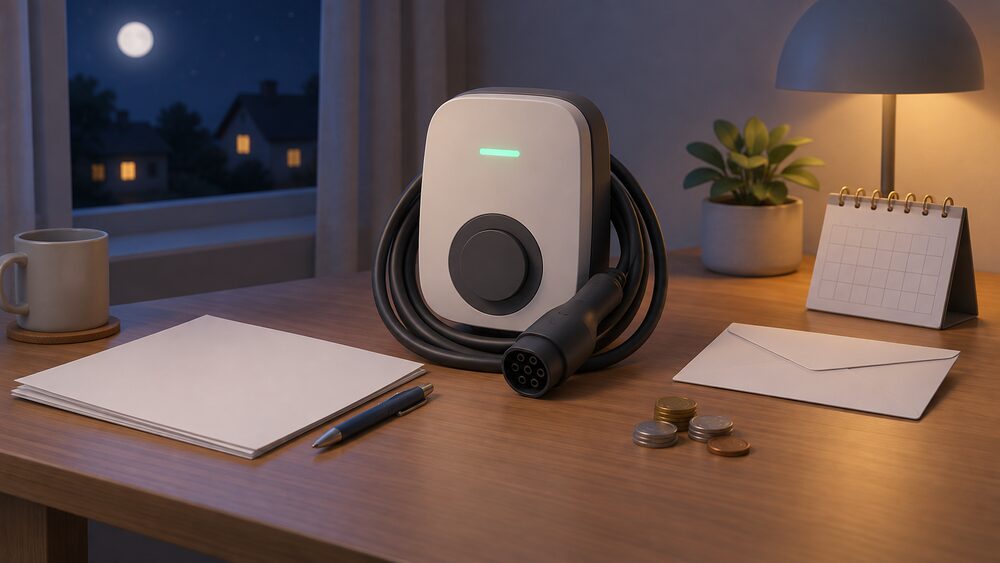
Yes. Overnight charging on a dedicated EV tariff is the cheapest routine way to put energy into a car at home, and the structure is simple: a lower unit rate for a set window in the early hours, and a higher rate for the rest of the day. EV tariffs typically charge a cheaper rate for electricity used at night1, and most of the tariffs marketed to drivers involve a lower rate for charging overnight2.
The headline number is small. One maker's calculator puts home charging on an overnight EV tariff at around 2p per mile3. A documented dual-rate case study used a low rate of 7.5p per kWh between 23.30 and 05.30, against a flat 31.5p per kWh for the rest of the day4. A supplier press release quoted an average night-time unit rate of 8.00p per kWh across all distribution regions5.
What that buys is a car filled while the household sleeps, on a window the supplier defines rather than the driver. What it does not buy is independence from the grid or from a supplier: the cheap rate exists because the supplier wants load moved, and it can be changed or withdrawn with the tariff.
How EV tariffs work: a cheaper window, like Economy 7 for your car
The mechanism is inherited from electric heating. Economy 7 gives a set number of hours of cheap electricity through the night, with daytime electricity charged at a higher peak rate8, and the cheaper rate applies for 7 hours out of every 24, usually at night9. EV tariffs work similarly: electricity is charged at a lower unit rate for seven hours during the night10. The Energy Ombudsman describes the category plainly: time-of-use tariffs vary prices throughout the day, usually with a cheaper overnight charging window11.
The difference is what sits behind the meter. Economy 7 was built for storage heaters and immersion heaters, which draw a predictable block of power. A car is a flexible load that can be moved within the window, and a chargepoint that supports in-home demand flexibility is what makes that possible. EV chargepoints, especially those able to export to the grid or allow in-home demand flexibility, can save households significant amounts while reducing strain on the grid at peak times12.
That is the trade at the centre of the tariff. The household gives the supplier control over when the car charges, and receives a lower unit rate in return. The car is still charged from the grid, and the rate is still set by a commercial supplier, so the arrangement lowers cost rather than removing dependence.
Overnight windows and rates compared: five hours, seven hours or an add-on
Windows are not standard. The electric heating industry describes a 7-hour night tariff as the typical supplier offer6, and Economy 7 is documented at seven hours during the night13 and at 7 hours during the night hours14. Shorter windows exist: Octopus Go gives five hours of cheaper energy every night to charge a car15. A common overnight window in EV guidance is 00:30 to 04:3016.
| Tariff shape | Documented window | Documented rate | Source |
|---|---|---|---|
| Dual-rate case study tariff | 23.30 to 05.30 | 7.5p per kWh overnight, 31.5p per kWh rest of day | 4 |
| Supplier night rate | Not stated | 8.00p per kWh average, all DNO regions | 5 |
| Octopus Go | Five hours every night | Not stated | 15 |
| Typical supplier night tariff | 7 hours | Not stated | 6 |
| Common EV guidance window | 00:30 to 04:30 | Not stated | 16 |
Two documents disagree on Economy 7 hours: one gives 7 hours during the night14, another gives 22:00 to 08:30. Both are recorded here without a ruling, so the window should be read from the individual tariff.
The rate spread matters more than the window length for most households. A 7.5p overnight rate against a 31.5p daytime rate is a ratio of roughly four to one4, which is why the economics depend on how much load can be moved rather than on the headline cheap rate alone.
Dedicated EV tariff, two-rate tariff or add-on: which fits which household
Three structures are documented, and they suit different patterns of use.
A two-rate tariff offers cheaper off-peak electricity rates overnight and a higher on-peak rate during the day17. The cheap rate applies to the whole house during the window, so a dishwasher, washing machine or immersion heater can share it. The cost is a higher daytime rate, which penalises a household that is at home and using power through the day.
An add-on EV tariff keeps the existing household tariff and adds separate EV charging discounts, credits or other benefits11. Charge Anytime is documented as an add-on to existing tariffs rather than a standalone tariff18. This suits a household that does not want its whole supply repriced, and it limits the benefit to the car.
A dedicated EV tariff is the two-rate structure aimed at drivers, with the cheaper rate reserved for charging the car19. Several providers have introduced overnight or off-peak tariffs solely for EV drivers20.
The deciding factor is how much of the household's consumption can be shifted. A time-of-use tariff becomes much more valuable where there is an EV charger, heat pump or home battery21. A household with none of those, and heavy daytime use, carries the peak rate without the offset.
What you need at home: a chargepoint, smart charging and the grant route
The tariff is the easy part. The hardware and the paperwork are where households stall.
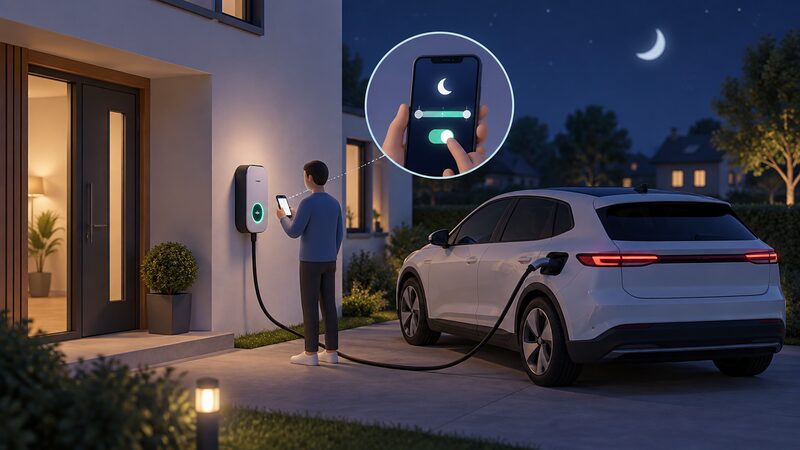
Some energy providers offer smart charging tariffs that make electricity cheaper at night or at times of low demand22. Those tariffs are built around a chargepoint that can be scheduled and, in some cases, modulated by the supplier. A chargepoint that supports in-home demand flexibility is the enabling device12.
For renters and flat owners, the electric vehicle chargepoint grant helps towards the cost of installing a chargepoint socket at the property23. Eligibility requires that the home has its own private off-street parking space24, and an applicant who has already claimed the grant or its predecessors, the Electric Vehicle Homecharge Scheme or the Domestic Recharge Scheme, cannot apply again25. The grant offers up to £350 per socket for residential landlords, people living in flats and people who rent2.
Installation itself is regulated work. The chargepoint must be fitted to the supply in a way that accounts for the home's available capacity, and load management is one route to that. Schneider Electric has described how a charger with built-in load management can help electricians complete installations within a home's available electrical capacity26.
Where overnight tariffs fall short: daytime rates, small windows and on-street parking
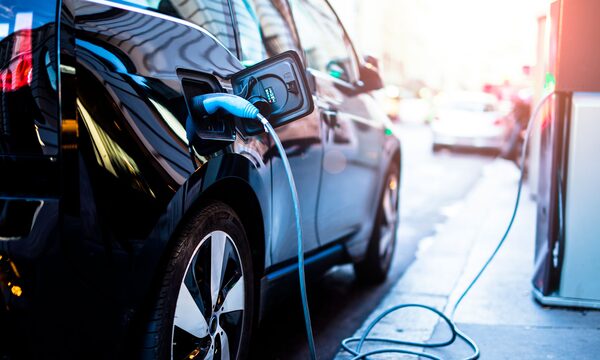
The cheap window is a discount on part of the day, not a discount on the bill. Rates are lower during off-peak hours such as overnight and higher during peak hours when demand is greater27, so a household that cannot move its load pays more for everything outside the window. The higher daytime rate is the price of the cheap night rate.
Window length is the second limit. A five-hour window15 is enough for a full charge on many cars, but a household arriving home late and leaving early may not fit the whole charge inside it. A seven-hour window6 gives more room, and the difference between the two is a real constraint on some routines.
The third limit is physical. The renters and flat owners grant requires private off-street parking24, so households without it cannot use that route to a home chargepoint. They depend on public charging, where VAT is charged at 20% rather than the 5% applied to domestic electricity7. Campaign groups including FairCharge are lobbying the government to reduce public charging VAT from 20% to 5% to match domestic charging, and the government has yet to decide28. In February 2026 the First-tier Tribunal ruled, in a case brought by Charge My Street, that public EV charging can qualify for the reduced 5% rate where supply at a single location to an individual customer does not exceed 1,000kWh per month.
For a household with a driveway, an overnight tariff plus a smart chargepoint is the lowest-cost routine available, and it still leaves the home dependent on the grid and on a supplier's tariff terms. For a household without off-street parking, the cheap window is largely out of reach, and the VAT position on public charging remains the live question.
Sources28 cited
- Smart meter benefits for Britain, Smart Energy GB, 2026-04-24
- Charging electric vehicles, Energy Saving Trust, 2026-04-23
- waEV-charge savings calculator, waEV-charge, 2026-09-17
- Understanding the opportunity of flexibility for households, Energy Systems Catapult, 2025-04-30
- Revealed: the charges keeping electricity bills high, End Fuel Poverty Coalition, 2025-05-08
- Electric hot water, BEAMA, 2026-09-19
- Electric car charging costs, Zapmap, 2026-09-04
- Heating fuel guide, Uswitch, 2026-01-27
- Time of use tariffs: the benefits, Smart Energy GB, 2026-08-17
- Electric cars and energy bills, Uswitch, 2026-04-27
- EV tariffs and home charging: what consumers need to know, Energy Ombudsman, 2026-09-11
- Response to the Treasury's consultation on VAT relief for energy saving materials, Energy Saving Trust, 2025-10-08
- Economy 7 guide, Uswitch, 2026-09-08
- What is Economy 7, Energy Helpline, 2026-09-20
- Octopus EV energy tariffs, Uswitch, 2025-10-09
- What is the cheapest way to charge an EV, Uswitch, 2025-07-02
- EV energy tariffs, Zapmap, 2024-09-16
- OVO EV energy tariffs, Uswitch, 2025-10-09
- Time of use tariffs explained, Which?, 2026-04-23
- Consumer grants and incentives: EV time of use tariffs, Flexi-Orb, 2024-06-19
- Should I switch to a time of use tariff, Energy Saving Trust, 2026-01-23
- EV charger installation and maintenance, NICEIC, 2025-08
- Electric vehicle chargepoint grant, GOV.UK, 2026-09-17
- Electric vehicle chargepoint grant: eligibility, GOV.UK, 2026-09-17
- Electric vehicle chargepoint grant for renters and flat owners, Find a Grant, 2026-09-18
- How EV chargers with built-in load management help electricians avoid service upgrades, Schneider Electric, 2026-09-04
- Should EV owners get a fixed or time of use tariff, Uswitch, 2025-07-02
- Electric car charging costs, Zapmap, 2026-09-04
 Electric Vehicle TariffsCharging an electric car at home can cost far less overnight, but only on special electricity plans.
 EV Charging Bolt-OnsCan you get cheap electricity for your car without changing the tariff for the rest of your home?
 Time-of-Use Tariffs ExplainedCan you pay less for electricity by using it at different times of day?
 Economy 7 TariffsEconomy 7 gives you seven hours of cheaper electricity at night, but the exact hours depend on where you live and who supplies you.
 EV Tariffs and Home ChargingHow EV-specific import tariffs and charging bolt-ons work, including supplier-controlled charging where the energy company decides when the car draws power, which charge points each scheme supports, and what a household needs in place.
 The Full EV Charging GuideCharging an electric car at home usually means a wallbox, but do you need one, and what will it cost to fit and run?