
In this comparison
Both Octopus Go and EDF GoElectric are two-rate electricity tariffs built around a cheap overnight window, and the gap between the cheap rate and the daytime rate is the whole point of them. Octopus Go gives five hours of cheaper energy every night, with off-peak rates as low as £0.07/kWh from 23:30 to 05:301. EDF's overnight tariff for EV owners offers an average nighttime unit rate of 8.00p/kWh across all distribution regions, against a night rate of 16.63p/kWh on its standard variable equivalent3.
The comparison is not simply a race to the lowest night rate. The two tariffs differ in how much control the supplier takes over charging, which cars and chargers qualify, and what the daytime rate does to a household's bill. A driver who charges almost entirely overnight sits in a very different position from one who plugs in whenever the car is home.
This page sets out the published rates, the smart charging conditions, the daytime position against the Ofgem price cap, and what public charging at 54p/kWh does to the arithmetic. It does not recommend either tariff: the figures and the conditions are set out so a household can match them to its own pattern of use.
Octopus Go vs EDF GoElectric at a glance
The two tariffs share a shape: a cheap window in the early hours, a higher rate for everything else, and a requirement for a smart meter so the supplier can see when electricity was used. EV tariffs are typically two-rate structures, cheaper at night, so that vehicles can be charged more cheaply overnight5. The Energy Saving Trust describes the cheap period as one period of very cheap electricity in the early hours of the morning for charging an electric vehicle6.
Where they diverge is in the degree of control. Octopus runs a family of EV tariffs rather than one, and the more aggressive versions trade lower pricing for handing over control of the charging session7. Octopus's original EV tariff enables customers to get five hours of cheaper energy every night to charge their car1. Intelligent Octopus, by contrast, has six hours of cheaper electricity overnight5.
EDF's position in the comparison is narrower in the published material: an overnight tariff for EV owners with an average night rate of 8.00p/kWh across all distribution network regions, set against 16.63p/kWh on its standard variable night rate3. That is a night rate roughly half the standard variable equivalent, which is the same structural discount the Octopus tariffs offer.
| Octopus Go | EDF GoElectric | |
|---|---|---|
| Structure | Two-rate, five hours cheap each night1 | Two-rate overnight tariff for EV owners3 |
| Off-peak window | 23:30 to 05:302 | Overnight, region-dependent3 |
| Off-peak rate | As low as £0.07/kWh2 | 8.00p/kWh average across all DNO regions3 |
| Peak rate | Around 28.69p/kWh2 | Standard variable night rate 16.63p/kWh on the equivalent tariff3 |
| Vehicle compatibility | Any vehicle works with Octopus Go1 | Not stated in the published material |
| Smart charging | App-based; some cars will not work with Intelligent Octopus Go1 | Not stated in the published material |
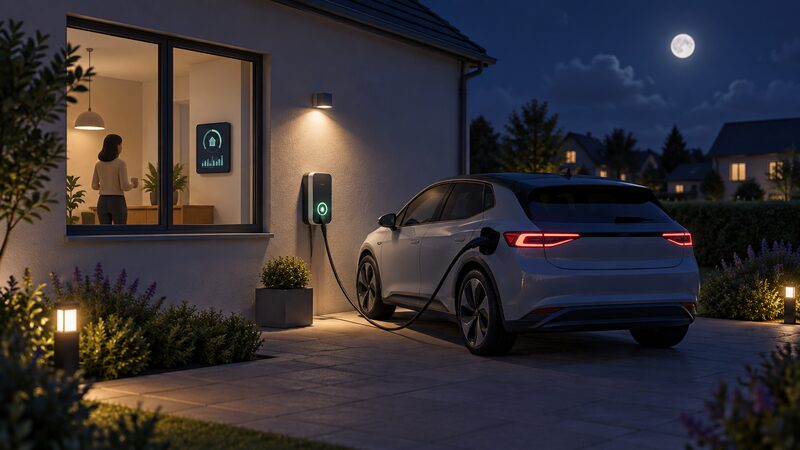
Overnight rates: what each tariff charges per kWh
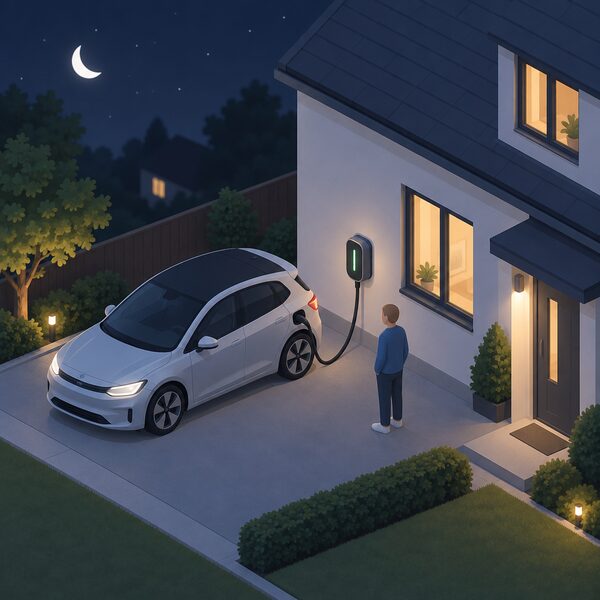
The headline number for Octopus Go is an off-peak rate as low as £0.07/kWh, available from 23:30 to 05:302. That is the floor of the range rather than a universal rate, and the same source gives a peak rate of around 28.69p/kWh, which is the figure that governs everything charged outside the window2. The practical illustration offered is a 7kW wallbox, which can add around 28kWh during the off-peak window for just £1.962. The same charge at peak rates could cost £22.29 or more2.
EDF's overnight tariff for EV owners is quoted as an average nighttime unit rate of just 8.00p/kWh across all DNO regions3. The word average matters: distribution network regions differ, so the rate a particular household sees depends on where it is. The comparison point given is EDF's standard variable tariff, which imposes a significantly higher night-time unit rate of 16.63p/kWh3.
For Intelligent Octopus Go, the published figures conflict. One maker figure puts the overnight rate at around 7p per kWh, another at around 28p/kWh on average varying by region, and the two have not been reconciled. A dated entry records Intelligent Octopus Go's overnight rate being set at 8p/kWh from 1 April 2026 for its smart-charging window. Households comparing the intelligent variant should treat the overnight rate as variable by region and check the current figure for their own postcode area rather than relying on any single number.
The structural point is the same across both suppliers: the cheap rate is a fraction of the peak rate, and the saving is realised only by moving load into the window. A tariff with a very low night rate and a high day rate can cost more than a flat tariff for a household that does not shift anything.
Smart charging requirements: which chargers and cars qualify
Octopus Go is the more permissive of the two Octopus products. Any vehicle will work with the Octopus Go tariff1. Intelligent Octopus Go is not universal: there are some vehicles that will not work with it1. That distinction decides which households can reach the lower intelligent pricing at all, and it is a compatibility question about the car rather than the charger.
Smart charging services also impose a control condition. To participate in services like Octopus Intelligent Go or ev.energy, users must disable all other control sources to prevent conflicts7. A household running a charger app, a car app and a supplier app at once can end up with two systems issuing instructions for the same session.
Ohme's own support guidance sets out what that looks like in practice. Where a household has a compatible EV and an Ohme charger, the app will only offer to connect using the EV at first, and will not offer the Ohme charger option straight away8. If the tariff is connected to the vehicle instead of the charger, both Octopus Energy and Ohme may try to control charging at the same time, with Octopus sending schedules to the car and Ohme acting on the charger, which can cause charging sessions to fail or behave unexpectedly8.
The charger itself is a separate purchase from the tariff. Home wallboxes are sold and installed independently of the energy supplier, and a smart tariff compatible unit such as the Simpson & Partners Home Series V3 is listed as compatible with Octopus Intelligent Go9. Compatibility with a named tariff is a specification item to check before buying, not an assumption.
Daytime unit rates against the price cap
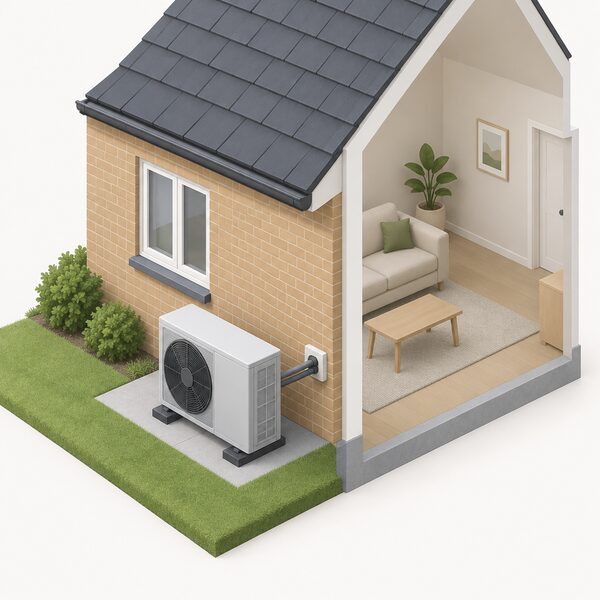
The Ofgem price cap electricity unit rate was 26.35p/kWh from 1 October 20254. That is the benchmark a daytime rate has to be judged against, because the cap governs what a standard variable tariff can charge for a unit of electricity. The cap moved by +0.21 p/kWh, or +0.8%, across the period from 1 July 2026 to 1 October 2026, and the standing charge moved by -5.29 p/day across the longer period from 1 July 2024 to 1 October 20264.
Set against that, Octopus Go's peak rate of around 28.69p/kWh sits above the cap unit rate2. That is the trade a two-rate tariff makes: a very cheap night rate in exchange for a day rate that is not the cheapest available. A household that charges a car overnight and uses relatively little electricity in the day comes out ahead; one that runs heavy daytime loads, such as an immersion heater or electric heating, may not.
The historical context is worth holding onto. As of June 2023, the Ofgem price caps were 33.2 pence per kilowatt hour for electricity and 10.3 pence per kilowatt hour for gas, a price ratio of 3.22:14. Electricity has long been the more expensive unit, which is why shifting consumption into a cheap electricity window is worth more than shifting gas use.
For households with a heat pump as well as a car, the ratio matters directly. One modelled case found that a consumer running a heat pump only in discounted periods would see an effective electricity to gas price ratio of 2.14 instead of the average 4.28 in 202410. That is a modelled outcome for a specific pattern of use, not a guarantee, but it shows how far time-of-use pricing can move the comparison between fuels.
How public charging at 54p/kWh changes the maths
The case for a home EV tariff rests on the alternative being expensive. The average cost of charging an electric car on a public network was 52p/kWh on slow and fast charging devices, about 15p per mile11. Public rapid chargers and fast chargers are installed for public use at a cost of 54p/kWh to 72p/kWh12. Public ultra-rapid charging is priced at 79p, working out at 27p per mile based on an average tested EV efficiency of 3.18 miles per kWh13.
Against an overnight rate of 8.00p/kWh on EDF's EV tariff, or an Octopus Go off-peak rate as low as £0.07/kWh, the public network is several times more expensive per unit2. That gap is the entire financial argument for charging at home overnight.
The network itself is unevenly distributed. Public charging devices are banded by power rating: 8kW to 49kW, 50kW to 149kW and 150kW and above14. In January 2025, 57% of charging stations were between 3 and 8kW, which at best is slightly faster than an at-home charger and at worst would take nearly a full day15. The North West had the largest quarterly percentage increase in devices rated 50kW and above, at 12.2%, an increase of 199 devices between 1 April and 1 July 202514.
For a driver who cannot charge at home, the cost penalty is real. A driver relying on public charging at a rate of 60p per kWh pays £396 more than a petrol car driver refuelling at 125p per litre, for an 8,000 mile annual driver16. That is the case for a home tariff in one figure: the household with a driveway and an overnight window is in a different cost category from the one without.
Beyond the overnight window: pairing with export and agile tariffs
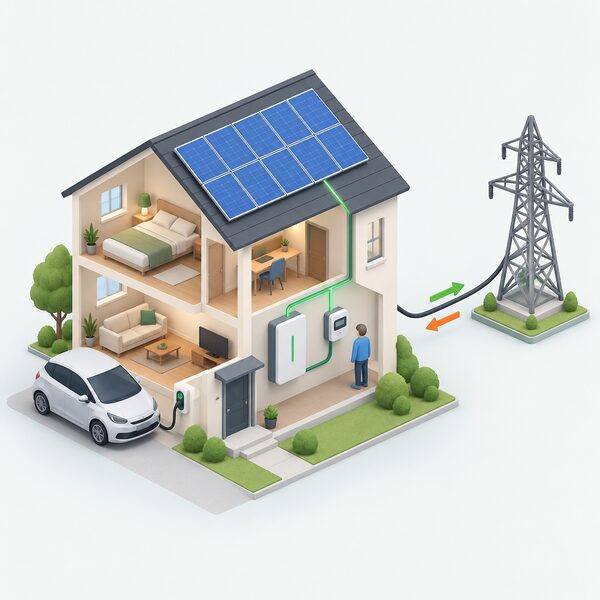
An EV tariff does not have to stand alone. Octopus offers some of the highest export tariff rates, and a household does not have to buy its solar solutions to use them17. Its SEG tariffs are available to all Octopus customers who export electricity17. Outgoing Octopus has no fixed end date18.
The pairing options are set out in independent guidance. For a heat pump, solar panels and a battery, the recommendation is a good SEG tariff for exported electricity and then either a dynamic tariff or a heat pump tariff for import, from the same company6. For solar panels and a battery, the options are a dedicated solar and battery tariff, or a good SEG tariff matched with a dynamic import tariff or an Economy 7 tariff6.
Octopus also runs a two-rate tariff with matching import and export prices and automated battery management, charging the battery when power is cheapest and exporting between 4pm and 7pm19. That structure is designed for a household with storage rather than one with only a car.
The wider point for independence is that an EV tariff plus an export tariff turns the household into a two-way participant: buying in the cheap window, selling in the peak. That reduces reliance on the grid for cost reasons, though not for supply. The household still depends on the supplier's systems, the smart meter connection and the app that schedules the charge.
Which tariff fits which household
The deciding variables are the car, the charger, the overnight window and how much electricity can be moved into it. Octopus Go suits a household that wants a cheap overnight rate without giving up control of charging, and it works with any vehicle1. Intelligent Octopus Go suits a household willing to hand over control in exchange for lower pricing, provided the car is on the compatible list1.
EDF's overnight tariff suits a household that wants a straightforward two-rate structure with a night rate averaging 8.00p/kWh across all DNO regions, and that is content with the daytime rate on the accompanying tariff3. The regional averaging means the exact figure depends on the distribution area.
A household with solar and a battery has a further option: pairing the EV tariff with an export tariff. Octopus's SEG tariffs are open to all its exporting customers, and Outgoing Octopus and Agile Outgoing can be paired with Octopus Go and Intelligent Octopus Go17. That combination lets a household charge the car cheaply overnight and export from the battery at peak times.
What none of these tariffs changes is the underlying dependence. The household still buys its electricity from a supplier, still relies on the grid for whatever it does not generate, and still depends on a working smart meter and a live data connection for the cheap window to be applied correctly. Time-of-use pricing moves the cost of consumption; it does not remove the connection.
For households weighing the wider field, the EV tariffs page covers the full range of products, and smart charging tariffs explains what handing over control actually involves. Households with panels should read EV tariffs with solar and battery before pairing an import tariff with an export one.
Sources21 cited
- Octopus EV energy tariffs, Uswitch, 2025-10-09
- Electric car charging guide, Carwow, 2025-07-16
- Tariff Watch, End Fuel Poverty Coalition, 2026-09-20
- The Ofgem price cap, End Fuel Poverty Coalition, 2025-10-01
- How to choose the best energy company, Which?, 2026-08-17
- Tariffs for renewable technology, Energy Saving Trust, 2026-08-12
- Making home energy management work for consumers, Energy Systems Catapult, 2026-02-12
- Troubleshooting for Intelligent Octopus Go and Ohme, Ohme, 2026-08-18
- Home electric vehicle chargers, Carwow, 2026-01-09
- Plugging heat in: smart policy can help electrify household heating in Europe, Ember, 2024
- EV charging statistics, Uswitch, 2025-07
- Electric vehicle charging, Isle of Anglesey County Council, 2026-09-20
- How much does it cost to charge an electric car, Which?, 2026-08-26
- Electric vehicle public charging infrastructure statistics: July 2025, Department for Transport, 2025-07-24
- Should I buy an electric car, Which?, 2025
- Consumer experience of electric vehicles in Scotland, Consumer Scotland, 2024-08-11
- Solar panel costs, Which?, 2026-08-03
- Smart Export Guarantee, Solar Energy UK, 2026-05-12
- Smart Export Guarantee rates, Which?, 2026-04-24
- What happens if your energy supplier goes out of business, Ofgem, 2026
- Electricity only, Confused.com, 2026
 Electric Vehicle TariffsCharging an electric car at home can cost far less overnight, but only on special electricity plans.
 Public EV Charging PricesCovers the published price series for public charging, how per-kWh rates differ by network and speed, and how they have moved over the past year.
 EV Charging Bolt-OnsCan you get cheap electricity for your car without changing the tariff for the rest of your home?
 Time-of-Use Tariffs ExplainedCan you pay less for electricity by using it at different times of day?
 Home EV Charger ManufacturersWhich home EV charger brands are worth considering, and how do you choose between them?
 The Full Tariffs GuideWhich energy tariff suits how you live, and will switching really save you money?