
In this guide
An Ohme charger is a smart home charge point that reads live data from the grid and shifts your car's charging into the cheapest and greenest hours available on your electricity tariff. The company describes its chargers as dynamic, using live data to automatically provide drivers with the greenest and cheapest energy, and states that they are compatible with all energy suppliers1. Two models are sold in the UK: the Home Pro and the ePod, both rated at 7.4kW and both compatible with solar through a Solar Boost function3.
The commercial case rests on tariff arbitrage rather than on the hardware. Ohme states that charging on a smart tariff can cost less than £5 per charge, that a typical 60kWh battery costs around £15 to £20 on a standard tariff, and that most drivers save £500 or more each year by charging smarter3. A separate Ohme figure puts an annual 6,800 miles at £136 on a smart tariff such as Intelligent Octopus Go, against £493 for the same mileage on a standard variable tariff5.
What the charger does not do is sell you energy. Ohme states plainly that it will never bill you directly for the energy used to charge the car, and that tariff information is used only to work out when charging is cheaper and to estimate session costs7. Your supplier bills the units; Ohme decides the timing.
What an Ohme charger is and how dynamic smart charging works
Ohme's chargers are described by the maker as dynamic, meaning they use live data from the grid to charge when demand is lower and prices cheaper within a schedule1. The distinction matters. A basic smart charger follows a fixed timer set by the householder; a dynamic charger adjusts the schedule itself as prices and grid conditions move, reaching the desired charge level within the window the driver has set1.
The regulatory backdrop is the Electric Vehicles (Smart Charge Points) Regulations 2021, and Ohme states that its chargers meet the latest smart charger regulations and are compliant with the new rules9. That compliance is what allows a charger to be sold and installed in the UK at all, and it is also what makes the tariff-linked behaviour possible: the charger must be capable of delaying and modulating charging in response to signals.
In practice the householder sets a target, a departure time and, if wanted, a price cap. Ohme then works out when to draw power. The company states that its chargers are compatible with any UK energy tariff, including the market's cheapest, and that they automatically adjust to optimise the cost of charging12. The charger is not tied to one supplier, which is the point: Ohme states that its chargers work with every electricity supplier, so switching supplier does not require new hardware9.
The dependence this creates is worth stating plainly. Dynamic charging depends on the charger's internet connection, on Ohme's servers and app, and on a tariff that publishes half-hourly or time-of-use prices. Without a smart tariff the charger still works, but it has nothing to arbitrage. More on how these products compare with fixed-schedule chargers is at smart EV chargers.
The range: Home Pro and ePod
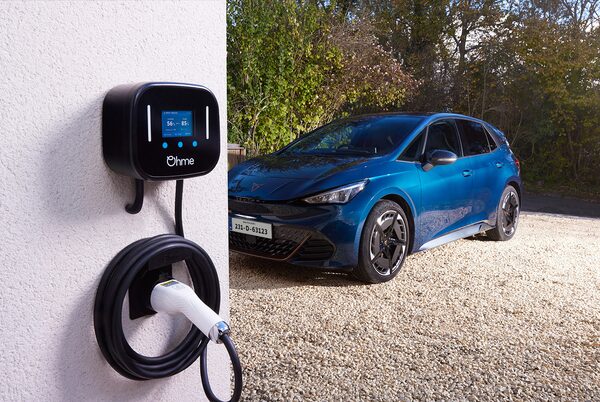
Ohme's European home charger range comprises the Home Pro and the Go portable charging cable alongside the ePod and ePod S 22kW14. For UK households the two wall-mounted options are the Home Pro and the ePod, and both deliver electricity at a rate of 7.4kW3. E.ON Next lists the Ohme ePod and Ohme Home Pro alongside the zappi GLO at up to 7.4kW output depending on the vehicle, with a Type 2 socket15.
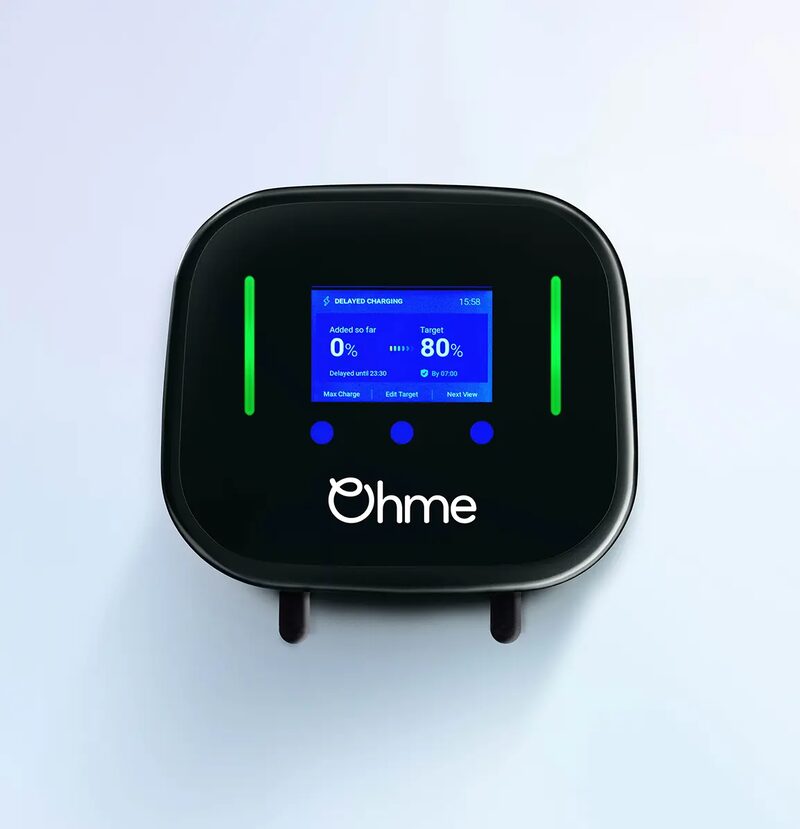
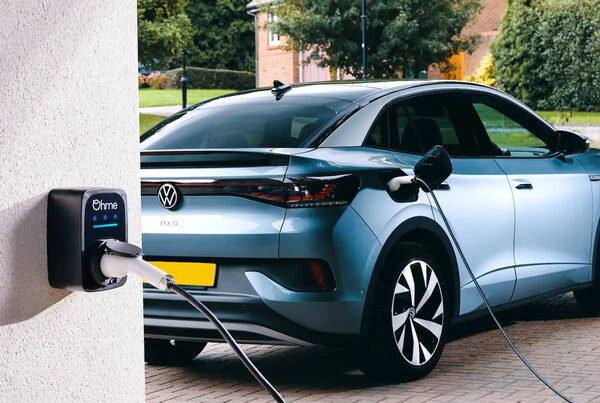
The Home Pro is the tethered unit. It has a 5m Type 2 tethered charging cable as standard, with an 8m cable available as an option16. The ePod is the untethered counterpart, and Ohme states that any EV with a Type 2 connector charges perfectly well with it9. Ohme also states that its chargers are compatible with all Type 1 and Type 2 EVs4.
| Model | Cable | Output | Solar | Notes |
|---|---|---|---|---|
| Ohme Home Pro | 5m Type 2 tethered (8m optional)16 | 7.4kW3 | Solar Boost via CT clamp4 | UK Smart Charge Point Regulations compliant11 |
| Ohme ePod | Type 2 socket, untethered15 | 7.4kW3 | Solar Boost via CT clamp4 | UK Smart Charge Point Regulations compliant11 |
| Ohme ePod S 22kW | Not stated | 22kW14 | Not stated | Listed in the European range14 |
The 22kW ePod and ePod S sit outside the mainstream UK domestic picture, since a 22kW charge rate needs a three-phase supply that most homes do not have. The comparison between the two main models is set out at Ohme ePod vs Ohme Home Pro, and the wider question of tethered versus untethered is at tethered vs untethered EV charger.
Tariff integration: how charging follows your tariff's cheapest hours
Ohme's tariff integration is the core of the product. The app connects the charger to your electricity tariff and lets Ohme automatically schedule the car to charge during off-peak hours4. Ohme states that its technology integrates with energy tariffs including time-of-use off-peak and type-of-use tariffs, and that the tariff information is used to estimate the cost of charging sessions and to power features such as the price cap7.
The price cap is the most concrete control. When enabled, Ohme will only schedule charge during your tariff's off-peak times, to keep charging as cheap as possible, and this applies to standard dual-rate or multi-rate tariffs11. Where a tariff is not in Ohme's database, the householder can set up a custom tariff by entering the tariff times and prices11.
The tariff landscape the charger is working with has three broad shapes. Independent guidance describes EV tariffs as usually involving a lower rate for charging overnight, often structured like Economy 7 with a lower unit rate for seven hours during the night17. Type-of-use tariffs are different: they offer cheaper rates just for the specific energy used to charge the EV, and the cheaper cost applies at any time of day or night19. Zapmap describes the outcome from the driver's side as the EV charging at the cheapest time based on your existing tariff and preferences20.
That last point is the one to hold on to. The charger does not create cheap electricity; it finds the cheap hours your tariff already publishes and moves the load into them. A household on a single-rate tariff gets scheduling convenience and no price benefit. The wider tariff picture is at EV energy tariffs and how they change home charging.
Cost: what a charge and a year of driving actually cost
Ohme's published figures give a wide spread, and the spread is the story. On a typical tariff, charging a 60kWh battery costs around £15 to £20; with smart tariff integration it can cost less than £5 per charge3. The difference is entirely the rate paid per unit, not the amount of energy drawn.
At annual scale, Ohme states that a typical UK driver covering 6,800 miles a year charging with Ohme on a smart tariff such as Intelligent Octopus Go would spend just £136 for the energy5. The same annual mileage on a standard variable tariff would cost £4936. Ohme also states that EV drivers charging at home with Ohme on a smart tariff save more than £90 a month versus the standard variable tariff, and that most EV drivers save £500 or more each year by charging smarter5.
A worked example from the maker puts a full charge of an MG4 SE Long Range with a 64kWh battery at £4.48 on Intelligent Octopus Go, for its 281 mile WLTP range21. Ohme's broader claim is that charging costs can be reduced by up to 70% with its charger11.
For context on what public charging costs by comparison, independent statistics put the VAT paid by a UK EV driver reliant entirely on public charging at an estimated £194 per year in 202522. Home charging is charged at domestic VAT rates; public charging is not. That difference is covered at why public EV charging VAT is higher than home charging, and the full running-cost picture is at what does it cost to charge an electric car at home.
Solar charging and the Solar Boost setting
Both the Home Pro and the ePod are solar charging compatible, and Ohme states that Solar Boost works with either charger to fill the car with excess solar generation4. The mechanism is a CT clamp, included in a standard installation, which measures generation and consumption at the supply so the charger can tell when the house is exporting9.
Ohme describes the outcome as letting you prioritise self-generated energy so you can charge greener, cheaper and make the most of your solar setup23. The company's press material describes a solar boost function reducing reliance on the grid12. A further Solar Boost setting, described as only charging with solar when there is enough excess, was stated for release in Summer 202624.
The limits are worth being clear about. Solar Boost shifts charging into daylight hours when the panels are producing beyond the house's own demand; it does not store energy, and on a cloudy day or in winter there may be little or no excess to divert. A household with a modest array and a car needing a large daily top-up will still draw most of that from the grid for much of the year. The charger makes the most of what the roof produces; it does not make the roof produce more. Solar pairing in general is covered at charging an EV from solar panels, and the choice between solar and grid charging at charging an EV from solar vs the grid.
Installation: survey, lead times and what a standard fit includes
The process starts online. Ohme requires a quick eligibility check, which takes about two minutes, followed by an online home survey of about ten minutes covering your home, your energy usage and your installation requirements25. Ohme states that it needs this information before it can provide a date for installation26.
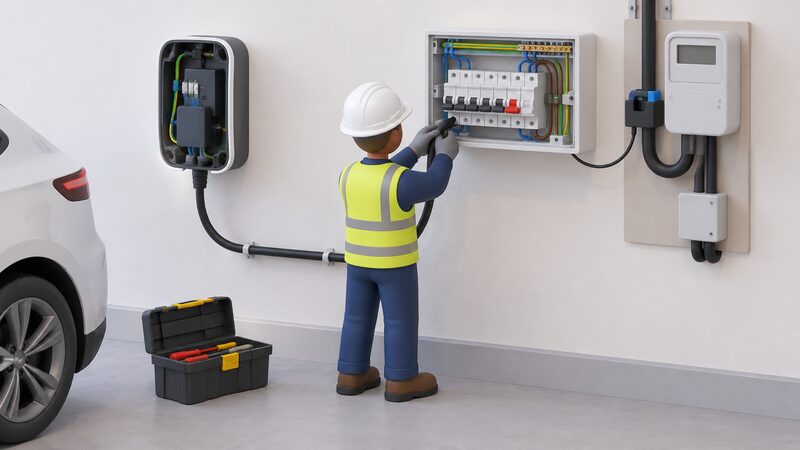
A standard installation includes mounting the charger, up to 15 metres of cabling, connection to your fuse board, circuit protection, a CT clamp and app setup, plus testing and certification9. Ohme's own figure for a standard fit is up to 3 hours, while its general guidance elsewhere puts an EV charger installation at around 4 hours25. The documents differ on the duration; the 3 hour figure is specific to a standard fit, the 4 hour figure to installations generally.
Standard installations are usually booked within one to two weeks, though Ohme states that lead time varies with engineer availability in your area and the complexity of the installation25. Installation is carried out by an Ohme approved installation partner, who arrives on an agreed date to fit the charger in your preferred location27. Questions during the visit go to the engineer on site or to the Customer Success Team through the chat function27.
The electrical standard is not optional. Independent guidance from NICEIC states that an EV charger must be installed in line with the current edition of BS 7671, the national standard for electrical installations28. Ohme states that its installation certificate is ready around 3 to 5 working days afterwards9. The wider process, including who may legally do the work, is at home EV charge point installation, and the supply-side requirements at electrical requirements for a home EV charge point.
Who Ohme works with: car makers, energy suppliers and fleets

Ohme states that its chargers are compatible with all energy suppliers, and that this means a household is free to switch supplier without changing hardware9. That is the commercial position: the charger is supplier-agnostic, and the tariff relationship sits between the householder and the supplier.
The partnership list is long and mostly about distribution rather than technology. Ohme was chosen as the exclusive official home EV charging partner of smart UK12. It has announced partnerships with Ford in Northern Ireland, with XPeng, and with the Richmond Motor Group29. It became the new smart EV charger choice for Travis Perkins31. In May 2026, SG Fleet selected Ohme as its smart home EV charging partner in Australia32.
On the energy supplier side, Ohme works with E.ON Next on the Next Drive Smart tariff, with dedicated support articles covering how the tariff works with an Ohme charger, how to set it up, and how to disconnect the charger from it32. Ohme and Octopus Energy rolled out a six-hour smart charging update together in August 2026, with a prioritise setting available to everyone who has the six-hour smart charging limit in place35. In August 2026, ESB Networks and Ohme began the EV Flex trial in the Republic of Ireland with selected Ohme drivers, paying rewards for frequent home plug-ins36.
The pattern is that Ohme's charger is the hardware layer and the supplier's tariff is the commercial layer, with the two integrated through the app. That is a genuine independence benefit in one direction, since switching supplier does not strand the hardware, and a dependence in another, since the smart behaviour runs through Ohme's platform. Flexibility and reward schemes are covered at smart charging, flexibility services and reward schemes.
The company: size, status and customer ratings
Ohme describes itself as the UK's largest home EV charging company and the fastest growing EV charging company in Europe, and separately as the UK and Ireland's largest home EV charging company30. It is based in Cork29. Earlier company material described it as the UK's fastest growing smart charger manufacturer6. These are the company's own characterisations of its market position.
On recognition, Ohme holds the Best Electric Charging Point Provider 2025 award from the Business Motoring Awards23. The company has also cited Fast Track Company of the Year in the 2023 UK Green Business Awards and Best Electric Charging Point Provider from Business Motoring, alongside ISO 9001 and ISO 27001 certifications covering quality processes and information security; the two sets of claims are not reconciled in the documents.
On testing, BSI became the first UKAS-accredited lab for electric vehicle charger testing and is a CB test lab for EV chargers under the global IECEE scheme, a 2022 development37. That is a testing-capability fact rather than an endorsement of any one brand.
Where an Ohme charger falls short
The clearest limit is the one that applies to every smart charger: the intelligence lives in the cloud. Scheduling, price caps, cost tracking and remote control all run through the Ohme app and Ohme's servers, and the app is where the features sit, from setting schedules and price caps to tracking costs, carbon savings and charge history23. Ohme's app also handles routines, one-off charging sessions, a price cap in pence per kWh, and energy cost and consumption tracking8. A household that loses broadband loses the smart layer, though the charger itself continues to deliver power.
The second limit is that the charger controls the charger, not the car. Ohme's app can pre-set a battery charge level for a specific time of morning, but cabin pre-heating and climate settings are the vehicle's business14. Multi-car control and smart tariff switching are supported32, but the vehicle-side functions are not.
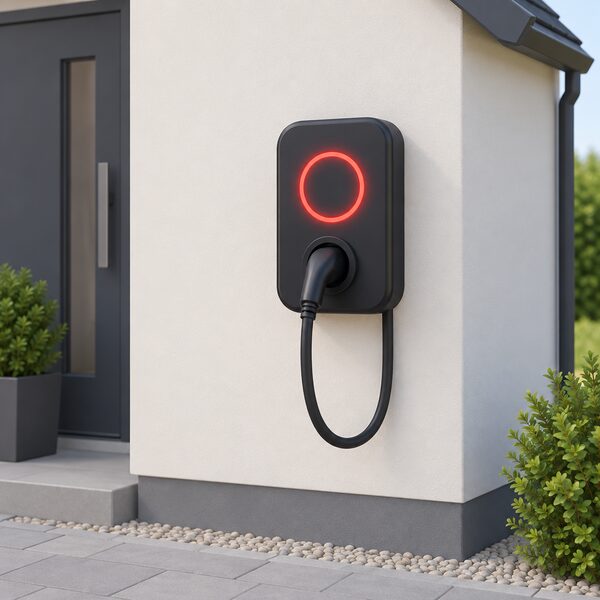
The third is fault behaviour. If the supply voltage goes outside the acceptable range, the charger will stop working and show an error, a safety feature protecting both charger and vehicle38. UK Power Networks states that if the voltage goes beyond that range the charger will not function and will display a red ring or an error39. That is a network condition, not a charger defect, and it is not something the householder can fix at the unit.
For faults that are the charger's own, Ohme's support route is to go to My Charger, then Advanced Settings, and tap the Change charger button10. A forum report from May 2026 describes an Audi Q4 owner whose charging continued but not at the smart rate, and who reported the issue cleared after resetting 13 times40. Persistent faults go to the Customer Success Team through the app chat function27. Broader fault diagnosis is at EV charge point faults and troubleshooting, and the warranty position at EV charge point warranties and aftercare.
Sources40 cited
- How our chargers work, Ohme, 2025-09-10
- Energy, Ohme, 2026-03-16
- Smart charging FAQs, Ohme, 2025-12-11
- Product, Ohme, 2026-05-21
- Save £90 a month driving an EV when charging at home with Ohme, Ohme, 2026-09-17
- Saving money with an EV, Ohme, 2024-05-13
- How do I set my tariff in the Ohme app, Ohme, 2026-09-17
- New to EVs, Ohme, 2026-07-09
- What to look for when buying a home EV charger, Ohme, 2026-08-18
- How do I pair my Ohme charger to the app, Ohme, 2026-09-17
- Ohme ePod, Ohme, 2026-05-21
- Ohme smart UK partnership, Ohme, 2026-09-17
- Ohme ePod 22kW, Ohme, 2026-09-17
- Ohme, Ohme, 2026-05-12
- How to do electric vehicle charging at home, E.ON Next, 2026-09-17
- Home electric vehicle chargers, Carwow, 2026-01-09
- Charging electric vehicles, Energy Saving Trust, 2026-04-23
- Electric cars and energy bills, Uswitch, 2026-04-27
- EV energy tariffs, Zapmap, 2024-09-16
- Smart charging, Zapmap, 2026
- Ohme Richmond Motor Group, Ohme, 2025-07-23
- EV charging VAT, Zapmap, 2025
- Ohme Home Pro, Ohme, 2026-08-05
- How to charge with Solar Boost and Solar Only, Ohme, 2026-06
- Can I get a home charger installed before my new EV arrives, Ohme, 2026-09-17
- 5 things you should know about your EV charger installation, Ohme, 2026-03-31
- What to expect on your installation day, Ohme, 2025-07-29
- Electric vehicle charger installation and maintenance, NICEIC, 2025-08
- Ford Ohme partnership Northern Ireland, Ohme, 2026-09-17
- XPeng Ohme partnership, Ohme, 2026-09-17
- Ohme is new smart EV charger choice for Travis Perkins, Ohme, 2026-09-17
- How does Next Drive Smart work with Ohme, Ohme, 2026-05-12
- Setting up Next Drive Smart with Ohme, Ohme, 2026-05-12
- Disconnecting Ohme from Next Drive Smart, Ohme, 2026-05-12
- Prioritise savings or your target with Intelligent Octopus Go, Ohme, 2026-08
- Electroverse news, August 2026, Electroverse, 2026-08-10
- BSI becomes the first UKAS accredited lab for electric vehicle charger testing, BSI, 2022-11-16
- Managing voltage changes in your property, Electricity North West, 2026-09-19
- Voltage changes in your home or business, UK Power Networks, 2026-09-17
- Ohme charger issues with charging, how can I fix this, OVO Energy forum, 2026-05-15
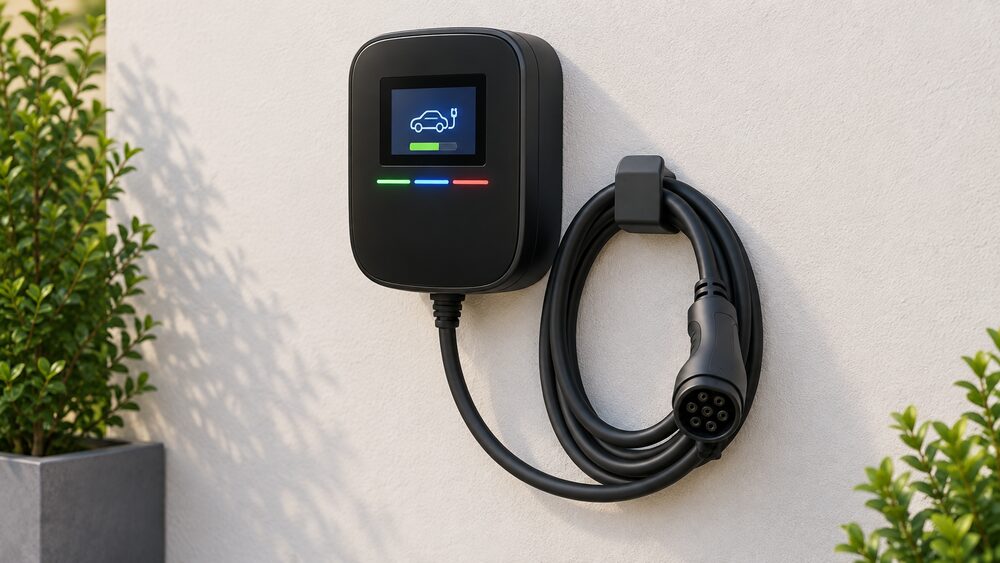 Ohme Home ProThe Ohme Home Pro is a tethered 7.4kW smart charger with a colour touch screen, a 5m Type 2 cable as standard and an 8m upgrade, priced from £999 with standard installation included.
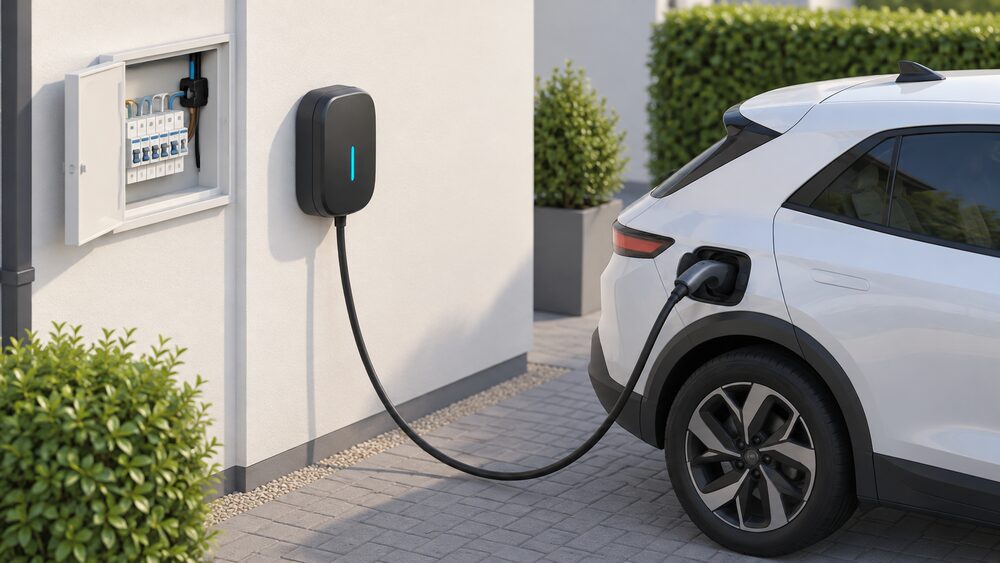 Ohme home EV chargersOhme is a smart home EV charger brand, based in Cork and claiming to be the UK and Ireland's largest home EV charging company.