
In this comparison
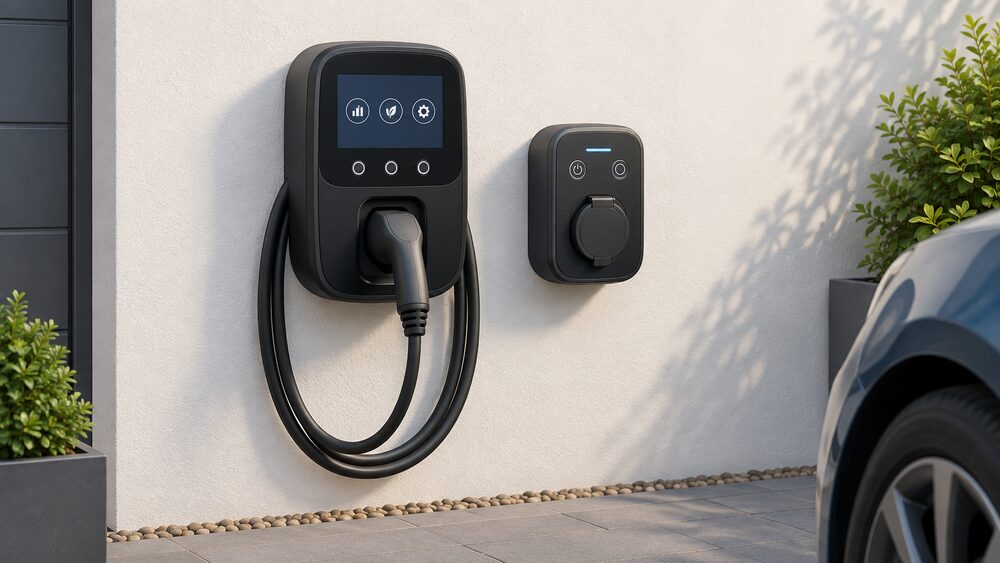
Ohme sells two home chargers in the UK, and the choice between them is narrower than the price gap suggests. The ePod starts from £949 including standard installation and the Home Pro from £999 including standard installation, both as listed on Ohme's product page1. Carwow's review of home chargers puts the difference at £50 and describes the Home Pro as the larger of the two2. Both are solar compatible, both meet the UK Smart Charge Point Regulations, and both can be controlled either from the Ohme app or from buttons on the unit itself3.
The real distinction is physical rather than functional. The Home Pro carries a tethered cable and a touch screen; the ePod is the smaller unit4. Everything that makes an Ohme charger worth having, the tariff integration, the price cap scheduling, Solar Boost and multicar support, sits in the app and applies to either model5. A household choosing between them is choosing a shape and a cable arrangement, not a tier of smartness.
What neither charger does is make a home independent of the grid. Ohme's own framing is cost and carbon shifting: the chargers move EV charging away from the 5pm to 8pm demand peak and use live grid data to pick cheaper windows6. The car still draws from the network, and the household still buys that electricity from a supplier. The gain is in when the power is taken and what it costs, not in whether it is taken.
ePod and Home Pro: Ohme's two home chargers at a glance
The two models share a platform. Ohme states that both chargers can be controlled either through the Ohme app or using the buttons on the device itself, that both meet the UK Smart Charge Point Regulations, and that both are compatible with solar energy setups3. The Home Pro is described by the maker as the larger of the two chargers, and its product page lists a touch screen and a tethered cable as the way it powers the car4. The ePod is the compact option, and Ohme's Irish product page for it notes SEAI grant approval, a detail that applies in the Republic rather than the UK5.
The Home Pro's data sheet gives the specification detail that the marketing pages leave out. It lists control via the three buttons on the charger or via the Ohme smartphone app, and connectivity through a 3G/4G multinet SIM card with the cost covered by Ohme for the first three years9. That SIM is the point at which the charger depends on something outside the home: Carwow notes the Home Pro's reliance on 4G data networks for connection2. A charger that schedules around tariff windows needs that link to work.
| Ohme ePod | Ohme Home Pro | |
|---|---|---|
| Price from | £949 including standard installation1 | £999 including standard installation1 |
| Cable | Socket unit5 | Tethered cable4 |
| Display | Not stated | Touch screen4 |
| Local control | Buttons on the unit or the app3 | Three buttons on the unit or the app9 |
| Connectivity | Not stated | 3G/4G multinet SIM, cost covered by Ohme for the first 3 years9 |
| Solar | Solar charging compatible5 | Solar charging compatible4 |
| Tariffs | Compatible with all energy tariffs5 | Compatible with all energy tariffs4 |
| Regulations | Meets UK Smart Charge Point Regulations3 | Meets UK Smart Charge Point Regulations3 |
Smart tariffs and the price cap feature: how charging gets cheap
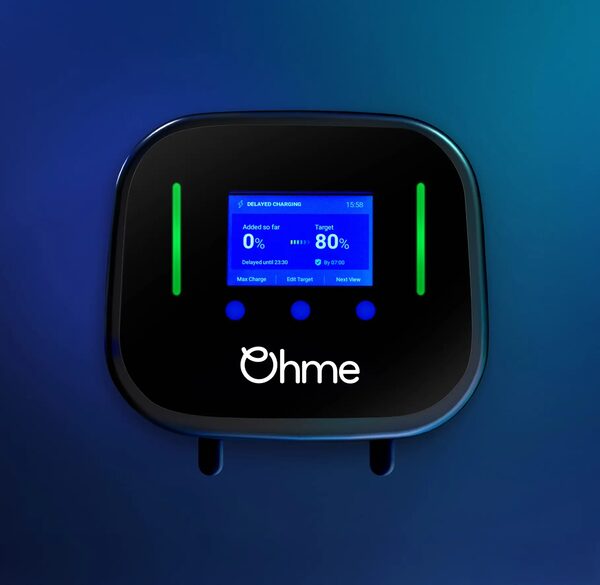
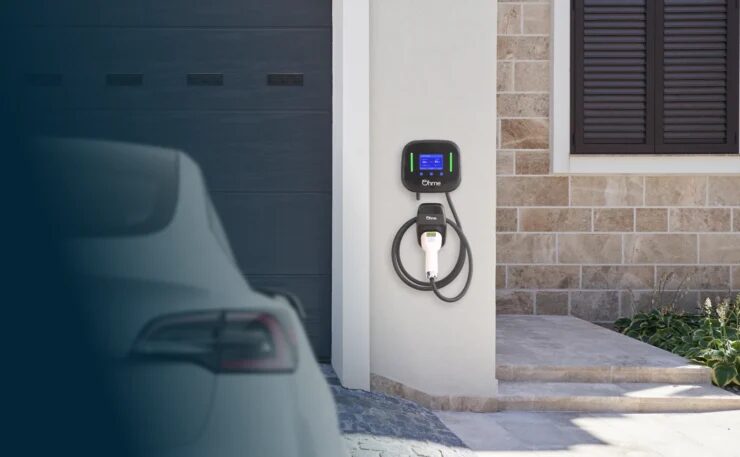
The price cap is the feature that does the work. Ohme states that when it is enabled, the charger will only schedule charge during the tariff's off-peak times, to keep charging as cheap as possible3. That is a scheduling rule rather than a discount: the charger is deciding when to draw power, and the saving comes from the tariff the household has chosen. Ohme uses the tariff information to estimate the cost of charging sessions and to run features such as the price cap10.
Setting that up depends on the app recognising the tariff. Ohme says the chargers are compatible with all energy tariffs, and where a supplier or tariff is not listed, the app allows a custom tariff to be created through the "My supplier/tariff isn't listed" option4. The product page puts it more simply: you can set up a custom tariff if needed by telling Ohme your tariff times and prices3. Carwow notes that the Home Pro is one of the only chargers that can integrate with both Octopus and OVO's smart tariffs2.
The wider case for smart charging is independent of the brand. The NICEIC explains that some energy providers offer smart charging tariffs that make it cheaper to use electricity at night, or at times of low demand11. Ohme's own figures put the effect at more than £90 a month saved by EV drivers charging at home on a smart tariff compared with the standard variable tariff12. That is a maker's claim about its own product and should be read as such, but the mechanism it relies on, off-peak windows and a smart meter, is the same one the NICEIC describes.
For a household's energy independence, this is a modest but real shift. The home is not generating anything; it is choosing when to buy. That reduces exposure to peak prices and to the 5pm to 8pm demand peak, and it makes the household a participant in demand shifting rather than a passive load6. It does not reduce the total units the car needs.
Costs: from £15 to £20 a charge to under £5
Ohme's own comparison is the clearest statement of what smart scheduling is worth. On a typical tariff, charging a 60kWh battery costs around £15 to £20; with Ohme's smart tariff integration, it can cost less than £5 per charge3. The same page claims that for most EV drivers this adds up to £500 or more in savings each year, and that charging costs can be reduced by up to 70%3. These are maker figures for the maker's product.
Independent figures land in the same territory. The Energy Saving Trust gives home charging on a standard tariff at £17 per full charge, and home charging with an EV tariff or other time-of-use tariff at £813. ChargeUK's price comparison table lists home off-peak electricity at 3.59 pence per kWh against 22.20 pence per kWh for an 80% home, 20% rapid split14. The Energy Saving Trust figure of £8 sits between Ohme's under £5 and the £15 to £20 typical tariff figure, which is what you would expect from a different assumed tariff and a different assumed battery size.
The hardware cost is separate. Ohme lists the ePod from £949 and the Home Pro from £999, both including standard installation1. Which? puts a home EV charger generally at £500 to £1,200 to buy and install15. Carwow's £50 gap between the two Ohme models is the only like-for-like comparison available here2. Prices are as published on the dates given and are installer-quoted in practice; no range beyond the maker's starting figures is published.
Solar Boost and charging from your own excess generation
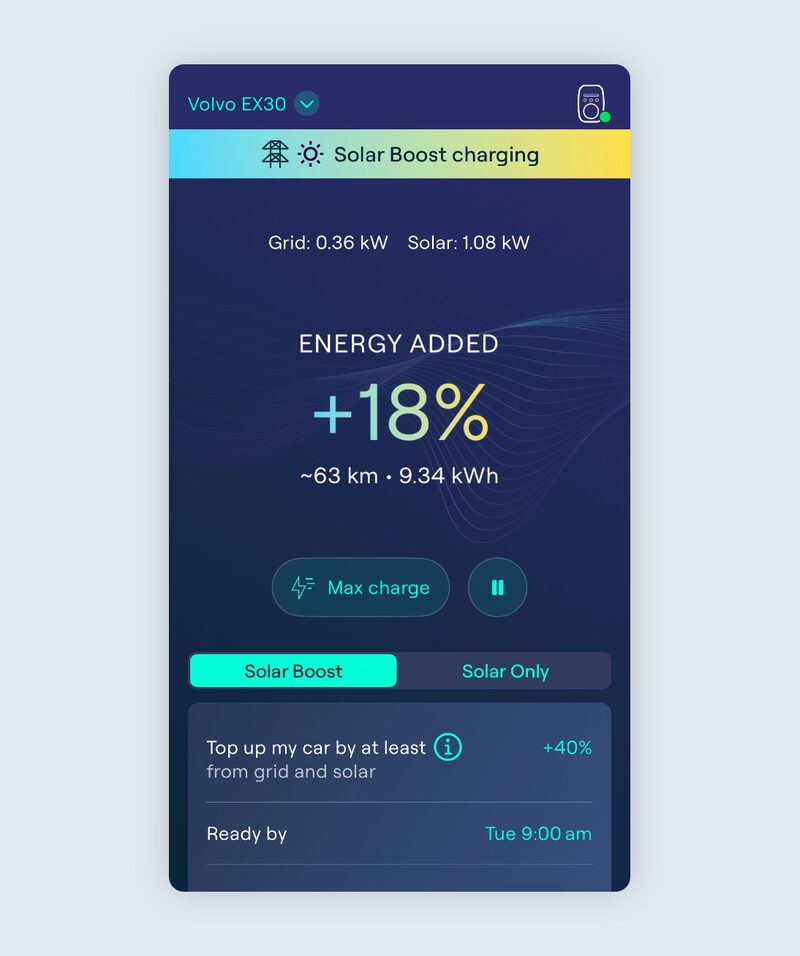
Both Ohme models are solar charging compatible, and the Solar Boost feature in the app uses excess solar generation to charge the car4. Ohme's own description is that the chargers let you prioritise self-generated energy, so you can charge greener and cheaper and make the most of a solar setup6. This is the one feature on either charger that touches genuine energy independence: the car is running on electrons generated on the roof rather than drawn from the network.
The limits are worth stating plainly. Solar Boost only has something to work with when the panels are producing more than the house is using. The Energy Saving Trust describes battery storage as chargeable from excess solar generation, from the mains supply, or from off-peak grid electricity on a time-of-use tariff17. Its case study on a solar installation notes that a battery will increase the cost but will allow you to use more of what you generate18. Without a battery, excess generation that the car cannot absorb at that moment is exported or lost to the household.
Ohme has also signalled a further Solar Boost setting, "only charge with solar when there is enough excess", launching in summer 202616. That is a dated statement of intent rather than a shipped feature. For a household weighing the two chargers, solar behaviour is identical between them: the difference is the cable and the screen, not the solar logic.
Installation: survey, lead times and what a standard fit includes
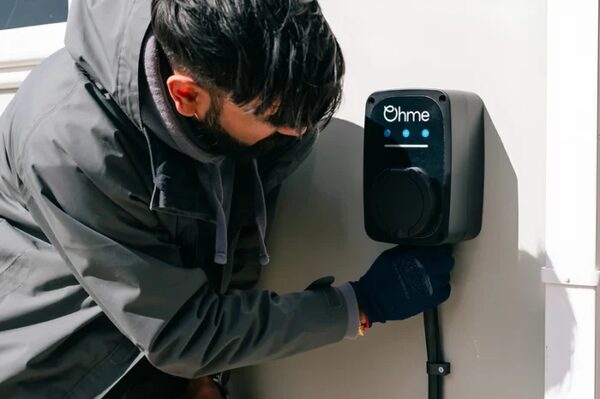
The process starts with an online home survey. Ohme says most customers complete it in about 20 to 30 minutes, though an engineer can be arranged to visit and complete it on the household's behalf19. A separate Ohme page puts the survey at about 10 minutes and describes uploading photos of the fuse box, meter and intended charger position from a phone7. The survey is about the property, not the car, which is why a charger can be fitted before the EV arrives20. Ohme states it can install even if the car has not arrived yet6.
After the survey is submitted, an approved installation partner reviews the details and calls to schedule a date8. Ohme says standard installations are usually booked within one to two weeks, and that most UK customers wait one to two weeks for an installation7. End to end, Ohme puts a standard installation at around two weeks for most UK homes20. The installation certificate follows around three to five working days afterwards6.
On the day, Ohme gives a standard fit as up to three hours, with the engineer testing the charger and helping set up the app before leaving7. One Ohme page puts the average at around four hours, and the same page states that engineers work within a standard four-hour allowance to ensure there is adequate time for installation and testing3. The standard installation includes up to 15 metres of cable to connect the charger to the distribution board or electric meter3. Both the Home Pro and the ePod come with a CT clamp in the box21.
Two things can extend the job. Ohme says an individual quote is sent first if the home needs a longer cable run or extra works, and that installation complexity such as extra cabling, ground works or permissions, along with missing survey information, can add time7. Separately, Ohme may ask the household to contact the DNO after the home survey if it identifies a need for a fuse upgrade or a looped supply22. Ohme states it cannot contact the DNO on the customer's behalf because of GDPR, though it can provide the contact number, and cannot retrieve an MPAN because of privacy and data protection regulations23. The MPAN can be found on a recent energy bill or requested from the DNO, and it must be provided on the home survey so the installation partner can update the relevant databases24.
Where the two chargers sit in the wider Ohme range
Ohme's UK range for the home is these two units. The company describes itself as the UK's largest home EV charging company and the fastest growing EV charging company in Europe, based in Cork25. It is the official charger provider for a long list of vehicle brands, including the Volkswagen Group, Volvo Cars and Polestar in both the UK and Ireland, and Mercedes-Benz and Hyundai in the UK, with XPENG UK naming it as exclusive home charging partner27. It also works with the Motability Scheme, managing the entire installation process for those customers26.
On the energy side, Ohme chargers are compatible with all electricity suppliers, and the company is the official home EV charging partner for the Energia Group, SSE Airtricity, Power NI and Click NI3. Its chargers work with named tariffs including Energia's Smart Drive and Power NI's EV Nightshift29. Ohme states it never bills users directly for the energy used to charge the car, using tariff information only to work out when charging is cheaper and to estimate costs29. The household's relationship remains with its electricity supplier.
That is the honest boundary of what either charger delivers. The ePod and the Home Pro both reduce what a car costs to run by moving the load into cheaper windows and, where solar is present, by absorbing surplus generation. Neither removes the grid connection, the supplier, or the need for a working data link to the charger. For households comparing the two, the decision rests on whether a tethered cable and a touch screen are worth £50, and on nothing else in the specification.
Sources29 cited
- Ohme product range, Ohme, 2026-05-21
- Home electric vehicle chargers, Carwow, 2026-01-09
- Ohme smart charging FAQs, Ohme, 2025-12-11
- Ohme Home Pro product page, Ohme, 2026-05-21
- Ohme ePod product page, Ohme, 2026-05-21
- What to look for when buying a home EV charger, Ohme, 2026-08-18
- How fast can an EV charger be installed, Ohme, 2026-07-02
- How installation works, Ohme, 2026-08-13
- Ohme Home Pro data sheet, Ohme, 2026-09-17
- How do I set my tariff in the Ohme app, Ohme, 2026-09-17
- Electric vehicle charger installation and maintenance, NICEIC, 2025-08
- Save £90 a month driving an EV when charging at home with Ohme, Ohme, 2026-09-17
- Electric vehicles: debunking myths, Energy Saving Trust, 2025-09-22
- Reduced public charging prices could boost EV sales, ChargeUK, 2026-07-31
- Electric car charging at home, Which?, 2026-02-25
- Ohme energy, Ohme, 2026-03-16
- Solar panel battery storage, Which?, 2026-05-14
- Installing solar panels to help reduce your carbon footprint, Energy Saving Trust, 2025-09-24
- What is the Ohme managed installation process, Ohme, 2025-01-08
- Can I get a home charger installed before my new EV arrives, Ohme, 2026-07-02
- How do I install a CT clamp, Ohme, 2025-02-18
- What is a DNO and why might we ask you to contact them, Ohme, 2026-09-17
- Frequently asked questions about MPAN and MPRN numbers, Ohme, 2026-09-17
- How do I complete my online home survey, Ohme, 2024-09-13
- Ohme JCT600 VLS partnership, Ohme, 2026-06-22
- Ohme and Motability, Ohme, 2026-08-05
- XPENG and Ohme partnership, Ohme, 2026-09-17
- Ohme Energia partnership, Ohme, 2026-09-17
- How do I set my tariff in the Ohme app (Ireland), Ohme, 2026-09-17
 Home EV Charger ManufacturersWhich home EV charger brands are worth considering, and how do you choose between them?
 Types of Home EV ChargerWhich home charger suits your car and your driveway?
 Cost to Charge an EV at HomeHow home charging cost is worked out from battery size, efficiency, the unit rate paid and the tariff behind it, with full-charge costs of about £8 to £17, cost per mile, annual running costs and what changes for EV owners from April 2028.
 Electric Vehicle TariffsCharging an electric car at home can cost far less overnight, but only on special electricity plans.
 Bidirectional Chargers and CostsA bidirectional charger lets your electric car send power back to your home or the grid, not just take it in.
 Public EV Charging PricesCovers the published price series for public charging, how per-kWh rates differ by network and speed, and how they have moved over the past year.