
In this guide
Power NI is one of five electricity suppliers operating in Northern Ireland, alongside SSE Airtricity, Click Energy, Budget Energy and Electric Ireland1. It is the only price-controlled electricity supplier in Northern Ireland, and the only one whose household tariffs are scrutinised and validated by the independent Utility Regulator2. That regulatory position is the single most important fact about the company for a householder: it means domestic unit prices move through a review process rather than at the supplier's discretion.
The Northern Ireland market is structurally separate from Great Britain. There is no price cap of the kind Ofgem operates across England, Scotland and Wales; instead the Utility Regulator regulates energy suppliers and sets the equivalent of the price cap4. Power NI's most recent published review produced a 4% increase in its residential unit price, effective 1 October 2025, approved by the Utility Regulator and applying to domestic customers only3.
For a household, Power NI offers no fixed-term contracts, no exit fees and the option of 100% green energy tariffs5. That combination, a regulated tariff with no lock-in, is unusual in the wider UK market and shapes how a Northern Ireland household should think about switching, budgeting and independence.
Power NI at a glance: who they are and who they supply
Power NI supplies domestic and business electricity across Northern Ireland. The supplier list for the province is short: Power NI, SSE Airtricity, Click Energy, Budget Energy and Electric Ireland1. A separate listing names Budget Energy, Power NI, SSE Airtricity, Click Energy and Share Energy, and notes that the list of suppliers may change7. The two lists differ on the fifth name, which is a reminder that the Northern Ireland market is small enough for entries to move.
The company's own framing of its position rests on regulation. Power NI states it is the only electricity supplier in Northern Ireland with household tariffs scrutinised and validated by the independent Utility Regulator2. Its September 2025 tariff announcement repeats the point: Power NI is the only price-controlled electricity supplier in Northern Ireland3.
That matters because the Northern Ireland market does not have a price cap in the GB sense. The Utility Regulator regulates energy suppliers and sets the equivalent of the price cap4. The Energy Saving Trust describes the Northern Ireland arrangement as a tariff review process overseen by the Utility Regulator, rather than the cap mechanism used in England, Scotland and Wales8. For a household, the practical difference is that the regulated element applies to one supplier's domestic tariffs rather than to a market-wide ceiling.
Consumption in Northern Ireland is measured separately. The domestic electricity consumption indicator for the province is sourced from the Department for Energy Security and Net Zero (Northern Ireland), and electricity meters are classified as domestic meters based on their tariff type9. That definitional point matters when comparing Northern Ireland usage figures with GB ones: the classification follows the tariff, not the property.
For a household's energy independence, Power NI represents the conventional position: a regulated, grid-connected supply relationship with no generation of your own and no storage. The regulation reduces price risk relative to an unregulated supplier, but it does not reduce dependence on the grid, on imported fuel for generation, or on the single supplier relationship itself.
Tariffs and contracts: no fixed term, no exit fees, 100% green options
Power NI's contract terms are unusually permissive. The company states it has a range of tariffs with no fixed-term contracts, no exit fees and the option for 100% green energy5. Its tariff page repeats both points: no fixed contracts, with customers able to switch or swap tariffs, and no exit fee or hidden charges for switching2.
The practical effect is that a Power NI household is not locked in. There is no termination charge to weigh against a better offer elsewhere, and no contract end date to track. That is a meaningful difference from the GB market, where fixed-term tariffs with exit fees are common.
The green option is a tariff choice rather than a change to the physical supply. A 100% green energy plan is one of the plans Power NI lists5. What a green tariff does and does not guarantee about the electricity actually delivered is a separate question, covered in green energy tariffs.
On price, the published change is the 4% residential unit price increase effective 1 October 2025, approved by the Utility Regulator and applying to domestic customers only3. Other preserved tariffs may vary, so the 4% figure should not be read as applying to every Power NI domestic tariff.
| Feature | Power NI position |
|---|---|
| Fixed-term contract | None5 |
| Exit fee | None5 |
| Hidden switching charges | None stated2 |
| Green option | 100% green energy plans available5 |
| Tariff switching | Customers can switch or swap tariffs2 |
| Last unit price change | 4% increase, effective 1 October 20253 |
For independence, the absence of a fixed term cuts both ways. It removes the penalty for leaving, which strengthens a household's position, but it also means the tariff is not a hedge: a variable or regulated tariff moves with the review, and there is no fixed-price period to shelter in.
What the Utility Regulator's scrutiny means for household tariffs
The regulatory arrangement is the defining feature of Power NI's domestic offer. Power NI states it is the only electricity supplier in Northern Ireland with household tariffs scrutinised and validated by the independent Utility Regulator2. Its September 2025 announcement confirms the tariff change was approved by the Utility Regulator and applies to domestic customers only3.
The wider Northern Ireland framework is described by the Energy Saving Trust: rather than a price cap, there is a tariff review process that the Utility Regulator oversees8. The Utility Regulator regulates energy suppliers and sets the equivalent of the price cap4. So the mechanism differs from GB even where the intent, protecting households from unjustified price moves, is similar.
What this means in practice is that a Power NI domestic tariff change arrives with a published effective date and a regulator's approval behind it. The most recent example is the 4% residential unit price increase effective 1 October 20253. A household can therefore expect price changes to be announced rather than applied silently, and to be justified through a review.
The limit of the protection is worth stating plainly. Regulation constrains the tariff; it does not control the wholesale cost of the electricity, the network charges that sit within the bill, or the household's own consumption. Nor does it extend to the other four suppliers in the market, whose tariffs are not price-controlled in the same way. A household comparing Power NI with SSE Airtricity, Click Energy, Budget Energy or Electric Ireland is comparing a regulated domestic tariff against unregulated ones, which is a different comparison from brand against brand. The Northern Ireland market as a whole is covered in energy suppliers in Northern Ireland, and the Consumer Council's switching guidance is a separate route to the same decision11.
For independence, regulation is a partial shield. It reduces the risk of an arbitrary price move on the regulated tariff, but it leaves the household dependent on the regulated review outcome, on the grid, and on the fuel mix behind the supply.
Microgen and export: selling electricity back to the grid
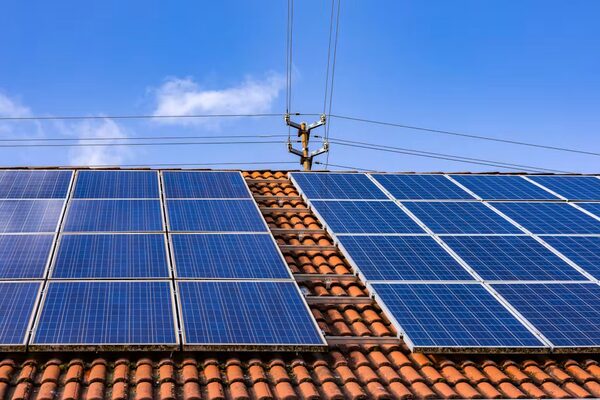
A household that generates its own electricity in Northern Ireland can sell surplus back. The official position on micro-combined heat and power states that Power NI will buy back electricity which is spilled onto the grid, but at a cost which is below the supply cost12. That single sentence sets the economics: export is possible, and it is paid at less than the retail rate.
The general principle applies across technologies. Independent guidance states that domestic and business customers can sell any electricity they do not need back to the grid13. For small-scale wind, official guidance says any unused or excess electricity can be exported to the grid and sold to the local electricity supply company14. For solar, the Energy Saving Trust states that surplus can be sold back to the grid through the Smart Export Guarantee15.
Power NI's own export arrangement is specific: it offers an annual fixed price for export generators up to 50 kW16. That is a fixed price set annually rather than a market-linked rate, and the 50 kW ceiling places it well above typical domestic generation.
| Export route | Position |
|---|---|
| Power NI buyback | Buys back spilled electricity, at a cost below the supply cost12 |
| Power NI export scheme | Annual fixed price for export generators up to 50 kW16 |
| Solar surplus | Sold back through the Smart Export Guarantee15 |
| Small-scale wind | Excess exported and sold to the local supply company14 |
| General domestic and business | Surplus can be sold back to the grid13 |
Larger connections run through the network operator. Northern Ireland Electricity Networks handles connections for businesses or farms, and for solar, wind and other generation17. That is the route for anything beyond a domestic-scale installation.
For independence, export is a partial offset rather than a substitute for supply. A household that exports is still buying its electricity from a supplier and still dependent on the grid for both import and export. The buyback price being below the supply cost means the value of self-generation lies mainly in what it displaces, not in what it sells.
Bills, payments and Direct Debit explained
Power NI's monthly Direct Debit is calculated on historical energy use to forecast costs for the next 12 months for existing customers, or on property details for new customers18. That forecasting basis explains why a Direct Debit amount can sit above or below actual usage in any given month: it is a smoothed figure, reviewed against a 12-month projection rather than a monthly actual.
Paying by monthly Direct Debit and taking the bill online carries a discount. Power NI states that choosing monthly Direct Debit and online billing means a saving of up to 6%16. Its price list puts a figure on it: customers choosing monthly Direct Debit and online billing together get a 6% discount, up to £15 per quarter or £60 per year, based on a quarterly bill of £2506. The £60 annual figure is therefore tied to that £250 quarterly bill, not to every household's usage.
| Payment feature | Detail |
|---|---|
| Direct Debit basis | Historical use for existing customers, property details for new18 |
| Combined discount | 6%, up to £15 per quarter or £60 per year6 |
| Discount condition | Monthly Direct Debit and online billing together6 |
| Credit refunds | Not automatic; requested by contacting Power NI18 |
| Customer Helpline | 08000 285 455, Monday to Friday 9am to 5pm6 |
Credit balances are not refunded automatically. Power NI states that a refund can be requested by contacting the company, and that credit may reflect seasonal usage18. A balance built up over a high-usage winter and drawn down in summer is a normal pattern rather than an error, which is why the refund is on request.
Changing the bank account a Direct Debit is taken from is done within the online account. Power NI's steps are to log in, go to My Account and select My Details, then Payment Details, click update, and edit the account number and sort code before saving19. Only those two fields are editable in that process.
For independence, the payment structure is a dependence on a supplier's forecasting and on a bank mandate. The 6% discount is a real reduction, but it is conditional on both Direct Debit and online billing, and it is capped at the £15 per quarter figure on a £250 bill6.
Moving in, moving out and switching: what to register and when
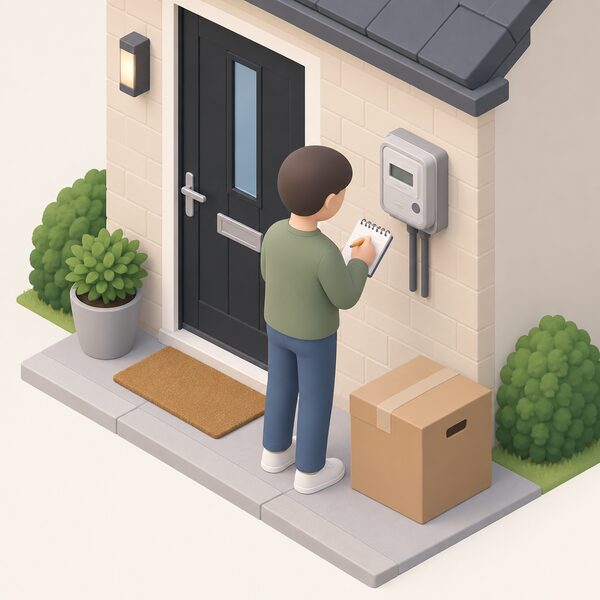
Power NI's moving process is built around meter identifiers. For a move in, the supplier needs the new address, the Meter Point Reference Number (MPRN) or Keypad Premise Number (KPRN) and the moving in date, plus bank details and an opening meter read for bill pay customers; if the MPRN or KPRN is unknown, the meter serial number can be used instead20. For a move out, it needs the date you are moving out, a final meter read if the property has a bill pay meter, and a forwarding address21.
Existing customers moving house need a slightly longer list:
- The account number and MPRN or KPRN for the existing address.
- The new address, MPRN or KPRN and moving in date.
- A final meter read if the old property has a bill pay meter.
- An opening meter read if the new property has one.
- Bank details if the new property has a bill pay meter20.
Power NI's checklist for a move lists the move-out date, the final meter reading for bill pay meters, the new address, the MPRN or KPRN for the new home, the move-in date, and the opening meter reading at the new home if it has a bill pay meter5.
One rule catches people out: if you are moving to a property registered with another electricity supplier, Power NI asks you to contact them21. The account at the new address belongs to whoever supplies it, and a move does not automatically transfer it.
Meter readings are submitted by contacting Power NI with the reading5. The reading window exists because a reading only aligns the bill if it falls near the end of the billing period; a read taken well outside it leaves part of the period on estimate.
For independence, moving is the moment a household has the most leverage: the new property's supply can be set up with any of the five suppliers, and Power NI's lack of exit fees means the choice is not locked in afterwards. The mechanics of switching are covered in moving home and your energy supplier and final bills and credit refunds.
Support if you're struggling to pay, and extra customer care services
Support in Northern Ireland runs through referral rather than a supplier fund alone. Official guidance describes energy suppliers referring customers who are struggling to pay bills to organisations like Advice NI, which offers free, independent debt advice22. That means the first step for a household in difficulty is a conversation with the supplier that produces a referral, not a separate application.
There is also an independent advice service. NI Energy Advice offers independent and impartial energy advice to domestic householders in Northern Ireland, plus referrals to energy grants and other sources of help23. The service is funded by the Department for Communities and delivered by the Housing Executive25. It is free to domestic householders in Northern Ireland23.
On the network side, Northern Ireland Electricity Networks runs a Critical Care information service for vulnerable customers26. That is separate from the supplier relationship and covers the network's own obligations to customers who depend on electricity for medical or mobility reasons.
| Support route | What it provides |
|---|---|
| Supplier referral | Referral to organisations like Advice NI for free, independent debt advice22 |
| NI Energy Advice | Independent, impartial energy advice and referrals to grants23 |
| NI Energy Advice delivery | Funded by the Department for Communities, delivered by the Housing Executive25 |
| Network support | Critical Care information service for vulnerable customers26 |
Northern Ireland also had a distinct energy price support arrangement. The Northern Ireland EPG support provided a discount of up to 13.6 p/kWh for electricity and 3.9 p/kWh for gas in Q1 202327. That was a temporary scheme, and the figures are historical.
For independence, support services reduce the risk of a household losing supply over debt, but they do not change the underlying dependence on a supplier and a grid. The wider framework of supplier obligations is covered in supplier support for vulnerable customers and supplier hardship funds and trusts.
Beyond supply: EV chargers, solar and battery storage in Northern Ireland
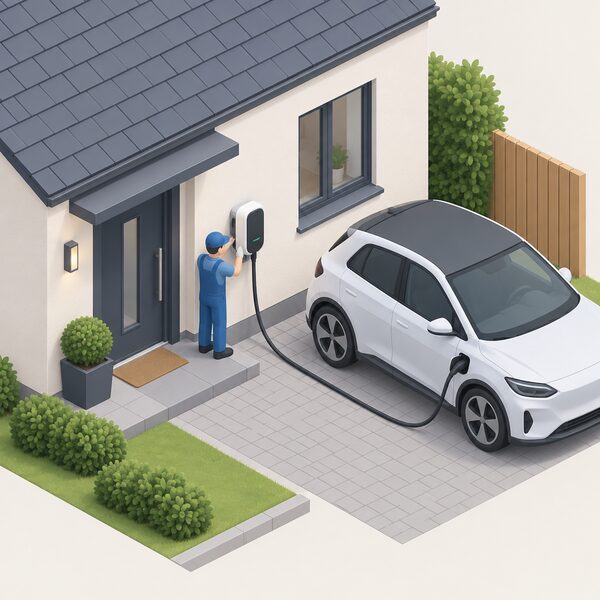
Power NI operates beyond supply through its solar installation service, which it describes as supported by Northern Ireland's leading energy provider and available in Northern Ireland16. That places the company in the position of both supplier and installer for a household that adds generation.
The charging picture in Northern Ireland is thinner than in Great Britain. As of 1 July 2026, Northern Ireland had 60.0 total EV chargers per 100,000 population, of which 19.3 were rapid or above28. Independent statistics for August 2026 record Northern Ireland with 371 EV chargers29. Those two figures measure different things, one a rate per head of population and one a count, and they are not directly comparable.
For households without off-street parking, there is a specific route. Official guidance states that if you live in Northern Ireland, own an electric vehicle and need a way to charge it at home across a pavement, you can apply for electric vehicle cross-pavement charging30. Grants are also available: the electric vehicle chargepoint grant for renters and flat owners has territorial extent in Northern Ireland, and the guidance notes that DfT and OZEV have numerous grants available in Northern Ireland towards the installation of EV charge points and infrastructure31.
| Beyond-supply item | Northern Ireland position |
|---|---|
| Power NI solar installation | Available in Northern Ireland16 |
| Public EV chargers | 60.0 per 100,000 population, 19.3 rapid or above, as of 1 July 202628 |
| EV charger count | 371 chargers, August 202629 |
| Cross-pavement charging | Application route available in Northern Ireland30 |
| Chargepoint grants | DfT and OZEV grants available in Northern Ireland31 |
| Generation connections | Northern Ireland Electricity Networks connects solar, wind and other generation17 |
Heating technologies in Northern Ireland are covered separately by official guidance on technologies suited to a home, biomass, and insulation23. Those sit alongside the electricity supply decision rather than within it.
For independence, the beyond-supply services are where a household can reduce its dependence on the grid, but only partially. Solar generation with export still relies on the grid for import and for the buyback route, and an EV charger is a new electrical load rather than a source of independence. The full picture of what a supplier relationship can and cannot deliver is set out in energy suppliers and household energy independence.
Sources31 cited
- Electricity suppliers in Northern Ireland, Northern Ireland Electricity Networks
- Power NI electricity tariff, Power NI
- Power NI tariff announcement September 2025, Power NI, 2025-09-05
- What is the energy price cap, Energy Saving Trust
- Moving house checklist, Power NI, 2025-07-30
- Power NI pricing, Power NI
- Electricity suppliers FAQ, Northern Ireland Electricity Networks
- Switching your energy supplier, Energy Saving Trust
- Domestic electricity consumption indicator, Office for National Statistics
- Domestic electricity consumption indicator, Office for National Statistics
- Switching electricity or gas supplier, Consumer Council for Northern Ireland
- Micro combined heat and power, nidirect
- Renewable energy, Electricity North West
- Wind, nidirect
- Solar power facts, Energy Saving Trust
- Power NI solar, Power NI
- Connections, Northern Ireland Electricity Networks
- Monthly Direct Debit, Power NI
- Change the bank account my Direct Debit is taken from, Power NI
- Moving house electricity, Power NI
- I'm moving house, what do I need to do, Power NI
- Advice if you're struggling to pay your energy bills, nidirect
- Energy efficiency tips, nidirect
- Energy saving grants in your area, nidirect
- NI Energy Advice, Northern Ireland Housing Executive
- Advice for vulnerable customers, Northern Ireland Electricity Networks
- Northern Ireland energy price support, House of Commons Library
- Public electric vehicle charging infrastructure statistics, Department for Transport, 2026-07-01
- EV charging statistics, Zapmap, 2026-08
- Apply for electric vehicle cross-pavement charging, nidirect
- Electric vehicle chargepoint and infrastructure grants, Department for Infrastructure
 Power NIPower NI is Northern Ireland's largest electricity supplier, with no fixed contracts or exit fees, a 2% online account discount, and a 9.64p/kWh export tariff approved by the Utility Regulator.