

In this answer
Short answer
No. The Ofgem energy price cap does not apply in Northern Ireland. Ofgem's cap covers England, Scotland and Wales only, and the Energy Saving Trust states the position plainly: "No, the price cap only applies to England, Scotland and Wales"1. Household energy bills in Northern Ireland are regulated separately and are not currently subject to Ofgem's price cap2. The Energy Saving Trust repeats the point for households directly: "The Ofgem energy price cap doesn't apply to households in Northern Ireland"3.
That matters because the headline figure most households recognise, £1,723 a year for a typical dual fuel household from 1 October to 31 December 2026, is a Great Britain number4. It describes a typical direct debit dual fuel home in England, Scotland or Wales, not a home in Belfast, Derry or Newry. Northern Ireland suppliers set their tariffs independently to reflect their own operating costs, and the Energy Price Guarantee figures published for Northern Ireland, around £2,109 per year for a typical household using electricity and mains gas, come from a different support mechanism entirely5.
The practical consequence is that a Northern Ireland household cannot rely on the GB cap level, the GB review timetable or the GB prepayment cap when judging its own bill. What applies instead is the Utility Regulator's own review process, and the last review of energy tariffs in Northern Ireland was September 20261.
What the price cap actually is
The price cap is a limit on the unit rates and standing charges a supplier can charge on a default or standard variable tariff, not a cap on the total bill a household pays. Ofgem, the regulator for Great Britain, first introduced the price cap in 2019 because of concerns that customers on default tariffs were paying too much1. It applies where a customer has not signed up for a fixed-term contract with their supplier, which is why it is often described as a cap on loyalty penalties rather than on consumption8.
The cap is not a single flat UK rate. Ofgem sets different caps for different parts of the country, so a household in Merseyside and North Wales will pay substantially more than one in London for the same consumption6. Regional variation is built into the design, reflecting the different costs of distributing electricity and gas across network areas. Standing charges vary too: the Northern Scotland electricity standing charge was 57.55p per day for 1 July to 30 September 20269.
The legal basis constrains what Ofgem can do. Under the Act, Ofgem cannot set different cap levels for different suppliers and must protect default tariff customers10. That is a protection for households on variable tariffs, but it also means the cap cannot be used to favour one supplier over another or to target support at particular groups.
For a household's energy independence, the cap is a floor under the worst of the market rather than a route to self-sufficiency. It limits what a supplier can charge a passive customer, but it leaves the household exposed to wholesale prices, network costs and policy levies that flow through the cap level each quarter. It does nothing to reduce consumption, and it does not apply at all in Northern Ireland.
Current level: £1,723 a year for a typical dual-fuel home
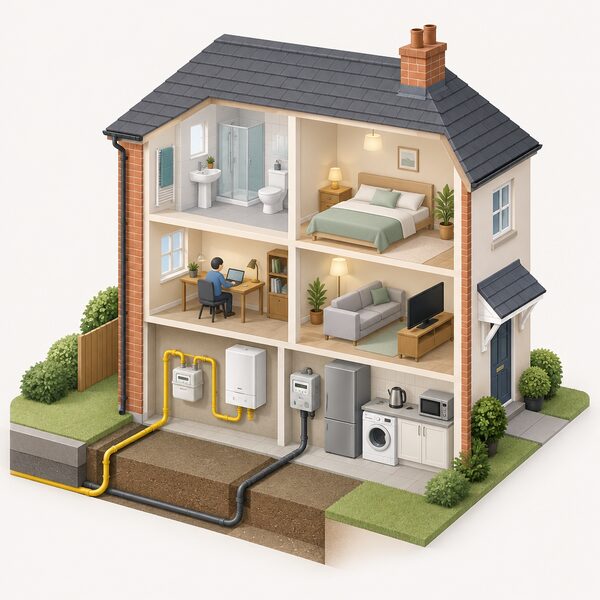
The cap level that most households recognise is the annual figure for a typical dual fuel home paying by Direct Debit. From 1 October to 31 December 2026 it is £1,723, a rise of around £60 a year from the previous level of £1,663, and a 4% increase4. The same figure is reported across the market: the cap rises 4% from 1 October, taking a typical annual bill from £1,663 to £1,7234.
The £1,723 figure is an average across GB regions and usage patterns, not a bill any particular household will receive. It assumes typical consumption and direct debit payment. Households that use more, or pay by other means, will see different totals. The cap also has a separate prepayment level: for cap period 15 the prepayment cap rose from £1,672 to £1,707, a £35 or 2% increase compared with period 14b11.
Northern Ireland sits outside all of this. The Energy Price Guarantee figures published for Northern Ireland describe a typical household using electricity and mains gas seeing a bill increase from £1,952 to £2,109 on an annual equivalent basis5. That is a different scheme, applied in a different jurisdiction, and it should not be read as a Northern Ireland equivalent of the £1,723 cap.
| Figure | Value | Applies to | Period |
|---|---|---|---|
| GB cap, direct debit | £1,723 a year | Typical dual fuel household | 1 Oct to 31 Dec 20264 |
| GB cap, prepayment | £1,707 a year | Prepayment customers | Cap period 1511 |
| NI typical bill under EPG | around £2,109 a year | Electricity and mains gas household | Published 20265 |
| GB households covered | around 20 million | Variable tariff customers | 20266 |
How and when the cap is reviewed
Ofgem reviews the price cap every three months to reflect changes in wholesale prices7. The review dates are published in advance, which gives households a predictable calendar even though the outcome is not predictable. The review for the January to March 2027 cap period is due on 25 November 2026, the review for April to June 2027 on 23 February 2027, and the review for July to September 2027 on 26 May 20271.
Each review produces a new cap level for the following quarter, and the level can rise or fall. The cap limited the average annual household bill to £1,717 for October to December 2024, which was higher than pre-energy crisis levels and a 10% rise, an additional £14912. That history shows how far the cap has moved and why the quarterly announcement is watched so closely.
Northern Ireland does not follow this calendar. The last review of energy tariffs in Northern Ireland was September 2026, conducted through the Utility Regulator rather than Ofgem1. The Northern Ireland Sustainable Energy Programme, an £8 million fund collected from domestic and non-domestic customers, is administered under that separate framework13.
What Ofgem can and cannot do for households

Ofgem's remit is wide but bounded. It administers 12 schemes on behalf of the UK government and the devolved administrations, and it has formal enforcement powers that can include opening investigations, making orders and imposing penalties14. It monitors supplier compliance closely and states it will continue to take firm action against suppliers who fall short of their requirements11. It also has information gathering powers under the ECO4 Order, allowing it to require suppliers to provide information about proposals, evidence of compliance and costs of achieving obligations15.
What Ofgem does not do is handle individual consumer complaints. The Energy Ombudsman is approved by Ofgem to deal with consumer complaints about energy bills, mis-selling, problems with energy supply and problems with switching supplier16. Ofgem's own consumer-facing role is to publish guidance and to regulate suppliers, not to adjudicate a household's dispute.
For households in difficulty, Ofgem's guidance sets out what a supplier can be asked to do: agree a payment plan, a payment break or a reduction, review payments and debt repayments, and give access to hardship funds17. That guidance is aimed at households struggling to pay for energy or expecting to get into difficulty. It applies in Great Britain.
Ofgem's role is also changing. A new set of three equal principal objectives will be introduced, focusing on the interests of existing and future consumers, net zero and growth18. From January 2026, Ofgem will begin regulating heat networks19. Neither change extends the price cap to Northern Ireland.
"Under the Act we cannot set different cap levels for different suppliers and must protect default tariff customers"
Where the GB cap stops and the NI framework begins
The dividing line is regulatory, not geographic convenience. Ofgem's cap applies to around 20 million GB households on variable tariffs6. Northern Ireland households are regulated separately, and the Energy Price Guarantee operated there on different terms, with suppliers free to set tariffs independently to reflect their costs of operating5. The additional backdated support provided under that scheme ended in March 20235.
For a Northern Ireland household, the practical questions are different. There is no GB cap level to compare against, no quarterly Ofgem announcement to wait for, and no prepayment cap set by Ofgem. The Northern Ireland Energy Advice Service can be contacted on 0800 111 4455, open 9am to 5pm Monday to Friday, for advice on schemes and support13.
VAT treatment also diverges. Ofgem states that VAT of 5% on gas is included in the price cap calculation from 1 October 2026 to 31 March 202720. In Northern Ireland, qualifying supplies of electricity remain liable to VAT at the reduced rate of 5%20. The headline rate on electricity is the same, but the schemes and the caps around it are not.
A household in Northern Ireland that wants to understand its own tariff position should look to the Utility Regulator's framework and to energy tariffs in Northern Ireland rather than to the GB cap. Households in Great Britain comparing their options can start from the UK energy tariffs pillar and the rules on tariff rules and consumer protections.
Sources20 cited
- What is the energy price cap, Energy Saving Trust, 2026
- Billing Me Softly, Resolution Foundation, 2026
- Switching your energy supplier, Energy Saving Trust, 2026
- Dual fuel, Confused.com, 2026
- Energy Price Guarantee up until 30 June 2023, GOV.UK, 2026
- Ofgem price cap, End Fuel Poverty Coalition, 2026
- The history of Ofgem's energy price cap, Energy Helpline, 2026
- Research briefing CBP-10958, House of Commons Library, 2026
- Gas and electricity standing charges, Confused.com, 2026
- Energy price cap operating cost and debt allowances decision overview, Ofgem, 2025
- Summary of changes to energy price cap 1 October to 31 December 2025, Ofgem, 2025
- Energy bills support: an update, National Audit Office, 2024
- NISEP List of Schemes 2026-27, Utility Regulator, 2026
- Supplier Performance Report Jul-Dec 2023, Ofgem, 2024
- ECO4 guidance supplier administration guidance, Ofgem, 2025
- Problems with services, Isle of Anglesey County Council, 2025
- Get help with your home or business energy bills, Ofgem, 2026
- Ofgem review final report, GOV.UK, 2026
- Research briefing SN06163, House of Commons Library, 2026
- VAT on fuel and power notice 701/19, HMRC, 2026
 Utility Regulator NIWho sets your energy prices in Northern Ireland and who can you complain to?
 Tariffs in Northern IrelandWhy does Northern Ireland have its own energy tariffs instead of the Ofgem price cap?
 Energy Bills in Northern IrelandNorthern Ireland has no price cap.
 OfgemOfgem sets the rules energy suppliers and network companies must follow, including the price cap on standard tariffs.
 Devolved vs Reserved PowersWho decides what you pay for gas and electricity, and who decides how your home is insulated or improved?
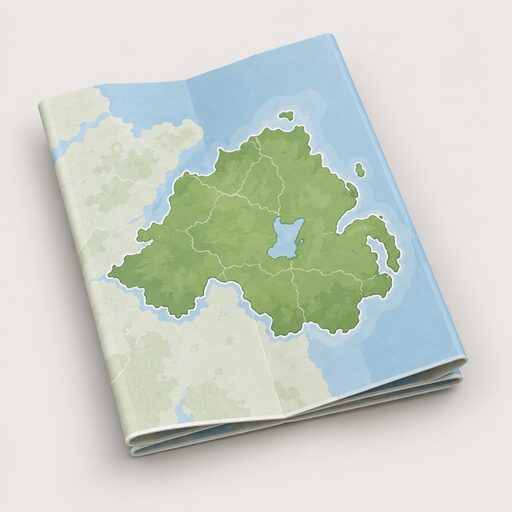 Suppliers in Northern IrelandNorthern Ireland runs its own energy market, with its own regulator, its own suppliers and no price cap.