
In this guide
Northern Ireland runs its own energy tariff market. The Ofgem energy price cap does not apply to households there, and instead a tariff review process overseen by the Utility Regulator sets the equivalent of the cap1. Suppliers in Northern Ireland have the flexibility to set their tariffs independently to reflect their own operating costs, which is why the unit rates a household pays are set supplier by supplier rather than by a single national ceiling2.
The practical effect is that a Northern Ireland householder cannot look up a single capped figure and know what energy should cost. The Energy Saving Trust publishes Northern Ireland savings figures based on current energy supplier tariffs for Northern Ireland, precisely because the Ofgem price cap does not apply there3. Around 30.8p per kWh is the average standard electricity rate in Northern Ireland as of 1 November 2025, with an average Economy 7 on-peak rate of 35p per kWh and an off-peak rate of 16.7p per kWh3.
The market is also smaller and more concentrated than Great Britain's. Official statistics on domestic electricity supplier shares excluded Northern Ireland because competition is still limited in scope for domestic customers4. That history shapes everything that follows: fewer suppliers, a regulator-led review rather than a cap, a prepayment product with its own rules, and a gas network that only reaches certain towns.
How Northern Ireland's electricity market differs from Great Britain's
The structural difference is regulatory. In Great Britain, Ofgem sets maximum prices for a unit of energy and daily standing charges for customers in each energy supply region7. In Northern Ireland, the Utility Regulator regulates energy suppliers and sets the equivalent of the price cap1. The mechanism is a tariff review rather than a formulaic cap, and the outcome is a set of supplier tariffs that can move at different times and by different amounts.
That difference has been visible in the official statistics for over a decade. The quarterly energy price publication excluded Northern Ireland from its domestic electricity supplier type and payment method table because competition was still limited in scope for domestic customers4. An earlier edition used the same reasoning, excluding the region from its supplier type table for the same reason8. Competition has widened since, but the market remains distinct.
The Energy Price Guarantee, which capped unit rates across Great Britain, was applied in Northern Ireland through a separate legal route. Domestic energy price reduction schemes for Northern Ireland were funded by reducing the amount that would otherwise be charged for NI domestic electricity supply by licensed electricity suppliers who were parties to the scheme9. The Northern Ireland Regulator may give an NI domestic electricity supplier directions in relation to the supplier's performance of the terms of the designated scheme9. The schemes were intended for customers on domestic tariffs, with some non-domestic premises with similar metering and tariff arrangements in scope, including places of worship, some farms and small businesses operating from former dwelling-houses9.
For a household's energy independence, the distinction matters in one direction: there is no national ceiling to fall back on, so the tariff a household chooses, and the supplier it chooses, carries more of the weight. The dependence on a supplier and on the regulated review process remains either way.
What electricity costs per kWh in Northern Ireland
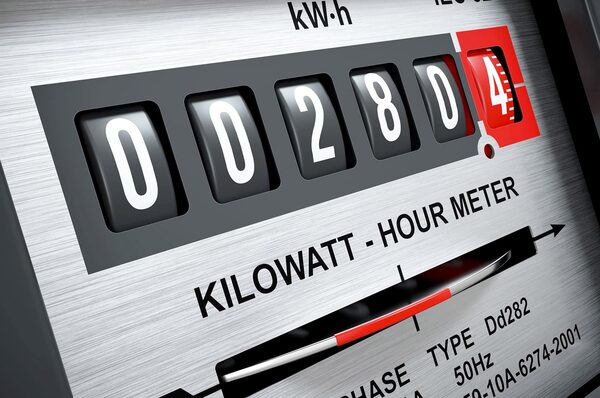
Average figures give the shape of the market. As of 1 November 2025, the average standard electricity rate in Northern Ireland was 30.8p per kWh, with a standing charge of £8 a year3. The average Economy 7 on-peak rate was 35p per kWh and the off-peak rate 16.7p per kWh, with a standing charge of £50 a year3. Those are averages across suppliers, not a tariff any one household can buy.
For comparison across fuels, the same dataset puts Northern Ireland gas at an average of 9.0p per kWh, oil at 5.5p per kWh, LPG at 11.3p per kWh, wood pellet at 6.8p per kWh and coal or solid fuel at 6.5p per kWh3. Electricity is the most expensive unit of the set, which is the central fact for any household weighing a heat pump or an electric vehicle against a fossil fuel alternative.
| Fuel | Average unit rate, 1 November 2025 |
|---|---|
| Electricity, standard | 30.8p per kWh3 |
| Electricity, Economy 7 on-peak | 35p per kWh3 |
| Electricity, Economy 7 off-peak | 16.7p per kWh3 |
| Gas | 9.0p per kWh3 |
| Oil | 5.5p per kWh3 |
| LPG | 11.3p per kWh3 |
| Wood pellet | 6.8p per kWh3 |
| Coal or solid fuel | 6.5p per kWh3 |
The Consumer Council's comparison table gives a named product figure. Power NI Keypad is listed at 33.290p per kWh, with an annual cost of £1,065 using 3,200 units, as of 18 September 20265. The same table records the Keypad discount as equivalent to 2.5% off the standard rate5. Power NI's own guidance describes that discount as 2.5% off the standard rate, ongoing10.
VAT sits at 5% on qualifying supplies of electricity in Northern Ireland6. That is the reduced rate, and it applies to domestic electricity there. The Consumer Council's Economy 7 table states that annual costs are calculated using a typical annual consumption of 3,200kWh, based on unit rate and standing charge where applicable and including VAT at 5%11.
Economy 7: on-peak and off-peak rates
Economy 7 in Northern Ireland splits the day into a more expensive on-peak rate and a cheaper off-peak rate, with a higher standing charge than a single-rate tariff. The average figures as of 1 November 2025 are 35p per kWh on-peak, 16.7p per kWh off-peak and a £50 a year standing charge, against 30.8p per kWh and £8 a year on the standard rate3. The gap between the two standing charges is the first thing a household has to clear before the cheaper night rate pays for itself.
Named Economy 7 products show the same structure. Power NI Keypad (E7) is listed at 38.610p per kWh during the day, 18.460p per kWh at night, with a standing charge of 14.050p per day, as of 18 September 202611. The Consumer Council notes that these discounts apply only up to £250 per quarter, or £1,000 per year, with usage beyond that charged at the standard rate11.
| Economy 7 figure | Value | Date |
|---|---|---|
| Average on-peak rate | 35p per kWh3 | 1 November 2025 |
| Average off-peak rate | 16.7p per kWh3 | 1 November 2025 |
| Average standing charge | £50 a year3 | 1 November 2025 |
| Power NI Keypad (E7) day rate | 38.610p per kWh11 | 18 September 2026 |
| Power NI Keypad (E7) night rate | 18.460p per kWh11 | 18 September 2026 |
| Power NI Keypad (E7) standing charge | 14.050p per day11 | 18 September 2026 |
| Discount threshold | £250 per quarter, £1,000 per year11 | 18 September 2026 |
Independent modelling of Economy 7 assumes 34.38p for on-peak and 15.43p for off-peak, with a 58:42 split between the two periods14. That split is an assumption rather than a measured average, and it shows how sensitive the economics are to how much load a household can actually move into the night window.
The Consumer Council's Economy 7 page states that tariffs will be updated on the date when the new increase or decrease comes into effect, not when announced11. A household watching for a price change therefore sees it on the bill from the effective date, not from the announcement.
For independence, Economy 7 rewards a household that can shift load: storage heating, an immersion on a timer, a car charged overnight. It does nothing for a household whose demand is fixed in the daytime, and the higher standing charge is paid either way. The wider mechanics of night rates are covered in Economy 7 tariffs and time-of-use tariffs.
Prepayment electricity: the Power NI Keypad
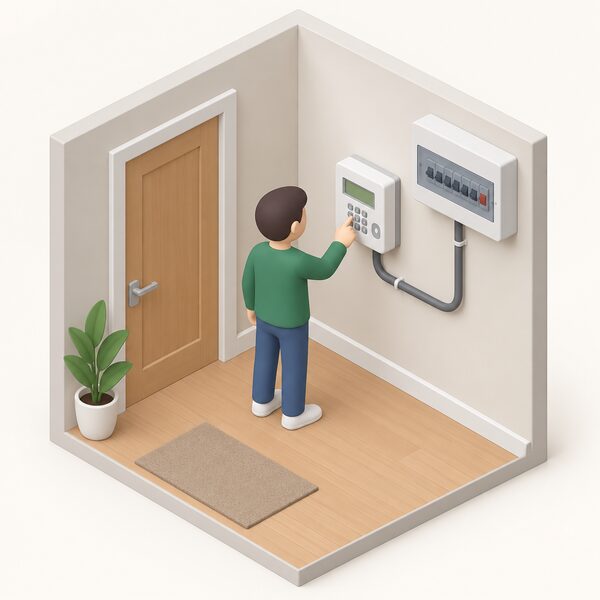
The Keypad is Northern Ireland's pay-as-you-go electricity product, and it works differently from a card meter. Power NI states that Keypad customers do not receive a quarterly bill, and that there is no rental fee, no security deposit and free installation10. The meter takes a Powercode, usually a 20-digit number, bought as a top-up10.
Top-up channels are broad. Power NI lists online at powerni.co.uk, the Customer Helpline 24 hours a day, any Post Office or PayPoint, or the Power NI app for iPhone and Android10. A Keypad card is not required: Power NI states that if the card is lost, top-up can still be made without it, and that there is no charge for replacement cards15.
A guest top-up needs the 19-digit Keypad Premise Number (KPRN), which usually begins with 9826908501, plus the postcode, with no registration required15. The KPRN identifies the meter, so it stays with the property.
Rewards are tiered. The Eco Energy Keypad product offers top-up options starting from £5, with £1 of free electricity for a top-up of £50 to £79 and £2 for a top-up of £80 to £12416. The Consumer Council's table records Keypad reward as free electricity from £1 to £4 for top-ups between £50 and £175 online or through the app5.
| Top-up band | Reward |
|---|---|
| From £5 | Minimum top-up option on Eco Energy Keypad16 |
| £50 to £79 | £1 of free electricity16 |
| £80 to £124 | £2 of free electricity16 |
| £50 to £175 online or through the app | Free electricity from £1 to £45 |
Arrears recovery is capped. Power NI states that where a meter is set to collect arrears with each top-up, this will not be more than 20% of each top-up, and gives the example that with a 20% recovery rate a £10 top-up gives £8 credit on the meter and £2 paid off the outstanding balance10. Customers with arrears receive an annual account statement10. Installation of a prepayment meter without express agreement is used only as a last resort in the debt recovery process10.
Support schemes: the Energy Price Guarantee and household discounts
The Energy Price Guarantee reached Northern Ireland through ministerial directions rather than through the Great Britain scheme documents. The published set includes a scheme document for domestic electricity consumers in Northern Ireland, a scheme document for domestic gas consumers in Northern Ireland, and ministerial directions17. The directions were given under section 22 of the Energy Prices Act 20229.
The discount levels changed quarter by quarter.
| Period | Electricity discount | Gas discount |
|---|---|---|
| October to December 2022 | Up to 19.9p per kWh2 | Up to 4.8p per kWh2 |
| January to March 2023 | Up to 13.6p per kWh2 | Up to 3.9p per kWh2 |
| April to June 2023 | Up to 3.8p per kWh2 | Up to 2.6p per kWh2 |
The discount rates to three decimal places in Northern Ireland were 3.770p per kWh for electricity and 2.603p per kWh for gas2. The additional backdated support ended in March 20232.
Separately, all households in Northern Ireland received a one-off £600 payment to help with energy bills in winter 2022/23, made up of the £400 Energy Bills Support Scheme plus the £200 Alternative Fuel Payment18. The £400 discount on energy bills for households in Northern Ireland was the subject of its own legislation19. The Energy Price Guarantee itself was open to all households with a domestic gas and or electricity contract18.
A later scheme was announced to cut energy bills in Northern Ireland by £30 a year per household4. Households struggling to pay can find official advice through nidirect20, and NI Energy Advice offers free independent and impartial energy advice to domestic householders in Northern Ireland21.
Comparing tariffs: the Consumer Council's free comparison tool

The Consumer Council offers an energy price comparison tool to compare electricity and gas tariffs for all suppliers in Northern Ireland20. It is free to use and covers the whole market rather than a panel of suppliers.
The comparison table carries named products with unit rates, standing charges and annual costs. Power NI Keypad appears at 33.290p per kWh and £1,065 a year using 3,200 units, as of 18 September 20265. The Economy 7 table carries the Power NI Keypad (E7) day and night rates and the £250 per quarter discount threshold11.
Two cautions apply to any comparison. First, the annual cost basis is a typical consumption figure, not a household's own: the Economy 7 table uses 3,200kWh a year including VAT at 5%11. Second, tariffs move on their effective date rather than their announcement date, so a table is a snapshot11.
For a household's independence, the comparison tool is the main lever available in a market without a price cap. Choosing between suppliers is the substitute for waiting for a national ceiling to move. The general mechanics of comparing annual costs and projections are set out in comparing energy tariffs, and the prepayment market more broadly in prepayment and pay as you go tariffs.
Gas tariffs alongside electricity: the Ten Towns comparison
Gas in Northern Ireland is not a single national network. The Consumer Council publishes a separate comparison for the Ten Towns area, and states that its tables compare all gas tariffs available in the Ten Towns area and are correct on the day of comparison22. Prices are given for 17/09/2026 including VAT of 5%22.
The same source gives indicative annual bills: £1,121 for electricity and £1,060 for gas in the Ten Towns area, dated 4 September 202622. A separate figure of £1,093 for electricity applies to Greater Belfast and West22. These are area-specific, which is the point: a household outside a gas network area cannot take a gas tariff at all, and its heating options are oil, LPG, solid fuel, wood pellet or electricity.
| Area | Indicative annual electricity bill | Indicative annual gas bill |
|---|---|---|
| Ten Towns | £1,12122 | £1,06022 |
| Greater Belfast and West | £1,09322 | Not given in this figure22 |
The Utility Regulator's last review of energy tariffs in Northern Ireland was September 202622. A tariff change for Firmus Energy in Greater Belfast is scheduled for 08 October 202622. That pattern, a review followed by supplier-specific changes on different dates, is what a household in a gas area has to track.
The dependence here is physical as well as commercial. A household in a Ten Towns gas area depends on a network and a supplier; a household outside one depends on delivered fuel and on the supplier of that fuel. Neither is self-sufficiency, and the gas network's reach is the constraint that no tariff choice can remove.
Who regulates tariffs and how price changes reach your bill
The Utility Regulator regulates energy suppliers and sets the equivalent of the price cap in Northern Ireland1. The Energy Saving Trust describes the same arrangement as a tariff review process that the Utility Regulator oversees1. There is no Ofgem cap to appeal to.
Price changes reach a bill through directions and supplier decisions. Directions No. 2 under section 22 of the Energy Prices Act 2022 allow domestic electricity and gas suppliers in Northern Ireland to make tariff changes on days other than the first day of a quarter23. Before that, licensed electricity suppliers were restricted: each licensed electricity supplier was not to set a new tariff or revise an existing tariff for any consumer to take effect on a day other than a quarter day unless it had the consent in writing of the Secretary of State for Business, Energy and Industrial Strategy24. The directions were given pursuant to sections 22(2) and 22(4)(b) of the Energy Prices Act 202225.
Notice to the customer is a separate protection. Power NI states that it will provide 21 days' notice of any tariff change10. The Consumer Council notes that tariffs are updated on the date the new increase or decrease comes into effect, not when announced11.
For a household, the sequence is:
- The Utility Regulator reviews energy tariffs.
- The supplier sets a tariff for its product.
- Notice of the change arrives, with 21 days' notice from Power NI10.
- The new rate applies from the effective date, not the announcement date11.
The dependence on that chain is complete for a grid-connected home. What a household controls is the tariff type it takes and the load it can shift, which is the subject of tariffs and household energy independence.
Complaining about a supplier: where the Consumer Council steps in
The Consumer Council for Northern Ireland is the contact for problems dealing with a fuel supplier26. It gives free advice and can investigate complaints about natural gas and electricity20. The Consumer Council NI and Northern Ireland Energy Advice both give free, independent and impartial energy advice to all domestic householders in Northern Ireland26.
Where a dispute concerns connection or disconnection, the route is statutory. Under Article 27, any dispute between the distributor and the consumer, or another distributor, or the owner of the street electrical fixture, over disconnection or refusal to connect may be referred by any party to the Department27.
Overdue bills are a separate matter with their own guidance28. For households in debt, the practical protections on a Keypad meter are the 20% cap on arrears recovery per top-up, the annual account statement, and the rule that prepayment installation without express agreement is a last resort10.
"It also gives free advice and can investigate complaints about natural gas and electricity"
The limits of what a complaint can achieve are worth stating plainly. The Consumer Council can advise and investigate; it does not set tariffs. The Utility Regulator sets the framework. A household's tariff outcome depends on the supplier's published rates and on which product it has chosen.
Sources28 cited
- Switching your energy supplier, Energy Saving Trust, 2026
- Energy Price Guarantee up until 30 June 2023, GOV.UK, 2026
- Our data, Energy Saving Trust, 2025
- Energy bills support: an update, House of Commons Library, 2026
- Electricity price comparison table, Consumer Council, 2026
- VAT on fuel and power (Notice 701/19), GOV.UK, 2026
- Energy price cap levels, 1 October to 31 December 2025, Ofgem, 2025
- Quarterly Energy Prices, March 2012, Department of Energy and Climate Change, 2012
- Energy Prices Act 2022, legislation.gov.uk, 2022
- Services for prepayment meter customers, Power NI, 2026
- Economy 7, Consumer Council, 2026
- Domestic electricity consumption, Office for National Statistics, 2026
- Domestic electricity consumption, Office for National Statistics, 2025
- Electric heating, Centre for Sustainable Energy, 2026
- I need a new Keypad card, Power NI, 2026
- Eco Energy tariff, Power NI, 2026
- Energy Price Guarantee scheme documents, GOV.UK, 2022
- Energy bills support, House of Commons Library, 2026
- Energy Bills Support Scheme, National Audit Office, 2024
- Advice if you're struggling to pay your energy bills, nidirect, 2026
- Energy efficiency tips, nidirect, 2026
- Ten Towns, Consumer Council, 2026
- Energy Price Guarantee for domestic energy consumers in Northern Ireland: ministerial directions, GOV.UK, 2023
- Energy Price Guarantee for Domestic Electricity Consumers in Northern Ireland, Direction No.1, GOV.UK, 2022
- Energy Price Guarantee for Domestic Electricity Consumers in Northern Ireland Direction No.2, GOV.UK, 2023
- Overdue utility bills, nidirect, 2026
- The Electricity (Northern Ireland) Order 1992, Article 27, legislation.gov.uk, 2012
- What is the energy price cap, Energy Saving Trust, 2026
 Suppliers in Northern IrelandNorthern Ireland runs its own energy market, with its own regulator, its own suppliers and no price cap.
 Energy Bills in Northern IrelandNorthern Ireland has no price cap.
 Devolved vs Reserved PowersWho decides what you pay for gas and electricity, and who decides how your home is insulated or improved?
 Utility Regulator NIWho sets your energy prices in Northern Ireland and who can you complain to?
 NI Gas Tariffs and NetworksHow gas tariffs in Northern Ireland are set by network area, why the Ten Towns area differs from Greater Belfast, when approved changes take effect, and what the Consumer Council comparison tool covers.
 Energy Supply in NICan you get gas where you live in Northern Ireland, and what happens if your power goes off?