
In this guide
firmus energy is the gas supplier that households in Northern Ireland meet twice over: as the company that owns and operates the Ten Towns gas network outside Belfast, and as the supplier selling gas on it. The Consumer Council for Northern Ireland states plainly that "The Ten Towns gas network area in Northern Ireland is supplied exclusively by Firmus Energy"1. That exclusivity is the single most important fact about the company for a householder weighing independence, because it means the network and the retail supply are not separate choices in that area.
The Ten Towns network has been open to competing suppliers since 2015, and none have entered1. Greater Belfast is a different market, served by the Phoenix Energy licence area covering Greater Belfast, Lisburn, County Down, East Antrim and East Down, where firmus energy competes for customers rather than owning the pipes2.
Prices moved from October 2026: firmus energy changed its gas prices by 8.9% in Ten Towns and 12.5% in Greater Belfast1. The Consumer Council lists a Greater Belfast tariff change scheduled for 8 October 20261. New customer offers on the supplier's own price list include a 32% discount for new customers and a £275 welcome credit on the PAYG product, both stated as correct as of 20 September 20261.
What firmus energy is and who owns it
firmus energy is a Northern Ireland gas business rather than part of the Great Britain supply market. It operates the Ten Towns network and sells gas on it, and it also sells in the Greater Belfast area where the network belongs to Phoenix Energy. The distinction matters because network ownership and supply are regulated differently, and because a household in Ten Towns cannot choose a different gas supplier in the way a household in Greater Belfast can.
The published material does not give a parent company for firmus energy in the way it does for the large GB suppliers. For comparison, the ownership structures that dominate the wider UK market are set out in who owns which energy supplier, where Octopus Energy is majority owned by Octopus Group (UK) and EDF Energy is majority owned by Électricité de France, itself wholly owned by the French government3. firmus energy sits outside that pattern: it is a regional operator, and its scale is regional too.
That regional character shapes what a household gets. A Ten Towns customer deals with one company for both the pipe and the gas, which simplifies billing and connection but removes the competitive pressure that a choice of supplier creates. A Greater Belfast customer has the opposite arrangement: the network is Phoenix Energy's, and firmus energy is one of several suppliers competing for the account. The wider structure of the separate Northern Ireland market is covered in energy suppliers in Northern Ireland.
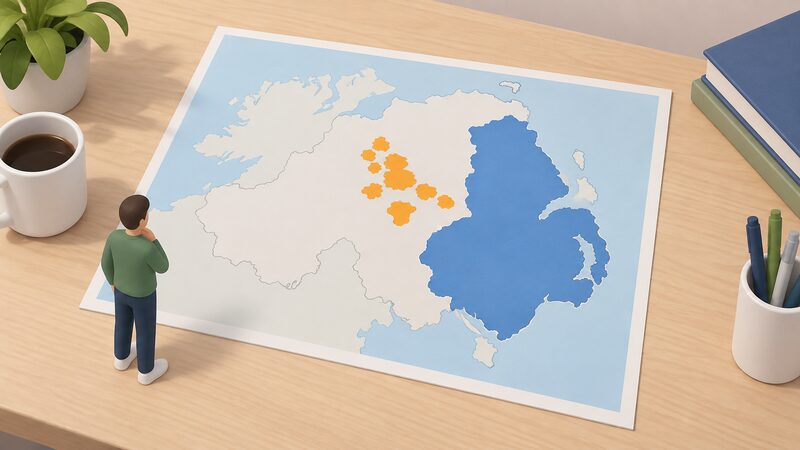
Supply areas: Greater Belfast and the Ten Towns network
The two supply areas behave differently, and the difference is not cosmetic. In the Ten Towns network area, firmus energy is the exclusive supplier1. The network has been open for other suppliers to compete since 2015, but none have entered, so the exclusivity is a market outcome rather than a permanent legal monopoly. That is a meaningful distinction: the door is open, and no one has walked through it.
In Greater Belfast, the position is competitive. The Phoenix Energy licence area covers Greater Belfast, Lisburn, County Down, East Antrim and East Down, and the NISEP scheme rules for 2026-27 describe funded and part-funded efficiency measures as available in that area only2. The same territorial extent appears in the 2024-25 scheme documentation, which refers to access to the Phoenix Energy licence area4. A household in that footprint therefore has a choice of gas supplier, and firmus energy is one of them.
| Area | Network owner | Supply arrangement | Choice of supplier |
|---|---|---|---|
| Ten Towns | firmus energy | Exclusive supply by firmus energy1 | None in practice, open to entry since 20151 |
| Greater Belfast | Phoenix Energy | Competitive supply2 | firmus energy is one of several suppliers2 |
For a householder, the practical question is which network serves the property. The Energy Networks Association maintains a find-my-network-operator service for that purpose5, and the general question of identifying a supplier is covered in how to find out who supplies your gas and electricity. In Northern Ireland the answer is simpler than in Great Britain: if the property is on the Ten Towns network, firmus energy supplies it; if it is in the Phoenix Energy area, the supplier is a matter of choice.
Tariffs and prices: what is regulated and what has changed
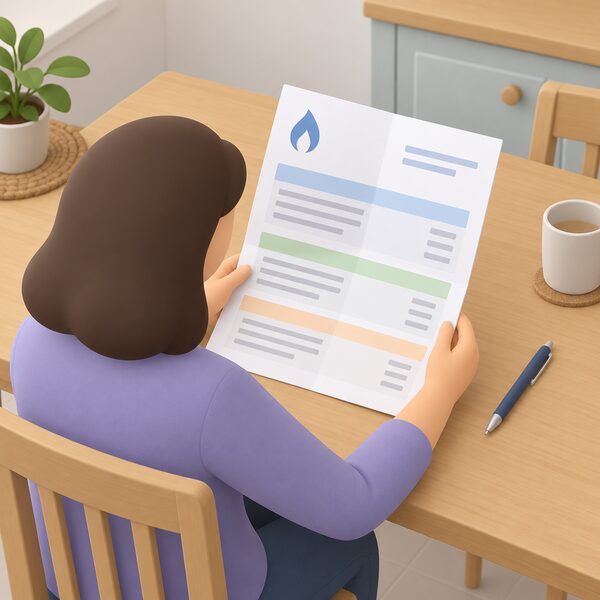
Northern Ireland does not have the price cap that governs Great Britain. The Energy Price Guarantee documentation states that "Energy prices were not capped in Northern Ireland and energy suppliers have the flexibility to set their tariffs independently to reflect their costs of operating"6. That is the structural fact behind every firmus energy price change: the company sets its own tariffs, and the regulator's role is different from Ofgem's in Great Britain.
The most recent change is an increase from October 2026 of 8.9% in Ten Towns and 12.5% in Greater Belfast1. The Consumer Council lists a Greater Belfast tariff change scheduled for 8 October 20261. On the network home credit tariff, the unit rate effective 1 July 2026 is 7.712p per kWh excluding VAT and 8.098p per kWh including VAT, and the two figures are the same rate expressed with and without tax rather than a disagreement1.
| Tariff point | Figure | Effective date |
|---|---|---|
| Ten Towns price change | 8.9%1 | October 20261 |
| Greater Belfast price change | 12.5%1 | October 20261 |
| Greater Belfast tariff change listed by the Consumer Council | Scheduled1 | 8 October 20261 |
| Network home credit unit rate, ex VAT | 7.712p per kWh1 | 1 July 20261 |
| Network home credit unit rate, inc VAT | 8.098p per kWh1 | 1 July 20261 |
The supplier's own price list notes that "Tariffs will be updated on the date when the new increase or decrease comes into effect, not when announced"1. That is a useful rule for a householder watching for a change: the announcement date and the effective date are not the same, and the bill follows the effective date.
For context on how Northern Ireland gas pricing compares with the rest of the UK, the Consumer Council maintains a gas price comparison tool3, and the tariff structures across the region's network areas are set out in Northern Ireland gas tariffs. Fixed-rate products, where offered, protect against price changes during the fixed term7, which is the main hedge available to a household facing an uncapped market.
New customer offers: the 32% discount and £275 welcome credit
firmus energy's acquisition offers are aimed squarely at switchers. The online credit product carries a 32% discount for new customers only, and the PAYG product carries a £275 welcome credit, also for new customers only, with both figures stated as correct as of 20 September 20261. The eligibility condition is explicit: "You must be a new customer switching to Firmus Energy"1.
The offers are not unique in the Northern Ireland market. Budget Energy runs an £80 discount product with £40 free credit after switchover and £40 after month nine, and a separate £100 loyalty product with credit applied after the first quarterly bill has issued, both for new customers only1. A further Budget Energy keypad Economy 7 product carries a 16% discount with a £40 welcome credit1. That comparison is worth having because it shows the market's offers are structured around switching rather than around loyalty.
A householder comparing offers should read the conditions rather than the headline. A percentage discount applies to a tariff that has just risen, and a welcome credit is a one-off payment rather than a reduction in the unit rate. The general mechanics of supplier rewards are covered in energy supplier rewards and referral schemes, and the Northern Ireland-specific picture in energy suppliers in Northern Ireland.
Switching to firmus energy: process, timing and what you need
Switching gas supplier in Northern Ireland follows the standard sequence: apply, pass the registration and objection window, and take over on an agreed date. The published material does not give a firmus-specific timescale. The nearest official figure is for Feed-in Tariff licensee transfers, which "usually takes around 4-5 weeks"8, and that is a different process with a different regulator behind it, so it should be read as an indication of administrative pace rather than a promise about gas supply.
The steps, in order:
- Apply to firmus energy and confirm the property is on the Ten Towns network or in the Phoenix Energy licence area1.
- Set up the Direct Debit with the new supplier ahead of the takeover date9.
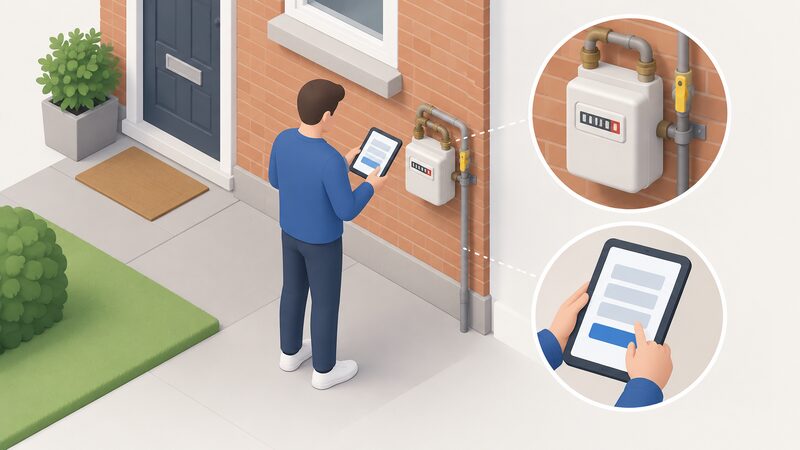
- Take a meter reading at the point of transfer so the two suppliers' bills stay separate.
- Cancel the old Direct Debit only after final bills are paid9.
On payment, the ordering matters: cancelling early can leave a final bill unpaid and complicate the transfer. If a Direct Debit fails, it may be returned unpaid and the bank may levy a charge to cover the additional administration9.
The cancellation right is 14 days. The Consumer Contracts (Information, Cancellation and Additional Charges) Regulations 2013 give a 14 day cancellation period for most off-premises and distance contracts, including energy contracts10. The Renewable Energy Consumer Code applies the same 14 day period to contracts signed in the home or by distance means, running from signature, or up to 14 days from delivery of goods where goods are involved11.
For the wider switching mechanics, including cooling-off rights and what happens if a switch is cancelled, see cooling off period when switching energy supplier and do I need to cancel my Direct Debit when switching.
Connecting to the gas network and converting your home
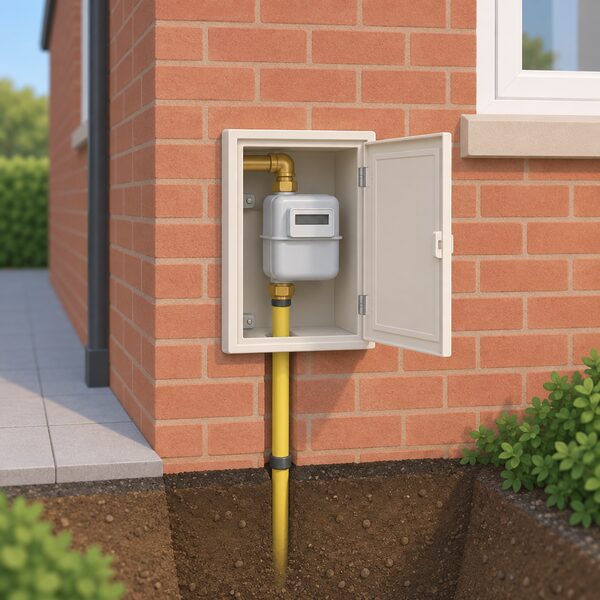
Connecting a property to the gas network is a different exercise from switching supplier, and the published material on it is general rather than firmus-specific. The relevant point for a householder is that network connection and supply are separate transactions: the network operator connects the property, and a supplier sells the gas once it is connected.
The wider case for changing how a home is heated rests on reducing reliance on a single fuel. Official guidance on renewable energy technologies states that they "will help you to meet your own energy requirements and reduce your home's carbon dioxide emissions"12, and separate guidance notes that this "will reduce your reliance on fossil fuels such as gas and oil and therefore reduce your fuel bills & carbon emissions"13. Those are the terms in which a household should weigh a gas connection against an alternative, and they are set out in more detail in energy suppliers and household energy independence.
There is also a demand-side argument. Shifting energy usage away from traditional peak times, which are currently reliant on fossil fuel energy, makes more use of renewables14. A household on a gas connection has limited scope for that kind of shifting, because gas demand is driven by heating and hot water rather than by timing. That is the structural limit of a gas-only arrangement, and it is worth stating plainly alongside the convenience.
Customer service, ratings and how to get in touch
The published material does not carry a firmus energy customer service rating in the way it does for the large GB suppliers. For comparison, Octopus Energy scores 5 out of 5 on customer commitments in independent statistics covering January to March 202615. That is a benchmark rather than a firmus figure, and it should be read as such.
On contact, the company publishes two phone numbers on its own pages, 0808 169 8093 and 0808 169 8092, and the two documents disagree on which is current. Both are maker-published rather than an official register entry, so the number printed on a bill or account letter is the reliable one. The Consumer Council for Northern Ireland handles household gas queries for the region and maintains a gas price comparison tool3, and the general route for a dispute that cannot be resolved is set out in complaining about an energy supplier.

What being a firmus energy customer means for household independence
The independence question has a clear answer in Ten Towns and a more nuanced one in Greater Belfast. In the Ten Towns network area, a household is dependent on a single company for both the pipe and the gas, and the network has been open to competitors since 2015 without any entering1. That is a dependence on one supplier, one network and one fuel, with no competitive alternative available in practice.
In Greater Belfast, the dependence is on gas and on the Phoenix Energy network, but not on a single supplier. A household there can switch between suppliers, which is the ordinary competitive pressure that a Ten Towns household does not have.
Across both areas, the dependence on gas itself remains. Northern Ireland gas prices are not capped, and suppliers set tariffs independently to reflect their costs of operating6, so a household carries the full price risk of the fuel. The October 2026 increases of 8.9% in Ten Towns and 12.5% in Greater Belfast are the most recent illustration1. Support schemes exist but are conditional: the Warm Home Discount requires a household to "be a customer of a participating energy supplier on the qualifying date"16, and the Northern Ireland position on that scheme differs from Great Britain, as set out in Warm Home Discount in Northern Ireland.
The practical position for a householder is therefore this. A firmus energy account delivers a reliable gas supply and, in Greater Belfast, a choice of supplier. It does not deliver independence from the gas network, from gas prices or, in Ten Towns, from a single company. The routes that change that are the ones that change the fuel, and they are covered in energy suppliers and household energy independence and Northern Ireland gas tariffs.
Sources16 cited
- Greater Belfast gas switching and tariff information, Consumer Council for Northern Ireland, 2026
- NISEP List of Schemes 2026-27, Utility Regulator, 2026
- Gas price comparison tool, Consumer Council for Northern Ireland, 2026
- NISEP List of Schemes 2024-25, Utility Regulator, 2024
- Find my network operator, Energy Networks Association, 2026
- Energy Price Guarantee up until 30 June 2023, GOV.UK, 2026
- Best deal energy guidance, Home Energy Scotland, 2026
- Feed-in Tariffs: switching and transfer guidance, Ofgem, 2026
- Direct Debit energy payments guide, Uswitch, 2025
- Consumer advice on problems with services, Isle of Anglesey County Council, 2025
- Renewable Energy Consumer Code consumer leaflet, Renewable Energy Consumer Code, 2026
- Home energy generation, Planning Portal, 2026
- Renewable energy guidance for households, Carmarthenshire County Council, 2025
- A smarter future: the smart energy system revolution, Smart Energy GB, 2026
- Octopus Energy customer service details, Citizens Advice, 2026
- Warm Home Discount eligibility statement 2026 to 2027, GOV.UK, 2026