
In this answer
Short answer
There is no published count of air source heat pump installations in Northern Ireland. No official statistic in the public record gives a number of NI households with an air source heat pump, and the figures that do exist cover the wider renewable heat picture rather than a single technology. Any figure quoted for Northern Ireland alone should be treated with caution.
What can be said with confidence is that the technology is the mainstream choice across the UK. Air source heat pumps are the most common type of domestic heat pump in the UK and are suitable for most types of home1. They work by taking warmth from the outside air and using it for heating and hot water2. In Northern Ireland the planning position is settled: the installation, alteration or replacement of an air source heat pump within the curtilage of a dwellinghouse is permitted development under Part 2, Class G of the domestic permitted development rules3.
Support exists, but it is narrow. The Northern Ireland Sustainable Energy Programme makes a limited number of air source heat pump installations available as part of a heating upgrade this year4, and households can apply for insulation funding through NI Energy Advice to get heat pump ready5. There is no equivalent of the Boiler Upgrade Scheme, which does not extend to Northern Ireland.
What the uptake figures actually show
The honest answer to the headline question is that the data does not support a single number. Northern Ireland's renewable heat story has been dominated by other technologies and by policy failures, and the statistics that exist are not broken down to give a household count for air source units. Where a figure is quoted, it usually refers to Great Britain, to the UK as a whole, or to a scheme's funded installations rather than to the installed base.
The UK-wide position is clearer. Air source heat pumps are the most common type of domestic heat pump in the UK and are suitable for most types of home1. They extract heat from the outside air to heat a home and its water8, and they can serve space heating, water heating, or both9. That makes them the default option for a household without access to a gas main, which describes a large share of Northern Ireland's housing stock.
Support in Northern Ireland runs through two routes. The Northern Ireland Sustainable Energy Programme funds a limited number of air source heat pump installations as part of a heating upgrade this year4. Separately, NI Energy Advice provides funding for insulation, which is the practical first step to getting a home heat pump ready5. Neither route produces a published installation count that can be read as an uptake rate.
For a household, the absence of a headline number matters less than the conditions attached to installing one. The planning route is open, the funding route is narrow, and the running-cost case depends on tariffs that Northern Ireland does not yet have. That combination, rather than a percentage, is what shapes the decision.
Who the permitted development route applies to
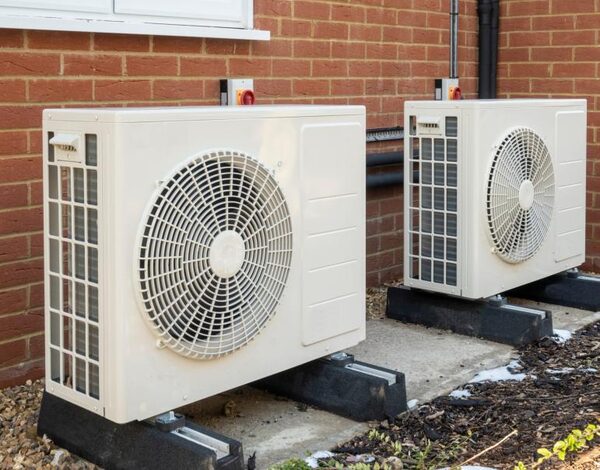
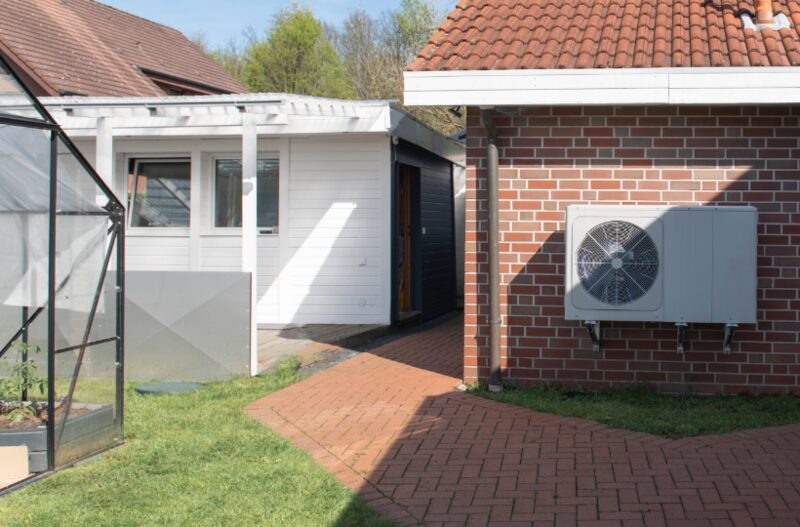
Permitted development for air source heat pumps applies to domestic premises. In Northern Ireland, Class G covers the installation, alteration or replacement of an air source heat pump within the curtilage of a dwellinghouse3. A parallel Class F covers the provision of a ground or water source heat pump within the curtilage of a dwellinghouse3. Both sit within Part 2 of the domestic permitted development rules.
The route does not extend to non-domestic buildings. Permitted development rights for small scale renewables do not extend to non-domestic buildings, and planning permission may be required before installation10. That covers offices, schools, industrial premises and agricultural buildings. A farmhouse is a dwellinghouse; a farm building is not.
The conditions are consistent across the guidance. The air source heat pump must be for heating purposes or heating and cooling11, and it must not be solely used for the purpose of cooling7. Council guidance across the UK repeats the same restriction12. In Scotland the equivalent rule states that the air source heat pump must be used only for the purpose of providing domestic heating or hot water16, and the same wording appears in the Scottish permitted development order17.
There is a further condition that applies in Scotland and is worth knowing for comparison: permitted development rights for domestic air source heat pumps exist where they are sited 100m from the nearest neighbour's curtilage18. That is a Scottish rule, not a Northern Ireland one, but it illustrates how far the four nations diverge on the same technology.
| Nation | Air source heat pump permitted development | Key condition |
|---|---|---|
| Northern Ireland | Part 2, Class G, within the curtilage of a dwellinghouse3 | Not solely used for cooling7 |
| Scotland | Domestic permitted development, sited 100m from nearest neighbour's curtilage18 | Domestic heating or hot water only16 |
| England | Class G, domestic premises19 | Not solely used for cooling19 |
| Wales | Permitted development, heating or heating and cooling11 | Not solely used for cooling11 |
Where permitted development stops
Permitted development is not automatic. It is subject to a number of limits and conditions20, and an installation that fails them needs a planning application. The circumstances that trigger one include an installation that does not meet permitted development rules, a listed building, a conservation area with restrictions, a prominent position such as the front of a property, or an unacceptable impact on neighbours through noise or visual impact21.
Listed buildings and conservation areas are the most common exceptions. Guidance notes that there are exceptions, for example if a household lives in a listed building or a conservation area, and advises checking with the local planning department before committing1. The same exception applies to ground source heat pumps5.
Northern Ireland's wider policy context shapes what happens next. Northern Ireland has committed to reaching net zero by 205022, and it has one of the best wind resources in Europe23. Both facts point towards electrified heating over time, but neither creates an installation count today.
There is also a regulatory gap worth stating plainly. At the present time Northern Ireland has no equivalent statutory requirement for domestic electrical installation work24. There are currently no statutory requirements for domestic electrical installation work in Northern Ireland, though organisations do register and assess electrical contractors in the area24. A household commissioning a heat pump installation therefore relies on competent-person registration rather than a statutory building control route of the kind that applies elsewhere.
How an installation is done, and what it costs
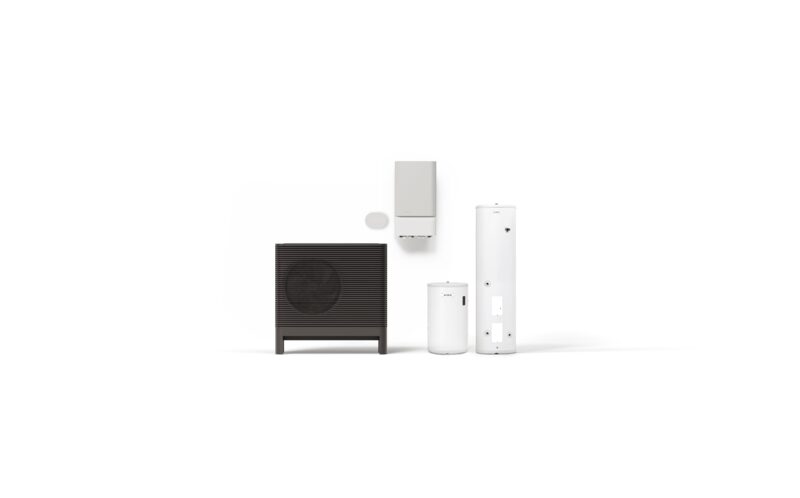
An air source heat pump takes warmth from the outside air and uses it for heating and hot water2. It absorbs heat from the outside or surrounding air and transfers that into usable heat in the home for space or water heating9. The energy source is the outside air, or air from a ventilation system, used for heating, cooling and heating water25. Outputs are hot water or hot air10.
The published cost figure is £10,000 or more6. That figure is not Northern Ireland specific and does not account for any grant deduction. Prices are installer quoted, and the final cost depends on the property, the heat distribution system and any associated insulation or radiator work.
The process runs in a recognisable order:
- Establish whether the property is a dwellinghouse within the curtilage, which brings the installation inside Class G permitted development3.
- Check for a listed building, a conservation area or a prominent siting that would require a planning application21.
- Confirm the unit will not be solely used for cooling, which is the condition that keeps it inside permitted development7.
- Apply for insulation funding through NI Energy Advice to get the home heat pump ready5.
- Check whether the Northern Ireland Sustainable Energy Programme is funding an air source heat pump installation as part of a heating upgrade this year4.
Two features of the Northern Ireland energy market bear directly on running costs. Smart time-of-use tariffs are not available in Northern Ireland, and there is no standing charge for mains gas5. Time-of-use tariffs are a common part of the case for a heat pump elsewhere in the UK, because they let a household run the unit when electricity is cheaper. Without them, that lever is not available.
Connection requirements for any generation or storage installed alongside a heat pump are governed by the Electricity Safety, Quality and Continuity Regulations (Northern Ireland) 2012 and Engineering Recommendation G98/NI26. Northern Ireland also applies certain EU product safety regulations, including GPSR26.
What this means for a household's energy independence
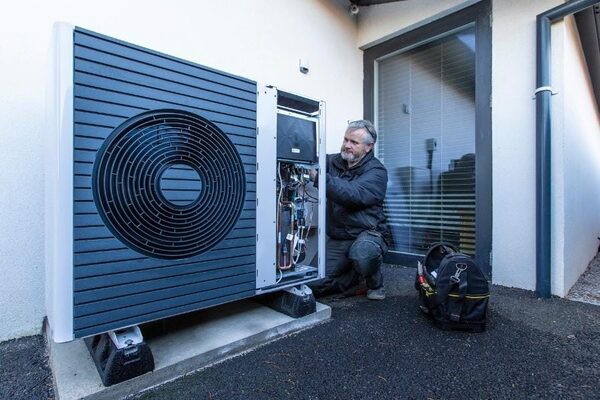
An air source heat pump moves a home's heating off delivered fuel and onto electricity. That is the independence gain: no oil tank to fill, no gas standing charge, and a heat source, the outside air, that no supplier controls2. For a household in an area without a mains gas connection, that shift is the substantive change.
The dependence that remains is significant. The heat pump runs on electricity from the grid, supplied by a company the household does not choose in any meaningful sense, and Northern Ireland's smart meter rollout is not due to begin until 202827. Without time-of-use tariffs, a household cannot shift consumption to cheaper periods5. The equipment itself comes from a manufacturer, and servicing and parts depend on that company continuing to trade.
There is also a data and control dimension. A heat pump with a cloud-connected controller depends on the maker's app and servers for remote operation and, in some cases, for firmware updates. That is a form of dependence a household should weigh alongside the fuel it replaces.
The practical position for Northern Ireland is therefore mixed. Planning is straightforward for most dwellings3. Funding is narrow, with a limited number of air source heat pump installations available through NISEP as part of a heating upgrade this year4 and insulation funding through NI Energy Advice5. Costs are installer quoted, with published guidance putting an air source heat pump at £10,000 or more6. The technology is the most common domestic heat pump type in the UK and suits most homes1, but the tariff structure and the absence of a specific grant mean the Northern Ireland case rests on the household's own circumstances rather than on a scheme.
For the wider picture across the four nations, see Home Energy in Scotland, Wales and Northern Ireland. For the funding landscape, see Why Home Energy Grants Differ Across the Four Nations and NISEP: The Northern Ireland Sustainable Energy Programme. For the planning rules in full, see Planning Rules for Home Energy Equipment in Northern Ireland.
Sources27 cited
- In-depth guide to heat pumps, Energy Saving Trust, 2026-07-16
- Air source heat pumps, Energy Saving Trust, 2026-07-16
- The Domestic Permitted Development Regulations (Northern Ireland) 2015, legislation.gov.uk, 2026-09-17
- Energy grants in Northern Ireland, Energy Saving Trust, 2026-09-17
- Ground source heat pumps, Energy Saving Trust, 2026-07-16
- Air and ground source heat pumps, London Borough of Croydon, 2026-09-17
- Planning permission: air source heat pump, Planning Portal, 2026-09-17
- DESNZ public attitudes tracker: heat and energy use in the home, summer 2025, Department for Energy Security and Net Zero, 2025-10-28
- VAT energy saving materials and grant funded heating supplies, HM Revenue and Customs, 2026-09-17
- Fact sheet 5: air source heat pumps, Pendle Borough Council, 2026-09-17
- Planning permission for heat pumps, Welsh Government, 2026-09-17
- Air source heat pumps, Cornwall Council, 2026-09-17
- Planning guidance: heat pumps, London Borough of Richmond upon Thames, 2026-04-22
- Air source heat pumps, Westmorland and Furness Council, 2026-09-17
- Heat pumps, New Forest District Council, 2026-09-17
- The Town and Country Planning (General Permitted Development) (Scotland) Order 1992, article 3, legislation.gov.uk, 2016
- Householder permitted development rights guidance, Scottish Government, 2021-04-01
- Permitted development rights for non-domestic solar panels and domestic air source heat pumps, Scottish Government, 2015-06
- Class G: installation or alteration of air source heat pumps on domestic premises, legislation.gov.uk, 2025-05-29
- Do I need planning permission, Cornwall Council, 2026-09-09
- Air source heat pumps, London Borough of Hammersmith and Fulham, 2026-09-17
- Research briefing CBP-9888, House of Commons Library, 2026-07-10
- Wind, nidirect, 2026-05-18
- Building regulations, Electrical Safety First, 2026-09-17
- About heat pumps, European Heat Pump Association, 2026-04-24
- Plug-in solar consultation document, Department for Energy Security and Net Zero, 2026-06-16
- Smart meters, Consumer Council for Northern Ireland, 2028
 Planning Permission in NIDo you need planning permission for a heat pump in Northern Ireland?
 Housing Stock Data for NIMost homes in Northern Ireland heat with oil, so why are the grants and help different from the rest of the UK?
 Home HeatingWhy do so many homes in Northern Ireland run on heating oil, and will that ever change?
 Heat Pump Install StatisticsHow many heat pumps are actually being fitted in the UK each year, and is that number going up?
 Planning Permission in EnglandDo you need planning permission for an air source heat pump?
 Which Homes Suit a Heat PumpMost UK homes can have a heat pump fitted, so the real question is whether yours makes it easy or expensive.