

In this guide
The Northern Ireland Sustainable Energy Programme (NISEP) is an £8 million fund collected from both domestic and commercial electricity customers through a public service obligation, and it provides grants to support businesses and low-income households with energy saving measures1. Energy Saving Trust is the Programme Administrator, acting on behalf of the Utility Regulator in Northern Ireland1. The programme is an energy efficiency programme for domestic and non-domestic customers, and at least 80% of its funding is available to vulnerable or priority customers3.
The programme has been extended. The Utility Regulator announced on 2 April 2026 that NISEP will be extended for two years, from 1 April 2027 until 31 March 2029, in continued collaboration with the Department for the Economy5. If the Department's successor scheme is not operational, NISEP will continue for the second year 2028/20295. At the time of publication, the Regulator stated there is no certainty that the extended programme will run for the full two years5.
In its most recent reported year, 2024/2025, NISEP funding spent reached £7,662,216, with total lifetime energy savings of 384.120 GWh and total lifetime carbon saved of 30,147 tC6. The programme treated 2,484 domestic properties and 75 non-domestic properties or premises in that year6. It is a levy-funded scheme, not a grant paid from general taxation, and that distinction shapes both who pays for it and what it can do for a household's energy independence.
What NISEP is and who runs it
NISEP is administered by Energy Saving Trust on behalf of the Utility Regulator4. The programme's legal basis sits in the licence conditions of the electricity supplier NIE plc, with the role of Programme Administrator defined by Condition 43 of that licence7. The scheme was not always called NISEP: the Northern Ireland Energy Efficiency Levy Programme was renamed the Northern Ireland Sustainable Energy Programme, and the reforms that produced the current structure were set out in a decision paper that committed the programme to run for at least three years before review7.
The programme is delivered through scheme managers rather than directly by the regulator. The Utility Regulator approved the NISEP schemes for 2026/2027 and published the full list of schemes, which are currently delivered by 11 Scheme Managers3. Scheme managers can bid into NISEP to deliver energy efficiency schemes each year2. All schemes run on a financial year basis2.
The programme's stated aim is to reduce carbon emissions2. It is not a fuel poverty scheme in name, though its priority ringfence means most of its money reaches households in or near fuel poverty. The Utility Regulator describes it as an energy efficiency programme for domestic and non-domestic customers6.
"NISEP is administered by Energy Saving Trust on behalf of the Utility Regulator."
The figures: what NISEP spends and saves

The headline figure is £8 million, collected from both domestic and commercial electricity customers through a public service obligation1. In 2022-23, the latest published data at the time of that briefing, it was worth £8.3 million8. The two figures are close but not identical, and they reflect different reporting years rather than a disagreement about the fund's design.
The most recent annual report covers 2024/2025. Total spend reached £7.66m, an increase on the previous year, alongside a reduced level of underspend9. NISEP funding spent was £7,662,216, gross lifetime customer benefits were £24,440,864, total lifetime energy savings were 384.120 GWh, total lifetime carbon saved was 30,147 tC, and total lifetime CO2e saved was 110,529 tC6. The programme treated 2,484 domestic properties and 75 non-domestic properties or premises6.
The benefit ratio is the figure that best explains why the programme persists. One pound of NISEP funding provided £3.19 of Net Present Value lifetime benefits in 2024/259. The previous year's report put the same measure at £3.24 of Net Present Value lifetime benefits per £1 of NISEP funding10. Both are modelled figures, and the small decline between them reflects the mix of measures installed rather than a change in how the ratio is calculated.
| Measure | 2023/24 | 2024/25 |
|---|---|---|
| Funding spent | £7.66m reported for 2024/259 | £7,662,2166 |
| Benefit ratio | £3.24 NPV per £110 | £3.19 NPV per £19 |
| Measures installed | 14,44510 | not stated in the same form |
| Properties treated | not stated in the same form | 2,484 domestic, 75 non-domestic6 |
The 2023/24 report recorded 14,445 measures installed, a decrease of 4,610 compared with the previous year10. It also recorded an underspend of approximately £380k, of which over half (£200k) was linked to a single air source heat pump scheme that did not proceed; excluding that scheme, the remaining underspend was £180k, lower than the previous year's figure, and the unspent funds were carried forward into 2024/2510.
What drives the figures
Three things drive NISEP's numbers: the levy that funds it, the priority ringfence that directs most of it, and the first come, first served rule that decides who actually receives it.
The funding source is the levy. The fund is collected from all Northern Ireland electricity customers through a public service obligation11. It is collected from both domestic and commercial electricity customers2. In 2009/10 the Energy Efficiency Levy was £7.354 per customer, and with approximately 840,800 customers this equated to overall funding of £6,183,5597. That is the historical per-customer figure recorded for the programme; no current per-customer levy figure is published in the same form.
The priority ringfence is the second driver. The majority of the funding, at least 80%, is available to vulnerable or priority customers3. In 2023/24, 81% of NISEP funding was spent in the Priority category, and the Priority category represented approximately 74% of the total energy savings10. The Non-Priority category accounted for 25% of the overall energy savings in 2023/2410. The Innovative category accounted for 2% of total energy savings, an increase of 1% from 2022/2310.
The allocation rule is the third. Grants are allocated on a first come, first served basis, and the scheme a household wishes to apply for may be oversubscribed and already have a waiting list12. NISEP funding is primarily allocated on a first-come, first-served basis9. This means the annual figures reflect how quickly scheme managers committed their allocations, not simply how much need existed.
The 2023/24 report also shows how the measure mix shifts. The reduction in installations was primarily due to a reduction in LED installations, from 8,655 to 5,05210. In the Innovative category the total number of measures installed increased from 124 to 213, but no heat pumps were installed, which impacted overall outturn figures10. Uptake of cavity wall and loft insulation within the Whole House category remained steady at 11%, and the overall proportion of properties receiving either measure fell from 53% to 39%10.
What NISEP funds and who can get it
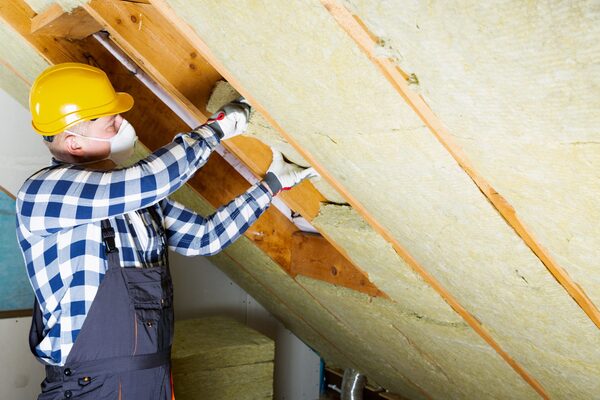
Measures vary from scheme to scheme but can include heating systems, loft insulation and cavity wall insulation2. Additional measures may include LED light bulbs, low-flow or eco shower heads, hot water tank jackets, reflective radiator panels, draught proofing measures and remote smart heating controls2. Belfast City Council describes the funding as covering various energy saving schemes such as boiler upgrades, LED light bulbs and draught proofing13. Turn2us notes that some people in Northern Ireland might be entitled to help in making energy efficient home improvements14.
The programme is structured around a Whole House Solution. When a heating system is being installed, both loft and wall insulation should also be installed, where suitable for the property and if required4. Properties with oil heating at the time of application will be able to have a replacement oil system installed if natural gas is not available2. Properties with Economy 7 at the time of application will be provided with replacement electric high heat retention storage heaters2. If an existing oil or gas boiler is over 15 years old, a household might be eligible for whole house solution schemes2.
Eligibility is not simply a matter of income. Homeowners, private tenants and non-domestic or commercial properties might be eligible, and eligibility can depend on income, housing tenure and where you live2. Your total gross household income is assessed, not your outgoings, and proof of total gross household income includes wages, benefits, pensions and any other income; income from anyone under 18 who lives at the address is not included2. Work under NISEP is either fully funded or may require a contribution depending on the level of household income2. Most of the funding is kept for schemes that do not require any payment by the homeowner15.
The rules: exclusions, warranties and how to apply
The exclusions are specific and worth checking before any application. Self-build and new build properties, including new extensions, are not eligible for NISEP funding4. Flat roof properties are ineligible for loft insulation under NISEP4. Funding is only available for the applicant's primary residence, so a second home does not qualify2. A household cannot get NISEP funding for a measure already installed by another grant programme2.
Renewable technologies installed under NISEP require installers to be registered with MCS4. For NISEP schemes installing air source heat pumps, an EPC will be carried out by an accredited domestic energy assessor pre and post installation4. A pre and post EPC assessment was introduced under NISEP for heat pump schemes only in 2025/2616.
The application route is through the scheme manager. Identify the scheme you want to apply for and check that you are eligible to receive funding, then contact the relevant Scheme Manager via the telephone number or email address provided3. A technical survey of the home will be carried out to check which measures are suitable2. Applicants may need to show who owns the property, for example a mortgage statement or property deeds2.
Warranties are provided at installation. All installations include a workmanship warranty and product warranties, and the scheme manager or installer will provide information about the warranty and any specific terms and conditions needed to keep the warranty valid2. If there is a problem with any measures received under NISEP within the first 12 months after installation, the household should contact the scheme manager, who will confirm receipt of the email within five working days and then review the situation in line with programme rules2. The homeowner or landlord is responsible for arranging and paying for the annual service after installation2.
How NISEP differs across the UK nations
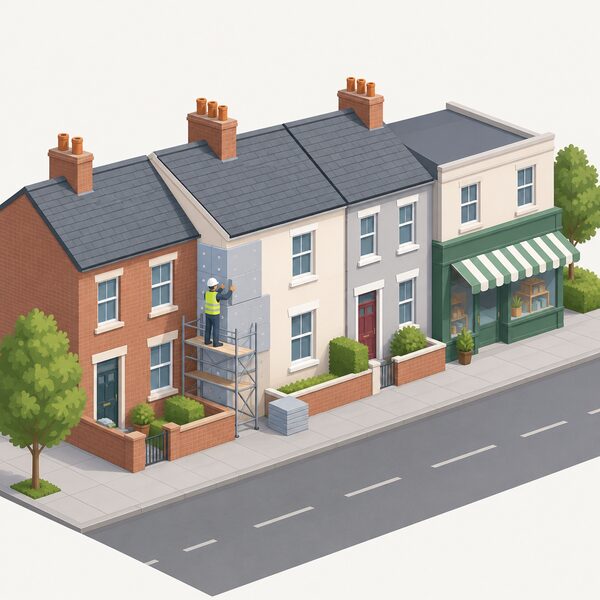
NISEP has no direct equivalent in England, Scotland or Wales. It exists because Northern Ireland has a different regulator, no price cap and an entirely different set of suppliers from Great Britain17. That structural difference is the reason a levy-funded energy efficiency programme sits in the Northern Ireland electricity licence conditions rather than in a GB-wide obligation.
The Energy Price Guarantee, by contrast, operated for the most part in the same way for households across the whole of the UK, with differences for Northern Ireland18. The Northern Ireland version of that scheme was made for domestic electricity consumers in Northern Ireland specifically19, and it worked by reducing the amount that would otherwise be charged for NI domestic electricity supply by licensed electricity suppliers who are parties to the scheme20.
Tax treatment has moved toward consistency. Rules on energy-saving materials applying to Northern Ireland took effect from 1 May 2023, with the stated purpose of ensuring consistency across the whole of the United Kingdom21. The 2023/24 NISEP annual report records that the introduction of 0% VAT by HMRC on energy efficiency measures in Northern Ireland from May 2023 meant lower installation costs10.
Building regulation sits in a different place again. The Northern Ireland Building Regulations 2012 are designed to further the conservation of fuel and energy22. NISEP itself is territorial: it helps homes and businesses in Northern Ireland, and schemes vary by location and licence area23. Households elsewhere in the UK looking for comparable support need the devolved schemes, which is why why energy grants differ by nation is worth reading alongside this page.
| Nation | Comparable levy-funded scheme | Notes |
|---|---|---|
| Northern Ireland | NISEP | £8 million fund, 80% priority ringfence1 |
| England, Scotland, Wales | none equivalent | NISEP is Northern Ireland only23 |
What NISEP means for energy independence
NISEP improves a household's energy position in a specific and limited way. It funds physical measures, heating systems, insulation, draught proofing and controls, that reduce the energy a home needs to buy2. Those measures stay with the property. A household that receives loft and cavity wall insulation, or a replacement heating system, is less exposed to the price of the fuel it burns, because it burns less of it.
The limits are equally clear. NISEP does not make a household independent of the electricity grid, and it does not change the fact that the fund itself is collected from electricity customers through a public service obligation11. Every Northern Ireland electricity customer contributes to the levy, whether or not they ever receive a measure. The programme is a redistribution of levy money toward priority households, not a route off the network.
There is also a dependence on the programme's own continuity. NISEP has been extended to March 2029, but the Regulator stated at the time of publication that there is no certainty the extended programme will run for the full two years, and that it will close after the first year if the Department for the Economy successor scheme is fully developed5. A household planning work around NISEP is planning around a scheme with a stated end date and a break clause.
The programme's scale is worth holding alongside its ambition. Each year since 2010, NISEP has installed at least 15,000 energy efficiency measures, benefiting over 3,500 properties per year15. In 2024/25 there was a broad geographical spread of measures, with all 11 councils in Northern Ireland receiving installations, and Belfast City Council recorded the highest proportion at 22%, up from 15% the previous year9. That spread matters for independence: it means the programme reaches households outside the areas with the densest gas network, including those on oil and on Economy 7 electric heating2.
The independence NISEP offers is therefore partial and physical. It reduces demand, improves the building, and lowers bills for households that qualify. It does not remove the grid connection, the levy, or the scheme's own dependence on a regulator's decision to keep it running.
Sources23 cited
- The Northern Ireland Sustainable Energy Programme, UK Parliament, 2026
- NISEP, Energy Saving Trust, 2026
- NISEP List of Schemes 2026/2027 Published, Utility Regulator, 2026
- NISEP List of Schemes 2026-27, Utility Regulator, 2026
- Extension Announced for the Northern Ireland Sustainable Energy Programme, Utility Regulator, 2026
- 2024-25 NISEP Annual Report, Utility Regulator, 2026
- NISEP Framework Document, Utility Regulator, 2009
- Energy Bills Support, UK Parliament, 2024
- 2024/2025 Annual Report for NISEP, Utility Regulator, 2026
- 2023-24 NISEP Annual Report, Utility Regulator, 2025
- Energy Saving Grants in Your Area, nidirect, 2026
- List of Schemes for NISEP 2025-2026 Published, Utility Regulator, 2025
- Cost of Living and Winter Support, Belfast City Council, 2026
- Help with Energy Efficiency Measures, Turn2us, 2026
- Energy Grants Northern Ireland, Energy Saving Trust, 2026
- Northern Ireland Fuel Poverty Strategy, Energy Saving Trust, 2025
- Energy Prices (Domestic Supply) (Northern Ireland) Regulations 2022(NorthernIreland)Regulations2022), Hansard, 2022
- Energy Price Guarantee up until 30 June 2023, GOV.UK, 2023
- Energy Price Guarantee Scheme Documents, GOV.UK, 2022
- Domestic Energy Price Reduction Schemes for Northern Ireland, legislation.gov.uk, 2022
- VAT Energy Saving Materials and Grant Funded Heating Supplies, HMRC, 2023
- Building Regulations, Building Control NI, 2026
- NISEP List of Schemes 2024-25, Utility Regulator, 2024
 Community Energy in NICan a community group in Northern Ireland sell power to its neighbours, and is there funding to get a project off the ground?
 Check Which Energy Grants ApplyWhich energy grants can you actually get right now, and which have closed?
 Energy Bills in Northern IrelandNorthern Ireland has no price cap.
 Utility Regulator NIWho sets your energy prices in Northern Ireland and who can you complain to?
 Suppliers in Northern IrelandNorthern Ireland runs its own energy market, with its own regulator, its own suppliers and no price cap.
 The Full Grants and Schemes GuideWhich grants can you actually get right now, and how do you apply for them?