In this guide
Northern Ireland does not have a single gas tariff, a single gas price or a single gas network. Gas is available in two distinct network areas, Greater Belfast and the Ten Towns, and each supplier sets its own rates within the area it serves. Energy prices were not capped in Northern Ireland, and energy suppliers have the flexibility to set their tariffs independently to reflect their costs of operating1. That is the central fact behind every figure on this page: there is no equivalent of the Ofgem price cap to anchor a Northern Ireland gas bill.
The practical consequence is that a householder comparing tariffs is comparing named suppliers in a named network area, on a stated date. The Consumer Council publishes comparison tables for the Ten Towns area and states that they compare all gas tariffs available there and are correct on the day of comparison, with prices for 17/09/2026 including VAT of 5%1. Independent guidance published on 1 November 2025 puts the average gas price in Northern Ireland at 9.0 pence per kWh, against oil at 5.5 pence, LPG at 11.3 pence, coal or solid fuel at 6.5 pence and wood pellets at 6.8 pence per kWh2.
For a household, gas in Northern Ireland means a connection to a piped network that covers part of the country, a supplier chosen from those operating in that network area, and a tariff that can move on a supplier's own effective date rather than on a common quarter day. Where there is no network, the same household is buying oil, LPG, solid fuel or electricity instead, and the price per kWh is different.
Where the gas network reaches in Northern Ireland
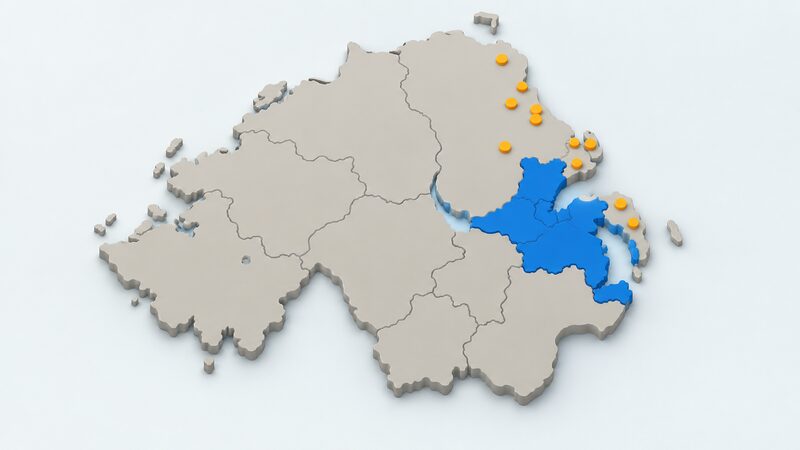
Piped gas is not a national service in Northern Ireland. Not all areas of Northern Ireland are connected to the gas network; urban and suburban areas tend to be well served, whereas many rural and western parts have limited or no access3. That single sentence explains most of the regional variation in how households heat and what they pay.
The two network areas that do exist are Greater Belfast and the Ten Towns. Greater Belfast is the larger and denser of the two, covering the city and its surrounding urban belt. The Ten Towns area covers a set of smaller towns, and the Consumer Council maintains a separate comparison table for it precisely because the suppliers and tariffs differ from Greater Belfast1. A household's postcode determines which area, if either, applies.
The historical position is worth stating because it shaped the market. In 2011/12, official statistics excluded Northern Ireland from a domestic gas supplier table on the grounds that gas was not yet widely available in Northern Ireland5. The network has since extended, but the starting point was a region where gas was a minority heating fuel and oil dominated. That inheritance still shows in the fuel mix.
For households outside a gas area, the alternatives are oil, LPG, solid fuel and electricity. Northern Ireland Energy Advice offers independent and impartial energy advice to domestic householders in Northern Ireland, plus referrals to energy grants and other sources of help, and covers heating and energy use among its topics6. The Northern Ireland Housing Executive also publishes energy guidance for households9.
Who supplies gas and how tariffs are set
The regulatory starting point is that Northern Ireland has no price cap on domestic energy. Energy prices were not capped in Northern Ireland and energy suppliers have the flexibility to set their tariffs independently to reflect their costs of operating1. A household therefore cannot point to a cap level and check whether a tariff is compliant, the way a Great Britain household can with the Ofgem cap.
What exists instead is a directions regime. Directions made under Section 22 of the Energy Prices Act 2022 required domestic electricity and gas suppliers in Northern Ireland to seek agreement to make tariff changes on days other than the first day of a quarter10. The Energy Price Guarantee for domestic energy consumers in Northern Ireland was made to allow domestic electricity and gas suppliers in Northern Ireland to make tariff changes on days other than the first day of a quarter10. The same instrument is cited as the Energy Price Guarantee for Domestic Gas Consumers in Northern Ireland, Direction No.1, made pursuant to Section 22 of the Energy Prices Act 202211.
The effect is procedural but visible to households: suppliers announce a change and apply it on their own effective date, which is why Greater Belfast and Ten Towns changes do not always land on the same day. The Consumer Council's pages list scheduled changes by supplier and area, including a tariff change for SSE Airtricity in Greater Belfast scheduled for 01 October 2026 and a tariff change for Firmus Energy in Greater Belfast scheduled for 08 October 20261.
Greater Belfast gas tariffs: unit rates and annual costs
Greater Belfast is the larger gas network area and the one where the most suppliers operate. Because there is no cap, the published benchmarks that exist for Northern Ireland come from the Ofgem cap tables, which include a Northern region alongside the Great Britain regions. These are useful as a reference point for the scale of a bill, not as a limit that applies to a Northern Ireland supplier.
The figures move with each cap period. For 1 July to 30 September 2026, the Northern region shows a standing charge of £127.56 and an annual bill of £821.19 at 9,500 kWh on standard credit, and a standing charge of £101.33 with an annual bill of £739.84 at 9,500 kWh on prepayment12. For 1 October to 31 December 2025, the Northern region showed £118.70 at nil consumption and £837.33 annual at 12,000 kWh on other payment method13. For the Charge Restriction Period 14a, the Northern region showed £113.80 standing charge with £906.74 annual on other payment method and £883.19 on prepayment14. For 1 April to 30 June 2024, the Northern region default tariff cap was £109.79 standing charge and £798.66 annual at 12,000 kWh on other payment method, with £122.38 at nil consumption on standard credit15.
| Period | Region and payment method | Standing charge | Annual figure |
|---|---|---|---|
| 1 Jul to 30 Sep 2026 | Northern, standard credit | £127.56 | £821.19 at 9,500 kWh12 |
| 1 Jul to 30 Sep 2026 | Northern, prepayment | £101.33 | £739.84 at 9,500 kWh12 |
| 1 Oct to 31 Dec 2025 | Northern, other payment method | £118.70 | £837.33 at 12,000 kWh13 |
| Charge Restriction Period 14a | Northern, other payment method | £113.80 | £906.7414 |
| Charge Restriction Period 14a | Northern, prepayment | £113.80 | £883.1914 |
| 1 Apr to 30 Jun 2024 | Northern, other payment method | £109.79 | £798.66 at 12,000 kWh15 |
For the default tariff cap in 2024, the Northern annual figure appears as £798.66 in one table and £847.41 in another, and the two have not been reconciled15. Both are given here rather than one being chosen.
For comparison, the same cap tables show Northern Scotland at £113.87 standing charge and £905.24 annual on other payment method for Charge Restriction Period 14a14, and North West at £101.39 standing charge and £756.14 annual at 9,500 kWh for 1 July to 30 September 202612. These are Great Britain regions, included only to show that the Northern figures sit within a normal range rather than being an outlier.
Ten Towns gas tariffs: the smaller towns' comparison
The Ten Towns area is treated separately because it has its own suppliers and its own tariff structure. The Consumer Council states that its tables compare all gas tariffs available in the Ten Towns area, and that they are correct on the day of comparison, with prices for 17/09/2026 including VAT of 5%1. Tariff changes for Ten Towns gas tariffs are scheduled for 01 October 20261.
The area is smaller and less dense than Greater Belfast, which affects both the number of suppliers competing and the cost base they carry. A household in the Ten Towns area comparing tariffs is working from a shorter list than a Greater Belfast household, and the comparison is only meaningful on the date it is run.
The published price movement for the area is documented. Firmus Energy announced price changes of 8.9% in Ten Towns and 12.5% in Greater Belfast from October 20261. The same change is recorded across the supplier's own pages, with prices rising by 8.9% in Ten Towns and 12.5% in Greater Belfast from October 20261. The two areas moving by different percentages in the same announcement is the clearest illustration of why the network area matters: the same supplier, the same date, two different outcomes.
For a household, the practical point is that a Ten Towns tariff cannot be compared with a Greater Belfast tariff, and a percentage change announced for one area says nothing about the other. The Consumer Council's separate tables exist for that reason.

Prepayment (PAYG) versus online credit tariffs
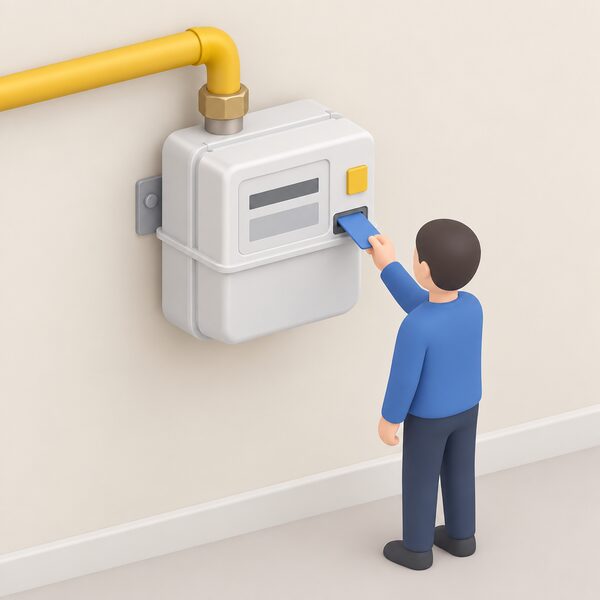
Payment method changes the shape of a gas bill as much as the unit rate does. Prepayment, known in Northern Ireland as PAYG, carries a different standing charge and a different annual total from credit in the same region.
The cap tables show the gap. For Charge Restriction Period 15b, the Northern region shows £122.38 standing charge and £751.53 for gas on prepayment at 11,500 kWh16. For 1 July to 30 September 2025, the Northern region showed £103.95 at nil consumption on prepayment, with £797.24 annual at 12,000 kWh17. For Charge Restriction Period 14a, the Northern region showed £113.80 standing charge with £883.19 annual on prepayment, against £113.80 and £906.74 on other payment method14.
| Period | Northern, prepayment | Northern, credit |
|---|---|---|
| Charge Restriction Period 15b | £122.38 standing charge, £751.53 at 11,500 kWh16 | £122.47 standing charge, £768.10 at nil kWh, other payment method16 |
| 1 Jul to 30 Sep 2025 | £103.95 at nil consumption, £797.24 at 12,000 kWh17 | Not stated in this table |
| Charge Restriction Period 14a | £113.80 standing charge, £883.19 annual14 | £113.80 standing charge, £906.74 annual14 |
For Charge Restriction Period 15b, the Northern annual figure appears as £751.53 in one table and £772.26 in another, and the two have not been reconciled16. Both are given here.
Prepayment is not a minority payment method in Northern Ireland. Official statistics for standard electricity record 36 per cent of Northern Ireland households on prepayment in September 201418, and a March 2013 table records the same 36 per cent figure19. Those are electricity figures rather than gas, and they are old, but they indicate that prepayment is a mainstream payment method in the region rather than an edge case. For gas specifically, the cap tables show prepayment annual totals consistently below the credit equivalents in the same period, which is the opposite of the pattern in some other markets.
The £275 welcome bonus and its usage limits
No £275 welcome bonus appears in the published record for Northern Ireland gas supply. The documented household payments are different in both amount and structure, and they are historical rather than current.
All households in Northern Ireland received a single, one-off £600 payment to help with their bills20. That payment was made up of the £400 Energy Bills Support Scheme plus the £200 Alternative Fuel Payment, and it went to all households in Northern Ireland in winter 2022/2321. The support was delivered by voucher, and vouchers were valid until 31 March 202322.
| Payment | Amount | Recipients | Period |
|---|---|---|---|
| Energy Bills Support Scheme Northern Ireland | £600 single, one-off payment per household | All Northern Ireland households | Winter 2022/2320 |
| Of which Energy Bills Support Scheme | £400 | All Northern Ireland households | Winter 2022/2321 |
| Of which Alternative Fuel Payment | £200 | All Northern Ireland households | Winter 2022/2321 |
The Energy Price Guarantee itself applied to all households with a domestic gas and or electricity contract23. It was introduced later in Northern Ireland, on 1 November 2022 rather than 1 October 2022 as in Great Britain1. The scheme documents cover domestic gas consumers in Northern Ireland and domestic electricity consumers in Northern Ireland separately24, and the directions are cited as the Energy Price Guarantee for Domestic Gas Consumers in Northern Ireland, Direction No.1 and Direction No.211.
Any switching incentive offered today is a commercial term in a supplier's own contract, not a government payment, and its conditions sit in that contract. A household weighing an incentive against a tariff should read the contract terms, including any minimum period and any exit fee, rather than the headline amount.
Gas versus LPG: what a kWh costs off the grid
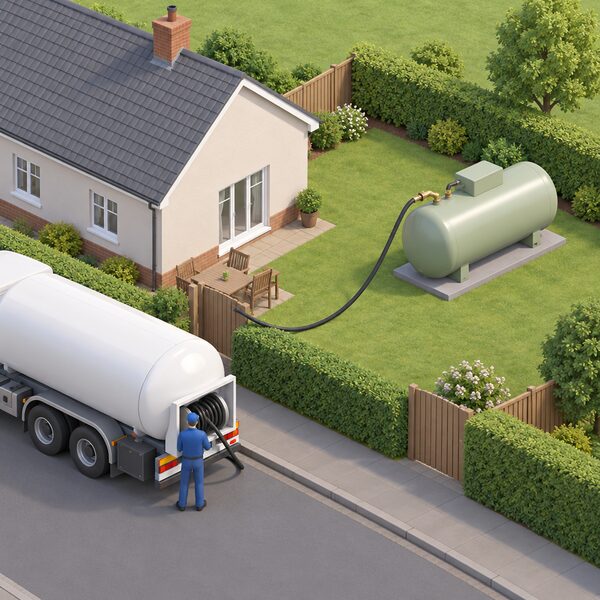
For households outside the gas network, the comparison is between delivered fuels rather than between suppliers. Independent guidance published on 1 November 2025 gives the following averages for Northern Ireland.
| Fuel | Average price per kWh, 1 November 2025 |
|---|---|
| Gas | 9.0 pence2 |
| Oil | 5.5 pence2 |
| LPG | 11.3 pence2 |
| Coal or solid fuel | 6.5 pence2 |
| Wood pellets | 6.8 pence2 |
| Electricity, standard rate | 30.8 pence2 |
| Electricity, Economy 7 on-peak | 35 pence2 |
| Electricity, Economy 7 off-peak | 16.7 pence2 |
LPG also carries a standing charge of £63 per year in Northern Ireland2. That is a fixed cost that applies whether or not the fuel is used, and it sits alongside the unit rate rather than being absorbed into it.
The ranking is not the same as the ranking of convenience. Piped gas at 9.0 pence per kWh is cheaper per unit than LPG at 11.3 pence, but it is only available where the network reaches. Oil at 5.5 pence per kWh is the cheapest unit cost in the table, but it requires a tank, deliveries and a boiler, and it is not available to every property. Electricity at 30.8 pence per kWh on the standard rate is the most expensive way to heat, which is why off-peak tariffs matter for storage heating.
For a household's independence, the distinction is between a fuel that arrives by pipe under a supply contract and a fuel that is bought in deliveries and stored on site. Piped gas depends on the network and a supplier. Oil and LPG depend on a distributor and a tank. Neither is self-supply, and the unit costs above are the terms on which each dependence is bought.
The Energy Price Guarantee for domestic gas consumers
The Energy Price Guarantee was the mechanism that held down unit rates during the 2022 energy crisis, and in Northern Ireland it worked as a discount on the rate rather than as a cap on the total bill.
The discounts were set per quarter. From October 2022 to December 2022, the discount was up to 19.9p per kWh for electricity and 4.8p per kWh for gas1. From January 2023 to March 2023, it was up to 13.6p per kWh for electricity and 3.9p per kWh for gas1. From April to June 2023, it was up to 3.8p per kWh for electricity and 2.6p per kWh for gas1. The discount rates to three decimal places in Northern Ireland were 3.770p per kWh for electricity and 2.603p per kWh for gas1. A separate record gives the Q1 2023 discount as up to 13.6 p per kWh for electricity and 3.9 p per kWh for gas21.
| Period | Electricity discount | Gas discount |
|---|---|---|
| October to December 2022 | Up to 19.9p per kWh1 | Up to 4.8p per kWh1 |
| January to March 2023 | Up to 13.6p per kWh1 | Up to 3.9p per kWh1 |
| April to June 2023 | Up to 3.8p per kWh1 | Up to 2.6p per kWh1 |
| April to June 2023, to three decimal places | 3.770p per kWh1 | 2.603p per kWh1 |
One record gives up to 13.6 p per kWh for electricity and 3.9 p per kWh for gas, while another gives up to 19.9 p per kWh for electricity and 4.8 p per kWh for gas, and the two have not been reconciled21. Both are given here.
The scheme's legal basis was Section 22 of the Energy Prices Act 2022, under which the directions to licensed gas suppliers were given11. The Energy Price Guarantee for domestic energy consumers in Northern Ireland is recorded as applying to Northern Ireland10, as are Direction No.1 and Direction No.211. The scheme documents are published as ministerial directions24.
The Energy Price Guarantee has ended. It is described here because it explains why Northern Ireland gas bills moved in steps through 2022 and 2023, and because the discount structure, applied to unit rates rather than to a total, is the model that any future support would most likely follow.
Comparing tariffs with the Consumer Council
The Consumer Council offers an energy price comparison tool to compare electricity and gas tariffs for all suppliers in Northern Ireland6. It also publishes separate tables for the Ten Towns area, stating that they compare all gas tariffs available there and are correct on the day of comparison1.
The tool is the practical starting point for a Northern Ireland household because there is no cap to check against. A household comparing tariffs is comparing named suppliers on a stated date, and the comparison is only as good as that date. The Consumer Council's Ten Towns page carries a price date, 17/09/2026 including VAT of 5%1, and lists scheduled changes by supplier and area, including a tariff change for SSE Airtricity in Greater Belfast scheduled for 01 October 2026 and a tariff change for Firmus Energy in Greater Belfast scheduled for 08 October 20261.
Energy Saving Trust states that its Northern Ireland savings figures are based on current energy supplier tariffs for Northern Ireland, because the Ofgem price cap does not apply there2. That is the same reason the Consumer Council tool exists in the form it does: without a cap, the comparison has to be built from live supplier tariffs rather than from a published ceiling.
For households considering a switch, the general process and the protections that apply are set out in the guide to switching energy supplier and in the material on energy comparison sites and brokers. The Northern Ireland market itself, including which suppliers operate there, is covered in energy suppliers in Northern Ireland, and the Consumer Council's own role is set out in the Consumer Council for Northern Ireland.

If something goes wrong: complaints and support

The Consumer Council gives free advice and can investigate complaints about natural gas and electricity6. It is a consumer body rather than a regulator, so its role is to take a complaint up with a supplier and advise on next steps.
The advice service covers more than billing disputes. NI Energy Advice offers independent and impartial energy advice to domestic householders in Northern Ireland, plus referrals to energy grants and other sources of help6. Its topics include energy grants and support, heating and energy use, energy bills and fuel poverty support, damp, condensation and ventilation, insulation and home improvements, renewable energy, changing electricity or gas supplier, and heating-oil savings9. The Northern Ireland Energy Advice Service can be contacted on 0800 111 4455, open 9am to 5pm Monday to Friday4.
For households struggling to pay, nidirect publishes advice on energy bills5. The Northern Ireland Housing Executive also publishes energy guidance9. On the oil side, the Home Heating Oil (Temporary Financial Assistance) Regulations (Northern Ireland) 2026 are recorded as new26, and the Northern Ireland Renewable Heat Incentive publishes guidance for applicants on avoiding common metering errors27.
| Body | What it does |
|---|---|
| Consumer Council | Free advice and can investigate complaints about natural gas and electricity; runs the price comparison tool6 |
| NI Energy Advice | Independent and impartial advice, plus referrals to grants and other help6 |
| Northern Ireland Energy Advice Service | 0800 111 4455, 9am to 5pm Monday to Friday4 |
| Northern Ireland Housing Executive | Publishes energy guidance9 |
The wider complaints process, including the Energy Ombudsman and the point at which a dispute can be escalated, is set out in complaining about an energy supplier and in the Energy Ombudsman. Households on a keypad meter have a separate set of arrangements, covered in keypad meters in Northern Ireland.
Sources27 cited
- Ten Towns gas tariff comparison, Consumer Council, 2026
- Our data, Energy Saving Trust, 2025
- Continuous Household Survey: Heat and Insulation 2024-25, Northern Ireland Statistics and Research Agency, 2025
- NISEP List of Schemes 2026-27, Utility Regulator, 2026
- Advice if you're struggling to pay your energy bills, nidirect, 2026
- Low carbon heating, nidirect, 2026
- Energy efficiency tips, nidirect, 2026
- Biomass, nidirect, 2026
- Energy, Northern Ireland Housing Executive, 2026
- Energy Price Guarantee for domestic energy consumers in Northern Ireland: ministerial directions, GOV.UK, 2023
- Energy Price Guarantee for Domestic Gas Consumers in Northern Ireland, Direction No.1, GOV.UK, 2022
- Energy price cap levels 1 July to 30 September 2026, Ofgem, 2026
- Energy price cap levels 1 October to 31 December 2025, Ofgem, 2025
- Benchmark Maximum Charges for the Charge Restriction Period 14a, Ofgem, 2025
- Default tariff cap level 1 April 2024 to 30 June 2024, Ofgem, 2024
- 15b cap tables, Ofgem, 2025
- Energy price cap levels 1 July to 30 September 2025, Ofgem, 2025
- Quarterly Energy Prices, December 2014, Parliament, 2014
- Quarterly Energy Prices, March 2013, Parliament, 2013
- Vital help with energy bills on the way, GOV.UK, 2022
- Energy bills support: research briefing CBP-9714, House of Commons Library, 2026
- Northern Ireland households to receive voucher support for energy bills, GOV.UK, 2022
- Energy bills support: an update, National Audit Office, 2024
- Energy Price Guarantee scheme documents, GOV.UK, 2022
- Energy Price Guarantee for Domestic Gas Consumers in Northern Ireland Direction No.2, GOV.UK, 2023
- Home Heating Oil (Temporary Financial Assistance) Regulations (Northern Ireland) 2026 screening, Department for Communities, 2026
- Northern Ireland Renewable Heat Incentive FAQs: metering, Ofgem, 2012
 Tariffs in Northern IrelandWhy does Northern Ireland have its own energy tariffs instead of the Ofgem price cap?
 Utility Regulator NIWho sets your energy prices in Northern Ireland and who can you complain to?
 Energy Bills in Northern IrelandNorthern Ireland has no price cap.
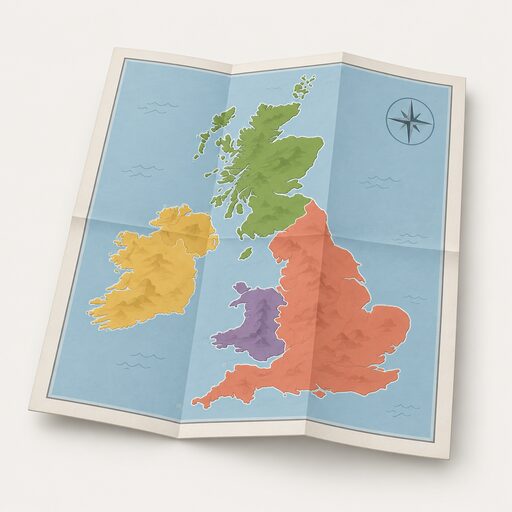 The Full Scotland, Wales and Northern Ireland GuideWhy a householder in Glasgow, Cardiff or Belfast faces different schemes, standards, targets and markets from one in England.
 Devolved vs Reserved PowersWho decides what you pay for gas and electricity, and who decides how your home is insulated or improved?
 Energy Supply in NICan you get gas where you live in Northern Ireland, and what happens if your power goes off?