In this guide
A white label energy brand is a name that sells gas or electricity tariffs to households without holding a supply licence of its own. The tariff is marketed under the brand, but the company legally responsible for providing energy to the home is a licensed supplier sitting behind it. Ofgem's definition is blunt: an energy supplier is the company "responsible for providing energy to homes and businesses"1. That responsibility, and the licence conditions that go with it, rest with the licensed partner, not with the retail or affinity brand on the marketing material.
Ofgem's own statistics treat the arrangement this way. Its Energy Consumer Satisfaction Survey states that "Subsidiary brands such as white label brands are included in the supply group that is responsible for their customer service operations"2. So a household cannot look up a separate published satisfaction score for a white label name: the performance shown is the supply group's. A licence itself is granted by the Gas and Electricity Markets Authority, and for electricity under section 6(1)(d) of the Electricity Act 1989, carrying obligations "concerning treating customers fairly, financial responsibility, operational capability, billing, information provision and consumer protection"3. Those obligations attach to the licensee.
For a household weighing energy independence, the practical point is that a white label adds a marketing layer but changes nothing structural. The grid connection, the meter, the settlement arrangements and the regulated protections all run through the licensed supplier, and the supplier remains, in Ofgem's words, "the primary interface between energy consumers and the energy system"4. Ofgem itself has said the current supplier hub arrangements "are not going to be fit for purpose for energy consumers over the longer term"5.
What a white label energy brand is
A white label is a consumer-facing energy brand, often a supermarket, a membership organisation, a club or a retailer, that puts its name on a gas or electricity tariff supplied by a licensed company. The brand brings recognition, a customer base and a marketing channel. The licensed supplier brings the supply licence, the trading and hedging capability, the billing systems and the regulated obligations.
The distinction matters because almost everything a household relies on is held by the licensee. Wholesale purchasing, described by Ofgem as "the cost a supplier pays to buy energy", is done by the licensed partner9. Obligations under the Energy Company Obligation place "legal obligations on energy suppliers to deliver energy efficiency measures to domestic premises"10. Under the Great British Insulation Scheme, "Energy suppliers are responsible for meeting their obligations and ensuring that they, and any members of the supply chain acting on their behalf, comply with scheme requirements"11. A brand partner is, in effect, part of that chain acting on the supplier's behalf.
The same pattern appears in export and generation schemes. Licensed electricity suppliers are "required to declare their FIT status annually"12, and the market share contribution of a licensed electricity supplier is calculated as the sum of all Feed-in Tariff contributions by all FIT licensees adjusted by that supplier's market share13. For the Smart Export Guarantee, Ofgem's published list names the licensed entity and any trading name alongside it, for example Electricity Plus Supply Limited, trading as Utility Warehouse, listed as a mandatory SEG licensee for the sixth SEG year running 1 April 2025 to 31 March 2026 and for the seventh year from 1 April 2026 to 31 March 202714.
How a brand reaches the market without holding a licence

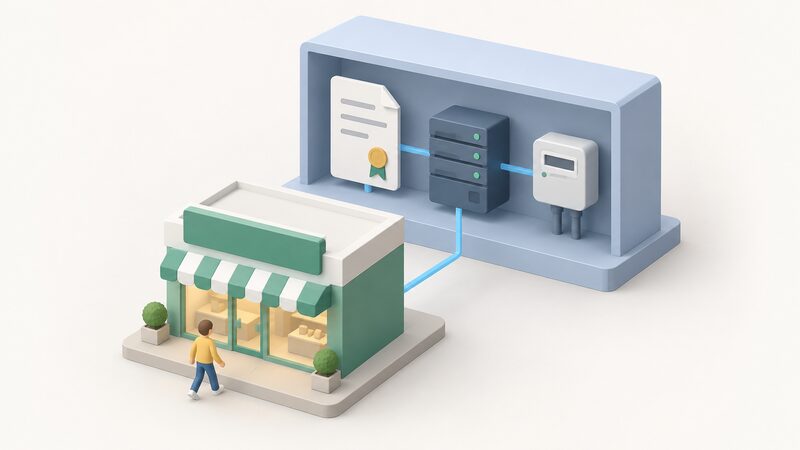
Selling energy in Great Britain requires a licence, but selling a tariff under a brand name does not require the brand itself to be the licensee. The arrangement works because the licence conditions bind the licensed supplier for all of its customers, however those customers were acquired. Ofgem is "Great Britain's independent energy regulator"15, and its licensing regime is the gate, not the marketing.
Licensing is being extended in newer parts of the market. Provisions on energy smart appliances and load control require "load controllers to hold a licence issued by Ofgem, the energy regulator"16. That illustrates the general principle: where a party takes on a role that affects a household's supply or its devices, the regulator reaches for a licence rather than relying on a contract between businesses.
Where the licensing regime does not reach, protection thins. The heating oil market "does not have the same consumer protections and is not regulated by Ofgem"17, which is the clearest available illustration of what regulated supply provides and unregulated supply does not. Households on off-grid fuels can read more on LPG and heating oil suppliers.
Some protections have been extended by fresh legislation rather than by the licence. From 1 April 2025, "new legislation requires all Heat Network suppliers to be signed up to Energy Ombudsman in order to remain compliant"18. Ofgem has also confirmed that the Supplier Standards of Conduct and the Operator Standards of Conduct "apply to suppliers and operators of domestic and non-domestic networks and to alternative models and ownership structures including but not limited to: bulk supply arrangements; shared ground loop arrays; and small communal heating systems"19. The direction of travel is that new delivery models are pulled into the same conduct rules rather than left outside them.
The licensed supplier partner behind every brand
Behind every white label is a licensee carrying the full weight of supply licence conditions. Those include the involuntary prepayment meter Code of Practice, of which Ofgem states plainly:
"All energy suppliers will have to follow them."
They include debt and reporting duties. Ofgem's Debt Relief Scheme guidance notes that a proposed licence condition, SLC24B.18 of the Gas and Electricity Supply Licences, will require suppliers to comply with reporting, assurance and auditing requirements, with data requested under existing powers in SLC 5 of the Gas Supply Licence and Electricity Supply Licence21. They include smart metering duties: suppliers needed to publicly share their annual installation target and their performance against those targets under the 2022 to 2025 Rollout Framework22. And they include back-billing limits, with Ofgem regulation aiming to prevent back-billing beyond 12 months prior to the date of the bill where the customer is not at fault19.
None of these obligations transfers to the brand partner. A household signing up through a white label receives the same statutory and licence protections as a household that signed up directly, because those protections follow the licensee. The corollary is that a household's assessment of financial resilience, service and compliance should be an assessment of the licensee, which is covered further on financial resilience rules and who owns which energy supplier.
What the licensee holds and the brand does not
| Element | Held by the licensed supplier | Held by the white label brand |
|---|---|---|
| Gas or electricity supply licence | Yes, granted by the Gas and Electricity Markets Authority3 | No |
| Licence obligations on fair treatment, billing, consumer protection | Yes3 | No |
| ECO and insulation scheme obligations | Yes, including supply chain compliance10 | No |
| Smart metering installation targets and published performance | Yes22 | No |
| Prepayment Code of Practice | Yes, all suppliers must follow20 | No |
| Customer-facing brand name and marketing | Sometimes | Yes |
Separate brands, shared operations: what that means for customers
Ofgem's satisfaction statistics have applied the same rule across four successive publications: subsidiary brands such as white label brands are included in the supplier group responsible for their customer service operations, stated in the July 2024, January 2025, July to August 2025 and January 2026 supplier-level findings24. Ofgem has published two indicators for supply groups, "overall satisfaction with their supplier" and "satisfaction with the customer service they have received from their supplier", covering seven energy supply groups in the January 2025 release27.
The practical effect is that a white label customer's experience is largely the supply group's experience. Call handling, billing accuracy, debt support and complaint resolution are typically operated by the group that runs customer service, and Ofgem has said it expects suppliers "to demonstrate excellent customer service as part of their strategies for driving down consumer energy debt"28. Published data is therefore useful for judging a white label, but only once the licensee is identified. The customer service ratings page sets out how those figures are compiled.
A related risk sits with intermediaries rather than with the brand itself. In one Energy Ombudsman case study, a microbusiness consumer engaged a broker and agreed a four-year deal, having been told they would not have to pay separate network charges; the broker confirmed that its agent had given incorrect information29. Where a sale is made through a third party under someone else's name, the chain between the household and the licensee lengthens. See energy comparison sites and brokers.
The supplier hub model the brands sit inside
White labels only make sense inside a market built around the supplier as the single point of contact. Ofgem has described the design directly: "the market was designed with suppliers as the primary interface between energy consumers and the energy system", and that role "has been entrenched in legal frameworks, licensing arrangements and industry rules"4. Everything the household touches, tariff, bill, meter, environmental levies, is routed through one licensed counterparty.
That concentration is visible in how regulation is administered. Ofgem's green supply guidelines list the schemes that ride on the supplier relationship: ECO, Domestic RHI, Non-Domestic RHI, FIT, REGO, RO, CCL, WHD, GER and SEG30. The price cap is built from supplier data: in its wholesale costs review Ofgem received data from 11 suppliers and proposed to exclude one supplier from its analysis sample31. Smart metering data flows the same way, with the DCC stating that "Only your energy supplier can see how much energy you are using and when"32.
The hub is being tested by flexibility. Ofgem has set out commercial models for domestic demand side response in which a retail energy supplier could itself play the role of demand side response service provider, alongside separate provider contracts, multiple providers per smart appliance, and bundled products where the manufacturer acts as the provider33. Each of those splits the single relationship the hub model assumes. Ofgem has also asked consumer panellists who they would feel comfortable providing their energy supply if they were on default arrangements34.
For a household pursuing independence through solar, storage or flexible loads, the hub model is the reason a licensed supplier stays in the picture even when self-generation is high: export payments, settlement and levies all run through it. That dependence is explored on energy suppliers and household energy independence.
What white labels can offer households

The case for white labels is reach and engagement. A trusted retail or membership brand can put an energy tariff in front of people who would not otherwise shop around, and can bundle it with other services. Ofgem counted 23 domestic energy suppliers and 72 business energy suppliers active in the market as at April 20256, and brand partnerships add choice at the shopfront without adding a licensee.
What comes with the tariff is largely what comes with any licensed supply. Suppliers run schemes and grants funding "making energy-saving improvements to your home"35, can "agree a payment plan, payment break or reduction" and will "review your current payments and debt repayments"35. In Northern Ireland, suppliers offer "advice on more efficient use of energy that could help you to cut your bills" and refer customers struggling to pay to organisations such as Advice NI for free, independent debt advice36. In Scotland, Home Energy Scotland provides advice on using energy more efficiently, information on switching energy supplier and referrals for benefit checks, with Energycarers able to make home visits and assess eligibility37.
Household eligibility for efficiency schemes is not tied to the brand on the bill. Ofgem states that "You can contact any of the obligated energy suppliers to find out how they may be able to help you benefit from the ECO scheme, even if they are not your energy provider"38. Local support exists alongside this: 361 Energy offers in-home energy visits, help understanding bills, advice on energy and water debt including debt write-off, efficiency funding and free measures such as LED light bulbs39. Welsh Smart Local Energy Systems funding can be delivered by community energy organisations, social enterprises, public sector bodies and SMEs40.
Transparency: knowing who actually supplies you
The single most useful thing a white label customer can establish is the licensee's name, because complaint routes turn on it. Ofgem "does not directly get involved with complaints about energy suppliers or network operators" and does not investigate individual disputes8. The Energy Ombudsman provides "an independent service, separate to Ofgem" for problems with an energy supplier, an energy broker, a network operator or a heat network supplier8.
The Ombudsman's registration process is name-driven: "Search for the name of your energy supplier to get started"44. Its guidance for individual suppliers states that the supplier name on the dispute must match the company name written on the account holder's bill, as set out for Business Energy Online and for Connekt Energy7. Where a brand and a licensee differ, a mismatch can stall a case. Where a distribution rather than supply matter is involved, the Ombudsman notes that the network provider can be identified via the Energy Networks Association website46.
Billing itself is the main transparency tool. Government guidance on smart meters states that households "should receive accurate bills, only paying for the energy you use"47. The bill is also where the licensed company name normally appears. The finding out who supplies your energy page sets out the lookup routes, and complaining about an energy supplier covers the escalation steps.
Where the Ombudsman upholds a case, it can tell suppliers to "Take practical action (E.g. credit or cancel an account, change your tariff)", make an apology, or offer a financial award, or a combination, and may make recommendations to prevent issues happening again48. Its scope has been listed consistently as covering an energy supplier, energy broker, network operator, green deal or heat network supplier43.
The legal foundations a supply licence rests on
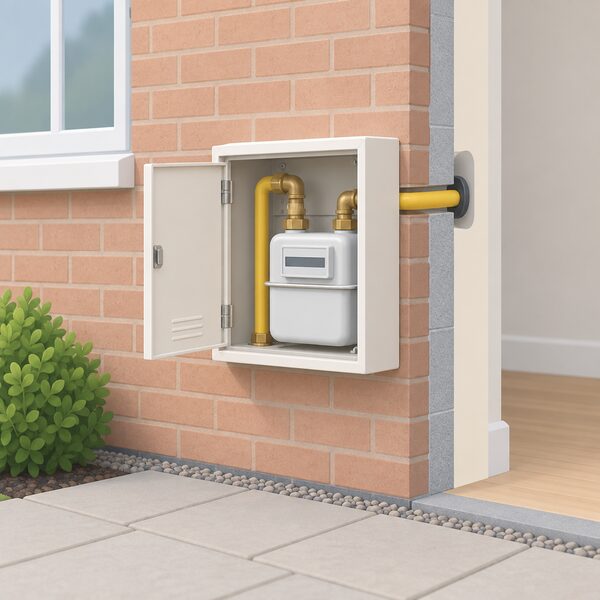
An electricity supply licence is granted under section 6(1)(d) of the Electricity Act 1989 and formally approved by the Gas and Electricity Markets Authority, as recorded when Tesla Energy Ventures Limited was granted a licence authorising it to supply electricity to domestic and non-domestic consumers in Great Britain in March 20263. On the gas side, the Gas Act 1986, its subordinate legislation and related statutory instruments, namely licences and industry codes collectively the Gas Laws, form a regime of economic regulation for gas transporters which Ofgem monitors and enforces50.
The Gas Act also underpins supply that begins without a signed contract:
"Where a gas supplier supplies gas to a consumer otherwise than in pursuance of a contract, the supplier shall be deemed to have contracted with the consumer for the supply of gas as from the time ('the relevant time') when he began so to supply gas to the consumer."
The Ombudsman's general approach in such cases is that where gas is available to a consumer or microbusiness, the supplier has supplied gas to that customer, and one function of the standing charge is to cover the costs of maintaining an available supply51. See deemed contract rates.
Statutory definitions also tie scheme obligations to licensees rather than brands. A scheme gas supplier is defined as a licensed gas supplier who supplied gas to GB domestic customers on 31 December preceding the start of the scheme year and was connected to a compulsory scheme electricity supplier52. On disconnection, Ofgem defines voluntary disconnections as gas disconnections carried out at the request of the consumer and not required under health and safety legislation, for which gas distribution networks charge a reasonable and cost reflective charge approved under their connection charging methodology50. A brand cannot end a supply at the close of a contract: ending supply is a licensed and network process, and consumers with their own contract may be able to switch supplier instead53.
Is the supplier hub model still fit for purpose?
Ofgem put the question formally in its November 2017 call for evidence, "exploring whether the supplier hub model is still fit for purpose or whether we should consider changes as the energy system evolves"4. Its July 2018 response to that call for evidence was clear that "current supplier hub arrangements are not going to be fit for purpose for energy consumers over the longer term"5.
The pressures are visible in the facts already set out. Flexibility services can place a demand side response provider or an appliance manufacturer between the household and the supplier33. Heat networks have been brought under Ombudsman coverage by legislation from April 2025 rather than by the supply licence18, and Standards of Conduct have been extended to alternative models and ownership structures including bulk supply arrangements, shared ground loop arrays and small communal heating systems19. New licensable roles are appearing, with load controllers required to hold an Ofgem licence16. White labels are a mild version of the same fragmentation: the household's counterparty in marketing and the household's counterparty in law are not the same entity.
Reform would not remove the need for a licensed party. It would change how many parties a household deals with and which of them carries the duties. For a household building towards self-supply, the live question is whether the licensee remains the single hub for export payments, settlement and levies, or whether those functions split. Until that is settled, the licensed supplier behind a white label remains the point at which a household's regulated protections, and its remaining dependence on the market, are concentrated.
Sources53 cited
- Complain about your energy supplier, Ofgem, 2026
- Customers' satisfaction with their supplier, July to August 2025, Ofgem, 2025-12-02
- Tesla Energy Ventures Limited granted electricity supply licence, Ofgem, 2026-03-12
- Future supply market arrangements: call for evidence, Ofgem, 2017-11-14
- Future supply market arrangements: response to our call for evidence, Ofgem, 2018-07-31
- State of the energy market: retail, Ofgem, 2025-04-15
- Raise a dispute: Business Energy Online, Energy Ombudsman, 2026-09-19
- Complain about your energy supplier or network operator, Ofgem, 2026
- Check if you are owed money on your energy bill, Ofgem, 2026
- Grants and funding for energy saving, Tameside Council, 2026-09-17
- Great British Insulation Scheme: energy suppliers, Ofgem, 2026-09-17
- FIT guidance for suppliers, Ofgem, 2021-08
- FIT guidance for licensed electricity suppliers, Ofgem, 2024-09-06
- Smart Export Guarantee supplier list, Ofgem, 2025-03-26
- Electricity distribution networks study: government response, GOV.UK, 2025-07-07
- Energy smart appliances and load control briefing, House of Commons Library, 2026
- Over 50 million to help families struggling with heating oil costs, GOV.UK, 2026-03-16
- Raise a dispute: ESP Heat Ltd, Energy Ombudsman, 2025-04-01
- Heat networks regulation: consumer protection guidance decision, Ofgem, 2026-01-13
- Involuntary prepayment meter supplier Code of Practice, Ofgem, 2023-04-18
- Debt Relief Scheme delivery guidance, Ofgem, 2025-11-06
- Supplier smart metering installation targets, Ofgem, 2026-09-17
- Supplier smart metering installation targets, Ofgem, 2026-09-17
- Customers' satisfaction with their supplier, July 2024, Ofgem, 2024-11-25
- Customers' satisfaction with their supplier, January 2025, Ofgem, 2025-05-13
- Customers' satisfaction with their supplier, January 2026, Ofgem, 2026-01
- Energy Consumer Satisfaction Survey: January 2025, Ofgem, 2025
- Debt strategy update: supporting reduction of energy debt, Ofgem, 2025-11-06
- Case study: third party charges, Energy Ombudsman, 2026-09-20
- Green supply guidelines: open letter, Ofgem, 2009-02-04
- Energy price cap wholesale costs review, Ofgem, 2023-12-15
- Upgrading Britain's first generation smart meters, Smart DCC, 2026
- Smoothing the Journey: engaging domestic consumers in energy flexibility, Ofgem, 2023-08
- Consumer First Panel year 9 wave 3: future energy market, Ofgem, 2018-07-27
- Get help with your energy bills, Ofgem, 2026-09-17
- Advice if you're struggling to pay your energy bills, nidirect, 2026-09-17
- Tackling fuel poverty in Scotland: a strategic approach, Scottish Government, 2021-12-23
- Energy Company Obligation: homeowners and tenants, Ofgem, 2026-09-17
- Energy efficiency advice, Torridge District Council, 2026-09-17
- 129 million to support Welsh communities in the transition to renewable energy, Welsh Government, 2025-09-17
- Spark Energy ceases trading: our advice to consumers, Energy Ombudsman, 2018-11-23
- ECO3 final determination report, Ofgem, 2022-03-31
- We may be able to help resolve your energy dispute, Energy Ombudsman, 2026-09-20
- Raise a dispute, Energy Ombudsman, 2026-09-19
- Raise a dispute: Connekt Energy, Energy Ombudsman, 2026-09-19
- How we can help: network operators, Energy Ombudsman, 2026-09-20
- Smart meters: your rights and expectations, GOV.UK, 2025-08-08
- What to expect, Energy Ombudsman, 2026-09-19
- How we can help, Energy Ombudsman, 2026-09-19
- Call for input: disconnections, Ofgem, 2025-01-13
- Deemed contracts and rates, Energy Ombudsman, 2026-09-20
- The Warm Home Discount Regulations, legislation.gov.uk, 2026-04-30
- Alternative homes energy guidance, Ofgem, 2026
 OfgemOfgem sets the rules energy suppliers and network companies must follow, including the price cap on standard tariffs.
 Energy Complaints and RedressMaps the routes a householder has when an energy supplier, network operator, broker or heat network gets something wrong, which body handles which dispute, and what the Energy Ombudsman can and cannot do.
 Dual Fuel TariffsExplains what a dual fuel tariff is, how discounts and single billing work, and where separate gas and electricity contracts remain available.
 Scams and Mis-SellingHow energy supplier scams present, what the doorstep and phone selling rules require, the redress available when a contract was mis-sold, and how the Energy Ombudsman handles a dispute.
 Financial Resilience RulesYour supplier going bust raises two questions: who takes over and what happens to your credit balance?
 Who Owns Which Energy SupplierWho is actually behind the company that sends your energy bill?