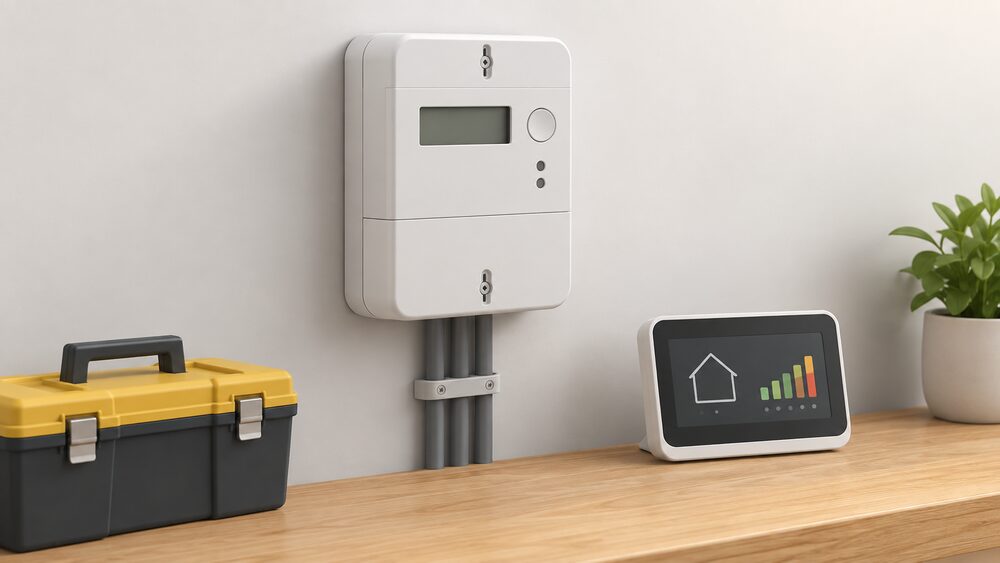
In this guide
A smart meter is installed by your energy supplier, not by a separate national body, and the supplier carries the obligation to make it work. Energy suppliers are responsible for providing and installing smart meters to all their customers, and they must meet the government's overall timescale and targets1. Under their licence conditions, suppliers are required to take all reasonable steps to install a smart meter where a meter is fitted for the first time or a traditional meter needs replacing due to a fault2. The installation itself is free to the household, and it is voluntary.
The practical shape of the process is short. A typical installation takes about 90 minutes, and the appointment includes key safety checks, an in-home display offered and demonstrated, and energy efficiency advice1. A household that pays for its energy, whether owning or renting, should be able to book an installation where it is expected to work1. Suppliers must offer an appointment within six weeks of a request or pay compensation, a standard set out in Ofgem's guaranteed standards work4.
What follows is the detail behind those headlines: who does what, what the appointment must include, how first and second generation meters differ, what happens on switching supplier, and where the process falls short. The wider context of who supplies British homes sits in the UK energy suppliers guide.
Your supplier installs your smart meter: who does what and when
The division of responsibility is straightforward and worth stating plainly, because most disputes about smart meters come from a household expecting one party to act and another being obliged to. Your supplier is responsible for installing your smart meter and making sure it works properly12. That responsibility does not end at the doorstep. If your smart meter stops working, contact your supplier: they are responsible for maintenance and will fix or replace your meter as needed13. Energy suppliers must also take all reasonable steps to ensure that smart meters automatically send them your gas and electricity meter readings2.
The supplier may not send its own staff. Your energy supplier might use a different company to install your smart meter, and will tell you if so7. The installer arriving at the door is therefore not always the company named on the bill, though the obligation remains with the supplier.
Timing is governed by two things: the supplier's rollout targets and the household's own request. Suppliers must meet the government's overall timescale and targets for the rollout1. On the household side, the guaranteed standards work sets an appointment deadline: the energy supplier must offer the consumer an appointment to take place within six weeks of the request being made, otherwise compensation is payable5. Ofgem's later consultation describes the same requirement in the same terms, that suppliers must offer an installation appointment within six weeks on request or pay the consumer compensation4.
There is one asymmetry a household should know about. There is currently no requirement for suppliers to install a smart meter on request, but if you would like one you can contact your supplier12. The obligation to offer within six weeks bites on the appointment, not on an absolute duty to install at a moment of the household's choosing. In practice, if you have not already been offered a smart meter, you can request one from your supplier14.
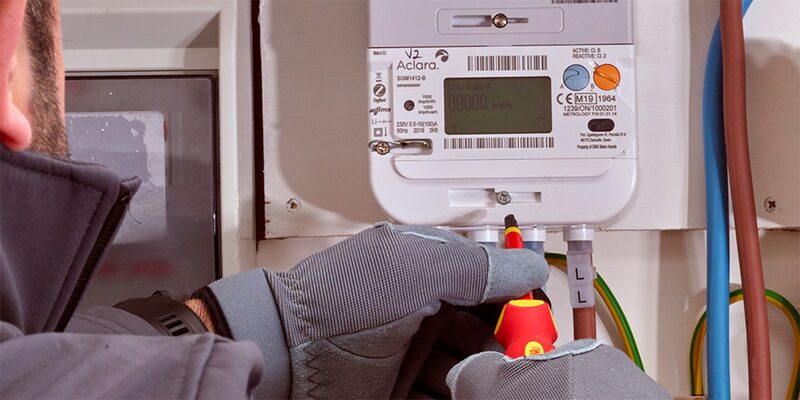
Installation is free, voluntary and takes about an hour per meter
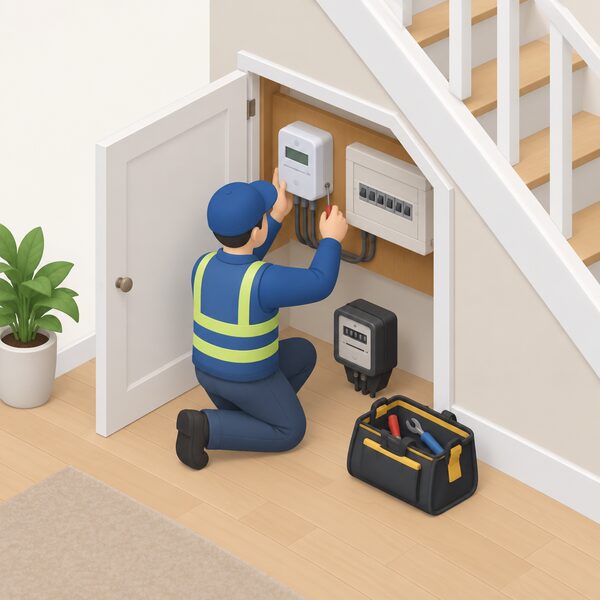
Three facts settle most of the questions households ask before booking. The first is cost. You can get a smart meter installed by your energy supplier at no extra cost7. The same position appears in the Welsh Government's guidance, which states that installation typically takes about 90 minutes and is free of charge15. ScottishPower's own appointment page says smart meters are being installed in homes across Great Britain at no extra cost to customers16. There is no published price for a standard domestic installation because there is no charge to the household.
The second is duration. A typical installation takes about 90 minutes10. Which's guidance puts it at around one hour for each smart meter installation6. The difference is explained by what is being fitted: a dual fuel property with both a gas and an electricity meter takes longer than a single meter, and older wiring or a meter in an awkward position adds time. A household with two meters should plan for the longer figure.
The third is consent. Installation is not compulsory: if your energy supplier offers you one, you can refuse10. The right to refuse is real, but it is not unconditional in every circumstance. While it is your right to refuse the installation of a smart meter, if your traditional meter needs to be replaced due to a fault or safety issue, replacement options may be limited12. A meter that has reached the end of its certified life, or one that is unsafe, will be replaced with something, and the supplier's default replacement is a smart meter.
There is a middle path that households rarely hear about. You can ask your supplier to install your smart meter with the extra functionality switched off11. That keeps the meter and its automatic readings while limiting what else it does.
SMETS1 or SMETS2: which meter you have and why it matters
The generation of meter in a property determines how well it survives a change of supplier, and it is the single most useful thing a household can check. First-generation smart gas and electricity meters, known as SMETS1, do not always allow the consumer to change energy supplier without losing the ability to send meter readings automatically5. All first-generation smart meters use a third-party communications network to send metering information to the energy supplier12. As a result, some SMETS1 meters could lose smart functionality when a consumer switched energy supplier17.
Second-generation meters were built to avoid that. SMETS2 meters were designed to connect directly to the DCC's secure national network, allowing supplier switching while retaining smart functionality17. They allow the consumer to switch seamlessly between energy suppliers because they are connected to a nationwide secure smart meter network5. SMETS2 meters allow consumers to switch supplier while retaining smart functionality, including automatic meter readings18. Cross-compatibility means a smart meter will keep its smart functions across all energy suppliers, and SMETS2 is now the meter type for any new smart meter installation12.
The first-generation estate is being brought up to the same standard. Suppliers had until the end of 2023 to enrol first-generation meters onto the national network or replace them with second-generation meters, and if a supplier is unable to enrol a first-generation meter, it must replace it with a second-generation meter12. Those with first-generation smart meters will be upgraded to the new SMETS2 smart meters in due course if they have not been already4.
| Feature | SMETS1 | SMETS2 |
|---|---|---|
| Communications | Third-party network12 | DCC national network17 |
| Switching supplier | May lose automatic readings5 | Retains smart functions18 |
| Risk on switching | Could temporarily go 'dumb'18 | No change to readings or billing19 |
| New installations | No longer the standard | The meter type for new installations12 |
A household that does not know which it has can find out from the supplier, or by checking the meter itself. The distinction matters most to anyone planning to switch, because it determines whether readings continue automatically or revert to manual submission.
What happens to smart functionality when you switch supplier
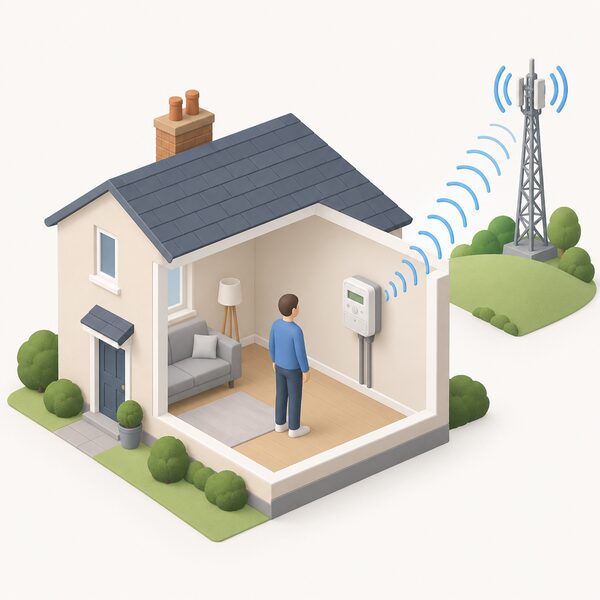
Switching supplier with a smart meter is permitted, and the meter does not block it. If you have a smart meter, you can still switch energy supplier11. The variable is what the meter can do afterwards. You can switch suppliers if you have a smart meter, but the new supplier might not offer all smart meter services such as remote meter readings, and the meter may need replacing20. More bluntly, your meter may not work in smart mode when you move to the new supplier, and you may need to take meter readings manually and submit them to your new supplier instead21.
For second-generation meters the experience is smoother. With a type of smart meter called SMETS2, a household can switch energy supplier and keep all smart functions with no interruption, because these meters are connected to a central wireless network all energy firms can use19. For first-generation meters the risk is real: they could temporarily go 'dumb' and lose their ability to send automatic meter readings after a switch of energy supplier18. With an older type of smart meter, switching energy suppliers might mean temporarily estimated bills, and if smart functionality is lost, readings have to be sent manually until the meter is upgraded over the air22.
This is not a new problem, and the rules have long anticipated it. In some instances the gaining supplier may not currently be able to operate the meter in smart mode, and Ofgem rules require suppliers installing a smart meter to inform the customer they may lose functionality on switching23. A household that was told nothing at installation has a legitimate complaint if the meter goes dumb later.
The practical consequence for independence is worth naming. A smart meter reduces dependence on manual reading and estimated billing, but it does not remove dependence on the supplier, because the supplier controls the meter's smart mode and the data flowing from it. A household that switches frequently should check the meter generation first, and treat automatic readings as a feature of the current supplier relationship rather than a permanent property of the meter.
Booking an installation: online account, letter or phone
Booking routes vary by supplier, and the constraint is usually administrative rather than technical. Any household that pays for energy, whether owning or renting, can book a smart meter installation where it is expected to work in the property1. Only the person paying the bills can request a smart meter installation from their energy supplier8. That single rule explains most failed booking attempts in shared or rented households where the account is in someone else's name.
ScottishPower's own process is a useful illustration of how a large supplier handles it. Its smart appointment page offers three routes: book with your online account, book without an online account, or call from Monday to Friday, 9am to 6pm16. The existence of a non-online route matters, because not every household has or wants an online account. Business customers are routed separately, on 0800 634 005216.
Once booked, confirmation follows. A confirmation of the appointment arrives by email, message or phone6. Before the visit, there is a household duty as well as a supplier one: the energy company is told about unusual home or meter circumstances when the appointment is made, or at least several days before the installation6. Examples include a meter box that is locked, a meter located in a communal area, or access that requires a key.
Ofgem's consumer line is simpler still: contact your supplier to get a smart meter for free24. There is no central booking service, and no national phone number, because the appointment is the supplier's to arrange.
Eligibility: renters, flats, prepayment and business customers
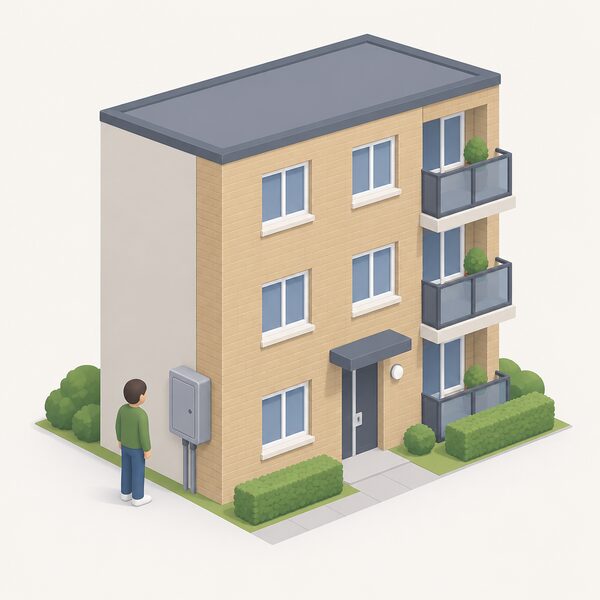
Eligibility is broader than many households assume. You can apply for a smart meter if you are renting, are a prepay customer, or if the meter is located outside your property, as in flats with communal meter boxes3. Whether you are on a pre-payment plan or renting, you can benefit from a smart meter15. Even renters can have a smart meter installed10.
For private renters there is a specific route and a specific condition. If you are a private renter, if the energy bills are in your name or you prepay for your energy, you can choose to have a smart meter installed, after checking the tenancy agreement and letting the landlord know12. The tenancy agreement is the document that decides whether a tenant may alter metering, and the landlord should be told rather than asked in every case.
The barriers that do exist are practical rather than categorical. Only the person paying the bills can request an installation8. Your supplier may not currently be installing smart meters in your area8. And a supplier can decline where the property is not expected to support a working meter, which is why the booking guidance is framed around installation "where it is expected to work"1.
Prepayment customers have a further protection worth knowing, though it concerns debt rather than smart meters directly. Authorised heat network suppliers are obliged to offer a reasonable amount of additional support credit in a timely manner where a prepayment consumer has self-disconnected or self-rationed in circumstances in which any occupant of the household is in a vulnerable situation25. For households on prepayment, the smart meter's remote switching capability is also the mechanism by which a supplier can move a meter to prepayment mode without entry, a power that sits alongside the warrant route26.
| Household type | Position |
|---|---|
| Owner occupier | Can book where installation is expected to work1 |
| Private renter | Can choose if bills are in their name or they prepay, after checking the tenancy and telling the landlord12 |
| Prepayment customer | Eligible, and can benefit15 |
| Flat with communal meter box | Eligible, meter may be outside the property3 |
| Business customer | Separate supplier route, for example ScottishPower on 0800 634 005216 |
The In-Home Display: what it shows and what it costs to run
Every installation comes with a display. Everyone who gets a smart meter installed will be provided with an in-home display14. With every smart meter installation, the customer is provided with an in-home display4. Smart meters also come with a useful In-Home Display so consumers can see and manage energy use to save money on bills1.
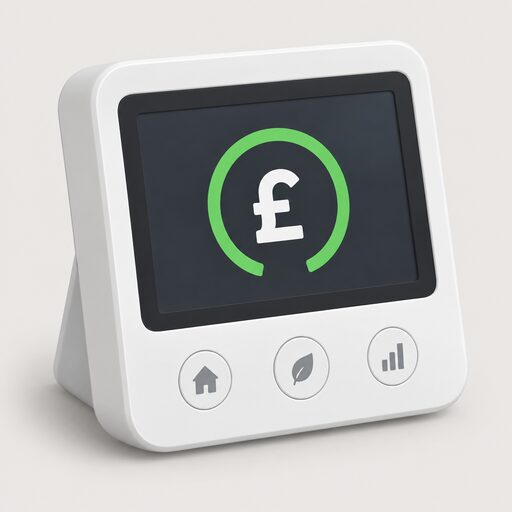
What it does is narrow and specific. It is a portable touchscreen device that shows near real-time energy usage data28. The meter's in-home display also shows you how much energy you are using during the day29. Your in-home display should show you how much energy you are using in pounds and pence, and should also show your standing charge depending on tariff and supplier22.
The limits are as important as the functions. Your in-home display may not show any discounts or ad hoc charges22. That is the main reason a display total and a bill total diverge, and it is not a fault. The display is a monitoring device, not a billing document.
The obligation to keep it working is time-limited, and this is the fact most households discover too late. Consumers are only guaranteed to receive the benefits available from being able to monitor their energy usage via an in-home display for a year, and after that the supplier has no obligation to replace it11. Separately, energy suppliers are required to maintain smart meters for 12 months after installing them10. The meter and the display therefore have different clocks, and the display's is the shorter one in practice.
Reading frequency, data granularity and what changes when you alter it
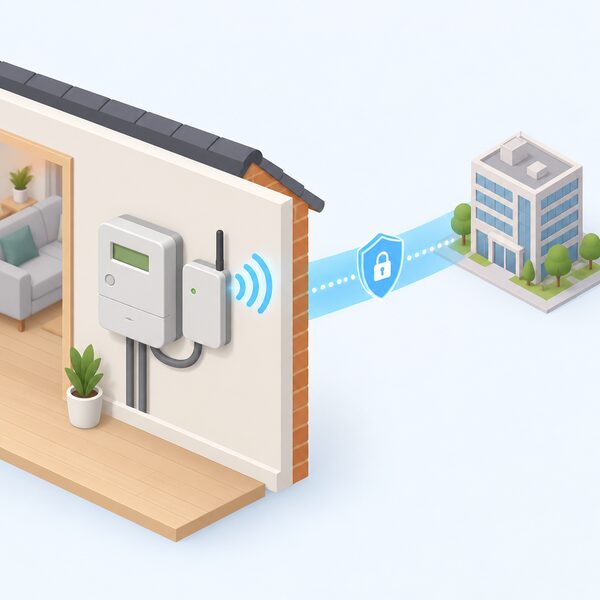
Automatic reading is the core function. A smart meter automatically sends your electricity and gas meter readings to your supplier30. Meter readings should be sent automatically by your smart meter to your energy supplier1. The mechanism is a dedicated network rather than the internet: a smart meter uses a secure smart data network to send your meter readings directly to your supplier at least once a month10.
The granularity is a setting, not a fixed property. Automatic meter readings provide your energy supplier with monthly, weekly, daily, or even half-hourly readings3. That range is the household's to influence, and it is the point at which data privacy and billing accuracy pull in opposite directions. Half-hourly data supports time-of-use tariffs and detailed monitoring; monthly data supports accurate billing with less detail shared.
The independence question here is genuine and cuts both ways. Automatic readings remove the household's dependence on remembering to submit figures, and they remove the estimated bill. This means you get an accurate bill instead of an estimated bill19. But the same automation means the supplier holds a continuous record of consumption, and the household's control over that record is exercised through the supplier's settings rather than at the meter.
A household that wants the accuracy without the granularity can ask for the extra functionality to be switched off at installation11. That is a legitimate request, made at the point of booking rather than afterwards.
Where installation falls short: delays, signal problems and non-communicating meters
Not every smart meter operates in smart mode, and the causes are documented. A meter may lose connection with your supplier, lose connection after you change supplier, or have been installed without being connected to the national communication system2. Those three causes cover most non-communicating meters, and only the third is a fault at installation rather than a later event.
The remedies have teeth. If a smart meter installation fails due to a fault within the energy supplier's control, the consumer will receive compensation5. Ofgem's final decision on the guaranteed standards confirms the same trigger9. The compensation figure reported for delayed or failed installations is £40, following reforms brought forward by Ofgem9.
Where the failure is not the supplier's fault, the ombudsman route exists and has produced findings. In one case the supplier failed to address the consumer's actual issue, and the consumer was not informed prior to the installation or given the option not to proceed based on that information31. In another, a delay in the supplier updating its systems after a meter exchange led to incorrect estimated billing32. Accessibility failures also appear: when an engineer visited one consumer to fit a smart meter, he did not have a talking display unit33.
The pattern across these cases is administrative rather than technical. Meters generally work; the failures are in communication, system updates and matching the installation to the household's needs. That is why the pre-installation conversation matters, and why a household with unusual circumstances should raise them at booking6.
Moving house: leaving the IHD behind and arranging a final reading
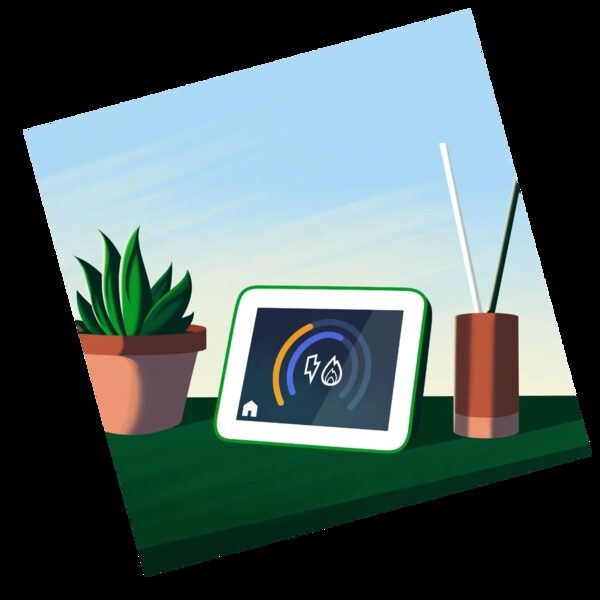
A smart meter stays with the property; the in-home display does not have to. The display is provided to the household that booked the installation, and it is a portable device rather than part of the fixed metering. A household moving out should expect to take the display with it or leave it, but the meter itself remains and continues to serve the next occupant.
The final reading is the practical task. Smart meters send meter readings automatically to your energy supplier, so you do not have to do it yourself3. Meter readings should be sent automatically by your smart meter to your energy supplier1. That reduces, but does not remove, the need to confirm a closing reading when an account ends, particularly where the meter has lost connection or the property is changing hands on a specific date.
For the incoming household, the meter generation determines what happens next. A SMETS2 meter will keep its smart functions across all energy suppliers, so a switch by the new occupant does not disturb it12. A SMETS1 meter may not, and the new occupant may need to send readings manually until the meter is enrolled or replaced18.
The wider administrative side of a move, including closing accounts and opening new ones, is covered in moving home and your energy supplier, and the process of confirming a closing balance sits with final bills and credit refunds.
Sources33 cited
- Smart meters: your rights and expectations, GOV.UK, 2025-08-08
- Smart meter performance, Ofgem, 2026
- How to get a smart meter, Smart DCC, 2026
- Does a smart meter need wifi?, Smart DCC, 2026
- How do you know if you have a smart meter, Smart DCC, 2026
- Smart meter installation, Which?, 2026-02-26
- Can I get a smart meter, Smart Energy GB, 2026-03-16
- Smart meters: easy read, Smart Energy GB, 2026-03-16
- Tough new rules force suppliers to fix faulty smart meters, GOV.UK, 2026-03-10
- Guide to smart meters, Energy Saving Trust, 2026-07-15
- Getting a smart meter installed, Citizens Advice, 2026-09-17
- Smart meters, Energy Ombudsman, 2026-09-20
- Smart meters, Welsh Government, 2026
- Smart meter installation, ScottishPower, 2026-09-17
- Upgrading Britain's first generation smart meters, Smart DCC, 2026
- Smart Meter Guaranteed Standards of Performance, Ofgem, 2025-03-28
- Smart metering policy framework post-2025 consultation, DESNZ, 2025-08
- Final decision: smart meter GSOPs, Ofgem, 2026-01-30
- Getting a smart meter, Ofgem, 2026
- Get help with your smart meter, Ofgem, 2026
- What happens if your energy supplier goes out of business, Ofgem, 2026
- Problems with services, Isle of Anglesey County Council, 2025-10
- Are smart meters accurate, Smart Energy GB, 2026-03-16
- How accurate are smart meters, Smart DCC, 2026
- How do smart meters help the environment, Smart DCC, 2026
- Installation of smart meters, Energy Ombudsman, 2026-09-20
- Incorrect estimated billing, Energy Ombudsman, 2026-09-20
- I'm blind and my energy supplier didn't cater for my needs, Energy Ombudsman, 2026-09-20
- Smart meters: written evidence, Science and Technology Committee, 2016-06
- Smart meters, Public Accounts Committee, 2023-10-20
- Heat networks consumer protection draft guidance, Ofgem, 2025-09-05
- Check energy suppliers can install prepayment meters without household permission, Ofgem, 2026
- Installing a prepayment meter without your permission, Ofgem, 2026
 Smart Meter RulesCan your supplier make you have a smart meter?
 Smart Meter Installation DayWhat happens during a smart meter fitting appointment: how long it takes, the supply interruption, the safety checks, the in-home display demonstration, who can book it, and what happens when gas and electricity come from different suppliers.
 Meters and Energy IndependenceDo smart meters really save you money, and can you still get one fitted for free?
 Smart Meter Faults and FixesYour smart meter has stopped working.
 Why You Cannot Get a Smart MeterWhy can some homes not have a smart meter fitted, and what counts as a good enough reason?
 Prepayment Meters and DebtCan your energy supplier force you onto a prepayment meter because you owe them money?