
In this answer
Short answer
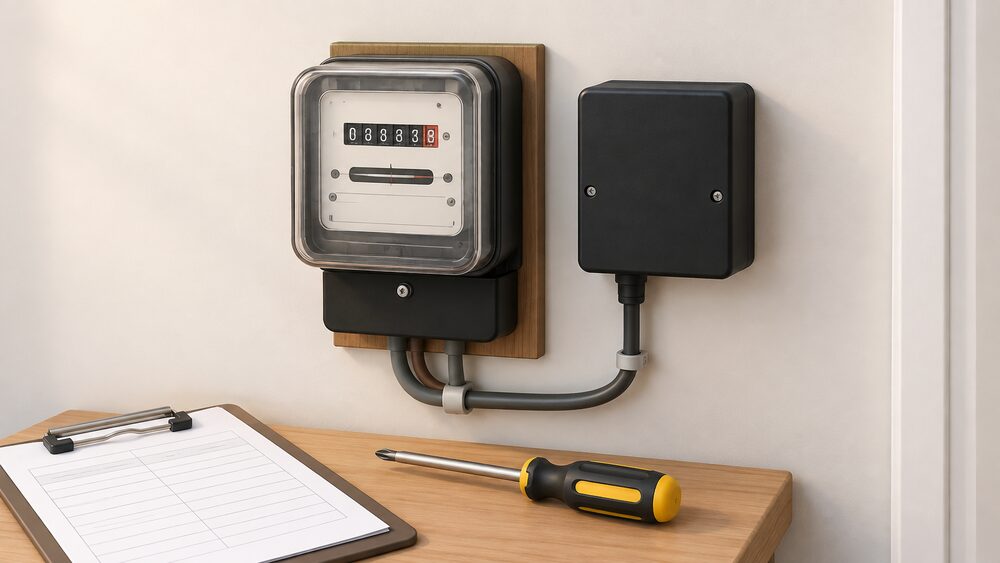
The Radio Teleswitch Service (RTS) signal has been switched off across the UK, and support for RTS meters has ended1. The service used a radio signal to tell some older electricity meters when to switch between peak and off-peak rates, and to control when electric heating and hot water systems turned on3. Households that still have an RTS meter may find that heating and hot water no longer function as normal, or that they are charged the wrong amount, for example a peak rate for off-peak usage1.
The switch-off was completed on 30 June 2026, when the phase out finished as the technology reached the end of its operational life5. It followed a phased process that began on 30 June 2025, with meters switched off in groups rather than all at once6. Suppliers were required to contact affected customers beforehand7.
The practical position for a household is straightforward: all RTS meters need to be replaced, the replacement is a smart meter, and the household does not pay for the change8. The sections below set out how to identify an RTS meter, what happens to one after the signal ends, and what the switch-off means for heating and hot water timing.
The RTS signal has been switched off: what that means for your meter
The Radio Teleswitch Service produced the radio signal to household meters that have off-peak tariffs but are not smart meters. It sent signals by radio waves to switch between peak and off-peak electricity rates and controlled when heating and hot water systems turned on7. Radio teleswitching itself is the transmission of digital data on radio for alarm, control and information to locations throughout the reception area of the radio transmissions12.
With the signal gone, RTS meters lose functionality4. Support for them has ended, and a meter still in place may no longer work as expected2. The effects are not always immediate or obvious. Systems may become unpredictable, potentially not working or turning on or off at incorrect times7. Households risk losing access to heating and hot water, losing cheaper off-peak tariffs, receiving inaccurate or inconsistent billing, or finding the meter stops working properly13.
The switch-off affects customers who have an RTS meter in their home, and may mean that their heating and hot water supply stops functioning as normal1. For a household, the meter is no longer a passive measuring device: it was the control point for when cheap electricity was drawn and when heat was stored. Losing that control is what turns a metering change into a heating and hot water problem.
Why the Radio Teleswitch Service had to end
The service ended because the equipment that produces the radio signal can no longer be adequately maintained3. The technology behind RTS reached the end of its operational life, with some of the components that support it no longer being manufactured, and the equipment can no longer be maintained14. The service had reached the end of its natural operational life9.
This is an infrastructure retirement rather than a policy choice about tariffs. The radio teleswitch is a device that lets electricity suppliers switch large numbers of electricity meters between different tariff rates12, and it was designed to support those using electricity for their heating and hot water9. Once the transmitting equipment could not be kept in service, every meter depending on that signal had to move to a replacement method of switching.
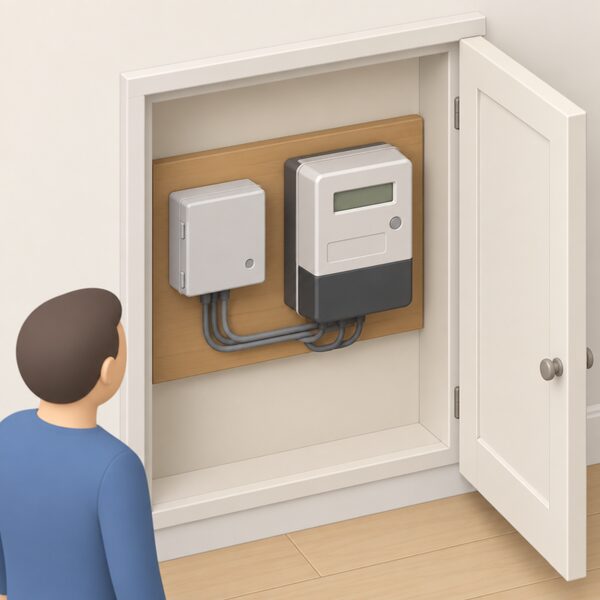
The replacement method is the smart meter. A smart meter gives a similar service to an RTS meter9, applying off-peak rates and controlling load without a broadcast radio signal. That shift matters for energy independence in a specific way: the household no longer depends on a national radio transmitter it cannot influence, but it does depend on a supplier, a communications network and a meter that the supplier owns and maintains.
What happens to an RTS meter after switch-off
After they are switched off, RTS meters stop functioning properly, which might leave households unable to switch between peak and off-peak rates, and in some cases without heating and hot water15. The consequences reported for households that did not replace an RTS meter before the service ended include losing access to heating and hot water, loss of cheaper off-peak tariffs, inaccurate or inconsistent billing, and meters that stop working properly13.
If the RTS equipment is not replaced, customers could be limited to a more expensive single-rate tariff and could no longer rely on heating and hot water switching on and off as expected, with the risk of them even staying permanently on or off16. That last point is the one that catches households out: a storage heater or immersion heater that stays permanently on draws peak-rate electricity continuously, while one that stays permanently off leaves the home without heat or hot water.
Checking whether your home uses an RTS meter
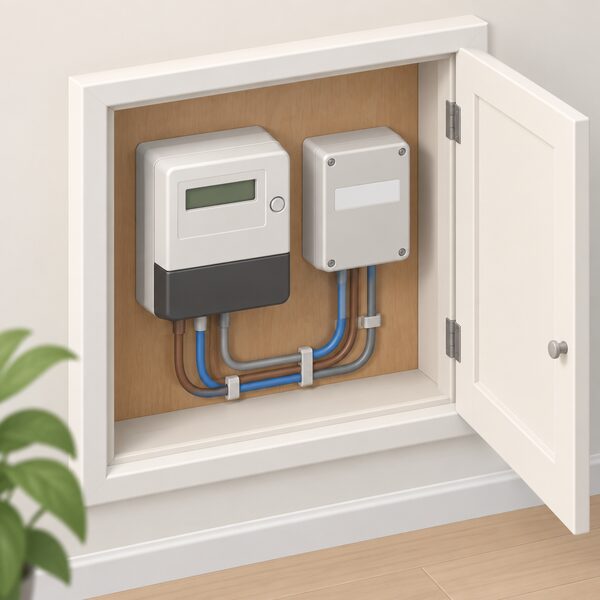
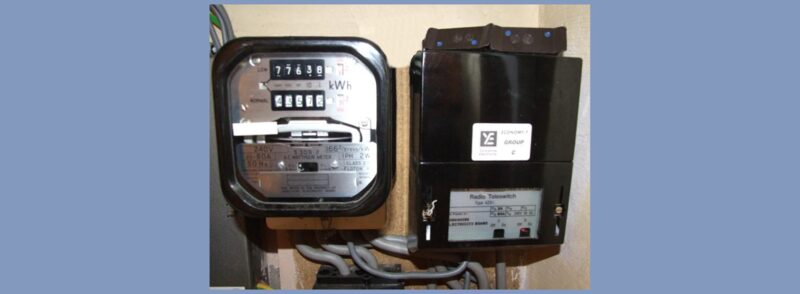
RTS meters are more likely in homes that use electric heating or storage heaters, have no gas supply, get cheaper electricity at certain times of day, or have a radio teleswitch box near the meter16. The most reliable single check is physical: there may be a separate switch box near your meter with a Radio Teleswitch label on it3. Some meters carry the words Radio Teleswitching Service and show two different meter readings, one for daytime and one for night-time17.
The tariff is the other strong indicator. If your supply is on Economy 7, Economy 10 or Total Heat Total Control, you may have an RTS meter9. A letter about getting a new meter is also a sign, and households can ask their supplier whether there is a black box next to the meter with radio teleswitch written on it18.
| Sign | What it looks like |
|---|---|
| Switch box | Separate box near the meter labelled Radio Teleswitch3 |
| Meter display | Two readings, one day and one night17 |
| Heating | Electric heating or storage heaters16 |
| Gas | No gas supply to the area, including rural areas and high-rise flats4 |
| Tariff | Economy 7, Economy 10 or Total Heat Total Control9 |
If your property matches any of these criteria, you may have a Radio Teleswitch meter4. The signs overlap with the profile of homes that are most dependent on electricity for heat, which is why the switch-off has fallen hardest on households without a gas connection.
Replacing an RTS meter: what to expect from your supplier
Your supplier must replace your meter to make sure there is no disruption to your electricity supply8. Suppliers are required to proactively contact customers who currently use RTS meters to inform them about the switch-off date and the need to upgrade to a smart meter to avoid disruptions7. The action for a household is to contact the supplier, using the number on the bill, and book the installation10.
You do not pay anything to change your meter8. The replacement is arranged through the electricity supplier, and Ofgem guidance is to contact your supplier to arrange to have a new smart meter installed19. Anyone with an RTS meter should contact their supplier urgently, as the service is being actively phased out20.
Preparation for the visit is modest. The area around the meter needs to be clear with good access, and the installer will ask for all electrical appliances to be turned off before power is switched off21. The installation itself is covered in more detail in smart meter installation, and the rules that bind suppliers are set out in smart meter regulations.
What RTS switch-off means for heating and hot water timing
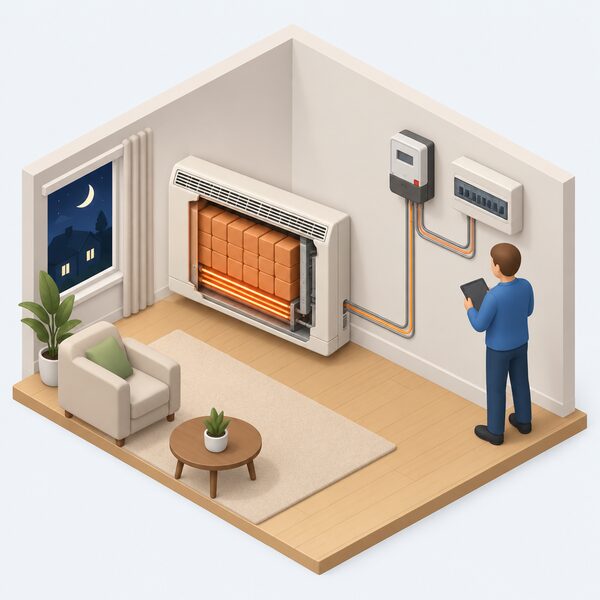
RTS was used by some older electricity meters to control electric heating and hot water, often linked to tariffs such as Economy 7 or Economy 1016. It was designed to support those using electricity for their heating and hot water9. Once the signal is turned off, a heating system or water heater controlled by the RTS meter could stop working10.
The failure modes reported are specific. Heating and hot water could stop working properly, for example turning on or off at the wrong times6. Heating or hot water may be continually left on or off, or the charging-up may happen at the wrong time of day15. For a household with storage heaters, the charging window is the whole system: if the heaters charge at the wrong time, the heat is either unavailable in the evening or bought at the peak rate.
A smart meter restores the switching function. It gives a similar service to an RTS meter9, so off-peak charging and hot water timing can continue under a time-of-use arrangement. The dependence that remains is on the supplier and the communications network behind the meter, rather than on a radio broadcast. Households weighing up what the meter change delivers for control of their own energy use can read smart meters and energy independence, and the tariff side is covered in smart meters and time-of-use tariffs.
Economy 7 and off-peak tariffs after the switch-off
Economy 7 remains on offer as a tariff from most energy suppliers22. The tariff and the meter are separate things: the RTS signal was the mechanism that told a non-smart meter when the off-peak window applied, and a smart meter performs that role instead9. The RTS switch-off is expected to have been completed by the end of 2026 according to energy regulator Ofgem, a date now passed with the phase out finished on 30 June 202623.
Off-peak hours themselves are not uniform. One source describes Economy 7 as seven hours during the night, while another gives the window as between 22:00 and 08:3024. The specific window is a matter to confirm with the supplier rather than assume.
For a household, keeping an off-peak tariff after the switch-off depends on having a meter that can apply it. That is the practical link between the RTS retirement and the smart meter rollout: the off-peak tariff survives, but the equipment that delivered it does not.
Where the switch-off differs across the UK
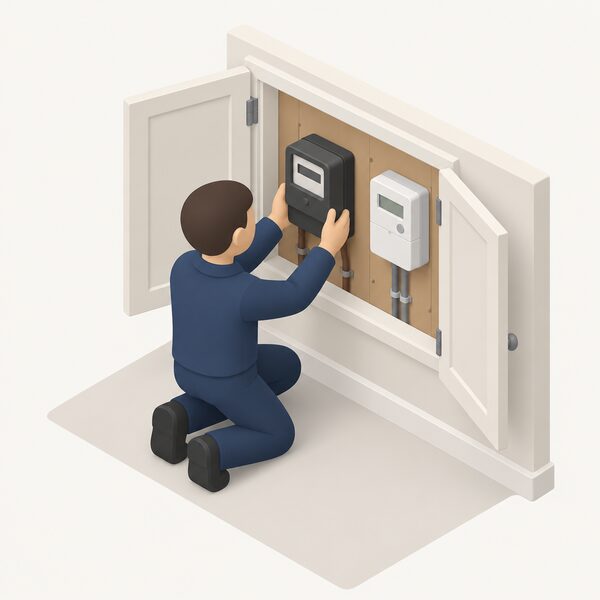
The RTS signal has been switched off across the UK14, and the phase out was completed nationally5. The switch-off has been a phased process, so it has not happened across the entire country at once6, and the radio frequency that switches RTS and DTS meters between peak and off-peak rates could be switched off in any area from 30 June 2025, with suppliers required to tell households beforehand7.
The household-facing rules are consistent across England, Scotland, Wales and Northern Ireland: the supplier replaces the meter, and the household does not pay8. What differs is the surrounding support and the network operator. In Wales, guidance for renters has been issued through Rent Smart Wales, warning that the switch-off could affect heating and hot water16. In Northern Ireland, meter replacement work is handled through NIE Networks, which advises clearing the area around the meter and turning off appliances before power is switched off21. In Scotland, Home Energy Scotland has published switch-off guidance for affected households6.
For households in flats and rented homes, the practical constraints are covered in monitoring in flats and rented homes, and the national picture is set out in smart meters in Scotland, smart meters in Wales and smart meters in Northern Ireland.
If your meter stops working after the switch-off
Contact your supplier. They are responsible for maintenance and will fix or replace your meter as needed26. If you still have an RTS meter, it may no longer work as expected2, and the supplier is the first point of contact for faults, billing problems and replacement.
The wider fault and diagnosis picture, including what suppliers must do and how quickly, is covered in smart meter faults and troubleshooting and smart meter guaranteed standards. Households that have not yet had a replacement arranged should treat the meter as the priority, because the heating and hot water consequences follow from the meter rather than from the tariff.
Sources26 cited
- Smart meters, SSEN
- Get help with your smart meter, Ofgem, 2026-09-17
- Radio Teleswitch Service switch-off, National Energy Action, 2026-06-30
- The Radio Teleswitch Service (RTS) switch-off, Smart Energy GB, 2026-04-24
- The Radio Teleswitch Service switch-off: what you need to know, Energy UK, 2026-06-30
- RTS switch-off, Home Energy Scotland, 2026-09-20
- Radio Teleswitch Service, Electricity North West, 2026-09-19
- RTS meter switch-off, Energy Saving Trust, 2026-05-08
- RTS meters, National Energy Action, 2026-07-08
- RTS: what you need to know, Act on Energy, 2026
- RTS meters, Good Energy, 2026-07-17
- Radio Teleswitch, Energy Networks Association, 2026-09-17
- Looming crisis for households on RTS meters, End Fuel Poverty Coalition, 2025-04-30
- RTS meters, ScottishPower, 2026-06-30
- Radio Teleswitch Service switch-off, Age UK, 2026-08-26
- Act now: RTS switch-off could affect heating and hot water, Rent Smart Wales, 2026-06-15
- Important reminder for Economy 7 and 10 meters, Centre for Sustainable Energy, 2026-06
- DTS energy meter, Citizens Advice, 2024-02-03
- Getting a smart meter, Ofgem, 2026
- Radio Teleswitch, Energy Advice Scotland, 2025-12-22
- Meter replacements, NIE Networks, 2026-09-19
- Economy 7, Uswitch, 2026-09-08
- Time of use tariffs explained, Which?, 2026-04-23
- A guide to using electric storage heater controls, Energy Saving Trust, 2026-05-21
- Radio Teleswitching Service, OVO Energy, 2026-09-17
- Smart meters, Welsh Government Climate Action, 2026
 Radio Teleswitch Switch-OffIs your storage heating or hot water still run by an old radio-controlled meter?
 Smart Meters in WalesCan you get a smart meter fitted free in Wales, and will it work if you live in a rural area or an older home?
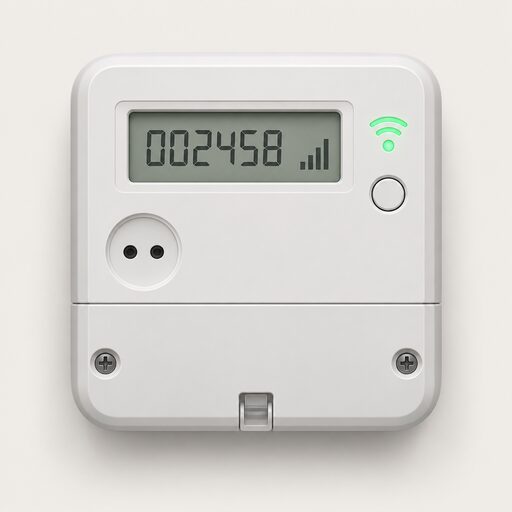 The Full Smart Meters GuideDo smart meters really save you money, and how do you use one to cut your bills?
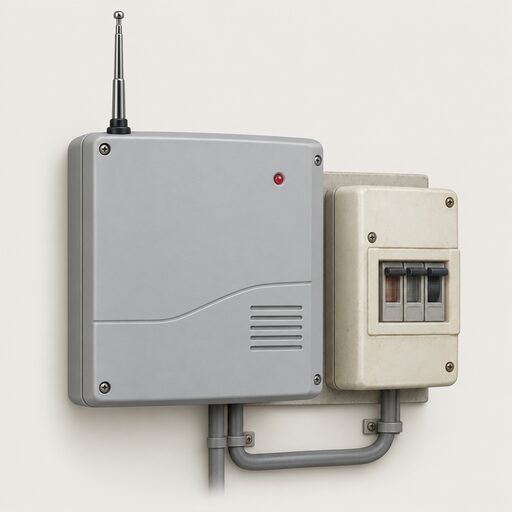 Smart Meters in ScotlandWhen will you get a smart meter in Scotland, and what happens if yours still runs on the old radio signal that switches heating and hot water?
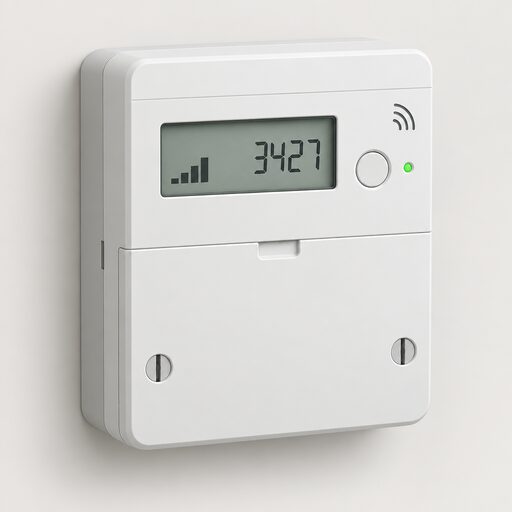 How a Smart Meter WorksHow a British smart meter measures gas and electricity, how the in-home display and the DCC's secure network fit together, what data leaves the house, what it costs, and where smart mode goes wrong.
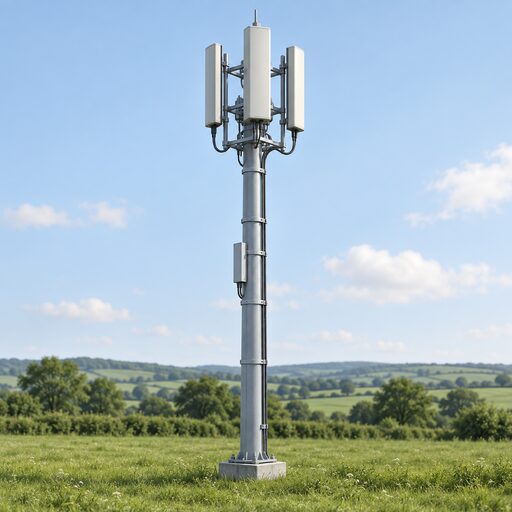 How Smart Meters CommunicateSmart meters send readings without using your home wifi or broadband, so they still work if your internet goes down.