
In this answer
Short answer
Yes, a smart meter can run an Economy 7 tariff. All smart meters can support tariffs which charge different prices at different times throughout the day and night, including Economy 7, and Economy 10 meters are also available1. The catch is not the technology but the supplier: you can get a smart meter if you are on an Economy 7 tariff, but not all suppliers can offer this2.
The practical obstacle is readiness rather than compatibility. If you have storage heaters, and are on Economy 7 or Economy 10, and your supplier does not offer smart meters that work with Economy 7 or 10 yet, you may have to wait or move supplier3. All energy suppliers are obliged to offer their customers a smart meter before the end of the rollout, even if they use specific appliances like storage heaters3.
Installation itself costs nothing. You can get a smart meter installed by your energy supplier at no extra cost4, and installation is free5. There is currently no requirement for suppliers to install a smart meter on request, but you can request one from your supplier if you have not already been offered one1.
How a smart meter records Economy 7 in dual-rate mode
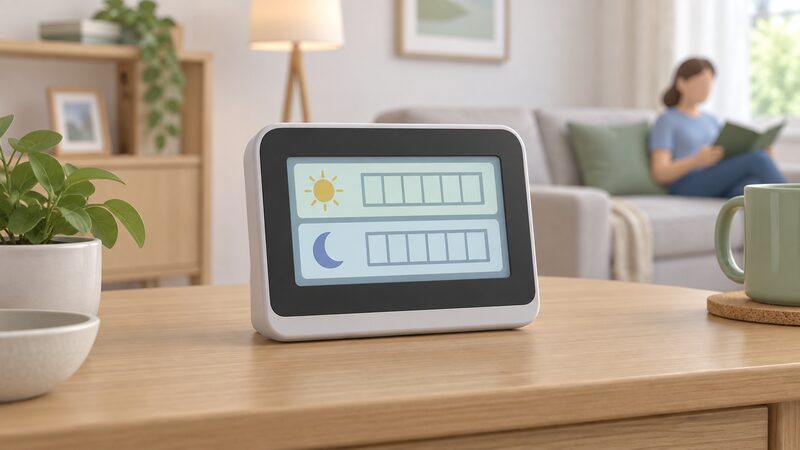
Economy 7 electricity meters offer a two-tier rate system for electricity, with usage during the day and the night charged at different rates, the nightly rate being less expensive7. A smart meter in Economy 7 mode does the same job electronically: some electricity smart meters show separate readings for day and night tariffs, Economy 7 pricing, and peak and off-peak usage8.
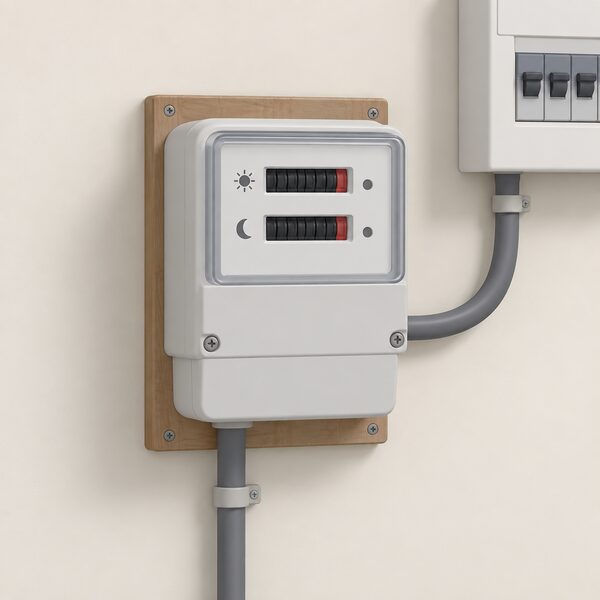
On a traditional Economy 7 meter, the display shows two readings, one for on-peak hours (marked "normal" or "day") and one for off-peak hours ("low" or "night"), possibly shown as Rate 1 and Rate 29. These two sets of numbers are typically marked "low" and "normal"10. Electricity unit rates are either a single unit rate or a dual rate, which provides two meter readings and is usually called Economy 711. The National Energy Action guidance for households lists the same identifiers: two meter readings, a low or off-peak rate, a normal, high or on-peak rate, or a button to press to see each rate on an electronic meter12.
A smart meter removes the need to read those registers by hand. It records both rates automatically and sends them to the supplier, which is why the same meter can serve an Economy 7 tariff, a fixed rate tariff, or a newer time-of-use tariff without a physical exchange10. The rate you pay does not change just because a smart meter is fitted: your rate will not change with a smart meter, unless you change your energy tariff at the same time13.
Suppliers that install Economy 7-compatible smart meters
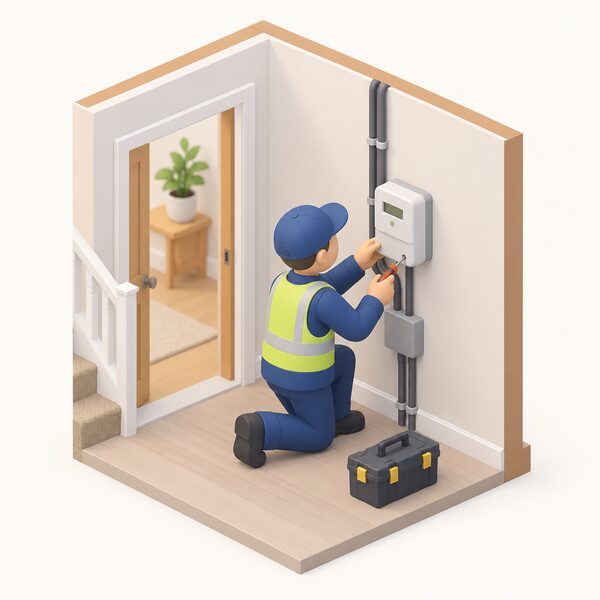
Supplier readiness is the variable that decides whether a household can get an Economy 7 smart meter now. You can get a smart meter combined with an Economy 7 tariff, but not all suppliers offer this14. If you have an Economy 7 or 10 electricity supply, you can get a smart meter as part of the national smart meter rollout, but it depends on which supplier is ready to install one, and smart meters of this type will be available at larger scale later in the rollout15.
The obligation on suppliers is general rather than tariff-specific. All energy suppliers are obliged to offer their customers a smart meter before the end of the rollout, even if they use any specific appliances, like storage heaters3. Under the Rollout Framework for 2022 to 2025, energy suppliers were required to meet binding annual targets for installing smart and advanced meters16. Ofgem's own stated expectation is that suppliers are ensuring customers who want a smart meter can receive one quickly17.
Where a supplier cannot yet provide an Economy 7 or Economy 10 smart meter, the household has three routes: wait for larger-scale availability later in the rollout15, ask the current supplier to arrange a credit meter, which may cost a fee18, or change supplier to one that is ready. If you do not already have an Economy 7 meter, your chosen supplier will need to install a new one14.
Switching away from Economy 7 without a meter exchange
A smart meter is compatible with Economy 7 tariffs, fixed rate tariffs and newer time-of-use tariffs, and it allows switching tariffs without changing the meter10. That means a household on Economy 7 can move to a single-rate tariff without a meter exchange, provided the meter is already a smart meter. The rate itself only changes when the tariff changes: your rate will not change with a smart meter, unless you change your energy tariff at the same time13.
For households no longer on an Economy 7 or Economy 10 tariff, there is no rush. The meter will continue to function normally and, providing all electricity is on one circuit, there should be no difference, though the Centre for Sustainable Energy recommends smart meters20. Where a household wants to leave Economy 7 but does not have a smart meter, the route is to talk to the current supplier and arrange for a credit meter to be installed, which may cost a fee18.
Switching supplier with a smart meter is possible, but the new supplier might not offer all smart meter services such as remote meter readings, and the meter may need replacing21. Except by switching, you do not control the tariff your energy supplier sets, though you can change how much energy you use22.
Economy 7, Economy 10 and time-of-use tariffs: what meter each needs
Economy 7 and Economy 10 are older time-of-use tariffs that need compatible meters, while newer flexible tariffs typically need a smart meter23. Economy 7 and Economy 10 use fixed cheaper periods, while newer EV and tracker tariffs can be more dynamic and usually work best with a smart meter23. Customers need a smart meter to get all the benefits from new flexible energy tariffs23.
| Tariff | Meter needed | Smart meter position |
|---|---|---|
| Economy 7 | Dual-rate meter recording day and night11 | All smart meters can support it1 |
| Economy 10 | Meter that records and keeps separate peak and off-peak usage24 | Depends on supplier; Economy 10 does not work with existing smart meters25 |
| Time-of-use (EV, tracker) | Smart meter for full benefits23 | Smart meters enable time-of-use tariffs25 |
Economy 10 is the narrower case. Economy 10 tariffs require a specific type of meter which can record and keep separate how much energy you have used in the peak and off-peak hours24. You might be able to get a smart meter with your Economy 10 tariff, but this depends on which energy supplier you are with24. Economy 10 tariffs do not work with existing smart meters, and many energy suppliers do not sell tariffs for them25. You can request an Economy 10 meter from your energy supplier, but they may charge you to do so, while a smart meter is requested at no additional cost10.
Smart meters enable time-of-use tariffs, where you are charged different amounts for electricity used at different times25. For a household weighing up which restricted meter suits it, the comparison between Economy 7 and Economy 10 sets out the hours and rate structures, and the wider guide to time-of-use tariffs covers the newer flexible products.
The storage-heater gap and the RTS switch-off
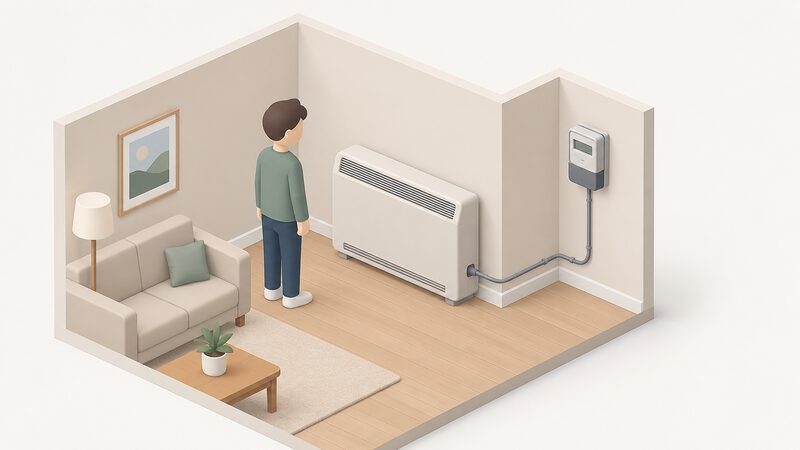
The storage-heater gap is the point where compatibility and supplier readiness diverge. A household with storage heaters on Economy 7 or Economy 10 may find its supplier does not yet offer smart meters that work with those tariffs3, even though the supplier is obliged to offer a smart meter before the end of the rollout3. In Northern Ireland, the Sustainable Energy Programme provides replacement electric high heat retention storage heaters for properties with Economy 7 at the time of application26, which keeps the tariff relevant for those homes.
The Radio Teleswitch Service switch-off adds a deadline for some, but not all, Economy 7 households. Some older Economy 7 meters use the RTS service and will be affected, but not all Economy 7 meters27. Anyone with these systems on Economy 7 or Economy 10 tariffs will need a new meter to ensure their heating and hot water continue turning on and off as usual20. Where a smart meter cannot be fitted because of a lack of signal, the supplier will usually install a non-communicating smart meter preset to switch between tariffs, or a non-smart meter on request20. The RTS switch-off guide covers which meters are caught.
Prepayment, solar and installation conditions
Prepayment is not a barrier. All smart meters can be switched between prepay and credit mode, so anyone eligible for a smart meter is eligible for a prepay meter6. If you already prepay for your energy, a smart meter can be set to pre-payment mode28. On older digital and prepayment Economy 7 meters, each reading is accessed by pressing a button, sometimes marked Rate 1 and Rate 229.
Solar households face a similar readiness question to storage-heater households. If you have solar panels, or generate renewable electricity, you could still have a smart meter installed, but some energy suppliers are not yet ready to supply smart meters to customers with solar panels6. You can ask your supplier to install your smart meter with the extra functionality switched off30.
Where installation is genuinely impossible, the rules recognise it. If an energy supplier is unable to physically install a smart meter, a timely appointment would not be necessary under the installation appointment standard31. Smart meter performance statistics are published for suppliers with over 150,000 customers in England, Scotland and Wales32. Smart meters are optional in Wales, but without one a household misses out on easier billing and innovative tariff options19.
"You can get a smart meter installed by your energy supplier at no extra cost"
Sources32 cited
- Smart meters, Energy Ombudsman, 2026
- Economy 7 guide, Uswitch, 2026
- Can I get a smart meter, Smart Energy GB, 2026
- Do you have to have a smart meter by law, Smart DCC, 2026
- Cheaper bills with energy flexibility, Centre for Sustainable Energy, 2026
- Myth-busting smart meter problems, Smart Energy GB, 2026
- Moving house gas and electricity guide, Uswitch, 2026
- How can I read a smart meter, Smart Energy GB, 2026
- Reading your gas or electricity meter, Centre for Sustainable Energy, 2026
- What is Economy 7, Smart Energy GB, 2026
- Understanding your gas or electricity bill, Centre for Sustainable Energy, 2026
- Getting the most from Economy 7, National Energy Action, 2026
- Smart facts, Smart Energy GB, 2026
- What is Economy 7, Energy Helpline, 2026
- Switching supplier, tariffs and bills, Smart Energy GB, 2026
- Supplier smart metering installation targets, Ofgem, 2026
- Debt strategy update, Ofgem, 2025
- Energy tariffs explained, Uswitch, 2026
- Smart meters, Welsh Government, 2026
- Important reminder for Economy 7 and 10 meters, Centre for Sustainable Energy, 2026
- Problems with services, Isle of Anglesey County Council, 2025
- How do smart meters save energy, Smart DCC, 2026
- Energy flexibility, Smart Energy GB, 2026
- What is Economy 10, Energy Helpline, 2026
- Gas meters and electricity meters, Which?, 2026
- Northern Ireland Sustainable Energy Programme, Energy Saving Trust, 2026
- The Radio Teleswitch Service switch-off, Smart Energy GB, 2026
- A guide to smart meters, Age UK, 2026
- How to read your gas and electricity meter, Confused.com, 2025
- Getting a smart meter installed, Citizens Advice, 2026
- Final decision: smart meter GSOPs, Ofgem, 2026
- Smart meter performance, Ofgem, 2026
 Meters and Time-of-Use TariffsDo you need a smart meter for a time-of-use tariff, and does it have to send readings every half an hour?
 Why You Cannot Get a Smart MeterWhy can some homes not have a smart meter fitted, and what counts as a good enough reason?
 Smart Meter RulesCan your supplier make you have a smart meter?
 Meters and Energy IndependenceDo smart meters really save you money, and can you still get one fitted for free?
 Meter Readings and EstimatesWhy is my energy bill estimated, and how often should my meter be read?
 Batteries and Smart TariffsA home battery can earn its keep if your electricity prices change through the day.