
In this answer
Short answer
There is no published national price for an Economy 10 meter. The meter is normally supplied and fitted by the energy supplier rather than bought by the household, and the supplier may charge a fee to install one because Economy 10 meters are fairly uncommon1. Where a smart meter is requested instead, that is at no additional cost2. So the honest answer to the cost question is that the meter itself is usually free or a supplier-set fee, and the real cost of Economy 10 sits in the standing charge and the peak unit rate rather than in the hardware.
Economy 10 is a restricted meter tariff giving ten hours of cheaper electricity a day, usually in three blocks, against Economy 7's seven hours mostly overnight3. It is not as widely used as Economy 7, and not all suppliers offer tariffs that support it5. That scarcity, not the price of the box on the wall, is what makes an Economy 10 switch awkward: most price comparison sites, including Uswitch, do not compare Economy 10 deals, so the switch has to be arranged directly with a supplier1.
What an Economy 10 meter is, and how it differs from Economy 7
Economy 10 and Economy 7 are both older types of time-of-use tariff that offer cheaper rates, typically used with electric storage heaters8. The difference is the shape of the cheap window. Economy 7 gives seven hours of cheaper electricity, mostly overnight9. Economy 10 gives ten hours of cheaper electricity, usually in three blocks across the day4. The National Energy Action leaflet sets out the common pattern: three hours in the afternoon, two hours in the evening and five hours through the night5.
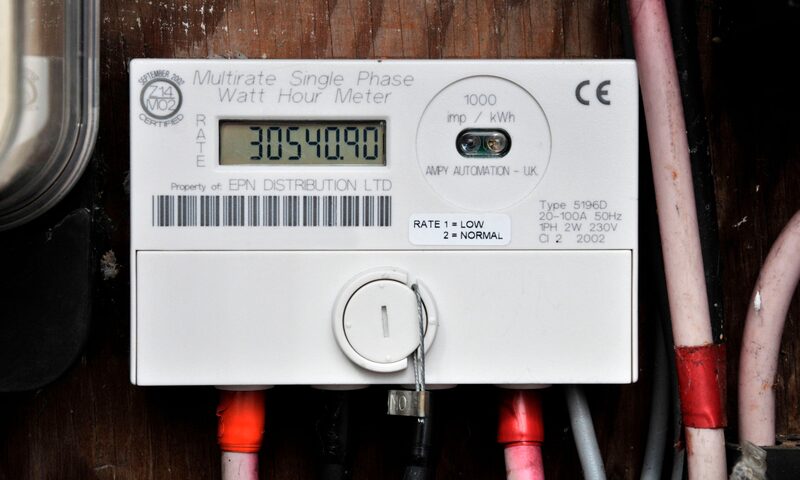
The meter follows the tariff. A specific Economy 7 meter is only compatible with Economy 7 tariffs, and records peak and off-peak usage separately, which is why an Economy 7 meter shows two different readings2. Economy 10 needs a meter that switches between three rate periods, which is why the meter, not just the tariff name, is the thing that has to change.
Standing charges on Economy 10 can be higher than on Economy 72. That matters because the cheap unit rate is only half the story: Economy 10 offers unit rates of up to half the price of peak rates, but the standing charges are often higher, and outside the cheap hours the rate is typically much higher than the average1. A household weighing up Economy 10 is therefore weighing a bigger cheap window against a higher fixed cost and a sharper peak.
"Economy 10 tariff provides 10 set hours of cheaper off-peak electricity:"
What the meter itself costs: usually supplied and fitted by your supplier
The meter is not a retail purchase. A household can request an Economy 10 meter from its energy supplier, but the supplier may charge for doing so, and a smart meter can be requested at no additional cost2. The same guidance notes that the supplier might be able to arrange the fitting but may charge a fee because the meter is fairly uncommon1.
Where a meter is suspected of being faulty, the accuracy test itself is free, but the supplier may charge for removing and replacing the meter, and that charge can be around £200 if the test shows the meter is working properly7. That figure is a useful benchmark for what a supplier visit can cost, though it is a fault-testing charge rather than an Economy 10 installation price.
Smart meters are free to the customer through the supplier13. That is the cheapest route to a meter capable of multi-rate billing, provided the supplier supports Economy 10 on it. The catch is supplier support rather than hardware cost: many suppliers do not support Economy 10, or may not offer tariffs to new customers6.
Installation and switching costs to expect
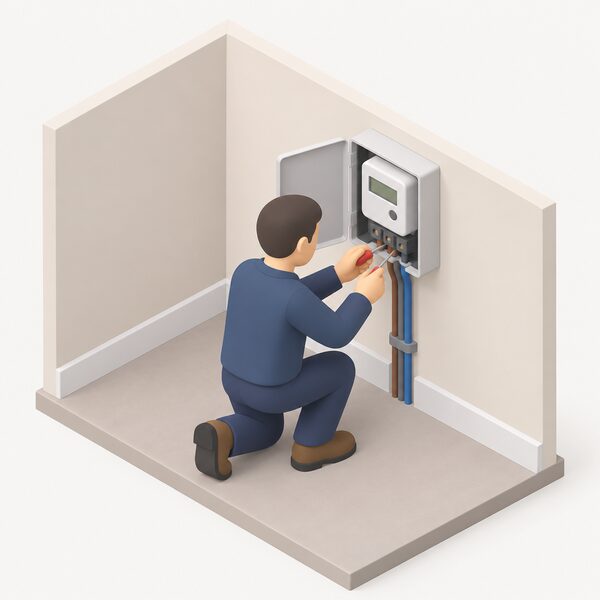
There is no published Economy 10 installation price, so any figure a household is given will be installer or supplier quoted. What can be said is what suppliers charge for adjacent meter work. Moving an electricity supply or meter costs £308 to £607 with SSEN, excluding additional work such as digging or traffic management, with a detailed quote provided during the application process14. SGN's basic alteration costs start from around £605 to £1,210, depending on whether SGN performs excavation work and which part of the country the customer lives in14. Those are network operator charges for moving a supply, not for fitting an Economy 10 meter, but they show the order of magnitude of any work that involves a visit and a change to the connection.
Switching between Economy 10 plans can also carry a cost that is not a fee at all: it may require the meter to be reprogrammed by an engineer1. Switching away from Economy 10 to a standard tariff may require a fee to have a standard meter installed1. For Economy 7, the equivalent rule is that if a household does not already have an Economy 7 meter, the chosen supplier will need to install a new one15. The pattern is consistent: the meter change is arranged by the supplier, and the charge, where there is one, is set by the supplier.
Running costs: whether the ten cheap hours save money
Whether Economy 10 saves money depends on how much load can be moved into the ten cheap hours. The tariff gives ten hours of cheaper electricity, usually in three time periods3. The unit rate can be up to half the peak rate, but standing charges are often higher, and the peak rate outside the cheap blocks is typically much higher than the average rate1. A household that runs storage heaters and heavy appliances inside the cheap blocks is using the tariff as designed. A household that cannot shift its load pays the peak rate for most of its consumption.
The scale of what shifting is worth is visible in ordinary appliance running costs. An electric shower used for ten minutes a day costs around £137 a year on average16. Electric underfloor heating in a 10m2 room can cost as much as 36p per hour17. Fans usually cost less than 2p an hour to run16. These are general running costs rather than Economy 10 rates, but they show which loads are worth moving into a cheap window and which are too small to matter.
Storage heating is the load Economy 10 was built around. Upgrading to a modern storage heater can help reduce energy bills by about 10%18. Dynamic storage heaters do not work with Economy 7, and their running costs are still higher than night storage heaters for that reason19. Matching the heater type to the tariff matters as much as the meter.
Alternatives if Economy 10 is not available from your supplier
Availability is the binding constraint. There simply are not many Economy 10 suppliers available1. Many suppliers do not support Economy 10, or may not offer tariffs to new customers6. Economy 10 is not as widely used as Economy 7, and not all suppliers offer tariffs that support it5. Most price comparison sites, including Uswitch, do not compare Economy 10 deals, and Uswitch does not support Economy 10 switching at all1.
The practical alternatives are therefore:
- Ask the current supplier directly whether it offers an Economy 10 tariff, since comparison sites will not surface one6.
- Consider Economy 7, which is more widely offered and gives seven hours of cheaper electricity, mostly overnight9.
- Consider a time-of-use tariff built for a smart meter, since all smart meters can support tariffs that charge different prices at different times of day and night20.
- Where the home has an electric vehicle or a heat pump, look at tariffs designed around those loads rather than around storage heating.
The trade-off is the same in each case: a wider cheap window usually comes with a higher standing charge or a sharper peak, and the household's own pattern of use decides whether that is worth it.
Checking whether Economy 10 suits your home and tariff
The first check is the meter. To get an Economy 10 tariff you must have an Economy 10 meter5. A household can identify a restricted meter from its bill: two different rates for day and night, or a tariff type listed as Economy 7 or Economy 1021. A meter that switches between peak and off-peak rates, such as Economy 7 or Economy 10, or a Total Heating Total Control tariff, is also the marker used to identify radio teleswitch meters22.
The second check is the radio teleswitch switch-off. Anyone with these systems on Economy 7 or Economy 10 tariffs will need a new meter to ensure their heating and hot water continue turning on and off as usual23. That replacement is happening regardless of whether the household wants to keep Economy 10, so it is the natural moment to decide whether the tariff still fits.
The third check is smart meter compatibility. Economy 10 tariffs do not work with existing smart meters in every case, and many energy suppliers do not sell tariffs for them4. A household might be able to get a smart meter with an Economy 10 tariff, but this depends on which supplier it is with11. Smart Energy GB's position is that a smart meter can be obtained on an Economy 7 or Economy 10 tariff24, and the Energy Ombudsman states that all smart meters can support tariffs which charge different prices at different times throughout the day and night, with Economy 10 meters also available20. The documents differ on how straightforward this is in practice, and the deciding factor is the supplier.
For a household, the independence question is narrow. Economy 10 does not remove reliance on the grid or on a supplier; it changes when electricity is bought and at what price. The dependence that remains is on a supplier that offers the tariff, on a meter that can bill three periods, and on a heating system that can use the daytime cheap blocks. Where those three line up, the ten hours do real work. Where they do not, the higher standing charge is paid for nothing.
Sources24 cited
- Economy 10 guide, Uswitch, 2025-12-08
- What is Economy 7, Smart Energy GB, 2026-04-07
- Time of use tariffs explained, Which?, 2026-04-23
- Gas meters and electricity meters: what you need to know, Which?, 2026-01-16
- Getting the most from Economy 7, National Energy Action, 2026-09-10
- Energy tariffs explained, Uswitch, 2026-02-17
- Find out if your energy meter is faulty, Citizens Advice, 2026-09-20
- The best heating for your home, Which?, 2025-09-22
- How to switch energy supplier, Which?, 2026-05-15
- How to read your gas and electricity meter, Confused.com, 2025-12-15
- What is Economy 10, Energy Helpline, 2026-09-20
- Top energy company issues and how to solve them, Which?, 2026-03-03
- Get help with your smart meter, Ofgem, 2026-09-17
- How to move your gas or electricity meter, Uswitch, 2026-08
- Economy 7 guide, Uswitch, 2026-09-20
- Save money using your electrical appliances, Citizens Advice, 2023-05-10
- Electric vs water underfloor heating, Which?, 2026-05-27
- Night storage heaters, Centre for Sustainable Energy, 2025-10
- Electric heating, Centre for Sustainable Energy, 2026-06
- Smart meters, Energy Ombudsman, 2026-09-20
- RTS: what you need to know, Act on Energy, 2026
- Protection for energy customers ahead of RTS switch off, Scottish Government, 2025-03-15
- Important reminder for Economy 7 and 10 meters, Centre for Sustainable Energy, 2026-06
- Can I get a smart meter, Smart Energy GB, 2026-03-16
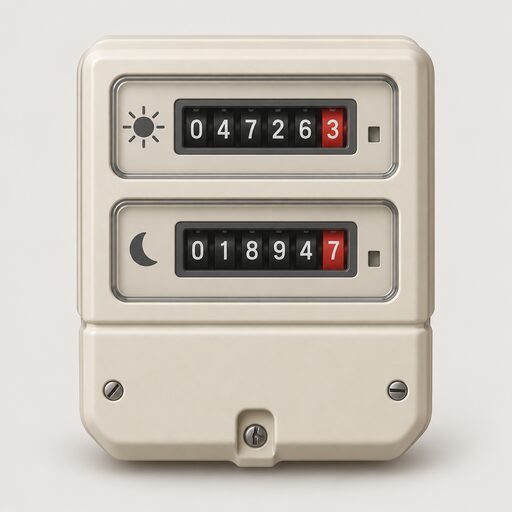 Economy 7 and Restricted MetersEconomy 7 and Economy 10 meters give you cheaper electricity for a set number of hours overnight and charge you more the rest of the day.
 Move, Exchange or Remove a MeterMoving a meter is not a DIY job and it is illegal to do it yourself.
 New Electricity ConnectionWho do you contact for a new or upgraded electricity connection, and what will it cost?
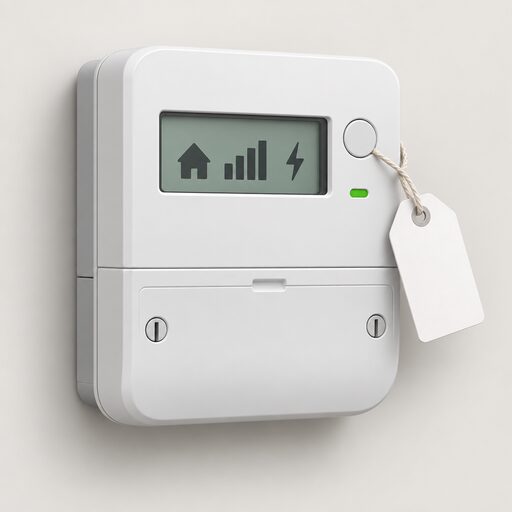 What Does a Smart Meter Cost?There is no upfront charge for a smart meter or a standard installation: the cost is recovered indirectly through energy bills.
 Meters and Time-of-Use TariffsDo you need a smart meter for a time-of-use tariff, and does it have to send readings every half an hour?
 Meters and Energy IndependenceDo smart meters really save you money, and can you still get one fitted for free?