
In this answer
Short answer
Eligibility for an EV tariff in the UK rests on three things: a working smart meter, a plug-in vehicle, and in many cases a home charger that appears on the supplier's compatibility list. For most EV-specific tariffs, particularly smart or time-of-use products, a working smart meter is required, and in most cases that means a connected SMETS2 meter1. A smart meter is not needed simply to charge a car at home, but without one the EV-specific tariffs are largely closed off2.
The vehicle condition is broader than many households assume. Owning or leasing a plug-in vehicle is the requirement, and some plug-in hybrids are eligible for domestic charge point funding, with the eligible model list published by OZEV3. The charger condition is where applications most often fail: ineligibility usually stems from not having a connected SMETS2 smart meter, or from the vehicle model or home charger not being on the supplier's approved compatibility list5.
Northern Ireland runs a separate market with its own tariffs and comparison tables, and qualifying supplies of electricity there remain liable to VAT at the reduced rate of 5%6. In Great Britain the arithmetic changes on 1 October 2026, when VAT on household electricity falls from 5% to 0%8.
What an EV tariff is and who it is for
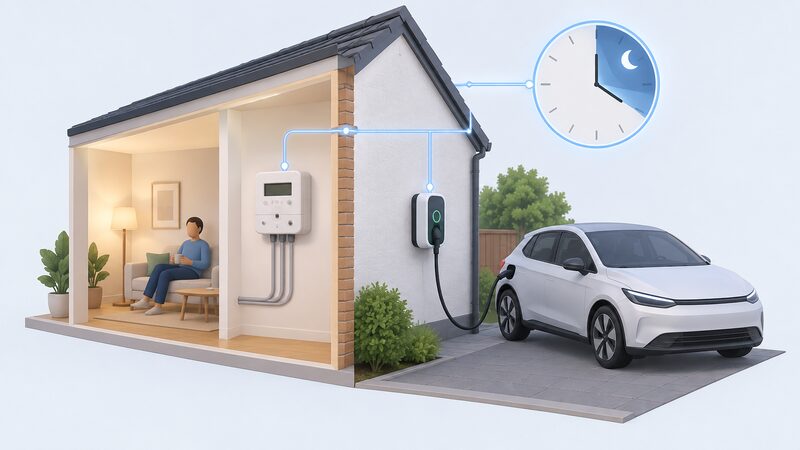
An EV tariff is an electricity plan that offers different unit rates for different times of the day, known as time-of-use pricing5. They are typically two-rate tariffs, where it is cheaper to use energy at night, so electric vehicles can be charged more cheaply overnight11. The purpose is a dedicated energy plan designed for EV owners that offers discounted electricity rates during off-peak periods12, and several providers have introduced overnight or off-peak tariffs solely for EV drivers13.
The benefit to a household is straightforward: access to lower tariffs at times when demand for electricity is lower14. That is a flexibility benefit rather than a supply benefit. The household still buys every unit from a licensed supplier over the same wires, and the cheap window exists because the wider system has spare capacity overnight, not because the home has become self-sufficient. What the tariff does change is the household's exposure to peak wholesale pricing: a car charged in the small hours is largely insulated from the evening peak that drives the standard variable rate.
Some Economy 7 tariffs are tailored to people who own electric vehicles15, which matters because Economy 7 predates the EV market and works on a fixed overnight window rather than a smart-charging schedule. The distinction between a legacy restricted meter tariff and a modern smart EV tariff is covered in Economy 7 tariffs and time-of-use electricity tariffs.
The common eligibility requirements: smart meter, EV and charger
Three conditions recur across the market, and a household usually fails on one of them rather than on the tariff's headline rate.
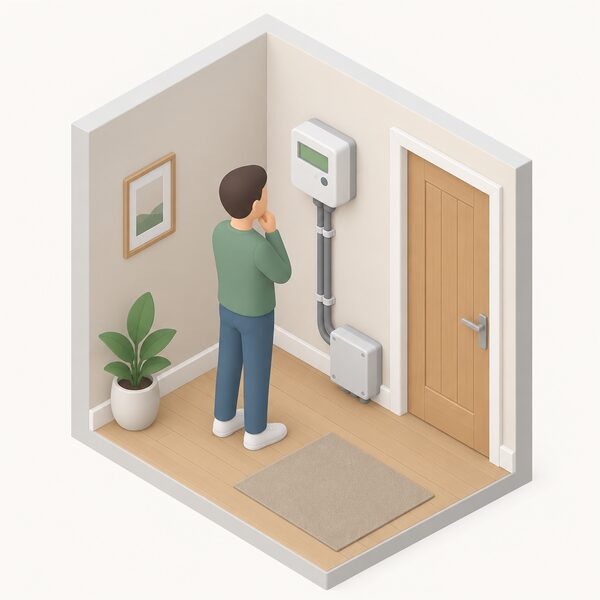
The first is metering. For many EV-specific tariffs, particularly smart or time-of-use tariffs, a working smart meter is required2. In most cases a smart meter is required to access EV tariffs at all1. The reason is billing: a supplier cannot apply a half-hourly cheap window without half-hourly consumption data, and a traditional meter records only a single cumulative total.
The second is the vehicle. A household must own or lease a plug-in vehicle3. This is a condition of the product rather than a technical necessity, and it is the point at which some households discover that an EV tariff is not simply a cheaper overnight rate open to anyone.
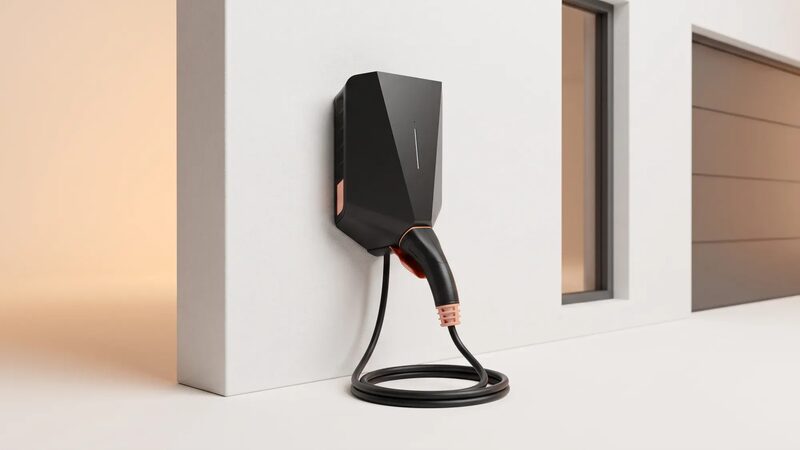
The third is the charger, and it is the most restrictive. Type of Use tariffs are add-ons to an existing energy tariff, and they need a compatible home charger and a working smart meter9. Add-on EV tariffs work differently again: consumers keep their existing household tariff but receive separate EV charging discounts, credits or other benefits2. That structure suits households whose charging is not concentrated at home.
Vehicle and charger compatibility: which tariffs restrict make or model
Compatibility lists are the least visible part of eligibility and the most common cause of a rejected application. Ineligibility usually stems from not having a connected SMETS2 smart meter, or from the specific EV model or home charger not being on the supplier's approved compatibility list5. The list is the supplier's, not a universal standard, so a charger that works with one smart tariff may not work with another.
Grant funding applies the same logic from the public side. Only approved models for the Electric Vehicle Chargepoint Grant and approved models for the Workplace Charging Scheme are eligible for their respective grant funding4. A household checking whether its car qualifies for support is therefore checking the same kind of list a supplier uses.
Where the technology does align, most EV tariffs work seamlessly with smart charging technology12. Smart charging shifts the charging session within the cheap window, or pauses it when the grid is under strain, which is what allows a supplier to offer a low overnight rate without simply absorbing the cost of a peak-time charge.
Tariff-by-tariff eligibility: EDF, Ecotricity, Good Energy and others
Eligibility varies by supplier and by product type, and the differences are structural rather than cosmetic.
EDF Energy lists other tariffs available for heat pumps and electric vehicles17, so a household with both technologies is choosing between products rather than finding one that covers both. OVO's Charge Anytime is an add-on to existing tariffs rather than a standalone tariff7, which means the household keeps its current supply arrangement and layers EV charging credits on top. That structure removes the need to move the whole home onto a time-of-use product.
The green suppliers sit outside the price cap, which changes what an EV tariff from them can look like. Good Energy, 100Green and Ecotricity are exempt from the energy price cap18, and all three only sell tariffs backed by 100% renewable electricity and supply a proportion of green gas from biomethane19. A capped tariff and an exempt one are not directly comparable on unit rate alone, because the cap does not constrain the exempt supplier's pricing in the same way.
For households in Northern Ireland, Power NI and the other suppliers are covered by a separate comparison framework. The Consumer Council's price comparison tables compare relevant tariffs available in Northern Ireland and are correct on the day of comparison20, which is the practical starting point for eligibility there.
| Product type | What it requires | Who it suits |
|---|---|---|
| Standalone time-of-use EV tariff | Smart meter, plug-in vehicle, often a compatible charger2 | Households charging mostly at home overnight |
| Add-on EV tariff | Existing household tariff retained, separate charging credits2 | Households charging partly away from home |
| Economy 7 style tariff | Restricted meter with a fixed overnight window15 | Households already on a legacy two-rate meter |
| Heat pump or EV tariff from one supplier | Separate products, chosen individually17 | Homes with both technologies |
Time-of-use tariffs when you don't have an EV: batteries and other routes
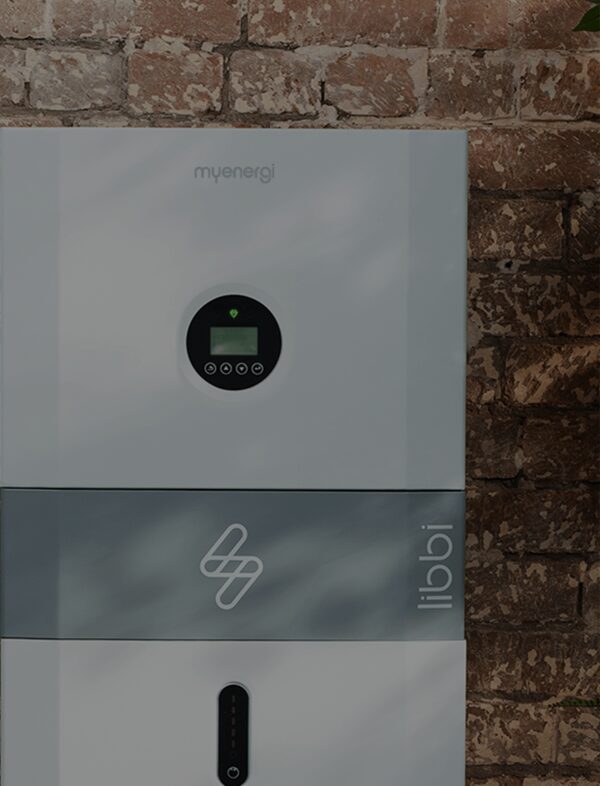
An EV is not the only route into a time-of-use tariff. Such tariffs suit households with green tech such as a heat pump, battery storage or an electric or hybrid car21. A home battery can absorb cheap overnight units and discharge them during the peak, which performs the same arbitrage a car does, without a car.
Most EV tariffs involve a lower rate for charging overnight22, and that overnight window is what a battery or a heat pump would use. Eligibility may vary between products23, so the presence of a battery does not guarantee access to every EV-branded tariff.
The economics depend on load shifting. If most energy is used during peak times and cannot be shifted, a time-of-use tariff could cost a little more, and in that case it probably is not suitable24. A household that cannot move its demand is worse off on a time-of-use product than on a flat rate, whatever the headline overnight price.
"an energy supplier cannot charge you based upon when you use your energy unless you specifically choose such a tariff"
For households weighing this up, time-of-use tariffs and home batteries with time-of-use tariffs set out the mechanics, and EV tariffs without an electric car covers the specific question of access without a vehicle.
Northern Ireland: EV Anytime and EV Nightshift
Northern Ireland is a separate electricity market with its own licence area and its own suppliers25. Eligibility questions there are answered against Northern Ireland products rather than the Great Britain price cap, and the Consumer Council's comparison tables are the reference point for what is actually available20.
Chargepoint support operates in Northern Ireland as well. The Department for Infrastructure operates a grant for homeowners without off-street parking, to help them charge an EV at home26, and grants are available in Northern Ireland towards the installation of EV charge points and associated infrastructure27. The conditions mirror the Great Britain scheme: the chargepoint must not already have been installed, since the grant cannot be backdated, the applicant must own or rent the property, must not have private and exclusive access to off-street parking, must have adequate on-street parking, must have permission from the local highways authority, and must own or be responsible for an eligible vehicle27.
The VAT position differs across the Irish Sea. In Northern Ireland, qualifying supplies of electricity remain liable to VAT at the reduced rate of 5%6. In Great Britain, VAT on household electricity falls from 5% to 0% on 1 October 20268, the same date the price cap changes8. A household comparing an EV tariff in Belfast with one in Glasgow is comparing two different tax treatments as well as two different markets.
Support levels have also moved. Northern Ireland's Energy Price Guarantee provided a discount of up to 13.6 p/kWh for electricity and 3.9 p/kWh for gas in Q1 2023, against a separate figure of up to 3.8 p/kWh for electricity and 2.6 p/kWh for gas in the same period, and the two sets of figures are unresolved28. Households should treat the higher figure as the one most often quoted and check the current position rather than relying on either.
Charging away from home, and combining tariffs

Charging location changes which tariff structure makes sense. Workplace charging can be offered by an employer as a taxable employee benefit or billed on a pay-as-you-go basis29, so a driver who charges at work may be buying very few home units. Add-on EV tariffs exist for exactly this pattern: the household keeps its existing tariff and receives separate EV charging discounts or credits2.
Public charging has its own eligibility rules. A Tesla Supercharger membership allows drivers of non-Tesla EVs to access some of the Tesla Supercharger network paying the same charging rates as Tesla owners30, which is a subscription question rather than an energy tariff one.
Combining an EV tariff with a heat pump tariff is the hardest case. There is currently a lack of combined tariffs designed specifically for both EVs and heat pumps31. Some suppliers list separate products instead: EDF Energy has other tariffs available for heat pumps and electric vehicles17. One case study describes a supplier offering compatible households with heat pumps and EVs a set-priced energy tariff32, which shows the combination is possible without being widely available.
The practical position is that a household with both technologies usually picks one tariff and accepts that the other technology runs on the same rates. Heat pump electricity tariffs and EV charging bolt-ons cover the two halves separately.
Switching, and what eligibility means for independence
Switching is rarely the barrier. If a household pays a supplier directly for the electricity or gas it uses at home, it can choose to switch to a different supplier or tariff at any time33. It is easy to switch providing the household is on a variable rate tariff or the current fixed rate contract is ending shortly34. Switching to any energy tariff is simple, will not cause power outages and typically takes just a few days10.
The independence question is worth stating plainly. An EV tariff lowers the cost of a unit of electricity at certain hours; it does not reduce the number of units drawn from the grid, and it does not remove the supplier. The household remains dependent on the network, on the supplier's smart-charging platform, and on the compatibility list that decides whether its charger can take part. Where a supplier's smart charging depends on an app or a cloud service, that is a further dependency: the cheap window is administered remotely, not by the household.
What the tariff does deliver is control over timing. A household that can shift charging into the overnight window is buying its electricity when the system is least stressed, and that is a genuine form of energy independence at the margin, even though the electrons still arrive through the same cable. The limits are real: no smart meter, no compatible charger, or a vehicle absent from the approved list, and the tariff is unavailable regardless of how suitable the household's pattern of use would be.
Sources34 cited
- Smart meter benefits for Britain, Smart Energy GB, 2026
- EV tariffs and home charging: what consumers need to know, Energy Ombudsman, 2026-09-11
- Electric cars and energy bills, Uswitch, 2026-04-27
- Grant schemes for electric vehicle charging infrastructure statistics, GOV.UK, 2026-08-27
- Choosing the right EV tariff, Fuse Energy, 2026-04-02
- VAT on fuel and power (Notice 701/19), GOV.UK, 2026-10-01
- OVO EV energy tariffs, Uswitch, 2025-10-09
- VAT cut on electricity bills, OVO Energy, 2026-10-01
- EV energy tariffs, Zapmap, 2024-09-16
- EV energy tariffs, Uswitch, 2025-09-17
- Understanding energy flexibility, Smart Energy GB, 2026-08-17
- Benefits of an EV tariff, Wondrwall, 2026
- EV time-of-use tariffs, Flexi-Orb, 2024-06-19
- Agile Streets: future flexible charging report, Energy Saving Trust, 2025-10-03
- What is Economy 7, Energy Helpline, 2026-09-20
- Smart Energy GB FAQs, Smart Energy GB, 2025-08-08
- EDF Energy, Energy Helpline, 2026-09-20
- Green electricity tariffs, Centre for Sustainable Energy, 2026-07
- How to choose the best energy company, Which?, 2026-01-19
- Electricity price comparison table 28 March 2026, Consumer Council, 2026-03-28
- Five top tips to cut your energy bills, Welsh Government, 2026-03-18
- Charging electric vehicles, Energy Saving Trust, 2026-04-23
- Time-of-use tariffs: the benefits, Smart Energy GB, 2026-04-24
- Should I switch to a time-of-use tariff, Energy Saving Trust, 2026-01-23
- Connecting electric vehicles and heat pumps to the networks, Energy Networks Association, 2026-09-17
- Electric vehicles, nidirect, 2026-09-17
- Electric vehicle chargepoint and infrastructure grants, Department for Infrastructure, 2026-09-18
- Energy price support research briefing, House of Commons Library, 2026-08-28
- Electric vehicle charging, SMMT, 2025-06-25
- Best electric car charging subscriptions, Carwow, 2025-11-21
- Best tariffs for EV and heat pump, Uswitch, 2025-07-02
- ivie Energy Sure: home heating over winter, ivie, 2026-09-20
- Switch your home energy supplier, Ofgem, 2026
- How to read your energy bill, Confused.com, 2025-12-15
 Electric Vehicle TariffsCharging an electric car at home can cost far less overnight, but only on special electricity plans.
 Batteries and Smart TariffsA home battery can earn its keep if your electricity prices change through the day.
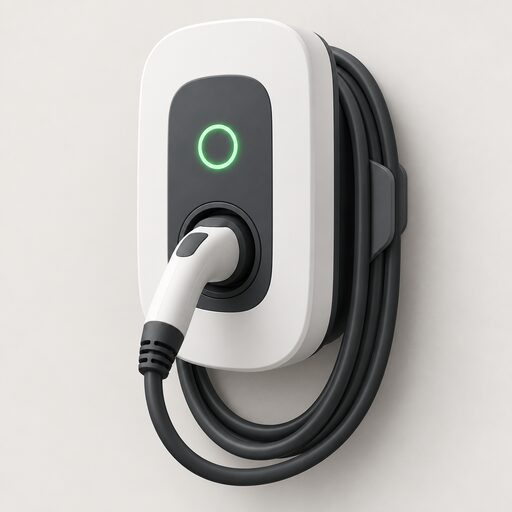 Supplier-Controlled ChargingSmart charging tariffs let your energy supplier decide when your car charges, usually overnight when electricity is cheaper.
 EV Tariffs and Home ChargingHow EV-specific import tariffs and charging bolt-ons work, including supplier-controlled charging where the energy company decides when the car draws power, which charge points each scheme supports, and what a household needs in place.
 Which Tariffs Your Meter AllowsHow meter type decides which energy tariffs a household can access, from single-rate and two-rate meters to smart, prepay and restricted configurations, and the constraints faced by flats, rented homes and homes without a working smart connection.
 What Is a Smart Charger?A smart EV charger is an internet-connected home charge point that schedules charging around tariff prices, grid demand and household load.