
In this answer
Short answer
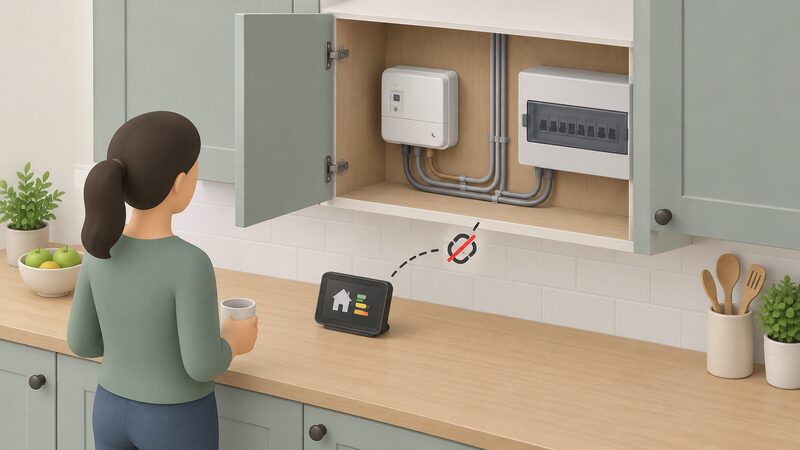
A smart meter in dumb mode is a meter that still measures and records your gas and electricity use, but no longer sends those readings to your supplier automatically. It behaves like a traditional meter: accurate, but silent. "Dumb mode" is the informal name for it; the industry and the regulator call the same condition a meter "not operating in smart mode", or working in "traditional mode"1.
It is common. Independent guidance puts around 10% of smart meters in dumb mode3, and a later review reports around 3 million domestic smart meters, 8.2% of the total, working in traditional mode4. Ofgem's own figures show 90% of installed meters operating in smart mode, with compliance action under way to reduce the rest5. First-generation SMETS1 meters are the most affected, particularly after a change of supplier.
The practical consequences are modest but real: you take readings yourself, bills may be estimated between them, and time-of-use tariffs and half-hourly data services that depend on automatic readings stop working. The meter itself is not broken, and the fix is your supplier's responsibility.
What "dumb mode" means: a meter that records but no longer reports
A smart meter is defined by two things: measurement and communication. It measures how much gas and electricity you are using, and it sends those readings automatically to your supplier8. Dumb mode is what happens when the second half fails. The meter keeps measuring, but the readings no longer arrive.
The formal definition in Ofgem's proposed guaranteed standard covers "any version of a SMETS1 or SMETS2 meter set out in Section 11 of the Smart Energy Code", so both generations are in scope9. The same consultation sets out what falls outside it: a meter that is not operating in smart mode where the action of another party, other than the supplier, is required to resolve it; where the consumer has agreed the meter should not operate in smart mode; or where no solution is available from any party9.
Two things are worth separating. A meter can stop sending readings while still recording them perfectly, and a meter can stop recording altogether. Ofgem describes both possibilities: your smart meter may stop recording the energy you use, or may no longer send readings to your supplier10. Only the first is a metering fault in the strict sense; the second is a communications failure, and it is far more common.
It also helps to know what dumb mode is not. It is not a privacy setting, and it is not the meter listening. Smart meters have no video or audio recording components, so they cannot record anything you do at home11. The communications they use are a closed, dedicated system rather than the internet12.
How common it is: around 10% of smart meters, and 8.2% of domestic ones
The share of installed smart meters not operating in smart mode is put at around 10%1. Government statistics give a narrower figure for the domestic stock: around 3 million meters, or 8.2% of total domestic smart meters, are working in traditional mode and not connecting to the smart meter network2. The two figures measure slightly different things, which is why they differ: one is a share of all smart meters installed, the other a share of domestic smart meters only. On the other side of the ledger, smart meters have been installed in 65% of homes and 61% of businesses, with 90% of these meters operating in smart mode3. For a household, the practical point is that a meter can be installed and still not deliver smart functions, so the meter's mode matters as much as its presence.
The headline figure most households will recognise is around 10% of smart meters in dumb mode, from independent guidance3. A later review, reporting government statistics, puts it at around 3 million domestic smart meters, 8.2% of total domestic smart meters, working in traditional mode4. Ofgem's own state of the energy market reporting gives the complement: smart meters have been installed in 65% of homes and 61% of businesses, with 90% of these meters operating in smart mode5. Consumer Scotland, responding to a consultation on guaranteed standards, cited government statistics illustrating that around 10% of smart meters installed were not operating in smart mode13.
The figures differ because they measure different things on different dates. A share of all installed meters, a count of domestic meters in traditional mode, and a share of meters operating in smart mode are three ways of drawing the same picture, and the gap between 8.2% and 10% is largely a matter of when the count was taken and whether non-domestic meters are included. The direction of travel is the same in all of them: a substantial minority of meters are not doing the job they were installed to do.
| Measure | Figure | Date | Source |
|---|---|---|---|
| Smart meters in dumb mode | Around 10% | 2025-05 | 3 |
| Domestic meters in traditional mode | Around 3 million, 8.2% of total | 2026-05 | 4 |
| Installed meters operating in smart mode | 90% | 2025-04-15 | 5 |
| Meters not operating in smart mode | Around 10% | 2025-10-10 | 13 |
For a household, the number matters less than the odds. Roughly one meter in ten is affected, which means most people will never see it, but it is common enough that a neighbour, a relative or a previous occupant of your home may have. The condition is not rare, not a sign of a faulty installation, and not something a household has caused.
Why smart meters go dumb, especially first-generation models
The single biggest cause is the generation of meter. Independent guidance notes that smart meters can go dumb, particularly in older models, and that there could be other technical issues that prevent automatic readings14. First-generation SMETS1 meters were built before the central communications network was fully in place, and many were never enrolled into it. Early meters might not have been connected to the communications network at all, and so lost their smart functions15.
Switching supplier is the trigger most households notice. A first-generation meter may have experienced some loss of its smart functionality when switching energy suppliers16. Independent guidance is blunter: if you have an older type of smart meter, switching energy suppliers might mean you temporarily get estimated bills, and if smart functionality is lost you may need to send readings manually until the meter is upgraded over the air17. Reporting from 2019, when most installed meters were first-generation, found that it was these meters that were affected when you switch18.
The other causes are ordinary communications problems. Signal does not reach every meter position, particularly in flats, basements and rural areas, and a meter that cannot reach the network cannot report. Firmware and enrolment issues sit behind some of it: updates are tightly controlled, with firmware digitally signed by the manufacturer and validated against the certified product list before a meter will activate it19. That control protects the meter, but it also means a meter that misses an update can sit outside smart mode until something prompts a retry.
What a dumb meter means for readings, bills and switching supplier
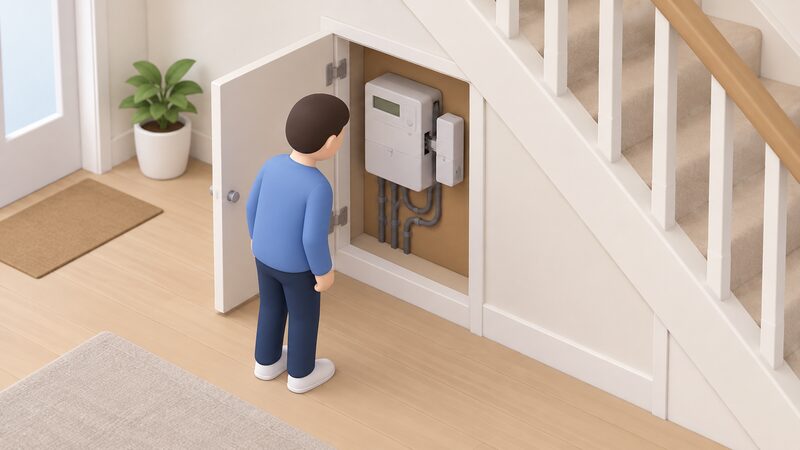
The meter still works. A meter not operating in smart mode will still record your energy usage accurately, and you will still be able to take manual readings2. Nothing about the measurement changes; what changes is who does the reading and how often.
Bills are where it shows. A working smart meter sends automatic readings to your supplier on a half-hourly, daily, or in some cases monthly basis, which is what produces accurate rather than estimated bills20. Lose that link and the supplier falls back on estimates between readings you supply yourself. Ofgem's guidance for households moving to a new supplier is explicit: your meter may not work in smart mode when you move to the new supplier, and you may need to take meter readings manually and submit them to your new supplier instead8.
Switching itself is not blocked. Having a smart meter does not stop you from switching supplier, and smart meters should make switching quicker because they can send information to a new supplier instantly21. That is the promise when the meter is communicating. When it is not, switching still works, but the automatic handover of data does not, and the new supplier starts from a manual reading.
The wider losses are quieter. Time-of-use tariffs, half-hourly settlement and any service that reads your consumption remotely all depend on the meter reporting. A household on a dumb meter can still be on a time-of-use tariff, but the supplier cannot see when the energy was used, so the tariff's mechanics lose their point. For energy independence, this is the crux: the meter is still yours and still accurate, but the data path runs through the supplier's systems, and when it breaks, the household is back to reading a meter and typing the numbers in.
Running a meter in dumb mode deliberately: switching communications off
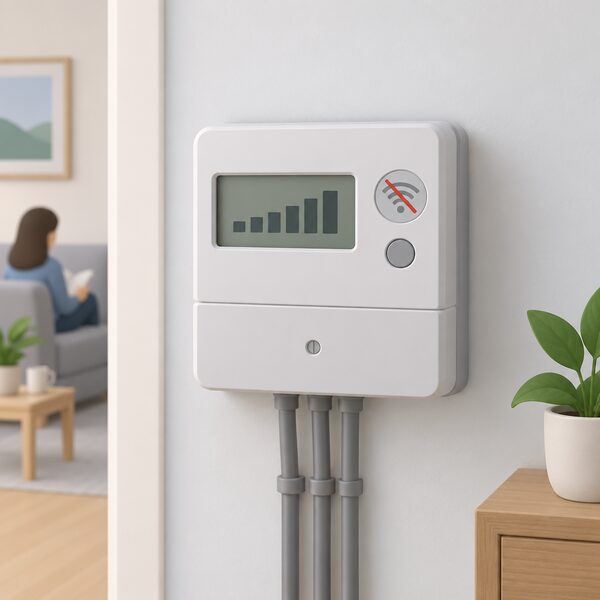
Some households ask whether they can have the communications switched off on purpose, usually for privacy reasons. The honest answer is that there is no general right to it, but the possibility is recognised in the rules being drafted.
Ofgem's consultation on the guaranteed standard proposes exemptions from the smart mode requirement, and a consumer request for no communication is one of them, alongside there being no appropriate technical solution available and the consumer's own role in booking appointments or interacting with the meter22. The proposed standard also places meters where the consumer has agreed the meter should not operate in smart mode outside its scope9.
What that means in practice is that a deliberate dumb meter is a negotiated position with a supplier, not a switch you throw. It also has a cost that is easy to overlook. Smart meters differ from traditional meters in that they offer two-way communication, which means they can wirelessly send and receive information23. Turn that off and you lose automatic readings, remote switching between credit and prepayment, and any tariff or service that depends on consumption data arriving at the supplier. The meter keeps recording, and you keep reading it.
The privacy concern itself is narrower than it looks. Smart meters do not use the internet, and they have their own closed, dedicated communications system12. Data on the network is handled under rules set for the smart metering system rather than passed around freely24. A household weighing up a deliberate dumb meter is trading a defined and regulated data flow for manual readings and lost functionality, and that is the whole of the trade.
Ofgem's compliance engagement with the six largest suppliers
The regulator has treated dumb mode as a supplier performance problem rather than a household one. In July 2024 Ofgem opened compliance engagement with Great Britain's six largest suppliers to review in greater detail why some smart meters are not operating in smart mode and how this may be addressed2. By April 2025 Ofgem was undertaking compliance action with energy suppliers to reduce the number of smart meters not operating in smart mode5.
The obligation on suppliers is already in place in general terms. Energy suppliers must take "all reasonable steps to ensure that they are able to communicate with their customers' smart meters"21. The guaranteed standards work is about turning that into something with timescales and remedies attached.
The proposed recovery requirement is the sharpest part: suppliers must take all reasonable steps to ensure smart meters in traditional mode are back working in smart mode no later than 90 days from the date energy suppliers are first aware6. Ofgem has also consulted on automatic compensation for smart metering consumers where their energy supplier fails to meet certain expectations25. On the specific standard covering meters not operating in smart mode, however, Ofgem has decided not to make a final decision at this point in time26.
That last point matters for expectations. The 90-day recovery requirement sits in a consultation, not in a settled rule, and the standard that would give it teeth is still open. A household reporting a dumb meter today is relying on the general communication obligation and the supplier's own processes, not on a fixed deadline with compensation attached.
Getting a dumb meter working again: what to ask your supplier
The route back to smart mode runs through the supplier, because the supplier owns the relationship with the meter and the network. If your smart meter stops working, contact your supplier: they are responsible for maintenance and will fix or replace your meter as needed27. The same applies to a meter that has stopped sending readings, which Ofgem lists among the faults to report10.
A useful first step is to establish which of the two problems you have. If the meter is recording but not reporting, the fix is usually remote: an enrolment or communications retry, or a firmware update pushed over the air. If the meter has stopped recording, that is a metering fault and may need a visit. If you have an older radio teleswitch meter rather than a smart meter, the advice is different again: contact your supplier to arrange to have a new smart meter installed29.
If you have not been offered a smart meter and want one, you can request one from your supplier, and Ofgem's guidance is to contact your supplier to get a smart meter for free7. There is currently no requirement for suppliers to install a smart meter on request, but a request can be made31. If the meter is already installed and has gone dumb, the request is not for a new meter but for the existing one to be brought back into smart mode.
Where a complaint stalls, the Energy Ombudsman can look at smart meter disputes once the supplier's own process has been exhausted23. It is worth keeping a note of dates: when the meter stopped reporting, when you told the supplier, and what you were told. Those dates are what any later complaint turns on.
Where a dumb meter leaves your energy independence
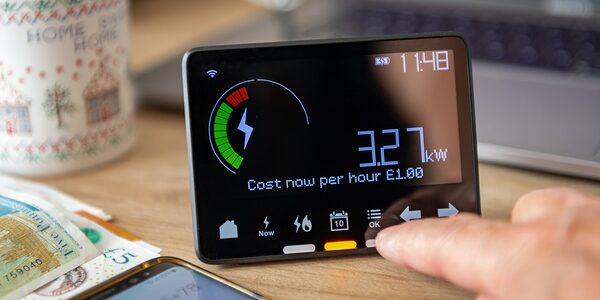
A smart meter in dumb mode is a small but instructive case of dependence. The meter is in your home and it is accurate, but the value it was installed to deliver, automatic readings, accurate billing without effort, time-of-use pricing, remote services, runs through a communications network and a supplier's systems that you do not control. When that link fails, the household falls back on the oldest arrangement there is: read the meter, send the number.
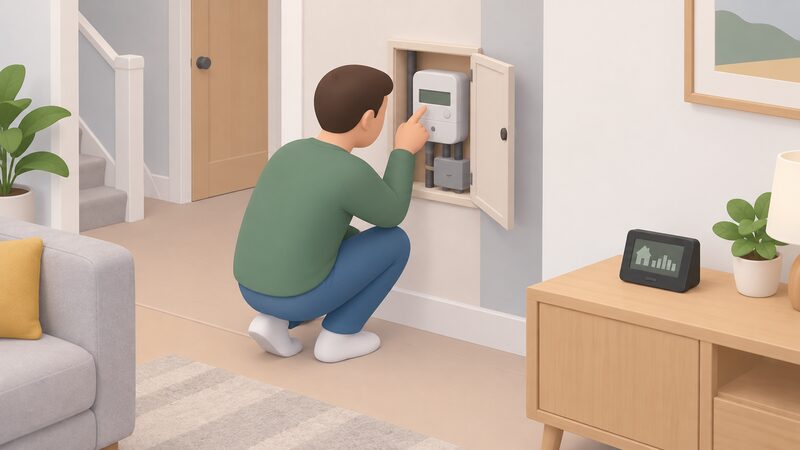
The dependence is not total. The meter still records, you can still read it, and you can still switch supplier2. A separate energy monitor or a consumer access device can give you consumption data in the home without waiting for the supplier's systems to be fixed, which is one reason some households run both. The in-home display is the first thing to check, since a display that has stopped updating is not the same as a meter that has stopped reporting, and a display that is disconnected or unavailable does not stop the meter recording and sending readings32.
The wider point is that dumb mode is a communications problem with a supplier-side remedy, and the remedy is being formalised. Until the guaranteed standard is settled, the practical position is the one Ofgem sets out: report it, keep reading the meter, and expect the supplier to take all reasonable steps to restore smart operation21. For a household working towards energy independence, the lesson is to treat the meter as one data source among several, and not the only one.
Sources32 cited
- Smart meters not working, Smart Energy GB, 2026-03-16
- Smart meter performance, Ofgem, 2026
- Smart meters advice, Centre for Sustainable Energy, 2025-05
- Smart meter problems and solutions, Which?, 2026-05
- State of the energy market report: retail, Ofgem, 2025-04-15
- Smart metering policy framework post 2025, Department for Energy Security and Net Zero, 2025-08-08
- Get help with your smart meter, Ofgem, 2026
- What happens if your energy supplier goes out of business, Ofgem, 2026
- Smart Meter Guaranteed Standards of Performance, Ofgem, 2025-03-28
- Get help with your smart meter, Ofgem, 2026
- Data access and privacy, Smart Energy GB, 2026-03-16
- Protecting data on the smart meter network, Smart DCC, 2026
- Response to Ofgem consultation on supplier guaranteed standards of performance payment uplift, Consumer Scotland, 2025-10-10
- How to read your gas and electricity meter, Confused.com, 2025-12-15
- How to solve 6 common energy supplier problems, Which?, 2024-03-12
- Troubleshooting smart meter issues, Smart Energy GB, 2026-04-01
- Are smart meters accurate, Smart Energy GB, 2026-03-16
- Half of smart meters stop working when you switch energy firm, Which?, 2019-03-08
- Written evidence on smart meters, Science and Technology Committee, 2016-06
- Do smart meters cost more, Smart Energy GB, 2026-03-16
- What is a smart meter, Which?, 2026-04-07
- Smart Meter Guaranteed Standard statutory consultation, Ofgem, 2025-08-08
- Smart meters, Energy Ombudsman, 2026-09-20
- How accurate are smart meters, Smart DCC, 2026
- Smart meters: your rights and expectations, Department for Energy Security and Net Zero, 2025-08-08
- Final decision on smart meter GSOPs, Ofgem, 2026-01-30
- Smart meters, Welsh Government, 2026
- Get help with your smart meter, Ofgem, 2026-09-17
- Getting a smart meter, Ofgem, 2026
- Moving home: dealing with your energy supply, Citizens Advice, 2026-09-20
- Moving house energy checklist, Energy Saving Trust, 2026-05-01
- The in-home display, Smart Energy GB, 2026-08-19
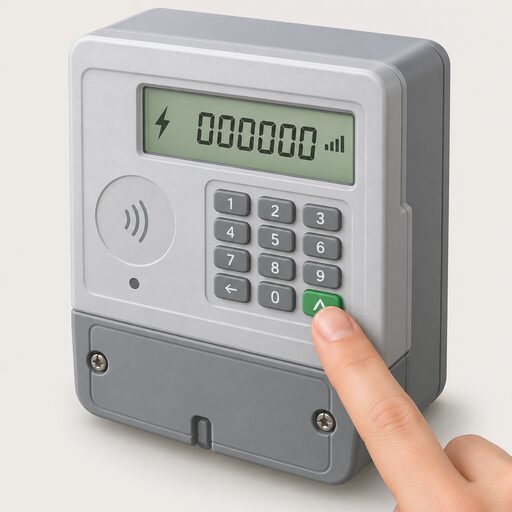 Get a Reading From a Smart MeterHow to bring up a meter reading on a smart electricity or gas meter when a manual reading is still needed, and the difference between the meter itself and the in-home display.
 SMETS1 and SMETS2 MetersIs your smart meter an old first generation model or a newer one, and does it matter?
 Smart Meter Faults and FixesYour smart meter has stopped working.
 The Full Smart Meters GuideDo smart meters really save you money, and how do you use one to cut your bills?
 Meter Readings and EstimatesWhy is my energy bill estimated, and how often should my meter be read?
 Take Control of Your EnergyHow do you read your own energy use and keep hold of your meter readings?