
In this answer
Short answer
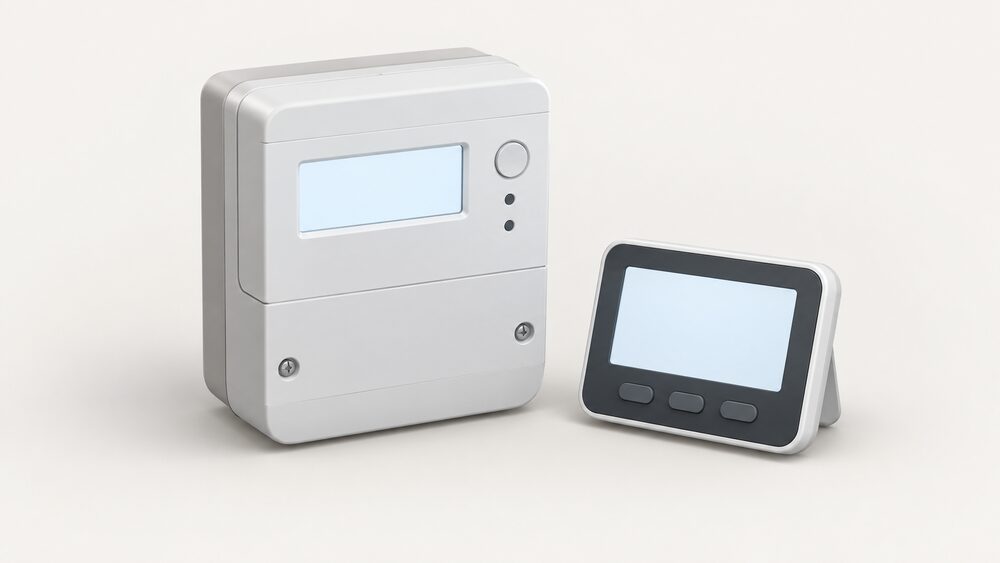
A smart meter does use electricity, but it does not report that use as a separate figure. Electricity smart meters usually use mains power, so the meter is powered from the same supply it is measuring1. Its own draw is therefore part of the whole-home total it records, not a line item you can read off the display.
The more useful answer is what the meter is for. A smart meter automatically sends your electricity and gas meter readings to your supplier, and its in-home display shows you how much energy you are using during the day2. It measures the whole home, not individual appliances: smart meters only measure household energy use and do not know when individual appliances are turned on or off3.
Installation is arranged through your energy supplier at no extra cost, and the meter records electricity use in near-real time, with gas every half hour4. What follows sets out what the meter does, what it can and cannot tell you, and what it means for a household's energy independence.
What a smart meter actually does
A smart meter is a billing and information device before it is anything else. The data shared through it is used to bill you for the energy you use, to offer new products and services such as new tariffs where you have given permission, and to help make the energy system more efficient by recording demand more accurately2. That third use is the one households rarely see: the meter's half-hourly record of demand feeds the wider system, not just your bill.
The practical change for a household is the end of the estimated bill. Smart meters enable accurate billing by automatically recording energy use in half-hour periods, so suppliers bill on what was actually used6. Having a smart meter means getting a bill based on how much energy the person you care for has used, rather than a figure built from past estimates7. For anyone managing a tight budget, that removes a recurring source of dispute.
The meter also carries a live signal into the home. Smart energy meters can help encourage good habits, as they provide live information about how much energy you are using3. That is the whole of the mechanism: the meter measures, the display shows, and the household decides what to do about it. The meter itself does not act on the information.
What a smart meter measures: whole-home use, not individual appliances
This is the limit that catches most people out. Smart meters keep track of how much power an entire home uses per day, week, month or year, and show it on your in-home display9. They do not break that total down by appliance. Smart meters only measure household energy use and do not know when your individual appliances are turned on or off3.
The meter cannot tell which specific appliances you are using, but it can help you understand your appliances' energy use in aggregate10. In practice that means a household can see the shape of a day, the spike when the oven goes on, the overnight baseload that never quite falls to zero, without knowing which device caused any of it. The in-home display does not automatically break usage down by appliance, but it can help you spot changes in energy use throughout the day11.
For appliance-level figures, a separate device is needed. A smart meter can help you be aware of the appliances that are using the most electricity in your home, but the identification comes from the household's own observation, not from the meter12. Standalone monitors and smart plugs do the isolating work; the meter supplies the whole-home context. The smart meter versus standalone energy monitor comparison sets out where each approach fits, and smart plugs and appliance-level energy monitoring covers the plug-level option.
There is one further capability worth knowing about. The smart metering system can support up to four smart electricity meters, and smart electricity meters can be used as generation meters, so exported energy from microgeneration can be measured13. That matters to a household with solar, because it turns the meter into an export record as well as an import one.
The in-home display: where your usage figures appear
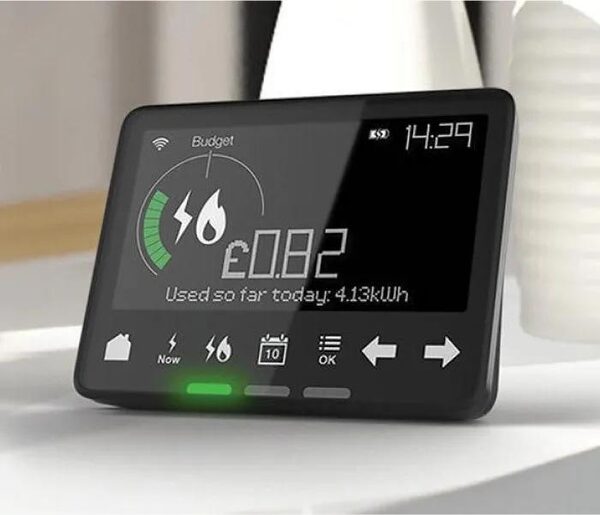
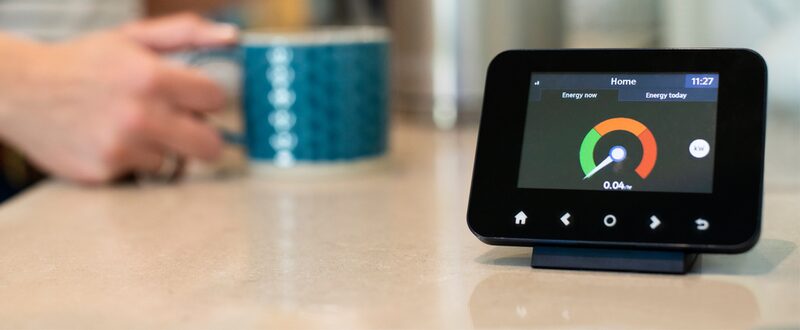
The in-home display is the part of the system a household actually looks at. It shows you how much energy you are using during the day, and it shows that use in near real time2. The display shows energy use in pounds and pence, and should show the standing charge depending on tariff and supplier7. For prepayment mode it also shows how much credit is left7.
What the display gives you is a running total for the property, not a per-appliance account. The smart meter in-home display shows your energy usage in near real time, so you can get a clearer view of how your home uses energy15. The figures are whole-home figures. A household wanting to know what a single appliance costs to run has to isolate it, typically by switching other things off and watching the display, or by using a plug-level monitor.
The display is also where the daily, weekly and monthly picture sits. Smart meters keep track of how much power an entire home uses per day, week, month or year, and show it on your in-home display9. Electricity readings are available every day16. If the display is lost or stops working, the meter itself carries on measuring and sending readings; the display is a convenience, not the meter. In-home displays covers what the screen shows in more detail, and consumer access devices explains how to pull the same data into your own equipment.
Near-real time readings: how often a smart meter reports electricity use
Two different clocks are running in a smart meter, and confusing them causes most of the misunderstanding about how much data the meter produces.
The first is the measurement clock. Your smart meter records your electricity use in near-real time, and every half hour for gas5. The meter is therefore building a detailed record of electricity demand throughout the day, and a half-hourly record for gas. The in-home display reflects that near-real time figure, which is why it moves when a large appliance switches on.
The second is the reporting clock. Smart meters send accurate readings to your energy supplier, wirelessly and automatically, at least once per month4. A smart meter automatically sends your electricity and gas meter readings to your supplier2. The monthly minimum is the floor, not the ceiling: suppliers can take more frequent reads, and half-hourly settlement arrangements use the meter's half-hourly record. The readings frequency page deals with the reporting schedule in full.
The distinction matters for independence. A household sees near-real time data on its own display, but the supplier's view is governed by the reporting arrangements and by what the household has consented to. The data sent covers meter readings and the technical information needed for billing, meter operation and smart services; it does not record conversations, browsing history, personal activities or details about individual appliances3. Smart meter data sets out what is collected and who can see it.
Installation at no extra cost: who fits a smart meter and what you pay
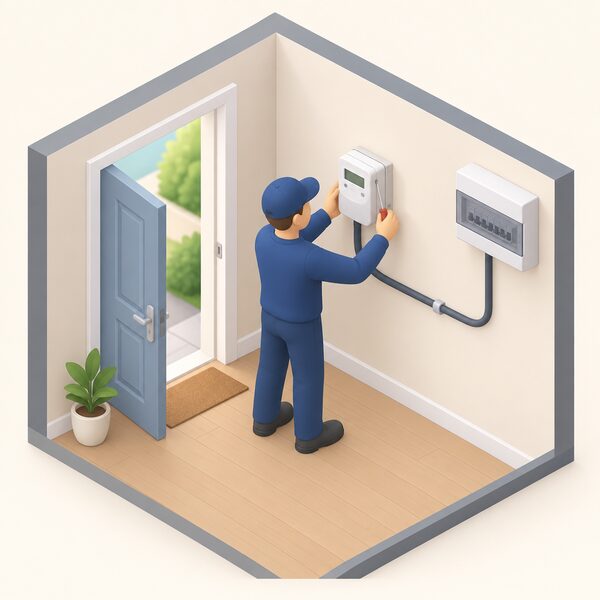
Your energy supplier installs the meter, and the household does not pay for the fitting. A smart meter can be installed by an energy supplier at no extra cost17. Energy suppliers must install smart meters at no extra cost, so a household is not asked to pay to have one installed19. There is no additional cost for installation of a smart meter20.
The cost does not vanish; it moves. The cost of the rollout is spread across everyone's bills rather than charged to the household having the meter fitted20. That is why the fitting is free at the point of installation and why the charge appears, in effect, in the standing charge or unit rate for all customers. Smart meters are provided at no extra cost, so you will not have to pay your smart meter installer21. The smart meter cost page works through where the money sits.
Eligibility is broad. A household that pays for its energy, whether it owns or rents its home, can book to have a smart meter installed where it is expected to work in the property6. The roll-out is being implemented by energy suppliers across the country, who are installing millions each year18. Where a property cannot support one, the reasons are practical rather than administrative; why you might not be able to get a smart meter covers those cases.
The installation itself is a supplier visit, not a household project. Smart meter installation describes what happens on the day, and smart meter installation also covers the practical arrangements around the appointment.
Does a smart meter track gas as well as electricity?
In most homes, yes. Smart meters can support both gas and electricity tracking, while many home energy monitors focus on electricity only11. A smart meter automatically sends your electricity and gas meter readings to your supplier2. The two fuels are recorded on different clocks: electricity in near-real time, gas every half hour5.
The in-home display carries both. A smart meter in-home display shows in near real time how much gas and electricity a customer is using, how much it costs, and, for prepay mode, how much credit is left7. That combined view is one of the practical differences between a smart meter and a standalone electricity monitor, which typically sees only the electricity circuits it is clamped to.
Reading a gas smart meter is a separate procedure from reading the electricity side, using the meter's own buttons. How to read a gas smart meter covers the button sequence. Where a display shows electricity but no gas reading, the fault is usually in the communications or the pairing rather than the gas meter itself; in-home display shows electricity but no gas sets out what to check.
What owning a smart meter means for household energy independence
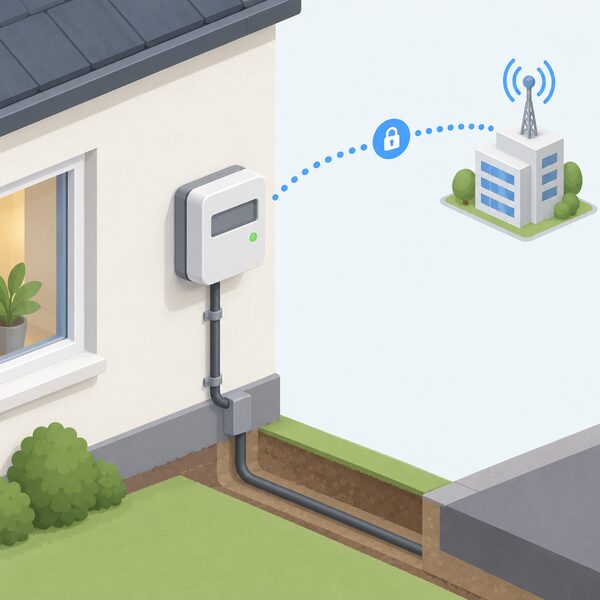
A smart meter does not make a home independent of the grid. It remains a mains-powered device on a supplier's account, reporting to a supplier's systems through a secure network1. The dependence is real and worth stating plainly: the meter needs the mains to run, the communications network to report, and the supplier relationship to be billed. What it changes is the household's knowledge of its own consumption.
That knowledge is the independence the meter offers. The data provided by your smart meter puts you in control of your energy usage, meaning you can take energy-saving steps to reduce your CO2 emissions23. Smart meters provide real-time information about the energy use in a household, helping customers avoid wasting energy and getting estimated readings and bills24. They give you real time information on your energy use, allowing you to better manage your usage, so you can save money and reduce emissions25.
The meter also opens the door to arrangements that require one. A smart meter allows your energy use to be measured in real time, which is essential for flexibility participation, and in most cases a smart meter plus a smart tariff is needed, with suppliers able to arrange free installation13. Installed by your energy supplier at no extra cost, smart meters track how much energy you are using daily, weekly and monthly26. With a smart meter, you can easily monitor your home energy use and develop a better understanding of what you can do to become more energy efficient27.
The remaining dependence is the one to weigh. The meter's data flows to the supplier and, where the household has consented, to other parties; the display depends on the meter's communications working; and the household remains on a grid supply. Smart meters and energy independence examines that balance, and household flexibility and reward schemes covers what a meter unlocks. The pillar guide places the meter within the wider home energy management picture.
Sources27 cited
- Smart meters are safe, Smart Energy GB, 2026-03-16
- Get help with your smart meter, Ofgem, 2026-09-17
- Automatic meter readings, Smart Energy GB, 2026-04-07
- How do smart meters work?, Smart Energy GB, 2026-08-27
- What is a smart meter?, Smart Energy GB, 2026-08-10
- Smart meters: your rights and expectations, GOV.UK, 2025-08-08
- Smart meters and carers, Smart Energy GB, 2026-08-19
- How carers could prepare for higher energy bills, Smart Energy GB, 2026-03-16
- Are energy monitors the best way to measure your power usage?, Which?, 2026-03-31
- What appliances use more electricity, Smart Energy GB, 2026-03-16
- Smart meters vs home energy monitors, Smart Energy GB, 2026-08-17
- Standby power: the hidden costs of vampire devices, NICEIC, 2026-01-28
- Written evidence on smart meters, Parliament, 2016-06
- Are smart meters accurate?, Smart Energy GB, 2026-03-16
- Getting a smart meter installed, Citizens Advice, 2026-09-17
- How can I reduce my carbon footprint, Smart Energy GB, 2026
- The installation process, Smart Energy GB, 2026-04-01
- How to get a smart meter, Smart DCC, 2026
- Do you have to have a smart meter by law?, Smart DCC, 2026
- How can I read a smart gas meter, Smart Energy GB, 2026-08-17
- A guide to smart meters, Age UK, 2026-08-24
- Smart meters, Welsh Government Climate Action, 2026
- Smart meters and decarbonisation, Smart DCC, 2026
- Support with energy bills, Energy UK, 2025-09-03
- What are the benefits of having a smart meter, UK Power Networks, 2026-09-17
- Smart meters, SSEN, 2026-09-19
- How to bleed a radiator, Smart Energy GB, 2026-08-17
 The Full Smart Meters GuideDo smart meters really save you money, and how do you use one to cut your bills?
 Take Control of Your EnergyHow do you read your own energy use and keep hold of your meter readings?
 Get a Reading From a Smart MeterHow to bring up a meter reading on a smart electricity or gas meter when a manual reading is still needed, and the difference between the meter itself and the in-home display.
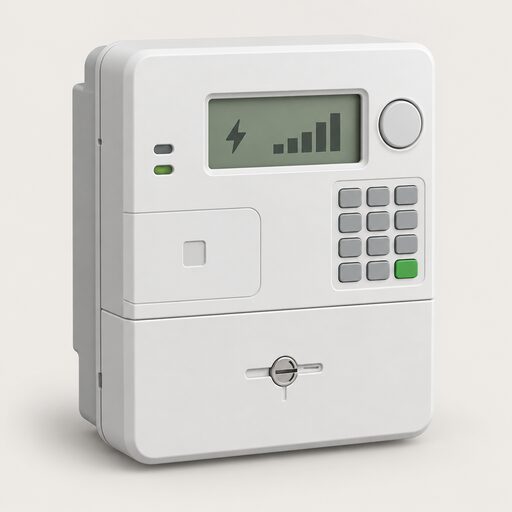 Who Owns Your Home Energy DataYour smart meter records how much gas and electricity you use, and that information belongs to you, not your supplier.
 In-Home DisplaysWhat does the little screen that came with a smart meter actually tell you, and what can you do when it stops working?
 What Does a Smart Meter Cost?There is no upfront charge for a smart meter or a standard installation: the cost is recovered indirectly through energy bills.