
In this comparison
A smart meter and a standalone energy monitor both tell you about electricity, but they do different jobs and only one of them talks to your supplier. A smart meter automatically sends your electricity and gas meter readings to your supplier, so your bill is based on actual use rather than an estimate1. A home energy monitor can help you track electricity use, but it does not replace a smart meter because it cannot automatically send meter readings to your supplier2.
That single difference decides most of the choice. If the aim is to stop sending manual readings, get bills based on real use and see gas as well as electricity, the smart meter is the device that does it, and your supplier provides and fits it at no extra cost3. If the aim is to watch electricity closely, in your own home, without anything leaving the house, a standalone monitor is the tool, and it is usually bought separately4.
The two are not rivals in the way a comparison table suggests. Smart plugs and smart meters are both about energy, but they do different jobs, and neither one depends on the other5. The same holds for a monitor and a meter: a household can run both, and many do.
What each device actually does
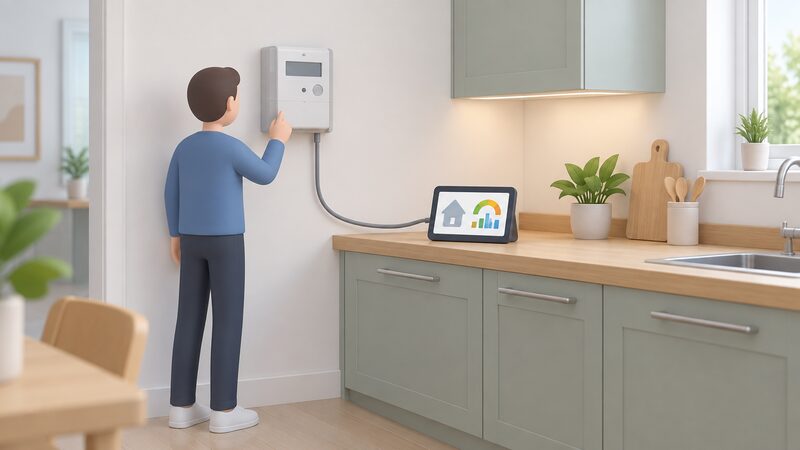
A smart meter system is made up of two parts: the smart meters, which replace your traditional gas and electricity meters, and the in-home display3. The meter measures how much gas and electricity you are using, and the display shows you how much energy you are using during the day7. Smart meters provide near-real-time visibility of energy consumption, often through that in-home display8.
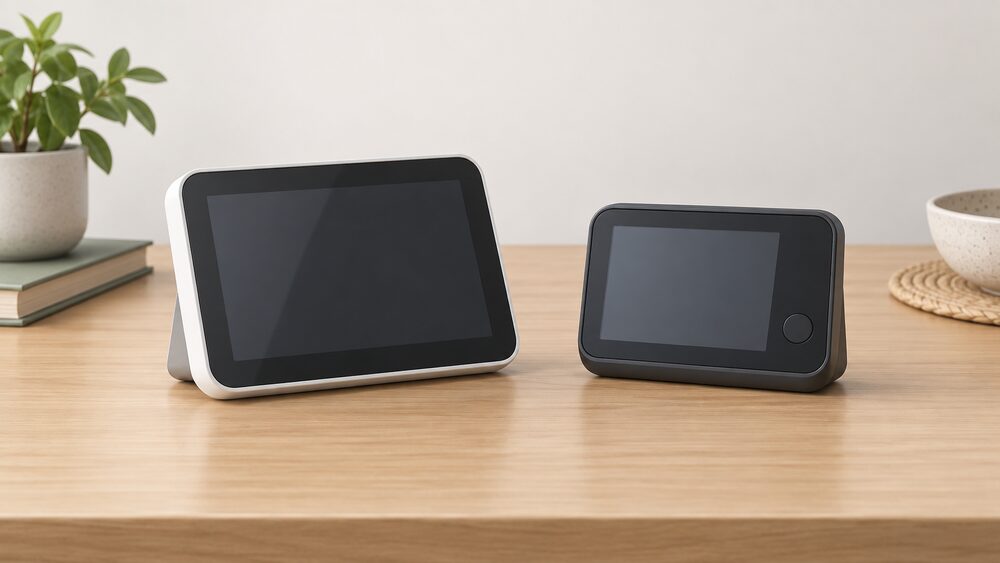
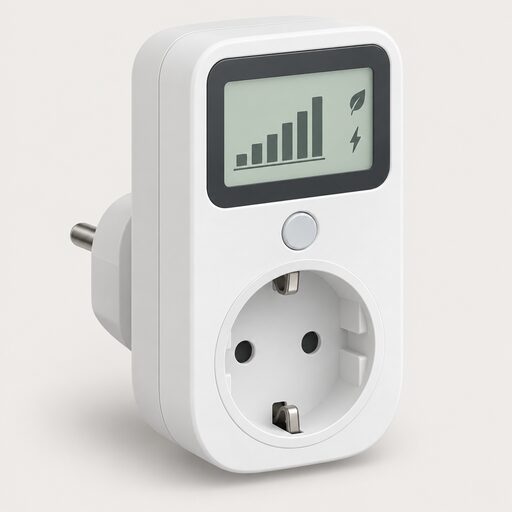
A standalone energy monitor is a different product. It is usually bought separately and mainly tracks electricity use in your home2. It can be mains or battery powered9. It does not replace the meter and it does not sit on the supplier's network.
The in-home display that comes with a smart meter is a portable touchscreen device that shows near real-time energy usage data10. It shows how much electricity and gas you are using, in near-real time, and how much it is costing based on your energy unit rates9. That costing function is one of the practical differences: the display works in pounds as well as kilowatt hours, using the rates on your account.
A monitor, by contrast, is a measuring device rather than a billing device. It reads the supply and reports it to you. Nothing about it changes what your supplier knows or how your bill is calculated.
The key difference: readings that reach your supplier, or readings that do not
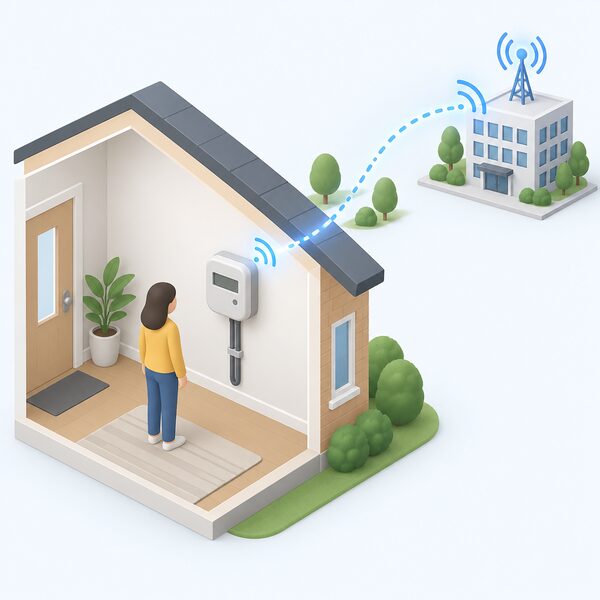
This is the line that separates the two products, and it runs in one direction only.
A smart meter automatically sends your electricity and gas meter readings to your supplier1. Readings are sent securely to the energy supplier automatically11. When you have a smart meter installed, all the readings are automatically sent via the DCC's secure network to your energy supplier12. The practical effect is a bill based on actual energy used rather than estimated bills11. Smart meters enable accurate billing by automatically recording energy use in half-hour periods13.
A home energy monitor does none of this. It cannot automatically send meter readings to your supplier2. Energy monitors and smart thermostats are not linked to your energy accounts and do not send any information to your energy suppliers14.
There is a useful test for which one you already have. If your energy supplier has told you that you do not need to send them meter readings anymore because they are receiving them automatically, you have a smart meter15. Households without one still see an engineer, usually a couple of times a year, to read the meter16.
The data question follows from the same design. Only your supplier, or third parties when given explicit permission from the consumer, can see how much energy you are using and when17. The only information that gets sent to energy suppliers is how much energy is being used and when; suppliers cannot see what appliances are plugged in11. Smart meters only give data about how much energy you use, and personal information such as your name, address or bank account is not kept on the meter18.
"However, they're not smart meters; they are not linked to your energy accounts and don't send any information to your energy suppliers."
For a household thinking about independence, this cuts both ways. The smart meter removes the manual reading and the estimated bill, but it also means consumption data leaves the home on a schedule you do not control. A monitor keeps everything local, and in exchange it changes nothing about your account.
What a standalone energy monitor shows
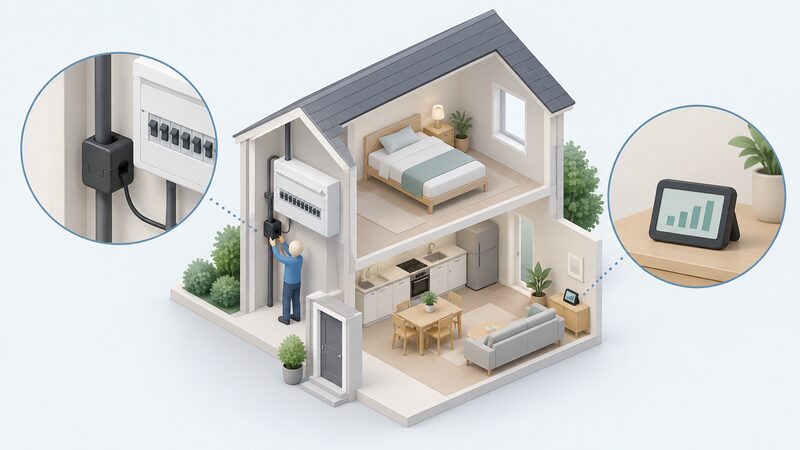
A monitor gives you a live view of electricity use in the home. It is a display and a sensor arrangement rather than a metering point, and it is not part of the national programme.
What it does not do is just as important. Simply buying and plugging in an energy monitor will not automatically reduce your bills4. Where a seller or manufacturer claims that a monitor saves energy and cuts bills, that claim should be treated with scepticism4. The device shows consumption; the reduction comes from what a household does with the information.
A monitor also covers less ground than a meter. Smart meters can support both gas and electricity tracking, while many home energy monitors focus on electricity only2. For a home with gas heating and gas hot water, that leaves a large part of the energy bill outside the monitor's view.
The detail a monitor offers is whole-house, not per-appliance. A smart meter in-home display does not automatically break usage down by appliance, though it can help you spot changes in energy use throughout the day2. A monitor shares that limitation. Neither device can tell you that the tumble dryer is the problem; both can tell you that something changed at four o'clock.
Where a monitor earns its place is in resolution and placement. It can sit where you want it, it can be mains or battery powered9, and it reports continuously rather than at the intervals a supplier needs for billing. For a household trying to understand a specific circuit or a specific time of day, that is the point of buying one.
Neither device shows which appliances use the most
This is the most common expectation that neither product meets, and it is worth stating plainly before any purchase.
A smart meter in-home display does not automatically break usage down by appliance2. It shows a whole-home figure, in near real time, with a cost attached9. A whole-house energy monitor reports the same whole-home figure. Neither can separate the fridge from the freezer from the kettle.
What the in-home display does offer is pattern spotting. It can help you spot changes in energy use throughout the day2, and smart meters provide nearly real-time updates for electricity19. That is enough to notice that consumption rises at a particular hour, or that something is running overnight. It is not enough to name the appliance.
Appliance-level detail needs a different approach, and the site covers it separately in smart plugs and appliance-level energy monitoring. A smart plug measures what is plugged into it, which is a narrower and more precise answer than either a meter or a whole-house monitor can give.
The independence point here is about data quality rather than data ownership. A household that wants to cut consumption needs to know where it goes, and neither of these two products answers that on its own.
Solar households: why a monitor often suits better than the in-home display
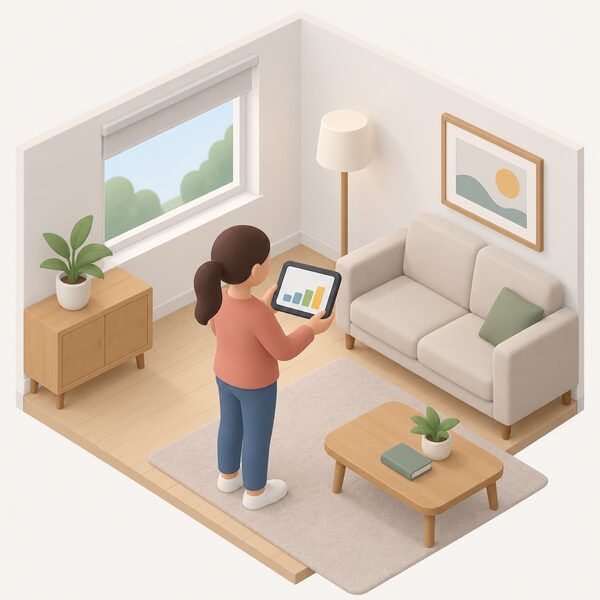
For a home with panels, the in-home display is not built around generation. A smart meter tracks how much power an entire home uses per day, week, month, or year, and shows it on the in-home display, while sending readings automatically to the energy supplier4. That is a consumption figure, not a generation figure.
A home energy monitor mainly tracks electricity use in your home2. For a solar household, that electricity focus is often the more useful one, because the flows being watched are electrical and they change quickly with the weather and the time of day. The site covers the wider picture in monitoring a solar and battery system at home.
The in-home display still has a role. It shows how much energy you are using during the day7, and it is the device the supplier provides. But it is a consumption display attached to a billing meter, not a generation monitor.
There is a further consideration for anyone weighing up a monitor purchase. Consumers are only guaranteed the benefits of monitoring energy usage via an in-home display for a year; after that the supplier has no obligation to replace it6. A household that has come to rely on the display, and then loses it, is left with the meter and the supplier's app. A separately bought monitor is owned outright, which is a different kind of security.
Cost and who supplies what
The cost position is not symmetrical, and it is the clearest practical difference between the two products.
A smart meter and its accompanying in-home display are provided and fitted by your energy supplier, and can be installed at no extra cost15. You can get a smart meter installed by your energy supplier at no extra cost20. Smart meters are provided by your energy supplier at no extra cost to you2. Some providers may offer a free energy efficiency inspection during installation19.
A plug-in energy monitor is not included in the smart meter programme and is usually purchased separately; a few suppliers may give one free with specific tariffs, but that is not the norm4. Where a supplier does not publish a price, monitors are sold at retail and the price depends on the model and the sensors it needs.
| Smart meter and in-home display | Standalone energy monitor | |
|---|---|---|
| Who provides it | Your energy supplier3 | Bought separately by the household4 |
| Upfront cost | At no extra cost20 | Purchased at retail; not part of the programme4 |
| Fuels covered | Gas and electricity2 | Often electricity only2 |
| Sends readings to supplier | Yes, automatically1 | No2 |
| Appliance-level breakdown | No2 | No2 |
| Guarantee period | One year on the in-home display benefits6 | Depends on the retailer and maker |
The rollout itself is not optional in the long run, even though installation is not compulsory for an individual household. It is not compulsory to have a smart meter installed, and if your energy supplier offers you one, you can refuse21. It is your right to refuse the installation of a smart meter, but replacement options may be limited if a traditional meter is faulty or unsafe22. There are no provisions in any Bill that would allow anyone to enter a property by force to install a smart meter, and consumers retain the right to refuse installation23. In practice, most energy companies do not have the old meters to fit, so a household that refuses may find the choice narrows when a meter needs replacing9.
The direction of travel is set out in government policy. The consultation proposes that suppliers complete installation of smart meters in remaining domestic premises by the end of 203024. Suppliers are required to take all reasonable steps to install smart meters in all remaining domestic premises by the end of 203024.
Faults, communications and the 2G and 3G switch-off
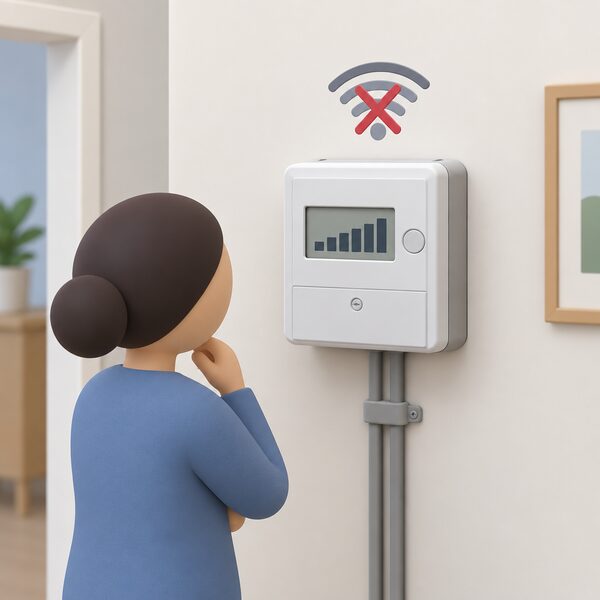
A smart meter can fail in two distinct ways. Your smart meter may stop recording the energy you use, or may no longer send readings to your supplier25. Those are different problems: the first affects your bill, the second affects whether anyone receives it.
The communications side is being upgraded. The smart meter network is to transition to 4G before the 2G and 3G mobile services switch off by the end of 203324. Your smart meter will continue to operate as normal following the 3G switch-off, as smart meters will switch seamlessly to the 2G network26. Suppliers must replace all smart meters that are still connected to 2G and 3G before the services are switched off by 203327.
A meter that has lost its smart functions is not a dead meter. If you have a smart meter that is not operating in smart mode, it will still record your energy usage accurately28. What is lost is the automatic reading, not the measurement.
A monitor fails differently, and more simply. If yours stops working, it will not affect your smart meter9. The two systems are independent, which is the practical advantage of running both.
Where each one leaves a household
The honest summary is that these two products answer different questions, and the answer to "which one" depends on which question matters more.
A smart meter delivers accurate billing, automatic readings, gas and electricity coverage, and an in-home display, all at no upfront cost, but it depends on your supplier, the national network and a communications hub, and its display is only guaranteed for a year6. A standalone monitor delivers a local, continuous, electricity-focused view that nothing else can switch off, but it sends nothing to your supplier, covers gas poorly or not at all, and cannot name an appliance2.
For energy independence, the split is clear. The smart meter reduces dependence on manual reading and estimated billing, and increases the household's connection to the supplier's network and to the DCC. The monitor keeps the data in the house and depends on nothing but its own sensors and power supply. Neither removes dependence on the grid or on a supplier; both are measuring tools, not sources of energy.
Households that want both accurate bills and a local view are not choosing between them. The two can run side by side, and neither interferes with the other5.
Sources28 cited
- Getting a smart meter, Ofgem, 2026
- Smart meters vs home energy monitors, Smart Energy GB, 2026-08-17
- What is a smart meter?, Smart Energy GB, 2026-08-10
- Are energy monitors the best way to measure your power usage?, Which?, 2026-03-31
- How do smart meters reduce my bills?, Smart DCC, 2025
- Smart Metering 2025 Costs and Benefits Report, Department for Energy Security and Net Zero, 2025
- Get help with your smart meter, Ofgem, 2026
- Guide to smart meters, Energy Saving Trust, 2026-07-15
- Smart meter rollout: government response, Public Accounts Committee, 2023-10-20
- Get help with your smart meter, Ofgem, 2026
- Smart meters and carers, Smart Energy GB, 2026-08-19
- How do smart meters save energy?, Smart DCC, 2026
- Smart meters: your rights and expectations, GOV.UK, 2025-08-08
- How do you know if you have a smart meter?, Smart DCC, 2026
- Do I already have one?, Smart Energy GB, 2026-03-16
- What is a smart meter? Easy read, Smart Energy GB, 2026-03-16
- Protecting data on the smart meter network, Smart DCC, 2026
- Smart meters, Welsh Government, 2026
- Smart meters and decarbonisation, Smart DCC, 2026
- How to get a smart meter, Smart DCC, 2026
- Lived experience of fuel poverty in Scotland, Scottish Government, 2020-09-03
- Do smart meters use 3G?, Smart DCC, 2024
- How to understand your electricity and gas bills, Energy Ombudsman, 2025-04-24
- Smart meter installation, Which?, 2026-02-26
- Smart meters, Energy Ombudsman, 2026-09-20
- Tough new rules force suppliers to fix faulty smart meters, GOV.UK, 2026-03-10
- Smart meter performance, Ofgem, 2026
- Smart meters and the smart meter rollout, House of Commons Library, 2026-09-20
 HEMS and Monitoring CostsWhat does a home energy monitor cost to buy and run?
 Meters and Energy IndependenceDo smart meters really save you money, and can you still get one fitted for free?
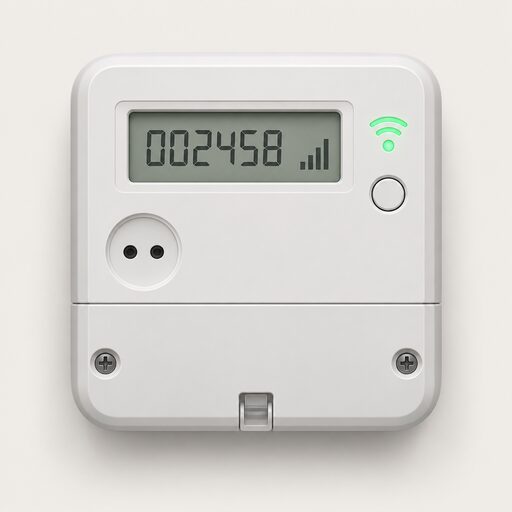 The Full Smart Meters GuideDo smart meters really save you money, and how do you use one to cut your bills?
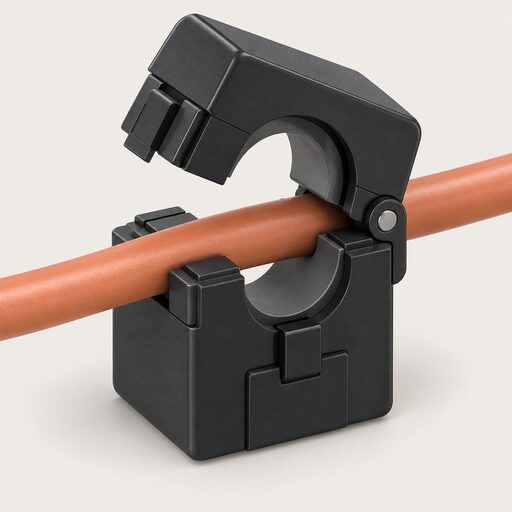 Current Transformers and SensorsA clamp monitor measures the current in your cables, while a P1 module reads your smart meter instead.
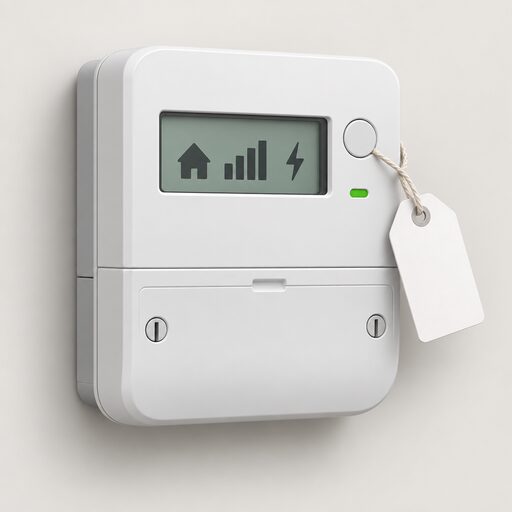 What Does a Smart Meter Cost?There is no upfront charge for a smart meter or a standard installation: the cost is recovered indirectly through energy bills.
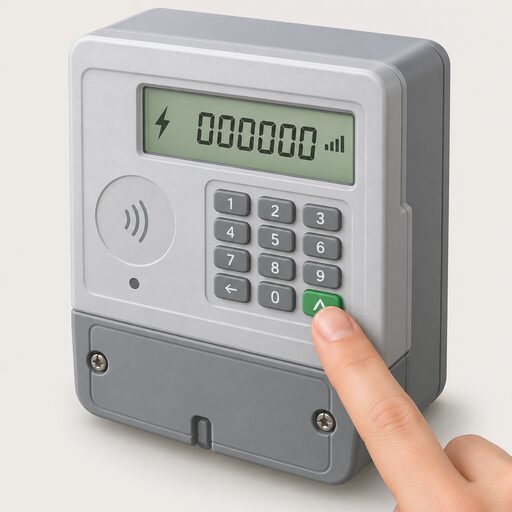 Get a Reading From a Smart MeterHow to bring up a meter reading on a smart electricity or gas meter when a manual reading is still needed, and the difference between the meter itself and the in-home display.