
In this comparison
Two app-led thermostat brands dominate most shortlists of UK buyers moving from a basic dial or programmer to smart heating control: Netatmo and tado°. They are not evenly matched on evidence. tado°, founded in Munich in 2011, says it has connected more than 5.5 million smart thermostats and reached operating profitability1, and it claims compatibility with 95% of heating systems, including gas boilers, heat pumps, water-based underfloor heating and air conditioning2. Netatmo's smart thermostat remains on sale in the UK, but the independent information available is thinner, and Netatmo itself has announced it will stop selling products through its own e-shop in the United States and Canada from 1 June 2026.
That asymmetry runs through this comparison. tado° publishes detailed compatibility lists, warranty terms and savings figures; Netatmo's equivalent claims are harder to verify from independent sources, and Which? found Netatmo among the brands that did not provide specific information on how long their products receive software updates3. For a household weighing a purchase that should last a decade, that difference matters as much as any feature list.
How the two compare at a glance
| tado° | Netatmo | |
|---|---|---|
| Founded | Munich, 20114 | French smart home brand; no comparable company figures in the independent sources here |
| Scale | Over 1 million tado° homes; more than 5.5 million devices connected1 | Not stated in the sources here |
| Compatibility claim | 95% of heating systems2 | Not covered by the sources here |
| Heat pump support | Yes, plus a dedicated Heat Pump Optimizer8 | Not covered by the sources here |
| Smart home standard | Matter, on the X range9 | Not covered by the sources here |
| Claimed saving | 22% average on heating costs4 | Not covered by the sources here |
| Software support | 10 years of support stated6 | No specific information provided to Which?3 |
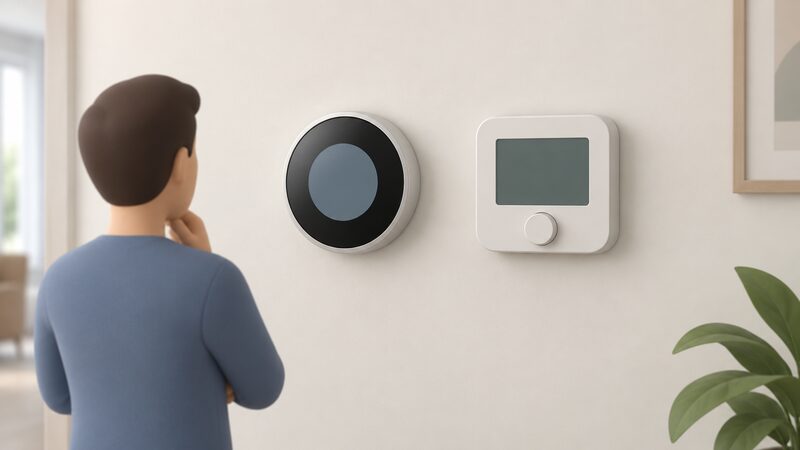
The honest summary is that this is not a like-for-like comparison on published evidence. tado° puts numbers, compatibility lists and warranty terms in the public domain; Netatmo does not, at least not in the independent and maker material available here. That does not make Netatmo's thermostat a poor product, but it means a buyer has to take more on trust. Where a fact about Netatmo exists, this page gives it; where none exists in the material available, it says so rather than guessing.
What each brand is and where it stands
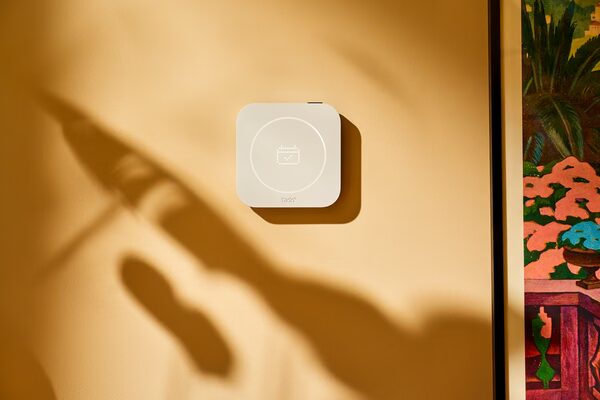
tado° is a Munich company founded in 2011 that combines hardware, software and services into one platform4. It describes itself as the market leader in Europe, offering precise sensors, self-learning algorithms and app control10, and in March 2026 it announced it had connected more than 5.5 million smart thermostats and reached operating profitability1. Its UK product pages claim over 1 million tado° homes, 15+ years of experience and app ratings drawn from 36,000+ reviews7. Those are maker's figures, but they are at least stated, dated and consistent across the company's own pages.
Netatmo is a French smart home brand whose thermostat has been sold in the UK for years, often through third-party retailers and bundled with other Netatmo devices. The independent material available here gives no company scale figures, no compatibility percentage and no savings claim for Netatmo. What is known is cautionary in two respects. First, Which?'s smart thermostat research found that Netatmo was among the brands that "didn't provide us with specific information on update support periods"3, which matters because a smart thermostat without software updates becomes a dumb thermostat with a screen. Second, Netatmo states its products will no longer be available for purchase in the United States and Canada through its e-shop from 1 June 2026. That withdrawal does not affect the UK, but it is a signal about the brand's retail direction that a buyer weighing a ten-year purchase may want to weigh too. More background on the brand is on our Netatmo smart thermostats page, and on tado° at tado° Smart Thermostats and TRVs.
Compatibility with boilers, heat pumps and heating systems
tado°'s compatibility position is unusually well documented. The company states its products work with gas boilers, oil boilers, heat pumps, district heating and underfloor heating, and that direct electric systems such as storage heaters, fan heaters and infrared panels are not supported11. The tado° X range works with all boilers that have a relay or an OpenTherm connection, which tado° says covers the vast majority of models on the market12. OpenTherm matters because it lets the thermostat modulate the boiler's output rather than simply switching it on and off; see our OpenTherm page for why that improves efficiency.
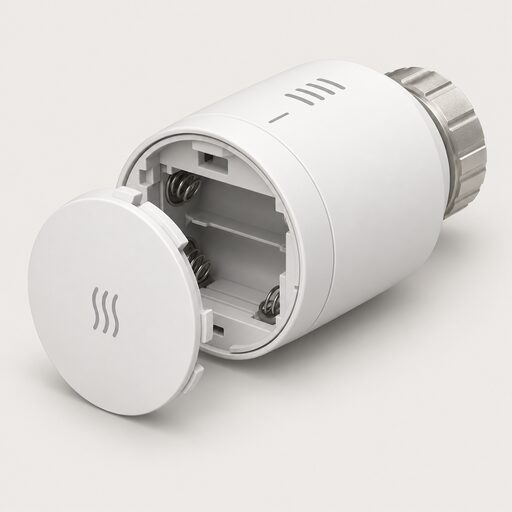
On heat pumps, tado° is compatible with many hydronic heat pumps, including models from Panasonic, Daikin, Atlantic, Vaillant, Saunier Duval and Fujitsu11, covering air-to-water, water-to-water and geothermal types13. It also sells a Heat Pump Optimizer X that works with the heat pump without replacing its control unit, and tado° states it is compatible with air-to-water, water-to-water and brine-to-water heat pumps, even those not connected to a thermostat8. Its Smart Radiator Thermostats fit almost all common radiator thermostats12.
For Netatmo, the sources available here contain no compatibility figures, no boiler-connection detail and no heat pump statement. Netatmo's own product pages carry compatibility guidance, but nothing independent verified for this comparison. A household with a heat pump, an oil boiler or underfloor heating therefore has published, checkable answers from tado° and an unverifiable one from Netatmo. Before buying either brand, check your specific boiler or heat pump against the maker's compatibility list, and read our wider guidance on smart thermostat boiler compatibility.
Scheduling, zoning, automation and app control
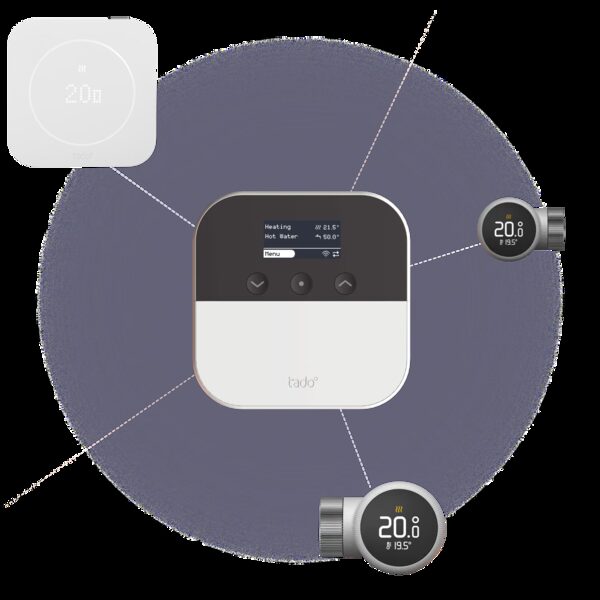
tado°'s feature set is built around its app. Every Smart Thermostat includes remote control, Smart Schedule, smart home and voice assistant integration, and Room Link at no additional cost13. Room Link is the integration between room thermostats and the boiler that fires the boiler only when a room actually demands heat, which is what turns a set of smart valves into an efficient system rather than a set of gadgets. Manual schedules are set by room and day, down to 15-minute blocks14, and room-by-room zoning is achieved with smart TRVs, each controlled individually from anywhere via the app10.
The automation features are where the maker's claims need reading carefully. Geofencing and Adaptive Heating are offered as intelligent features10, and tado° claims up to 12% energy savings from open window detection and up to 23% from geofencing13. A paid tier changes the picture: auto-learning schedules come with an AI Assist subscription rather than built in14, and tado° states users with AI Assist save an additional 55% more energy compared with users of the free app, from internal modelling13. On the air conditioning side, Smart Schedule and remote control are included free, but without a subscription Geofencing and Open Window Detection send a notification only rather than acting automatically15. Our page on smart thermostat subscriptions explains this paywall pattern across the market.
For Netatmo, the sources here contain no comparable detail on scheduling granularity, zoning, geofencing or subscription tiers. Netatmo's thermostat is widely understood to work with a phone app and to support scheduling, but no verified figure on its features appears in the independent material available, so none is offered here. If precise, documented room-by-room control is the priority, the evidence supports only one side of this comparison; our smart TRVs and heating zoning pages explain the underlying principles whichever brand you buy.
Matter, voice assistants and smart home platforms
tado°'s X range uses Matter, the open smart home standard, and works with Google Home, Apple Home, Amazon Alexa and Samsung SmartThings9. More than 240 companies, including tado°, Apple, Amazon, Google and Samsung, are committed to Matter through the Connectivity Standards Alliance16. The X devices also use Thread, described by tado° as a stable, fast and energy-efficient network in which each device acts as its own node16, a modern alternative to Wi-Fi and Bluetooth10. tado° also has an official Home Assistant integration2, which matters to households that want to escape manufacturer clouds altogether; see our page on Home Assistant and open-source control.
Matter support is the strategically important fact here. A thermostat that speaks an open standard can be controlled by any of the major platforms and is less tied to one company's app surviving, which is exactly the kind of dependence our smart home protocols page warns about. For Netatmo, the sources available here give no Matter statement and no platform list, so no claim is made. Households already running Apple Home or Google Home should verify Netatmo's current platform support with the maker directly before buying, and read our page on smart heating security, data and product support for why long-term software support is the real compatibility question.
Savings claims: what each maker says

tado°'s headline claim is that its customers save an average of 22% on heating costs4, a figure the company repeats across its product pages and press releases, drawn from internal data of estimated customer energy savings17. Independent guides repeat the same number: uSwitch reports that tado°'s makers claim users can save up to 22% on their energy bills18, and ivie records that a tado° study found users saved an average of 22% thanks to scheduling features19. tado° has also claimed at least an estimated £740 million cut from customers' heating bills across Europe, from €870 million in its own analysis17.
These are maker figures, and they should be read as such. The 22% average comes from tado°'s own customer data, not from an independent trial, and the "up to" claims (22%, and the 23% for geofencing) describe best cases, not typical ones18. What drives real savings is unglamorous: a schedule matched to when the house is occupied, temperatures set per room, and heating that responds to open windows and weather. Our page do smart heating controls actually save money? sets out the evidence across the whole market.
For Netatmo, no savings claim appears in the sources available here, from either the maker or independent guides. That is a genuine gap for a buyer comparing on running costs. A household choosing between the two on savings grounds has one brand's self-reported figure and nothing verified to set against it, so the honest position is that no independent comparison of the two brands' real-world savings exists in the material here.
tado° X's decade long guarantee versus Netatmo's unclear after sales care
tado° ran an exclusive 10-year extended warranty as a special introductory offer on its X range, but the company states the promotion has come to an end and is no longer available for new purchases made after 30 June 20265. Devices bought and registered before that date keep the cover; anyone buying now gets the standard terms, and tado°'s Premium Direct-Service Warranty provides rapid replacement if a hardware defect is confirmed, with specialists using remote diagnostic tools to resolve issues without returns20. Separately from the warranty, Which? reports that tado° said it will offer an impressive 10 years of support for its products6, meaning software updates as well as hardware cover.
Two further points deserve attention. First, tado° X products are not compatible with tado° V3+ and older generations12, so a household with older tado° devices cannot mix generations, and existing V3+ owners face a full replacement to move to the X range and its Matter support. Second, the Energy Savings Promise announced by tado° applies to tado° X heating products purchased on or after 2 September 20264.
For Netatmo, the warranty picture is an open question in the most literal sense: Which? found Netatmo did not provide specific information on update support periods3, and no Netatmo warranty terms appear in the sources available here. A smart thermostat is a device whose value depends on its software being maintained, so an unstated support period is not a technicality. Buyers should ask Netatmo or its retailer for the written warranty length and the software support commitment before purchase, and see our page on DIY installation and warranty if fitting it yourself.
Deciding between the two systems for a British home
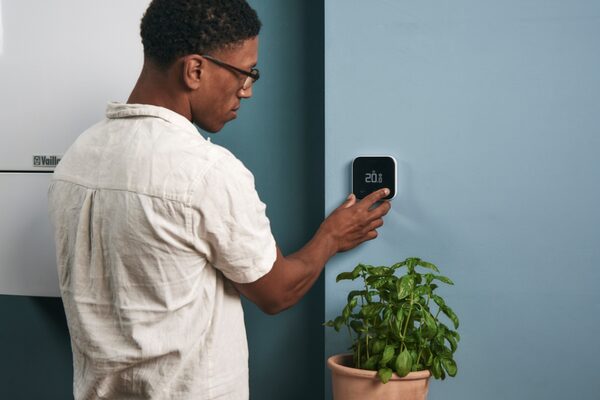
The evidence available points in one direction, and it is worth being plain about why. tado° publishes its compatibility coverage, its platform support, its warranty mechanics and its savings data; Netatmo, in the material verified here, publishes none of these to the same standard, has given no software support commitment to independent researchers3, and is withdrawing e-shop sales from North America from 1 June 2026. None of that proves Netatmo's hardware is inferior. It means the risk of buying blind is higher, and for a device intended to run a home's heating for a decade, documented support is a feature in itself.
For households on fluctuating energy prices, tado° states that its Balance feature shifts consumption to times when energy prices are lower and reduces it when prices are high21. That is a maker's claim about its own subscription features, and no independent UK assessment of it exists in the material here. Our page on heating controls with time-of-use tariffs covers what UK households can actually automate today. On price, tado° smart radiator valves can be bought in Duo and Quattro packages to save money when connecting several radiators22, but no verified UK price for either brand's thermostat appears in the sources here, so prices are retailer-quoted and should be checked at the point of sale.
The independence lens cuts both ways for both brands. A smart thermostat with room-by-room zoning and boiler interlock reduces wasted gas and gives a household finer control over its own heating than any dial timer. But both devices remain cloud-tied for their app control, and tado°'s offline resilience, with schedules stored on the X devices so heating still works if the internet is down14, is a maker's claim that only partially removes that dependence. Whichever brand you choose, the heating keeps working when the app does not; what you lose is the intelligence. That trade-off is set out fully in our page on heating controls and energy independence, and the wider context is in our heating controls guide.
Sources22 sources
- tado° connects over 5.5 million smart thermostats and reaches profitability, tado°, 2026-03-26
- tado° vs Hive comparison, tado°, 2026-07-09
- How to buy the best smart thermostat, Which?, 2026-09-17
- tado° Smart Thermostat X 2nd generation announcement, tado°, 2026-09-02
- tado° X extended warranty, tado°, 2026
- Best smart radiator valves, Which?, 2026-09
- tado° UK homepage, tado°, 2026
- tado° heat pumps and Heat Pump Optimizer X, tado°, 2026
- tado° vs Google Nest comparison, tado°, 2026-07-28
- tado° multi-room control, tado°, 2026-07-24
- tado° best heating systems and compatibility, tado°, 2026-07-07
- tado° compatibility list, tado°, 2026
- tado° Smart Thermostats product page, tado°, 2026
- tado° central heating controls guidance, tado°, 2026-07-07
- tado° Smart AC Control, tado°, 2026
- tado° X and Matter smart home devices, tado°, 2026
- tado° connects 1 millionth home, tado°, 2025-05-20
- What are smart thermostats?, Uswitch, 2026-02-05
- The best way to run your central heating to save money, ivie, 2026-09-20
- tado° warranty and Premium Direct-Service, tado°, 2026
- tado° Balance and smart energy tariff, tado°, 2026
- tado° vs Hive: which smart thermostat is best, energyhelpline, 2026-09-20
 Smart Thermostats ExplainedWhat can a smart thermostat actually do for your heating bills, and is it worth the money?
 Room Thermostats ExplainedWhat temperature should the thermostat be set at, where on the wall does it belong, and does a wireless one need wifi?
 Smart Heating Security and DataHow safe is your smart thermostat from hackers, and who sees the data it collects about your heating?
 SMETS1 and SMETS2 MetersWhich smart meter do you have, and does it keep working when you switch supplier?
 Controls and Time-of-Use TariffsCheaper electricity at night only saves money if your heating actually uses it then.
 Smart TRVs ExplainedCan a radiator valve you control from your phone actually cut your bills?