
In this comparison
Smart thermostats replace a fixed programmer and dial with app control, scheduling and, in tado°'s case, room-by-room zoning. The two names most UK householders weigh up are tado°, founded in Munich in 2011, and Google Nest. They differ in how they schedule, how they connect to the rest of a smart home, and how much of their intelligence sits on the device rather than in a cloud account.
tado° states that its thermostats reduce energy usage by 22% on average, based on internal data to 30 November 2023, and that this can add up to £244 less spent on heating per year, reflecting 22% of an average UK household gas heating bill of £1,109 for 20241. Independent figures are more modest: Confused.com cites up to £110 a year from installing a smart thermostat and controls2, and the Energy Saving Trust puts a one degree reduction, from 22°C to 21°C, at £120 in GB and £80 in NI3. The gap between maker and independent claims is the single most important thing to understand before buying either brand.
tado° vs Nest at a glance
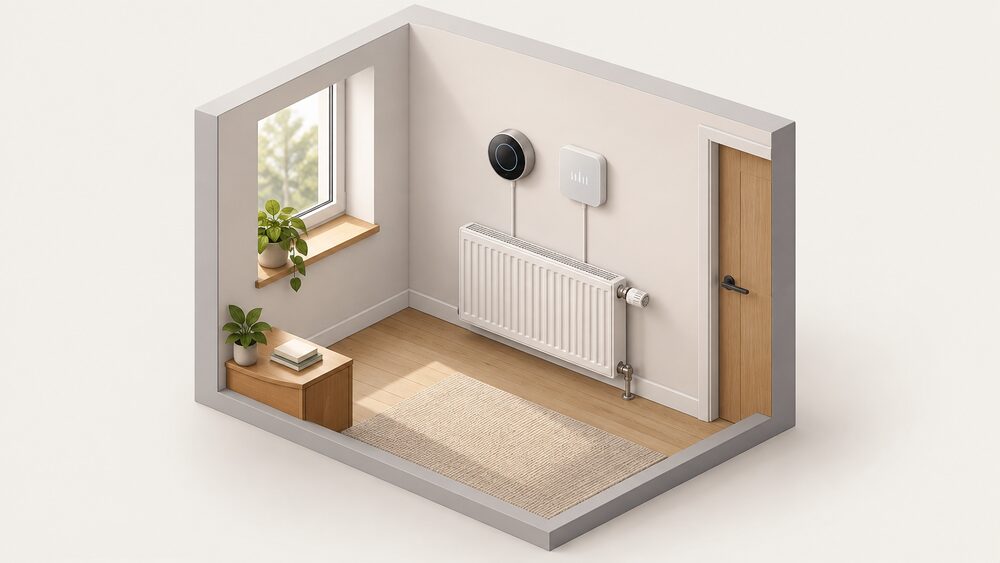
The two systems approach the same job from different directions. tado° builds a control layer that sits on top of whatever boiler or heat pump is already installed, and states that it is vendor-agnostic, meaning it is compatible across manufacturers5. Its app handles room-by-room temperature and humidity, energy consumption tracking and integration with dynamic energy tariffs6. Nest, by contrast, is a Google product, and Google has recommended the tado° Smart Thermostat X to affected older Nest owners in Europe as a third-party device compatible with Google Home6.
tado° states that its products work with 95% of systems and that it serves over one million homes4. It describes 15 years of experience in smart heating4. The company also offers a refund policy: if a householder is not happy with the savings, tado° can be returned for a full refund4.
| tado° | Nest | |
|---|---|---|
| Origin | Founded in Munich in 20115 | Google product |
| Compatibility stance | Vendor-agnostic, compatible across manufacturers5 | Google ecosystem |
| Room-by-room zoning | Yes, via smart TRVs6 | No6 |
| Auto-learning schedule | With AI Assist subscription6 | Built-in6 |
| Offline schedule execution | Stored on device (tado° X)6 | Cloud-dependent6 |
| Smart home standard | Matter (tado° X range)6 | Google Home |
The table above draws on tado°'s own comparison guidance, which is a maker's account of its own products and a competitor6. It should be read as the maker's position rather than an independent assessment.
What each thermostat claims to save

Savings claims are where the two brands diverge most sharply, and where the evidence is weakest. tado° states that its thermostats reduce energy usage by 22% on average, based on internal data to 30 November 20231. It breaks that down into component features: open window detection at up to 12% energy savings, geofencing at up to 23%, and weather adaptation at up to 6%1. Users with AI Assist are stated to save an additional 55% more energy compared to users of the free tado° app, based on internal modelling1. uSwitch cites tado°'s manufacturers as claiming up to 31% on energy bills7.
Independent sources are more conservative. Confused.com cites up to £110 a year from installing a smart thermostat and controls2. The Energy Saving Trust puts a one degree reduction, from 22°C to 21°C, at £120 in GB and £80 in NI3. Which? has examined what smart thermostat companies claim, and the Energy Saving Trust separately states that turning a thermostat down by one degree can save up to 10% off a heating bill8. CIPHE puts a one degree reduction from 20°C to 19°C at around 7% on bills9.
The reason these figures differ is that they measure different things. A maker's percentage is typically modelled against a baseline of uncontrolled heating, while an independent figure is usually a measured or modelled reduction against a typical household. Which? ran a comparison scenario keeping the thermostat at 20 degrees for most of the day but turning it down to 9 degrees for seven hours at night8. That is a schedule change, not a device change, and it illustrates the point: much of the saving attributed to a smart thermostat comes from the scheduling behaviour it encourages, not from the hardware itself.
For a household's energy independence, the practical implication is that a smart thermostat reduces gas consumption but does not reduce dependence on gas or on the grid. It is a control layer, not a generation source.
Zoning and scheduling: room-by-room control versus whole-home
Zoning is the clearest functional difference between the two approaches. tado° supports room-by-room zoning via smart TRVs, and its app allows schedules to be set manually by room and day, down to 15-minute blocks6. Individual temperatures and schedules can be set for each room to fit routines4. Nest, by tado°'s own comparison, does not offer room-by-room zoning6.
This matters because zoning is a recognised efficiency measure in its own right. NICEIC notes that zoning allows control of the temperature of individual rooms, and that smart, programmable thermostats can keep a home heated on a schedule to help minimise bills10. BEAMA states that each room can be treated as a separate zone and controlled individually11. Approved Document L requires that each room in a new dwelling should be provided with thermostatic room controls12, and Ofgem's ECO4 guidance describes time and temperature zone controls as enabling independent programming of temperature and heating times in at least two different areas or zones of a premises13.
Zone controls work by heating different rooms at different times of day automatically, via separate programmable heating circuits for different parts of the house3. A tado° system with smart TRVs on each radiator achieves a similar outcome wirelessly, without separate circuits. The HHIC notes that heat pump and hybrid controls can be fitted to different heat sources and boiler types such as regular or combination boilers14.
The trade-off is complexity and cost. A whole-home thermostat controls one zone; a zoned system needs a smart TRV on every radiator a household wants to control independently. For a household in a flat or a small house with uniform occupancy, whole-home control may be sufficient. For a larger house with rooms used at different times, zoning is where the savings and the comfort gains concentrate.
Smart home compatibility: Matter, voice assistants and platforms
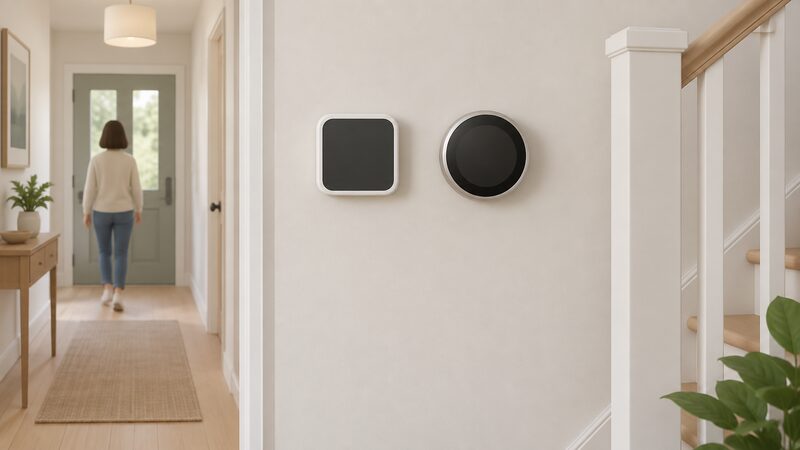
The tado° X range uses Matter, the open smart home standard, so it works with Google Home, Apple Home, Amazon Alexa and Samsung SmartThings6. The tado° Smart Thermostat offers full smart home and voice assistant integration via Matter1. The tado° Smart AC Control works natively with Apple HomeKit, Alexa and Google Home15.
Matter matters for independence because it is an open standard rather than a single vendor's protocol. A device that speaks Matter can be controlled by more than one ecosystem, which reduces the risk that a household is locked into one company's app. Google's own recommendation of the tado° Smart Thermostat X to affected older Nest owners in Europe, as a third-party device compatible with Google Home, is a practical illustration of that interoperability6.
There is a setup condition worth noting. To use tado° X with Google Home, a household needs either a Google Home Hub alongside a tado° Bridge X, Wireless Receiver X or Heat Pump Optimizer X, or a Google Nest Wifi Pro acting as the Thread border router6. That is a hardware requirement, not a subscription, but it is an extra device.
Voice control extends to individual rooms: tado° gives the example of "Hey Siri, make the kitchen 20°"4. The app also supports a heating boost feature for returning home4.
For a household thinking about long-term independence, the relevant question is what happens if the manufacturer changes its platform or withdraws a product. Matter reduces that risk by making the device addressable by multiple controllers. It does not eliminate it, because the device still depends on the maker for firmware and app support.
Heat pumps, boilers and other systems each can control
tado° states that its controls work with a wide range of heating systems, including gas boilers, oil heating, heat pumps, district heating and air conditioning heating systems5. The Smart Thermostat is listed as compatible with boilers in wired or wireless thermostat setups, water-based underfloor heating, radiators, and hydronic heat pumps including air-to-water, water-to-water and geothermal1.
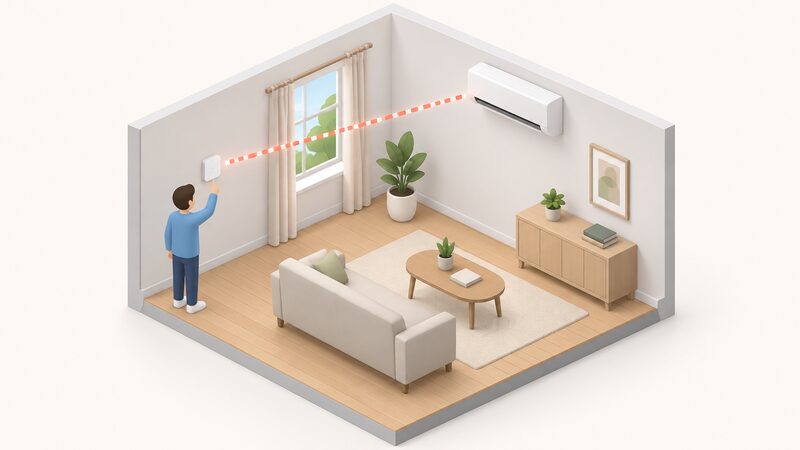
The Smart AC Control is a separate product for cooling. It works with air conditioners and air-to-air heat pumps that have an infrared remote showing current settings, covering split, multi-split and portable systems15. If the AC or air-to-air heat pump remote has a heating mode, tado° can control that too15. It has inbuilt open window detection, and with Auto-Assist, tado° pauses cooling automatically15.
Heat pumps are managed through a thermostat and controller, which may be built-in or separate16. That means a tado° thermostat can serve as the controller for a heat pump, but the heat pump's own manufacturer controls may also be in play. tado° states that it can maximise a heat pump's efficiency with intelligent control and scheduling4.
There is a regulatory dimension to heat pump installation. DNO registration is a legal requirement, usually done by the installer17. For any electrical installation work in homes and gardens, official guidance recommends hiring an installer registered with a competent person scheme who can self-certify that the work meets the required standards18.
For a household, the practical point is that tado° is a control layer that can sit on top of a boiler, a heat pump or an air conditioner. It does not change the fuel source. A gas boiler remains a gas boiler; a heat pump remains dependent on electricity from the grid.
Subscriptions, offline reliability and what happens when the internet is down
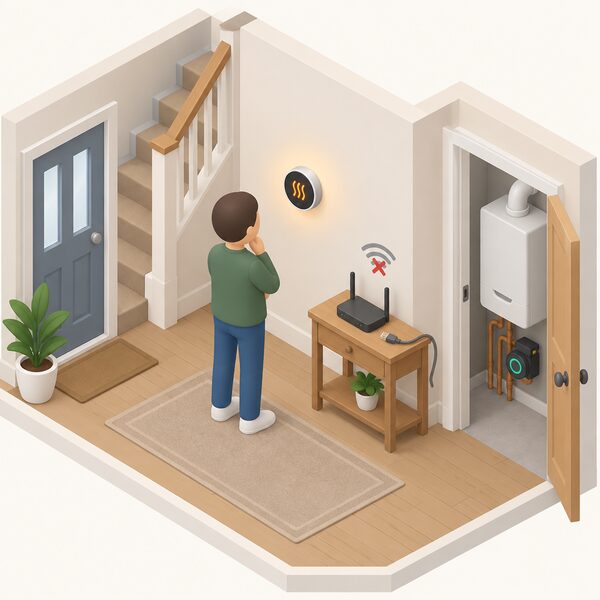
tado° works without a subscription for core heating control. AI Assist, or Auto-Assist on V3+ and older generations, adds features including an auto-learning schedule and automatic pausing of cooling when a window opens6. A single AI Assist or Auto-Assist subscription covers every property under a user's admin account19. Subscribers can be simultaneously signed into all their homes and switch between them with one click, whereas non-subscribers sign out and sign in again to switch homes19.
Offline reliability is where the two systems differ most in architecture. tado° states that the tado° X range stores heating schedules directly on each device, so if the internet is down, heating still works and follows its schedule6. Nest, by tado°'s comparison, is cloud-dependent for schedule execution6. This is a maker's claim about its own product and a competitor, but the architectural difference is real: local schedule storage means a broadband outage does not stop the heating.
Zigbee, the local wireless standard used by many heating devices, still works if the internet is down and does not require connection with or communication to the cloud20. That is a property of the protocol, not of any one product.
Power cuts are a separate matter. Electricity North West describes its network as one of the most reliable and cost-effective in the UK, but notes that power cuts can still happen21. NIE Networks aims to reconnect all customers within 24 hours after a fault on the distribution system22. Emergency disconnections, determined by National Grid ESO, could be shorter or longer than three hours23. For a household on a gas boiler, a power cut stops the heating because the boiler needs electricity to run its pump and controls. A smart thermostat does not change that.
The independence question is therefore twofold: does the control system work without the internet, and does the heating system work without the grid? tado° X addresses the first. Nothing in either system addresses the second.
Installation: DIY fit versus professional
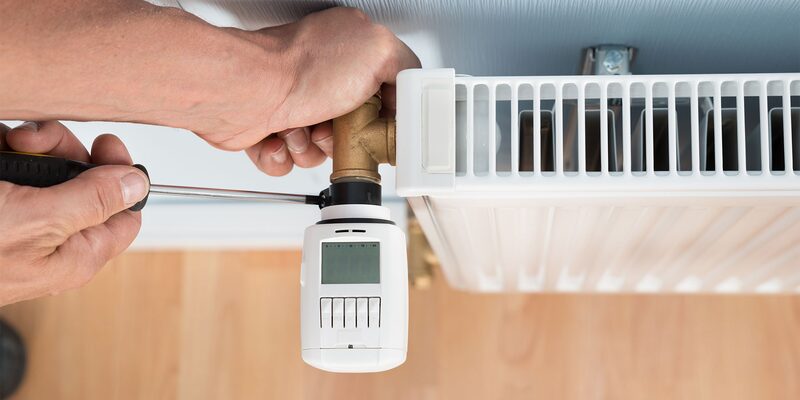
tado° is designed for easy DIY installation and is described as a retrofit solution whether a household owns or rents4. The Smart Radiator Thermostats can be installed in a few minutes, all by yourself, with no need to access the central heating1. The Smart AC Control is listed as a five minute install15.
For a household replacing a wired thermostat or working on mains electrical circuits, the position is different. Official guidance recommends hiring an installer registered with a competent person scheme who can self-certify that the work meets the required standards18. That is a recommendation, not a legal requirement for all work, but it is the standard route for anything involving fixed wiring.
Heat pump installation carries its own requirement: DNO registration is a legal requirement, usually done by the installer17. A household adding a tado° controller to an existing heat pump would not normally trigger that, but a new heat pump installation would.
The DIY route suits renters and householders replacing radiator valves or adding a wireless thermostat. The professional route suits wired replacements, heat pump integration and anything where the existing wiring is unclear. tado°'s own positioning as a retrofit solution is aimed at the first group4.
Which suits which home
The choice between tado° and Nest turns on three things: whether a household wants room-by-room zoning, whether it wants local schedule storage that survives a broadband outage, and how much weight it gives to independent savings figures rather than maker claims.
tado° suits a household that wants per-room control, has a mix of radiator types, and values the ability to keep heating running when the internet drops. Its vendor-agnostic stance means it can sit on top of an existing boiler or heat pump without replacing the heat source5. Its Matter support means it can be controlled from more than one ecosystem6.
Nest suits a household already invested in Google's ecosystem, or one that wants a single whole-home thermostat with a built-in learning schedule and no subscription for that feature6. It does not offer room-by-room zoning by tado°'s account6.
Neither system reduces dependence on gas, electricity or the grid. Both reduce the energy used to heat a home, to a degree that independent sources put lower than maker claims. The Energy Saving Trust's figure of £120 in GB and £80 in NI for a one degree reduction is a useful benchmark: it is a behaviour change that any thermostat, smart or not, can deliver3.
For households in Wales, the Nest scheme is a separate matter entirely. The Welsh Government's Warm Homes Nest scheme funds measures including a new boiler, central heating system, or loft insulation, and some packages may include newer technologies like solar panel PVs, air source heat pumps and external wall insulation24. The scheme is not identical to ECO or GBIS25. Anglesey Council lists help with household costs including small changes to energy use, reducing drafts, insulation and other measures such as solar panels26. A household considering a smart thermostat alongside grant-funded measures should check what the scheme covers before assuming a thermostat is included.

Sources26 cited
- tado° Smart Thermostats, tado°, 2026
- Energy saving tips for the home, Confused.com, 2025-10-14
- Thermostats and heating controls, Energy Saving Trust, 2026-02-10
- tado° UK homepage, tado°
- tado° connects over 5.5 million smart thermostats and reaches profitability, tado°, 2026-03-26
- tado° vs Google Nest, tado°, 2026-07-28
- What are smart thermostats?, Uswitch, 2026-02-05
- How to save on your heating bill this winter, Which?, 2022-10-19
- How to save money on energy bills, CIPHE, 2026-09-17
- Underfloor heating system, NICEIC, 2026-09-17
- Electric space heating, BEAMA, 2026-09-19
- Approved Document L Volume 1 Dwellings, HM Government, 2026
- ECO4 New Measures and Products Guidance v3.0, Ofgem, 2026-03-26
- HHIC guidance, HHIC, 2026-09-17
- tado° Smart AC Control, tado°, 2026
- Does turning off the heat pump affect heating, Nesta, 2025-01-21
- Heat pump inheritance, Energy Saving Trust, 2025-07-04
- Do I need building regulations approval for alterations to or installation of electrics, Planning Portal, 2026
- tado° enables customers to manage multiple homes or offices under one account, tado°, 2026-04-22
- Zigbee FAQ, Connectivity Standards Alliance, 2026
- Why do we experience power cuts, Electricity North West, 2026-09-19
- Overall standards, NIE Networks, 2026-09-19
- Electricity Supply Emergency Code, SSEN, 2026-09-19
- Warm Homes Nest scheme annual report 2022-2023, Welsh Government, 2023-11-30
- Written statement: support householders impacted by closure of Energy Company Obligation scheme, Welsh Government, 2026-03-13
- Help with household costs, Isle of Anglesey County Council, 2026-09-20
 Heating Control ManufacturersWhich heating controls are worth buying, and who actually makes them?
 OpenTherm Protocol ExplainedOpenTherm lets a smart thermostat and a boiler from different makers work together properly, so the boiler can run gently instead of switching on and off.
 Smart Thermostats ExplainedWhat does a smart thermostat actually do, and is it worth it?
 Controls, Thermostats and TRVsWhich heating controls actually cut your bills, and what does each one do?
 Heating Controls CostA smart thermostat usually costs between about a hundred and two hundred and fifty pounds, but fitting can push that higher.
 Room Thermostats ExplainedExplains mechanical, digital, programmable, wired, wireless and smart room thermostats, how they call for heat and switch it off, where to site them, how many zones a home needs under the building regulations, and what one degree on the dial is worth.