

In this answer
Short answer
A supplier that raises its own prices must notify the consumer at least 30 days in advance of the date on which the price increase takes effect1. That is the Price Increase Notification rule, and it is the direct answer to the question. Independent guidance from Citizens Advice states the same duty in looser terms: if your gas or electricity supplier increases its prices, they should tell you in a reasonable amount of time before the change takes place2.
The 30-day rule applies to a variation the supplier chooses to make. It is not the mechanism by which the Ofgem price cap moves. The cap is reviewed and reset on a fixed quarterly cycle, and the new level is announced in advance of the period it covers, so a cap-driven change arrives on a published timetable rather than through a notice letter.
The cap rises 4% from 1 October 2026, taking a typical annual dual fuel bill from £1,663 to £1,723 for the period to 31 December 20263. That figure describes a household with typical usage in Great Britain paying by direct debit, not a ceiling on any individual bill.
What Ofgem's rules require of suppliers
The notice rule sits inside a wider set of licence and regulatory obligations. Suppliers must cut their prices to the price cap level or below that Ofgem sets7, and from early 2026 suppliers will have to offer at least one "low standing charge" tariff8. Ofgem introduced new requirements for existing firms in January 2021, including a new financial responsibility principle that made it a legal requirement for suppliers to manage costs that would be mutualised in the event of supplier failure9.
On billing and credit, Ofgem credit refund rules require suppliers to reimburse customers on request unless there is a good reason not to10. Ofgem rules protect customers in debt where a supplier wants to install a prepayment meter11. An energy supplier cannot charge domestic or microbusiness consumers for energy used, or for charges, more than 12 months old due to the supplier's error12.
The cap itself is a legal instrument with limits on what Ofgem can do with it. Under the Act, Ofgem cannot set different cap levels for different suppliers and must protect default tariff customers13. That constraint matters to the notice question: because the cap applies across suppliers, a cap-driven change is a market-wide event announced by the regulator, while a supplier's own tariff restructuring is the kind of change the 30-day notification rule is designed to catch.
Compliance is monitored rather than individually policed. Ofgem will be closely monitoring supplier compliance and will continue to take firm action against suppliers who fall short of their requirements5. That is an enforcement posture, not a case-handling service, and the next section explains why the distinction matters to a household with a complaint.
The price cap: how changes are set and announced

The price cap sets a maximum amount that suppliers can charge per unit of energy for customers on default tariffs, as well as a limit on the daily standing charge14. It applies to standard variable and prepayment tariffs15. It is not a cap on the total bill: a household that uses more than the benchmark pays more, and one that uses less pays less.
The benchmark annual consumption levels, described in the methodology as the 'm' figures, are to be specified in a statement at least 25 days before the start of the charge restriction period16. That is the formal publication deadline for the numbers behind the headline. The headline itself is announced ahead of the period it applies to, which is why the 1 October 2026 change was known before it took effect.
Recent cap movements show the range. Ofgem announced a 2% rise of the energy price cap for the period covering October to December 202517. The January to March 2024 price cap was 5% higher than the previous cap18. The current cap makes an energy bill for a dual-fuel home with typical usage in Great Britain who pay by direct debit around £1,758 for 1 January to 31 March 20264. These describe different cap periods, and the £1,723 figure is the one dated to the period from 1 October 2026.
"The price cap sets a maximum amount that suppliers can charge per unit of energy for customers on default tariffs, as well as a limit on the daily standing charge"
The cap rises 4% to £1,723 for a typical dual-fuel home
The 1 October 2026 change is a 4% increase, moving the typical annual figure from £1,663 to £1,7233. Energy bills are rising 4% from October, energy regulator Ofgem announced on Wednesday 26 August19. The increase is driven mainly by higher wholesale gas prices20.
For context on how far the cap has travelled, the price cap limited the average annual household bill to £1,717 for October to December 2024, which is higher than pre-energy crisis levels and a 10% rise, an additional £14921. Between 1 January and 31 March 2025 the energy price cap was set at £1,738 per year for a typical household22. The current price cap for average households on dual fuel direct debit increased to £1,849 in April 2025 due to higher wholesale prices23.
Prepayment customers are capped separately. The prepayment cap level increased to £1,803, a £113 (7%) increase compared to the previous level, for the 1 April to 30 June 2025 period24.
| Cap period | Typical annual figure | Basis |
|---|---|---|
| October to December 2024 | £1,717 | Dual fuel, typical usage21 |
| 1 January to 31 March 2025 | £1,738 | Typical household22 |
| April 2025 | £1,849 | Dual fuel direct debit, average households23 |
| 1 April to 30 June 2025 | £1,803 | Prepayment, dual fuel typical customer24 |
| 1 January to 31 March 2026 | around £1,758 | Dual fuel, typical usage, Great Britain, direct debit4 |
| 1 October to 31 December 2026 | £1,723 | Typical dual fuel home, up 4% from £1,6633 |
The figures are not directly comparable across rows: some describe direct debit dual fuel customers, one describes prepayment customers, and the benchmark consumption assumptions behind them have been reviewed. What they show is the direction and scale of movement a household on a default tariff has absorbed.
When the cap is reviewed and when new rates take effect
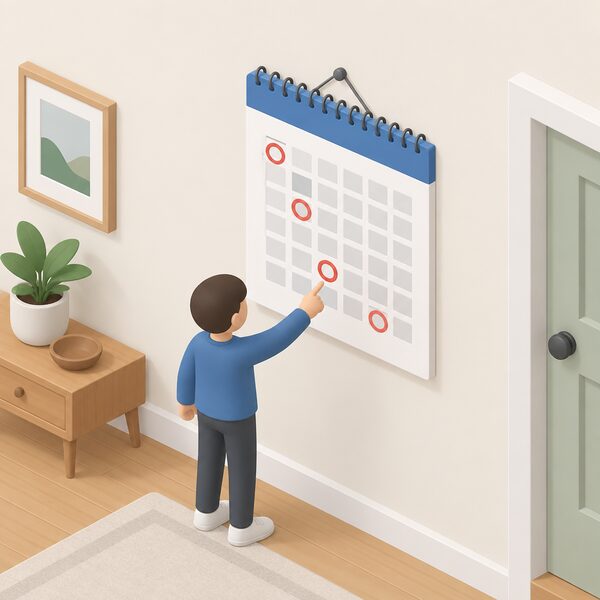
Ofgem updates the price cap every three months4. Every 3 months Ofgem reviews and sets a level for how much an energy supplier can charge for each unit of energy and daily standing charge9. That is the current cycle.
Older Ofgem documents describe a different one. Updates to the cap level occur in February and August in a given year, which respectively apply for cap periods starting in April and October25. Every six months Ofgem works out how much it costs a supplier, on average, and revises the cap level26. Those documents describe the six-monthly cycle that applied before the quarterly cycle came in, and the quarterly statements are the ones that govern current periods.
The forward review dates are published. Ofgem's review for the January to March 2027 cap period is due on 25 November 20265. The review for April to June 2027 is due on 23 February 2027, and the review for July to September 2027 is due on 26 May 20275. Each review sets the level that applies for the following quarterly period, so a household can see the next announcement date well ahead of the bill change.
The practical sequence for a household is: the review is published, the new unit rates and standing charges take effect on the first day of the following quarter, and the bill reflects them from that date. The cap change is not a notice event in the 30-day sense, because the timetable is fixed and public in advance.
Deemed contracts: the 'unduly onerous' limit on out-of-contract rates
A deemed contract arises when a household occupies a property and uses energy without having agreed a contract with the supplier. Ofgem's rules state that the terms of deemed rate contracts should not be "unduly onerous"6. Ofgem's own test for meeting that standard is that suppliers can ensure contracts are not unduly onerous by making sure that the profit it derives from deemed rate customers is not significantly higher than the profit derived from contracted customers6.
The gap between deemed and contracted rates can be wide. Ofgem has seen examples where deemed rate customers are charged more than double the rate of customers on contracts6. In one case study, the standing charge on the deemed contract was nearly 14 times higher than the consumer could have achieved on contract6.
There is a separate information duty. The licence conditions (7.7) set out an obligation for suppliers to send information regarding the deemed contract rates, explaining the prices and informing the customer of cheaper prices6. The Energy Ombudsman will consider whether it was appropriate for a supplier to place a customer on a deemed rate contract, or whether supplier error or omission left the customer on high deemed contract prices for longer than necessary6. That is a procedural question, distinct from the price level.
For a household's energy independence, the deemed contract is the weakest position available: no agreed term, no fixed rate, and a rate that Ofgem's own evidence shows can be more than double a contracted one. Moving onto an agreed tariff, whether fixed or variable, is the step that removes the exposure. The tariff rules and consumer protections page sets out what suppliers must offer, and closed and withdrawn tariffs covers the position when a chosen tariff is no longer available.
What Ofgem does and does not do for individual customers

Ofgem does not investigate individual complaints about energy suppliers or network operators, including heat network suppliers and operators. Its stated position is that it generally does not intervene in individual disputes between consumers and energy businesses, including heat suppliers and operators27. Its work is rule-setting and enforcement across the market: the back-billing condition, for example, prevents a supplier charging domestic or micro-business consumers for energy used more than 12 months before the date of the bill where the customer is not at fault27.
What it does instead is monitor and enforce. Ofgem will be closely monitoring supplier compliance and will continue to take firm action against suppliers who fall short of their requirements5. It also publishes scheme-specific contact addresses rather than a general consumer complaints line: feedback@ofgem.gov.uk for Boiler Upgrade Scheme administration matters28, and ecogbis_compliancequeries@ofgem.gov.uk for questions related to supplier compliance under the Energy Company Obligation29.
The route for an individual dispute runs through the supplier first. A complaint to the supplier is the first step where a customer considers they have not been given reasonable notice2. If that does not resolve it, the Energy Ombudsman is the next step, and it will consider the appropriateness of placing a customer on a deemed rate contract or leaving them there through supplier error or omission6.
On affordability, the support available is set out by Ofgem. If you are struggling to pay for energy or think you may get into difficulty, you can ask your supplier to agree a payment plan, a payment break or a reduction, to review payments and debt repayments, and to give access to hardship funds30. Suppliers can agree a payment plan, payment break or reduction31. Ofgem rules protect customers in debt where a supplier wants to install a prepayment meter11, and suppliers must reimburse credit balances on request unless there is a good reason not to10.
The dependence that remains is structural. The cap protects a household on a default tariff from the worst of the market, but it does not remove exposure to wholesale prices, and it does not give the household control over when the rate changes. A fixed tariff transfers that timing risk to the supplier for the term; a variable or default tariff leaves it with the household. The energy tariffs pillar sets out the full range of contract types, and tariffs and household energy independence covers what each does for a home's exposure to the grid and the market.
Sources31 cited
- Energy terms explained, Ofgem
- Your gas or electricity supplier has put up its prices, Citizens Advice
- Dual fuel, Uswitch
- Energy price cap explained, Welsh Government
- Summary of changes to energy price cap 1 October to 31 December 2025, Ofgem, 2025-08-27
- Deemed contracts and rates, Energy Ombudsman, 2026-09-20
- Energy bills to fall for millions of people, Turn2us, 2026-09-20
- Tariffs with lower standing charges set to come to market, End Fuel Poverty Coalition, 2025-10-02
- Changes to energy price cap between 1 October and 31 December 2025, Ofgem, 2025-08-27
- Energy refunds, Uswitch, 2025-10-29
- Energy debt factsheet, National Energy Action, 2026-09-10
- How to understand your electricity and gas bills, Energy Ombudsman, 2025-04-24
- Energy price cap operating cost and debt allowances decision overview, Ofgem, 2025-05
- Energy UK explains typical domestic consumption values, Energy UK
- Ofgem guide, Uswitch
- Energy price cap benchmark review decision, Ofgem, 2025-11-21
- Energy price cap will rise 2 percent October, Ofgem, 2025-08-27
- Energy prices and the price cap, House of Commons Library, 2024-01
- Price cap October 2026, National Energy Action, 2026-08-26
- Summer fuel poverty and the new price cap, Centre for Sustainable Energy, 2026-08
- Energy bills support: an update, National Audit Office, 2024-11-14
- Social tariff working group final report, Scottish Government, 2025
- State of the energy market report: retail, Ofgem, 2025
- Summary of changes to energy price cap 1 April to 30 June 2025, Ofgem, 2025
- Decision on the process for updating the Default Tariff Cap methodology, Ofgem, 2022-02-04
- Energy price caps explained, Ofgem, 2020-12
- Complain about your energy supplier, Ofgem, 2026
- Boiler Upgrade Scheme guidance for property owners, Ofgem, 2026-03-25
- Energy Company Obligation contacts, guidance and resources, Ofgem, 2026-09-17
- Getting help if you can't afford your energy bills, Ofgem, 2026
- Get help with your home or business energy bills, Ofgem, 2026-09-17
 Price Cap HistoryThe energy price cap sets the most a supplier can charge you for each unit of gas and electricity, so it shapes what you pay.
 OfgemOfgem sets the rules energy suppliers and network companies must follow, including the price cap on standard tariffs.
 Switching and Supplier MarketWhat is the Ofgem price cap and does it limit what you actually pay?
 Financial Resilience RulesYour supplier going bust raises two questions: who takes over and what happens to your credit balance?
 Tariff Rules and ProtectionsOfgem decides which energy tariffs suppliers can offer you, so it's worth knowing what they must provide.
 Supplier Licensing and FailureWhat happens when your energy supplier goes bust?