
In this answer
Short answer
When a fixed energy deal ends, the supplier moves the household onto its standard variable tariff. That happens automatically, without a new contract being signed, and the rate that applies from that point is the supplier's default rate rather than the rate that was fixed1. The move is the default outcome, not a penalty: it is what happens when no new deal has been agreed before the end date.
The timing is set by the supplier's notice obligation. A supplier is required to contact a household 42 to 49 days before the end date of a fixed-term tariff, so the reminder arrives with roughly six to seven weeks left to decide what to do3. The final 49 days of the contract are also the window in which switching away normally avoids exit fees, which is why the notice period and the free-switching window overlap1.
What follows is a change of rate, not a change of supply. The same supplier keeps billing the same meter, the same Direct Debit arrangement continues, and the account simply moves from a fixed unit rate and standing charge to the standard variable equivalents. The standard variable tariff is the tariff type the price cap protects, and it changes every three months4.
The standard variable tariff and the price cap
The standard variable tariff is the tariff type affected by the energy price cap, which changes every three months4. Ofgem describes the protected tariffs in exactly those terms: standard variable tariffs are the ones the cap covers5. The Centre for Sustainable Energy puts the same point from the household side: if you are on a standard variable tariff, which is the default one, you are protected by the price cap8.
That protection has a defined scope. The cap affects how much is paid for each unit of energy and the daily charge, not the total bill8. A household that uses more energy still pays more, because the cap sets rates rather than a ceiling on the amount owed. This is the same distinction that applies to fixed deals, which lock unit rates and standing charges rather than the total bill, since the total changes with how much energy is used1.
The practical consequence is that the rate on a standard variable tariff moves with each cap announcement. When the cap goes up or down, the standard variable rate changes with it9. A household that rolls onto the standard variable tariff therefore takes on price risk in both directions: the rate can fall as well as rise at the next review, but it is not fixed for any period.
Standard variable tariffs are usually described as the most expensive tariffs offered by energy companies, with fixed rates usually the cheapest10. That is the general position across the market rather than a guarantee for every household at every moment, because fixed deals are priced on wholesale expectations and the cap is reset quarterly. One further difference matters for households with storage heating or an electric vehicle: a standard variable or fixed tariff charges the same price for energy at all times of day, so there is no cheap night-time electricity12. Households wanting a night rate need a tariff designed for it, such as Economy 7.
Switching away, and when the old price can be held
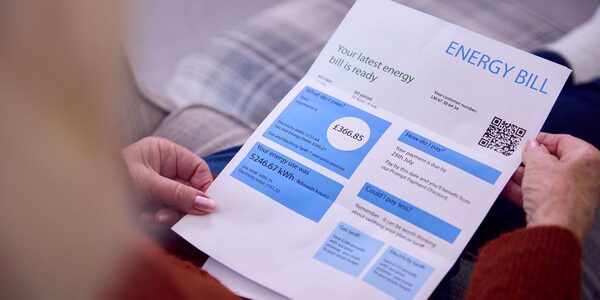
Switching is straightforward when a fixed contract is ending shortly, or when the household is already on a variable rate13. The window that matters is the final 49 days: inside it, a switch can be made without paying exit fees1. Outside it, exit fees usually apply if the contract is left before those final 49 days, and most fixed tariffs include an exit fee for each fuel, payable when switching to a different deal before the contract ends1.
The Energy Switch Guarantee adds a separate protection on the new contract: if the household changes its mind within 14 days, it simply remains with the existing provider or on the existing tariff7. The cooling-off period for a new energy contract starts the day after the contract is set up with the new supplier9.
One condition can block a switch entirely. A household cannot switch if it has been in debt to its supplier for more than 28 days15. Where the account is in debit but the debt is younger than that, a switch can still go ahead, with a final bill that must be paid in full16.
"You cannot switch if you have been in debt to your supplier for more than 28 days."
For households in Scotland, the same switching rules and the same price cap apply, and Home Energy Scotland sets out the fixed-rate position on the same basis as the rest of Great Britain17. Northern Ireland operates a separate market and is not covered by the price cap described here; the switching mechanics differ there.
What to check before the end date arrives
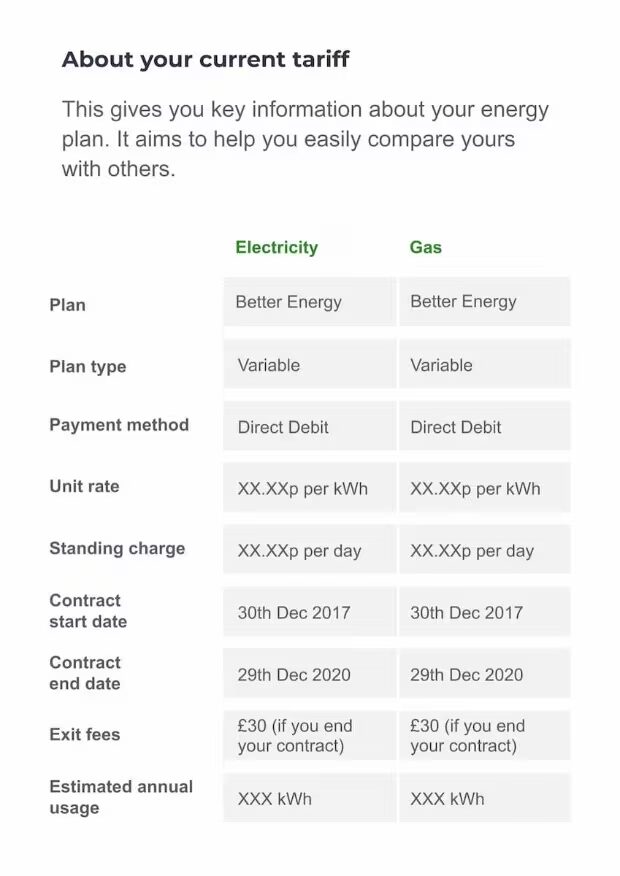
The first check is whether the tariff is actually fixed. If the bill says the contract has an end date, the household is on a fixed tariff2. The same test appears in the Welsh Citizens Advice guidance: if it says the contract has an end date, this means you are on a fixed tariff18. A tariff name containing words such as Simpler, Flex, Basic, Standard or Variable is a strong indication of a standard variable tariff instead19.
The second check is the exit fee position. Some fixed-rate tariffs charge a fee for leaving before the contract ends, so the amount and whether it applies need to be established before any switch is arranged20. Home Energy Scotland frames the same caution: leaving a fixed-rate tariff before the contract end date might result in exit fees, so it is worth checking whether there would be exit fees and how much they would cost17. Energy Helpline notes the same risk in the other direction: switching before the contract has finished may mean paying an early exit fee14.
The third check is the tariff's own terms. A supplier bill shows the tariff name, whether it is fixed or variable, any exit fees, and the unit rates and standing charges21. That is the information needed to compare the ending deal with whatever is offered next, and it is the same set of figures that appears on a Tariff Information Label.
Standing charges, bills and Direct Debits after the move
The standing charge continues after the move, because it is a feature of the supply rather than the tariff type. A standing charge covers the fixed costs of providing a home with gas and electricity, including network connection, meter readings, maintenance and government initiatives22. It is charged daily regardless of how much energy is used, so it appears on the bill under both fixed and standard variable arrangements.
Payment arrangements also continue. On a credit meter, energy is paid for after it is used, by Direct Debit, standing order or on receipt of a bill23. A Direct Debit set up with a supplier stays in place when the tariff changes, because the arrangement sits with the account rather than the tariff. Suppliers should review the Direct Debit amount annually in any case24.
When the household switches to a different supplier rather than staying put, the payment sequence changes. A new Direct Debit is set up ahead of the date the new supplier takes over, and the old Direct Debit is cancelled after the final bill has been paid25. That ordering avoids paying twice or leaving an unpaid final bill behind.
Moving home while on a fixed tariff

A fixed rate belongs to the contract at a particular address, not to the household. Breaking a contract to move home means going automatically onto a standard variable tariff at the new property26. The fixed rate does not travel with the occupant, and the new home starts on whatever tariff the property's current supplier applies, which for a household that has never switched, or has not switched for a year or more, is likely to be a standard variable tariff19.
Exit fees can apply where a fixed tariff is left before its end date, so the terms of the existing contract matter before a move is arranged20. The same 49-day window applies: a move that falls inside the final 49 days of the contract avoids the exit fee, while a move earlier in the term may not1.
Warm Home Discount and other scheme support
The Warm Home Discount is a scheme rather than a tariff feature, so changing tariff or supplier does not remove eligibility in itself. The scheme covers England, Scotland and Wales and runs until 31 March 203127. From April 2026 the recovery of Warm Home Discount costs shifts from the standing charge to the unit rate on household energy bills, which changes where the cost appears rather than who qualifies28.
The current scheme was due to end in March 2026, with proposals to continue it beyond that point29. Households in Northern Ireland are outside the scheme as described here, since it covers England, Scotland and Wales only27. For the wider set of support available, see help with energy bills in England, Scotland, Wales and Northern Ireland.
What the move means for a household's energy independence
Rolling onto a standard variable tariff keeps the household supplied and protected by the cap, but it hands the price decision back to the quarterly cap review. The rate is set by Ofgem's cap level rather than by anything the household does, and it changes every three months4. A fixed deal, by contrast, holds the unit rate and standing charge for an agreed term, usually 12 to 24 months, at the cost of an exit fee if the contract is left early6.
Neither arrangement removes the underlying dependencies. The household still relies on the grid for electricity and, in most cases, on gas for heating, and still relies on a supplier for billing and on wholesale prices for the level of the cap itself. What changes at the end of a fixed deal is who carries the price risk between now and the next review. For the wider picture of how tariffs, the cap and supply interact, see fixed and standard variable tariffs explained and switching energy supplier.
Sources29 cited
- Fixed energy deals, Uswitch, 2026-09-07
- Your gas or electricity supplier has put up its prices, Citizens Advice, 2026-09-17
- How to complain about your electricity, gas or energy bill, Which?, 2026-07-30
- Energy tariffs explained, Uswitch, 2026-02-17
- Energy price cap, Ofgem, 2026-09-17
- How to switch energy supplier, Which?, 2026-05-15
- Energy Switch Guarantee, Energy UK, 2026-07-08
- Current gas and electricity prices, Centre for Sustainable Energy, 2026-08-27
- Switching your energy supplier, Energy Saving Trust, 2026-06-26
- The average gas and electricity bills in the UK, Energy Helpline, 2026-09-20
- Types of energy tariff, Confused.com, 2025-11-03
- What is Economy 7, Smart Energy GB, 2026-04-07
- How to read your energy bill, Confused.com, 2025-12-15
- Fixed and variable tariffs: what's the difference, Energy Helpline, 2026-09-20
- Switch your home energy supplier, Ofgem, 2026
- Gas, Energy Helpline, 2026-09-20
- Fixed rate tariffs and switching, Home Energy Scotland, 2024-02
- Your gas or electricity supplier has put up its prices (Wales), Citizens Advice, 2026-09-17
- Standard rate tariffs, Uswitch, 2026-08-26
- How to check your energy tariff and switch if you find a better deal, British Gas Energy Trust, 2026-07-30
- How do I read my E.ON energy bill, Uswitch, 2025-09-10
- Energy standing charges, Uswitch, 2026-08-26
- Energy debt on prepayment meters, Centre for Sustainable Energy, 2026-08
- Top energy company issues and how to solve them, Which?, 2026-03-03
- Direct Debit, Uswitch, 2025-10-22
- Moving home: dealing with your energy supply, Citizens Advice, 2026-09-20
- Warm Home Discount, Ofgem, 2026-09-17
- DESNZ annual report and accounts 2025 to 2026: performance report, Department for Energy Security and Net Zero, 2026-04
- Debt strategy update: supporting reduction of energy debt, Ofgem, 2025-11-06
 Fixed-Rate Energy TariffsWhat a fixed energy tariff fixes and what it does not, the contract lengths sold in the UK, exit fees and the 49-day window, how fixed rates compare with the price cap, and what happens when the term ends.
 Switching SupplierHow long does switching energy supplier actually take, and what happens if you owe money?
 Supplier Licensing and FailureWhat happens when your energy supplier goes bust?
 Final Bills and Credit RefundsHow final bills and credit refunds work when you leave an energy supplier: the six-week deadline for the final bill, the ten-working-day deadline for refunding credit, the twelve-month back billing limit, and the automatic compensation that applies when suppliers miss these standards.
 Exit Fees and Contract TermsExplains exit fees on fixed energy contracts, how they are charged per fuel, and the Ofgem switching window in which a supplier cannot apply them.
 The Full Tariffs GuideWhich energy tariff suits how you live, and will switching really save you money?