

In this comparison
There are two main tariff types in the domestic market: fixed rate and variable1. A fixed tariff sets the price you pay for a period of time, so the unit rate is locked for the length of the deal2. A variable tariff moves with the energy price cap, which changes every three months, and the standard variable tariff is the type affected by it3. Neither is automatically better: the answer depends on what wholesale prices do next, how long you intend to stay, and whether you can absorb a rise.
The evidence on cost has leaned one way for some time. Standard variable tariffs are usually the most expensive types of tariff on the market, often hundreds of pounds more expensive per year than a fixed tariff3. Over the last year, more fixed deals have returned to the market and options are consistently available at rates cheaper than the capped standard variable tariff5. Analysis of 365 days of deals found average savings of £182 versus the cap5. That gap narrowed by September 2026, when fixed energy deals offered lower savings against the price cap than previously6.
What a fixed deal does not do is fix the bill. Only the unit price and standing charge are fixed; the amount charged is set by the amount of energy used, the unit cost and the daily fee7. For a household weighing independence from price shocks against the risk of locking in above a falling market, the choice is really about which uncertainty you would rather carry.
Fixed vs variable tariff: the core difference
The distinction is about who carries the risk of a price change. On a fixed rate tariff the price you pay is set for a period of time, and you are often locked into the deal for a set period2. On a variable rate tariff the price you pay for each unit of energy can go up or down over time, and the unit rate costs can go up or down at any time8. Both types cover the same two components: a unit rate per kWh and a standing charge per day.
Fixed terms vary more than the headline suggests. Fixed tariffs usually last for a year, and fixed deals typically run for 12 months9. Others run longer: fixed-rate tariffs usually set the price for between one and three years, and fixed energy tariffs commonly run 12 to 24 months17. Fixed rates are then locked in for the duration of the tariff, usually 12 to 18 months10. A household signing a two-year deal is making a longer bet on wholesale prices than one signing a 12-month deal, and the exit fee applies for the whole term.
Variable tariffs come in more than one form. The standard variable tariff is a supplier's basic offer, and tends to apply if you have not shopped around for a better deal18. A tracker tariff also moves, changing every three months when the price cap is reset, with most providers guaranteeing a discount on the price cap11. The difference matters for anyone comparing a fixed deal against "variable" as a single category: a tracker is a variable tariff with a different mechanism, not the default rate.
Understanding is not universal. Around one in five households reported that they have no understanding of what fixed or variable tariffs are, 15% for fixed and 19% for variable2. The practical difference between the two is the single most useful thing to establish before comparing prices.
A fixed tariff locks the unit rate for the length of the deal
A fixed tariff fixes the unit price and the standing charge, not the total. The amount charged is set by the amount of energy used, the unit cost and the daily fee, so a household that uses more energy pays more even though the rate has not moved8. This is the most common misunderstanding in the category, and it matters for budgeting: a fixed deal makes the price per unit predictable, not the bill.
What the deal does deliver is protection from mid-contract price rises. The price you pay is set for a period of time, and the supplier cannot move the unit rate during that period2. For a household on a tight budget that certainty has measurable value: most people correctly identify that budgeting is easier for fixed tariffs, at 80%2.
The trade-off runs the other way too. If prices decrease during your fixed-rate contract you may end up paying more than you would with a variable tariff20. A fixed deal is a position taken on future wholesale prices, and it can be the wrong one. That is the honest case against fixing, and it is why the length of the term matters as much as the rate.
"your unit price is fixed, not your energy bill"

A variable tariff follows the price cap and changes every three months

If you do not fix an energy deal, you will typically pay a provider's default, variable rate, which is determined by the energy price cap and changes every three months11. The cap is set every quarter, a change made in summer 2022 from the previous six-monthly cycle in response to high and volatile wholesale prices12. Suppliers are free to change variable rates at any time, though in practice the cap reset is the main trigger11.
The cap does not cap the bill. It affects how much you pay for each unit of energy and the daily charge, and if you are on a standard variable tariff, which is the default one, you are protected by it4. A household that uses more than the typical figure used to calculate the cap will pay more than the headline number, and one that uses less will pay less. The cap is a limit on rates, not on spending.
The standard variable tariff is also the landing place for households that do nothing. When you roll off a fixed price energy tariff, you will probably be rolled onto your supplier's standard variable tariff, and new movers start on the property's current supplier's standard variable tariff3. That makes the variable rate the default state of the market rather than a choice, which is why the comparison against fixed deals matters to almost every household at some point.
What the price cap means for your bill
The price cap protects standard variable tariff customers, and it is the reference point against which every fixed deal is judged4. It sets the maximum a supplier can charge for each unit of energy and the daily standing charge on that tariff type21. It does not apply to fixed deals, which is precisely why a fixed deal can be cheaper or more expensive than the cap depending on when it was struck.
That timing effect is visible in the official figures. The average fixed tariff offered in May 2026 was above the price cap, reflecting supplier expectations that the cap would increase in the future22. Suppliers price fixed deals on where they expect wholesale costs to go, so a fixed rate above today's cap can still be the cheaper choice over its term if the cap rises. The reverse also holds: a fixed deal below the cap can turn out expensive if the cap falls.
The cap applies across Great Britain. Northern Ireland has its own arrangements, and households there should check the separate regulatory position rather than assume the Ofgem cap applies. For households in England, Scotland and Wales the cap is the same mechanism, and the practical difference between nations lies in the support schemes and advice services available rather than in the cap itself.
Fixed deals versus the cap: how the savings compare

The savings have moved around a great deal, and the dates matter more than the direction. Shopping around for a fixed tariff had the potential to save some consumers more than £200 compared to the upcoming price cap in August 202523. By February 2026, households switching from a standard variable tariff to the cheapest fixed deal could save an average of £238 a year10. Welsh Government figures put the realised gap lower: last year, customers on a fixed tariff paid around £115 less on average compared to those on variable tariffs14.
The most recent readings are narrower. Fixed energy deals offered lower savings against the price cap than previously as of September 2026, with the war in the Middle East pushing prices up6. Fixed deals were checked at 7 to 10% below the standard variable tariff on 19 August 20266. The direction of travel is toward smaller margins, not larger ones.
| Measure | Figure | Date |
|---|---|---|
| Potential saving, fixed vs upcoming cap | more than £200 | August 202523 |
| Average saving, switching SVT to cheapest fixed | £238 a year | February 202610 |
| Average paid, fixed vs variable customers | around £115 less | 202614 |
| Fixed deals vs standard variable tariff | 7 to 10% below | 19 August 20266 |
| Fixed deals vs the cap | lower savings than previously | September 20266 |
The pattern across these figures is that the advantage of fixing has been real but shrinking, and that the size of the gain depends heavily on the day the deal is taken. A household comparing a specific quote against the current cap is comparing against a number that will change within three months.
When a fixed tariff is the better choice
Fixing suits a household that values a known unit rate over the chance of a lower one. The budgeting case is the strongest and the best evidenced: 80% of consumers correctly identify that budgeting is easier on a fixed tariff2. For anyone managing a tight monthly budget, a rate that cannot move mid-contract removes one variable from the household accounts.
The second case is a view on the market. If wholesale prices are expected to rise, a fixed deal taken now locks in today's rate against tomorrow's cap. That is the reasoning behind the May 2026 pattern, when the average fixed tariff sat above the cap because suppliers expected the cap to increase22. A household that shares that expectation and can carry the exit fee is buying insurance rather than a discount.
The third case is administrative. A fixed deal removes the need to watch the quarterly cap announcement and re-shop four times a year. That has a cost of its own in attention, and for households that will not act on a cap change, a fixed rate is the more predictable state.
When staying variable makes sense
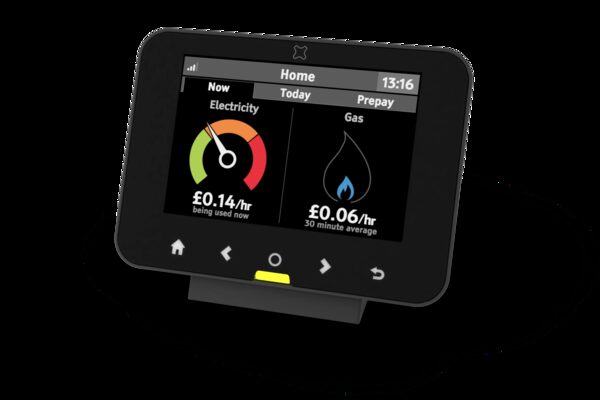
Staying on a variable tariff is the right position when prices are expected to fall, or when the household expects its circumstances to change. If prices decrease during your fixed-rate contract you may end up paying more than you would with a variable tariff, and that risk is real for anyone fixing at a local peak20. A variable rate carries no exit fee and no lock-in, so the household keeps the option to move the moment a better deal appears15.
The mechanics favour flexibility. If you are on a standard variable tariff, you can switch at any time without incurring any fees, and on a tracker or standard variable tariff the price can change but you are also free to leave at any point7. That freedom has value for households likely to move home, change occupancy, or install a heat pump or electric vehicle within the contract term, since each of those changes the shape of the bill.
Variable does not mean unprotected. The cap limits the unit rate and standing charge on the standard variable tariff, so the downside is bounded by regulation even without a contract4. The trade-off is that the cap can rise as well as fall, and the household carries that risk instead of the supplier.
Time-of-day pricing: why some tariffs cost the same all day and others do not
A fixed tariff sets one rate for the whole day, so the price is the same whenever energy is used. A time-of-use tariff works differently: electricity prices vary throughout the day, usually with a cheaper overnight charging window25. A time of use electricity tariff charges different rates depending on the time of day, cheaper when demand is low, usually overnight, and more expensive when demand is high in the early evening26. The two categories are not mutually exclusive, since a fixed deal can include an off-peak window.
Time-of-use tariffs divide into two mechanisms. With static ToU tariffs, the same prices are offered at the same times each day, and static time of use tariffs offer fixed cheaper hours every day, the same hours every day, although they might change with daylight savings time27. With dynamic ToU tariffs, energy prices can vary continually and are calculated in real-time depending on various factors, so the times and rates can change from day to day27.
The savings depend on being able to move load. Those who do not generally use electricity at peak times, between 4pm and 7pm, could save over £200 a year by switching from the price cap to a tariff that changes throughout the day28. That is a conditional figure, and it applies to households with the appliances and the habits to shift demand, such as an electric vehicle or a battery. For a household that cannot move its usage, a flat fixed rate is the simpler structure.
What happens when a fixed tariff ends

The end of a fixed deal is the point at which most households lose the rate they chose. With a fixed-rate tariff, you roll onto your provider's standard variable rate when the tariff ends, and the supplier will automatically move you onto this tariff when the fixed deal has ended1. The supplier should remind you when the contract is about to end, and some suppliers may offer the chance to move to another deal before the end date16.
The consequence is usually a price increase. Once your fixed rate plan comes to an end you will automatically be switched to a more expensive standard variable rate tariff, and when your fixed rate has expired your supplier will move you to the standard variable tariff, which is typically higher than fixed rates15. The household that does nothing at renewal therefore moves from a protected rate to the capped default.
The remedy is straightforward and time-limited. If your fixed tariff has already ended you can still switch supplier or tariff, and the last 49 days of a fixed-term contract are fee-free, which is the window in which to line up a replacement16. Leaving before the contract end date might result in exit fees, so checking whether there would be exit fees and how much they would cost is the step to take before switching early30.
What this means for household energy independence
A tariff choice does not change where the energy comes from. A household on a fixed deal is still connected to the grid, still supplied by a company, and still exposed to gas and imported wholesale prices through the standing charge and the unit rate. What the choice changes is who absorbs the price risk over the next 12 to 24 months: the supplier, on a fixed deal, or the household, on a variable one.
That is a real but limited form of independence. A fixed rate gives a household a known unit price for the term, which supports budgeting and protects against the quarterly cap reset2. It does not protect against using more energy, since the bill still moves with consumption, and it does not protect against the supplier's own circumstances8. A variable rate keeps the household free to leave at any point, which is a different kind of control7.
The deeper independence comes from reducing the volume of energy bought at any rate, and from tariffs that pay for flexibility or export. Time-of-use structures reward shifting load away from peak hours, with over £200 a year available to households that avoid the 4pm to 7pm peak28. For households with solar, a battery or an electric vehicle, the tariff question is increasingly about when energy is bought and sold rather than only what rate is paid. The fixed versus variable decision remains the first one most households face, and it is the one that sets the terms for everything after it.
Sources30 cited
- Understanding energy bills, StepChange, 2026
- Understanding consumers' energy tariff choices, Ofgem, July 2025
- Energy price cap, Ofgem, 17 September 2026
- Current gas and electricity prices, Centre for Sustainable Energy, 27 August 2026
- Standard rate tariffs, Uswitch, 26 August 2026
- Energy price cap research briefing, House of Commons Library, 2026
- Switching your energy supplier, Energy Saving Trust, 26 June 2026
- Best deal energy, Home Energy Scotland, 20 September 2026
- How to switch energy supplier, Confused.com, 15 December 2025
- Scared, switchless, bad news wars and price volatility, Uswitch, 4 February 2026
- Energy tariffs explained, Uswitch, 17 February 2026
- EV tariffs and home charging, Energy Ombudsman, 11 September 2026
- Dual fuel or single fuel tariffs, Energy Helpline, 20 September 2026
- Smart meter Guaranteed Standards of Performance draft impact assessment, Ofgem, August 2025
- The average gas and electric bills in the UK, Energy Helpline, 20 September 2026
- Your gas or electricity supplier has put up its prices, Citizens Advice Wales, 17 September 2026
- Your gas or electricity supplier has put up its prices, Citizens Advice, 17 September 2026
- Switch your home energy supplier, Ofgem, 2026
- Five top tips from Which? to cut your energy bills, Welsh Government, 18 March 2026
- Should I switch to a time-of-use tariff, Energy Saving Trust, 23 January 2026
- Fixed energy, Uswitch, 7 September 2026
- Written statement: fuel poverty, Welsh Government, 26 February 2026
- Power struggle: the best and worst suppliers, Which?, 19 January 2026
- How to understand your electricity and gas bills, Energy Ombudsman, 24 April 2025
- Time-of-use tariffs, Parliamentary Office of Science and Technology, 17 September 2026
- How to complain about your energy bill, Which?, 30 July 2026
- Time-of-use tariffs: the benefits, Smart Energy GB, 24 April 2026
- Energy price cap will rise 2 percent in October, Ofgem, 27 August 2025
- Types of energy tariff, Confused.com, 3 November 2025
- Energy price cap methodology: backwardation deadband decision, Ofgem, 21 November 2025
 Fixed-Rate Energy TariffsWhat a fixed energy tariff fixes and what it does not, the contract lengths sold in the UK, exit fees and the 49-day window, how fixed rates compare with the price cap, and what happens when the term ends.
 The Full Tariffs GuideWhich energy tariff suits how you live, and will switching really save you money?
 Fixed and Variable TariffsCompares capped standard variable tariffs with fixed deals, including exit fees, contract end and rollover.
 How Tracker Tariffs WorkTracker tariffs move your unit rate with wholesale prices or the Ofgem price cap, so what you pay can change daily.
 Energy Price CapThe price cap sets the most you pay for each unit of gas and electricity, plus the daily standing charge, but not your total bill.
 The Full Energy Bills and the Price Cap GuideWondering why your bill went up even when you used less power?