
In this comparison
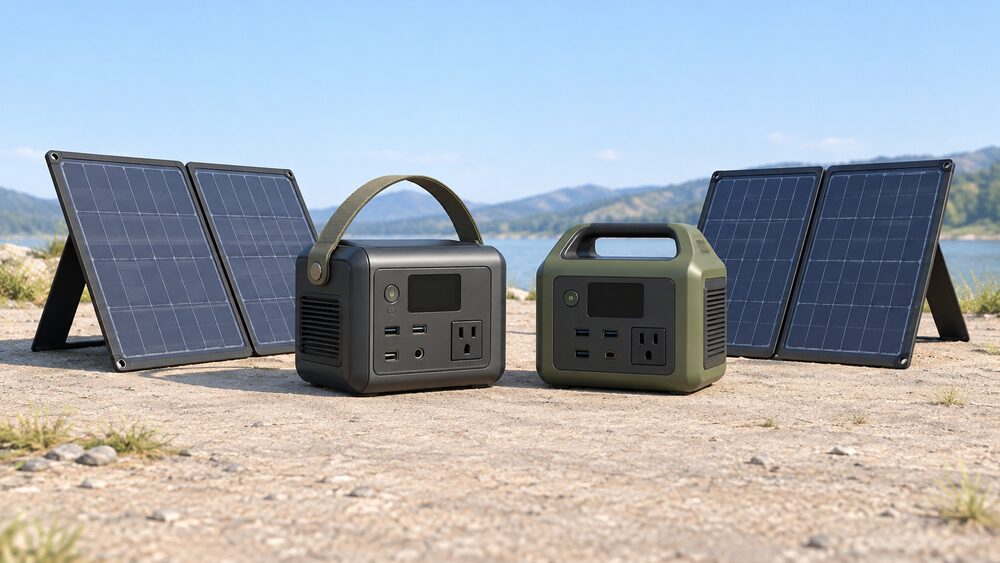
Jackery and Anker SOLIX both sell portable power stations and folding solar panels in the UK, and both are pitched at households that want some electricity of their own when the grid is down or absent. The two brands answer that need differently. Anker SOLIX leans on lithium iron phosphate (LiFePO4) chemistry, published cycle ratings and app control: it states LiFePO4 batteries "power up for 3,000 cycles", with 4,000 cycles on its BP3000 and BP2000 Gen 2 expansion batteries1. Jackery leans on portability and panel performance: it states its portable power stations are 30% lighter than comparable products with equivalent capacity, and its panels use monocrystalline cells at 23 to 25% efficiency4.
The commercial terms differ too. Anker SOLIX advertises up to 5-year warranties, a 30-day money-back guarantee and lifetime customer support across its store1. Jackery advertises a 30-day price guarantee and price match, and free shipping on qualifying orders within supported regions6. Neither brand publishes a UK price on the pages reviewed here, so what a household actually pays is quoted by the seller or installer at the time of purchase.
For energy independence, both brands do the same basic job: they store energy you generate or buy, and release it without the grid. What neither removes is dependence on a manufacturer's app, cloud account and spare parts, and on the mains to recharge when the sun is poor. This page sets out where the two ranges differ on chemistry, warranty, sizing, panels and control, and what each difference means in a UK home.
Jackery and Anker SOLIX: two different takes on portable power
The clearest split between the two brands is what they emphasise. Anker SOLIX builds its product pages around battery life and intelligence: LiFePO4 chemistry, cycle counts, app control and energy management1. Jackery builds its around weight and panel output: lighter units, higher claimed panel efficiency, and a long catalogue of customer stories about cabins, storms and off-grid living4.
Anker's portability claims are specific and comparative. It states the C300X is 15% smaller than similar power stations, the C200 DC is 39% smaller, and the C300X DC is 30% smaller, with a carry strap sold separately in each case11. Jackery's counter-claim is about weight rather than volume: its portable power stations are 30% lighter than comparable products with equivalent capacity4. Both are maker claims against unnamed competitors, so neither can be checked from the pages themselves.
The two brands also differ in how far they reach beyond portable kit. Anker SOLIX sells a home energy storage system, the X1, with a 10-year warranty and LiFePO4 batteries, and a Smart Meter accessory8. Jackery's UK pages reviewed here stay with portable power stations, solar generators and folding panels, plus a 30-day price guarantee on its store6.
For a household, the practical difference is this: Anker SOLIX sells a route from a camping power station up to a fixed home battery, under one app and one support line. Jackery sells a route from a small power station up to a large solar generator, with the emphasis on carrying it and charging it outdoors. Neither route removes the grid; both reduce how much a short outage matters.
Battery chemistry and cycle life: where Anker SOLIX leads on paper
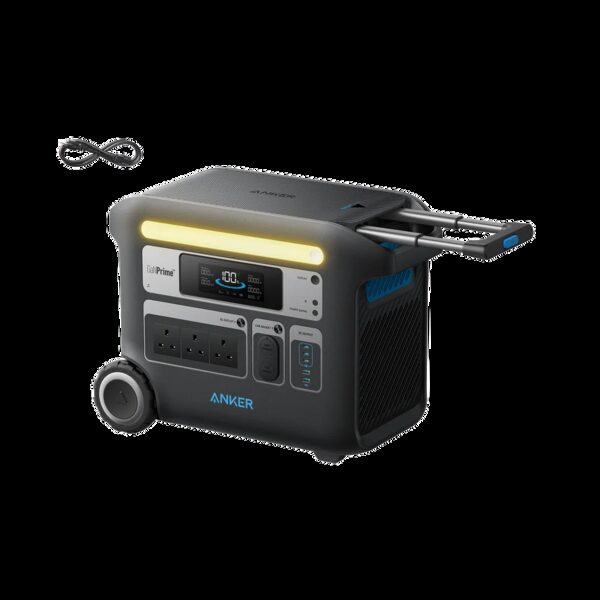
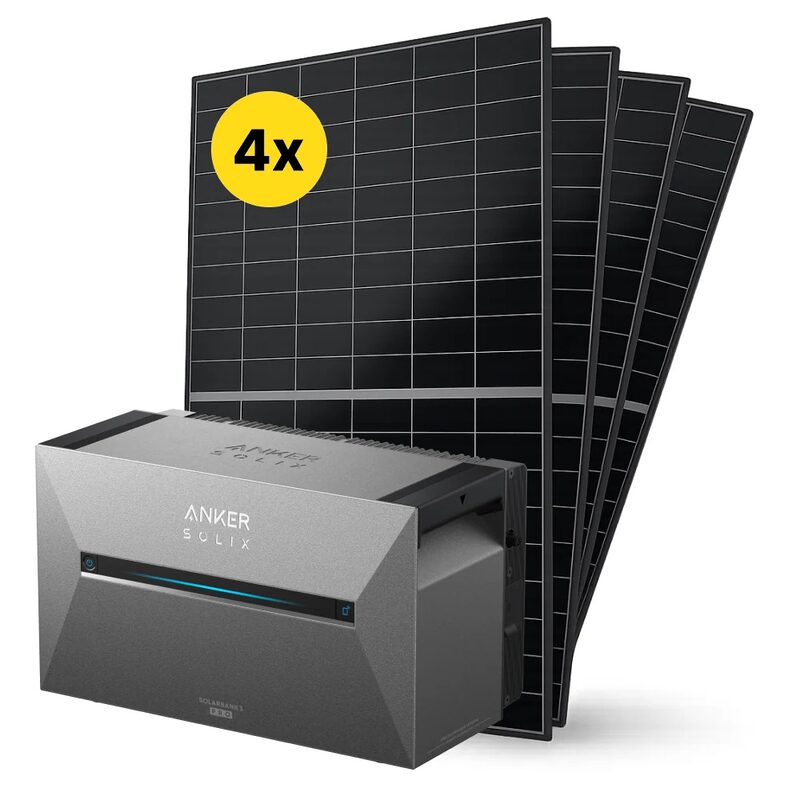
Anker SOLIX publishes chemistry and cycle life across its range, and the figures are consistent. The store states LiFePO4 batteries "power up for 3,000 cycles"1. The C800X is listed with "6× Longer-Lasting LFP Batteries with 3,000 Cycles", the C1000 with an LFP battery type, and the X1 home system with "Stable LiFePO4 Batteries"8. The BP3000 expansion battery is rated at 4,000 cycles, and the BP2000 Gen 2 expansion battery at 4,000 cycles to 80% capacity2.
Jackery's pages reviewed here do not publish a comparable cycle figure, so the two brands cannot be compared like for like on battery life. That absence matters more than it looks. Cycle life is the number that decides how many years of daily discharge a battery survives, and a household comparing two units on price alone is comparing the one specification neither brand's marketing leads with.
Two cautions apply to every cycle figure here. First, they are the maker's own ratings, not results from an independent test. Second, a cycle rating is measured to a stated end point, and Anker states 80% capacity for the BP2000 Gen 2, which means the battery is counted as spent when it has lost a fifth of its original capacity, not when it stops working3. A unit rated at 3,000 cycles used once a day is a different proposition from one cycled three times a day in a solar setup.
Anker also makes a broader claim for the X1 home system: 2000+kWh of additional attainable energy over 10 years compared with a traditional home battery, based on 15kWh batteries8. That is a modelled comparison against an unnamed alternative, and it applies to the fixed home system rather than to the portable range.
"LiFePO4 batteries power up for 3,000 cycles."
Warranty, returns and price protection compared
Anker SOLIX states "up to 5-year warranties" across its store, alongside a 30-day return or exchange window1. Individual pages carry the detail: 5 years on the C1000 and the S2000, and 10 years on the X1 home energy storage system8. The 30-Day Money-Back Guarantee appears on the C300 DC, C300X DC, C1000, C1000 Gen 2, C800X, F3000, S2000, the protective case for the C200 and C300 series, and the solar panel wall mounting brackets14. Anker also advertises lifetime customer support on several products22.
Jackery's position is different in kind. Its UK store advertises a "30-DAY PRICE GUARANTEE 30-DAY PRICE MATCH", and its US pages state free shipping on qualifying orders within supported regions6. The pages reviewed here do not state a warranty period for Jackery power stations or panels, so a five-year term cannot be confirmed for Jackery from this evidence.
| Term | Anker SOLIX | Jackery |
|---|---|---|
| Warranty | Up to 5 years; 10 years on X11 | Not stated on the pages reviewed here |
| Returns | 30-Day Money-Back Guarantee1 | Not stated; 30-day price guarantee and price match instead6 |
| Support | Lifetime customer support on several products22 | Not stated |
| Shipping | Fast, free shipping advertised11 | Free shipping on qualifying orders within supported regions7 |
The distinction a household should hold on to is between a warranty and a price guarantee. A warranty covers a fault in the product. A price guarantee covers a price change after purchase. They are not substitutes, and a brand offering one is not thereby offering the other.
Range and availability: what each brand sells in the UK
Anker SOLIX sells into the UK through a dedicated store, with fast free shipping, a 30-Day Money-Back Guarantee, a hassle-free warranty and lifetime customer support advertised on UK product pages11. The UK range covers the C300X and C300X DC, the C300 DC, the C200 DC (including a refurbished listing), the C1000 and C1000 Gen 2, the C800X, the F2000 and F3000, the S2000, the X1 home energy storage system, expansion batteries, folding solar panels, a protective cover and wall mounting brackets11.
Jackery sells through its UK store and a US site, with a catalogue built around the Explorer range, SolarSaga panels and larger solar generators6. Availability is the visible weak point. Jackery's own pages list the Explorer 2000 Plus (Refurbished), Explorer 600 v2 and Explorer 300 v2 as sold out, and its customer pages record the Explorer 500, Explorer 300, Explorer 3000 Pro, Explorer 1000 and Solar Generator 1000 Plus going out of stock on its US official website during 2026, each time with newer models recommended instead26. The Explorer 550 and Explorer 240 have been upgraded to newer-generation models27.
That pattern is worth reading carefully. A sold-out listing is not a fault in the product, but it does affect a household that has standardised on one model and wants a second unit or a spare battery later. Anker SOLIX also lists refurbished stock, including the C200 DC and F2000, which is a route to lower cost with the same advertised guarantee terms15.
App control and energy management: Anker's smart ecosystem vs Jackery's simplicity
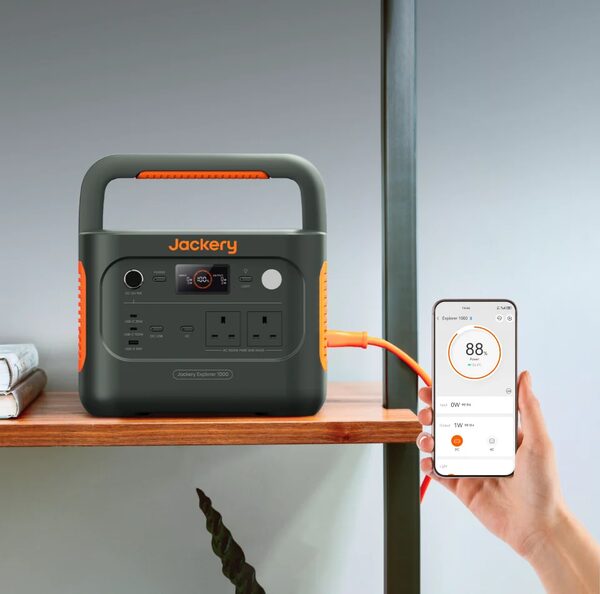
Anker SOLIX puts app control on most of its range. The store advertises "Intelligent energy management via app"1. The C300 and C300X offer smart app control over Bluetooth or Wi-Fi, the C1000 lets you "monitor energy intelligently via the app", and the F2000 and F2000 refurbished units offer smart app energy control for key power station information11. The F3000 goes further: it stores free solar or off-peak power with an optional Power Saver Kit, sold separately21.
The smart meter question is where the detail matters. Anker SOLIX sells a Smart Meter that communicates over Wi-Fi and Bluetooth, carries a 30-Day Money-Back Guarantee and lifetime customer support, and is listed as compatible with A17C1, A17C2 and A17C316. A second Anker page states the meter is only compatible with the Solarbank 2 Series, and the two statements are not reconciled on the pages reviewed here. Anker also states the meter is "Not at the moment, but we plan to add this capability in the future" regarding Google Home and Alexa16.
Jackery's pages reviewed here describe no equivalent smart meter product and no home energy management system. Its app and control story is thinner in the material available, which for some households is a simplification and for others a missing feature.
Solar panels: efficiency and weatherproofing compared
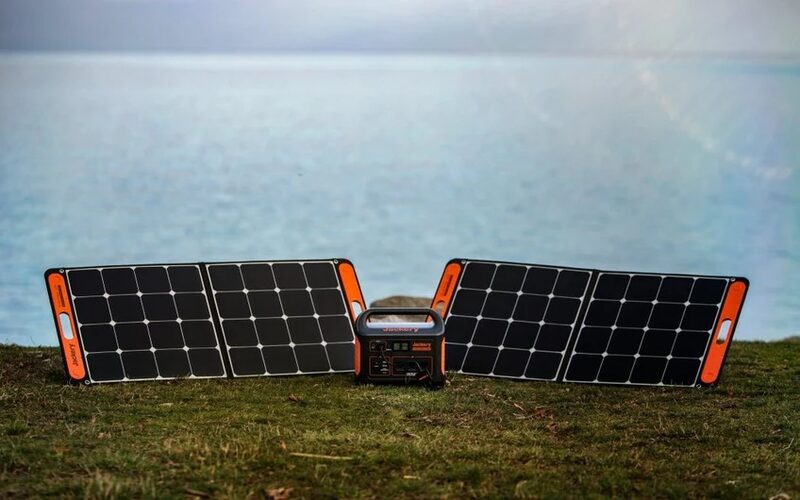
Jackery states its solar panels use monocrystalline cells with an efficiency of 23 to 25%, are portable and foldable, and generate 50% more power in low light conditions than conventional PERC panels5. It also states the panels are IP68 waterproof and function efficiently from -10°C to 65°C, and lists the SolarSaga 500 X as a bifacial panel with IP68 waterproofing and the SolarSaga 100 Light at 25% bifacial efficiency28.
Anker SOLIX states its solar panels convert up to 23% of sunlight into solar energy, for "1.5X better performance compared to compet" (the claim is truncated on the page), with scratch and weather-resistant surfaces9. Its store states IP67 solar panels with 23% conversion efficiency1.
| Specification | Jackery | Anker SOLIX |
|---|---|---|
| Cell type | Monocrystalline5 | Not stated on the pages reviewed here |
| Efficiency | 23 to 25%5 | Up to 23%9 |
| Water ingress | IP6828 | IP671 |
| Operating temperature | -10°C to 65°C28 | Not stated on the pages reviewed here |
| Low light | 50% more power than conventional PERC panels26 | Not stated on the pages reviewed here |
The two efficiency figures overlap, and Jackery's own range is not stated consistently: one Jackery page gives 23 to 25% and another gives up to 25%1. On water ingress the ratings are not the same: IP68 is the higher rating, and IP67 is a step below it1. Both are the makers' own claims rather than independent test results, and a panel's real output in a British winter depends on angle, shading and hours of daylight far more than on the cell rating.
Sizing a power station: what 3,000 to 5,000 watts actually runs
Jackery's guidance is the most explicit sizing advice in the material. It states that a 3,000 to 5,000 watt generator is generally sufficient to run basic off-grid appliances, and that a generator with an output of 5,000 to 10,000W is needed to live off the grid comfortably10. Those are output figures in watts, not stored energy in watt hours, and the distinction is the one households most often miss.
Anker SOLIX publishes output figures per model. The F2000 powers high-wattage devices up to 3600W, the C2000 Gen 2 has a 4,000W peak, and the F3000 accepts 240V at 15A maximum, 3600W maximum, through an EV charging adapter for a Type 1 connector only3. Capacity figures are given per model too: the C1000 Gen 2 is listed at 1,024Wh against 1,056Wh for the C1000 and 1,070Wh for another brand in the same comparison table29.
Runtime depends on the load, and Jackery publishes worked examples for its Solar Generator 1000 v2, showing how long a single unit lasts across different appliances27. Those figures show the range a single unit covers: the same battery runs a high-draw appliance for a short period and a low-draw one for far longer.
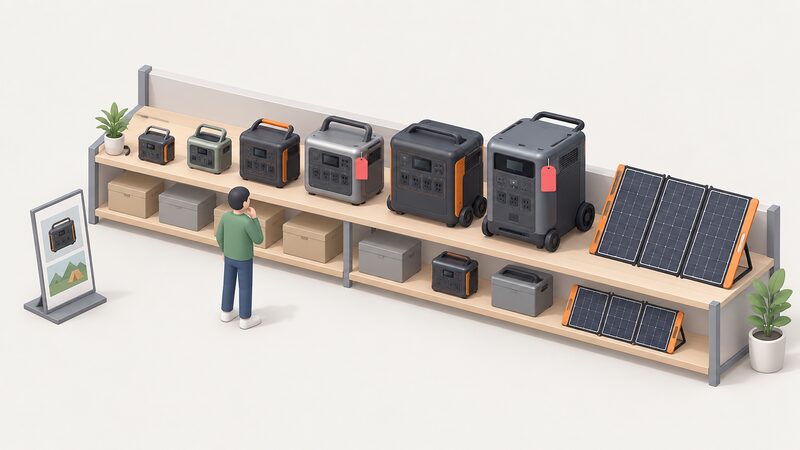
For a household, the sizing question has three parts. Output in watts decides what can be plugged in at once. Capacity in watt hours decides how long it runs. Chemistry and cycle life decide how many years it lasts. A unit sized on watts alone will run a kettle and then be empty.
Which brand fits which household
The two brands suit different priorities, and the evidence points to which is which without naming a winner.
Anker SOLIX suits a household that wants published battery specifications, a long warranty, app control and a route from a portable unit up to a fixed home battery. The evidence for that is the LiFePO4 chemistry and 3,000 to 4,000 cycle ratings across the range, the up to 5-year warranties with 10 years on the X1, the 30-Day Money-Back Guarantee on most products, and the Smart Meter and X1 home system1. The trade-off is dependence on the Anker app and account for the smart features, and on Anker for the meter's compatibility.
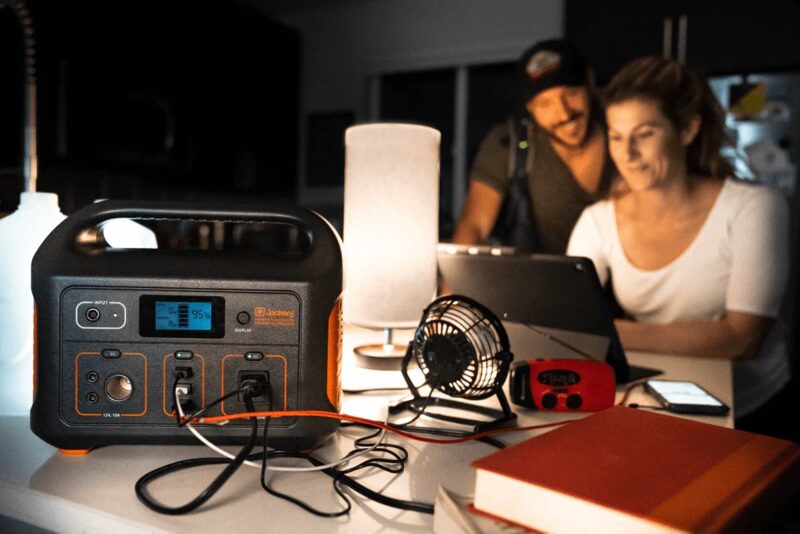
Jackery suits a household that prioritises carrying weight, panel performance and off-grid use. The evidence is the 30% lighter claim, the 23 to 25% panel efficiency, the IP68 rating, the -10°C to 65°C operating range and the volume of off-grid and storm-outage customer stories4. The trade-offs are the absence of a published cycle life or warranty period on the pages reviewed here, and the number of models listed as sold out.
Neither brand removes the grid. Both store energy you generate or buy and release it when the mains fails, and both depend on a manufacturer for spares, firmware and app support. For a household weighing independence, the questions that decide it are how long the battery is rated to last, what the warranty covers, whether the smart features need a cloud account, and whether the model will still be sold when a second unit is wanted. For the wider picture, see portable power stations and backup power and energy independence.
Sources29 cited
- Anker SOLIX UK store, Anker SOLIX, 2026-09-17
- Anker SOLIX F3000 expansion battery, Anker SOLIX, 2026-09-19
- Anker SOLIX C2000 Gen 2 expansion battery, Anker SOLIX, 2026-09-19
- Guide to solar generators in the UK, Jackery UK, 2026-04-29
- Jackery solar panels, Jackery, 2026-09-19
- Jackery UK store, Jackery UK, 2026-09-20
- Jackery camping collection, Jackery, 2026-09-19
- Anker SOLIX X1 energy storage system, Anker SOLIX, 2026-09-19
- Anker SOLIX solar generators, Anker SOLIX, 2026-09-19
- Jackery solar generators for off-grid living, Jackery, 2026-09-19
- Anker SOLIX C300X Portable Power Station, Anker SOLIX, 2026-09-19
- Anker SOLIX C300X with 60W solar panel, Anker SOLIX, 2026-09-19
- Anker SOLIX C300 Portable Power Station, Anker SOLIX, 2026-09-19
- Anker SOLIX C300 DC Portable Power Station, Anker SOLIX, 2026-09-19
- Anker SOLIX C200 DC refurbished, Anker SOLIX, 2026-09-19
- Anker SOLIX Smart Meter, Anker SOLIX, 2026-09-19
- Anker SOLIX C800X, Anker SOLIX, 2026-09-19
- Anker SOLIX solar panel wall mounting brackets, Anker SOLIX, 2026-09-19
- Anker SOLIX S2000 portable power station, Anker SOLIX, 2026-09-19
- Anker SOLIX C1000 with 100W bifacial solar panel, Anker SOLIX, 2026-09-19
- Anker SOLIX F3000 with 400W bifacial solar panel, Anker SOLIX, 2026-09-19
- Anker SOLIX protective cover for C200 and C300 series, Anker SOLIX, 2026-09-19
- Anker SOLIX F3000 Portable Power Station, Anker SOLIX, 2026-09-19
- Anker SOLIX F2000 refurbished, Anker SOLIX, 2026-09-19
- Anker SOLIX F2000 Portable Power Station, Anker SOLIX, 2026-09-19
- Jackery solar generator 5000 plus, Jackery, 2026-09-19
- Jackery disaster preparedness, Jackery UK, 2026-09-20
- Jackery exclusive Prime Day deals, Jackery UK, 2026-04-29
- Anker SOLIX C1000 Gen 2 with PS400 bifacial solar panel, Anker SOLIX, 2026-09-19
 Portable Power StationsWhat can a portable power station actually keep going in a power cut, and for how long?
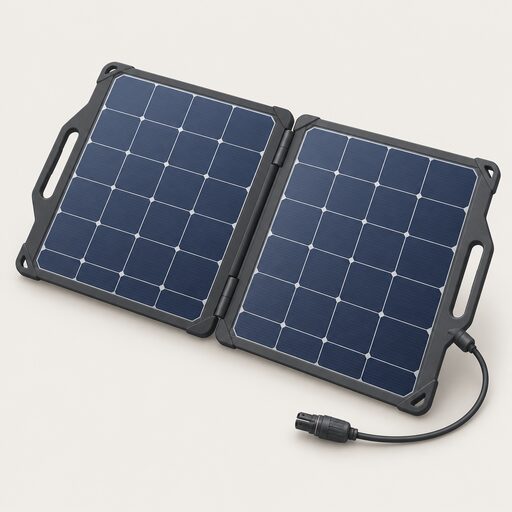 Solar Charging a Power StationCharging a portable power station from solar panels comes down to a few practical questions.
 Portable Generators for HomesWhat can a portable generator actually run in a power cut, and for how long?
 Portable Power Station CostHow much does a portable power station cost in the UK, and what does the money actually buy?
 Home EV Charger ManufacturersWhich home EV charger brands are worth considering, and how do you choose between them?
 Power Station BatteriesWhat kind of battery is inside a portable power station, and does it matter?