
In this guide
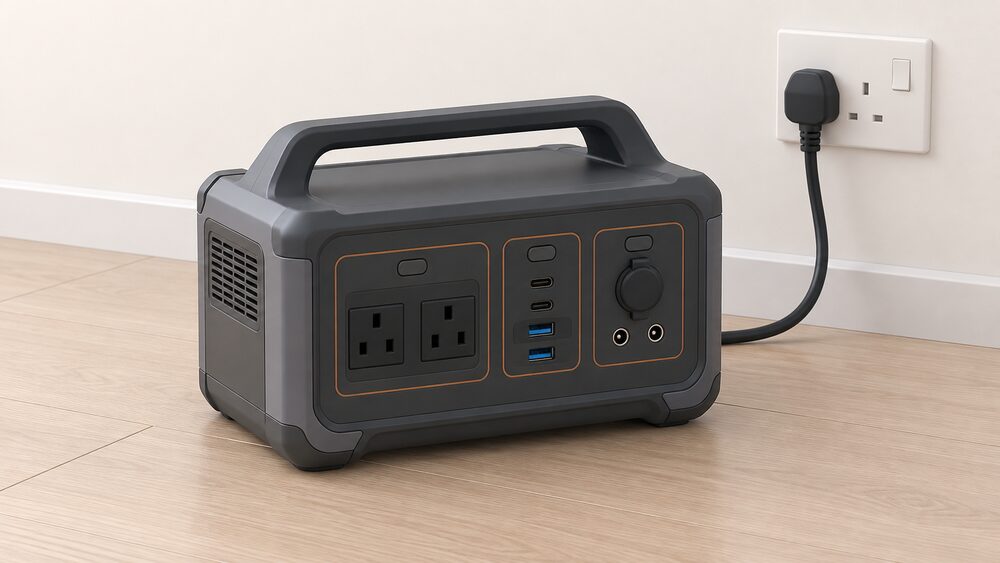
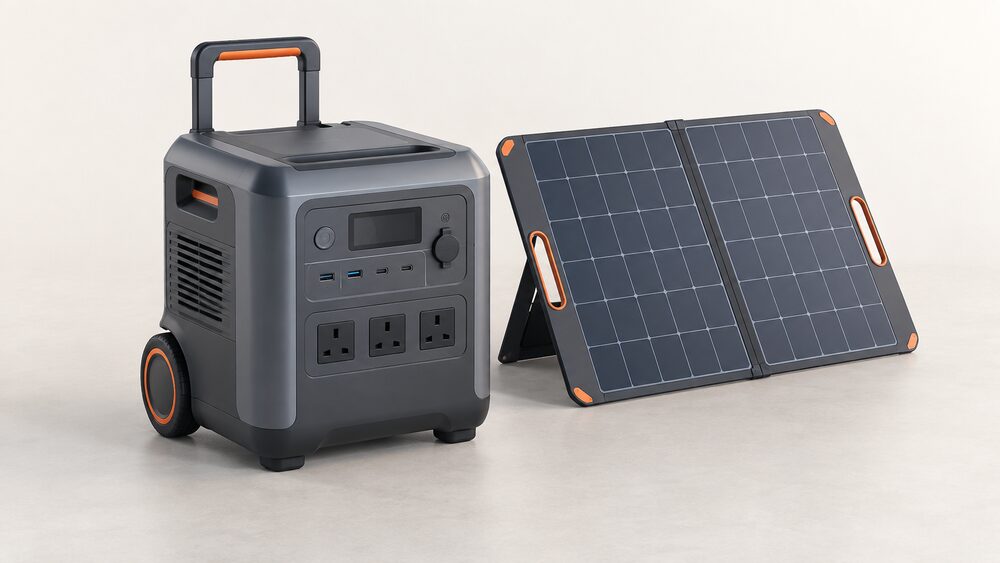
Anker SOLIX is the consumer backup brand from Anker, and it sells two quite different things under one name. The first is a portable power station: a box you carry, charge from a wall socket, a car or a solar panel, and plug appliances into during a cut. The second is a whole-home battery system wired into the house, which the maker describes as supporting whole-home backup1.
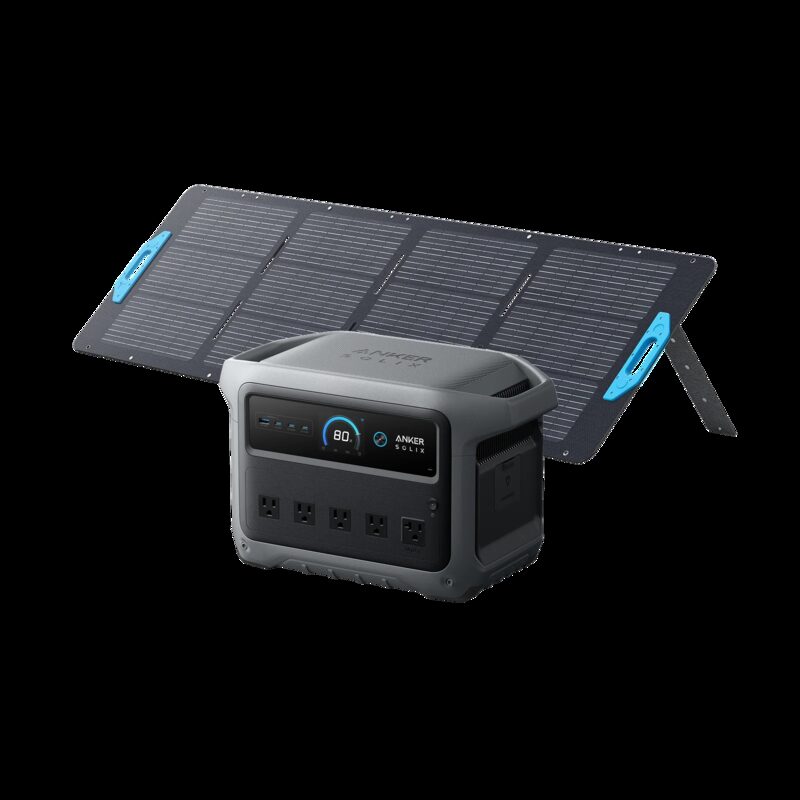
The portable side is built around a 2,000W class. Anker describes its 2000W stations as having a capacity of around 2kWh or larger and up to 2,400W output, with peak output reaching 3,000W or 4,000W on selected models1. The C2000 Gen 2 is listed at 2,400W maximum in inverter mode and 2,300W maximum in bypass mode, at 230V and 50Hz2. The C1000 Gen 2 sits below it at 2,000W output, 3,000W peak and 1,024Wh capacity3.
The whole-home side is the X1 energy storage system, scalable to six battery modules and 30kWh4. Anker also showed the E10 whole-home backup system at CES 2026 in January, where Digital Trends named it a Top Tech of CES 2026 for its triple-power approach5.
What follows is what the maker publishes about capacities, chemistry, charging, warranty and UK availability, and where each route leaves a household still dependent on something outside the house.
One brand, two routes to backup
The split matters because the two products solve different problems and carry different dependencies. A portable station is self-contained: it holds its own battery, its own inverter and its own sockets, and it needs nothing from the house beyond a socket to recharge from. Anker lists its 2000W stations with multiple AC, USB-C and DC ports able to support coolers, projectors, cameras, laptops, lights and tool batteries1. The C1000 Gen 2 is listed with ten ports, described as enough to plug in up to ten devices for emergency backup3.
A whole-home battery is a different proposition. It is installed, wired into the property's supply, and its output is limited by how many modules are fitted. Anker's X1 is described as scalable to up to six batteries per system, up to 6kW and 30kWh4. That is a permanent installation rather than something carried to a shed.
Between the two sits a middle group of larger portable units that Anker positions for home backup. The S2000 is listed with up to 24 hours of home backup and eight outlets, front and rear, with six ways to recharge7. The F3000 is listed with a 10-year lifespan under the maker's InfiniPower label8. These are still portable stations, but sized and marketed for the house rather than the campsite.
The practical difference for a household is what happens when the power goes. A portable station is already charged and waiting, and needs no installer. A home battery takes over automatically but has to be specified, fitted and registered. Both leave the household dependent on the grid for recharging in normal operation, and the home battery additionally depends on whoever installed it.
Portable power stations: capacities, outputs and the 2,400W class
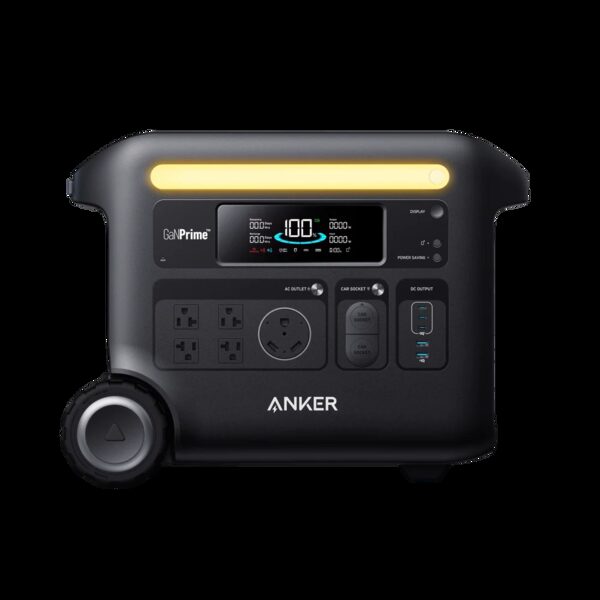
The headline figure for this range is 2,400W. Anker describes its 2000W portable power stations as having a capacity of around 2kWh or larger and up to 2,400W output, with peak output reaching 3,000W or 4,000W on selected models1. That peak figure matters because appliances with motors draw far more at start-up than they do running, and the peak rating is what covers that moment.
The C2000 Gen 2 is the clearest specification. Its AC output port is listed at 230V, 10.5A, 50Hz or 60Hz, 2,400W maximum in inverter mode, and 2,300W maximum in bypass mode2. AC charging input is listed at 2,300W maximum at 230V and 10A2. Anker notes that the USB-C ports on this model support output only, so they cannot be used to recharge the station2.
Below it, the C1000 Gen 2 is listed at 2,000W output, 3,000W peak and 1,024Wh capacity, with up to ten devices plugged in at once3. Its maximum AC input power is listed at 1,600W under the maker's UltraFast Charging label9. One of its USB-C ports is listed at up to 140W10.
The smaller units trade capacity for portability. The C300X is listed with seven device charging ports and a 288Wh LiFePO4 battery, rechargeable from solar panels, a car or its PD 3.1 USB-C port11. The C200 DC is listed with five device charging ports12. The C800 Plus is listed at 768Wh and 1,200W rated power13.
| Model | Capacity | Output | Ports |
|---|---|---|---|
| C2000 Gen 2 | Not stated on the UK page | 2,400W inverter, 2,300W bypass2 | USB-C output only2 |
| C1000 Gen 2 | 1,024Wh3 | 2,000W, 3,000W peak3 | 103 |
| C800 Plus | 768Wh13 | 1,200W rated13 | Not stated |
| C300X | 288Wh11 | Not stated | 711 |
| C200 DC | Not stated | Not stated | 512 |
There is one unresolved point in the maker's own listings. The C1000 Gen 2 is described in one place as having ten ports and in another as 2,000W output via nine ports3.
Whole-home backup: the X1, XE, F3000 and E10 range
The X1 is Anker's installed home battery. It is scalable to up to six batteries per system, up to 6kW and 30kWh, with each battery module rated at 5kWh4. Anker's published example configurations run from 3kW and 5kWh with one power module and one battery module, through 9kW and 15kWh with three battery modules, to 12kW and 30kWh with six4. A two-power-module arrangement is listed at 18kW and 30kWh4.
The XE is a newer all-in-one home battery with the inverter built in, launched in the UK and Ireland on 14 September 202614. Each unit holds 7kWh of storage, and a single string can be expanded to 42kWh across six modules14. Up to three XE units can run in parallel for a total system capacity of 126kWh14. It comes with 5kW, 6kW or 8kW inverter options, and the 8kW option is described as covering the vast majority of single-phase household peak load demands, including EV charging14. The XE uses 314Ah LFP cells, supports 10,000 charge and discharge cycles, and carries a 10-year warranty14. It is rated IP66 with C5-M corrosion resistance, for outdoor and marine installation, and works from -20C to 55C14. Maximum backup power reaches 16kW in a parallel configuration, and with the Anker SOLIX Backup Auto-Switch it delivers whole-home backup with a load-side switchover time of 0ms when the grid drops14. It is sold in the UK and Ireland through authorised installers14.
Off-grid output is listed at 4.5kW for ten seconds with one battery module and 9kW for ten seconds with two, on the hybrid single-phase system4. The X1 uses LiFePO4 chemistry, described by the maker as stable15. A 15kWh nominal capacity is listed for a hybrid single-phase system with 6kW AC output and six battery modules4.
The F3000 is the larger portable unit positioned for whole-home use. Its AC output is listed at 120V, 20A maximum, 2,400W maximum and 3,600W total on a NEMA 5-20R port8. That is a North American socket standard, not a UK one, and the figure is given as the maker publishes it. A bundle of two F3000 units is listed at 6kWh capacity with 240V and 7kW output, described as double the power for whole-home backup or heavy-duty use8.
The E10 is the newest arrival. Anker showed the E10 whole-home backup system at CES 2026 in January, where Digital Trends named it a Top Tech of CES 2026 for its triple-power approach5. That is recognition at a trade show rather than a UK installation record, and no UK specification or price for the E10 appears in the material available here.
Battery chemistry and cycle life: LiFePO4 rated for 3,000 cycles
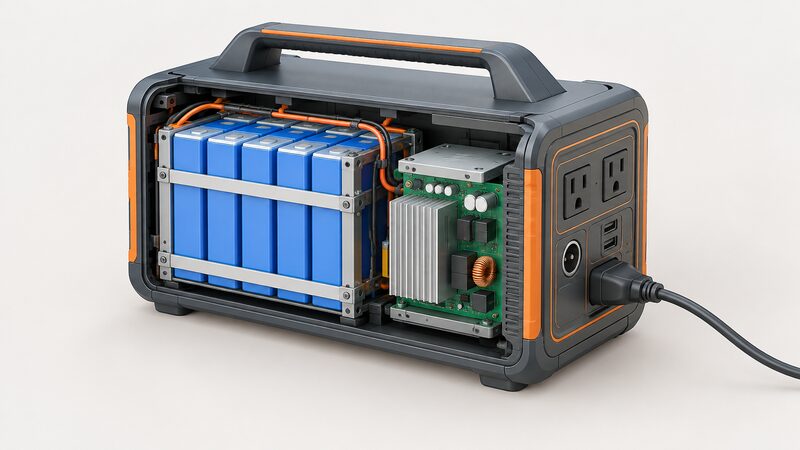
Anker uses lithium iron phosphate across the range, and states that LiFePO4 batteries power up for 3,000 cycles1. The same chemistry appears at model level: the C1000 is listed with LFP batteries rated for 3,000 cycles and a 5-year warranty9, the C800X with LFP batteries rated for 3,000 cycles16, and the C300X with a 288Wh LiFePO4 battery11. The X1 uses LiFePO4 described as stable15. The XE uses 314Ah LFP cells rated for 10,000 charge and discharge cycles14.
The F3000 goes further, listed with 4,000-cycle LFP batteries8. That is the longest cycle figure in the portable range as published.
Cycle life is a rating, not a calendar life. A cycle is a full charge and discharge, and a station used occasionally for cuts will take far longer to reach 3,000 cycles than one cycled daily. The figure also describes the point at which the battery has degraded to a stated proportion of its original capacity, not the point at which it stops working.
There is a wider disagreement in the maker's own guidance on this chemistry. One document gives LiFePO4 cycle life as 4,000 to 6,000 cycles and another as 4,000 to 10,000 cycles.
For a household, the chemistry choice is about safety and longevity rather than raw capacity. LiFePO4 is the chemistry Anker describes as the safest lithium-ion option in its solar generator range17. It is also the reason the warranty terms on the C1000 run to five years, since the battery is expected to outlast a shorter cover period.
Solar panels and charging: 23% efficiency, IP67 panels
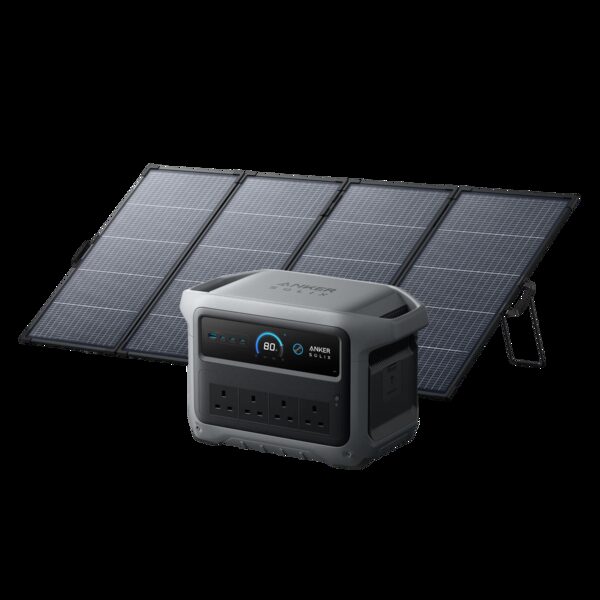
Anker states that its solar panels have IP67 rating and 23% conversion efficiency1. The same figure appears at model level: the PS200 is listed at up to 23% conversion efficiency18, the PS100 at up to 23%10, and a 400W portable panel at 23% with IP67 waterproofing19. The maker describes its panels as converting up to 23% of sunlight into solar energy, for 1.5 times better performance compared with competitors17.
IP67 means the panel is protected against dust and against temporary immersion in water. That is a rating for the panel, not for the station it charges, and it does not make the system safe to leave out in all weathers.
Charging speed varies by model. The C300X is listed as reaching 80% charge from solar panels in 2.5 hours20. Anker also states that its 2000W and above AC output solar generators reach 96% charging efficiency17.
The panels are sold as accessories rather than included. The C300X box contains the power station, an AC charging cable, safety instructions and a protective bag, and Anker states that the car charging and solar charging cables can be purchased separately11. The same applies to the C300 range generally22. Wall mounting brackets and Y cables for panels are listed as in stock with fast dispatch23.
There is one unresolved figure on the panels. The PS200 is listed at up to 23% conversion efficiency in one place and at 25% or more in another18.
For independence, solar charging is the one route that takes a portable station off the mains entirely. It still depends on daylight, on panel angle and on the weather, and a UK winter will not deliver the same input as a summer afternoon.
App control and smart energy management
Anker's app layer runs across the range. The brand describes intelligent energy management via app1. The F2000 is listed with Smart App Energy Control for key portable power station information25, and the C1000 with the ability to monitor energy intelligently via the app9. The C800 Plus is listed with remote app control13.
The X1 goes furthest. Anker states that the Anker app gives real-time data to monitor home power generation and consumption wherever you are, with monitoring by day, week, month or year4. The Alternator Charger connects via Bluetooth or Wi-Fi to control from a phone26. The XE adds a built-in AI EMS, powered by Anker PowerOS with an integrated assistant, which connects to over 870 electricity suppliers across Europe, predicts household energy needs, charges the battery when wholesale electricity prices are low and discharges when prices peak14.
This is where the range creates its clearest dependence. Local control at the station continues without an internet connection, and the sockets work regardless. But scheduling, energy monitoring, remote diagnostics and the historical data on the X1 all run through a home broadband connection, Anker's servers and the maker's app. A household that loses broadband in the same event that causes the cut loses the monitoring layer with it.
The app is also how firmware and behaviour changes reach the product. A station bought today may behave differently after an update, and that is a decision made by the manufacturer rather than the owner.
Warranty, returns and support: up to 5 years and 30-day returns
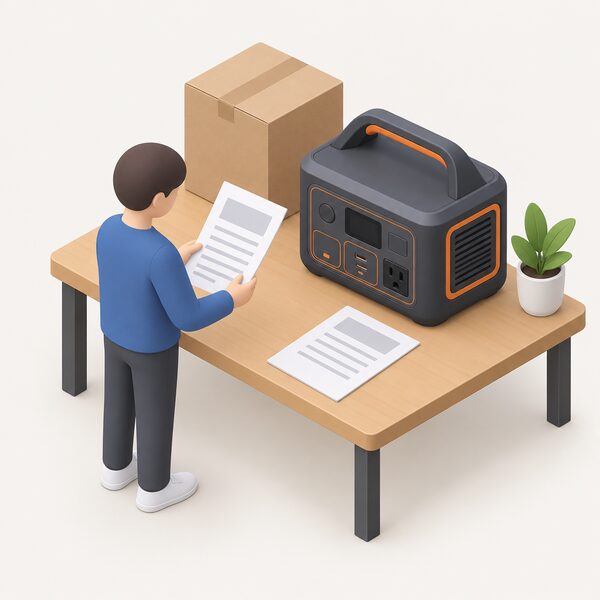
Anker states that buyers can return or exchange up to 30 days later and enjoy up to 5-year warranties1. The 30-day money-back guarantee appears across the range, including on the C300X11, the F200025, the Alternator Charger26, the Smart Meter13 and the F38006. The S2000 is listed with a 5-year warranty7. The XE carries a 10-year warranty14.
The terms are not uniform. Refurbished units carry shorter cover: the F2600 refurbished is listed with a 6-month warranty27, and the F3800 refurbished with a 6-month warranty28. The C800X is listed with a hassle-free warranty rather than a stated term16, and the solar panel wall mounting brackets carry the same description23.
Support is described as lifetime customer support on several listings, including the F200025 and the solar panel Y cable24. Anker directs buyers to Anker support for the car and solar charging cables sold separately from the C300X11.
UK availability and what Anker SOLIX means for household independence
The UK store lists free local shipping1. Individual items carry their own availability: the Alternator Charger is listed as in stock and shipping within one to two business days26, and the solar panel wall mounting brackets and Y cable as in stock with fast dispatch23. The Smart Meter is sold on the UK site with flexible instalment payment options13. The C300X carries fast, free shipping, a 30-day money-back guarantee, a hassle-free warranty and lifetime customer support11. The XE is available in the UK and Ireland through authorised installers14.
Not everything is available. The F3800 is listed as sold out6, and the refurbished F3800 listing sits on the Anker SOLIX US site rather than the UK store28. The F3800 page carries 48 reviews and a 30-day money-back guarantee6. A household looking at that class of station should check current availability before planning around it.
On independence, the position splits cleanly. A portable station gives a household a self-contained supply that needs no installer, no supplier and no permission, and can be recharged from a solar panel with no grid connection at all. What remains is the grid for routine recharging, a manufacturer for the app and firmware, and the maker's servers for remote features.
A whole-home battery changes the balance. It can carry more of the house for longer, and the X1 scales to 30kWh4, but it is installed, wired in and dependent on the firm that fitted it. Neither route removes the gas or electricity supply in normal operation, and neither is a substitute for the network. For what each route costs against the alternatives, see backup power costs compared and home battery vs portable power station.
Sources28 cited
- Anker SOLIX UK store, Anker SOLIX, 2026-09-17
- Anker SOLIX C2000 Gen 2, Anker SOLIX, 2026-09-19
- Anker SOLIX C1000 Gen 2 with PS400 bifacial solar panel, Anker SOLIX, 2026-09-19
- Anker SOLIX X1 energy storage system, Anker SOLIX, 2026-09-19
- Anker SOLIX E10, Anker SOLIX, 2026-01
- Anker SOLIX F3800, Anker SOLIX, 2026-09-19
- Anker SOLIX S2000 portable power station, Anker SOLIX, 2026-09-19
- Anker SOLIX F3000, Anker SOLIX, 2026-09-19
- Anker SOLIX C1000 Gen 2, Anker SOLIX, 2026-09-19
- Anker SOLIX C1000 Gen 2 with PS100 bifacial solar panel, Anker SOLIX, 2026-09-19
- Anker SOLIX C300X portable power station, Anker SOLIX, 2026-09-19
- Anker SOLIX C200 DC portable power station, Anker SOLIX, 2026-09-19
- Anker SOLIX C800 Plus portable power station, Anker SOLIX, 2026-09-19
- Anker SOLIX launches XE, the next-generation all-in-one home energy storage - pv magazine Global, pv-magazine.com
- Anker SOLIX X1 energy storage system, Anker SOLIX, 2026-09-19
- Anker SOLIX C800X, Anker SOLIX, 2026-09-19
- Anker SOLIX solar generators, Anker SOLIX, 2026-09-19
- Anker SOLIX C1000 Gen 2 with 200W bifacial solar panel, Anker SOLIX, 2026-09-19
- Anker SOLIX C2000 Gen 2 with expansion battery, Anker SOLIX, 2026-09-19
- Anker SOLIX C300X with 100W solar panel, Anker SOLIX, 2026-09-19
- Anker SOLIX C300X protective cover, Anker SOLIX, 2026-09-19
- Anker SOLIX C300X car and solar cables, Anker SOLIX, 2026-09-19
- Anker SOLIX solar panel wall mounting brackets, Anker SOLIX, 2026-09-19
- Anker SOLIX solar panel Y cable, Anker SOLIX, 2026-09-19
- Anker SOLIX F2000 refurbished, Anker SOLIX, 2026-09-19
- Anker SOLIX Alternator Charger, Anker SOLIX, 2026-09-19
- Anker SOLIX F2600 refurbished, Anker SOLIX, 2026-09-19
- Anker SOLIX F3800 refurbished, Anker SOLIX, 2026-09-19
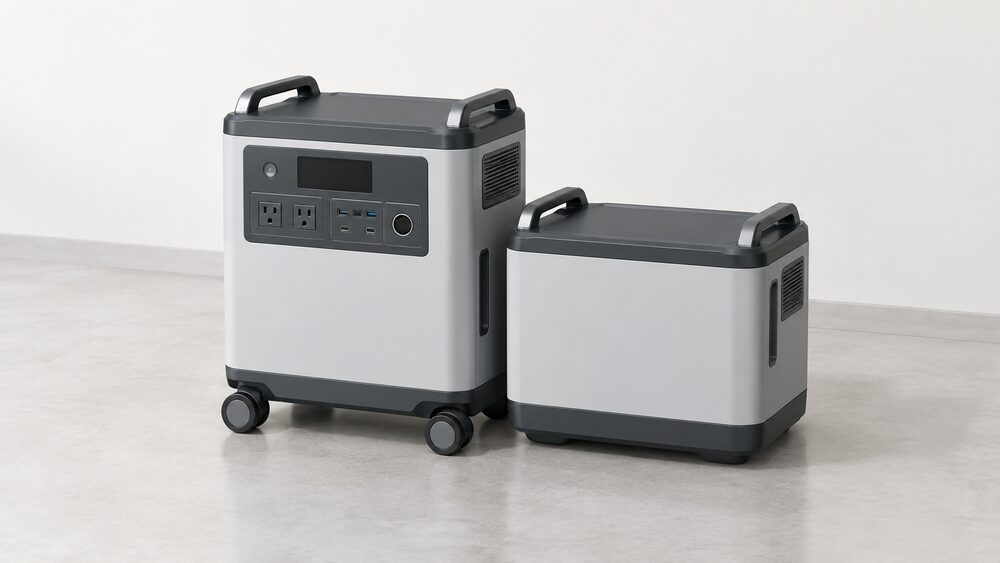 Anker SOLIX F3800 Plus home backup batteryHow much power does the Anker SOLIX F3800 Plus give you in a blackout, and how long will it last?
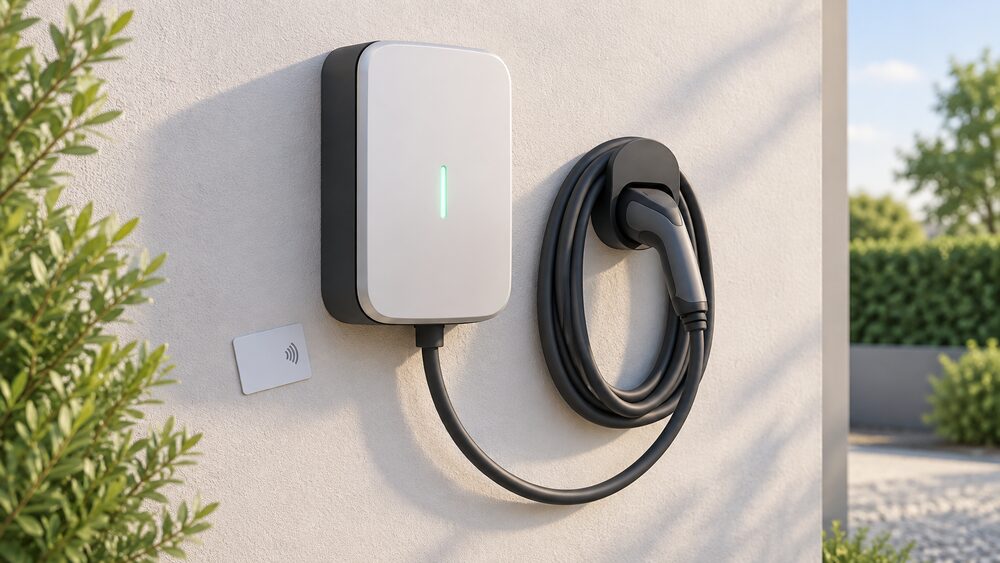 Anker SOLIX EV chargersAnker's SOLIX V1 is a home wallbox that can charge your car using solar power, battery storage or the grid.
 Anker SOLIX F3000Can the Anker SOLIX F3000 run a British home?