
In this comparison
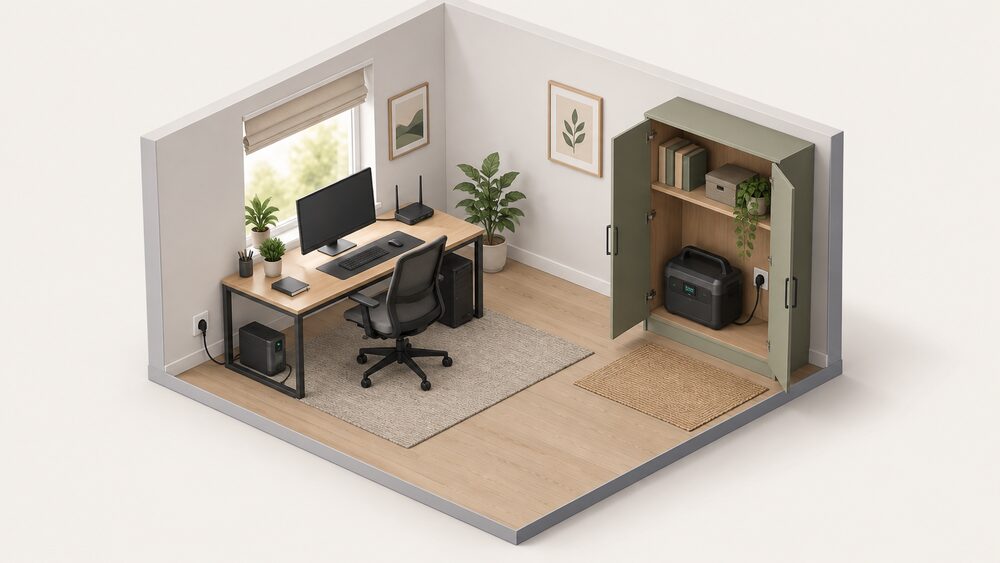
A UPS and a portable power station both contain a battery and an inverter, and both are sold to households that want the lights to stay on. The difference is time. An uninterruptible power supply provides a few minutes of emergency battery backup if power fails, sized to carry a load across a cut or a flicker and then shut it down cleanly1. A portable power station is an energy storage unit with multiple port options that stores energy but does not generate it, and it is built to run loads for hours rather than seconds2.
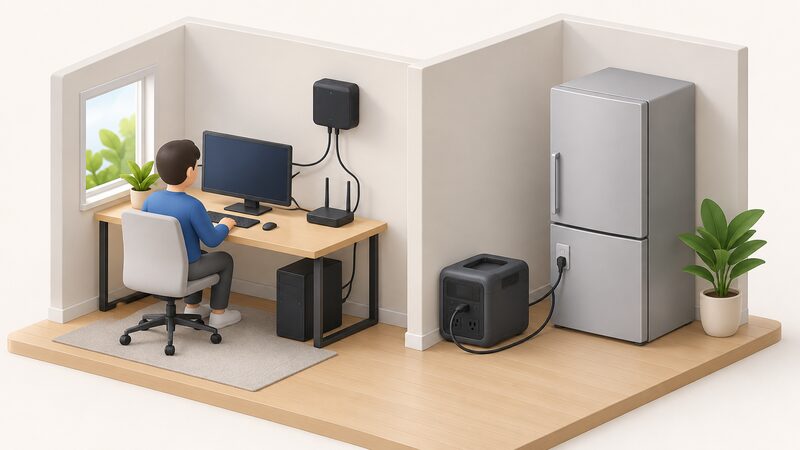
That single distinction decides most buying questions. If the load is a desktop PC, a router, a NAS drive or a home office setup, the UPS is the right shape of product and the runtime is measured in minutes. If the load is a fridge, a heater, a kettle or a whole evening of lighting, the portable power station is the right shape and the runtime is measured in hours. Some power stations now publish UPS-grade switchover times, which blurs the line, but the underlying design intent has not changed.
A UPS bridges seconds; a portable power station supplies hours
The runtime gap is not a marketing difference, it is a design difference. A UPS is specified around transfer time and load support: it holds a load up for the few minutes needed to ride through a fault or shut equipment down in order. Network operator guidance describes these units as providing a few minutes of emergency battery backup if power fails, which is exactly the job they are built for1. Nothing in that design brief rewards a large battery, because the load is expected to stop.
A portable power station is specified around capacity. The battery's capacity determines how much power the unit can store and deliver, and that figure, not the transfer time, is what the buyer is choosing between7. Capacity bands published by makers show how the product is positioned: 300 to 700Wh for phones, tablets, cameras, laptops and LED lights on day trips or short overnights; 800 to 1,200Wh as a useful weekend-camping range for a compressor fridge, electronics, lighting and occasional higher-wattage items; 1,500 to 2,500Wh for caravans, work equipment or short household outages where several essentials need to run together; and 2,500Wh and above for heavier home backup and longer off-grid stays4.
The overlap sits in the middle. A power station with a published transfer time can act as a UPS for the loads it can carry, and a UPS with an extended battery module can run for longer than minutes, at a price. For most households the question is not which technology is better but which failure the household is actually planning for: a dropped connection that costs work, or an outage that costs a fridge's contents and an evening's warmth.
Runtime and output: what each can actually keep running
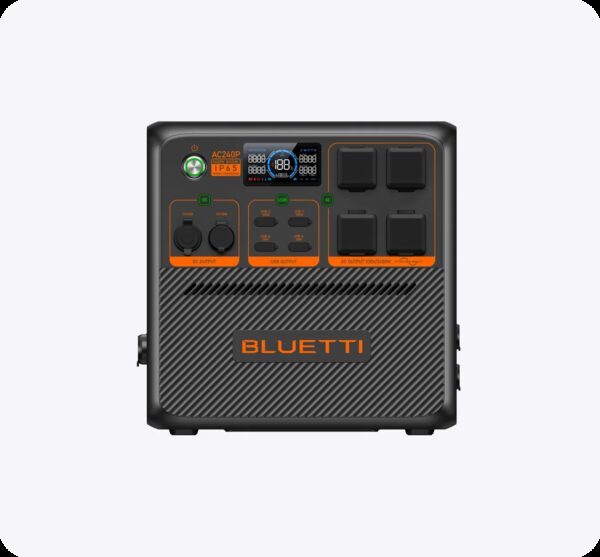
Output, not just capacity, decides what a power station can carry. Maker guidance puts the practical minimum for a combined load of a 1,500W kettle, a 200W fridge and 100W of electronics at a station with at least 1,800W continuous output4. That is a statement about the inverter, not the battery: a large battery behind a small inverter will still trip on a kettle.
UPS units are specified the other way round. Eaton recommends its compact 3S Mini UPS for routers, switches and modems, and its 3S Gen2 UPS for home office equipment, NAS systems, aquariums and terrariums, cryptominers, household appliances and automatic feeder systems, with desktop PCs for home office use named as a recommended application2. Those are small, always-on loads, and the recommendation reflects it.
Where a power station does publish UPS behaviour, the figure is a transfer time. One maker states that a 2048Wh unit with under 10 ms UPS capability keeps essential and high-draw devices online without interruption8. Another maker's Explorer 2000 v2 is described as having built-in UPS support switching in under 20 ms with pass-through charging, and separately as having a UPS function with switch-over in under 20 ms complying with UL1778 standards; the two descriptions of the same model have not been reconciled5.
| UPS | Portable power station | |
|---|---|---|
| Typical backup duration | A few minutes1 | Hours, set by capacity4 |
| Sized around | Transfer time and load support1 | Battery capacity and inverter output4 |
| Example home applications | Routers, switches, modems; home office equipment, NAS, aquariums2 | Fridge, electronics, lighting, kettle on a shared circuit4 |
| Published switchover | Not always stated | Under 10 ms on one 2048Wh model8; under 20 ms on one Explorer model5 |
| Practical output floor for mixed loads | Not applicable | At least 1,800W continuous for a 1,500W kettle plus a 200W fridge and 100W of electronics4 |
UPS, portable power station or both: which fits which home
The dividing line is whether the household needs continuity or duration. Continuity matters where an interruption itself causes loss: a desktop session, a NAS write, a router dropping a call, a heating control losing its schedule. Duration matters where the outage is the problem: food in a fridge, an evening without lighting, a phone that needs charging several times over. Independent guidance notes that portable power banks can hold enough power to charge up a mobile several times and are well worth having to hand, which is the smallest version of the duration argument9.
A home office is the clearest case for a UPS. Network operator guidance states that if you work from home or run a small business and use your computer, a UPS is worth considering10. The same logic covers the router and the modem, which is why Eaton's home range leads with those loads2.
A household planning for cuts is the clearest case for a power station. The capacity bands above show the shape of the choice, and the recharge options matter as much as the capacity: these units can be charged via standard electrical outlets, car DC outlets or solar panels, depending on the model, and the maker advises considering how the unit will be recharged, whether through an electrical outlet, a car or solar panels7. A station that can only be refilled from the grid is a one-shot reserve in a long outage.
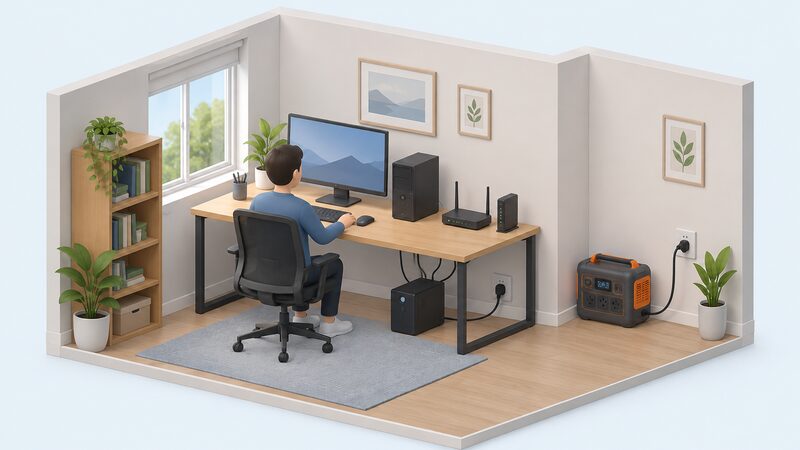
Both is a legitimate answer, and it is the one most mixed households arrive at. The UPS sits under the desk on a small load and never gets thought about. The power station sits charged in a cupboard and comes out when the cut is measured in hours. The two do not compete for the same socket.
Cost, warranty and what you pay for
The cost comparison is stark once runtime is taken into account. A small UPS system with a 10 to 20 minute run-time costs £3,000 to £5,0003. That figure buys minutes, and it is the price of the system rather than of a single desktop unit. For scale, portable generators start at around £160 but can go up to £2,000 or more, and a 1.6kVA portable generator would cost around £76 for a day or £110 for a week to hire6. Those are different products with different constraints, but they set the outer edges of what households pay for backup.
Warranty terms differ in kind as well as length. Jackery states a 4-year stand-by on its portable power stations, with LiFePO4 batteries it says can last up to 10 years with proper care5. The same maker lists a 6-month warranty on refurbished units and a 2+1 year extended warranty on standard series models, and those two terms have not been reconciled with each other5. Buyers comparing headline warranty figures should check which product line and which condition the term applies to.
Cycle life is the other long-term cost. Many current LiFePO4 stations are rated for roughly 3,000 to 6,000 cycles before falling to about 80% of original capacity4. A UPS cycled only during cuts will take far longer to reach that point than a power station used daily, which is why the two products are rarely compared on the same duty cycle.
The makers: Jackery and Eaton compared
Jackery and Eaton sit at opposite ends of this market. Eaton is an established power management manufacturer whose UK home pages set out which loads each model is recommended for, from the 3S Mini for routers, switches and modems to the 3S Gen2 for home office equipment, NAS systems, aquariums and terrariums, cryptominers, household appliances and automatic feeder systems2. The recommendations are narrow and specific, which is what a UPS brief looks like.
Jackery builds portable power stations and solar generators. The maker lists AC, DC or USB ports, 30dB quiet power, no fumes and indoor-safe operation, a 94V-0 fire rating, a 4-year stand-by and LiFePO4 batteries stated to last up to 10 years with proper care5. Those are the attributes of a product designed to be carried, stored indoors and run for hours.
| Eaton | Jackery | |
|---|---|---|
| Product type | UPS units for home and home office2 | Portable power stations and solar generators5 |
| Named applications | Routers, switches, modems; home office equipment, NAS, aquariums, terrariums, cryptominers, household appliances, automatic feeders2 | AC, DC or USB devices5 |
| Stated noise | Not stated on the home page | 30dB quiet power5 |
| Indoor safety | Not stated on the home page | No fumes and indoor safe; 94V-0 fire rating5 |
| Warranty | Not stated on the home page | 4-year stand-by; 6 months on refurbished; 2+1 years on standard series5 |
| Battery life claim | Not stated on the home page | Up to 10 years with proper care5 |
Jackery's own product pages also record stock changes that affect what a UK buyer can order. The Explorer 500 is sold out with the Explorer 600 v2 and HomePower 3600 Plus recommended instead, the Explorer 550 and Explorer 240 have been upgraded to newer-generation models, and the Explorer 300, Explorer 3000 Pro, Explorer 1000 and Solar Generator 1000 Plus have all been recorded as sold out on the US official website at various points in 20265. Those are US stock positions and do not by themselves describe UK availability, but they show how quickly a named model can leave the range.
UK availability and buying considerations
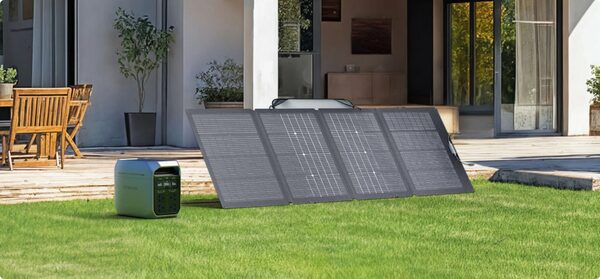
Both product types are widely sold in the UK, but the surrounding rules differ. Freestanding and portable solar panels are available to buy in the UK already, but they are only legal for off-grid use, which limits how a power station can be recharged from a balcony or garden array11. Portable solar chargers may seem appealing but are generally not so good for UK drivers, though they may be useful for short trips or as an emergency backup, and they will not yet fully replace a home charging setup12. For a power station, that means grid charging and car charging are the dependable routes, with solar as a supplement.
Households planning a larger change should note what the network side involves. Moving an electricity supply is handled through an online application service that provides an estimate for moving the supply for a home or business, including moving the service termination or meter position and the route of the cable, and this option applies to underground services only13. Adding more power and moving a meter are separate processes with their own cost and time estimates, each taking about 5 minutes to answer the questions for an indication14. None of that is needed for a plug-in UPS or power station, which is part of their appeal.
For households with a vulnerable occupant, network operators run support arrangements that sit alongside any equipment purchase, and the Priority Services Register is the route into them1. Gas network support during an incident can include portable electric appliances for cooking and heating for customers on the Priority Services Register16. Those schemes are not a substitute for a UPS or a power station, but they change what a household needs to cover itself.
What each means for household energy independence
Neither product removes a household from the grid, and it is worth being exact about what each one does. A UPS improves continuity: it keeps a defined set of small loads alive across a fault, and it does nothing at all about the length of an outage. A portable power station improves duration: it carries a defined set of loads for hours, and it does nothing at all about the supply of energy once its battery is flat.
The independence a power station offers is therefore bounded by its capacity and its recharge routes. Usable capacity is defined in the standards as the energy within the storage device available to the customer for use of any domestic energy storage application, including solar PV self-consumption, measured in kWh17. That definition matters because it is the figure that determines how long the household stays independent, and it is always lower than the headline battery figure.
The wider direction of travel is towards larger storage. UK utility-scale battery storage includes systems able to handle a gigawatt of power or more, around the capacity of two nuclear power stations, and these are in the pipeline18. Vehicle-to-grid trials have shown that using a car could power a house with energy flowing both to and from the vehicle19. Those developments sit well beyond a portable power station, but they show the same principle: stored energy bought once and used during a cut is the household's own reserve, and everything after that depends on the grid, a supplier or a fuel.
For a household, the honest summary is that a UPS buys continuity and a power station buys time, and neither buys independence from the network. What they buy is a smaller dependence: on the timing of a cut, on the length of an outage, and on whether the fridge, the router or the heating controls stay on. The rest of the household's exposure, to the grid, to a supplier and to the price of refuelling, is unchanged.
Sources19 cited
- Care and assisted living providers, Energy Networks Association, 2026-09-17
- UPS for home applications, Eaton, 2026-09-17
- More than money: finding the true power of V2G, Cenex, 2026-09-17
- Best portable power stations, BLUETTI UK, 2026-08-31
- Portable chargers, Jackery, 2026-09-19
- How to buy the best generator, Which?, 2026-01-20
- Portable power station: power at your fingertips, AlphaESS, 2023-08-25
- Best 1p per hour electric heaters, EcoFlow UK, 2025-12-03
- What to do in a power cut, Which?, 2026-06-04
- Compensation if a power cut damaged something in my home, UK Power Networks, 2026-09-17
- Plug-in solar panels vs rooftop systems, Which?, 2026-04-27
- Integrating solar panels with EV charging, Uswitch, 2025-07-02
- Moving your meter, UK Power Networks, 2026-09-19
- Adding more power: cost and time, UK Power Networks, 2026-09-17
- Charging electric vehicles, Energy Saving Trust, 2026-04-23
- Incident hub, SGN, 2026
- MCS 032 2025 V1.0, MCS Certified, 2025-01-01
- Waste not, want not: homes with batteries to cash in from free power offer, Solar Energy UK, 2026-04-14
- V2G domestic installation, BBC Radio Leicester, Cenex, 2017-03-09
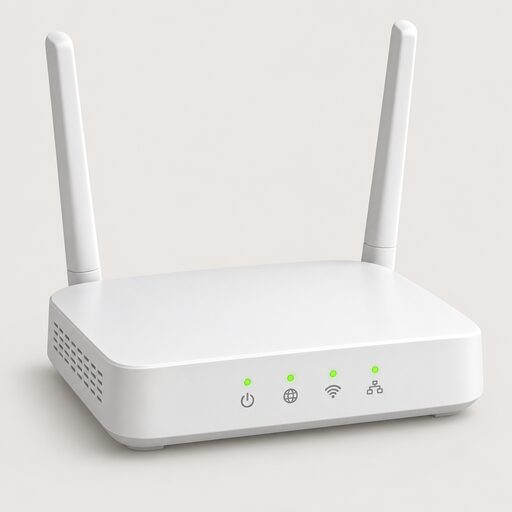 Home UPS SystemsA home UPS keeps your broadband, computer or boiler running through short power cuts and flickers, switching over instantly rather than after a second or two.
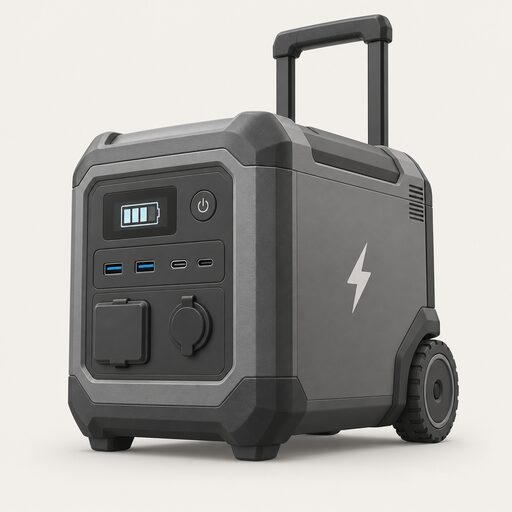 Portable Power StationsWhat can a portable power station actually keep going in a power cut, and for how long?
 Portable Power Station SizeHow big a portable power station does a home actually need, and how long will it keep things running in a power cut?
 Portable Generators for HomesWhat can a portable generator actually run in a power cut, and for how long?
 Backup Power Costs ComparedCompares purchase, installation and running costs across the main backup options, and what each delivers in runtime and coverage.
 Power Station BatteriesWhat kind of battery is inside a portable power station, and does it matter?