
In this guide
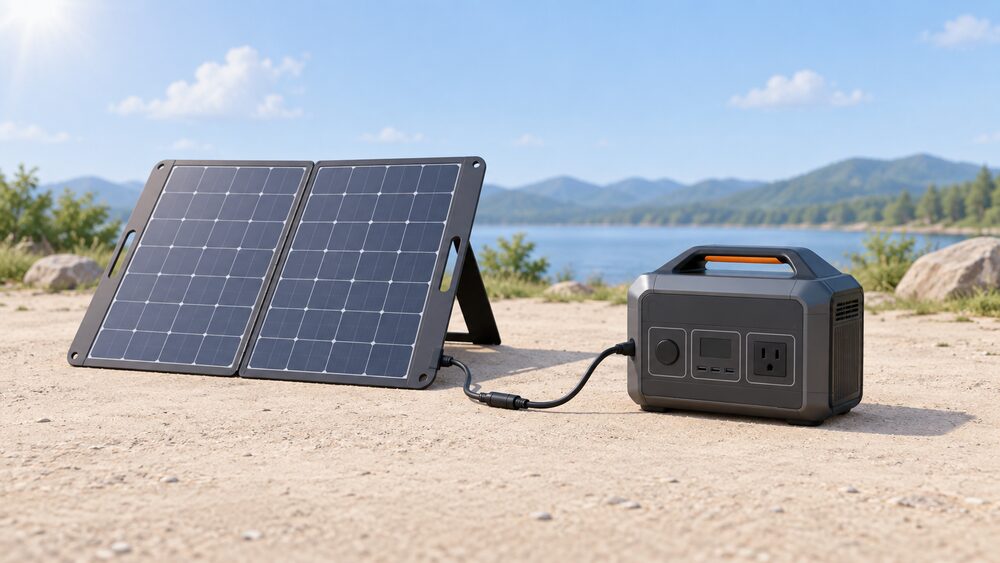
Jackery is a consumer brand built around two product families: the Explorer portable power station and the SolarSaga folding solar panel. A "solar generator" in Jackery's naming is not a generator at all in the fuel sense. Jackery describes its solar generators as consisting of a portable power station and multiple solar panels, with the number of panels varying by kit, so the bundle stores energy from the sun or the mains and delivers it later through the station's outlets1.
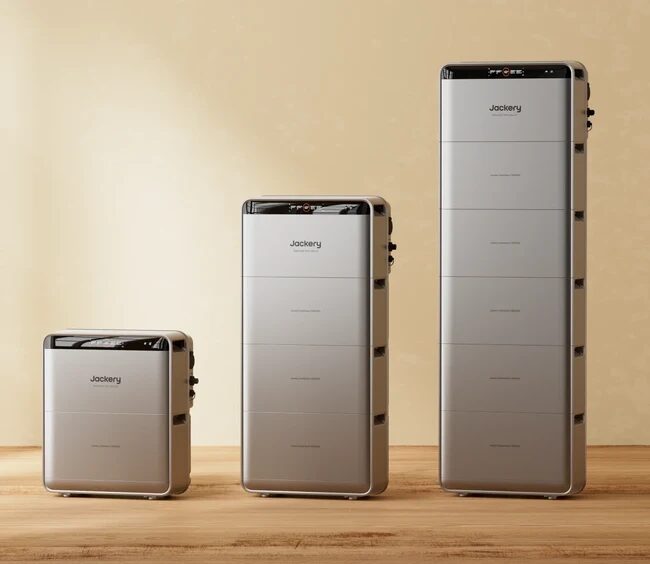
The range runs from small camping units to a whole-home kit. At the top, the Jackery Whole-Home Backup Kit 5000 Plus is listed at 20160Wh with 7200W output and a stated lifespan of 10+ years2. The Battery Pack 2000 Plus scales to 12kWh3. For household appliances, Jackery's own recommendation is an energy storage system with an output and capacity of over 2000W to ensure a stable supply4.
Prices are published on the UK store rather than quoted by installers, because nothing here is installed. A UK bundle of the Explorer 2000 v2 with a SolarSaga 200W panel and a free 5-metre solar extension cable is listed at £2,029.00, and the same station with two 200W panels at £2,599.005. The Explorer 3000 v2 with a SolarSaga 200W panel and extension cable is listed at £2,629.00 including tax6. The smallest unit in the current line, the Explorer 300D, is listed at £149.00 against a stated £219.007.
Jackery: the company behind the Explorer and SolarSaga ranges
Jackery sells direct through its own websites and through third-party platforms and authorised dealers, and the warranty position differs between those routes. The company states that warranty cover is only provided to customers who purchase from the official Jackery website, Jackery-branded third-party platforms, or authorised dealers8. That is a narrower channel definition than many buyers assume, and it matters because a unit bought through an unauthorised reseller may fall outside the maker's terms entirely.
The UK entity named in the warranty document is Jackery UK Ltd, which warrants to the original consumer purchaser that the product will be free from defects in workmanship and material under normal consumer use during the applicable warranty period9. The warranty is limited to the original purchaser and is not transferable to a subsequent owner, and the sales receipt from the first consumer purchase, or other reasonable documentary proof, is required to establish the start date9. The period is measured from the date of purchase by the original consumer purchaser, not from installation or first use9.
For a household thinking about independence, this is a straightforward commercial relationship rather than a utility one. There is no installer, no commissioning and no ongoing service contract. What remains is a dependence on the manufacturer: on its warranty administration, its spare parts, its app and, for the largest kits, its battery pack ecosystem. The brand also runs a membership scheme that includes a free extended warranty on purchased products for members10.
What a Jackery solar generator is: power station plus SolarSaga panels

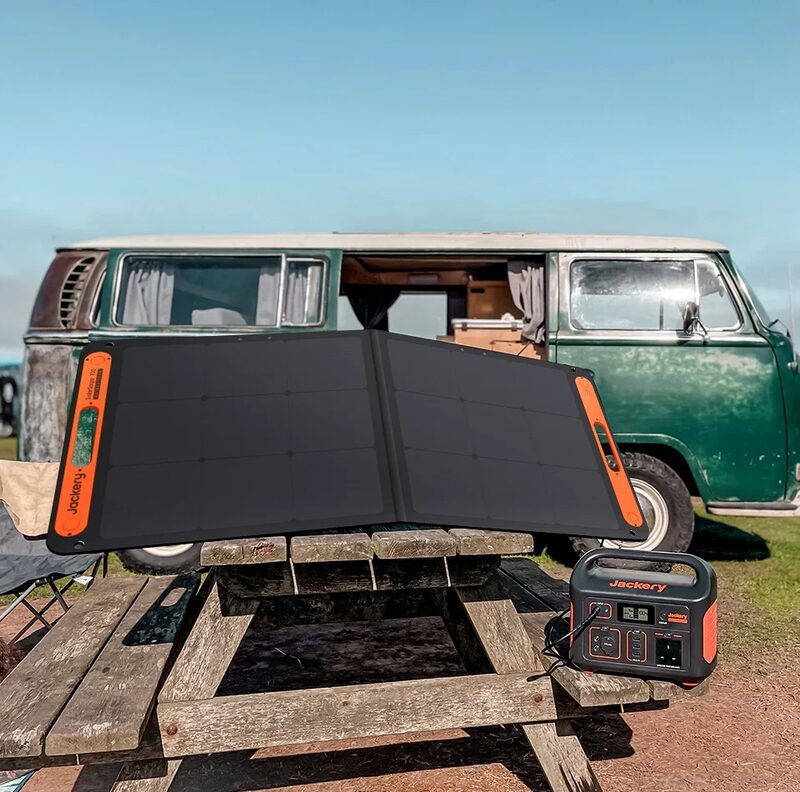
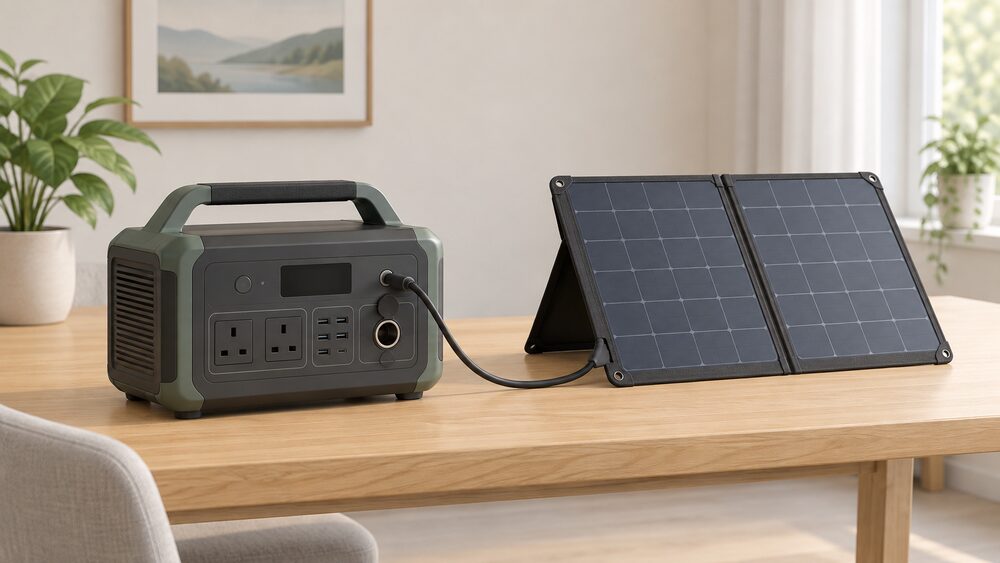
The term covers a bundle rather than a distinct product. Jackery states that its solar generators consist of a portable power station and multiple solar panels, with the number of panels varying10. The Solar Generator 500 v2 is described as featuring a SolarSaga 100W folding panel and a portable power station11. The Explorer 2000 v2 can be paired with SolarSaga 200W panels to create the Solar Generator 2000 v211. The Solar Generator 1000 v2 is the combination of an Explorer 1000 v2 with a SolarSaga 100W panel12.
Panel count and panel output determine recharge speed, and the spread is wide. An Explorer 2000 Plus paired with six SolarSaga 200W panels is quoted at 2 hours13. A Solar Generator 1000 Plus reaches full charge in 2 hours using four SolarSaga 200W panels1. The Solar Generator 3000 v2 supports up to 1,000W of solar input when paired with SolarSaga panels12.
The panels themselves carry small built-in outputs. The SolarSaga 200W has a USB-A port rated 5V 2.4A and a USB-C port rated 5V 3A, so a phone or small device can charge directly from the panel without the power station in the chain14. The SolarSaga 100W is rated 100W with a power current of 5.5A15.
"All Jackery Portable Power Stations are equipped with an MPPT (Maximum Power Point Tracking) charge controller"
That controller matters in UK conditions, where cloud cover and low winter sun reduce panel output well below the rated figure. MPPT tracks the panel's operating point to extract more energy in partial shade and diffuse light than a simple controller would. It does not change the fundamental limit: a 100W panel in a British winter produces a fraction of its rated output, and the maker's recharge times assume good conditions.
The range at a glance: capacities from camping units to a 20kWh home kit
Jackery's own sizing guidance splits by use. For outdoor camping, where devices usually consume less than 1500W, the recommendation is an output and capacity between 1000W and 2000W4. For household appliances, the recommendation is over 2000W4. For off-grid living, a 3,000 to 5,000-watt generator is described as sufficient to run basic off-grid appliances, while living off the grid comfortably is put at 5,000 to 10,000W16.
| Product | Stated capacity or output | Notes |
|---|---|---|
| Explorer 300D | £149.00, station alone7 | Entry unit, sold as a bundle with panels7 |
| Explorer 2000 v2 | 2042Wh1 | Pairs with SolarSaga 200W panels11 |
| Explorer 3000 v2 | 3kWh class, described as the world's lightest and most compact 3kWh LFP power station6 | Runs a 200W refrigerator for 1 to 2 days1 |
| Explorer 2000 Plus | Solar charge in 7 hours, or 2 hours on six SolarSaga 200W panels3 | Supports pass-through charging without damage to battery life3 |
| Battery Pack 2000 Plus | Up to 12kWh capacity3 | Expansion pack for the 2000 Plus system |
| Whole-Home Backup Kit 5000 Plus | 20160Wh, 7200W, 10+ years lifespan2 | Flagship home backup kit |
The weight claims are part of the pitch. Jackery states that the Explorer 2000 v2 is 35.6% lighter than the industry standard8 and that the Explorer 3000 v2 is 47% smaller and 43% lighter than industry standards6. The Explorer 1500 v2 is described as the lightest 1.5kWh LiFePO4 power station at 31.97 lbs18. These are maker comparisons and the basis for the industry standard figure is not published, so they are best read as the company's own positioning rather than an independently verified measurement.
Charging methods: solar, wall, car and USB-C
Jackery states that all its portable power stations can be charged via SolarSaga panels, wall outlets or car ports, and that USB-C fast charging is available on selected models4. Simultaneous charging is supported in most cases for AC and solar together, but most models do not support car charging and solar charging at the same time4.
The Explorer 2000 v2 lists its charging modes as AC, solar, car, AC plus solar, and AC plus car, with the explicit note that solar panel charging and car charging cannot be performed at the same time19. The Solar Generator 300D allows simultaneous charging via the DC8020 port and the Type-C port7. The Solar Generator 2000 Plus supports solar, mains power and vehicle charging20.
Recharge times vary enormously by method and model. A refurbished Explorer 1000 lists 8 hours on mains, 7 hours on solar and 14 hours from a car21. Jackery also advertises a 1.7-hour Emergency Super Charge as a charging feature of its portable solar generator range22.
For a UK household, the practical hierarchy is mains first, solar second. Mains charging is fast and predictable but ties the unit to the grid it is meant to back up. Solar charging is independent of the grid but seasonal, and the maker's recharge times assume conditions a British winter will not deliver. Car charging is a useful fallback during travel rather than a home strategy.
Pass-through charging and the companion app
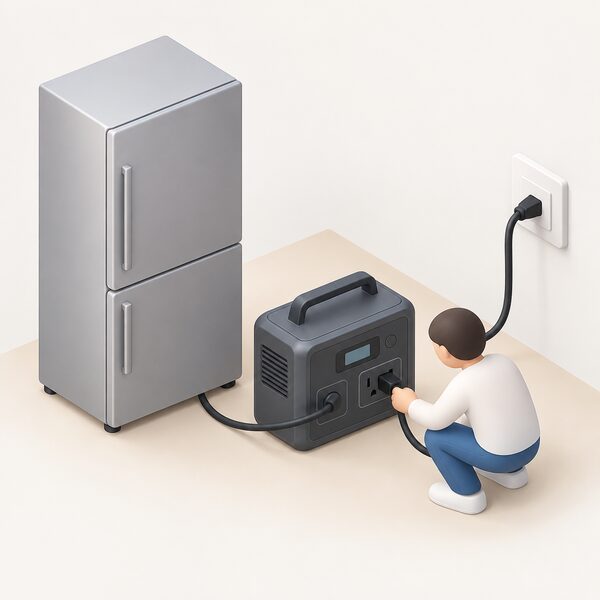
Pass-through charging lets a station power appliances while it is itself recharging. Jackery describes the feature as allowing appliances to be powered while the power station recharges simultaneously11, and the Explorer 2000 v2 is stated to support it, allowing home appliances such as refrigerators to run while charging19. The Explorer 2000 Plus supports pass-through charging without damage to battery life3, and the refurbished Explorer 1000 allows devices to be charged while the station is plugged into a charging point21.
The Explorer 2000 v2 also carries a UPS function: the power supply switches to a portable source in under 20 ms, and the unit supports pass-through charging5. That is fast enough for many sensitive loads, though the maker's own safety guidance is explicit about where such a unit should not be relied on.
"Jackery portable power stations are not recommended for use with medical devices, life-support equipment, data servers, "
The same wording appears on the Explorer 300D page7 and in the buying guide4. For a household with a medical dependency, that is the decisive limit: the maker does not position these units as life-safety equipment, and the Priority Services Register is the route designed for that situation.
Cost: higher upfront than a fossil generator, cheaper over years
Jackery publishes its own prices, which is unusual in backup power, where most installed equipment is quoted after a site visit. The UK store lists the Explorer 2000 v2 with one SolarSaga 200W panel and a free 5-metre extension cable at £2,029.00, and with two panels at £2,599.005. The Explorer 3000 v2 with a SolarSaga 200W panel and extension cable is £2,629.00 including tax6. The Explorer 300D station alone is £149.00 against a stated £219.007.
The maker's cost argument is per unit of stored energy rather than per unit of output. Jackery states that the Solar Generator 1500 v2 offers 9% lower cost per Wh than other 1.5kWh portable power stations18. On lifespan, the Solar Generator 2000 Plus is stated to have a 10-year lifespan1 and to ensure a lifespan of up to 10 years even with only one use per day20.
The comparison a household actually faces is with a petrol or diesel generator. A fuel generator has a lower purchase price for a given output but carries fuel, servicing, noise, exhaust and storage obligations, and it cannot be run indoors. A battery station has no fuel cost, no exhaust and no servicing, but its capacity is fixed and its output is limited by its inverter. The trade is capital against running cost, and the crossover point depends on how often the unit is used and what fuel would otherwise cost. Wider cost context sits in backup power costs compared.
Warranty, certifications and buying terms
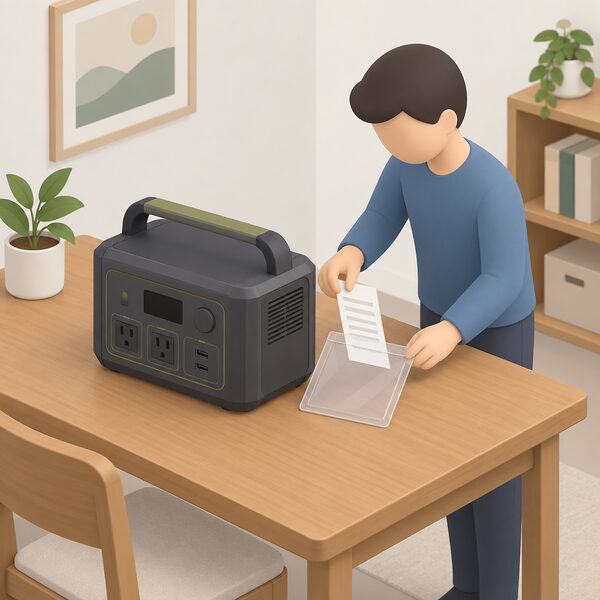
The warranty ladder is not a single number. For the Explorer 1000 v2, Jackery provides 3 years standard warranty and 2 years extended warranty, and states that warranty is only provided for purchases from the official Jackery website, Jackery-branded third-party platforms, or local authorised dealers6. The Explorer 2000 v2 carries the same channel restriction19. The Explorer 300 v2 is listed as 3+2 years at Jackery.com, with the extension applied automatically on some platforms but registration required for Amazon, Walmart or eBay purchases23. The Standard series carries a 2+1 year extended warranty4. The Jackery Connector carries a 3-year warranty plus a 2-year extended warranty, applied automatically if purchased from the official website23.
Exclusions are standard but worth reading. The warranty does not cover products that are misused, abused, modified, damaged by accident, or used for anything other than normal consumer use as authorised in Jackery's current product literature9. The warranty is not transferable, and proof of purchase is required9.
Certification claims centre on shipping compliance. Jackery states that its units comply with UN 38.3 shipping standards for lithium batteries, and that passengers may carry lithium batteries of 100Wh or less without airline approval24. That is a shipping standard, not a permission to fly with a particular unit, and most Explorer models exceed 100Wh. Airline acceptance remains a matter for the carrier. On safety more broadly, the units are described as producing no fumes and being indoor safe25, and the maker states a 4-year standby capability25. Battery chemistry, cycle life and disposal are covered in portable power station batteries and lithium battery safety.
Availability and stock: which models are sold out
Stock is the least stable part of the picture, and several models have moved to sold out status. The Explorer 500 is listed as sold out with a notify-when-available option26, and Jackery states the model is sold out and recommends the Explorer 600 v2 and HomePower 3600 Plus instead27. The Solar Generator 500 is marked sold out on the UK store28, and the Solar Generator 300D bundle is also listed as sold out7. The refurbished Explorer 1000 is sold out21.
| Product | UK availability |
|---|---|
| Explorer 500 | Sold out, notify when available26 |
| Solar Generator 500 | Sold out28 |
| Solar Generator 300D bundle | Sold out7 |
| Explorer 1000 (Refurbished) | Sold out21 |
Jackery has not published a reason for these discontinuations, so the replacement models are the maker's own suggestions rather than confirmed like-for-like substitutes. The pattern across the range is that older Explorer generations are being replaced by v2 models and by the HomePower line, and that the largest kits are positioned as the home backup answer. A household that needs a specific older model may find it only through third-party sellers, which raises the warranty channel question described above.
The UK store also runs promotions that change the effective price. A Jackery Member Sale ran from 14 to 20 September29, the SolarSaga 100W has been listed at 45% off28, and the Home Backup Kit 5000 Plus at 10% off10. The Solar Generator 2000 Plus has been listed at 50% off30. These are time-limited and should be read as the price at the date shown rather than a standing figure.
Where a Jackery fits a household's independence
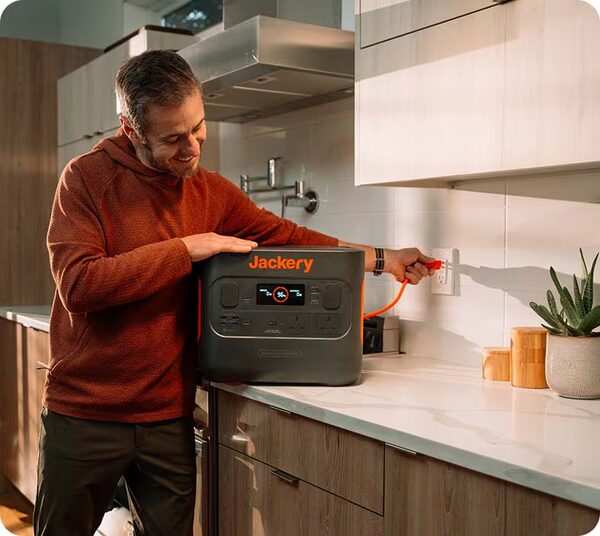
A Jackery station reduces dependence on the grid for the loads plugged into it, and it removes dependence on fuel supply entirely. It can be charged from a wall socket, from a car, or from its own panels, and it produces no exhaust, so it can run indoors. For a flat, a rented home or a property where a fixed generator or home battery is not an option, that portability is the whole point. The portable power stations overview sets out where this class of product sits.
The dependence that remains is real. The unit is a finite store: once depleted, it needs a charge, and in a long outage the mains is the thing that is missing. Solar charging restores some independence but is seasonal and weather-dependent in the UK. The largest kits depend on the maker's battery pack ecosystem for expansion. The app and remote features depend on the manufacturer's platform. And the warranty depends on buying through the right channel and keeping the receipt.
For a household weighing options, the honest summary is that a Jackery is a portable, fuel-free store for selected loads, not a whole-home supply. Sizing should start from measured consumption rather than the label, as set out in portable power station sizing, and the comparison against fuel generators is covered in solar generator vs fuel generator.
Sources30 cited
- Power outage in York guide, Jackery, 2026
- Solar Generator 5000 Plus, Jackery, 2026
- Explorer 2000 Plus portable power station, Jackery, 2026
- Jackery buying guide, Jackery, 2026
- Explorer 2000 v2 with accessories, Jackery, 2026
- Explorer 3000 v2 with accessories, Jackery, 2026
- Solar Generator 300D, Jackery, 2026
- Solar Generator 2000 v2, Jackery, 2026
- Warranty and return, Jackery, 2026
- Autumn savings, Jackery, 2026
- Solar power DIY, Jackery, 2026
- Solar Generator 100 Plus, Jackery, 2026
- Guide to 10kW solar system, Jackery, 2026
- SolarSaga 200W solar panel, Jackery, 2026
- SolarSaga 100W solar panel, Jackery, 2026
- Solar generator for off-grid living, Jackery, 2026
- Solar Generator 2000 Pro, Jackery, 2026
- Solar Generator 1500 v2, Jackery, 2026
- Explorer 2000 v2 portable power station, Jackery, 2026
- What is the UK energy price cap, Jackery, 2026
- Explorer 1000 refurbished, Jackery, 2026
- Cheapest standing charge electricity UK, Jackery, 2026
- Jackery Connector, Jackery, 2026
- SolarSaga 40 Air, Jackery, 2026
- Portable chargers, Jackery, 2026
- Explorer 500 portable power station, Jackery, 2026
- Jackery buying guide, Jackery, 2026
- All products, Jackery, 2026
- Jackery UK homepage, Jackery, 2026
- Solar Generator 2000 Plus with 200W panel, Jackery, 2026
 Jackery Portable Power Stations and Home BackupCan a Jackery power station really run your home in a power cut, and what does one cost?
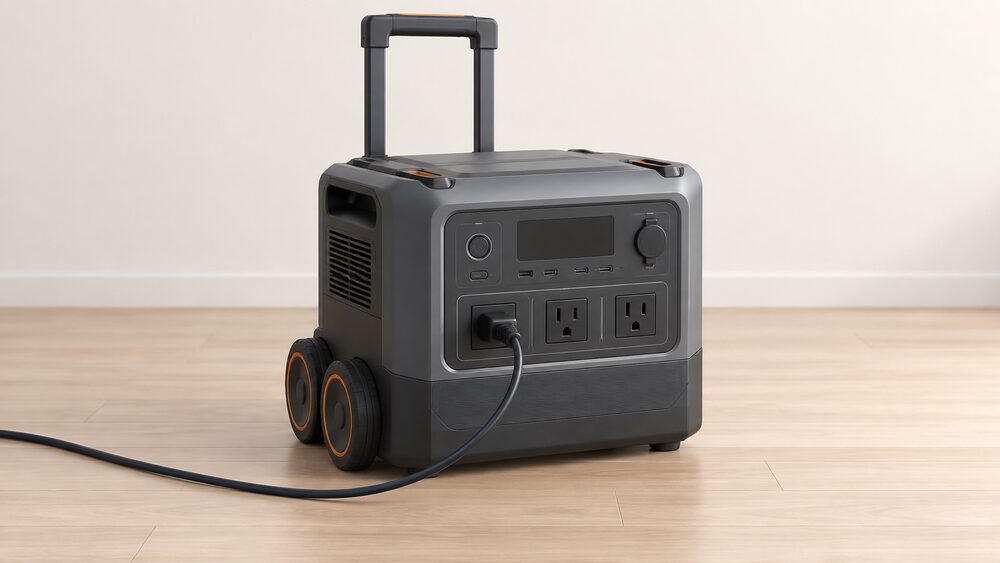 Jackery Explorer 2000 Plus portable power stationThe Jackery Explorer 2000 Plus is sold out and discontinued in the UK, with a replacement due late 2026.