In this guide
GoodWe is a Chinese inverter and battery maker whose residential range runs from small single-phase string inverters up to three-phase hybrid machines, with an all-in-one storage system in between. The company's own homepage lists a news item dated 1 September 2026 stating that it was included in the BloombergNEF Tier 1 Power Inverter List for the sixth consecutive quarter1. For a UK household, the practical question is not the badge but which of the families fits a roof, a phase supply and a battery plan.
The range divides into three jobs. String inverters convert panel output and export the surplus. Hybrid inverters do the same but also manage a battery. The ESA all-in-one systems combine inverter, battery and energy management in one enclosure, and the maker states they integrate "the inverter, battery and intelligent energy management into one compact system"2. Storage scales from 5 to 48 kWh per system, and up to 6 inverters can be connected for up to 288kWh of total storage capacity3.
What follows is what the maker and its UK distributor publish about the range, what it means for a household's independence from the grid and from a supplier, and where the dependencies remain.
Who GoodWe is and where it sits in the market
GoodWe sells under its own name across string, hybrid and storage categories, and the product pages in this range carry the brand plainly3. The company's news record through 2026 shows a maker expanding in several directions at once: a Global Partner Summit at a new headquarters in Suzhou, China on 17 September 2026, a 20 kW SDT three-phase inverter launch, an HCA Series AC wallbox EV charger for residential use, and confirmation of its entry into the lithium battery market with the Lynx Home series7. It also opened a Solar Service Centre in Bangalore, India and an office in Johannesburg, South Africa, and signed a 100 MW distribution agreement with TradeCorp at Solar Pakistan 20227.
That pattern matters to a UK buyer for one reason: service geography. A maker with service centres and regional offices in several markets is a different proposition from one with a single territory. It does not guarantee UK response times, and no UK service-level figure appears in the material here.
On bankability, the maker's own report of the BloombergNEF Tier 1 listing is the only rating claim available1. Tier 1 status is used in the industry as an indicator of bankability rather than a product certification, and it is not a statement about any individual inverter's performance. The wider context for how such ratings are built is set out in Tier 1 solar manufacturers and bankability ratings, and the brand's position among its peers is covered in solar inverter and microinverter manufacturers in the UK.
The range: string inverters by power band
The string range is organised by power band rather than by model name. The XS G3 covers the smallest end, appearing both in the 0 kW to 2 kW band and in the 2.1 kW to 4 kW band5. The DNS G3 is listed in the 4.1 kW to 10 kW band, and also in the 2.1 kW to 4 kW band for its smaller models9. The SDT G3 three-phase range spans the 4.1 kW to 10 kW, 10.1 kW to 20 kW and 20.1 kW to 30 kW bands11. The largest SDT G3 models are listed with 3 MPPTs, IP66 protection and a naturally cooled design11.
| Family | Phase | Power band | Notes |
|---|---|---|---|
| XS G3 | 1 | 0 kW to 2 kW, 2.1 kW to 4 kW | Smallest string models5 |
| DNS G3 | 1 | 2.1 kW to 4 kW, 4.1 kW to 10 kW | Built-in Wi-Fi for remote tracking9 |
| SDT G3 | 3 | 4.1 kW to 10 kW, 10.1 kW to 20 kW, 20.1 kW to 30 kW | 3 MPPTs on the largest models11 |
| ES G2 | 1 | 4.1 kW to 10 kW | Low-voltage single-phase hybrid12 |
| ET / ET G2 | 3 | 10.1 kW to 20 kW, 20.1 kW to 30 kW | Three-phase hybrid line13 |
| ESA all-in-one | 1 and 3 | 3 to 10 kW single-phase, 5 to 30 kW series | Inverter, battery and management combined6 |
The MPPT count is the figure that decides how a roof performs. The ET 15-30K three-phase hybrid carries 3 MPPTs, as do the largest SDT G3 models in the 20.1 kW to 30 kW band13. The ES G2 single-phase hybrid, in the 4.1 kW to 10 kW band, carries 2 MPPTs12. More trackers allow arrays facing different directions to run independently, which matters on a UK roof where a single aspect is rarely ideal.
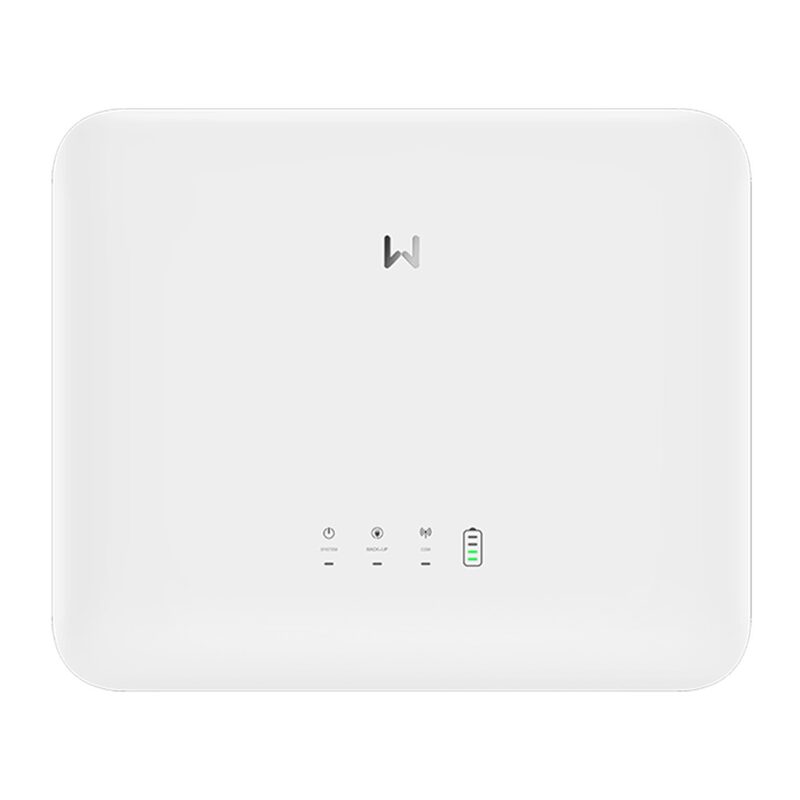
Hybrid and storage: ES G2, ET and the ESA 3 to 10K all-in-one
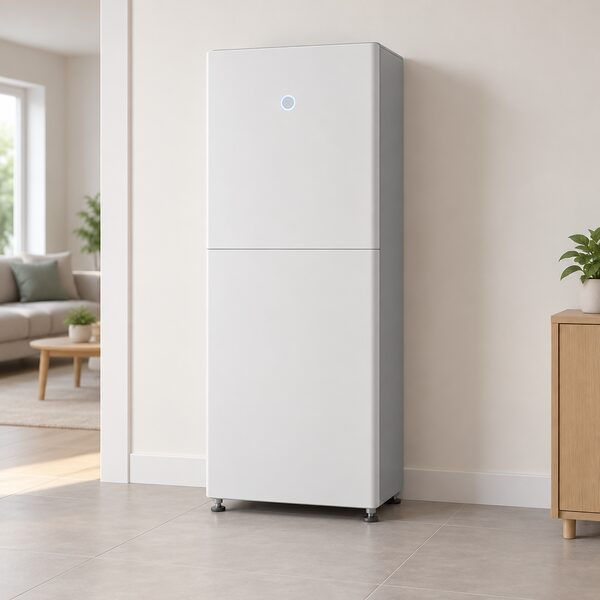
The ES G2 is described as a new generation of low-voltage single-phase hybrid inverters designed to optimise self-consumption12. The ET family is the three-phase hybrid line, with the ET G2 described as designed for residential systems14. The ESA Series takes a different approach: a three-phase all-in-one energy storage system for residential and small commercial applications, available from 5 to 30 kW with expandable storage from 5 to 108 kWh, and a pre-wired, modular design that the maker states simplifies installation and speeds up commissioning6.
The single-phase ESA 3-10K is the model most likely to appear on a UK house. It comes in 3, 3.6, 5, 6, 8 and 10 kW single-phase sizes, with scalable storage of 5 to 48 kWh per system across up to 6 modules per stack3. The maker states these inverters deliver 3 to 10 kW of output to suit typical household energy needs3. The three-phase ESA all-in-one, a combined inverter, battery and energy management unit, carries a 10 year warranty period6.
The scope of delivery is worth reading before an installation date is agreed, because it determines what the installer still has to supply. The inverter box contains a CT 120A/40mA and connection cable, battery base, smart dongle, adjustable feet, communication cable, decorative covers, handles, anti-tip bracket, PV terminals, AC terminals and other miscellaneous parts. The battery box contains the battery, plugs and screws. A smart meter is also listed3.
Scaling storage: up to six inverters and 288 kWh with the ESA 3-10K
The ESA 3-10K is designed to grow. The maker states up to 6 inverters can be connected, for up to 288kWh of total storage capacity, and the same figure appears across the single-phase model pages3. Per system, storage runs from 5 to 48 kWh across up to 6 modules per stack4. The three-phase ESA Series is listed separately from 5 to 30 kW, with expandable storage from 5 to 108 kWh13.
The Lynx F G2 battery scales by a different route: up to 8 towers can be connected in parallel for a total of 230 kWh2. That is a high-voltage battery, listed at 6.4 to 28.8 kWh, and the maker states it is compatible with GoodWe BH, EH, BT and ET inverters2.
Two things follow for a household. First, the headline 288kWh figure is a system ceiling, not a typical installation: a domestic array and a domestic load will sit far below it, and the number describes what the platform can be built out to. Second, parallel arrangements are an installer's design decision. They affect cabling, protection and the metering arrangement, and they are not something a householder configures.
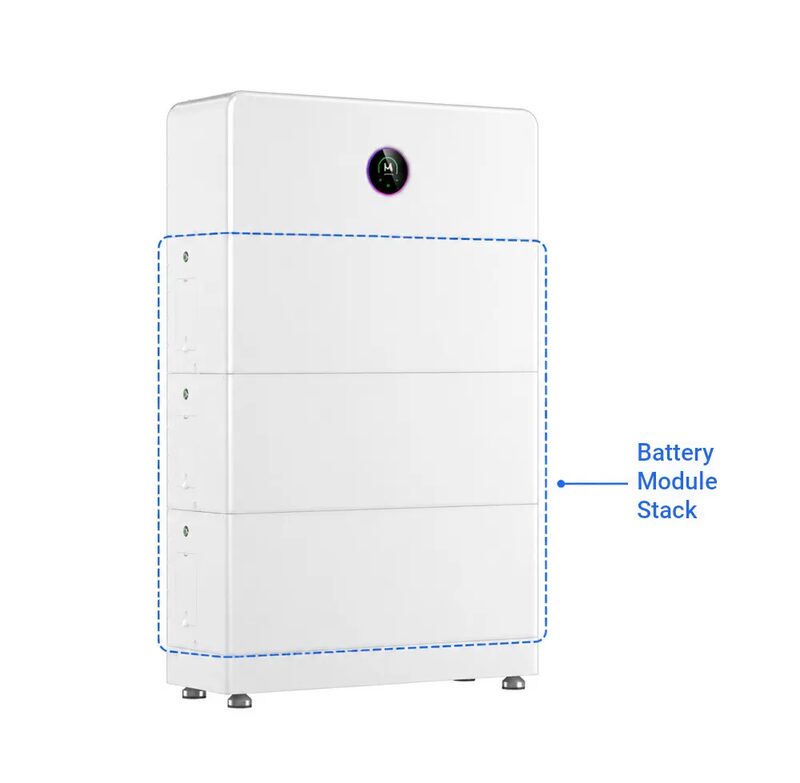
Batteries and extras: Lynx Home, BAT Series and the HCA EV charger
Battery compatibility is model-specific, and the maker's pages are explicit about it. The single-phase EHA all-in-one models, including the 5 kW and 10 kW versions, are stated to be compatible only with GoodWe BAT5 or BAT8 battery modules16. The Lynx D LXD5.0-10 is compatible with the ET G2, ET Plus+, BT, EH Plus+ and BH inverter series, and is listed for residential and small commercial use18. The ET 15-30K three-phase hybrid is described as compatible with high-voltage battery systems such as the GoodWe Lynx D Series13.
The Lynx D range also has mounting accessories: a wall bracket and a floor base, both listed as battery accessories19. These are the parts that decide where a stack can physically go, which in a UK house is often the constraint rather than the electrical specification.
The BAT Series became available in the UK on 27 October 2025, when Wagner Renewables announced it would be the first company in the UK to install the system7. That is a distributor's announcement of a first installation, not a statement about volume availability.
GoodWe launched the HCA Series AC wallbox smart EV charger for residential use on 17 September 2026, compatible with all EVs and with GoodWe inverters7. The wider field of home chargers is covered in home EV charger manufacturers.
Monitoring and setup: SEMS, EzViewer and the Smart Meter
GoodWe's monitoring runs through the SEMS portal and the EzViewer app. The maker's guidance states that SEMS handles both solar panels and energy storage batteries simultaneously, showing battery charging and discharging, and that it works for systems that use GoodWe inverters and hybrid systems21. The XS G3 models are listed with app-based commissioning and remote monitoring via GoodWe SEMS5. The DNS G3 has built-in Wi-Fi for remote performance tracking and diagnostics through the GoodWe smartphone app9.
Registration is a two-part process. After Wi-Fi has been configured, the power station is registered on the GoodWe Monitoring website or through the EzViewer monitoring app22. Warranty registration is separate and, on the ES G2 page, is stated to require manual registration by installers12. The Lynx D battery is listed as working with GoodWe inverters for remote monitoring, diagnosis and firmware updates18, and the Lynx F G2 supports remote diagnosis and update via the inverter2.
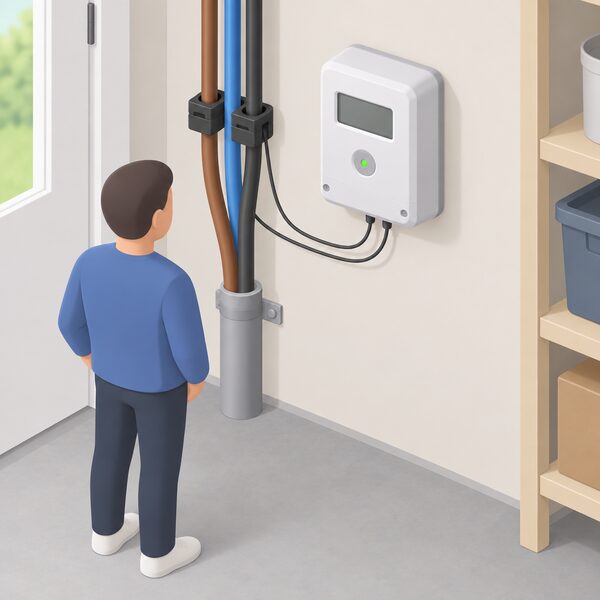
The Smart Meter is listed for working with inverters including SEMS systems, with CTs included, and detects voltage, current, power and energy21. Several hybrid models carry an integrated smart meter, including the GW15K-ET-20-1 and the GW10K-ET-2014.
What owning a GoodWe system means for household independence
A GoodWe hybrid inverter with a battery changes what a household draws from the grid, and when. Generation that would otherwise be exported is stored and used later, and the SEMS portal shows both the panels and the battery charging and discharging in one place21. That is a real reduction in dependence on a supplier for the hours the battery covers.
The dependencies that remain are specific. The system stays connected to the grid for import when the battery is empty and for export when it is full, and it stays on a supplier's tariff. Monitoring, remote diagnosis and firmware updates run through the maker's portal and app, so they depend on broadband and on GoodWe continuing to operate those services18. Battery compatibility is locked to particular module families per inverter model, which limits substitution later16. And the ET hybrid models carry an integrated remote shutdown feature, which is a grid and safety requirement rather than a household control13.
On certification, the GW-XS-30 certificate is stated to be valid until 15 February 2029, and the GW2500-XS-30-AFCI is listed as single-phase with an IP66 rating23. Certificate validity is a document status; a household checking a specific unit should match the certificate reference to the model on its own label. How such approvals work in the UK is explained in manufacturer certification: MCS product listing, Kitemark and Keymark, and the wider picture of what storage does for a home is in manufacturers and household energy independence.
Sources23 cited
- GoodWe homepage, GoodWe, 2026
- Lynx F G2 Series, GoodWe, 2026
- GoodWe 10kW All In One ESA 1ph Hybrid Inverter, Alternergy, 2026
- GoodWe ESA 5.12kWh Battery Module, Alternergy, 2026
- GoodWe 1.5kW XS G3 1ph String Inverter, Alternergy, 2026
- GoodWe 10kW All In One ESA 3ph Hybrid Inverter, Alternergy, 2026
- GoodWe news feed, GoodWe, 2026
- GoodWe 3kW XS G3 1ph String Inverter, Alternergy, 2026
- GoodWe 6kW DNS G3 1ph String Inverter, Alternergy, 2026
- GoodWe 10kW SDT G3 3ph String Inverter, Alternergy, 2026
- GoodWe 25kW 3ph String Inverter, Alternergy, 2026
- GoodWe 5kW ES G2 1ph Hybrid Inverter, Alternergy, 2026
- GoodWe 40kW 3ph Hybrid Inverter, Alternergy, 2026
- GoodWe 15kW 3ph Hybrid Inverter, Alternergy, 2026
- GoodWe 10kW 3ph Hybrid Inverter, Alternergy, 2026
- GoodWe 5kW All In One ESA 1ph Hybrid Inverter, Alternergy, 2026
- GoodWe 25kW All In One ESA 3ph Hybrid Inverter, Alternergy, 2026
- GoodWe Lynx D LXD5.0-10 Battery Module, Alternergy, 2026
- GoodWe Lynx D Wall Bracket, Alternergy, 2026
- GoodWe Lynx D Floor Base, Alternergy, 2026
- GoodWe Smart Energy Meter, GoodWe, 2026
- GoodWe FAQs, GoodWe, 2026
- GW-XS-G3 Certificate, GoodWe, 2029
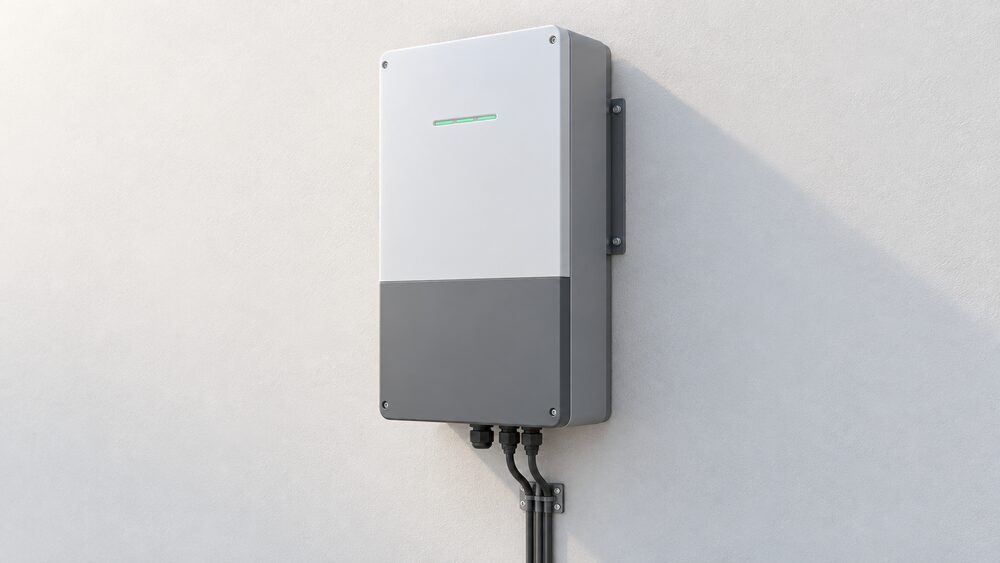 GoodWe ESA SeriesA battery and inverter in one unit sounds simpler than a wall of separate boxes, but how much power and storage does a typical home actually need?
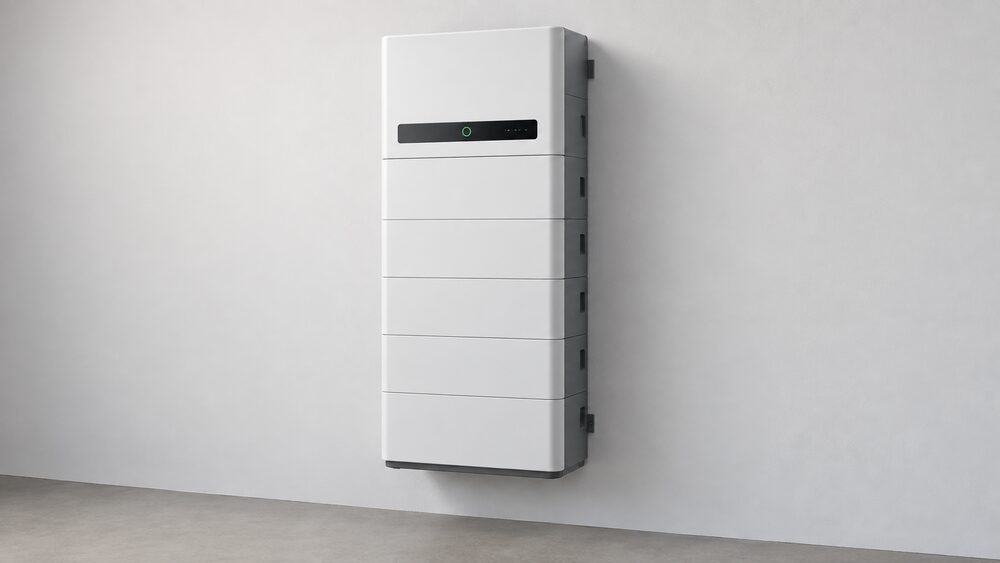 GoodWe Home Batteries and Hybrid Storage SystemsHow much can a GoodWe home battery store, and will it keep your lights on in a power cut?