
In this guide
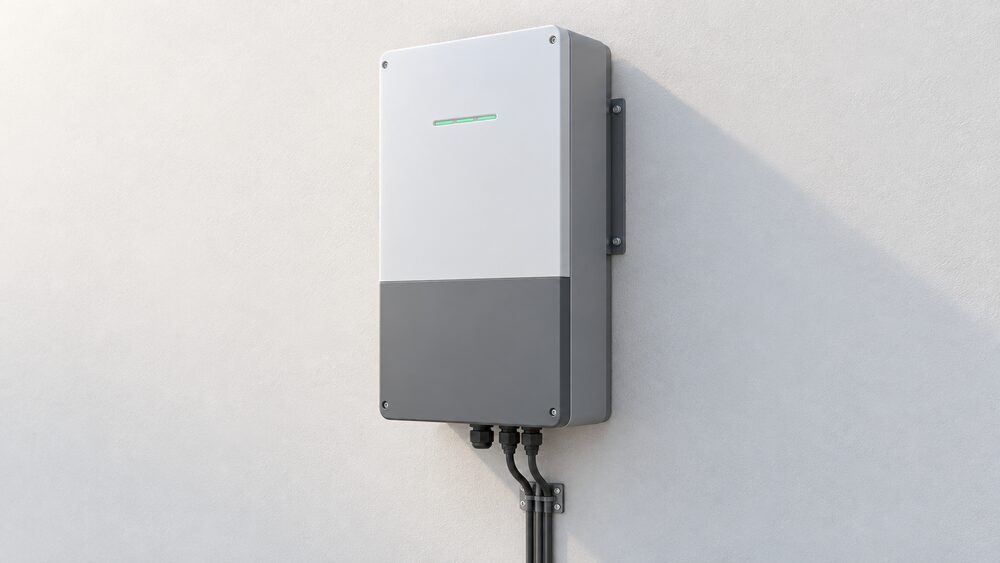
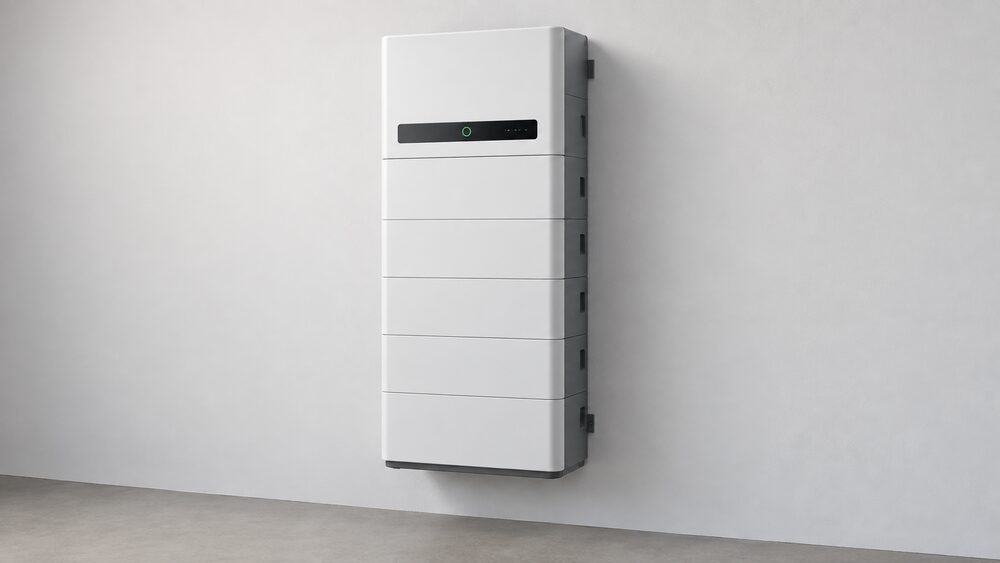
The GoodWe ESA Series is an all-in-one home energy storage system: the inverter, the battery and the energy management sit in one unit rather than as three separate boxes on a wall. GoodWe describes it as integrating "the inverter, battery and intelligent energy management into one compact system", designed for residential and small commercial applications1. In the UK it is sold through the distributor Alternergy, in single-phase and three-phase versions2.
The headline numbers are wide. The ESA 3 to 10K range covers 3, 3.6, 5, 6, 8 and 10 kW single-phase inverters, and GoodWe states that with 3 to 10 kW inverters the system enables 5 to 48 kWh of usable storage3. The wider ESA Series is quoted as available from 5 to 30 kW with expandable storage from 5 to 108 kWh4. Up to 6 inverters can run in parallel, giving up to 288 kWh of total storage capacity5.
Backup is the feature the line is sold on. GoodWe quotes a switching time to backup of under 4 ms, described as UPS-level switchover built in for whole-home backup6. That is a maker's claim, and it is the figure that separates the ESA from older GoodWe hybrid models quoting under 10 ms7.
What the ESA Series is: inverter, battery and management in one unit
The ESA is a hybrid energy storage system rather than a battery alone. GoodWe's own description is that it "integrates the inverter, battery and intelligent energy management into one compact system", and the same wording runs across the single-phase and three-phase pages1. The three-phase version is described as a three-phase All-in-One energy storage system for residential and small commercial applications4.
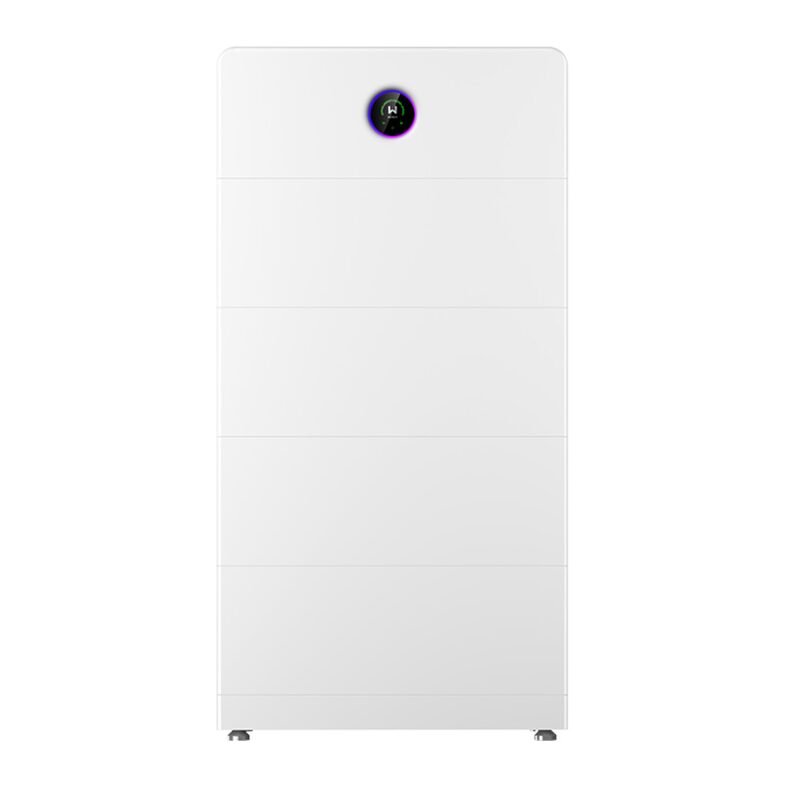
The practical difference from a conventional setup is the number of separate products. A typical hybrid installation pairs an inverter with a third-party battery and a separate monitoring gateway. The ESA ships as a matched inverter and battery stack, with a pre-wired, modular design that GoodWe says simplifies installation and speeds up commissioning4. Configuration and upgrades are described as one-click1.
That integration is also the constraint. GoodWe states that the ESA 3 to 10K must be installed with GoodWe BAT5 or BAT8 batteries, and that the inverter and batteries are interdependent and must be commissioned together3. The battery is not a free choice from the wider market, and the two halves cannot be bought or replaced independently. For a household, that means the system's future is tied to one manufacturer's continued support for the line, its firmware and its spares.
The energy management layer is where the commercial case sits. GoodWe lists AI-driven energy management, dynamic tariff optimisation and smart control as features of the series4. Those functions are what allow a battery to charge when power is cheap and discharge when it is expensive, and they are the reason an all-in-one is marketed as a system rather than a component. How much a household actually saves depends on the tariff, the load profile and the size of the stack, which is a separate calculation from the hardware specification. The wider picture is set out in all-in-one home battery systems and home battery storage.
Sizes and capacity: 3 to 10 kW inverters, 5 to 48 kWh of storage
The range splits into two families. The ESA 3 to 10K is the single-phase domestic line, offered in 3, 3.6, 5, 6, 8 and 10 kW inverter sizes3. The ESA 5 to 30K is the larger line, quoted as available from 5 to 30 kW with expandable storage from 5 to 108 kWh4. Both are described as three-phase All-in-One systems on the pages that cover the bigger units1.
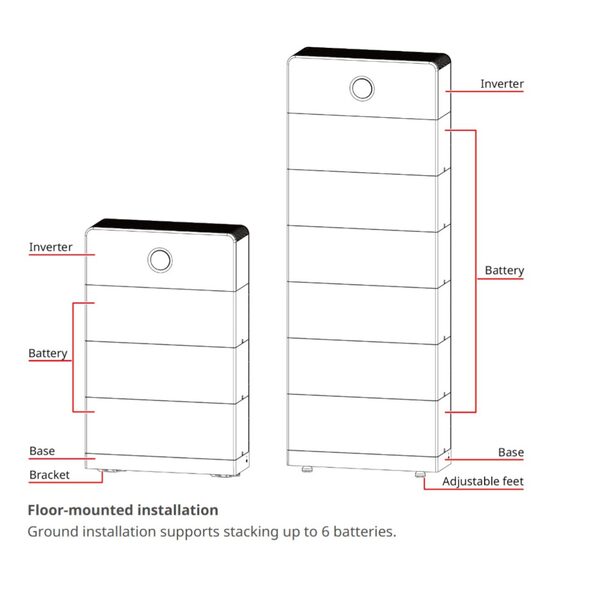
Storage is built from modules rather than fixed at purchase. GoodWe states that the ESA 3 to 10K, with 3 to 10 kW inverters, enables 5 to 48 kWh of usable storage3. The battery modules are quoted as 5 kWh and 8 kWh on some pages and as 5.12 kWh and 8.32 kWh on others, and both figures appear in the maker's own product listings8. Mixing 5 kWh and 8 kWh modules in one stack is supported, and GoodWe also describes mix-and-match of old and new battery modules for expansions6.
| Item | Figure | Source basis |
|---|---|---|
| Single-phase inverter sizes | 3, 3.6, 5, 6, 8, 10 kW | Maker product page3 |
| Usable storage, ESA 3 to 10K | 5 to 48 kWh | Maker product page3 |
| Wider ESA Series power | 5 to 30 kW | Maker product page4 |
| Wider ESA Series storage | 5 to 108 kWh | Maker product page4 |
| Parallel inverters | Up to 6 | Maker product page5 |
| Total storage, parallel | Up to 288 kWh | Maker product page5 |
| Battery chemistry | LFP | Maker product page6 |
The parallel figure is the one that changes what the product is. Up to 6 inverters and up to 288 kWh of total storage capacity is not a single-house specification; it is a small commercial or multi-dwelling scale5. For a domestic buyer the relevant ceiling is the 48 kWh of the single-phase line, which is already several times a typical daily household consumption. Sizing a stack to a household's own demand is covered in what size home battery do you need, and the difference between quoted and usable capacity in battery capacity and usable capacity.
Efficiency, MPPTs and the sub-4 ms backup switchover
The ESA Series is quoted with 4 MPPTs, the maximum power point trackers that let a solar array be split across differently oriented or shaded roof sections without one string dragging the others down1. Four trackers is a high count for a domestic hybrid inverter and matters on a roof with more than one aspect.
The efficiency figure that GoodWe publishes for the ESA line is the backup switchover time rather than a conversion efficiency percentage. The maker states a switching time to backup of under 4 ms, described as UPS-level switchover built in for whole-home backup6. The same sub-4 ms figure appears across the single-phase ESA pages14. For comparison, the older GoodWe EM Series datasheet quotes under 10 ms UPS-level switching, and the GW6000-ES-20-AFCI page also states under 10 ms7. The documents differ by model rather than contradicting each other, and the sub-4 ms claim belongs to the ESA line.
The 99.9% MPPT efficiency figure applies to a different GoodWe product line: the EM Series datasheet quotes 99.9% MPPT efficiency7. No equivalent conversion efficiency figure is given for the ESA Series, so the ESA's round-trip performance cannot be stated here. What can be said is that the architecture is a hybrid inverter with a DC-coupled battery, which is the configuration that generally avoids one conversion step compared with AC retrofits. The general principles are in AC-coupled and DC-coupled home batteries and round-trip efficiency.
Safety: six-layer architecture, AFCI 3.0 and IP66 protection
GoodWe describes the ESA as built on a six-layer safety architecture including AI-driven arc fault interruption, referred to as AFCI 3.012. The same six-layer storage safety protection is listed on the battery module pages, and the inverter pages add SPD Type II protection on both the DC and AC sides3. Arc fault interruption is aimed at detecting and breaking a series arc on the DC wiring before it becomes a fire risk, which is the failure mode that matters most on a rooftop array.
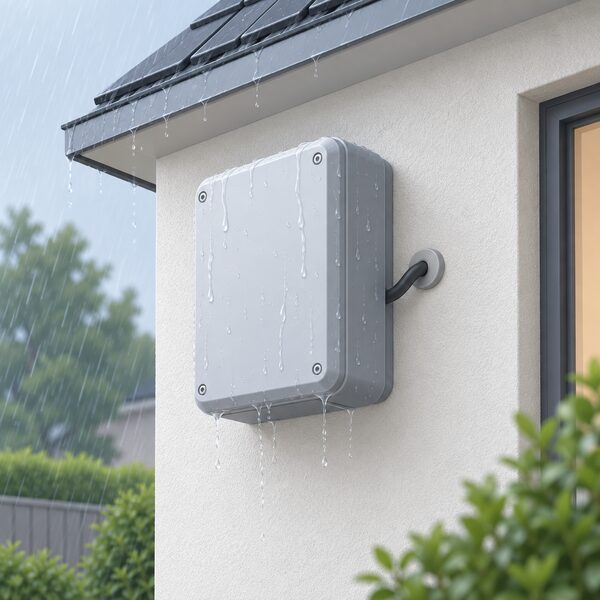
The battery module carries an IP66 rating, and the ESA 3 to 10K is stated to operate reliably indoors or outdoors in any weather conditions8. IP66 means protection against dust ingress and against powerful water jets, which is the level that allows an outdoor wall position. The older GW6000-ES-20-AFCI inverter is rated IP65, a lower grade, so the ESA's enclosure is the more weather-resistant of the two16.
Cell and module level monitoring is listed alongside the safety architecture, which means the system reports at the level of individual modules rather than only at the battery terminals3. That is what allows a single failing module to be identified without dismantling the stack. The general function of these systems is covered in battery management systems, and the chemistry behind the LFP cells in home battery chemistries.
Where it fits: on-grid, off-grid, microgrid and AC-coupled scenarios
GoodWe lists the ESA 3 to 10K as supporting on-grid, off-grid, microgrid and AC-coupled scenarios6. On-grid and backup parallel operation is stated as possible, and AC-coupling is supported6. The single-phase pages put it more simply: micro-grid and AC-coupling operations possible17.
Those four scenarios are not equally relevant to a UK household. On-grid is the ordinary case: the system runs alongside a mains supply, imports when the battery is empty and exports surplus generation. AC-coupling means the ESA can be added to an existing solar installation whose original inverter stays in place, rather than replacing it, which matters for a household retrofitting storage to a system installed years earlier6. Off-grid and microgrid operation are the modes that matter where there is no mains connection at all, or where a site runs its own islanded network.
The distinction between these modes is worth being precise about, because it is where marketing language and practical capability diverge. A system that supports off-grid operation can run without a grid reference, but the household's independence then depends on the battery capacity, the solar array and the load, not on the inverter's feature list. A system that supports AC-coupling can be added to existing generation, but it still depends on the grid for the periods when the battery is depleted and the sun is not shining. The wider subject is covered in off-grid battery systems and home batteries and household energy independence.
Installation and what comes in the box
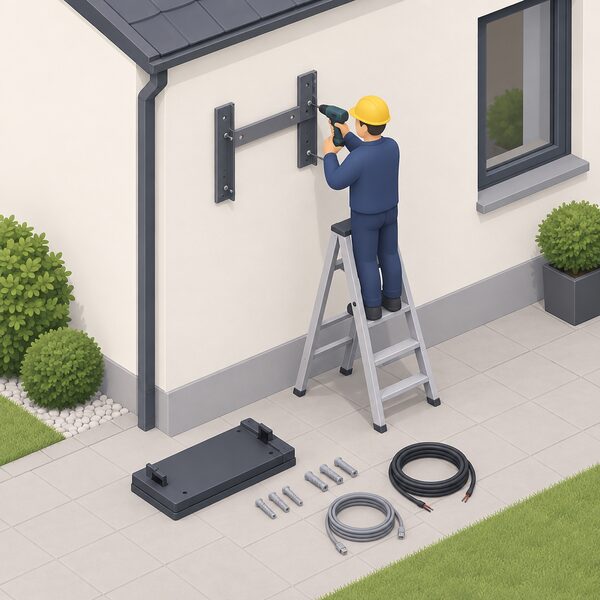
The ESA ships as two boxes. The inverter box is listed as containing a CT 120A/40mA and connection cable, battery base, smart dongle, adjustable feet, communication cable, decorative covers, handles, anti-tip bracket, PV terminals, AC terminals and miscellaneous parts. The battery box contains the battery, plugs and screws, and a smart meter is also listed in the scope of delivery14.
| Included | Detail |
|---|---|
| Inverter box | CT 120A/40mA and connection cable, battery base, smart dongle, adjustable feet, communication cable, decorative covers, handles, anti-tip bracket, PV terminals, AC terminals, miscellaneous parts14 |
| Battery box | Battery, plugs and screws14 |
| Metering | Smart meter18 |
| Expansion | Additional base and cable connections in the expansion kit10 |
| Wall mounting | Bracket set sold separately, for approved single-phase and three-phase configurations19 |
Two things are worth noting for anyone planning an installation. First, the wall-mounted bracket set is a separate product, described as supporting secure wall-mounted installation and suitable for approved single-phase and three-phase ESA system configurations19. Second, the battery expansion kit contains the additional base and cable connections needed to extend a stack, which confirms that expansion is a physical as well as a firmware exercise10. The distributor lists next day delivery on some ESA items, with conditions11.
The commissioning requirement is the point that shapes the whole installation. GoodWe states that the ESA inverter and batteries are interdependent and must be commissioned together10. A household cannot buy the inverter now and the battery later as two separate projects; the system is specified, installed and commissioned as one. The general sequence is set out in home battery installation, and the notification that may be needed to the network operator in G98 and G99.
GoodWe in the UK: availability, tier status and the PowerUp Cashback deadline
The ESA Series is sold in the UK through the distributor Alternergy, which lists the single-phase and three-phase inverters and the battery modules2. GoodWe was included in the BloombergNEF Tier 1 Power Inverter List for the sixth consecutive quarter, according to a company news item dated 1 September 202621. Tier 1 status is a bankability indicator used in the solar industry; it reflects the manufacturer's standing with financiers rather than the performance of any individual product.
The promotion attached to the line is the GoodWe ESA PowerUp Cashback Campaign. Claims must be made by 30th September 202622. That is a manufacturer promotion administered through the distributor, and the deadline is the date given on the distributor's special offers page.
On the wider question of what a household gets from an ESA, the position is mixed and worth stating plainly. The system reduces dependence on a supplier for the hours it can cover from stored generation, and the sub-4 ms switchover claim is aimed at keeping circuits live through an outage. It does not remove dependence on the grid: an on-grid ESA imports when the battery is empty, and it depends on a manufacturer for firmware, spares and the app that runs the energy management. The battery is locked to GoodWe's own BAT5 or BAT8 modules, so the household's future options are tied to one company's product line3. For context on how that compares with other all-in-one designs, see GivEnergy All in One, SolaX X3-ULTRA and Sigenergy SigenStor. The brand's wider range is covered in GoodWe home batteries.
Sources22 cited
- GoodWe 10kW All In One ESA 3ph Hybrid Inverter, Alternergy, 2026-09-17
- GoodWe 5.12kWh ESA Battery Module, Alternergy, 2026-09-17
- GoodWe 8kW All In One ESA 1Ph Hybrid Inverter, Textured Finish, Alternergy, 2026-09-17
- GoodWe 12kW All In One ESA 3ph Hybrid Inverter, Alternergy, 2026-09-19
- GoodWe 8.32kWh ESA Battery Module, Alternergy, 2026-09-17
- GoodWe 10kW All In One ESA 1Ph Hybrid Inverter, Alternergy, 2026-09-17
- GoodWe EM Series Datasheet, GoodWe, 2026-09-17
- GoodWe 5.12kWh ESA Battery Module, Textured Finish, Alternergy, 2026-09-17
- GoodWe 6kW All In One ESA 1Ph Hybrid Inverter, Alternergy, 2026-09-17
- GoodWe ESA Battery Expansion Kit, Alternergy, 2026-09-17
- GoodWe 6kW All In One ESA 3ph Hybrid Inverter, Alternergy, 2026-09-17
- GoodWe 8.32kWh ESA Battery Module, Textured Finish, Alternergy, 2026-09-17
- GoodWe 3kW All In One ESA 1Ph Hybrid Inverter, Alternergy, 2026-09-17
- GoodWe 5kW All In One ESA 1Ph Hybrid Inverter, Textured Finish, Alternergy, 2026-09-17
- GoodWe 5kW All In One ESA 3ph Hybrid Inverter, Alternergy, 2026-09-17
- GoodWe 6kW ES G2 1Ph Hybrid Inverter, Alternergy, 2026-09-17
- GoodWe 5kW All In One ESA 1Ph Hybrid Inverter, Alternergy, 2026-09-17
- GoodWe 8kW All In One ESA 1Ph Hybrid Inverter, Alternergy, 2026-09-17
- GoodWe ESA All-in-One Wall-Mounted Bracket Set, Alternergy, 2026-09-17
- GoodWe 25kW All In One ESA 3ph Hybrid Inverter, Alternergy, 2026-09-19
- GoodWe corporate news, GoodWe, 2026-09-01
- Special offers, Alternergy, 2026-09-30
 GoodWe Home Batteries and Hybrid Storage SystemsHow much can a GoodWe home battery store, and will it keep your lights on in a power cut?
 GoodWe solar inverters and batteriesGoodWe makes solar inverters and batteries for UK homes, from small systems to all-in-one storage.