
In this guide
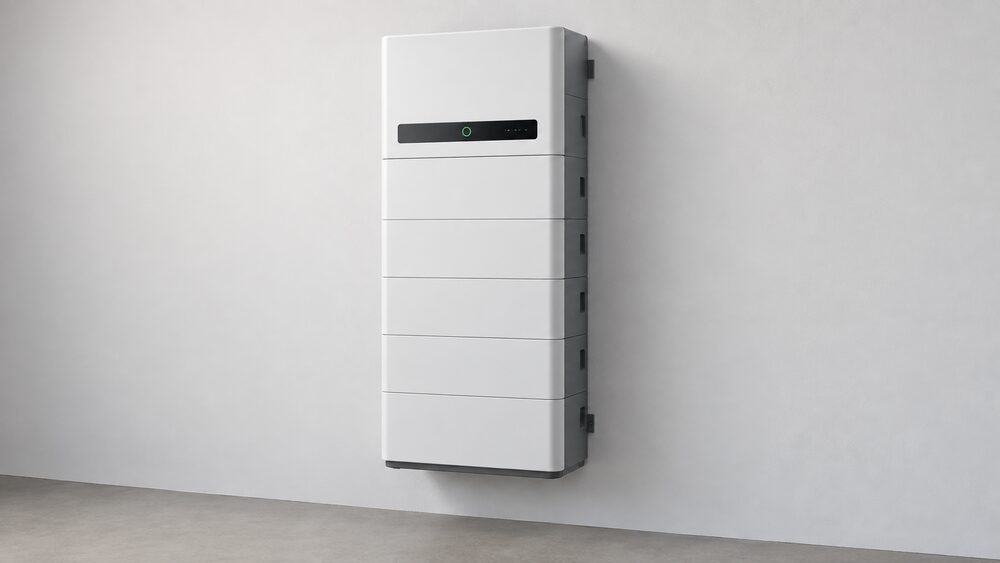
A GoodWe home battery is a modular lithium iron phosphate (LFP) storage system sold in the UK as the ESA Series, an all-in-one unit that combines a hybrid inverter and stackable battery modules in one enclosure. The range covers inverters from 5 to 30 kW, and battery stacks from 5 to 48 kWh of usable storage per system1.
The headline numbers are straightforward. GoodWe states a maximum efficiency of 98% for the ESA Series and a switching time to backup of under 4 ms, described as UPS-level switchover for whole-home backup4. Each stack holds up to 6 battery modules, and up to 6 inverters can run in parallel for a total of 288 kWh6. Modules come in 5 kWh and 8 kWh sizes and can be mixed in one stack1.
GoodWe is a Chinese manufacturer listed on the Shanghai Stock Exchange, and it states it was included in the BloombergNEF Tier 1 Power Inverter List for the sixth consecutive quarter as of 1 September 20268. For a UK household, the appeal is a value-tier all-in-one that can be AC-coupled to existing solar, expanded module by module, and run in backup mode. The dependence it leaves in place is the same as any grid-tied battery: the grid, a supplier, an installer, and for monitoring and remote features, the maker's app and servers.
GoodWe at a glance: a value-tier storage maker now selling in the UK
GoodWe sits in the part of the UK market where price competition is sharpest. The company makes hybrid inverters, battery modules, string inverters and smart meters, and its storage products are sold through UK distributors rather than direct. The ESA Series is the residential all-in-one line, and the separate Lynx F G2 series is a high-voltage battery range with its own limits9.
The wider UK storage market includes Tesla Powerwall, SolarEdge, GivEnergy, Enphase and MyEnergi among others, so a household choosing GoodWe is choosing one of several established options rather than a niche product10. On the tariff side, several providers offer smart storage tariffs, including British Gas, E.ON Next and EDF Energy, which is what makes a battery's charge and discharge schedule worth optimising in the first place11.
What GoodWe offers that some rivals do not is a single enclosure combining inverter and battery, with the battery modules stacked inside it. That reduces the number of separate boxes on a wall and simplifies the wiring, but it also means the inverter and battery share a location and a thermal environment. The all-in-one battery systems page explains how that layout compares with separate inverter and battery installations.
For independence, the position is mixed. A GoodWe system lets a household store its own solar generation and discharge it in the evening, and it can run backup circuits during a power cut. It does not remove the grid connection, the electricity supplier, or the need for an installer to commission and maintain the system.
The ESA Series: an all-in-one system from 5 to 30 kW
The ESA Series is described by GoodWe as a three-phase all-in-one energy storage system available from 5 to 30 kW4. The range spans single-phase and three-phase models, with the ESA 3-10K battery system model covering the smaller end1.
The ESA 3 to 10K is the single-phase sub-range, and it is the one most UK homes will meet. It pairs with GoodWe BAT5 or BAT8 battery modules and supports 5 to 48 kWh of usable storage per system2. The ESA 5 to 30K is the three-phase counterpart, supporting up to 12 battery modules and using 5, 6, 8 and 9 kWh module options4.
| Model | Phase | Battery system |
|---|---|---|
| GW3K-EHA-G20-TF | Single | ESA 3-10K8 |
| GW5K-EHA-G20 | Single | ESA 3-10K6 |
| GW6K-EHA-G20 | Single | ESA 3-10K6 |
| GW8K-EHA-G20-TF | Single | ESA 3-10K7 |
| GW10K-EHA-G20 | Single | ESA 3-10K1 |
| GW8K-ETA-G20 | Three | ESA 5-30K9 |
| GW10K-ETA-G20 | Three | ESA 5-30K4 |
| GW15K-ETA-G20 | Three | ESA 5-30K5 |
The distinction matters for a UK house. Most homes have a single-phase supply, so the smaller models are the realistic fit. Three-phase models suit larger properties or homes with a three-phase connection, and the upper end of the 5 to 30 kW range sits closer to small commercial use than to a typical domestic installation1.
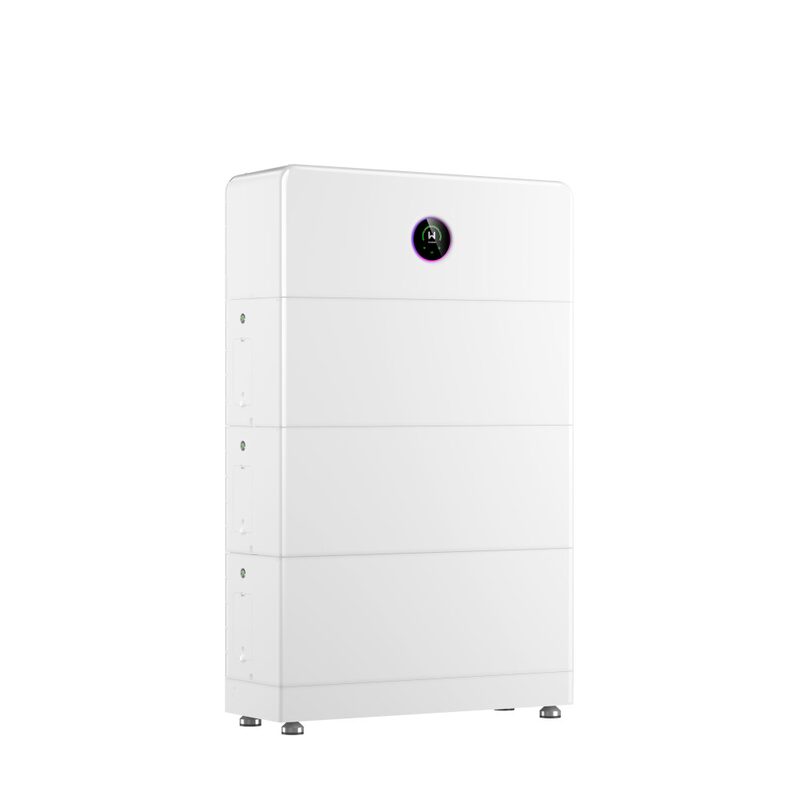
ESA 3 to 10K: 5 to 48 kWh per stack, up to 288 kWh with parallel inverters
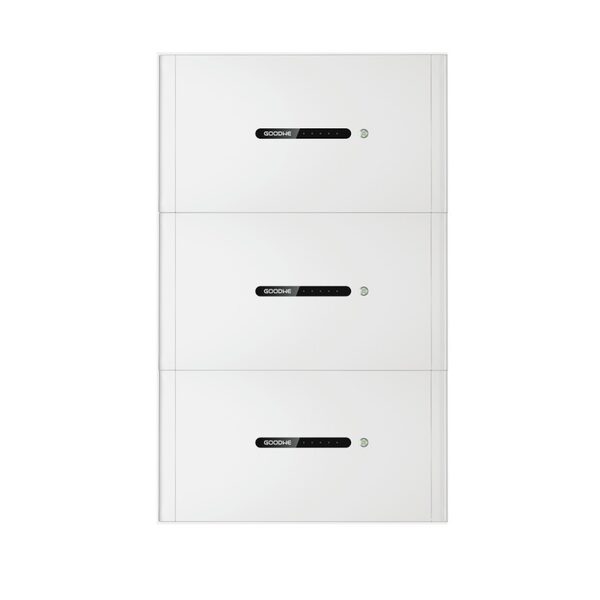
Capacity is where the ESA 3 to 10K is most flexible. GoodWe states scalable storage of 5 to 48 kWh per system, with up to 6 modules per stack1. Modules come in 5 kWh and 8 kWh LFP sizes, and mixing the two in one stack is supported1. That means a household can start with a single 5 kWh module and add capacity later without replacing what is already installed.
Beyond one stack, up to 6 inverters can be run in parallel, giving up to 288 kWh of total storage capacity6. That figure is far beyond domestic need and points to the product's dual role in residential and small commercial applications. The ESA Battery Expansion Kit exists for exactly this: GoodWe describes it as a connection unit used when a compatible ESA battery system requires more than one battery tower, compatible with the ESA 3 to 10K and ESA 5 to 30K, and including the additional base and cable connections10.
The separate Lynx F G2 battery series has different limits: up to 8 towers can be connected in parallel for a total of 230 kWh9. That is a different product line, so the two figures should not be read across.
For a household, the practical question is how much capacity is worth buying. The modular and stackable battery systems page covers the trade-offs, and battery capacity and usable capacity explains why the nominal figure on a module is not the same as the energy a household can draw from it.
Efficiency and backup: up to 98% peak and under 4 ms switchover
GoodWe states a maximum efficiency of 98% for the ESA Series4. That is a peak figure, achieved under favourable conditions, and it is not the same as round-trip efficiency across a full charge and discharge cycle. The battery round-trip efficiency page sets out why the two numbers differ and what standby losses do to the gap.
Backup is the more distinctive claim. GoodWe describes a switching time to backup of under 4 ms, presented as UPS-level switchover for whole-home backup1. Several individual models repeat the same figure, including the GW6K-EHA-G20 and GW8K-EHA-G20-TF6. For comparison, SolaX guidance describes its X1-Hybrid G4 as offering claimed UPS-level switchover under 10 ms with up to 150% EPS output for 10 seconds14. The documents give different figures for different products, and neither is a guarantee of what a particular installation will deliver.
A switchover time in single-digit milliseconds matters because it is fast enough that most electronic equipment will not notice the interruption. What it does not do is guarantee that every circuit in the house stays live. Which circuits are backed up depends on how the installer wires the backup supply, and that is a design decision made at survey. The battery backup and EPS page explains how backup circuits are configured.
The dependence here is worth stating plainly. Backup works when the battery has charge, when the inverter is functioning, and when the backed-up circuits have been wired correctly. It is not a substitute for a generator or for grid reliability, and it does not cover a prolonged outage beyond the capacity installed.
LFP battery modules and mix-and-match expansion
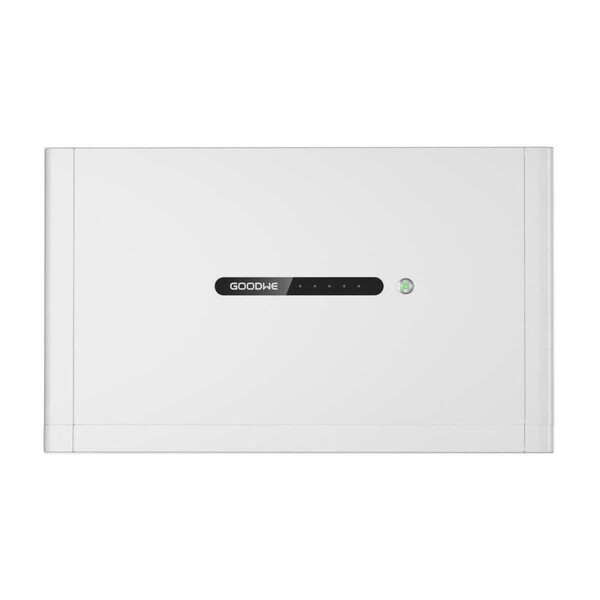
GoodWe uses LFP chemistry across the ESA battery modules, described as LFP with high cycle stability1. The 5.12 kWh module is listed as LiFePO4 (LFP), and the 8.32 kWh module carries the same chemistry2. LFP is the dominant chemistry in home storage for good reason: it is more thermally stable and generally longer-lived than NMC, at the cost of slightly lower energy density. The home battery chemistries page compares the two.
Expansion is designed in. GoodWe states that mix-and-match of old and new battery modules is supported for expansions, and that each battery module contains an integrated DC-DC converter3. That integrated converter is what allows modules of different capacities and ages to work together in one stack, rather than requiring matched units.
"Mix-and-match old and new battery modules for expansions"
The 5.12 kWh module is listed with a charge and discharge rate of 5/5 kW, and the textured-finish variant is described as maintaining full 1C charge and discharge in cold conditions, giving faster cycling than most competitor systems2. Both are given here as the maker states them.
For a household, mix-and-match expansion changes the economics of buying small and growing later. It means an initial 5 kWh install is not a dead end. The add more batteries later page covers what to check before relying on that.
Safety: six-layer architecture, AFCI 3.0 and IP66 protection
GoodWe describes a six-layer safety architecture across the ESA range, including AI-driven arc fault interruption (AFCI 3.0) and cell- and module-level monitoring7. The three-phase ESA 5 to 30K models are listed with AI-driven AFCI 3.0 and IP66 protection, and the GW8K-EHA-G20-TF adds SPD Type II protection on both DC and AC sides9.
The battery modules themselves carry an IP66 rating, and the 5.12 kWh module is listed with six-layer storage safety protection3. The textured-finish 5.12 kWh module is described as having six-layer storage safety protection with fire suppression and heating as standard15.
| Safety feature | Detail | Applies to |
|---|---|---|
| Six-layer safety architecture | Includes AFCI 3.0 and cell/module monitoring | ESA 3-10K7 |
| AFCI 3.0 | AI-driven arc fault interruption | ESA 5-30K9 |
| IP66 | Dust and powerful water jet protection | Battery modules3 |
| SPD Type II | DC and AC surge protection | GW8K-EHA-G20-TF7 |
| Fire suppression and heating | Standard on textured-finish module | GW5.1-BAT-D-G20-TF15 |
Arc fault interruption addresses a real risk in DC solar and battery circuits, where a series arc can develop at a loose connection and is not detected by a conventional circuit breaker. IP66 means the enclosure resists dust ingress and water jets, which is what makes outdoor siting plausible.
Where GoodWe fits in the UK market and what ownership means for independence
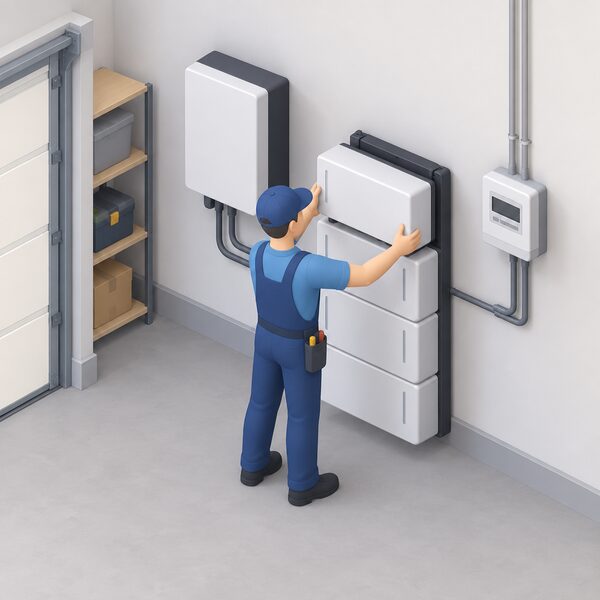
GoodWe storage reaches UK households through distributors and installers rather than a direct sales channel. The ESA Series is listed for sale by UK distributors, and the company's string inverters and smart meters are sold alongside it12. The GM330 three-phase smart meter supports export limitation and zero-feed control when used with compatible GoodWe inverters, which matters where a network operator imposes an export limit11.
On price, the 5.12 kWh battery module is listed at £2,8992. That is a module price, not an installed system price, and it does not include the inverter, mounting, wiring, labour or commissioning. No installed system price is published, so quotes are installer-led. The home battery cost page explains what a full installation typically includes.
One condition is worth flagging. GoodWe states that battery-ready operation with no batteries is not permitted on the GW5K-EHA-G20, meaning the inverter must be installed with battery modules rather than commissioned empty6.
For household independence, the honest summary is this. A GoodWe ESA system stores self-generated solar and discharges it when the household needs it, supports backup circuits during an outage, and can be expanded module by module as needs change. It remains grid-tied, dependent on an electricity supplier, dependent on an installer for commissioning and any expansion, and dependent on the maker's monitoring platform for remote visibility. Off-grid and microgrid modes are supported by the product, but a household running that way carries the whole burden of system design, maintenance and fault-finding itself. The batteries and energy independence page sets out where those lines fall.
Company background: Shanghai-listed, Tier 1, and its global footprint
GoodWe is a public limited company listed on the Shanghai Stock Exchange under stock code 6883908. It states it was included in the BloombergNEF Tier 1 Power Inverter List for the sixth consecutive quarter, in a news item dated 1 September 20268. Tier 1 status in that list reflects bankability and scale as assessed by BloombergNEF; it is not a warranty or a quality rating for any individual product.
The company has a broad international footprint. It opened an office in Johannesburg in September 2021 to serve Sub-Saharan African markets, with support from its EMEA team in Munich, and in September 2026 it announced expansion of its Sub-Saharan Africa presence with a Nairobi office alongside the launch of its EO G2 off-grid solution8. It also expanded the EO G2 off-grid solution to the Philippines in September 20268.
GoodWe introduced the Lynx Home battery series in February 2021, comprising the Lynx Home Sky high-voltage battery and Lynx Home Box low-voltage battery for residential storage8. Its product range now spans hybrid inverters, battery modules, string inverters, smart meters and an EV charger, and the company has launched a solar-powered smart EV charger for residential use8. BSI, an independent body, became the first UKAS-accredited lab for electric vehicle charger testing in November 2022, which is a separate certification matter and not a GoodWe claim16.
The relevance to a UK buyer is supply chain and support rather than brand prestige. A listed manufacturer with a global service network is more likely to be around to honour a warranty than a small importer, but that is a general point about corporate scale, not a statement about GoodWe's warranty terms, which are not given in the material here. The home battery warranties page explains what to check in any battery warranty before buying.
Sources16 cited
- GoodWe 10kW All-in-One ESA 1ph Hybrid Inverter, Alternergy, 2026
- GoodWe All-in-One ESA 5.12kWh Battery Module, Alternergy, 2026
- GoodWe All-in-One ESA 8.32kWh Battery Module, Alternergy, 2026
- GoodWe 10kW All-in-One ESA 3ph Hybrid Inverter, Alternergy, 2026
- GoodWe 15kW All-in-One ESA 3ph Hybrid Inverter, Alternergy, 2026
- GoodWe 6kW All-in-One ESA 1ph Hybrid Inverter, Alternergy, 2026
- GoodWe 8kW All-in-One ESA 1ph Hybrid Inverter, Textured Finish, Alternergy, 2026
- GoodWe 3kW All-in-One ESA 1ph Hybrid Inverter, Textured Finish, Alternergy, 2026
- GoodWe 8kW All-in-One ESA 3ph Hybrid Inverter, Alternergy, 2026
- GoodWe ESA Battery Expansion Kit, Alternergy, 2026
- GoodWe GM330 3-Phase Smart Energy Meter, Alternergy, 2026
- GoodWe 3kW DNS G3 1ph String Inverter, Alternergy, 2026
- GoodWe Lynx F G2 Series, GoodWe, 2026
- Which Hybrid Inverter Should I Buy for a UK Home, SolaX Power, 2026
- GoodWe All-in-One ESA 5.12kWh Battery Module, Textured Finish, Alternergy, 2026
- BSI Becomes First UKAS-Accredited Lab for EV Charger Testing, BSI, 2022
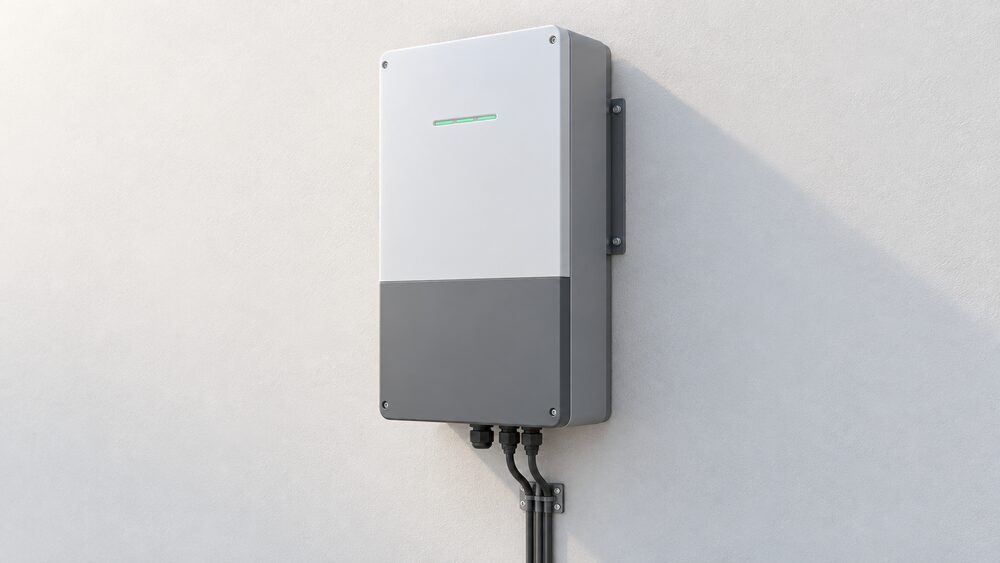 GoodWe ESA SeriesA battery and inverter in one unit sounds simpler than a wall of separate boxes, but how much power and storage does a typical home actually need?
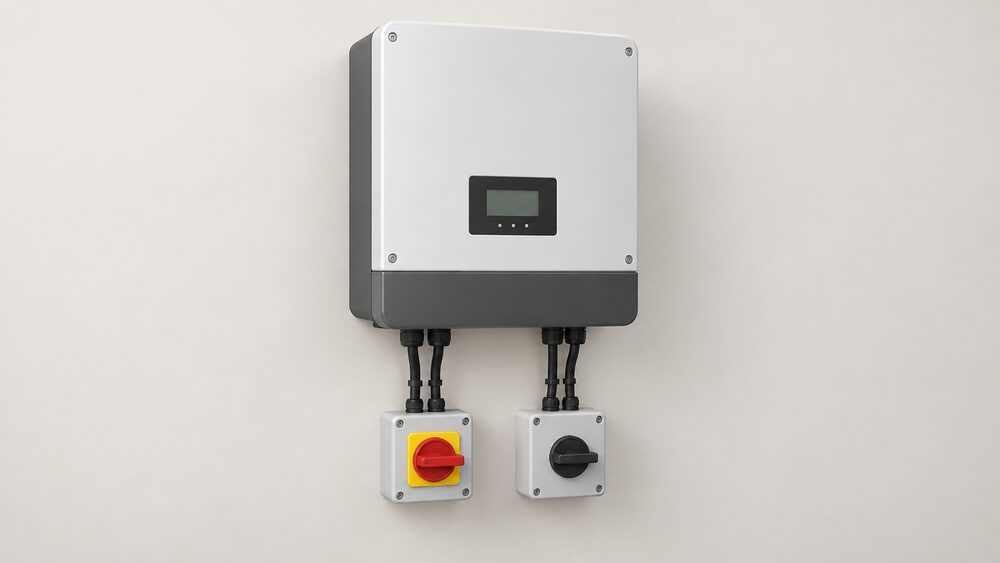 GoodWe solar inverters and batteriesGoodWe makes solar inverters and batteries for UK homes, from small systems to all-in-one storage.