
In this guide
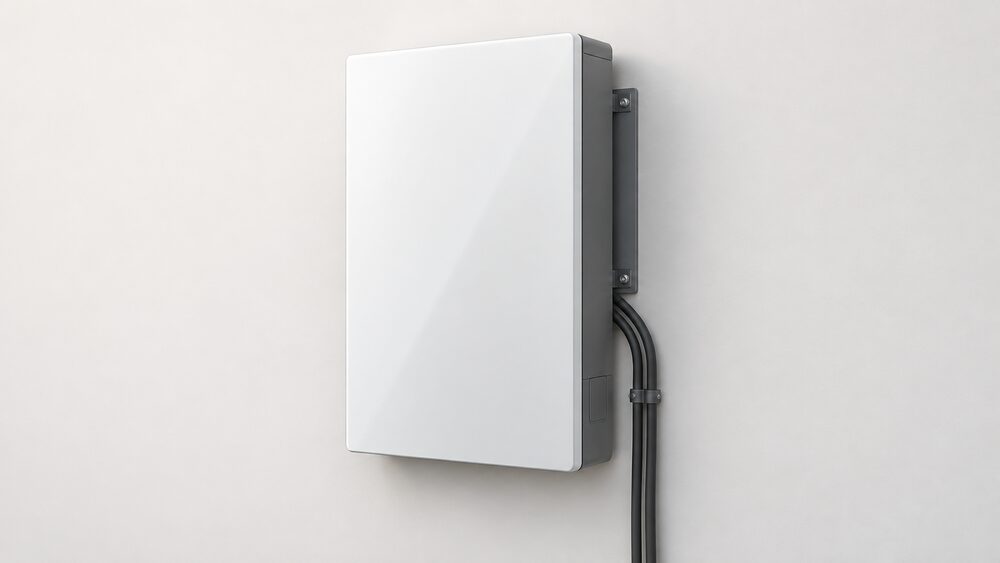
Tesla's Powerwall is the best-known home battery in the UK, and the current model is the Powerwall 3: a 13.5kWh unit with a built-in solar inverter, up to 11.04 kW of power output and a 10-year warranty1. It works with or without solar panels, charges from the grid overnight when electricity is cheap, and switches to stored energy automatically when the grid fails3.
The headline installed price from Tesla is £7,495 with 0% VAT, covering the unit and basic installation, with possible additional costs depending on the home setup or electrical upgrades5. Independent figures sit either side of that: a UK installer guide puts the unit at around £6,700 to £7,600 depending on installation requirements, and Which? lists the Powerwall at £6,200 excluding installation6.
What a household gets for that is a battery that can run a home's essentials in a blackout, shift cheap overnight electricity into expensive evening hours, and store surplus solar for use after dark4. What it does not get is independence from the grid: Tesla states the Powerwall 3 cannot operate entirely off-grid with no network connection, and the full 10-year warranty depends on the unit staying connected to the internet9.
What a Powerwall is and which homes it suits
The Powerwall is a fully integrated AC battery system for residential or light commercial use, and the Powerwall 3 is the version sold in the UK today2. Tesla describes it as suited to homes with solar panels or planning them, households wanting lower bills, backup power during outages, more control over energy use, or a lower-carbon supply1. The company's own eligibility framing is narrower: UK homeowners with solar panels looking to store and use their own energy, homes prone to power cuts, and households aiming to cut electricity costs through peak rate optimisation4.
The distinction matters because the Powerwall 3 does not need solar to be useful. It can store grid electricity, which Tesla describes as making it ideal even without solar, and solar can be added later3. In that configuration the battery is a tariff tool rather than a generation tool: it charges when electricity is cheap and discharges when it is expensive.
For a household thinking about energy independence, the honest position is that a Powerwall reduces dependence on expensive grid electricity at peak times and on the grid's availability during an outage, but it increases dependence on a manufacturer. The system is managed through the Tesla app, which provides real-time tracking of energy generated, stored and used, with insights and adjustable settings1. Remote management, firmware and the longest warranty term all run through Tesla.
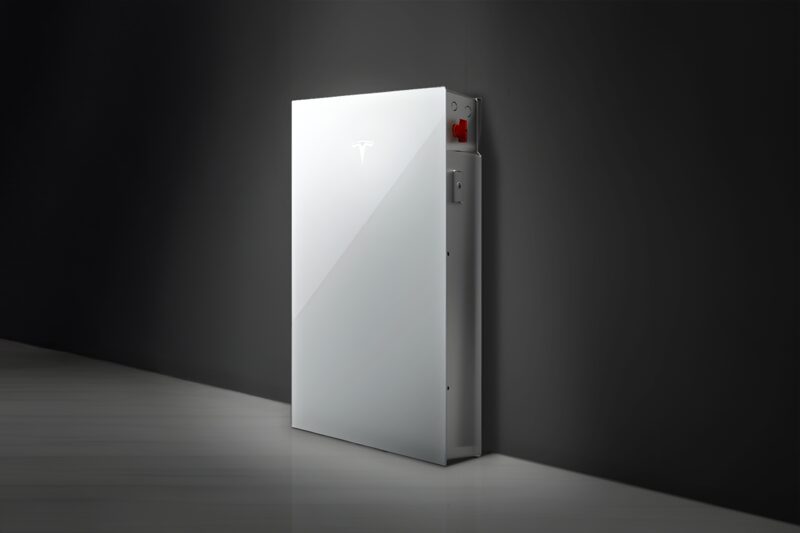
Powerwall 3 specifications: 13.5kWh, up to 11.04 kW and a built-in inverter
The core figure is 13.5kWh of usable capacity per unit, confirmed across Tesla's own material and independent listings11. One installer guide notes that the 13.5kWh is a usable figure against a nominal capacity closer to 15kWh, which is why the number does not move when other batteries quote gross capacity15. Tesla guidance elsewhere describes the nominal capacity as 13.5kWh per unit, and that conflict is unresolved3.
Power output is the other headline. Tesla guidance puts peak output at up to 11.04 kW, and the inverter rating is fully software-configurable between 3.68 and 11.04 kW with no hardware changes required6. The available settings are 3.68 kW, 5 kW, 6 kW, 7 kW, 8 kW, 9 kW, 10 kW and 11.04 kW16. That configurability matters at installation: the export limit agreed with the network operator can be set in software rather than by swapping hardware.
| Specification | Figure | Source |
|---|---|---|
| Usable capacity | 13.5kWh per unit | 11 |
| Nominal capacity | 13.5kWh stated; closer to 15kWh per Tesla guidance | 3 |
| Peak power output | up to 11.04 kW | 6 |
| Inverter rating range | 3.68 to 11.04 kW, software-configurable | 9 |
| Round-trip efficiency | up to 97% | 6 |
| Chemistry | LFP | 17 |
| Depth of discharge | up to 100% | 6 |
| Generator connection | No | 18 |
| Warranty | 10 years | 12 |
The chemistry is lithium iron phosphate, and the depth of discharge is stated as up to 100%, which is why the usable figure matches the nominal one in Tesla's own marketing6. Round-trip efficiency is given as up to 97%6. The system does not accept a generator connection18. On cold weather, Tesla guidance states that older Powerwall 2 units throttle their charge rate near freezing, while the Powerwall 3 forecasts temperature swings and pre-heats or pre-cools the cells to hold them in their optimal range19.
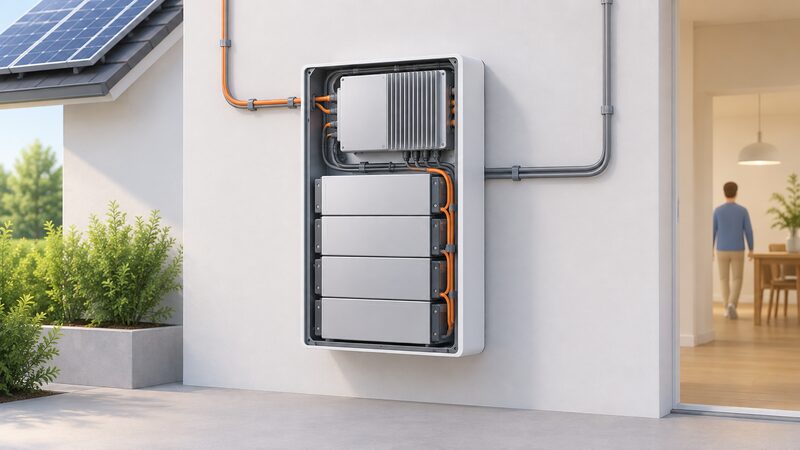
Powerwall 2 compared with Powerwall 3
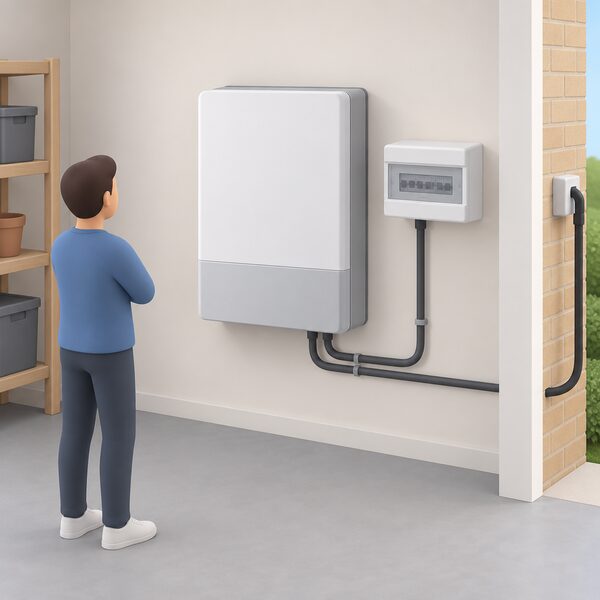
The Powerwall 2 was AC-coupled and required a separate solar inverter; the Powerwall 3 has a built-in solar inverter and an integrated hybrid design8. Tesla's own summary of the change is that the Powerwall 3 has more power output, a built-in solar inverter and better backup performance3. The continuous power figures illustrate the gap: the Powerwall 2 could supply a maximum of 5kW of continuous power, against 11.04 kW for the Powerwall 316.
The Powerwall 2 remains in the field and in the secondhand market, and its warranty terms are still published. Its battery modules carry a 10-year guarantee or energy throughput, whichever comes first, with unlimited charging cycles, and its electronic components carry 10 years21. It also requires a permanent internet connection under its special guarantee conditions21.
For a household choosing between them, the practical differences are the inverter, the power output and the cold-weather behaviour. The Powerwall 3's integrated inverter removes one box from the wall and one point of failure, and its software-configurable rating removes the need to match a separate inverter to the array. The Powerwall 2 cannot be combined with a Powerwall 3 in the same system18.
Cost, installation and 0% VAT in the UK
Tesla quotes £7,495 with 0% VAT for a Powerwall 3, described as including the unit and basic installation, with possible additional costs based on the home setup or electrical upgrades5. Tesla states that Powerwall installations benefit from a 0% VAT rate5. Independent figures differ: a UK installer guide puts the Powerwall 3 at around £6,700 to £7,600 per battery unit depending on installation requirements, and Which? lists the Powerwall at £6,200 excluding installation6.
Tesla designs bespoke Powerwall 3 setups and provides fixed-price installation quotations, and states that all quotes include installation by Tesla-certified engineers3. Installation is carried out by certified Tesla Powerwall 3 installers, either integrated with an existing solar system or as part of a new setup22. The Powerwall is available direct from Tesla7.
On cost position, one installer comparison puts the Powerwall 3 around 3% higher per kilowatt-hour than the Fox Evo9. A separate Tesla rebate scheme allows claims for up to two units per installation address, equating to a maximum saving of £750 through reimbursement, at £375 per Powerwall 3 or expansion unit23. Wider cost context is at How Much Does a Home Battery Cost in the UK?.
Warranty: 10 years, with an internet condition
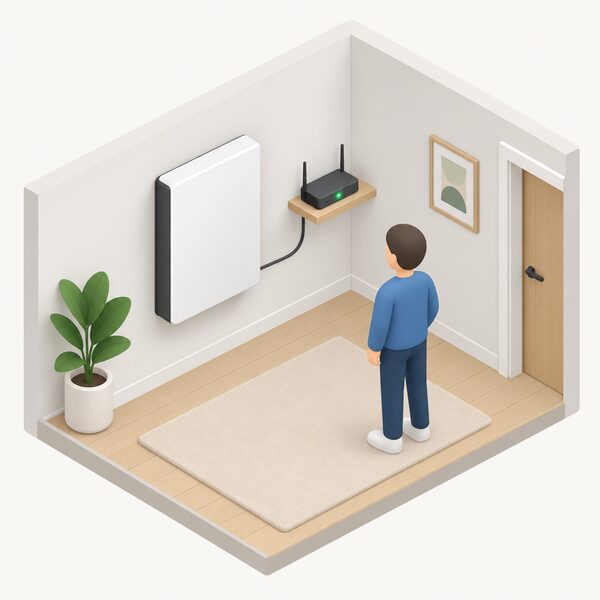
The Powerwall 3 carries a 10-year warranty, and the Powerwall 2 carries 10 years on its battery modules and electronic components12. The condition attached to the Powerwall 3 term is the part households miss: to secure the full 10-year warranty it must be reliably connected to the internet to allow remote firmware upgrades from Tesla10.
"we will always honor your warranty for at least four years following the date your Powerwall was installed for the first time"
If the internet connection is not established or is interrupted for an extended period and Tesla is unable to contact the owner, the warranty may be limited to 4 years10. Tesla's own warranty document states that if the Powerwall is not connected to the internet for an extended period or has not been registered with Tesla, the company may not be able to honour the full ten-year warranty, but will always honour the warranty for at least four years following first installation10. The remedies are repair with new or refurbished parts, replacement with an equivalent product, or a refund of the market price of an equivalent product at the time of the claim10.
This is the clearest dependence the product creates for a household. The battery itself works without the internet, but the warranty term and remote firmware updates do not. Warranty structures across the market are compared at Home Battery Warranties: Retained Capacity, Throughput and Conditions.
Backup during power cuts and what it can and cannot do
Tesla states that if the grid goes down the Powerwall instantly switches to stored energy, keeping essential appliances running, and that during an outage the system automatically switches to stored energy, keeping essentials such as a refrigerator, heating system or lights running4. Unlike generators, it operates silently and without fuel, making it a cleaner, low-maintenance alternative4.
A reserve percentage can be set so capacity is held back for outages. On the Powerwall 2, a household specifies a reserve percentage such as 30%, and the system always keeps that percentage of capacity available13. The Powerwall 2 grid boost feature increases power output of the average home by 20% for 2.5 hours with a full battery on a single phase 100A connection at 230V13.
The limits are as important as the capability. Tesla guidance states the Powerwall 3 cannot operate entirely off-grid with no network connection9. On three-phase supplies, one phase can be backed up, and three-phase backup is not currently available on the Tesla system in the UK9. A Tesla product page states that three-phase power cut protection support is coming soon, according to Tesla18. A three-phase Powerwall went on sale in Germany in April 2026, with no UK release date announced24.
How long a Powerwall lasts in a blackout depends on the load, not the battery alone. The Powerwall 2's 5kW continuous supply figure is the relevant constraint for high-draw appliances20. Backup design, changeover and what keeps running are covered at Battery Backup in a Power Cut: EPS, Changeover and What Keeps Running.
Smart tariffs, peak shaving and running without solar
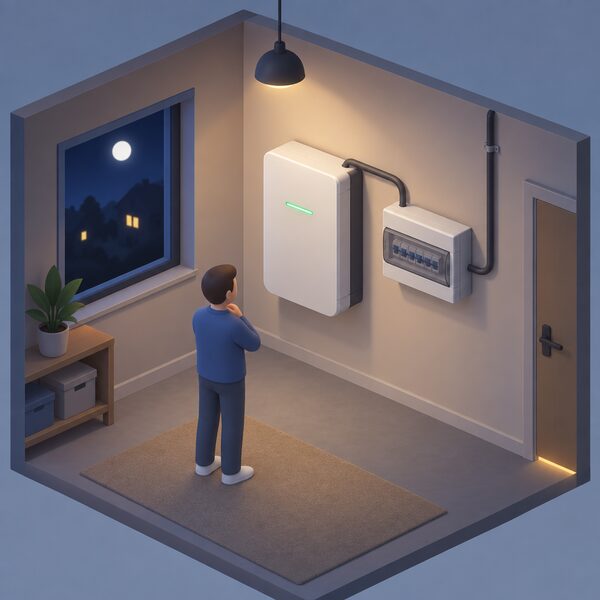
The Powerwall's commercial case rests on price arbitrage. Tesla describes the method as storing power when rates are low and using it during peak pricing periods, a process known as peak shaving, and as storing energy when rates are lower and using it when electricity prices rise during peak hours4. The company's own summary is blunt: buy low, use high14.
With a smart tariff, the battery charges automatically when electricity prices drop to low or negative rates overnight3. Tesla describes this as best-in-class automation with no manual adjustments, just smart energy management14. The Powerwall 3 can also sell stored energy back when prices surge3. Solar Energy UK reports that rooftop solar paired with battery storage can cut energy bills by up to 80% when factoring in smart tariffs and exporting excess energy back to the grid25.
Tesla's own bill-saving claim for the Powerwall 3 is a cut of up to 50%, from storing low-cost electricity for when prices spike3. That is a maker claim and should be read as such; the independent figure above is a modelled range for solar plus storage, not for a battery alone.
Without solar, the battery charges from the grid during off-peak hours and discharges during peak hours4. That is a pure tariff play, and its value depends entirely on the spread between the two rates and on the household being on a tariff that offers one. Tariff stacking is covered in more detail at Stacking a Home Battery With Smart and Time-of-Use Tariffs.
Scaling up: expansion packs and stacking limits
A Powerwall 3 supports up to three additional expansion packs, giving a total of 54kWh3. Each Powerwall 3 can be paired with up to three expansion packs, and one installer case study notes another nine on the way once Tesla rolls out a software update allowing multiple expansion packs across the same supply24. Up to four Powerwall 3 units are supported for power scalability12. Tesla describes the approach as starting with one Powerwall and expanding if needed14.
Expansion packs of 13.5kWh each are sold as separate units26. Tesla states that no additional grid permission is needed for expansion packs3. That is a notable difference from adding a second inverter or a larger array, both of which typically require a network operator notification.
On a three-phase supply, the Powerwall 2 allows a maximum of nine units per site, three per phase, or up to ten units on one phase for single-phase loads13. For the Powerwall 3, one unit can be installed per phase, plus three expansion packs per Powerwall 3 unit18.
| Configuration | Capacity | Units |
|---|---|---|
| Single Powerwall 3 | 13.5kWh | 1 |
| Powerwall 3 plus three expansion packs | 54kWh | 4 |
| Powerwall 3, maximum power scalability | not stated | up to 4 |
| Powerwall 2, three-phase site maximum | not stated | 9 (3 per phase) |
| Powerwall 2, single phase loads | not stated | up to 10 |
Siting is more flexible than many households expect. A Tesla Powerwall can sit up to around 45 metres from the gateway, so it can go almost anywhere sensible19. Modular expansion generally is covered at Modular and Stackable Home Batteries: Expanding Capacity Later.
Charging, efficiency and everyday operation
A single Powerwall 3 takes around two hours 42 minutes to charge fully from empty; stack two together and that rises to roughly three hours 22 minutes, because the charge rate only scales up to a point15. The battery charges from solar panels during the day or from the grid during off-peak hours when electricity is cheaper4.
Round-trip efficiency is stated as up to 97%, and depth of discharge as up to 100%6. The chemistry is LFP, which is the more thermally stable lithium chemistry and the one most home batteries now use17. Tesla states that over 600,000 Powerwalls are operating safely and reliably around the world, and that a paper identifies compliance of the Powerwall 3 with key provisions of PAS 63100:2024, the installation standard for home batteries27.
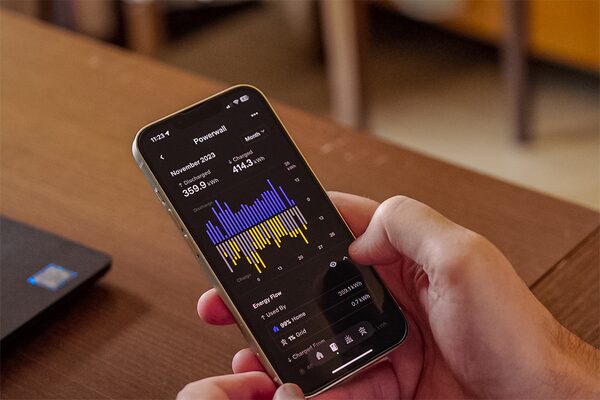
The system is managed through the Tesla app, which gives real-time tracking of energy generated, stored and used, with insights and adjustable settings, and lets the household manage the Powerwall from anywhere1. Homeowners can monitor real-time energy use, check battery levels and adjust settings to maximise efficiency4. That remote management is the dependence: local operation continues, but scheduling, monitoring and firmware updates run through Tesla's app and servers. Monitoring options across the market are compared at Monitoring a Home Battery: Apps, Data and Local Access.
Company, UK supply and what the Tesla name means
Tesla Energy Ventures Limited was granted a UK electricity supply licence by Ofgem, effective 11 March 2026, allowing it to supply electricity to domestic and non-domestic customers across Great Britain without dual fuel capability28. Ofgem announced that the licence had been formally approved by the Gas and Electricity Markets Authority28. The licence allows Tesla Electric to sell electricity directly to UK homes and businesses29.
That matters for a Powerwall owner because it points to a future in which the battery, the tariff and the supplier come from one company. It also deepens the dependence: a household that buys a Tesla battery and a Tesla tariff has one commercial relationship covering both the hardware and the electricity.
The Powerwall is available direct from Tesla in the UK, and installation is carried out by certified Tesla Powerwall 3 installers7. Tesla designs bespoke setups and provides fixed-price installation quotations3. The company's scale is the counterweight to that dependence: over 600,000 units operating worldwide is a service and parts network that smaller battery makers cannot match27.
For a household weighing independence, the position is straightforward. A Powerwall cuts dependence on peak-rate grid electricity and on the grid's availability during an outage, and it can absorb surplus solar that would otherwise be exported at a low rate. It does not cut dependence on the grid, on a supplier, or on Tesla: the warranty term, the firmware, the app and the longest guarantee all run through the manufacturer, and the system cannot operate entirely off-grid9. Households wanting to compare the wider field can start at Home Battery Storage for UK Homes: The Full Guide, and the Powerwall 3 specifically is covered at Tesla Powerwall 3: Capacity, Backup and Tariff Stacking.
Sources29 cited
- Is Tesla Powerwall right for your home?, Tesla Powerwall, 2026
- Powerwall 2 AC datasheet, Tesla, 2026
- Powerwall 3, Tesla Powerwall, 2026
- How Tesla Powerwall works in the UK, Tesla Powerwall, 2026
- How much does it cost to install a Tesla Powerwall, Tesla Powerwall, 2026
- The best solar batteries explained, Good Energy, 2026
- Solar panel battery storage, Which?, 2026
- Tesla Powerwall 2 vs 3, Spirit Energy, 2026
- What's the best battery in 2026, Spirit Energy, 2026
- Tesla Powerwall 3 warranty, Infinity Energy, 2026
- Solar panel backup, Spirit Energy, 2026
- Powerwall 3 datasheet, Tesla, 2026
- Tesla battery and solar, Spirit Energy, 2026
- Buy energy low, use it high, Tesla Powerwall, 2026
- How much battery storage should you get, Spirit Energy, 2026
- Powerwall 3 owner manual, Tesla, 2026
- Best solar batteries, SolaX Power, 2026
- Residential solar energy storage overview, Spirit Energy, 2026
- Solar panel survey: what to expect, Spirit Energy, 2026
- Tesla Powerwall off-grid, Spirit Energy, 2022
- Powerwall 2 warranty, Solarwatt, 2026
- Charge your Tesla with solar energy using Tesla Powerwall 3, Tesla Powerwall, 2026
- How to claim the Tesla Powerwall rebate, Good Energy, 2026
- Is this the largest home battery system in the UK, Spirit Energy, 2025
- Dear Prime Minister, the sunlit uplands are this way, Solar Energy UK, 2026
- Our solar and battery products, Good Energy, 2026
- PAS 63100:2024 and Tesla Powerwall safety, Tesla, 2026
- Tesla Energy Ventures granted electricity supply licence, Ofgem, 2026
- Tesla Electric UK: what it means for Powerwall owners in 2026, Spirit Energy, 2026
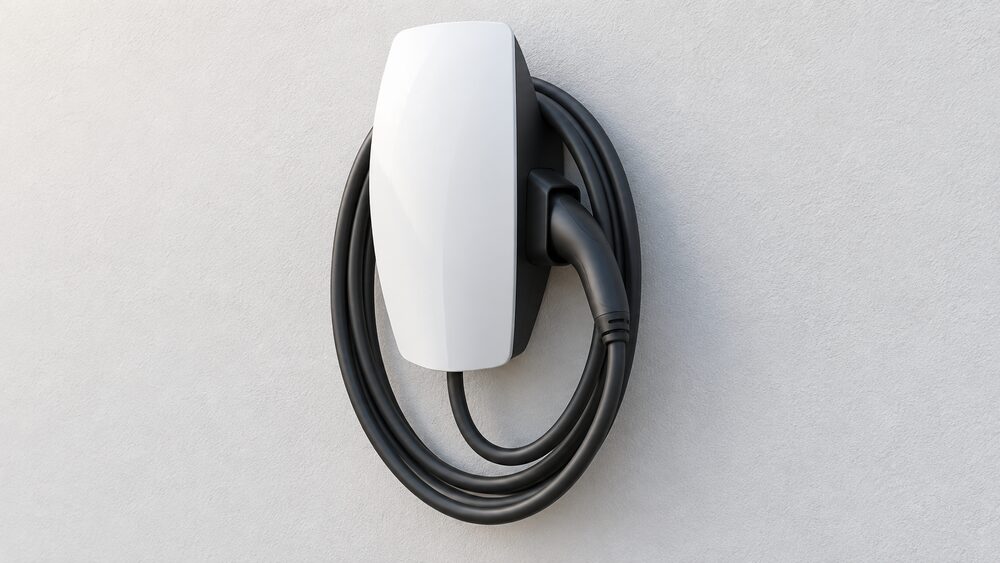 Tesla Gen 3 Wall ConnectorHow fast will a Tesla Gen 3 Wall Connector charge your car at home, and will it work with a non-Tesla electric car?
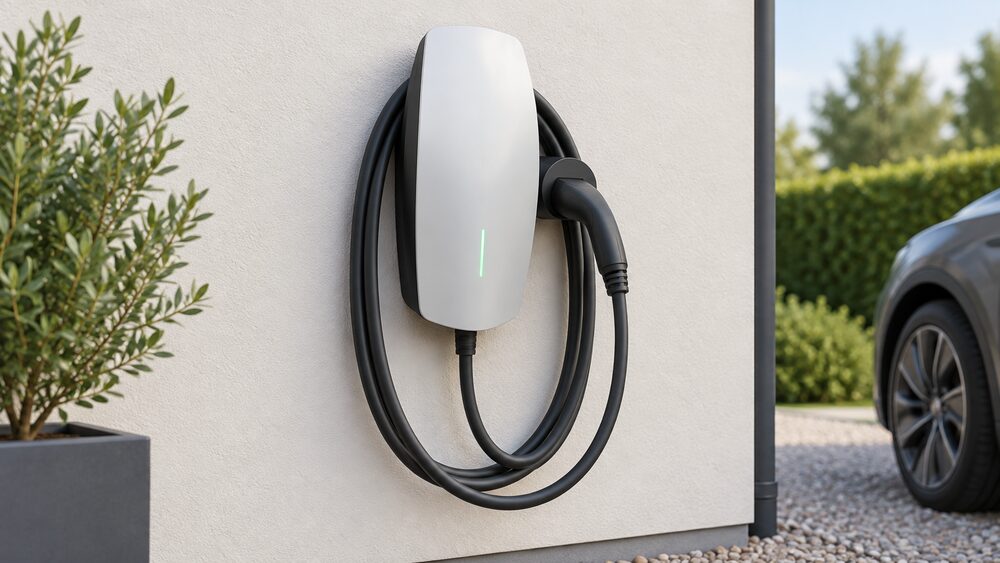 Tesla Wall Connector for home chargingCan you use a Tesla Wall Connector if your car is not a Tesla?
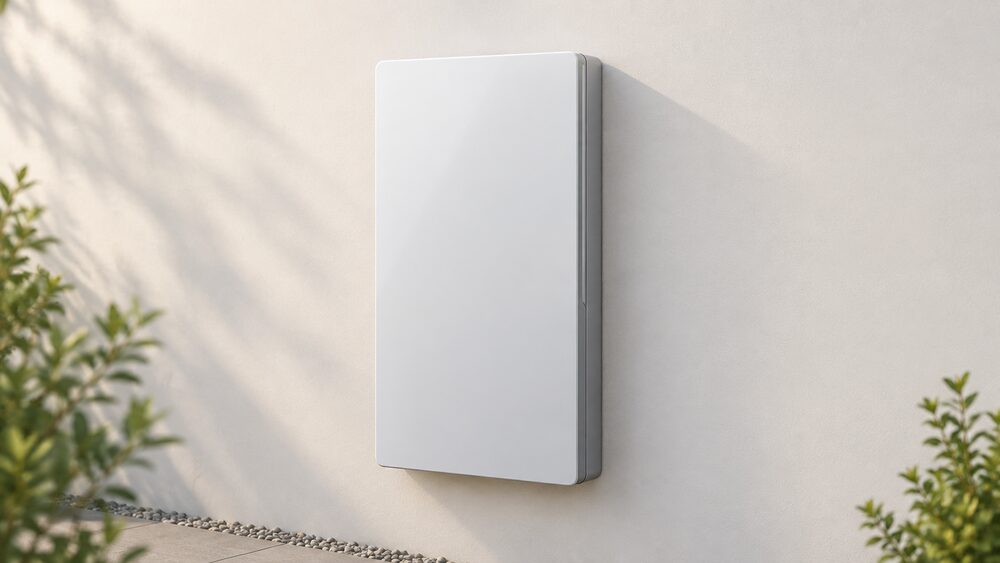 Tesla Powerwall 3How much does a Tesla Powerwall 3 cost installed in the UK, and what does it actually power in a blackout?
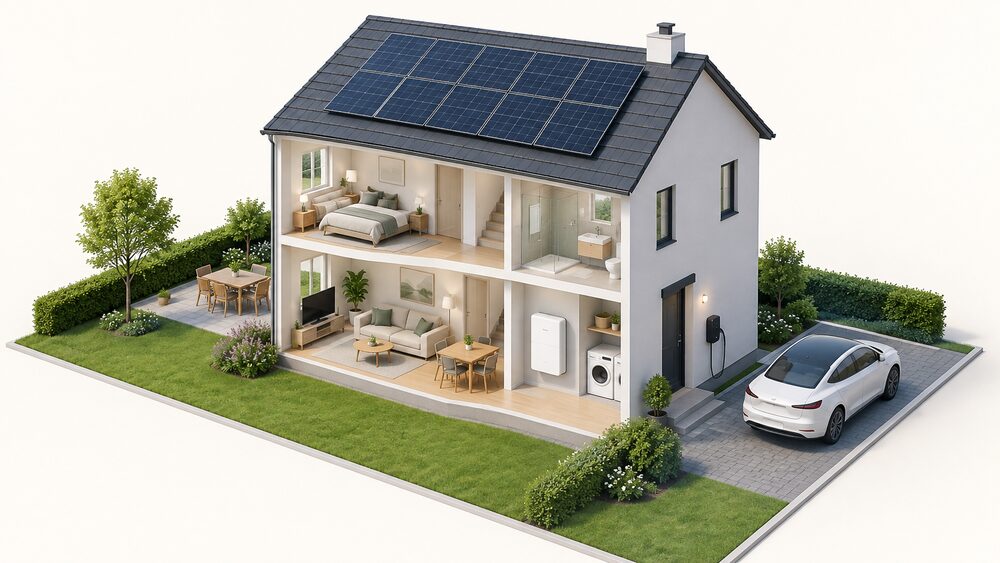 Tesla home energy productsA Tesla Powerwall stores cheap or solar electricity for use when you need it, and the Wall Connector charges your car at home.
 The Tesla Energy PlanCan you still get the Tesla Energy Plan with a Powerwall, and what does it pay for power you send back?