
In this comparison
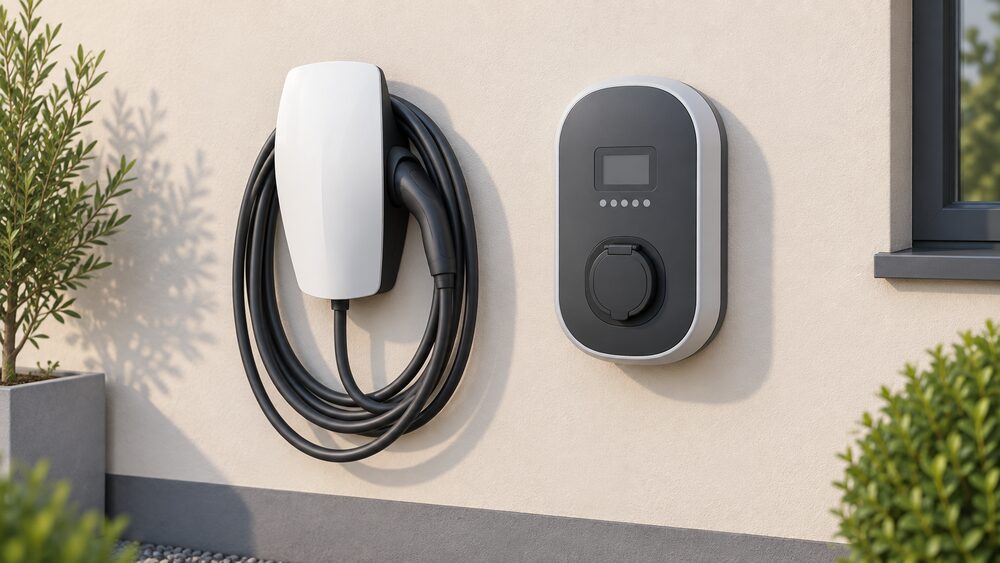
The Tesla Wall Connector and the myenergi Zappi are the two home chargers most often weighed against each other by Tesla owners in the UK. The short answer is that they do different jobs well. The Tesla Wall Connector is a Type 2 tethered unit listed at around £425 excluding installation, with a 7.3-metre cable and a four-year warranty1. It can charge other brands of EV with a Type 2 connection, and it integrates directly with the Tesla Powerwall through the Tesla app1.
The Zappi is a solar-aware charger that can operate as a standard plug-and-go home car charger using grid power, or divert surplus solar and wind generation into the car2. It comes in 7kW or 22kW versions, tethered or untethered, and installation costs typically start at £1,099 including the charger3. The zappi GLO is listed from £949 including standard installation and VAT4.
For a household with solar panels, the Zappi's ability to prioritise self-generated energy is the decisive difference. For a Tesla owner without solar, the Wall Connector's lower headline price and Powerwall integration may matter more. Neither charger is bidirectional: both are one-way AC units that cannot send power back from the car to the house1.
Tesla Wall Connector vs Zappi: the short answer
The two chargers share more than they differ on the fundamentals. Both use the Type 2 connector that has become the standard for most electric vehicles in the UK6. Both can charge any EV with a Type 2 connection, not just Teslas1. Both can be controlled from a phone app, and both can be scheduled to charge overnight.
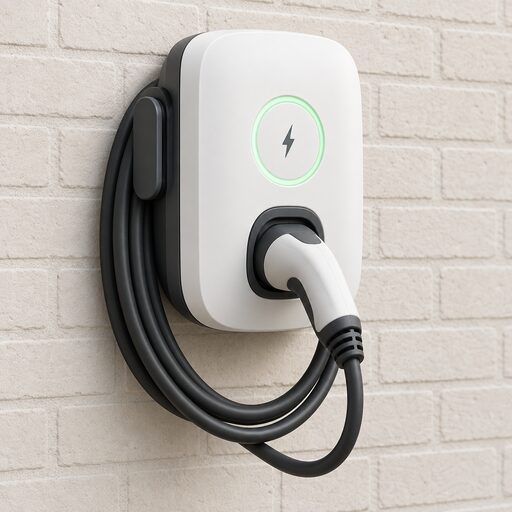
The differences are in emphasis. The Tesla Wall Connector is a Type 2 tethered unit with a 7.3-metre cable and a four-year warranty, listed at around £425 excluding installation1. It is suitable for indoor or outdoor placement and can charge other brands of EV with a Type 2 connection1. It integrates directly with the Powerwall through the Tesla app, but that integration requires a Tesla Powerwall to be present1.
The Zappi is available in tethered or untethered versions, with a choice of power outputs, connection types and colour options7. It can operate as a standard plug-and-go home car charger using grid power, or use power from household solar panels if the household has them2. It is described as the world's inaugural solar car charger and works with or without solar panels installed8.
For a Tesla owner with no solar and no Powerwall, the Wall Connector is the simpler and cheaper unit. For a household with solar, a home battery, or a smart tariff, the Zappi's energy management features are the reason it exists. The choice turns on what the household already has, not on which charger is better in the abstract.
Solar charging: where the Zappi pulls ahead
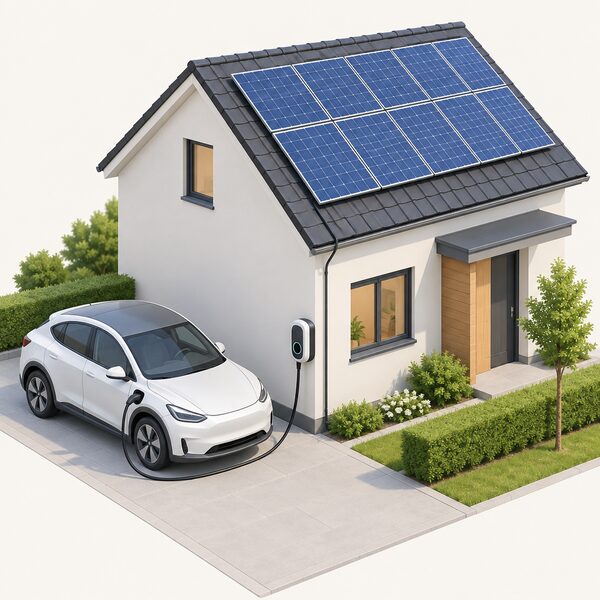
This is the clearest dividing line between the two products. The Zappi was designed around solar self-consumption. It can prioritise charging using any extra solar energy being produced and can change the charging speed depending on how much solar power is available9. It works with solar panels, a home battery, a heat pump and an energy tariff, and can charge the vehicle with free solar energy or store it for later10.
The Tesla Wall Connector can also be used with solar setups, but it often needs extra software or energy management systems to get the most out of solar charging9. That is a meaningful difference in practice. A Zappi can modulate its output to match surplus generation without additional hardware. A Wall Connector paired with solar typically relies on a separate energy management layer to achieve the same result.
The Zappi's solar divert capability is confirmed in the maker's own support documentation, which lists solar divert as a supported integration11. It works alongside battery storage systems and supports Mode 3 charging12. It can derive 100% of its power from the grid when solar is not available, so the solar capability is an addition rather than a dependency13.
For a household with solar panels, the Zappi's ability to charge from self-generated energy is the core of its value proposition. It allows the car to absorb surplus generation that would otherwise be exported, and it can switch between grid and solar automatically. The Wall Connector can participate in a solar setup, but it is not built around that use case in the same way.
"Chargers like the Myenergi zappi have features that let them prioritise charging using any extra solar energy you're producing and can change the charging speed depending on how much solar power is available."
Power, connectors and cable options
Both chargers offer 7kW single-phase output, which is the standard for most UK homes. The Zappi also offers 22kW for three-phase supplies, giving a choice of power outputs to suit different homes3. The Tesla Wall Connector is listed at 7kW or 22kW depending on configuration1.
| Feature | Tesla Wall Connector | myenergi Zappi |
|---|---|---|
| Power output | 7kW / 22kW1 | 7kW or 22kW3 |
| Connector | Type 2 tethered1 | Type 2 tethered (6.5m) or Type 2 socket with locking system12 |
| Tethering | Tethered only1 | Tethered or untethered7 |
| Cable length | 7.3 metres1 | 6.5 metres (tethered)12 |
| Warranty | Four years1 | Not stated in the facts available |
| Enclosure material | Not stated | ASA14 |
| Standby power | Not stated | 3W12 |
| Connectivity | Not stated | Ethernet port and built-in WiFi12 |
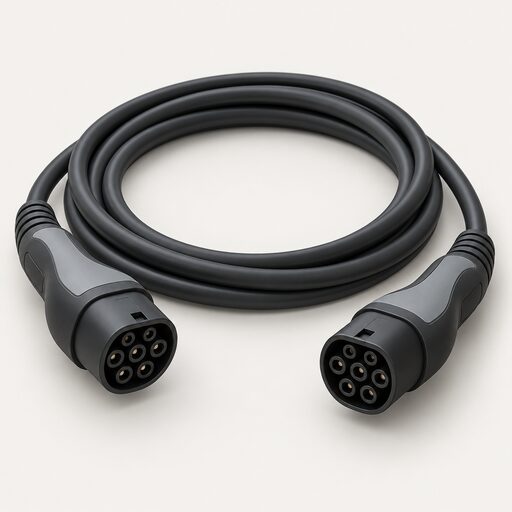
The Zappi's connector options are broader. It offers a Type 2 tethered cable of 6.5 metres or a Type 2 socket with a locking system, and the tethered version includes an integral cable holster12. The Wall Connector is tethered only, with a 7.3-metre cable1. For households that want to keep a cable in the car or use different cables for different vehicles, the untethered Zappi is the more flexible option.
The Zappi's latest version includes built-in WiFi and Ethernet connectivity as standard, with no hub required15. It has an Ethernet port and built-in WiFi12. It does not need a data cable to operate and requires no earth rod16. Those installation details matter for households with difficult cable routes or older earthing arrangements.

Smart features and tariff integration
The Zappi's smart features are built around tariff optimisation and solar diversion. It can integrate with smart energy tariffs and set the charge schedule around when electricity prices are at their lowest2. It seamlessly integrates with all popular low-cost tariffs, allowing charging at the lowest possible rate10. The zappi GLO variant plugs straight into the widest range of smart tariffs available today10.
The Zappi has been integrated with Intelligent Octopus Go the longest and is generally considered the most tried and tested combination1. That integration requires a stable internet connection and the vehicle's charging schedules must be cleared in both integration modes11. The Zappi is compatible with all EVs, as well as smart tariffs and solar panels17.
The Tesla Wall Connector's smart features are tied to the Tesla ecosystem. It integrates directly with the Powerwall through the Tesla app, but that integration requires a Tesla Powerwall1. Without a Powerwall, the Wall Connector's app control is more limited. Tesla was granted an Ofgem electricity retail licence in March 2026, with no confirmed launch date or rate card yet for a Tesla tariff1.
Both chargers can be controlled from a phone app. The Zappi offers full control through an intuitive app and EV charger display, with remote control, monitoring, timers, settings and firmware updates15. The app allows adjustment of the charging power rate and features a built-in timer to schedule charging during off-peak hours18. The Wall Connector's app control is documented primarily through its Powerwall integration1.
Installation and cost differences
The headline price gap is significant. The Tesla Wall Connector is listed at around £425 excluding installation1. The Zappi's installation costs typically start at £1,099 including the price of the charger3. The zappi GLO is listed from £949 including standard installation and VAT4. Those figures are not directly comparable: the Tesla price excludes installation, while the Zappi figures include it.
The Zappi can be installed by a qualified electrician in less than a few hours15. It requires no earth rod and does not need a data cable to operate16. It has app-based commissioning, which is designed for easy installs19. The Wall Connector is suitable for indoor or outdoor placement1.
Installation costs vary with the specifics of each property. Cable runs, consumer unit capacity, earthing arrangements and whether the charger is single or three-phase all affect the final price. The figures given are starting points, not fixed quotes. Prices are installer-quoted and vary by region and property.
For a household comparing the two on cost alone, the Wall Connector's lower headline price is clear. But the Zappi's price includes installation, and its solar and tariff features may reduce running costs over time. The relevant comparison is the total cost of ownership, not the sticker price of the unit.
Where each charger falls short

The Tesla Wall Connector's main limitation is its dependence on the Tesla ecosystem for its smart features. Without a Powerwall, its app integration is limited1. It was ruled not eligible for the £350 OZEV grant because it was not a smart charger at the time of that guidance1. That ruling dates from 2019 and grant rules have changed since, but it illustrates the charger's positioning as a simpler, less feature-rich unit.
The Zappi's main limitation is cost. Its installation costs typically start at £1,099 including the charger, compared with around £425 for the Wall Connector excluding installation1. For a household without solar, a home battery or a smart tariff, much of the Zappi's capability goes unused. It works perfectly well as a standard charger, but the premium buys features that may not be relevant.
Neither charger is bidirectional. Both are one-way AC chargers, not capable of vehicle-to-home or vehicle-to-grid operation1. Households interested in using the car battery to power the home need different hardware. The Zappi GLO is solar compatible, but that means it can take power from solar, not send power back20.
Both chargers are compatible with all EVs, not just Teslas17. The Wall Connector can charge other brands of EV with a Type 2 connection1. The Zappi is compatible with all EVs, as well as smart tariffs and solar panels17. The choice between them is not about vehicle compatibility.
Which charger suits which household
The decision turns on what the household already has and what it plans to add. A Tesla owner with no solar, no home battery and no Powerwall is likely to find the Wall Connector sufficient. It charges the car, it has a four-year warranty, and it costs around £425 excluding installation1. Its limitations only become relevant if the household adds solar or a Powerwall later.
A household with solar panels, or one planning to add them, is the natural Zappi buyer. The Zappi can prioritise self-generated energy and change its charging speed depending on how much solar power is available9. It works with solar panels, a home battery, a heat pump and an energy tariff10. It can charge the vehicle with free solar energy or store it for later10.
A household on a smart tariff without solar may also favour the Zappi. Its tariff integration and scheduling features are more extensively documented than the Wall Connector's2. The Zappi has been integrated with Intelligent Octopus Go the longest and is generally considered the most tried and tested combination1. For households that want to charge at the cheapest times automatically, that matters.
A Tesla owner with a Powerwall is the one case where the Wall Connector's ecosystem integration is a clear advantage. It integrates directly with the Powerwall through the Tesla app1. That integration is not available to other chargers. For a household already invested in Tesla's energy ecosystem, the Wall Connector is the natural fit.

Sources20 cited
- Best EV charger for solar panels, Spirit Energy, 2026
- Electric car charger home installation UK, myenergi, 2026
- How much does it cost to charge an electric car, myenergi, 2026
- myenergi products, myenergi, 2026
- Electric car charging at home, myenergi, 2026
- EV connector types, Zapmap, 2026
- Zappi EV charger, myenergi, 2026
- Can I charge my car for free, myenergi, 2025
- Charge your EV with solar panels, E.ON Next, 2026
- Renewable energy solutions: EV charging, myenergi, 2026
- Zappi Intelligent Octopus Go, myenergi, 2026
- Zappi multiphase datasheet, myenergi, 2024
- Zappi EV charger Northern Ireland, myenergi, 2026
- Zappi EV charger product page, myenergi, 2026
- The myenergi app, myenergi, 2026
- Zappi home EV charger, myenergi, 2026
- Good Energy EV charger installation, Good Energy, 2026
- Why opting for an electric vehicle charger is a smart move, myenergi, 2023
- BT Openreach partnership, myenergi, 2026
- OVO Energy myenergi smart charger, OVO Energy, 2026
 Types of Home EV ChargerWhich home charger suits your car and your driveway?
 AC-Coupled vs DC-CoupledCan you add a battery to your existing solar panels without swapping the inverter, and does one kind waste more of your solar power than the other?
 Home EV Charger ManufacturersWhich home EV charger brands are worth considering, and how do you choose between them?
 The Full EV Charging GuideCharging an electric car at home usually means a wallbox, but do you need one, and what will it cost to fit and run?
 Electric Radiator ControlsElectric heaters cost far more to run than gas, so the controls really matter.
 Solar Cell TechnologyBuying solar panels means choosing between cell types that work in different ways.