In this guide
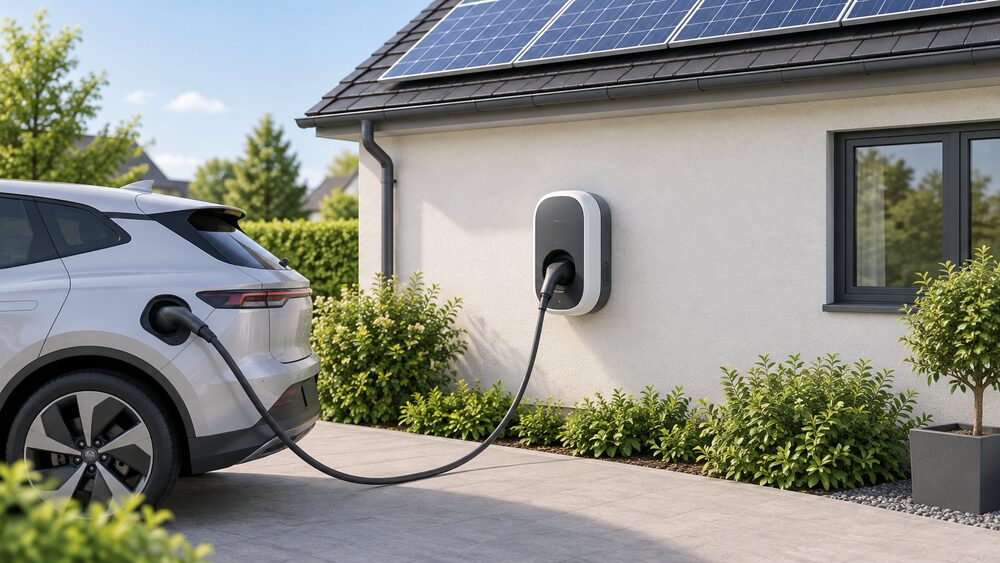
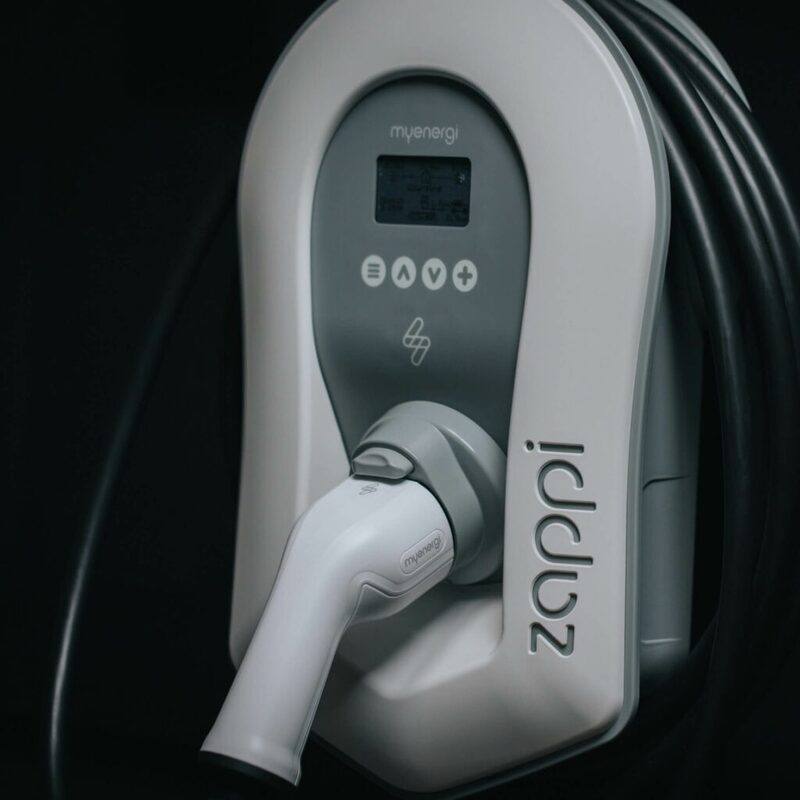
The zappi is a solar-aware home EV charger made by myenergi, a Lincolnshire manufacturer that describes it as the world's inaugural solar car charger1. It is sold in two power ratings, 7kW single-phase and 22kW three-phase, and it is one of the few home chargers that can take its energy from the grid, from solar panels or from a wind turbine, rather than from the grid alone2. The maker states that it is conceived, evolved and manufactured in-house in the UK3.
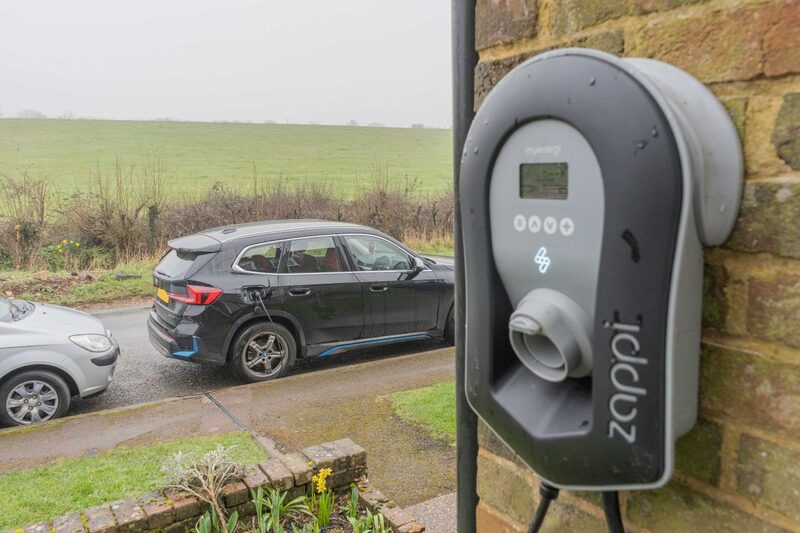
What separates it from an ordinary Mode 3 charge point is the ECO logic. In ECO+ mode the charger detects electricity going out to the grid and turns itself on to start charging the car, matching the charge rate to the amount of electricity currently being exported4. The maker's datasheet puts it more firmly: ECO+ charging ensures that all the charge delivered to the vehicle is from excess self-generation that would otherwise be exported5. For a household with solar, that is the difference between exporting surplus at an export rate and putting it into the car.
The zappi is not a route off the grid. It is a way of using a grid connection better, and it keeps the household dependent on a supplier for everything the roof and the turbine cannot cover, on broadband for remote features, and on myenergi for warranty and firmware. The sections below set out the models, the modes, the specifications, the warranty terms and what buying and installing one involves in the UK.
What the zappi charger is and who makes it
The zappi is an adaptive EV charger that takes power from the grid, solar or wind2. myenergi describes it as a "multiphase" charger, meaning the same product line covers single-phase and three-phase supplies rather than being split into separate families9. It is a Mode 3 charging point, the standard AC charging arrangement used by home charge points5.
myenergi positions itself as a leading manufacturer of renewable energy solutions for homes and businesses, and the zappi sits alongside its other products: the eddi energy diverter, the harvi energy harvesting sensor, the hub internet connector and the libbi battery10. The company states that it has shipped over 500,000 products worldwide and that it designs and manufactures at a UK-based manufacturing facility in Lincolnshire11. Technical and customer support is UK-based12.
The product has a track record rather than a launch story. A myenergi press release records the product launch in September 2016 of the zappi electric vehicle charger and smart power diverter8. The maker calls it the award-winning zappi EV charger, and a later press release describes it as a charger designed for easy installs with app-based commissioning13.
For a household, the significance of the maker's location is narrower than it sounds. UK manufacture shortens the parts and service chain and keeps support in the same time zone, but it does not change the fact that the charger is a mains electrical product installed by a third party, and that its smart features run through myenergi's app and servers.
Charging from your own solar: how the ECO modes work

The zappi's central function is surplus diversion. Rather than charging at a fixed rate and importing whatever the car needs, it measures what the house is generating and what it is using, and adjusts the charge rate to the difference. The maker states that its ECO settings allow for the optimisation of self-generated solar power1, and that the charger uses surplus energy to charge the vehicle15.
In ECO+ mode the behaviour is strict. The charger detects electricity going out to the grid and turns itself on to start charging the car, while matching the charge rate with the amount of electricity currently being exported4. Good Energy's guidance describes the same logic from the household side: ECO+ mode will ensure that the car only charges when the solar panels are producing more power than the home is using, and slows the charge to avoid grid energy16. The datasheet's claim is the strongest version of it, that all the charge delivered in ECO+ is from excess self-generation that would otherwise be exported5.
There is a floor to how low the charger can go. The maker's support material gives the minimum ECO charging power as about 1.4kW for a single-phase EV charge6. Below that, there is not enough surplus to start or sustain a charge, and the car waits. That figure matters in a British climate: an array on a bright but cloudy day will spend long periods under it, and the charger will pause rather than top up from the grid.
The same logic applies to wind. The maker states that zappi is compatible with all Solar PV systems and wind turbines1, and that its optional charging modes use 100% green energy generated from a Solar PV system or wind generation2. A household with a small turbine therefore gets the same diversion behaviour, though the pattern of generation is different and less predictable than solar.
"When zappi is set to ECO+ mode, it detects electricity going out to the grid and turns itself on to start charging your car, whilst also matching the charge rate with the amount of electricity currently being exported"
ECO, ECO+ and FAST: which mode suits which situation
The zappi has three charging modes: Fast, ECO and ECO+4. They are not quality settings; they are different rules for where the energy comes from.
Fast mode charges at the full rate the car and supply allow, drawing from the grid. It is the mode for a car that needs to be full by morning and for a household on a cheap overnight tariff, where the cost is managed by timing rather than by generation.
ECO mode is a blend. The maker states that on ECO mode the zappi becomes an intelligent device that adjusts the charge rate to minimise taking energy from the grid, by only taking the energy it needs4. Elsewhere the same mode is described as minimising the use of grid power and being able to charge using 100% green energy17. In practice ECO keeps the car charging continuously, using whatever green energy is available and making up the shortfall from the grid.
ECO+ is the strictest. Charge power is continuously adjusted in response to changes in generation or home consumption, and the car charging will pause if there is too much imported power, continuing only when there is surplus free power18. The maker's support article adds a condition that catches people out: for schedules to work, the zappi needs to be in ECO or ECO+ mode to prevent the EV from immediately charging at full power19. If a household does not want the car to charge from the grid before a scheduled boost, the charger must be in ECO+19. When a boost is active in ECO+ mode, the charger runs at full power for the duration6.
| Mode | Energy source | Behaviour | Suits |
|---|---|---|---|
| Fast | Grid | Charges at full available rate4 | Overnight cheap-rate charging |
| ECO | Green plus grid | Adjusts rate to minimise grid import, keeps charging4 | Mixed days, partial solar |
| ECO+ | Surplus generation only | Pauses when import is too high, resumes on surplus18 | Households maximising self-consumption |
Specifications and charging power: 7kW single-phase to 22kW three-phase
The zappi is rated at 7kW single-phase or 22kW three-phase5. The maker describes the two variants as selectable power settings of 7kW and 22kW, adapting to single or three-phase electrical setups20. The 22kW version is aimed at three-phase homes and commercial buildings21, and the maker states that a three-phase charger can charge an EV at a maximum of 22kW, vehicle permitting22.
That last qualification is the one that decides real-world speed. A car's onboard charger caps what it can accept, so a 22kW charge point only delivers 22kW to a vehicle that can take it. An independent product listing gives the maximum charging speed as 7.4kW or 22kW23, a reminder that the single-phase ceiling is around 7kW in practice.
The range is sold in tethered and untethered forms, in a choice of colours, with the buyer choosing the power output and connection type24. The datasheet lists the multiphase models as 7kW single-phase or 22kW three-phase across the tethered and untethered variants5. A separate GLO model is listed as tethered with a charging speed of 7kW, single-phase25.
| Specification | Detail |
|---|---|
| Rated power | 7kW single-phase or 22kW three-phase5 |
| Charging standard | Mode 35 |
| Variants | Tethered and untethered, choice of colour24 |
| Minimum ECO charge power | About 1.4kW, single-phase EV charge6 |
| Battery storage | Works alongside battery storage systems5 |
| GLO model | Tethered, 7kW single-phase25 |
Compatibility: solar PV, batteries, heat pumps and tariffs
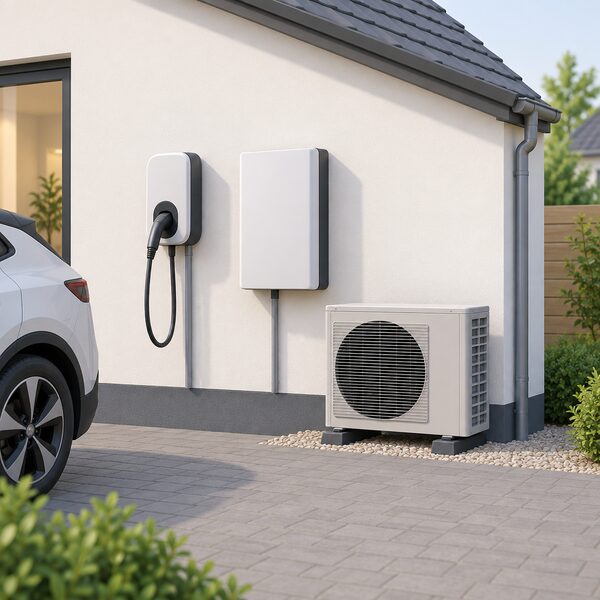
The maker's claim is that the zappi is the only charger that seamlessly integrates with the whole home energy ecosystem, working with solar panels, home battery, heat pump and energy tariff24. It states that the charger is compatible with all domestic microgeneration technologies3, and that it integrates with home battery storage and heating systems through one single app26.
On tariffs, the maker states that the zappi is fully compatible with the Intelligent Octopus Go tariff17, that it integrates with leading smart tariffs to reduce charging costs14, and that it can integrate with a chosen energy tariff for lower cost overnight or off-peak charging2. The broader claim is compatibility with all energy tariffs15. The charger can also integrate with low-cost tariffs and set automations so the vehicle charges solely during periods when energy prices are at their lowest24.
Two practical points sit under those claims. First, the zappi can alter its charging strength to be compatible with the EV, and can adjust depending on grid changes to save money4. Second, it can alter its charge rate when appliances in the home are switched on and off27, which is the load management behaviour that keeps a charge within the supply's capacity.
The dependence here is worth stating plainly. Tariff-linked charging depends on the supplier's tariff remaining available and on the charger's integration continuing to work. Battery and heat pump integration depends on the myenergi app and on the other equipment being compatible. None of that is a reason to avoid the product, but it is a set of relationships rather than a property of the box on the wall.
Warranty: three years against faults in materials and workmanship
The zappi comes with a 3-year warranty24. The maker's product warranty document states the term as 36 months, or 60 months if the extended warranty is purchased7. The extended warranty page describes the same arrangement as the option to extend the standard 3-year warranty to a total of 5 years28.
The extended cover is more than a longer clock. It includes a replacement unit if required, ensuring minimal downtime, and coverage for an installer visit, if necessary, to resolve any issues29. That installer visit element matters because a charger fault is not something a household can diagnose or swap itself.
Eligibility is time-limited. To qualify for the extended warranty, the purchase must be made no more than 3 months after the original warranty expiration date29. Purchases made outside the eligibility window, or duplicate warranty purchases, may be cancelled and refunded29.
Registration is part of the process. The maker advises registering individual products once installed to take full advantage of the 3-year warranty support24. The warranty document covers the zappi EV charger, the zappi pedestal, the eddi energy diverter, the harvi energy harvesting sensor, the hub internet connector and the libbi battery7. The maker also advises keeping charger firmware up to date for the best experience31.
Buying and installing in the UK: installers, booking and returns
The zappi can be purchased with full installation directly through Hive for Hive customers31. More generally, myenergi states that hundreds of trained zappi installers across the UK are ready to provide a quote, with a postcode search to find them9. The maker also works with energy suppliers and partners, including Octopus and BT Openreach17.
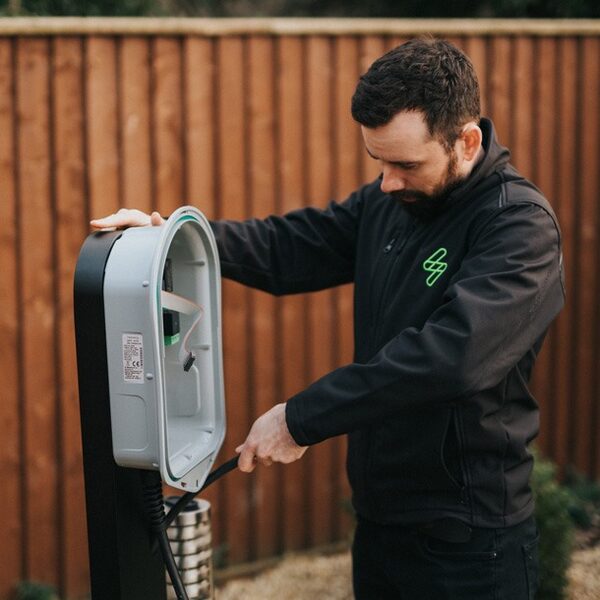
Installation itself is a qualified electrician's job. The maker states that the zappi can be easily installed by a qualified electrician in less than a few hours22, and that commissioning is app-based14. It is not a DIY product, and the electrical requirements of a home charge point are covered in electrical requirements for a home EV charge point and the wider process in home EV charge point installation.
Smart charging regulations apply regardless of connectivity. The maker states that the zappi will automatically configure smart charging regulations on first setup, but notes that, like all electronic devices, the internal clock will drift without an internet connection32. The charger also applies a random delay of up to 10 minutes at the start and end of each scheduled charge32, a requirement of the smart charge point rules rather than a fault. Those rules are set out in the smart charge point regulations.
On returns, the published cancellation terms cover the extended warranty rather than the charger: purchases made outside the eligibility window, or duplicate warranty purchases, may be cancelled and refunded29. For the hardware, the terms that apply are those of the retailer or installer that supplied it. Prices are installer-quoted, and cost context sits in how much a home EV charge point costs, fitted.
The company behind zappi: myenergi's scale and status
myenergi is an established UK manufacturer rather than a startup. It states that it has shipped over 500,000 products worldwide11, that it designs and manufactures at a UK-based state of the art manufacturing facility in Lincolnshire12, and that it provides UK technical and customer support12. It describes itself as a leading manufacturer of renewable energy solutions for homes and businesses10.
The company sells into the commercial and new-build markets as well as to households. It states that its chargers, whether zappi multiphase or GLO, are built with commercial application in their DNA11, and it offers developers an end to end solution for EV charging requirements, with a bespoke call off plan to meet timescales12. It also extended its sponsorship partnership with Grimsby Town FC for the 2026/27 season, announced on 2 April 20268.
Its product line continues to develop. On 22 July myenergi unveiled zapsafe, aimed at reducing unnecessary EV charger call-backs13. The company has also secured investment from high-profile UK businessmen Bill Currie and Sir Terry Leahy8.
For a household, the relevant question is not scale but continuity. A charger is a ten-year-plus fixture on a wall, and its app, firmware and warranty all depend on the maker remaining in business and supporting the product. myenergi's UK manufacturing base, its shipping volume and its continuing product launches are the evidence available on that point. The wider range is covered in myenergi home EV chargers, and comparisons with rival products sit in Zappi vs Hypervolt and Ohme Home Pro vs myenergi zappi.
Where the zappi's independence ends
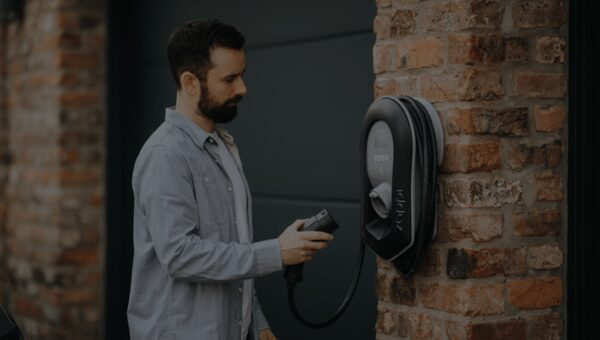
The zappi does something specific and useful: it lets a household put its own generation into its own car instead of exporting it. That is a real gain in energy independence, because a kilowatt hour diverted into the battery is a kilowatt hour not bought from a supplier.
What it does not do is remove dependence. The household remains connected to the grid and to a supplier for every mile the roof cannot cover, and in a British winter that is most of them. Tariff-linked charging depends on the supplier's tariff and on the integration continuing to work. Remote control, scheduling from away and firmware updates depend on a home broadband connection and on myenergi's app and servers. Warranty support depends on the maker, and the longest cover depends on buying an extended warranty within a three-month window.
The charger is also a fixed electrical installation, so it depends on a qualified electrician to fit it and on the wider supply having capacity for it. Load management behaviour, where the charger reduces its rate as other appliances switch on, is what keeps that within limits27. Households weighing the wider picture can read EV charging and household energy independence, charging an EV from solar panels and EV charging alongside a home battery.
Sources32 cited
- Can I charge my car for free, myenergi, 2025
- Electric car charger home installation UK, myenergi, 2026
- zappi product page, myenergi, 2026
- What EVs are compatible with myenergi products, myenergi, 2025
- zappi Multiphase Datasheet, myenergi, 2024
- What are the zappi charging modes, myenergi support, 2026
- myenergi Product Warranty v4.1, myenergi, 2026
- myenergi secures £1.2 million investment, myenergi, 2022
- zappi EV charger product page, myenergi, 2026
- Renewable energy solutions: EV charging, myenergi, 2026
- myenergi business, myenergi, 2026
- Home builders, myenergi, 2026
- zapsafe to reduce unnecessary charger call-backs, myenergi, 2026
- BT Openreach partnership, myenergi, 2026
- What is a solar car battery charger, myenergi, 2022
- EV and solar panels, Good Energy, 2026
- Octopus partnership, myenergi, 2026
- Car charger Northern Ireland, myenergi, 2026
- How to set a timed charge boost on your zappi, myenergi support, 2026
- zappi product page (Australia), myenergi, 2026
- Cinch home charging with myenergi, myenergi, 2026
- zappi EV charger, myenergi, 2026
- Home electric vehicle chargers, Carwow, 2026
- zappi home EV charger guide, myenergi, 2026
- EV charger installation, Good Energy, 2026
- Power diversion products, myenergi, 2026
- Home EV charger: a guide to zappi, myenergi, 2026
- zappi extended warranty, myenergi, 2026
- Extras and extended warranty, myenergi, 2026
- myenergi smart chargers, OVO Energy, 2026
- Works with Hive, myenergi, 2026
- Smart charge point regulations explained, myenergi, 2026
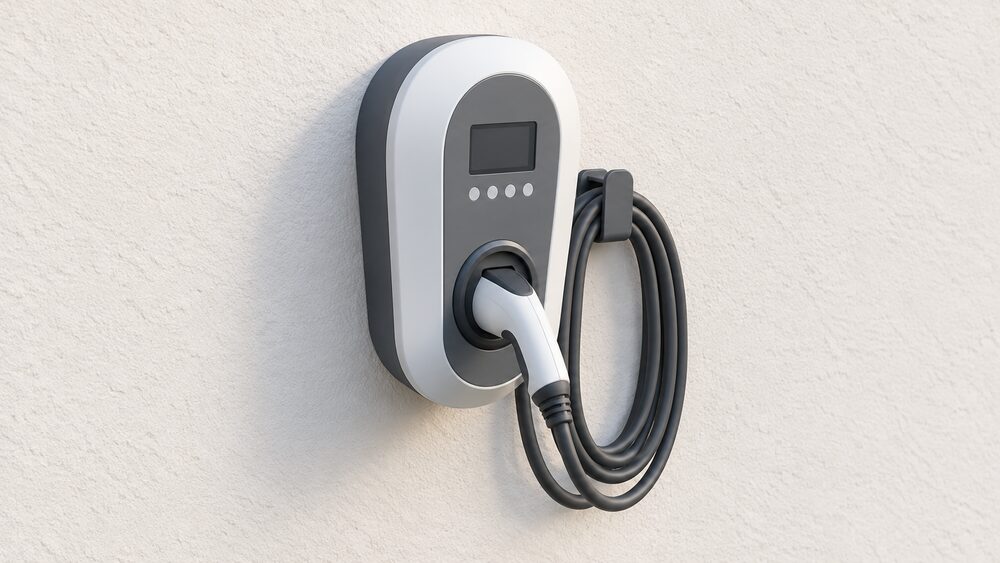 myenergi home EV chargersMaker of zappi, the UK's best-known solar-aware home charger; covers the full range, warranty and company status.
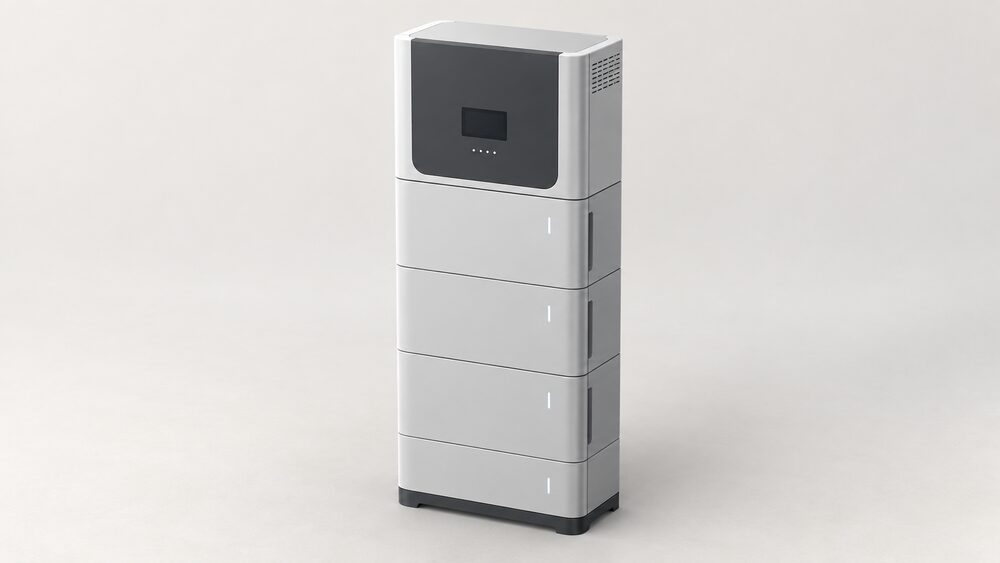 myenergi libbiHow much does a myenergi libbi cost, and how many units do you need to run a typical home?
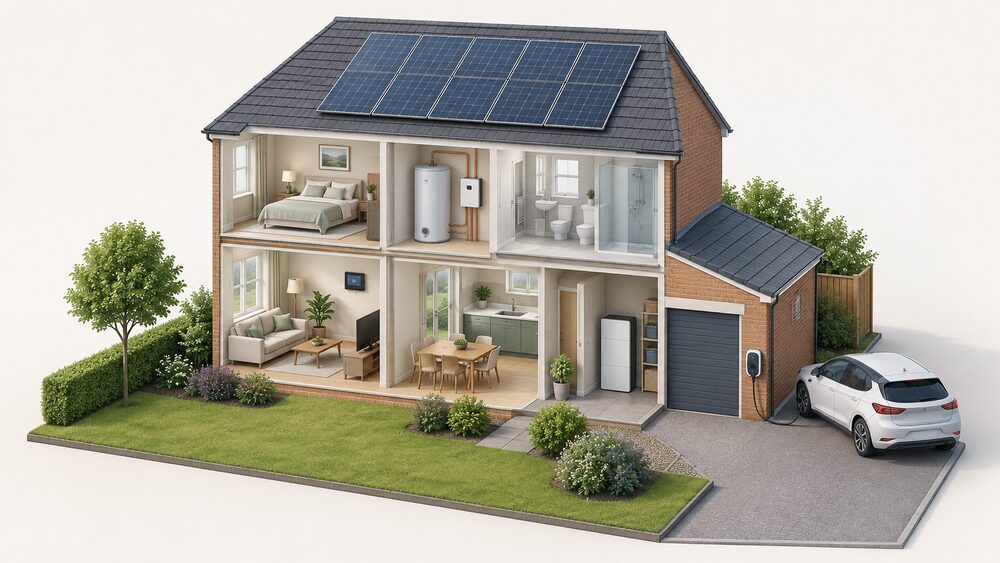 MyenergiMyenergi is a British company making home energy kit in Lincolnshire, best known for the zappi car charger.
 myenergi eddiThe myenergi eddi diverts surplus solar into an immersion heater instead of the grid, with up to 95% self-consumption claimed, a three-year warranty and UK manufacture in Lincolnshire.