
In this comparison
The Easee One and the myenergi zappi are the two chargers most often weighed against each other by households that want solar-aware charging without a large wallbox. Both are untethered or tethered options in the zappi's case, both work with smart tariffs, and both are sold into the UK market by makers with a strong European base. The practical differences sit in connectivity, grid flexibility certification, colour choice and, most importantly, who owns the company behind the product.
Easee is a Norwegian business founded in 2018, developing and manufacturing in Scandinavia and exporting to 23 countries across Europe, with close to 80 percent of revenue coming from exports and Sweden, the United Kingdom, Germany, the Netherlands, Switzerland and Denmark as its largest markets1. It reports more than one million chargers installed across Europe1. The zappi is made by myenergi and is listed among the top smart chargers in the UK, alongside the Wallbox Pulsar Plus and the EO Mini Pro2.
The ownership question is the one to settle first. Brødrene Jensen, a shareholder in Easee since 2019, has acquired 100 percent of the company, with AWC providing financing and set to become the majority owner pending approval from the relevant authorities3. That is a change of control, not a failure, but it means the corporate structure behind the warranty is in motion.
Easee at a glance: a Norwegian maker past one million chargers
Easee designs, develops and manufactures smart, connected EV chargers for homes, workplaces and apartment blocks, and was founded in Norway in 20181. The company's own platform figure is over 900,000 chargers with over 99 percent uptime, quoted on the Easee Charge Pro product page6, while the corporate announcement of July 2026 puts the installed base at more than one million chargers across Europe1. The two figures are not in conflict: one is a platform statement tied to a specific product line, the other a company-wide total, and the later date is the larger number.
For apartment blocks and shared parking, Easee's load and phase balancing supports up to 101 EV chargers on a single circuit7. That is the figure that matters to a landlord or a residents' management company, because it determines how much supply capacity has to be brought to a car park before any charging can happen. The same platform is described as developed and manufactured in Norway7.
The relevance to a household is narrower. A single Easee One on a driveway draws on the same platform and the same app ecosystem as the larger installations, so firmware, load management and solar behaviour are shared across the range rather than being features reserved for commercial sites. What a household does not get from the platform figure is any statement about domestic reliability specifically; the uptime claim is a maker's figure covering the installed estate, not a domestic field survey.
UK availability: Home and The One, with the UK among Easee's largest markets
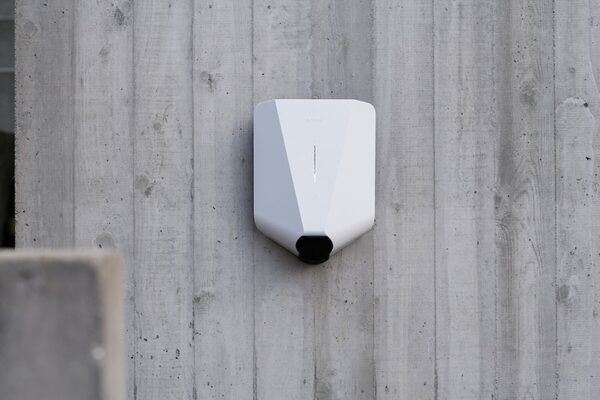
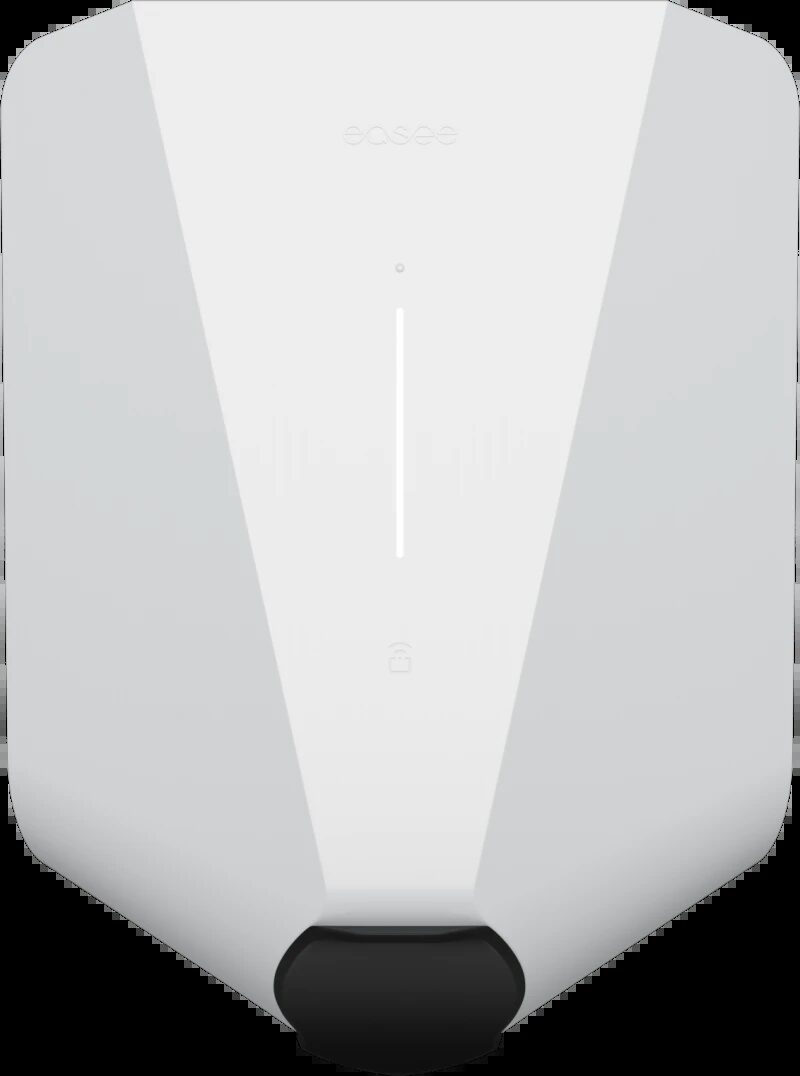
Easee lists the Home and The One as the supported models for app compatibility with ev.energy, which is the clearest statement of which units are actively sold and supported in the UK4. The United Kingdom is named among Easee's largest markets, alongside Sweden, Germany, the Netherlands, Switzerland and Denmark1. The Easee Charge Pro appears on Easee's own product pages with a fuller connectivity specification6, but it is not listed among the supported models for that app integration4, so a household comparing the two should treat the One as the mainstream domestic unit.
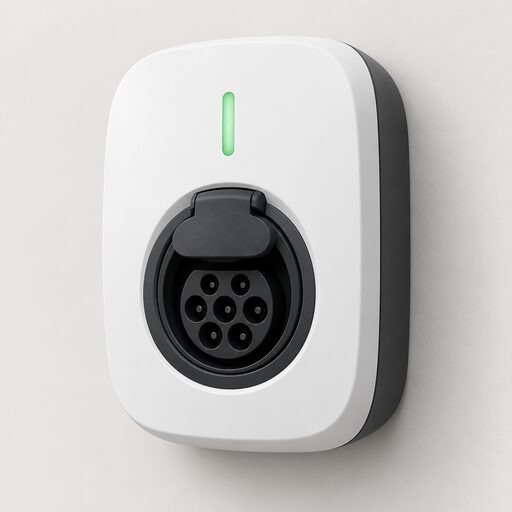
The Easee One is an untethered charger, meaning the charging cable is not fixed to the unit5. That suits households that keep a cable in the car, and it means the cable is a separate purchase and a separate point of wear. The zappi is offered in both untethered and Type 2 tethered versions8, and myenergi notes that Type 2 connectors have become the go-to for most electric vehicles in the UK9.
On the public charging side, the UK network that any home charger sits alongside is large and still growing. Zapmap shows more than 95 percent of the UK's public chargers on its app and desktop map10, and lists over 123,000 public EV chargers across the UK11. Rapid and ultra-rapid chargers make up 24 percent of total EV chargers11, and official statistics for 1 July 2026 put 12 percent of chargers as rated rapid, between 50kW and less than 150kW12. Slow and fast chargers account for around 80 percent of all UK chargers13. Those figures describe the public network, not the home unit, but they set the context: a home charger is the cheap, slow, always-available end of a network that is mostly slow and fast anyway.
Solar Only and local control: how Easee matches the zappi's eco charging
Solar Only is supported on the Easee Home and The One chargers4, and the Easee One is described as having solar integration as standard and compatibility with smart tariffs5. That is the direct answer to the comparison: Easee does offer a solar-only charging mode on its domestic units, so the feature is not exclusive to the zappi.
The zappi's approach is built around dynamic charging modes. The zappi GLO is described as having one dynamic charging mode2, and the wider zappi range is compatible with all EVs, smart tariffs and solar panels2. myenergi's guidance is that where there is no home battery storage, using zappi and eddi together can maximise solar self-consumption by charging the EV in the day and diverting excess energy with eddi for heating9. That is a system-level answer rather than a charger-level one, and it depends on buying a second myenergi product.
Local control differs in emphasis. Easee lists WiFi connectivity as part of its local control story7, and the Home and The One carry both Wifi and a SIM card4. The zappi offers full control through an app and the charger's own display2, which matters where a household wants to change mode at the unit rather than on a phone. Both approaches keep the scheduling decision at the property rather than at a supplier, which is the point for energy independence: the charger decides when to draw, and the household can override it.
Connectivity: WiFi and SIM card as standard
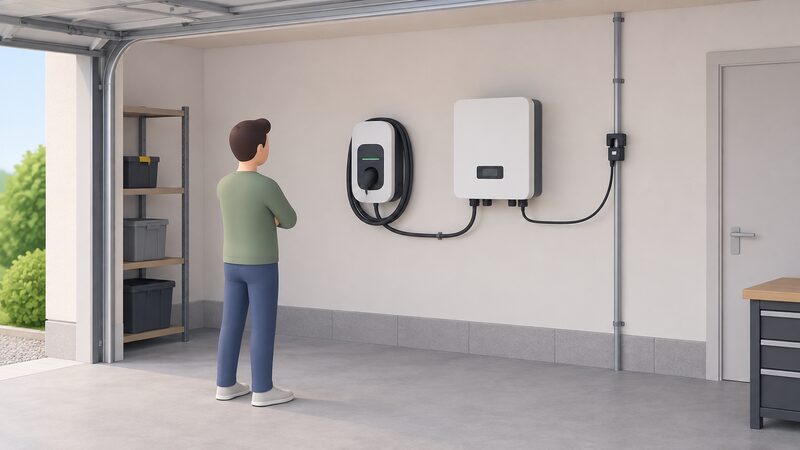
Easee lists Wifi and SIM card as the communications for the Home and The One chargers4. Having both means the unit can fall back to a mobile network where the household WiFi is weak or the router is changed, which is a practical advantage in a garage or a detached outbuilding where WiFi coverage is poor.
The Easee Charge Pro specification is fuller: Wi-Fi 2.4 GHz b/g/n, Bluetooth 4.2, a built-in e-SIM on LTE Cat M1, Cloud OCPP 1.6J, Easee Link 868 MHz radio and a built-in RFID/NFC reader6. The RFID reader is what allows access control on shared or workplace installations, and the 868 MHz radio is how multiple Easee units coordinate with each other without going through the internet.
The zappi datasheet lists an Ethernet port and built-in WiFi, with WiFi connectivity specified as 2.4GHz 802.11BGN up to 150 Mbps, and charging on Mode 314. There is no SIM card in that specification, so a zappi depends on the household's own network or a wired connection. For a household with reliable broadband and a router within range, that is not a limitation. For one with a weak signal at the parking space, the Easee arrangement is the more forgiving of the two.
Both chargers are Mode 3 units, which is the standard AC charging mode for home equipment14. Neither is a DC charger, and neither bypasses the vehicle's own onboard charger, so the charging speed is set by the car as much as by the wallbox.
Grid flexibility: the first EVSE maker with Mercury certification
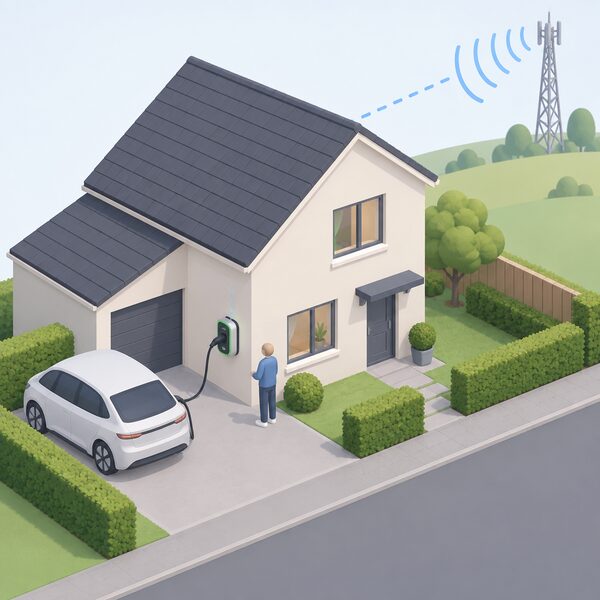
Easee became the first Electric Vehicle Supply Equipment manufacturer to receive Mercury certification for grid flexibility services3. Mercury certification confirms that a charger meets independently verified requirements for grid-ready functionality, and it is awarded by the Mercury Consortium, an independent, non-profit industry initiative established by EPRI and Kraken Technologies3. Easee, Zaptec and Octopus Charge were the first devices to carry the Mercury mark for smarter home energy3.
The scope of the scheme extends beyond chargers to devices from different manufacturers, including heat pumps, residential batteries, smart thermostats and solar systems3. That matters to a household because flexibility services only pay where several devices at a property can be coordinated; a charger certified under a scheme that also covers batteries and heat pumps is positioned for that coordination rather than for charger-only demand shifting. Easee has been an active participant in the Mercury Consortium since contributing to the development of its preliminary technical requirements for EV chargers3.
What certification does not do is guarantee a payment. It confirms the device meets the technical requirements of the scheme. The commercial arrangements sit with whoever operates the flexibility service, and the household's return depends on the tariff or service it signs up to. The independence point is that a certified charger can respond to a signal from outside the home, which is a form of dependence as well as a benefit: the household gains a route to reward, and in exchange accepts that a third party can influence when the car charges.
Design and accessories: five colours and nine accessories
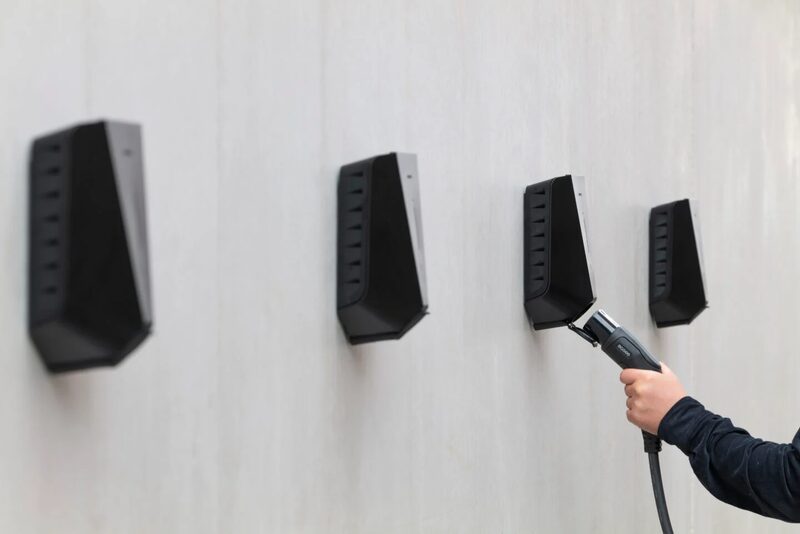
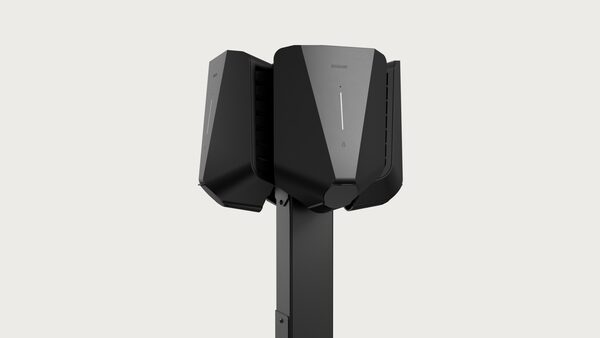
The Easee One is offered with a choice of five facia colours: white, red, dark blue, anthracite and black5. Easee's own product page states that the charger is available in black and that other colour front covers can be purchased separately7, and the Easee Charge Pro follows the same pattern, black as standard with white covers sold separately6. The two statements are consistent: the unit ships in black, and the colour range is achieved through interchangeable covers.
For comparison, the Andersen Quartz offers over 100 colour combinations for the fascia and body, with 247 different colour options and even fascias made of wood and carbon-fibre5. That is a different market position, and it shows how far the colour question can be taken. Five facia options is a moderate range: enough to match a wall or a door, not enough to be a design feature in itself.
Accessories matter more than colour for most installations. The Easee One is untethered5, so a Type 2 cable is needed, and the zappi is available in tethered or untethered versions8. Easee's scalability feature allows three Easee units on a single fuse, charging three cars from one location at the same time with the power split evenly between them and access controlled by RFID cards5. For a household with two electric cars, that is the relevant accessory path: a second unit on the same supply rather than a second supply.
Company standing: ChargeUp Europe membership, PAVE and industry role
Easee joined ChargeUp Europe, the voice of the EV charging infrastructure industry in Europe, in an announcement dated 13 July 20261. ChargeUp Europe is the industry association for the EV charging infrastructure sector, and its member companies are active in all 27 EU Member States, the UK and EFTA1. Membership places Easee inside the body that speaks for the charging industry to European regulators, which is a different kind of standing from a product certification.
The wider UK charging industry that Easee sells into is represented by ChargeUK, described as the voice of the UK's EV charging industry, which now represents 40 companies involved in installing, operating and supporting charge point infrastructure15. ChargeUK was set up in 2023 and brought together 24 charge point operators in the UK with a total of 6bn in investment16. A report commissioned by ChargeUK put the economic value from the charging sector at £15.5 billion by 203517.
For a household, the practical read is that Easee is inside the trade bodies that shape the rules its chargers will have to meet, rather than outside them. That is a modest signal of longevity. It says nothing about the reliability of an individual unit, and it does not replace the warranty terms, which sit with the maker and, after the ownership change, with the new structure.
Ownership: Brødrene Jensen acquires 100 percent of Easee
Brødrene Jensen, a shareholder in Easee since 2019, has acquired 100 percent of the company, with AWC providing financing and set to become the majority owner pending approval from the relevant authorities3. The transaction is dated May 2026. The sequence matters: full ownership passed to an existing shareholder, and a further change to majority ownership by AWC is pending regulatory approval rather than completed.
For a household, this is the fact that should shape how much weight is put on any long-term promise attached to the product. A warranty is only as good as the company standing behind it at the time a claim is made, and Easee's ownership is in transition. The company continues to trade, continues to announce product and certification news, and continues to export to 23 countries with close to 80 percent of revenue from exports1. None of that is a guarantee, and the pending approval means the final structure is not yet settled.
There is also a product safety matter on the record. GOV.UK published a product safety report covering Easee One EV Charger Backplate units with an incorrect PME terminal label, sold between late September 2025 and 3 February 202618. The report names the brand as Easee18. Households with an Easee One installed in that window should check the backplate against the report rather than assume the installation is unaffected.
Easee One and zappi side by side
| Easee One | myenergi zappi | |
|---|---|---|
| Origin | Founded in Norway in 2018; developed and manufactured in Norway1 | UK maker; listed among the top smart chargers in the UK2 |
| UK models | Home and The One supported4 | zappi range, tethered or untethered8 |
| Connector | Untethered5 | Untethered or Type 2 tethered9 |
| Solar | Solar Only supported; solar integration as standard4 | Compatible with solar panels and smart tariffs2 |
| Connectivity | Wifi and SIM card4 | Ethernet port and built-in WiFi, 2.4GHz 802.11BGN up to 150 Mbps14 |
| Grid flexibility | First EVSE maker with Mercury certification3 | Not stated in the sources for this page |
| Colours | Five facia colours5 | Not stated in the sources for this page |
| Ownership | Brødrene Jensen holds 100 percent; AWC pending as majority owner3 | Not stated in the sources for this page |
The table shows where the evidence is uneven. Easee's connectivity, colour and certification position is documented in detail; the equivalent zappi figures for colour and grid flexibility certification are not in the material behind this page, so the comparison is silent on them rather than favourable to either unit. On the facts that are documented, the two chargers are close: both do solar, both do smart tariffs, both offer untethered options, and both are sold into the UK by established makers.
The choice between them turns on three things a household can check for itself. First, whether the parking space has reliable WiFi, which decides whether the zappi's network dependence is a problem or not. Second, whether a tethered cable is wanted, which the zappi offers and the Easee One does not. Third, how much weight is placed on the ownership transition at Easee, which is unresolved pending approval3.
For the wider picture on how a home charger fits a household's energy position, the guide to EV charging and household energy independence sets out what a charger can and cannot do about reliance on the grid and a supplier. Households comparing solar-aware units more broadly will find the zappi solar-aware charger page useful, and the Easee One page covers that unit's specifications in more detail.
Sources18 cited
- Easee joins ChargeUp Europe, Easee, 13 July 2026
- EV charger installation, Good Energy, 18 September 2026
- Easee becomes first EV charger manufacturer to achieve Mercury certification, Easee, 23 June 2026
- Easee integration, ev.energy, 17 September 2026
- Home electric vehicle chargers, Carwow, 9 January 2026
- Easee Charge Pro, Easee, 10 September 2026
- Easee for apartment blocks, Easee, 13 March 2026
- Best EV charger for solar panels, Spirit Energy, June 2026
- Electric car charging at home, myenergi, 17 September 2026
- What is live data, Zapmap, 26 February 2026
- EV charging statistics, Zapmap, 2026
- Public electric vehicle charging infrastructure statistics, 1 July 2026, Department for Transport, 1 July 2026
- How to use electric car charging points, Which?, 20 May 2026
- zappi Multiphase Datasheet, myenergi, October 2024
- ChargeUK launches Our Electric Future, ChargeUK, 17 September 2026
- BEAMA Guide to Electric Vehicle Infrastructure, BEAMA, September 2024
- Over nine in 10 rapid EV charge points built outside London, ChargeUK, 30 June 2026
- Product safety report: Easee One EV Charger Backplate, GOV.UK, 6 May 2026
 Microgrids and Local EnergyA microgrid shares electricity between neighbours, using local solar and batteries instead of relying only on the national grid.
 Home EV Charger ManufacturersWhich home EV charger brands are worth considering, and how do you choose between them?
 Types of Home EV ChargerWhich home charger suits your car and your driveway?
 Solar and Energy IndependenceHow far domestic solar cuts dependence on suppliers and the grid, what self-consumption really looks like across the year, what a battery, diverter or EV adds, and the grid-outage limit of ordinary inverters.
 AC-Coupled vs DC-CoupledCan you add a battery to your existing solar panels without swapping the inverter, and does one kind waste more of your solar power than the other?
 Charging and Energy IndependenceCharging an electric car at home can cut your fuel costs, but how much does it really free you from the grid?