In this guide
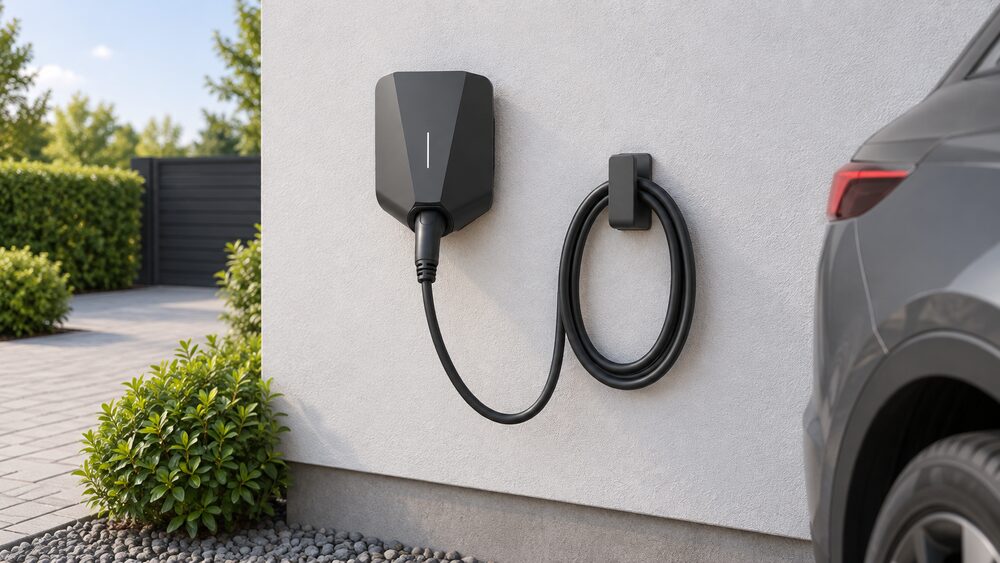
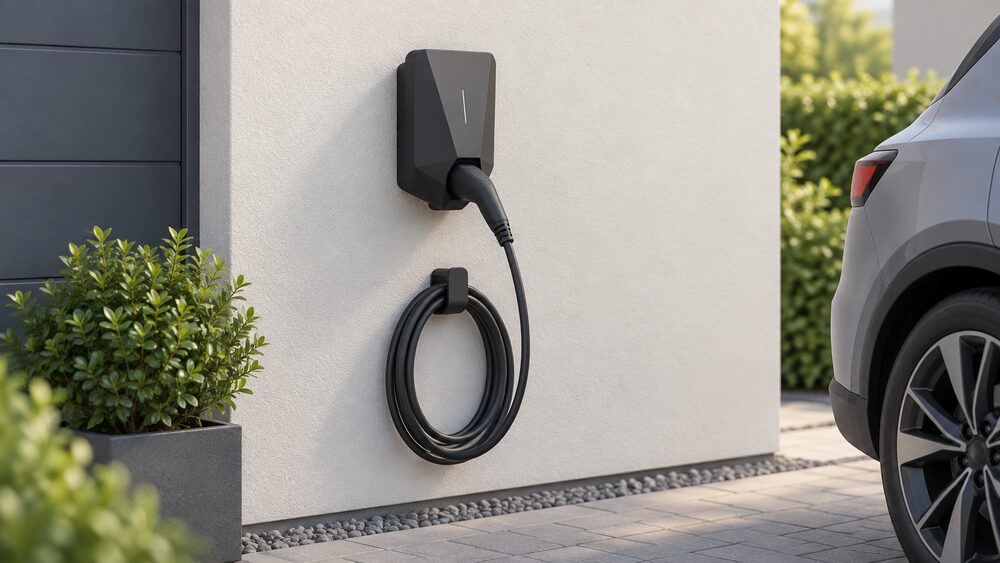
The Easee One is a compact, untethered 7.4 kW home wallbox designed in Norway and sold in the UK, where it is offered fully installed through Fuse Energy for £8991. It delivers 7.4 kW of power from a 32A current rating, which is the standard single-phase home charging speed in Britain2. The unit is untethered, meaning the charging cable is the driver's own Type 2 lead rather than a fixed one, and it is controlled by a 4G internet connection with a lifetime subscription1.
Easee describes the One as a 7.4 kW electric car charger with fully dynamic charging power between 1.4 and 7.4 kW, and energy measurement accurate to within 2 per cent for reading charge consumption3. Load and phase balancing technology is integrated into all Easee chargers, and the company states that up to 101 chargers can run on a single circuit4. The manufacturer's warranty is 3 years, and the Fuse Energy installation package covers both the unit and the installation2.
For a household, the Easee One is a grid-tied appliance: it draws from the mains, depends on a mobile data connection for its smart features, and depends on Easee's servers and app for remote control. What it offers in return is solar integration as standard, smart tariff compatibility, and load balancing that lets a home charge a car without upgrading its supply1.
Easee One at a glance: 7.4 kW, untethered, £899 installed
The headline figures for the Easee One are straightforward. It charges at 7.4 kW on a single-phase supply, which is the typical arrangement in most UK homes and some businesses6. The unit is untethered, so no cable is permanently attached, and it is controlled over 4G with a lifetime subscription included1. Easee's own product page describes it as a powerful 7.4 kW electric car charger with fully dynamic charging power from 1.4 to 7.4 kW3.
On price, the clearest UK figure is the Fuse Energy package: the Easee One EV charger, fully installed, for £8992. That price includes up to 15m of cabling, essential surge protection, and a 3-year warranty covering both the unit and the installation2. An independent product listing gives the same headline, describing the price as from £899 plus installation, which suggests the figure is widely quoted but that installation terms vary between providers1.
The distinction matters for a household comparing quotes. A fully installed price bundles the unit, the cabling run, the protective devices and the labour, while a unit-only price leaves the electrical work to be quoted separately. The Fuse Energy package is explicit about what is included, which makes it the more useful benchmark of the two2.
Specifications: power, dimensions and connectivity
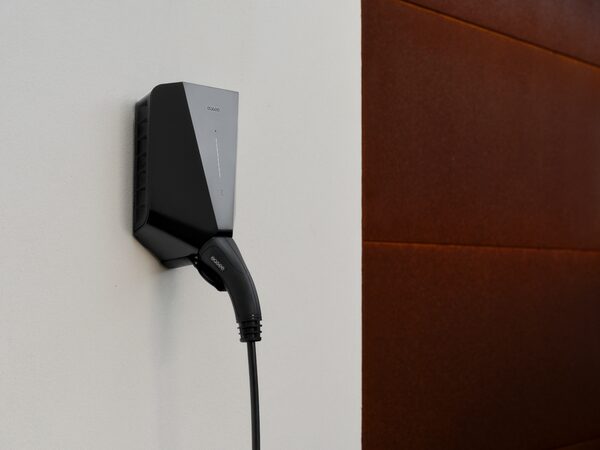
The Easee One sits on the same physical platform as the rest of the Easee range. The Easee Charge and Easee Charge Pro both measure H: 256 x W: 193 x D: 106 mm, which gives a good indication of the One's footprint, since the three share a common design language7. That is a small unit by wallbox standards, and it is one of the reasons the brand is popular in tight installations such as garages and narrow driveways.
Power output varies by model and by supply. The Easee One is specified at 7.4 kW single phase, with dynamic charging power between 1.4 and 7.4 kW3. Across the range, Easee states that its chargers support charging up to 22 kW and can charge on both 1 and 3 phase power5.
Connectivity is where the range differentiates itself from simpler wallboxes. Easee lists WiFi connectivity across its chargers, and the Easee One is controlled by a 4G internet connection with a lifetime subscription1. The unit is automatically updated with new software as soon as updates become available3. Energy measurement is accurate to within 2 per cent, which is what allows the app to report charge consumption with reasonable precision3.
| Specification | Easee One | Easee Charge | Easee Charge Pro |
|---|---|---|---|
| Power | 7.4 kW single phase3 | not stated | not stated |
| Dimensions | shared platform | H 256 x W 193 x D 106 mm7 | H 256 x W 193 x D 106 mm7 |
| Warranty | 3 years2 | 3 years7 | 5 years7 |
| Earth fault protection | integrated RCD | not stated | not stated |
Tethered or untethered, and five facia colours
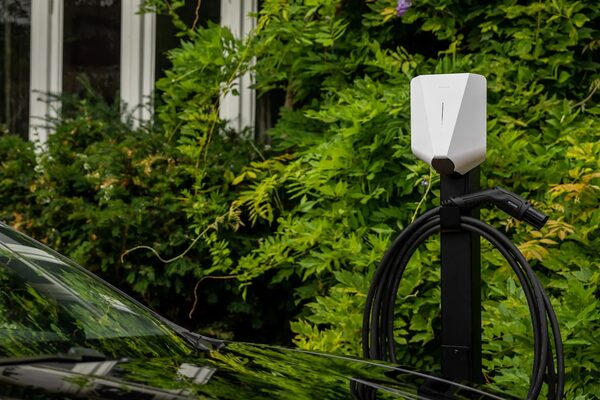
The Easee One is sold as an untethered unit, but the design allows the owner to choose. Easee states that the charger can be made tethered or untethered by locking the cable using the Easee App, so the same hardware can behave either way depending on preference3. That is unusual among home chargers, where the choice is normally fixed at the point of purchase.
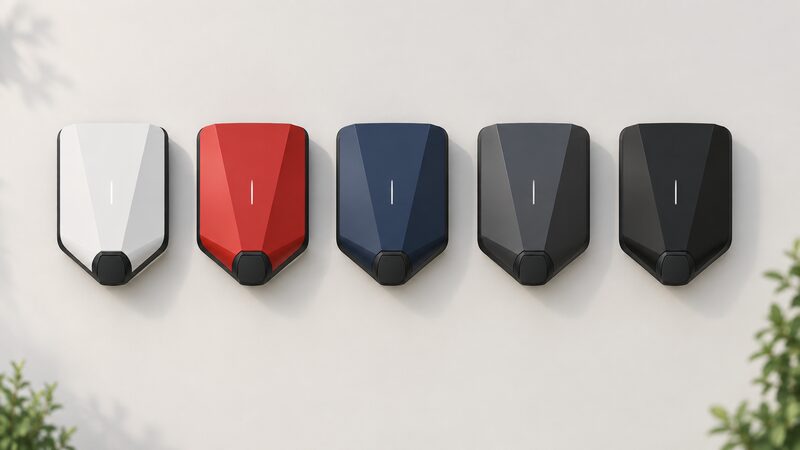
The facia is the other point of customisation. The Easee One is available in five colours: white, red, dark blue, anthracite and black1. Easee describes the front cover as coming in five different colours to match a car, home or personality, and states that covers can be changed by the user4. That means the appearance can be altered after installation without replacing the unit.
For households in conservation areas or with particular aesthetic requirements, the colour range is a practical consideration rather than a trivial one. The wider market offers far more variety: one independent comparison notes that the Andersen Quartz range offers 247 different colour options, including facias made of wood and carbon-fibre, and over 100 colour combinations for the fascia and body1. The Easee One sits at the simpler end of that spectrum, with five colours and a user-changeable cover1.
Accessories extend the same logic. The Easee U-Hook is offered with a scratch-resistant powder coating in three standard colours, and the Mirror edition carries a laser engraved logo9. These are cosmetic and cable-management additions rather than functional upgrades.
Smart charging, solar integration and load balancing
The Easee One's smart features are the main reason it appears on shortlists. Easee states that solar integration is standard and that the charger is compatible with smart tariffs1. Smart charging is available in the UK and Ireland, allowing the car to charge when energy is cheapest across a range of tariffs3. Easee's own summary is that the Easee One with smart charging is good for the wallet and the planet10.
Solar charging works through the wider Easee ecosystem. Easee states that its solar charging system tracks solar energy production and adjusts the charging rate accordingly, and that it balances electricity demand with supply, helping to reduce strain on the grid11. Across the range, Easee describes the proposition as charging a car with clean and renewable energy while balancing supply and demand on the grid4.
Load balancing is integrated rather than optional. Easee states that its load and phase balancing technology is built into all its chargers, and that it enables load and phase balancing of up to 101 EV chargers on a single circuit4. Together with the Easee Equalizer, Easee states it is possible to use almost 100 per cent of the available energy capacity to charge a car4. For a single household, the practical effect is that the charger can throttle itself to avoid overloading the supply, which is often what allows an installation to proceed without a supply upgrade.
The grid benefit is stated by the maker rather than measured independently. Easee says that with smart charging, households help relieve pressure on the electricity grid, reducing the need for costly infrastructure upgrades10. That is a manufacturer's framing of a real mechanism: shifting charging away from peak hours reduces the peak demand a network has to serve.
Who makes it: Easee, a Norwegian company now wholly owned by Brødrene Jensen
Easee was founded in Norway in 2018 and designs, develops and manufactures smart, connected EV chargers for homes, workplaces and commercial settings12. The company develops and manufactures its products in Scandinavia and exports to 23 countries across Europe, with Sweden, the United Kingdom, Germany, the Netherlands, Switzerland and Denmark as its largest markets12. It has installed more than one million chargers across Europe12. The chief executive is Øyvind Stavland Osjord12.
Ownership changed in 2026. Brødrene Jensen, a shareholder in Easee since 2019, acquired 100 per cent of the company, with AWC providing financing and set to become majority owner pending regulatory approval12. Easee describes the new ownership as strengthening its platform for global growth. The company has also joined ChargeUp Europe, the EV charging infrastructure industry body, and states that it was the first Electric Vehicle Supply Equipment manufacturer to receive Mercury certification for grid flexibility services12.
Manufacturing location matters for parts and service. Easee states that its accessories and the Easee Base are designed and manufactured in Norway13. The Easee One backplate carries a country of origin of Norway on its official product record14. For a UK household, that means a supply chain running through a Norwegian manufacturer with a European distribution footprint, rather than a UK-assembled product.
UK availability and installation through Fuse Energy
The Easee One is available in the UK through Fuse Energy, which offers the charger fully installed for £8992. That package includes up to 15m of cabling, essential surge protection, and a 3-year warranty covering both the unit and the installation2. The price is presented as transparent, meaning the components and the labour are bundled into a single figure rather than quoted separately.
Installation is a professional electrical job. The Easee One is a 7.4 kW unit drawing 32A, which requires a dedicated circuit and appropriate protective devices2. Earthing arrangements depend on the type of supply at the property, and the PME terminal labelling issue covered by the safety report is directly relevant to that assessment14.
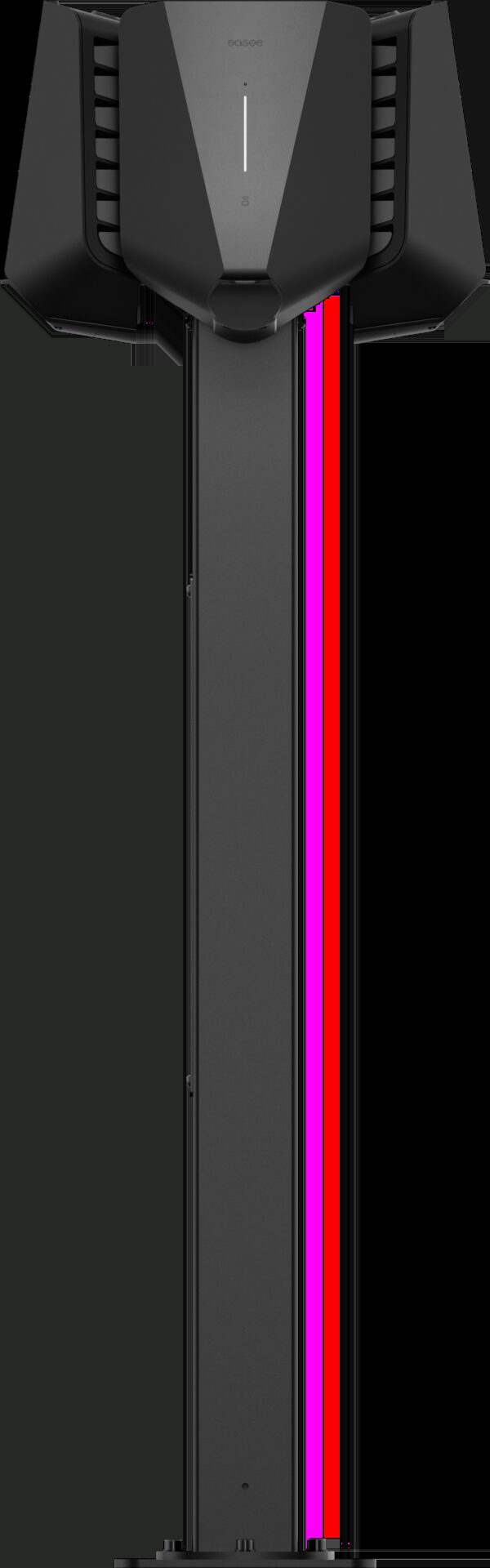
Accessories for multi-charger installations are available through the same channels. The Easee Base supports up to four chargers on a single post, and the Power Rail supports connection of up to four Easee EV chargers on one post13. Easee states that the Equalizer can be ordered via its dealers11. For apartment blocks and shared parking, Easee describes its chargers as universal, fitting all types of electric cars and power supplies, with an automatic queuing system to manage multiple vehicles5.
Warranty: 3 years as standard
The Easee One carries a 3-year warranty when installed through Fuse Energy, covering both the unit and the installation2. Easee states that the manufacturer's warranty runs from the day the charger is installed, which makes the installation date the reference point rather than the purchase date5. The Easee Charge also carries a 3-year manufacturer warranty, and the Easee Equalizer carries a three-year warranty11. The Easee Charge Pro is listed with a 5-year manufacturer warranty, so terms are not uniform across the range7.
The warranty structure has two parts that a household should keep distinct. The manufacturer's warranty covers the unit, while the installation warranty covers the work. The Fuse Energy package explicitly covers both, which is a meaningful difference from buying a unit and arranging installation separately, where the two warranties come from different parties2.
Registration and record-keeping matter. Because the warranty starts on the installation date, the commissioning record and the installer's paperwork are the evidence of when cover began5. For the Easee One specifically, the safety report covering backplates sold between late September 2025 and 3 February 2026 is a reminder that the backplate is part of the installed system and its labelling is part of the installation record14.
What owning an Easee One means for energy independence
A home charger is an energy smart appliance in the official sense: an appliance, such as an electric vehicle charging point or a heat pump, capable of increasing or reducing its electricity demand in response to signals received remotely from a third party15. A parallel definition describes an energy smart appliance as an internet-connected appliance that can adjust its electricity usage automatically based on signals received remotely16. The Easee One fits both descriptions, and that shapes what it does and does not do for a household's independence.
What it adds is control over when charging happens. Paired with a smart tariff, the charger can shift demand to cheaper periods, and paired with solar it can track production and adjust the charging rate accordingly1. Where a home has solar and storage, self-consumption is the mechanism: increasing self-consumption reduces reliance on the grid17. More homegrown energy means greater energy independence, as one independent consultation puts it18. The Easee One contributes to that by making it easier to charge from what the roof produces rather than from the network.
What remains is dependence. The charger draws from the grid, so the car is only as low-carbon as the electricity supply. Its smart features depend on a 4G connection with a lifetime subscription and on Easee's app and servers1. The company is Norwegian and now wholly owned by Brødrene Jensen, so the manufacturer relationship sits outside the UK12. The warranty depends on the installation route and on the installer's records2. And the backplate safety report shows that even a well-regarded product can have a component-level issue that requires owners to check their installation14.
For a household weighing this up, the honest position is that the Easee One is a well-specified, compact, solar-aware wallbox with strong load balancing and a clear installed price. It reduces the cost and carbon of charging by shifting when charging happens. It does not reduce the home's reliance on the grid, on a mobile network, or on a manufacturer's software platform.
Sources18 cited
- Best home EV chargers, Carwow, 2026
- EV charger installation in Havering, Fuse Energy, 2026
- Easee One, Easee, 2026
- Easee EV chargers, Easee, 2026
- Easee for apartment blocks, Easee, 2026
- EV charging glossary, Uswitch, 2024
- Easee Charge Pro, Easee, 2026
- Easee accessories, Easee, 2026
- Easee U-Hook, Easee, 2026
- Set it and forget it, Easee, 2025
- Easee solar charging, Easee, 2026
- Easee joins ChargeUp Europe, Easee, 2026
- Easee Base, Easee, 2026
- Product safety report: Easee One EV Charger Backplate, GOV.UK, 2026
- Energy smart appliances, House of Commons Library, 2026
- Energy smart appliances and load control, House of Commons Library, 2026
- Electrical energy storage systems, Flexi-Orb, 2025
- Solar Energy Scotland manifesto, Solar Energy UK, 2026
 Easee OneThinking about the Easee One?