In this guide
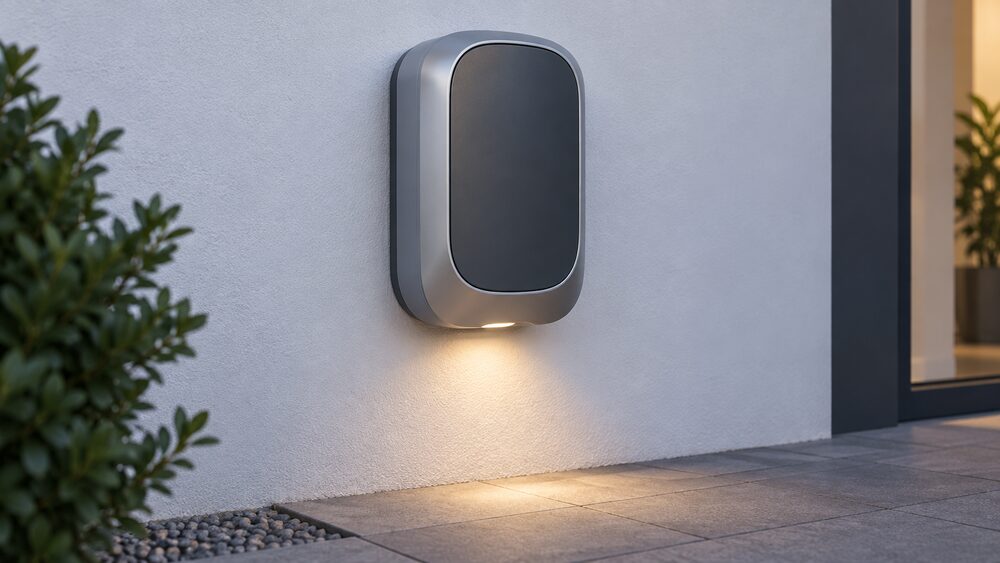
The Andersen A3 is a British-built home charge point sold on design as much as on electrical specification. It is a 7kW wallbox with a tethered cable that hides inside the unit when not in use, offered in up to 247 colour and finish combinations, and listed by the maker from £1,430 installed1. Andersen describes it as its best-selling charge point and as suitable for most homes1.
The headline figures are straightforward. Power is 7kW, which the maker says fully matches the maximum single-phase AC charging rate of standard UK homes, with 22kW available where a house has a three-phase supply1. The warranty is 7 years on units bought on or after 14 May 2024, and 3 years on units bought before that date1. The cable is 5.5m as standard, with an 8.5m option listed1.
The A3 sits in a range that also includes the A2 and the newer, smaller Quartz, all three of which are sold through John Lewis & Partners4. For a household weighing energy independence, the A3 is a well-specified grid-connected charger: it can be scheduled, it is integrated with a smart tariff, and it is listed as solar compatible, but it does not generate or store anything, and its smart functions depend on broadband and the manufacturer's cloud.
What the A3 offers a UK household
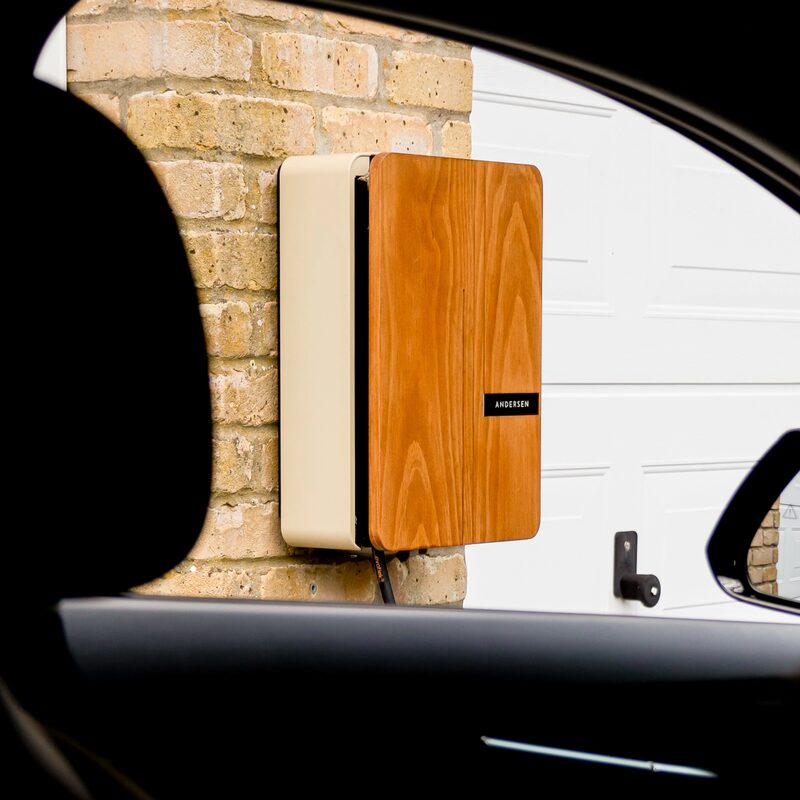
The A3 is a tethered wallbox, meaning the cable is permanently attached to the unit rather than being a separate lead carried in the boot. Andersen's distinguishing feature is that the cable and plug tuck away inside the wallbox when not in use, and the company states that the A3 and A2 are the only home chargers to feature a hidden cable and plug5. The unit is connected directly to the household fusebox3.
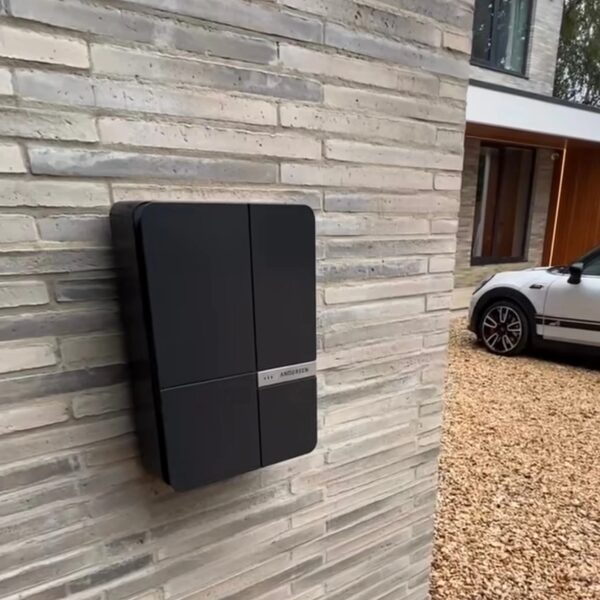
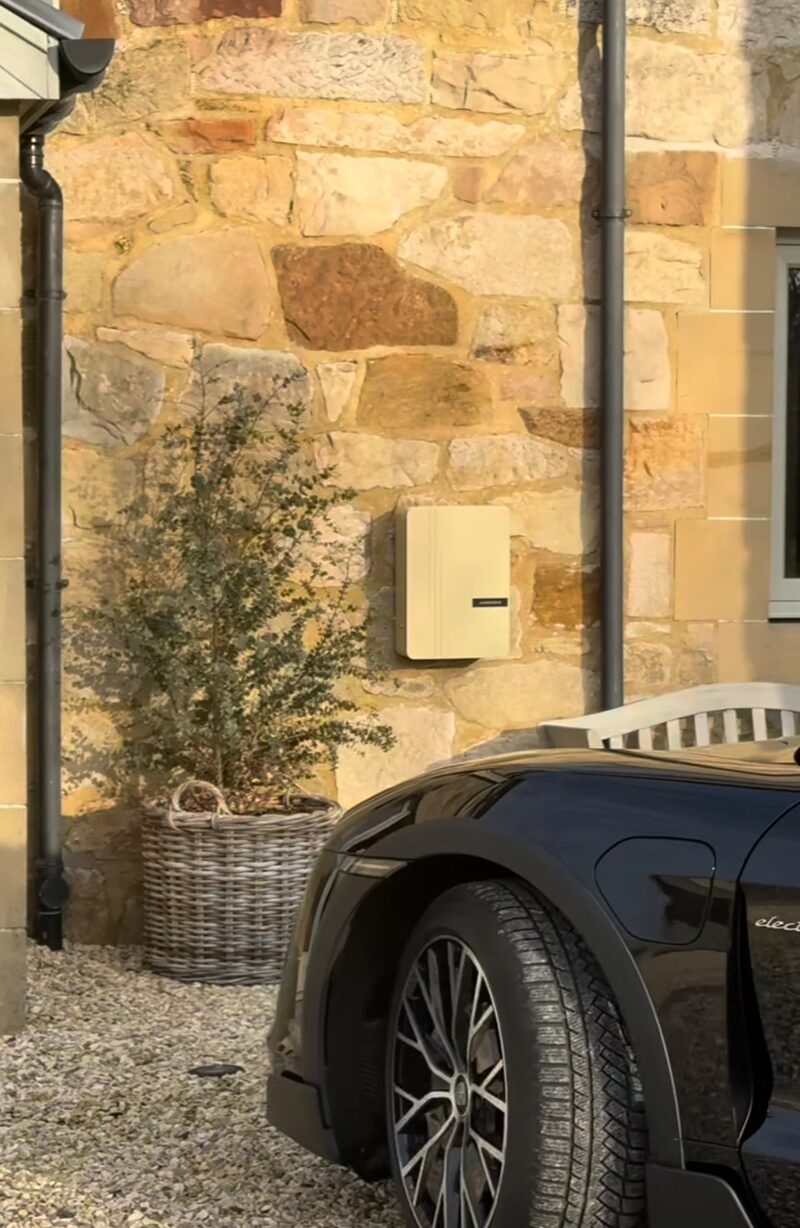
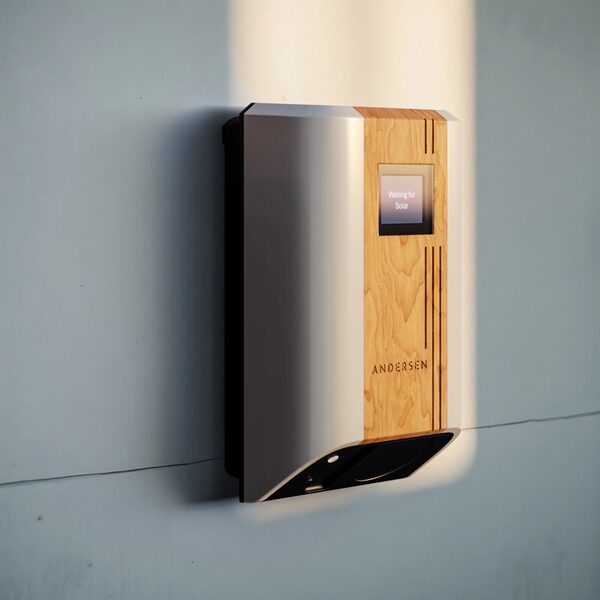
It is sold as a design object as much as a piece of electrical equipment. Andersen lists 247 colour and finish combinations including metal, wooden and special edition fascias, and offers a custom colour palette service that allows a unit to be colour-matched to any item1. A special edition A3 fascia was created with the automotive design house CALLUM Designs6. The body and front fascia are manufactured from cast aluminium, which the maker says ensures weatherproof durability4.
The A3 is available in the UK alongside the A2 and the newer Quartz, and all three are sold through John Lewis & Partners4. Andersen states that the A3 is designed, engineered and hand-built in Bedfordshire4. The maker also reports over 14,000 customers, though its own pages give a lower figure of over 13,000 elsewhere, so the two numbers sit side by side in its documentation1.
For a household, the practical offer is a 7kW charge point that covers an overnight fill for most cars, with a finish chosen to match the house rather than the garage. What it does not offer is any change to where the electricity comes from.
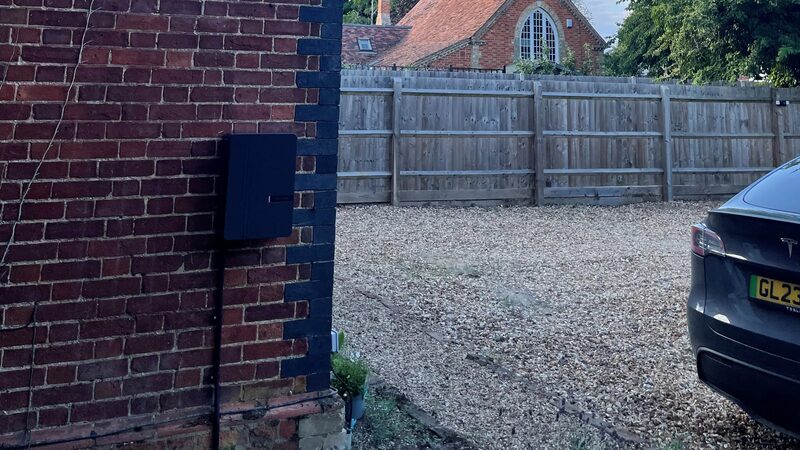
Specifications: 7kW, 5.5m cable, cast aluminium
The A3's electrical specification is deliberately conventional. Andersen states that the A3 can charge at 7kW, and that a house with a three-phase electricity supply can have a charger running at 22kW3. The maker's product page gives the figure as 7.2kW in a charging-time formula, and describes the A3 as fully matching the maximum single-phase AC charging rate of standard UK homes2. The two figures, 7kW and 7.2kW, both appear in the maker's own material and are not reconciled there.
| Specification | Andersen A3 |
|---|---|
| Power | 7kW single-phase; 22kW with a three-phase supply1 |
| Connector | Tethered 7kW cable, 5.5m or 8.5m3 |
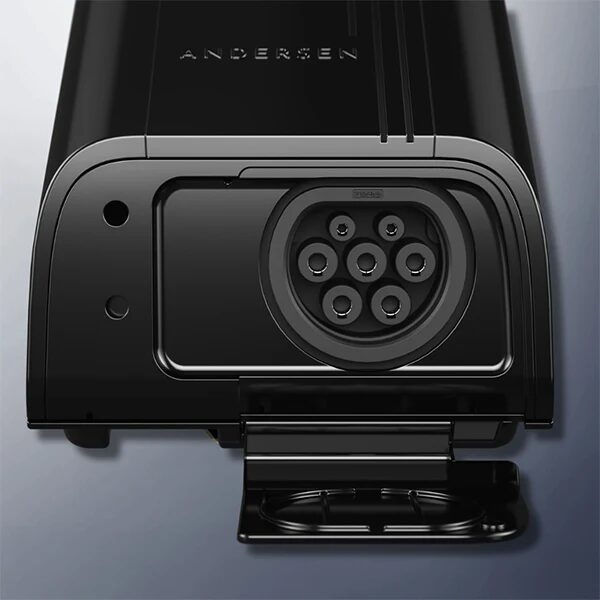
| Cable storage | Hidden inside the wallbox, winds clockwise or anticlockwise1 |
| Plug rating | IP44 rated type 2 plug, maintained only with the rubber cap secured3 |
| Dimensions | 430 x 310 x 148mm2 |
| Construction | Cast aluminium body and front fascia4 |
| Certification | IEC 61851-1 mode 33 |
| Connectivity | 128-bit data SSL AES encryption for smart connectivity3 |
| Lighting | Convenience lighting illuminates the floor area below1 |
The dimensions place the A3 in what the maker calls the standard size category2. For comparison, the newer Quartz is described as 34% shorter and 45% narrower than the A37. The A3's cable length of 5.5m is described by the maker as standard across the electric vehicle charging industry1. The IP44 rating on the type 2 plug is conditional: it is only maintained if the protective rubber cap is fully secured onto the plug when the charge point is not in use3.
Warranty: 7 years, but the purchase date decides
Andersen states that all its charge points are protected by a 7-year warranty, and the A3 is listed with 7 years of Andersen Care Cover subject to warranty terms1. The term is not uniform across the installed base. Units purchased on or after 14 May 2024 come with a 7-year warranty, while units purchased before that date carry a 3-year warranty1.
There is a harder cut-off behind that. Muller EV Ltd, trading as Andersen EV, went into administration in October 2022, and certain assets were taken over by Andersen EV Plc, with no contractual warranty support for units purchased before 24 October 20221. A household buying a used A3, or one installed before that date, cannot treat the warranty as something to rely on.
Installation is handled by Andersen's own team of in-house installers, and the company's installation service holds Which? Trusted Trader status5. That matters for warranty administration, because the maker's aftercare route runs through its own engineers rather than a network of independent fitters.
What the A3 costs
Andersen lists the A3 from £1,430, which is an installed price rather than a unit price2. The newer and smaller Quartz is listed at £1,130 including installation by one of Andersen's expert team of engineers4. Both figures are the maker's own and should be read as indicative: the final quote depends on cable run, consumer unit capacity and any remedial electrical work found at the survey.
For context on what a premium charger costs above a benchmark unit, one independent guidance document puts a Level 3 7kW AC charger at a total premium of £150 to install above a benchmark charger, with £30 and £15 components alongside it, as of around 20238. That figure describes the premium for a higher specification rather than the price of any particular brand.
Andersen has run promotional offers on its chargers. A £550 installation saving offer is stated as available until 31 March 2027, and a 3,000 free miles of home charging offer applies to purchases made after 1 September 2026 and ends on 30 September 20264. Offers of this kind change the effective price at the point of purchase, so the figure a household pays can differ from the list price.
Smart charging, tariffs and solar
The A3 is a smart charge point. Andersen states that as of September 2025 all Andersen A3 chargers are integrated with Intelligent Octopus Go, and that its range of charge points is compatible with popular EV smart charging tariffs such as OVO Charge Anytime1. The maker claims access to savings of over £400 a year through such tariffs1. The A3 is also listed with solar compatibility and solar integration among its features1.
Scheduling is done through a phone app. The maker's own review coverage notes that a household has to use a phone app to schedule charging, though once the parameters are set the process is largely automatic5. The charger can be set to deliver power only at certain times, which is what makes cheap-rate overnight electricity useful3. The A3 also supports remote charge point locking1.
This is where the A3's independence is thinnest. A smart tariff, a solar diversion decision and remote locking all depend on the charger's connection to the internet and to the manufacturer's servers. The A3 carries 128-bit data SSL AES encryption for its smart connectivity, which addresses the security of that link rather than the dependence itself3. A household that loses broadband, or a maker that withdraws an app, loses the scheduling and solar features even though the charger still delivers power.
What the What Car? review found
In the What Car? 2024 home EV charger review, the A3 received a score of four stars out of five, ranking fourth overall, but scoring the highest overall for installation satisfaction and a joint highest ranking for ease of use5. Andersen was also ranked the best charger for quality in that review5.
The same coverage reported on aftercare performance: Andersen provided a swift, effective response to customers with faults, fixing 50% of issues in less than 24 hours, 25% in less than a week, and the rest in less than 30 days5. The reviewer also noted the complimentary concierge service as useful for advice on the most suitable low-cost energy tariff, and liked that the A3 is made from sustainable materials and could be ordered with a Cotswold Oak Accoya front panel and cream casing5.
These are favourable indicators rather than a guarantee of individual performance. A review score reflects one publication's testing and one set of customer experiences; installation quality, cable routing and the condition of the existing consumer unit shape how a charger performs in a given house.
Company status and UK manufacturing
Andersen EV Plc is the entity behind the A3, following the October 2022 administration of Muller EV Ltd and the transfer of certain assets1. The company appointed John Stamford as Managing Director in August 2026, in a period when it states sales more than doubled4. In August 2026 it announced a partnership with Rightcharge to make it easier for electric fleets to reimburse drivers for charging at home4.
Manufacturing is domestic. The A3 is designed, engineered and hand-built in Bedfordshire, and the maker describes it as British-built and crafted in the UK1. UK assembly shortens the supply chain for parts and service compared with an imported unit, though the company remains a single manufacturer on which warranty, app and firmware support depend.
The A3 is also sold as an OEM unit under other brands. Andersen lists charger pages for BMW and Geely, and a Tesla landing page, indicating that the same hardware is offered through vehicle manufacturer partnerships9. For a household, that widens the routes to purchase but does not change the underlying dependence on one maker for support.
What the A3 means for energy independence
A home charge point does not make a household independent of the grid. It moves the cost of motoring from petrol or diesel to electricity, and it allows that electricity to be bought at whatever time and tariff the household chooses. The A3 supports that shift: it can be scheduled to run only at cheap overnight rates, it is integrated with a smart tariff, and it is listed as solar compatible1.
The limits are worth stating plainly. The A3 draws from the grid through the household supply, so the household remains dependent on a supplier and on the network. Its smart functions depend on broadband and on the manufacturer's cloud, so scheduling, remote locking and solar diversion are not available if that link fails. Solar compatibility means the charger can be told to use surplus generation, not that it produces any; the panels and any battery are separate purchases.
Where the A3 does contribute is in shifting consumption to cheaper and lower-carbon hours. The maker claims savings of over £400 a year through smart charging tariffs, and the A3's integration with Intelligent Octopus Go as of September 2025 is the mechanism1. Independent definitions of grid independence describe it as the fraction of electricity consumed in a property that is met by self-consumed generation or storage, which is a measure the A3 affects only indirectly, by making it easier to charge when a household's own solar is generating11. The wider policy direction, including the Energy Independence Bill's focus on affordability and security, sets the context rather than changing the charger's role12.
Sources12 cited
- Andersen A3 product page, Andersen EV, 2026-09-17
- Andersen A2 product page, Andersen EV, 2026-09-17
- Why do I need a home charger, Andersen EV, 2026-09-17
- Andersen news, Andersen EV, 2026-08-27
- Andersen A3 ranked best home charger for quality by What Car?, Andersen EV, 2024-08-07
- Andersen's in-house installation service earns Which? Trusted Trader status, Andersen EV, 2024-06-03
- Home electric vehicle chargers, Carwow, 2026-01-09
- V2GB vehicle to grid Britain, Cenex, 2026-09-17
- BMW and Andersen charger, Andersen EV, 2026-09-17
- Geely and Andersen charger, Andersen EV, 2026-09-17
- MCS 032 2025, MCS Certified, 2025-01-01
- King's Speech outlines three energy bills due to be debated by MPs, End Fuel Poverty Coalition, 2026-05-13
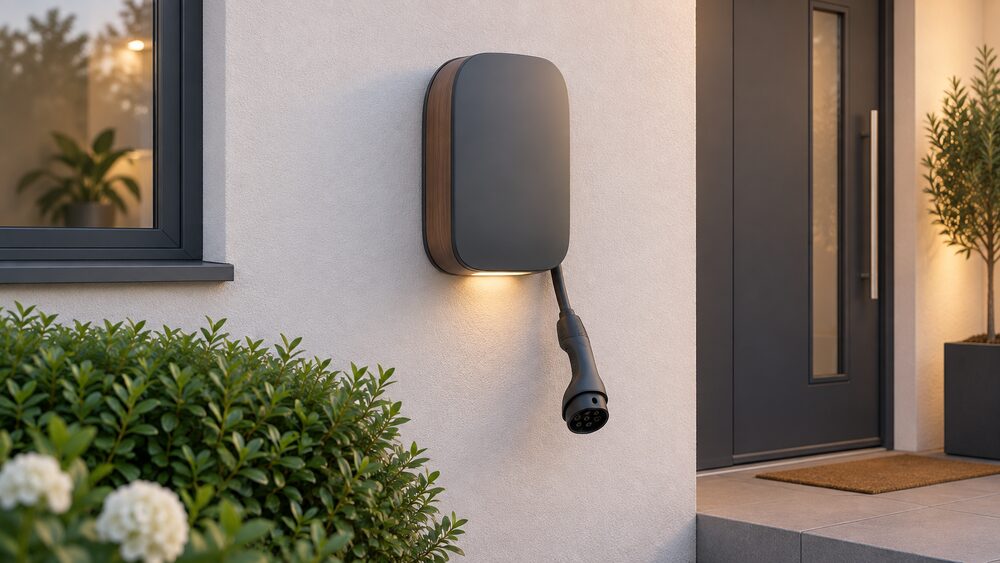 Andersen designer EV chargersAndersen chargers are British-made and sold on their looks as much as their specs.