In this guide
Andersen EV is a British maker of premium, design-led home charge points, sold in 7kW and 22kW versions and built in Bedfordshire1. The brand's history matters as much as its specification: the original company, Muller EV Ltd T/A Andersen EV, went into administration in October 2022, and its assets were taken over by Andersen EV Plc, with the business acquired by EVIOS Plc on 24 October 2022 and production restarted immediately1.
That sequence shapes what a household is buying today. Units purchased before 24 October 2022 carry no contractual warranty support, while units bought on or after 14 May 2024 carry a seven-year warranty1. The current range is the A3, the A2 and the newer Quartz, offered in over 200 colour and finish combinations and compatible with all Type 2 electric and hybrid cars4.
Andersen EV went into administration: what happened and what it means for owners
In October 2022, Muller EV Ltd T/A Andersen EV went into administration1. The immediate consequence for owners was connectivity: with the company in administration, chargers were left without cloud connectivity or smart charging, rendering them effectively dumb. They could still charge a vehicle, but their smart features and app functionality were lost9.
That episode is the clearest illustration of what cloud dependence means in practice. A wallbox is a piece of electrical hardware, but its scheduling, monitoring and solar features sit on a manufacturer's servers. When the company behind those servers fails, the hardware keeps working and the intelligence does not.
Recovery followed quickly. EVIOS Plc announced on 24 October 2022 that it had acquired the premium home charging business, and stated that production of Andersen units would recommence immediately3. For a household weighing a premium charger, the lesson is not that the brand is unsafe but that the smart layer is only as durable as the company providing it. Local charging at the unit continues regardless; remote control does not. The wider question of what a charger can do without a server is covered in EV charger apps, Wi-Fi, 4G and firmware.
The company today: new ownership, new management and doubled sales
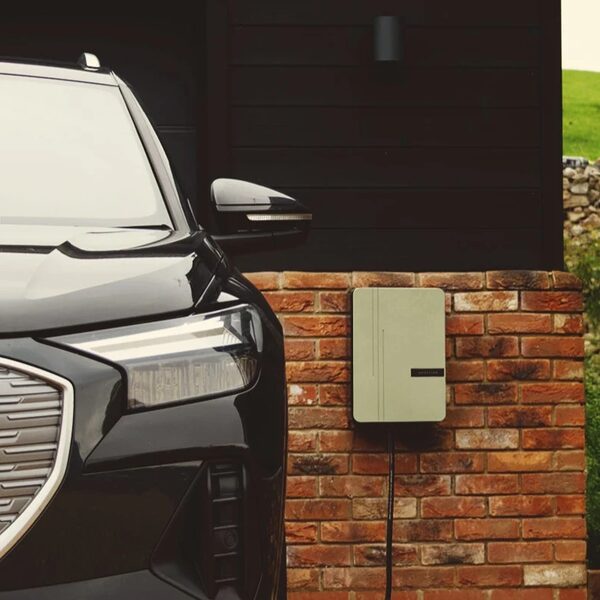
Andersen EV appointed John Stamford to the new role of Managing Director on 19 August 2026, announcing the appointment alongside sales that had more than doubled4. A separate company statement describes more than a doubling of sales over the past nine months10. The maker reports more than 13,000 customers11, and in December 2024 announced its two-millionth charging session since the business was acquired two years prior5.
Ownership has been stable since the 2022 rescue. David Martell acquired the business in 2022 and is named as CEO, with the company describing increased investment in UK-based manufacturing capabilities since the acquisition5. Andersen EV Plc took over certain assets from Muller EV Ltd1.
Two commercial developments point to the brand's current direction. John Lewis & Partners chose Andersen as its home EV charge point partner, stocking the A2, A3 and Quartz, with installation handled by Andersen's in-house engineers and the Concierge Service provided free of charge10. A partnership with Rightcharge, announced on 27 August 2026, is intended to make it easier for electric fleets to reimburse drivers for charging at home, removing the need for manual expense claims4.
For a household, the relevant reading is that the company has survived its failure, changed hands, restarted production and grown. That is a stronger position than 2022, but it remains a single manufacturer's account of its own recovery, and the warranty terms still distinguish sharply between units bought before and after the rescue.
The range: A3, A2 and Quartz designer charge points
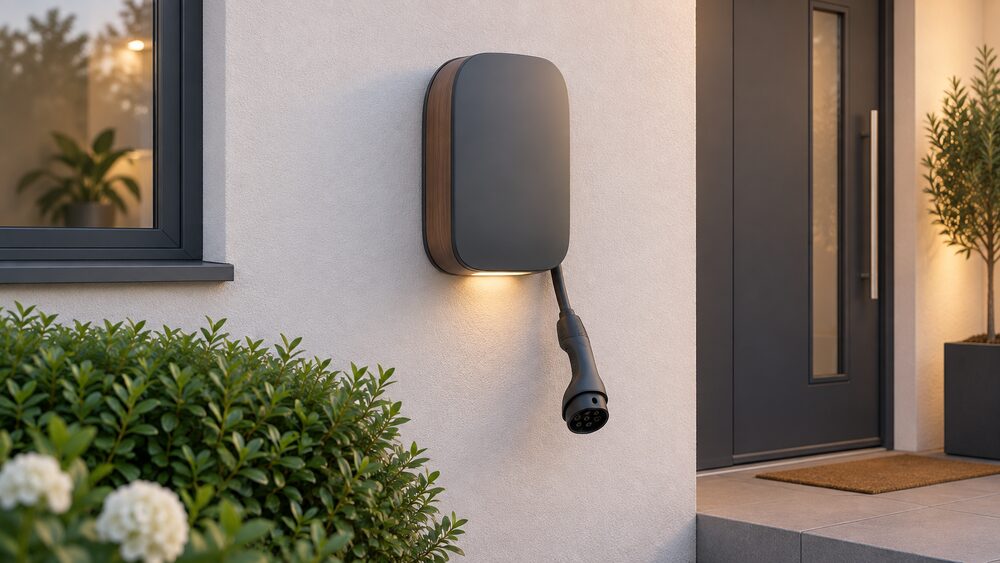
Andersen sells three charge point families. The A3 is the current flagship, available in 247 colour and finish combinations with a hidden tethered charging cable and convenience lighting7. The A2 is the model that established the brand, available in over 200 colour and finish combinations with a hidden tethered cable7. The Quartz is described as the most compact and flexible charge point, suitable for any home, with socketed and tethered charger options7.
The Quartz is also the most technically flexible on supply type: it is suitable for both single-phase and three-phase charge points6. That matters for households with a three-phase supply, where a 22kW unit can charge faster than a single-phase 7kW unit. The trade-offs between the two power levels are set out in 7kW vs 22kW home EV charger.
| Model | Power options | Cable | Notable feature |
|---|---|---|---|
| Andersen A3 | 7kW and 22kW2 | Hidden tethered cable7 | 247 colour and finish combinations, convenience lighting7 |
| Andersen A2 | 3kW, 7kW, 22kW13 | Hidden tethered cable7 | Over 200 colour and finish combinations7 |
| Andersen Quartz | 7kW and 22kW2 | Socketed or tethered13 | Single-phase and three-phase compatible6 |

Design and finishes: aluminium, wood and over 200 colour combinations
The design proposition is the reason the brand exists. Andersen describes over 200 different colour and finish combinations across the range4, with the A3 alone offered in 2477. One support page refers to 126 different colour options, so the figures vary by page and by model11.
The materials and finish options are what separate a designer charge point from a standard wallbox. A unit that sits on the front of a house, or on a listed or period property, is a visible object rather than a utility fitting, and the configurator exists to let a household match it to the building. The A3's convenience lighting and hidden tethered cable are part of the same approach: the cable is stored out of sight rather than coiled on a hook.
"With over 200 colour and finish combinations, a hidden tethered charging cable and a market-leading 7-year warranty"
The practical consequence is a longer specification and ordering process than a standard charger, and a unit whose appearance is a deliberate purchase decision. It also means the finish is part of what is being warranted, so a household should expect the colour and material choice to be recorded at order. For households where the charger will be visible from the street, the wider constraints are covered in Can I install an EV charger in a conservation area?.
Specifications: 7kW and 22kW, Type 2 tethered cable and dimensions
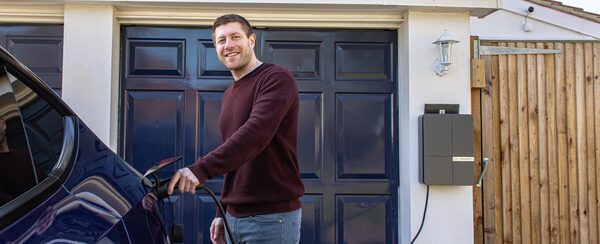
Andersen charge points are available in 7kW and 22kW versions2. The A2 page lists 3kW, 7kW and 22kW fast charging13. One product page describes 7kW fast charging only, so the published power figures vary by page and model, and the exact rating should be confirmed for the specific unit ordered14.
All Andersen chargers use Type 2 connectors, which the maker states are compatible with all modern EVs sold in the UK and Europe6. The range is described as compatible with all Type 2 electric and hybrid cars14. The maker lists specific compatibility pages for Porsche, Renault, Alpine, Dacia, Polestar, Kia and Land Rover models, and states that its charge points are compatible with all Porsche vehicles, both pure electric and plug-in hybrid15.
A 7kW unit is the standard single-phase home rating and suits overnight charging for most drivers. A 22kW unit requires a three-phase supply to deliver its full output, and on a single-phase supply it will not charge faster than a 7kW unit. The Quartz's support for both single-phase and three-phase installations makes it the natural choice where a three-phase supply exists6. Charging speeds and what they mean in practice are covered in EV Charging Speeds and Times, and connector types in EV Connectors and Cables.
Smart charging and tariffs: off-peak scheduling and Intelligent Octopus Go
Andersen chargers are compatible with Intelligent Octopus Go11. The A3 was integrated with the tariff as of September 202520, and the maker states that its range of charge points is compatible with popular EV smart charging tariffs such as OVO Charge Anytime20. Intelligent Octopus Go works by having the supplier charge the car at times when energy is cheapest21.
The value of tariff integration is that the charger and the supplier coordinate, so the household does not have to time charging manually. That is a real benefit for a driver on a time-of-use tariff, and it is the main reason a smart charger earns its premium over a dumb one. The dependence is equally real: the integration runs through the manufacturer's cloud and the supplier's systems, and it stops working if either does. The general mechanics are covered in EV Energy Tariffs and How They Change Home Charging.
Solar is handled the same way. Andersen states that all its charge points are compatible with solar, controlled through the Andersen App, with Advanced Solar available as a configuration option6. The A2 page notes that surplus locally generated energy can be used to charge an EV12. Smart chargers generally monitor real-time solar production, adjust charging speed accordingly, and switch between solar and grid supply depending on availability22. More on this is at Charging an EV from Solar Panels.
Warranty, Concierge service and installation options
The warranty terms are the most important thing to read before ordering, because they differ by purchase date and by who installed the unit. Units purchased on or after 14 May 2024 come with a seven-year warranty, while units purchased before that date carry a three-year warranty1. Charge points and ancillary items installed by an Andersen installer, including those benefiting from an OZEV grant, qualify for seven years1. Charge points installed by Andersen affiliate partners qualify for seven years on a return-to-base basis1.
The guarantee can be transferred to a new property address or location, provided the charge point is removed and re-installed by an Andersen installer, and, where an OZEV grant was received, OZEV must have been informed of the change of address1. To claim, an owner registers the product on the Andersen App or contacts support by phone on +44 (0) 1234 916125 or by email at helpdesk@andersen-ev.com; where a third party installed the unit, that party is the contact1.
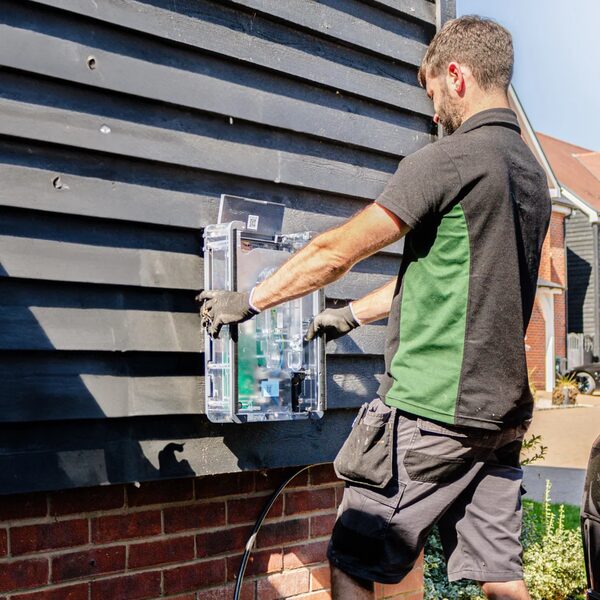
Installation is handled by Andersen's own in-house team of engineers, with the Concierge Service provided free of charge10. Installation takes between three and six hours depending on complexity, with a two to three week lead time6. Products are normally shipped next working day, or within three to four days on one support page9. The maker is the recommended installation provider for Porsche home charging15. The general process is covered in Home EV Charge Point Installation.
Cost, grants and offers: what a household pays and can claim
Andersen does not publish a list price for a supplied and fitted charger, so prices are installer-quoted. What is published is the grant position and the promotional offers.
The Electric Vehicle Chargepoint Grant offers up to £350 per socket for residential landlords, people living in flats and people who rent their homes, to install home EV chargers23. One independent source puts the grant at up to £350 for landlords and flat tenants, reducing installation cost to as low as £65024. Another states that the government's EV charge point grant provides funding of up to 75% towards the cost of installing EV charge points, up to a maximum of £350, for rental accommodation or flat owners in the UK25. Certain households and small businesses can claim up to £500 from 1 April 2026 to install an electric car charger26.
Claimable costs under the official specification include chargepoint units, additional electrical components or hardware, civil engineering works, labour costs, project management and reporting costs, VAT incurred by the customer, and site survey works when leading to a completed installation27. To apply for the residential landlord grant, an applicant contacts an OZEV-authorised installer for a quote, then creates an account and submits details of the property and vehicle to OZEV28.
On offers, Andersen has run free miles promotions. One gave 5,000 miles of free EV charging, delivered as a £106.05 credit to an Octopus Energy account for eligible customers purchasing directly from Andersen on the Intelligent Octopus Go tariff, and closed on 31 December 202512. A later 3,000 free miles offer applies to purchases made after 1 September 2026 and ends on 30 September4. A £550 installation saving offer runs until 31 March 20274. Grant eligibility by nation and property type is covered in The Electric Vehicle Chargepoint Grant for Renters and Flat Owners.
Made in Bedfordshire: UK manufacturing and what it means for energy independence

Andersen chargers are designed, engineered and hand-built in Bedfordshire8. The maker states repeatedly that its units are made in the UK9, and the A3 is described as designed, engineered and hand-built in Bedfordshire10.
For a household thinking about energy independence, the distinction is between the fuel and the hardware. A home charger does not change where the electricity comes from: it draws from the grid through a supplier, and the household remains dependent on that supplier for every mile driven. What a UK-built charger changes is the supply chain behind the box on the wall, and the speed at which parts and service can be reached.
The dependence that remains is threefold. The first is the grid and the electricity supplier, which no home charger removes. The second is the cloud: app control, tariff integration and solar features all run through Andersen's servers, and the 2022 administration showed what happens when those servers stop9. The third is the manufacturer itself, since the longest warranty term depends on an Andersen installer carrying out the work and on the company remaining able to honour it1.
Before any installation, the network operator advises speaking to an electrician or installer first to check whether the home's wiring can support an EV charger30. Where a new or upgraded supply is needed, that is a separate process. The wider picture is set out in EV Charging and Household Energy Independence.
Sources30 cited
- Andersen EV warranty terms, Andersen EV, 2026
- Porsche and Andersen charger, Andersen EV, 2026
- EVIOS Plc acquires Andersen EV business, Andersen EV, 2022
- Andersen EV OEM partners, Andersen EV, 2026
- Andersen hits two million charging session milestone, Andersen EV, 2024
- Andersen FAQs, Andersen EV, 2026
- Why do I need a home charger, Andersen EV, 2026
- Andersen news, Andersen EV, 2026
- Local vs cloud smart EV chargers, Simpson & Partners, 2022
- Andersen A3, Andersen EV, 2026
- Andersen app support, Andersen EV, 2026
- Andersen smart charging technology, Andersen EV, 2026
- Andersen configurator example, Andersen EV, 2026
- Andersen premium installation, Andersen EV, 2026
- Porsche owners, Andersen EV, 2026
- Renault and Andersen charger, Andersen EV, 2026
- Polestar and Andersen charger, Andersen EV, 2026
- Kia and Andersen charger, Andersen EV, 2026
- Land Rover and Andersen charger, Andersen EV, 2026
- Octopus Intelligent Go coming September 2025, Andersen EV, 2025
- Octopus EV energy tariffs, Uswitch, 2025
- Can solar panels charge electric cars, The CPA, 2026
- Charging electric vehicles, Energy Saving Trust, 2026
- EV charging statistics, Uswitch, 2025
- Electric vehicles for home charging, Electricity North West, 2026
- Electric car charger grants rise to £500, Carwow, 2026
- Electric vehicle chargepoint and infrastructure specifications, GOV.UK, 2023
- Electric vehicle chargepoint and infrastructure grants for landlords, GOV.UK, 2026
- Andersen's 5,000 free miles offer, Andersen EV, 2025
- Existing electricity supplies, SSEN, 2026
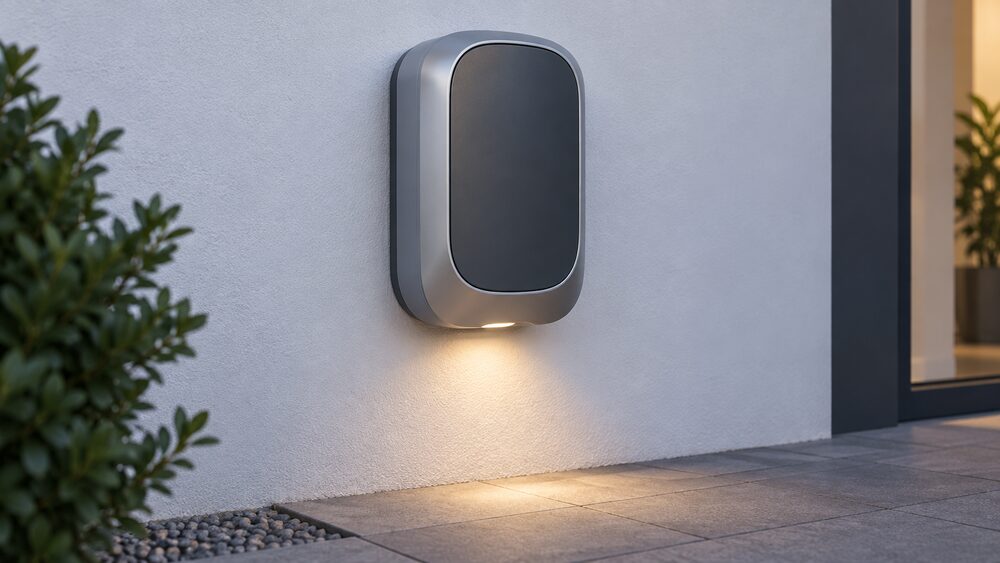 Andersen A3The Andersen A3 is a British-built 7kW home charge point with a hidden tethered cable, up to 247 colour and finish combinations, a 7-year warranty on units bought from 14 May 2024, and an installed price from £1,430.