In this guide
A home charge point warranty is a contract with the company that made the unit, not with the installer who fitted it and not with the retailer who sold it. The length varies more than most buyers expect. The myenergi zappi runs for 36 months as standard, or 60 months if an extended warranty is bought1. The evec unit carries a 3-year parts and labour guarantee, but only if the owner registers it within 30 days of delivery; register late and the cover falls to 12 months, and an unregistered product gets nothing2. waEV-charge gives three years on its units but only 12 months on materials fitted alongside them, such as a new consumer unit3.
The clock rarely starts on the day the installer drives away. evec counts from the date of delivery2. Fox ESS counts 24 months from the date of installation, but no more than 36 months from the date of manufacture, whichever comes first4. ATESS counts from delivery in the original packing to the first customer, or at the latest 6 months after the manufacturing date, whichever is earlier5. That last rule matters for a unit that has sat in a wholesaler's stock for a season.
What a charge point warranty covers, and what it does not
A charge point warranty is a defects guarantee, not a maintenance contract. evec states that the product is guaranteed against defects in materials and/or workmanship, and that any parts found to be defective will be repaired or replaced at the maker's discretion2. Fox ESS frames the same idea as a repair on site or at a designated Fox office or service centre, or a replacement with the closest product in its current range4. Neither promise covers wear, and neither is a service plan.
What falls outside is consistent across makers. evec excludes damage by transport, misuse or improper installation and assembly; the use of parts not used or recommended by evec; routine maintenance, wear-and-tear and installation faults; consumables and cosmetic parts; second hand or refurbished chargers; faults from accidental damage or misuse; claims for consequential loss except where liability is legally mandatory; and damage from the charger coming into contact with unsuitable materials2. Fox ESS limits its warranty to the Fox EV chargers range only and states that it does not cover any external or ancillary parts4. ATESS excludes loss of use, loss of profits, loss of production and loss of revenues associated with the performance or non-performance of a defective product5.
Two structural limits sit on top of the exclusions. Warranties are generally non-transferable, so evec states plainly that warranties in whole or part are non-transferrable2. And a claim does not buy extra time: ATESS states that no warranty periods or terms shall be extended because of a warranty claim or remedy5. A repair in year two does not push the expiry date back.
For a household, the practical effect is that the warranty protects the box on the wall and little else. It does not protect the cable, the mounting, the circuit, the consumer unit or the cost of a second visit. That is the boundary a buyer is really assessing when comparing cover lengths.
Warranty lengths compared: from 12 months to 5 years
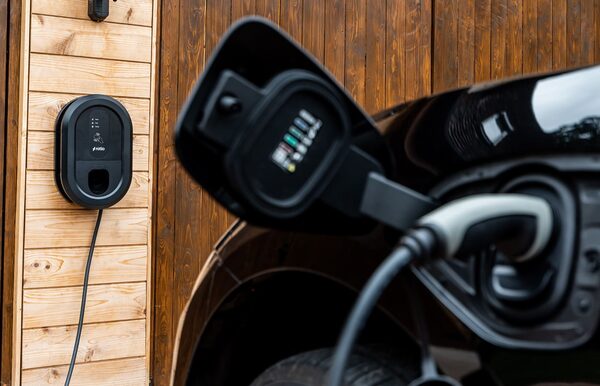
The spread runs from a single year to five. The table below sets out the periods the makers publish, with the exact model named for each figure.
| Product | Standard cover | Extended cover | Clock starts |
|---|---|---|---|
| myenergi zappi | 36 months1 | 60 months1 | Not stated in the warranty document |
| myenergi zappi pedestal | 12 months1 | None available1 | Not stated in the warranty document |
| evec charger | 3 years, registered within 30 days2 | None published | Date of delivery2 |
| waEV-charge unit | three years3 | None published | Not stated |
| waEV-charge consumer unit | 12 months3 | None published | Not stated |
| Fox ESS EV charger | 24 months from installation, capped at 36 months from manufacture4 | None published | Installation or manufacture, whichever comes first4 |
| ATESS EV AC charger | From delivery, capped at 6 months after manufacture5 | None published | Delivery or manufacture, whichever is earlier5 |
The differences are not arbitrary. A maker that sells through a network of installers, as waEV-charge does, can lean on that network for aftercare and price the cover accordingly3. A maker selling into commercial car parks and multi-dwelling buildings, as myenergi does with the zappi and zappi pedestal, has to write a warranty that covers private off-street charging in commercial settings such as private car parks, multi dwelling residential properties or workplace charging1. That wider permitted use is unusual: the myenergi warranty covers its products for domestic or non-commercial use only, with the exception of the zappi and zappi pedestal6.
For context, the warranty on the car itself is a different order of magnitude. Manufacturers provide warranties on EV batteries lasting at least eight years or 100,000 miles, according to the Society of Motor Manufacturers and Traders7. Which? reports that EV battery warranties usually last eight years8, and uSwitch puts the typical figure at around eight years or around 100,000 miles9. A charge point warranty of three years is therefore a fraction of the life of the vehicle it serves, which is why the extended options matter more than they might on a cheaper appliance.
When the clock starts: delivery, installation or production dates
The start date is the single most misunderstood term in a charge point warranty, because it is not the same event for every maker and it is rarely the event the owner remembers.
evec is explicit: the warranty remains effective from the date of delivery2. That is the delivery of the unit, not the day the electrician finished. Fox ESS runs its 24 months from the date of installation, but caps the whole period at 36 months from the date of manufacture, whichever comes first4. ATESS runs from the date of delivery in the original packing to the first customer, or at the latest 6 months after the manufacturing date, taking the earlier of the two5.
The ATESS rule is the one that catches people out. A unit that has spent months in distribution can arrive with part of its cover already spent, and the owner has no way of knowing from the box alone. Fox ESS's cap works the same way but with a longer fuse: a charger installed well after manufacture still gets its full 24 months, provided the installation date plus 24 months falls under the 36-month ceiling. Once that ceiling is reached, the cover is cut short.
There is a second clock, separate from the warranty itself, that governs registration. evec requires registration within 30 days of the delivery date to receive the warranty at all2. That is a deadline on the owner, not on the equipment, and it is the one date a household can control. The section below deals with what happens when it is missed.
Registration: the 30-day window that can halve your cover
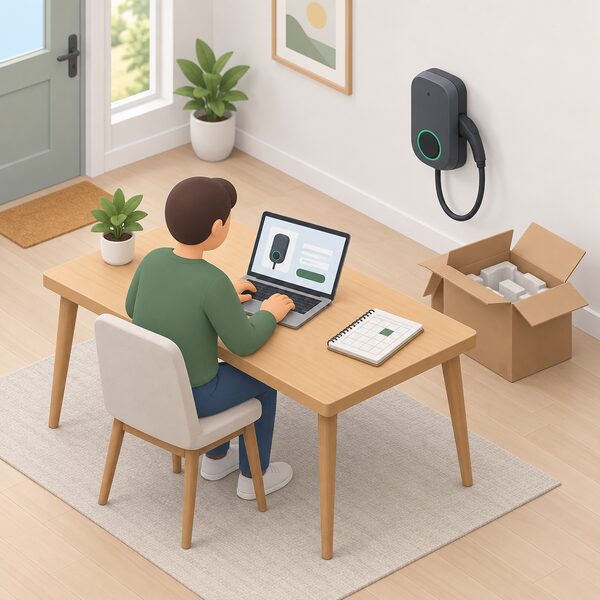
Registration is the step that converts a purchase into a claimable warranty, and on some products it is the difference between three years and one.
evec sets the terms clearly. The owner must register the product online within 30 days of the delivery date to receive the warranty, and products registered outside the 30-day period receive a 12-month part and labour guarantee only2. Products that are never registered do not benefit from the warranty at all2. Registration is by email to customer.services@evec.co.uk2.
That is a 3-year cover reduced to 12 months by a missed deadline, and to nothing by an omission. The mechanism is common in the sector because it lets a maker capture the installation date and the owner's details, which is what a claim needs. It also means the warranty is conditional on an action the buyer has to take, rather than on the transaction itself.
The registration requirement sits alongside a separate notification duty that has nothing to do with the warranty. UK Power Networks asks that the installation be notified within 28 days, using its Smart Connect portal10. That is a distribution network operator requirement, not a maker term, and it applies whether or not the charger is registered with its manufacturer. The two deadlines are close enough in length to be confused, and they are not the same obligation.
For a household, registration is the cheapest form of warranty protection available: it costs nothing and it is entirely within the owner's control. The failure mode is not a dispute about defects but a missed date, and the remedy is a diary entry on the day the box arrives.
Extended warranties: the zappi route from 3 to 5 years
The clearest extended warranty in the UK home charging market is myenergi's. The company offers the option to extend the standard 3-year warranty to a total of 5 years, available for both zappi 2.1 and zappi GLO11. The warranty document states the same in table form: zappi, 36 months, or 60 months if extended warranty is purchased1.
The extension is bought for zappi and/or eddi products, and it can be purchased at any time up to one month before the standard warranty expires12. The shop page adds a second condition: to qualify, the purchase must be made no more than 3 months after the original warranty expiration date11. The two statements do not sit comfortably together, and the outer boundary is unresolved. An owner close to expiry should treat the earlier of the two as the safe limit.
What the extension buys is not just time. myenergi states that it includes a replacement unit if required, ensuring minimal downtime, and coverage for an installer visit, if necessary, to resolve any issues11. That installer visit is the part a standard defects warranty often leaves to the owner.
The rules around it are strict. Extended warranties cannot be stacked or purchased more than once for the same device, and the buyer must not already hold an extended warranty for the same device11. A product serial number is required to purchase11. On a zappi 2.1 the serial number is on a silver sticker located on the left-hand side of the unit; on a zappi GLO it is printed on a silver sticker located under the sun-shield on the right side of the unit, which has to be removed to reveal it11. The number also appears in the myenergi app, on the Device Menu: press the Menu button, navigate to Information, press plus, and the serial number appears11.
Two products sit outside the extension. The zappi pedestal carries 12 months and the extended warranty column for it reads No1. The harvi and the hub have no separate extended warranty, but are covered under an extended warranty for either eddi or zappi if installed at the same time as either of them1.
Exclusions and conditions that void a claim
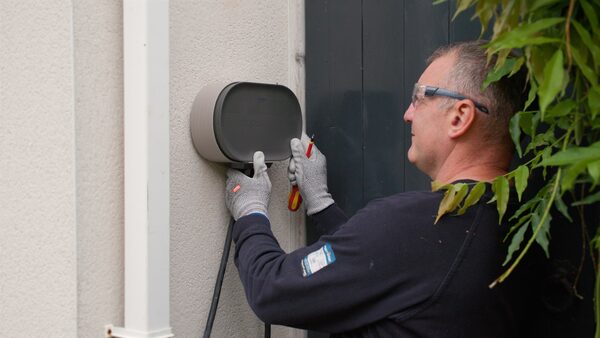
Most refused claims fail on one of a small number of grounds, and they are worth stating as a list because they are conditions rather than judgements.
- The product was not registered. evec states that products not registered will not benefit from the warranty2.
- The unit was second hand or refurbished. evec excludes second hand or refurbished EV chargers2.
- The installation was improper. evec excludes damage by transport, misuse or improper installation and assembly, and installation faults2.
- Non-approved parts were used. evec excludes the use of parts not used or recommended by evec2.
- The fault is wear, not defect. Routine maintenance, wear-and-tear, consumables and cosmetic parts are excluded2.
- The claim is for consequential loss. evec excludes claims in respect of compensation of consequential loss, except where such liability is legally mandatory2.
- The claim is for lost income. ATESS excludes loss of use, loss of profits, loss of production and loss of revenues5.
- The claimant is not the installer. Fox ESS states that the only person(s) eligible to claim warranty under its contract are the Installer and Fox authorized personnel4.
That last point is a structural difference rather than an exclusion. On a Fox ESS unit the household does not claim directly; the installer does. The same pattern appears in ATESS terms, which apply only to UK consumers for the ATESS EV chargers bought through the authorised repair and installation partner5. Where a claim has to be routed through the trade, the household's remedy depends on the installer still trading and still willing to act.
There is also a grant condition that touches warranty terms. The government's chargepoint specification states that warranty extensions beyond 3 years cannot be claimed as an eligible cost under the chargepoint grants13. A household buying an extended warranty can do so, but cannot put it through a grant claim.
Aftercare and support: who you call and where they are based
The first call is almost always to the installer, not the maker. That is sensible sequencing: many reported faults are supply, earthing or configuration issues rather than failed hardware, and the installer is the party who can test for them.
Where the fault is in the unit, the maker's process takes over. Fox ESS commits to approve and dispatch the product within 3 working days subject to availability4. Its remedies are a repair on site or at a designated Fox office or service centre, or a replacement with the closest product in its current range4. evec routes registration and support through a single email address2. waEV-charge works alongside a network of EV installers to cover the UK Nationwide, and describes its offer as a complete sales, install and aftercare package3. myenergi directs owners needing help with a serial number to myenergi Ireland technical support11.
The pattern across all of them is that aftercare is delivered through a chain: maker, distributor, installer, owner. Each link has its own terms, and the warranty sits at the maker end while the practical work sits at the installer end. That is why the service call fee condition matters. evec states that if a fault is reported and an authorised agent attends, a service call fee will be charged where no fault is found, or where the fault turns out to be caused by misuse or incorrect installation2. The visit is free only if the unit is genuinely defective.
For a household, the aftercare question is less about the length of the warranty than about who is reachable when something fails. A maker with a UK support line, a documented dispatch commitment and a named installer network is easier to deal with than one whose only route is through a third party. The warranty document itself is the place to check which of those applies.
Consumer protection: the EV Consumer Code for Home Chargepoints
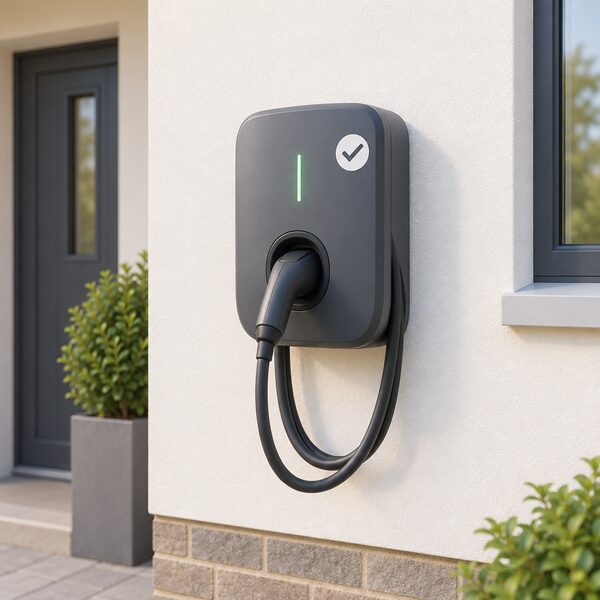
Beyond the maker's warranty, three layers of protection apply to a home charge point installation, and they operate independently of each other.
The first is certification. BSI Kitemark certification for charge points covers testing and certification for charge points both for home and commercial use, and is intended to demonstrate the safety, security, quality, and reliability of electric vehicle chargers14. A certified unit has been assessed against those criteria by a third party, which is a different assurance from the maker's own warranty promise.
The second is the consumer code. The Electric Vehicle Consumer Code for Home Chargepoints (EVCC) is a scheme covering home chargepoints15. It sits alongside the warranty rather than replacing it, and it addresses the conduct of the businesses that sell and install charge points.
The third is the grant framework, which imposes its own conditions. The chargepoint specification requires installations to be carried out as per BS EN 61851, the IET wiring regulations BS 7671, the IET Code of Practice for Electric Vehicle Charging Equipment Installations, and the Electricity Safety, Quality and Continuity Regulations installation requirements13. It also states that a claim will be rejected if the chargepoint model is not on the list of eligible chargepoint models13. For a household using a grant, the warranty requirement is explicit: the grant guidance asks applicants to make sure the chargepoint warranty meets the grant requirements16.
The grant landscape itself varies by nation and by tenure. The Electric Vehicle Chargepoint Grant is available for homeowners, renters, and landlords18, and covers up to 75% of the cost of purchasing and installing a charge point19. The residential landlords scheme covers 75% of the costs towards purchase and installation of chargepoint for non-resident building owners including landlords and social housing providers20. The renters and flat owners grant provides support towards the costs of the purchase and installation of EV charge points21, and is aimed at electric vehicle buyers living in flats and rented properties22. Northern Ireland operates its own chargepoint and infrastructure grants1. None of these schemes extends a manufacturer's warranty; they fund the purchase, and the warranty terms come from the maker.
What owning a charger means for energy independence
A home charge point is one of the few energy assets a household can own outright and use without a supplier in the loop. The electricity still comes from the grid, but the timing, the rate and the source are within the household's control to a degree that a gas boiler never allows. Energy UK reports that electric vehicle chargers, where EV ownership is required, can deliver an annual saving of £680 with a time-of-use tariff23. That figure depends on the tariff and on charging behaviour, and it is a modelled saving rather than a guaranteed one.
The dependence that remains is real and worth naming. The charger needs a live grid connection, a meter, and a supplier. It needs the maker's app or cloud service for smart functions, firmware and, in myenergi's case, for reading the serial number11. It needs the installer for the first fix and often for the first diagnosis24. And it needs the maker to stay in business for the warranty to mean anything: a warranty that can only be claimed by the installer, as Fox ESS's is4, or only through an authorised partner, as ATESS's is5, is exposed to the failure of a business the household did not choose.
The warranty is therefore not just a consumer protection. It is a measure of how much of the asset the household actually controls. A five-year transferable warranty from a maker with a UK support operation is a different proposition from a 12-month term on a unit whose claims route runs through a third party. The figures in this page are the ones the makers publish; the judgement about which matters is the household's own.
Sources24 cited
- myenergi LTD Product Warranty v4.1, myenergi, 2026-05
- evec warranty information, evec, 2026-09-17
- waEV-charge support FAQs, waEV-charge, 2026-09-17
- Fox EV Charger Warranty Policy Global v2.2, Fox ESS, 2025-04-25
- Warranties ATESS, Project EV, 2026-09-17
- myenergi LTD Product Warranty v2.0, myenergi, 2026-09-17
- EVs: the facts, SMMT, 2025-09-22
- Should I buy an electric car?, Which?, 2026-04-16
- What is the lifetime cost of an electric vehicle?, uSwitch, 2024-11-26
- Electric vehicles: cost, time and what's involved, UK Power Networks, 2026-09-17
- zappi Extended Warranty, myenergi, 2026-09-17
- myenergi Extended Warranty, myenergi, 2026-09-17
- Electric vehicle chargepoint and infrastructure specifications, GOV.UK, 2023-10-10
- Powering trust in electric vehicle charging with BSI Kitemark certification, BSI, 2026-09-17
- RECC Autumn Newsletter 2024, RECC, 2026-09-17
- Electric vehicle chargepoint grant: eligibility, GOV.UK, 2026-09-17
- What is Flexi-Orb?, Flexi-Orb, 2024-07-01
- Home and business grants, schemes and advice, East Herts Council, 2026-09-17
- Grants now available for EV drivers without street parking, Zapmap, 2024-03-18
- Residential landowners electric vehicle chargepoint scheme, Energy Saving Trust, 2025-09-22
- Funding schemes, OFTEC, 2026-09-20
- Driving an electric car: top tips, Zapmap, 2024-12-06
- Clean heat: supporting low-income households, Energy UK, 2026-06-11
- Voltage changes in your home or business, UK Power Networks, 2026-09-17
 EV Charge Point Faults and FixesDescribes the common failure patterns on domestic charge points: tripped protective devices, lost connectivity, stuck cables and locks, error indications and charging that stops early.
 New Build Charger RequirementsExplains the requirement for charge points and cable routes in new and materially altered homes, set by Part S in England and equivalent rules elsewhere in the UK.
 Workmanship WarrantiesIf something goes wrong with your solar panels, who actually fixes it and who pays?
 Warranties and DegradationHow long do solar panels actually last, and what do the warranties really cover?
 Home Battery WarrantiesHow long does a home battery warranty really last, and what does it actually promise?
 EV Charger Safety and StandardsHow do you know a home charge point is safe to use?