

In this guide
The On-Street Residential Chargepoint Scheme (ORCS) was the UK government's grant for local authorities to install public chargepoints for residents who have no driveway or garage. It was never a grant for individual drivers. Councils applied, councils received the money, and councils owned the resulting infrastructure. The scheme closed to new applications in March 20241.
Between its launch in 2017 and its close, ORCS paid out £64.9 million in grant value and completed projects installed 19,001 public charging devices across local authorities, comprising 23,677 charging sockets2. Local authorities could claim up to £7,500 per charge point to part fund capital costs, with the maximum public subsidy set at 75%, 60% or 50% depending on the year a project was approved1.
For a household without off-street parking, the practical position now is that ORCS is closed, ongoing projects must be completed, and the successor route for England is the Local Electric Vehicle Infrastructure fund, which is aimed squarely at residents who do not have off-street parking and need to charge their electric vehicles3. Wales runs a separate charging strategy with its own budget and targets4.
What the On-Street Residential Chargepoint Scheme was
ORCS was a capital grant that let local authorities install residential chargepoints on streets where homes have no private parking1. The Department for Transport approved every chargepoint site funded through the scheme, and chargepoint usage data was passed to DfT1. The Energy Saving Trust handled the day-to-day administration, receiving project updates and change notifications1.
The scheme launched in 2017 and provided grant funding between 2017 and 20241. It was designed to solve a specific problem: the household chargepoint grants that dominated the market assumed a driveway, and a large share of UK homes do not have one. By funding public infrastructure on residential streets, ORCS aimed to give those households a charging option within walking distance of home.
The money covered hardware and installation. Official guidance describes the scheme as providing up to 75% of hardware and installation costs to local authorities for on-street and rapid charging5. The Energy Saving Trust's own scheme rules put the per-unit figure at up to £7,500 per charge point to part fund the capital costs of installation1.
What ORCS did not do was give any resident a right to a parking space. The scheme funded infrastructure, not entitlement. A chargepoint installed under ORCS is a public chargepoint, open to any driver who can use it, not a private bay for the household that asked for it.
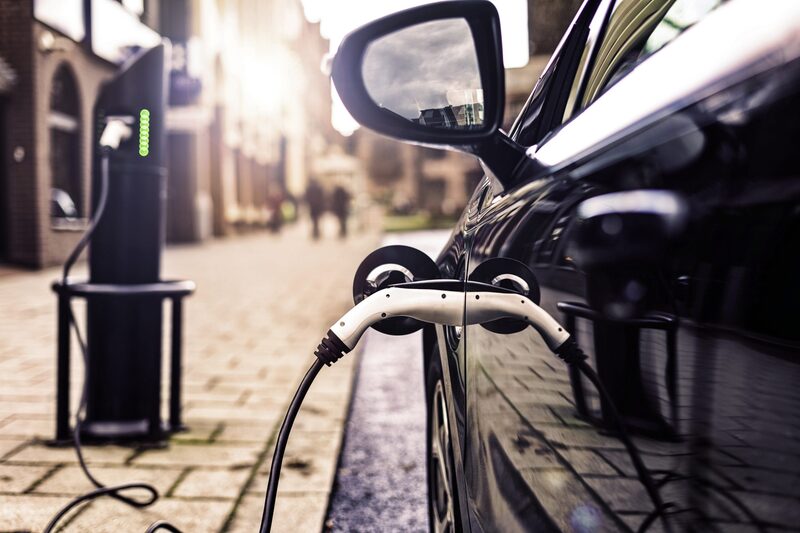
A grant for local authorities, not for individual drivers
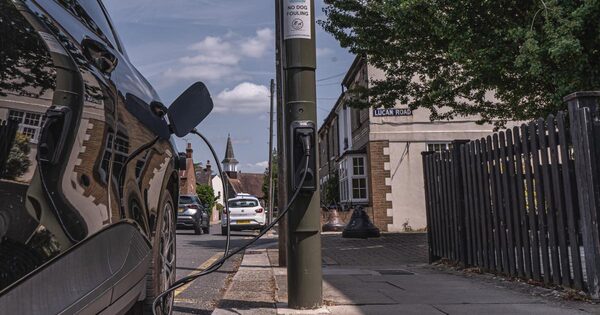
The single most important thing to understand about ORCS is who received the money. The funding recipients were local authorities1. Residents could not apply, and the scheme's closure is described in the same terms: ORCS is now closed for new applications for residents requesting chargepoints1.
This matters because the UK does have grants that individual households can claim, and they are often confused with ORCS. The Electric Vehicle Chargepoint Grant for Households with On-Street Parking is a separate scheme with its own rules. It requires the applicant to own or rent the residential property they live in, to install a non-temporary cross-pavement charging solution alongside the chargepoint, to have adequate on-street parking, to have permission from the local highways authority, and to own or be responsible for an eligible vehicle6. It pays 75% off the cost to buy and install a socket, up to a maximum of £5006.
The distinction runs through the whole grant landscape. The renters and flat owners grant requires private off-street parking that is clearly defined, and it cannot be used for a property that is still being built8. The residential landlords grant covers landlords, right to manage companies, residents' management companies, freeholders of multi-unit property, public sector organisations, charities managing residential property, registered social housing providers, property management companies and Scottish property factors9. None of these is ORCS, and none of them replaces it.
For a household, the practical consequence is that the route to an on-street chargepoint runs through the council, not through a form on GOV.UK. A resident can ask, but the authority decides whether to bid, where to site, and which funding stream to use.
What the scheme funded: 19,001 devices and £64.9 million
The published totals give the clearest picture of ORCS at scale. Completed projects installed 19,001 public charging devices across local authorities, comprising a total of 23,677 charging sockets, and received a grant value of £64.9 million since the scheme's launch in 20172. The gap between devices and sockets reflects the fact that a single chargepoint unit can carry more than one socket.
Those figures sit within a much larger public charging picture. As of 1 July 2025, 30,169 public charging devices were designated as on-street chargers, representing 37% of all charging devices10. ORCS contributed a substantial share of that on-street stock, though the two datasets measure different things: ORCS counts devices funded through the grant, while the public charging statistics count all devices in service.
| Measure | Figure | As of |
|---|---|---|
| Public charging devices installed under ORCS | 19,001 | 1 July 20262 |
| Charging sockets in those completed projects | 23,677 | 1 July 20262 |
| Grant value since 2017 | £64.9 million | 1 July 20262 |
| On-street public charging devices, all sources | 30,169 | 1 July 202510 |
Earlier in the scheme's life the numbers were far smaller. By mid-2021 ORCS had delivered over 600 chargepoints, with funding awarded for over 3,000 to be installed in future, and it had a fund of £20 million for 2021/20225. The trajectory from 600 delivered to 19,001 completed shows how much of the scheme's output came in its final years.
The same statistical release reports 19,001 completed public charging devices and separately notes 5,676 in the last 12 months, and reports 23,677 charging sockets alongside 6,567 in the last 12 months2. The two pairs are not reconciled in the published material, so both figures stand as given.
Grant levels: up to £7,500 per chargepoint, 75% of capital costs
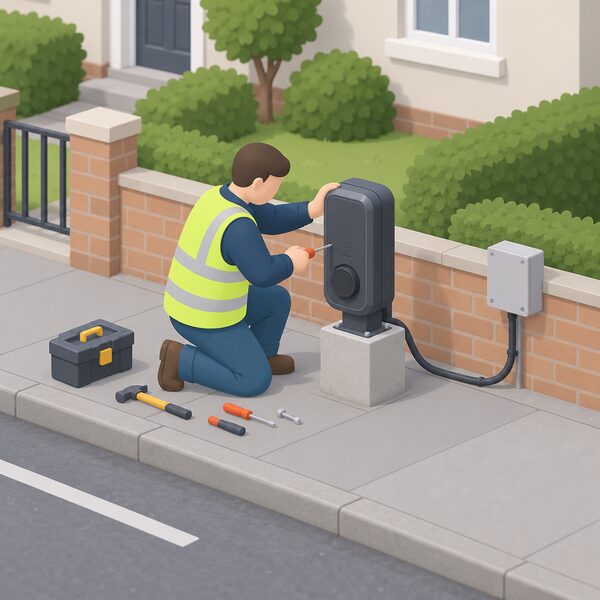
The headline rate for ORCS was up to £7,500 per charge point to part fund the capital costs of installation1. That figure appears in Welsh Government material describing the scheme as it applied across the UK, and in the 2020 consultation that preceded the Welsh charging strategy4.
The rate was not flat across the scheme's life. The maximum level of public subsidy offered was 75%, 60% or 50%, depending on the year in which a project was approved1. A council whose project was approved in a 75% year could claim more of its costs than one approved in a 50% year, even for identical hardware. This is why two neighbouring authorities can report very different grant values for similar installations.
Cash flow was also part of the design. Councils could receive 75% of project costs in advance1. For a local authority funding a multi-site rollout, that advance payment mattered: it meant the capital did not have to be found upfront from the council's own budget.
| Element | ORCS rate |
|---|---|
| Maximum per charge point | up to £7,5001 |
| Maximum public subsidy | 75%, 60% or 50% by approval year1 |
| Advance payment | 75% of project costs1 |
| Claim coverage | 100% of project costs1 |
Eligible costs were broad. Official guidance lists onsite software and hardware required to manage and maintain the chargepoints, communications media, grid connections, concrete plinths or footings, signage, reinstatement work, vehicle barriers, chargepoint units, additional electrical components or hardware, civil engineering works, labour costs, project management and reporting costs, VAT incurred by the customer, and site survey works where they led to a completed installation8.
The claim had to account for 100% of project costs, and all capital costs associated with the installations had to be individually evidenced and broken down by cost type1. That level of detail is why councils needed a monitoring log alongside their invoices.
How councils applied and how funding was allocated
The application route was administrative rather than competitive in the ordinary sense. Councils worked with the Energy Saving Trust, which sent project update requests every two months to gather information on risks, project timelines and any changes1. Any chargepoint site funded through ORCS had to be approved by the Department for Transport1.
Changes had to be reported as they happened. Councils were asked to contact the Energy Saving Trust about site changes, changes to the planned number of chargepoints, delays and project team changes1. Replacement sites had to meet ORCS criteria, and councils were told not to progress with replacement sites until approval was received1.
The claim itself came at the end. Once all chargepoints were installed, a council submitted a claim form, a monitoring log and a copy of all invoices with a detailed breakdown of all eligible project costs1. Claims went through the claims management portal8. All claims had to be submitted by the end of the financial year, and projects that would not be complete or would not be able to submit a claim had a deadline of 1 March 20251.
Usage data continued after installation. Chargepoint usage data was submitted quarterly to the Office for Zero Emission Vehicles and the Energy Saving Trust, and made available to the Department for Transport1.
Scheme status: closed to new applications, ongoing projects continue

ORCS closed to new applications in March 20242. Local authorities continue to provide data for ongoing projects2. Ongoing projects had to be completed by March 2025, and all claims had to be submitted by the end of the 2024/25 financial year1.
The closure is part of a wider pattern. The Domestic Recharge Scheme provided funding from 2013 to 2014 and was replaced by the Electric Vehicle Homecharge Scheme; the EVHS provided funding from 2014 to 2022 and was replaced by the Electric Vehicle Chargepoint Grant2. Both are closed to new applications and their published statistics are final2. Three further OZEV home and workplace chargepoint schemes closed for applications on 31 March 202612.
What remains open is a smaller set of grants with new rates. Five chargepoint grant schemes are available until 31 March 20278. The residential landlord rate increased from £350 to £500 per socket on 1 April 202612. The government reserves the right to end or change the grant schemes, aiming to provide four weeks' notice and honour claims made before any public announcement, subject to the grant criteria12.
For a household, the closure of ORCS means the pipeline of new council-funded on-street chargepoints now depends on other funding. The infrastructure already installed under ORCS remains in service and continues to report usage data.
Where residents without off-street parking stand now
The successor for England is the Local Electric Vehicle Infrastructure fund. Its stated purpose is to help residents who do not have off-street parking and need to charge their electric vehicles3. That is the same population ORCS served, funded through a different mechanism.
The delivery model has also shifted. In many cases, the charge point operator will fully fund the delivery, installation and maintenance at no cost to the local council13. That reverses the ORCS model, where the council claimed grant and procured the work. Under a fully funded operator model, the council provides the site and the operator carries the capital, recovering it through charging revenue.
For a resident, the practical steps are unchanged in kind. A request to a council is a request, not an application, and the authority decides whether a location is viable. Planning rules for installing charge points depend on whether the dwelling has off-street parking or on-street parking14. Where a cross-pavement solution is involved, the household grant requires local highways authority consent for the installation and a declaration that the necessary planning permissions will be obtained7.
The household grants that remain open are worth knowing about, because they are the ones a resident can actually claim. The grant for households with on-street parking pays 75% off the cost to buy and install a socket, up to a maximum of £5006. The renters and flat owners grant pays up to £500 or 75% of the cost, whichever is lower, for installing a chargepoint socket7. The landlords grant pays up to £500 per socket, with grants for up to 200 sockets across all sites8.
Wales: a separate charging strategy and budget
Wales sits inside the UK grant system and outside it at the same time. The household and landlord chargepoint grants require the property to be located in England, Wales, Scotland or Northern Ireland, so Welsh households can use them6. But Wales also runs its own charging strategy, published in March 2021 and covering the period to 20304.
The Welsh strategy carries its own money and targets. The Welsh Government allocated £30m to be spent by 20255. It set a target of a charging point facility for every 20 miles of the strategic trunk network across Wales by 2025, and a rapid charging network across the strategic trunk road network providing charging at a distance of approximately 20 miles4. The strategy estimates the need for up to 55,000 fast chargepoints and 4,000 rapid chargepoints5.
One Welsh consultation states up to 3,500 rapid chargers by 2030, and the same consultation describes an increase to up to 3,500 over the next ten years11. The two statements are not reconciled in the published material.
Wales also sets service standards that go beyond infrastructure counts. Payment for electric vehicle charging is to be possible by contactless debit or credit card and an associated app based system, and customer care for drivers is to be available in Welsh and English4. Public charge points in Wales must be added to the National Chargepoint Registry16.
On provision, Wales had 24.0 devices of 50kW and above per 100,000 population as of 1 July 202510. Work on developing potential new charge point sites is being undertaken in collaboration with Transport for Wales and the Welsh Government14. Draft amendments to Building Regulations in Wales would require EV charging points in new residential buildings, new non-residential buildings, and buildings undergoing major renovations or material change in use where car parking is part of the development17.
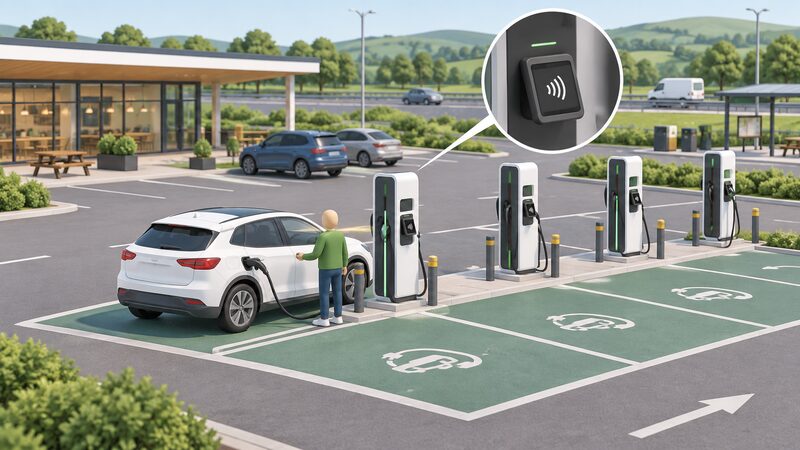
ORCS and the wider OZEV grant landscape
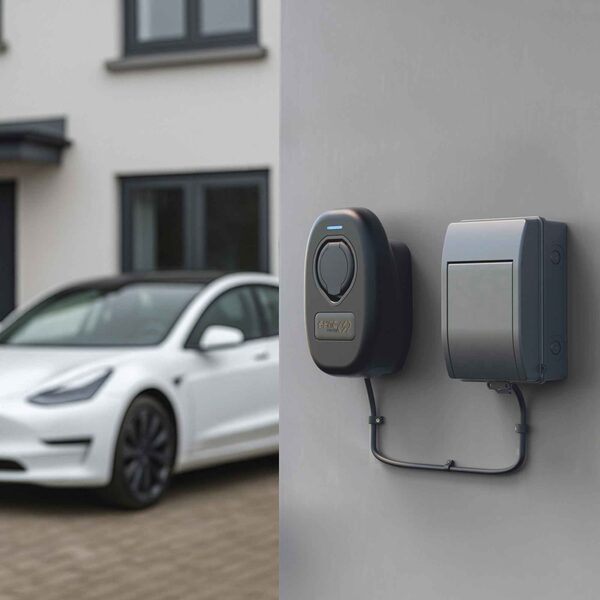
ORCS was one scheme among many administered by the Office for Zero Emission Vehicles. Seeing it in that landscape explains both what it achieved and why it closed.
The home charging grants dwarf it in volume. Home charging grant schemes have funded 412,682 installations since 2013, of which 10,833 were in the last 12 months2. The Electric Vehicle Homecharge Scheme alone funded 340,222 domestic charging device installations in the United Kingdom2. The Domestic Recharge Scheme funded 40,333 domestic charging device installations between 2013 and 20142. The renters and flat owners grant has funded 26,504 sockets, of which 9,301 were in the last 12 months2.
Workplace charging is the other large stream. Workplace charging grant schemes have funded 85,547 installations since 2016, of which 12,489 were in the last 12 months2. The Workplace Charging Scheme accounts for 72,388 socket installations since it began in late 2016, with a grant value of £26.9 million for socket installations and supporting infrastructure2. It provides support for organisations towards the cost of installing up to 40 electric vehicle chargepoint sockets at their sites7.
| Scheme | Installations funded | Grant value | Status |
|---|---|---|---|
| Home charging grants | 412,682 since 2013 | not stated | open schemes continue to 31 March 20272 |
| Workplace charging grants | 85,547 since 2016 | £26.9 million for sockets and infrastructure2 | open schemes continue to 31 March 20278 |
| ORCS | 19,001 devices, 23,677 sockets2 | £64.9 million since 20172 | closed to new applications March 20242 |
| NHS Chargepoint Accelerator | not stated | £7.1 million total spend to date2 | England only2 |
Public charging grant schemes have funded 24,945 EV charger installations since 2017 on provisional estimates2. The NHS Chargepoint Accelerator Scheme accounts for £7.1 million total spend to date for charging infrastructure projects at NHS sites in England2.
The pattern is consistent: grants that fund a socket on a private property have run at scale, while grants that fund public infrastructure on residential streets have run at a fraction of that volume and have now closed. For a household without a driveway, that is the central fact of the current landscape. The infrastructure ORCS built remains, the funding stream that built it has ended, and the replacement depends on councils and charge point operators reaching commercial agreements rather than on a national grant.
Sources17 cited
- On-Street Residential Chargepoint Scheme, Energy Saving Trust, 2026
- Grant schemes for electric vehicle charging infrastructure statistics, GOV.UK, 2026
- Local Electric Vehicle Infrastructure scheme, Energy Saving Trust, 2026
- Electric Vehicle Charging Strategy for Wales, Welsh Government, 2021
- Electric vehicle charging market study final report, GOV.UK, 2021
- Electric vehicle chargepoint grant for households with on-street parking, GOV.UK, 2026
- Electric vehicle chargepoint grant, GOV.UK, 2026
- Electric vehicle chargepoint grants, GOV.UK, 2026
- Electric vehicle chargepoint and infrastructure specifications, GOV.UK, 2023
- Electric vehicle public charging infrastructure statistics, July 2025, GOV.UK, 2025
- Electric vehicle charging strategy consultation document, Welsh Government, 2020
- Changes to electric vehicle chargepoint grant schemes from 1 April 2026, GOV.UK, 2026
- On-street charging, Zapmap, 2026
- Electric vehicle charging, Isle of Anglesey County Council, 2026
- Building a confident future for electric car users, Welsh Government, 2025
- Electric vehicle infrastructure national standards, Welsh Government, 2023
- Electric vehicle charging in residential and non-residential buildings, Welsh Government, 2024
 Smart Charging RewardsCovers the schemes that pay or reward households for shifting car charging, including the Demand Flexibility Service, app-based reward programmes and supplier incentives.
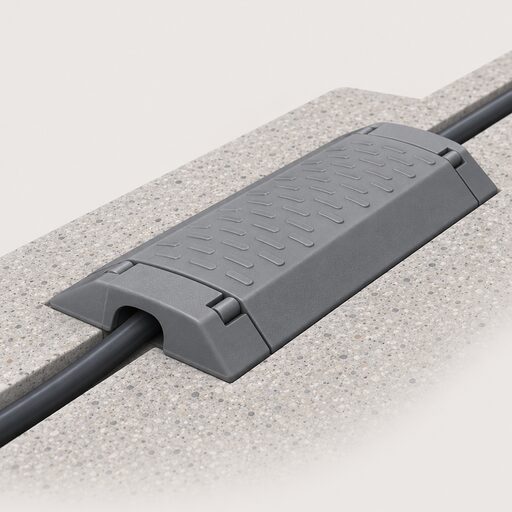 Charging Without a DrivewayParking on the street makes charging an electric car at home tricky.
 Home Charger InstallationWho can fit a home EV charger, and does it need building regulations approval?
 What Is a Smart Charger?A smart EV charger is an internet-connected home charge point that schedules charging around tariff prices, grid demand and household load.
 New Build Charger RequirementsExplains the requirement for charge points and cable routes in new and materially altered homes, set by Part S in England and equivalent rules elsewhere in the UK.
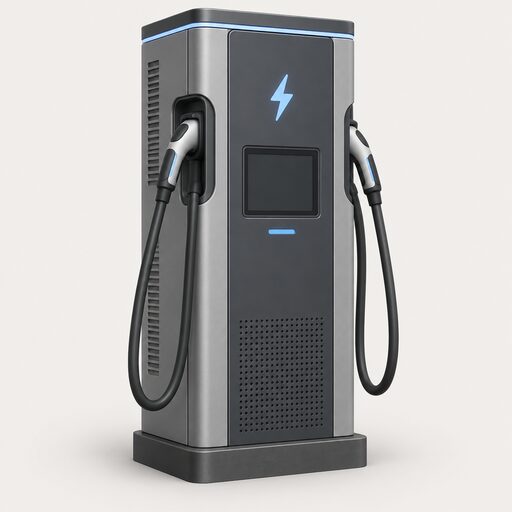 EV Charging Device StatisticsHow many public charging points are there in the UK, and why do different sources give different totals?