
In this guide
As of April 2026 there were around 82,000 certified battery installations in the UK1. That figure counts domestic battery storage systems registered on the Microgeneration Certification Scheme (MCS), and it is the closest thing the UK has to a national count of home batteries. The scale of it is worth holding in mind: after more than four years of a certification standard for battery storage, the certified stock is measured in tens of thousands of homes, not millions.
Growth has been fast and is accelerating. Certified battery storage installations reached 59,000 by the end of September 2025, an increase of 122% on the equivalent period the previous year2. In the first six months of 2026 alone, 36,000 MCS certified battery installations were recorded, almost double the same period the year before3. The technology is overwhelmingly an add-on to solar: 92% of battery installations in the first half of 2026 went onto properties with solar panels4, and around 20% of new solar installations include battery storage, although some analysts believe that figure to be higher1.
The counting has limits that matter. These are MCS certified installations only, and the battery series is published by government as "official statistics in development", a status that signals a new series still being developed and figures that may be revised as more complete data arrives from MCS5. A battery fitted by an uncertified electrician, or retrofitted outside the scheme, does not appear.
The headline number and how the run rate built up
The clearest way to read the battery numbers is as a series of annual jumps rather than a steady curve. In 2024, battery storage saw record-breaking numbers with nearly 20,000 certified installations6. During 2025 the running total reached 59,000 by the end of September, 122% above the equivalent point a year earlier2. By the first half of 2026, MCS reported that the previous year's annual record of 40,000 installations had almost been surpassed in just six months4, with 36,000 certified battery installations recorded in that half year3.
| Period | Certified battery installations | Source type |
|---|---|---|
| Calendar 2024 | nearly 20,0006 | MCS press release |
| To end September 2025 | 59,000, up 122% year on year2 | MCS press release |
| January to June 2026 | 36,000, almost double the same period last year3 | Government press release and MCS |
| As of April 2026 (cumulative) | around 82,0001 | Parliamentary POST briefing |
These are different measures and should not be added together: the 82,000 is a cumulative stock of certified installations, while the 36,000 and 59,000 figures are counts within a period. Read side by side they show the same thing from two angles, a cumulative base that has roughly doubled in a short span because annual volumes have roughly doubled.
For a household, the practical reading is that domestic storage has moved out of the demonstration phase. Earlier UK storage activity was measured in hundreds of homes: a manufacturer demonstration installed small battery-based storage units in about 300 homes across the UK, and a Scottish council programme had installed batteries in over 100 properties with a further 200 planned. Those were pilots. The current run rate is a market.
Where the number comes from: the MCS database and dashboard
Every published battery count in this article traces back to one place. The government's domestic battery statistics are sourced from the Microgeneration Certification Scheme database, covering the retrofitting of electric batteries into domestic properties in the United Kingdom, and including statistics on domestic and existing installations5. The same database underpins the official heat pump deployment quarterly statistics7, which is why battery, solar and heat pump figures tend to move in step with one another.
MCS also publishes its own MCS Data Dashboard, which provides near-real-time updates on MCS certified installations for small-scale renewables across the UK and holds the details of every MCS certified small-scale renewable energy installation in the UK since 2008, excluding installations commissioned in 20088. Total installation volumes and uptake can be viewed by each home nation and by each local authority9. Further detail on that tool is set out on the page covering what the MCS Data Dashboard shows.
What the battery series actually records is worth knowing before using it:
- Capacity bands. The statistics group batteries into distinct bands: approximately smaller than 6 kWh, approximately larger than 11 kWh, and a grouping in between5.
- Cost. The cost value associated with each installation includes the cost of the battery, the cost of installing and connecting to the electricity supply, and VAT where applicable5. It is not a product price.
- Sample effects. Monthly records can differ from the sample used for capacity: in November 2023, for example, 841 installations were recorded with 831 in the capacity sample totalling 6,900 kWh5.
- Revision. Figures may be revised following receipt of more complete data from MCS5.
What MCS certification means for a battery installation
MCS is an independent certification scheme for microgeneration installation companies and products11. Its roles include setting and maintaining technical standards for installations and products, certifying installers and products against those standards, issuing MCS certificates for completed eligible installations, and assisting certification bodies to review and address cases and consumer issues relating to installers or products11. It is described as a quality mark showing that a product, or an installation including one or more MCS certificated product, meets requirements defined in the MCS standards12, and it is presented as the UK's quality mark for renewable energy systems such as solar panels and heat pumps13.
Battery storage came into that framework comparatively late. MCS introduced the battery storage installation standard at the end of 202114, which is why there is no long historical run of certified battery data comparable to the solar record. The relevant installation standard for domestic batteries is MCS 301215.
Certification is not, in general, a legal requirement for fitting a battery at home. It becomes a condition where public money is involved. For domestic batteries to be eligible under the Warm Homes: Social Housing Fund, the product must be installed by an MCS certified installer to the relevant MCS installation standard, and domestic batteries on the UK market must carry UKCA or CE marking, which is required in the MCS Battery Installation Standard15. That distinction explains part of the gap between the certified count and the true installed stock: outside grant routes, certification is a choice made by installer and customer.
Batteries in the wider certified record
Battery storage is the fastest-moving part of a much larger certified market. There were 210,000 MCS certified installations in the UK between January and June 2026, equivalent to one installation every 74 seconds, with almost 150,000 of those being solar4. Across all technologies and years, there are over 2 million MCS certified installations across the UK16, and MCS reports over 2.2 million installation assets registered on its database17. Certified solar panel installations reached a total of 1.85 million to date by November 20252.
| Technology | Certified installations | Period |
|---|---|---|
| Solar PV (cumulative) | 1.85 million2 | to November 2025 |
| Heat pumps (cumulative) | over 275,0006 | to end of 2024 |
| Battery storage (cumulative) | around 82,0001 | as of April 2026 |
| All technologies, half year | 210,0004 | January to June 2026 |
Placed against that, batteries remain a minority technology by stock but a leading one by growth rate. The dependence on solar is the defining feature: with 92% of battery installations going onto properties with solar panels4, the battery market is largely a function of the solar market rather than a separate one. Wider context for these comparisons sits on the MCS installation statistics page and in the UK solar PV deployment statistics.
Installers: who can fit a battery and how certification is checked
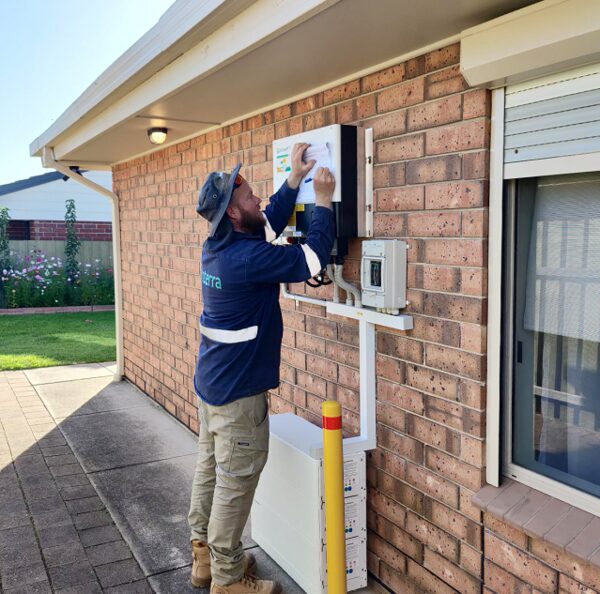
MCS reported a base of almost 6,000 certified installers in December 202517. Within that, over 4,000 MCS certified solar installers were operating across the UK as of August 202616. These counts are of companies holding certification, not individual engineers, and because most batteries are fitted alongside solar, the solar installer base is the pool from which most battery work is drawn.
Getting certified is not only a technical test. A requirement of companies wanting to gain MCS certification is that they are members of a CTSI Approved Consumer Code of Practice scheme in the first instance18. That places a consumer code obligation upstream of the technical standard.
For checking a specific company, MCS states that consumers can check whether an installer is MCS certified through its Find an Installer online tool or by contacting its Customer Support Helpdesk19. The same guidance sets out what MCS does not do, which is useful when judging a cold approach:
"MCS will never cold call you"
MCS also states that it never shares consumer details with installers or asks them to contact consumers on its behalf, and that consumers will not be asked to purchase items like warranties from MCS19. Trust in the installer base is not a minor issue for uptake: CTSI estimates that as many as 5 million UK households are being deterred from installing energy-efficiency measures because of unfamiliarity or a lack of a reliable installer20.
Regional picture: what the data can and cannot show by area
The MCS dataset is built to be cut geographically. Total installation volumes and uptake can be found in near-real-time by each home nation and also by each local authority9. That makes it possible to see where certified activity concentrates, and the same approach underlies the page on renewable installations by local authority.
For Wales, MCS data showed 103,506 installations of solar PV, battery storage systems, heat pumps and other renewables in November 20239. That figure covers all technologies together rather than batteries alone, which is a recurring limitation: published regional breakdowns often combine technologies, and a battery-only regional split is not generally set out in the public statements available.
The installer base is similarly uneven, though published battery-specific counts by nation are not available. What can be said is that certified installer numbers are national totals, and the practical availability of a certified battery installer in any given area follows the solar installer base rather than a separate storage industry. Northern Ireland, Scotland and Wales each have their own installation profiles, covered on the certified renewable installations in Northern Ireland and which UK nation has the highest renewable energy uptake pages.
Standards and statistics still in development
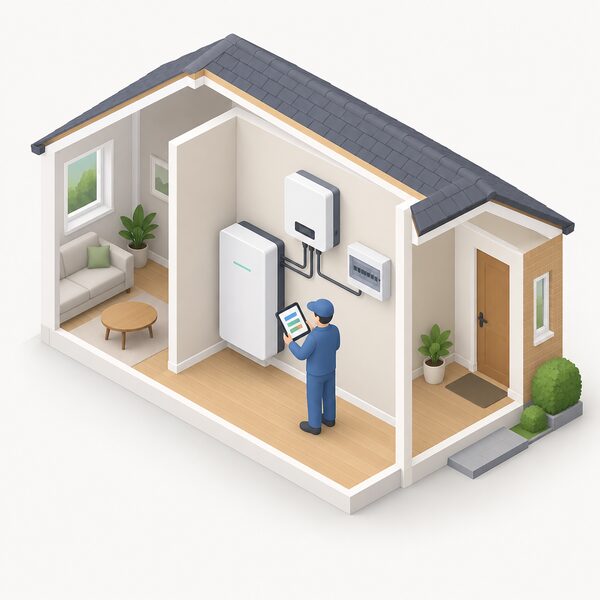
Two things about domestic storage are unfinished, and both affect how confident a reader should be in the numbers.
The first is the statistics themselves. The battery series is published as official statistics in development because it is a new series and still being developed10. Figures may be revised as more complete data arrives from MCS5, and the series is published partly to enable user feedback and further methodological development10.
The second is the standards framework. MCS facilitates the activity of its Technical Working Groups, conducts research on industry developments and their potential impact, and analyses updates to standards referenced in its documents21. MCS has also taken on work to improve the visibility of distributed energy assets, drawing on its base of almost 6,000 certified installers and over 2.2 million registered installation assets17. Visibility of where storage sits on the network is exactly the gap that a certification database can help close, because it records installations asset by asset rather than estimating them.
What a certified installation means for household energy independence
A home battery changes the shape of a household's grid dependence rather than removing it. Stored solar output can cover evening demand that would otherwise be imported, and with 92% of certified battery installations going onto properties with solar panels4, most UK home storage is doing precisely that job. Around 20% of new solar installations include battery storage1, so the majority of solar households still export surplus and import at night.
What remains dependent is worth stating plainly. The system stays connected to the distribution network and to a supplier, because the cost recorded for each certified installation includes connecting to the electricity supply5. Certification does not cover the household's tariff, the manufacturer's continued existence, or any app or cloud service used to control charging. And because MCS specifies handover documentation but not the quality of verbal explanation, household understanding, structured follow-up or ongoing support22, the household carries the burden of learning how to operate the system well.
Set against the wider record, storage is one strand of a broader shift: there were more than 260,000 certified installations in UK homes and small businesses in 2024, including heat pumps, solar and battery storage6. The batteries are the part of that mix that turns generation into availability, and they are also the part with the shortest standards history, dating only to the end of 202114.
If something goes wrong: complaints and consumer protection
MCS should be contacted about issues with the installation process, the installer, or the MCS certificate or product23. Complaints can be made by email to mcscomplaints@mcscertified.com or by telephone on 0333 103 813024, the same number given in official scheme guidance for contacting MCS25. MCS states that lessons learned from complaints will be used to improve scheme oversight and maintain standards24.
MCS aims to put consumer protection at the heart of the scheme26 and sets out specific commitments for consumers in vulnerable circumstances. It recognises that vulnerability can be permanent, transitory or temporary and assesses circumstances at the moment of interaction26. Practical provisions include:
- Access via all communication channels: phone, video calls, emails, live chat and post26.
- A Customer Support helpline available between 8.30am and 4.30pm Monday to Friday26.
- Alternative formats for MCS information and certification documentation, for example large font26.
- Working with a trusted relative or friend of a consumer if requested26.
- Signposting to organisations that can provide relevant support and advice, for example Citizens Advice and debt management agencies26.
MCS also states that health data or the reason a consumer needs additional support will never be used for any purpose other than offering the most appropriate service26, and that consumers do not have to give any information they are not comfortable to share26.
The boundary of that protection matters for batteries specifically. MCS does not require remediation of systems underperforming relative to their design22, so a dispute about yield or savings is different in kind from a dispute about whether the installation met the standard. Because certification requires membership of a CTSI Approved Consumer Code of Practice scheme18, the installer's consumer code is the other route available alongside MCS. Where a property owner is contacted for additional MCS checks under a government scheme, guidance states they should aim to respond within seven days.
MCS is based at First Floor, Violet 3, Sci-Tech Daresbury, Keckwick Lane, Daresbury, Cheshire, WA4 4AB, and profits made by MCS fund The MCS Foundation's activities27. It is not a government department, though its data feeds government statistics on batteries5, heat pumps7 and solar.
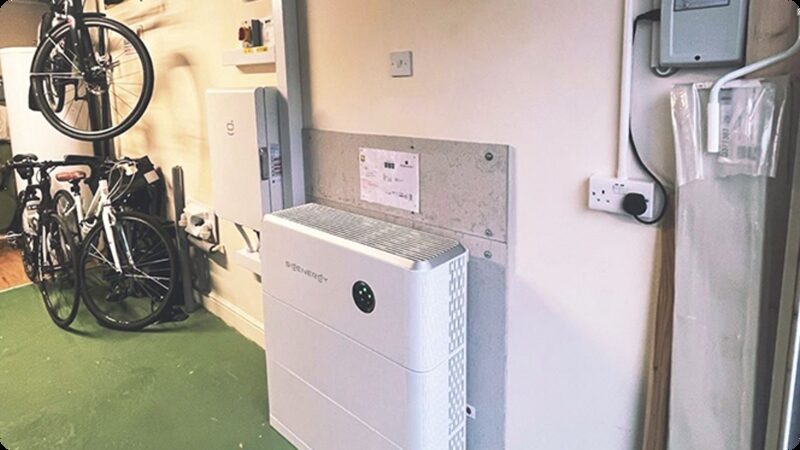
Further data context sits across the market data section, including what the data says about household energy independence and what home energy installations have cost over time.
Sources27 cited
- Domestic energy storage POSTnote, UK Parliament POST, 2026-06-25
- UK rooftop solar installations hit record high, MCS, 2025-11-13
- Households can save as plug-in solar panels come to market, GOV.UK, 2026
- Record number of UK households combining renewables to improve energy resilience, MCS, 2026
- MCS domestic retrofit battery installations data tables, GOV.UK, 2026-05-28
- 2024 was a record year for small-scale renewables, MCS, 2024
- Heat pump deployment quarterly statistics, UK 2026 Q1, GOV.UK, 2026-06-11
- MCS Data Dashboard, MCS, 2026-05-21
- More than 100,000 Welsh home and business owners turn to renewable energy, MCS, 2023-11-01
- MCS certified domestic battery installation statistics, GOV.UK, 2025-05-29
- Boiler Upgrade Scheme, Ofgem, 2026-09-17
- MCS product certification, Kiwa, 2026-09-17
- MCS for consumers, MCS, 2026-06-23
- UK on track for best year ever for renewable energy and heat installations, MCS, 2023-08-14
- Warm Homes: Social Housing Fund wave 3 guidance addendum, GOV.UK, 2026-06
- Powering the rooftop revolution in the North East, MCS, 2026-08-20
- MCS to co-lead project on visibility of distributed energy assets, MCS, 2025-12-12
- Renewable Energy Consumer Code, CTSI Approved Code, 2026-09-20
- Be scam aware, MCS, 2026-06-09
- Energy efficiency pledges undermined by lack of consumer confidence, CTSI, 2024-06-18
- MCS working groups, MCS, 2026-07-06
- Heat pump transition report, GOV.UK, 2026-05
- Who to contact, Ofgem, 2026-09-17
- MCS complaints and whistleblowing, MCS, 2026-05-13
- Boiler Upgrade Scheme guidance for property owners, Ofgem, 2026-03-25
- Our approach to supporting customers, MCS, 2026-09-07
- Scheme governance, MCS, 2026-07-06
 Siting and LocationWhere can a home battery actually go?
 The Full Home Batteries GuideA home battery stores cheap or solar power for later, but will it really cut your bills enough to be worth it?
 Data and Energy IndependenceHow many UK homes actually make their own power, and is that number really growing?
 Planning Permission in EnglandWhen a domestic battery or its enclosure falls within permitted development in England, when an application is needed, and how the position differs for outbuildings, listed buildings and conservation areas.
 Self-ConsumptionHow much of the electricity from your own solar panels do you actually use, and how much goes to the grid?
 Sodium-Ion Home BatteriesSodium-ion cells are being offered for home storage in the UK, but almost all published performance data still comes from makers.