

In this guide
Boiler Upgrade Scheme statistics are published monthly by the Department for Energy Security and Net Zero, and they report the uptake of the scheme to date: the number of voucher applications, the number of vouchers issued and redeemed, and the costs of installation1. The underlying data comes from Ofgem, which administers the scheme2. The series was first released in August 2022 and the latest listed release carries the date 27 August 2026, covering activity to July 20263. Separate quarterly and annual reports from Ofgem cover the same scheme from the administrator's side4.
The scheme itself opened at midnight on 23 May 2022, having come into force on 1 April 2022, and provides upfront capital grants towards approved heat pumps and biomass boilers in homes and small and medium non-domestic buildings in England and Wales5. Standard grant values are £7,500 towards an air source heat pump and £5,000 towards a biomass boiler, with £2,500 for air-to-air heat pumps5. From 21 July 2026 an uplifted grant of £9,000 is available for eligible off-gas-grid properties fitting an air-to-water or ground source heat pump, in place until 31 March 20277. The scheme has been extended to 2030, with a listed closing date of 30 December 20297.
On volumes, the clearest recent measure comes from the quarterly heat pump deployment statistics, which count 7,738 Boiler Upgrade Scheme installations in England and Wales in the third quarter of 2025, against 5,800 in the same quarter of 2024 and 4,713 in the second quarter of 20248. That is roughly a scheme running at a pace of the order of 30,000 installations a year, well short of the original ambition behind the budget but far above where it started.
Who publishes the numbers, and how often
Two organisations publish. The Department for Energy Security and Net Zero issues the monthly statistical release, described as a statistical release for the estimation of capital grant uptake to support installations of low carbon technologies in domestic and non-domestic buildings1. Ofgem, which administers the scheme on behalf of the Gas and Electricity Markets Authority, is required to publish quarterly and annual reports on its website and aims to publish monthly operational updates alongside them7. Ofgem's quarterly reports run to fixed windows: issue 13 covered 1 May to 31 July 2025, and issue 17 covered 1 May to 31 July 202610.
The status of the series has changed. Releases through 2024, including May, June and September 2024, carried the label official statistics in development, on the grounds that the series was new and still being developed, and were published to inform users about uptake, to enable user feedback and to allow further methodological development11. The in-development label was removed with effect from February 2025 and the figures are now published as official statistics3. Anyone comparing a 2023 release with a 2026 one is comparing across that change, which is the kind of thing covered in more detail on how to read UK energy statistics.
The dataset listing gives the earliest release as 25 August 2022 and the most recent listed as 27 August 20263. Coverage is always to a cut-off: an earlier departmental release, for example, covered delivery figures to 31 October and reported weekly applications from the start of the scheme on 23 May 202214.
Installations by quarter: the numbers and their revisions
The quarterly heat pump deployment statistics carry a Boiler Upgrade Scheme column, and it is the most useful run of comparable figures.
| Quarter | BUS installations | Coverage | Source release |
|---|---|---|---|
| 2024 Q1 | 4,79515 | England and Wales | June 2024 |
| 2024 Q2 | 4,71315 | England and Wales | June 2024 |
| 2024 Q2 | 4,69116 | UK series | 2025 Q2 |
| 2024 Q3 | 5,8008 | England and Wales | 2025 Q3 |
| 2024 Q4 | 7,42217 | as published | 2024 Q4 |
| 2024 Q4 | 7,41418 | as published | 2025 Q1 |
| 2024 Q4 | 7,3858 | England and Wales | 2025 Q3 |
| 2025 Q1 | 7,31118 | as published | 2025 Q1 |
| 2025 Q1 | 7,26616 | UK series | 2025 Q2 |
| 2025 Q1 | 7,2588 | England and Wales | 2025 Q3 |
| 2025 Q2 | 7,39816 | UK series | 2025 Q2 |
| 2025 Q2 | 7,3968 | England and Wales | 2025 Q3 |
| 2025 Q3 | 7,7388 | England and Wales | 2025 Q3 |
The repeated entries are not errors. The same quarter carries slightly different values in successive releases, because voucher redemptions continue to arrive after a quarter closes and the administrator's data is restated. The differences are small, in the tens rather than the hundreds, but they matter if a figure is quoted to the unit. The newest release is the one to prefer, and the period it covers should be given with it.
The shape of the series is a step change between the first half of 2024 and the end of that year, from the 4,700 range to above 7,300, then a plateau through 202515. Which? reported Boiler Upgrade Scheme heat pump installations up 57 per cent year on year in the second quarter of 2025. Our own page on heat pump installation statistics sets these against total UK deployment, and what share of heat pump installations use the Boiler Upgrade Scheme handles the share question directly.

What moves the numbers: grant value, installers and budget
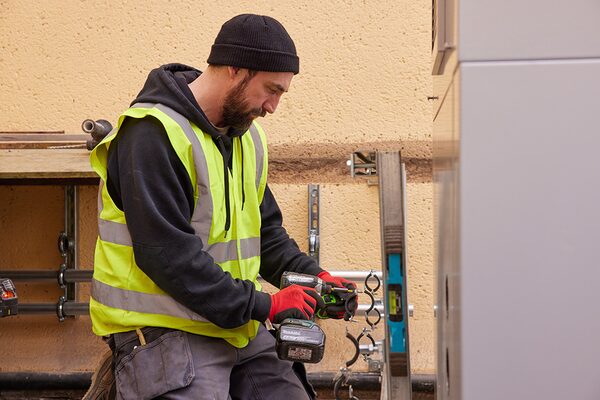
Three things drive the series, and the statistics themselves show the fingerprints of each.
Grant value is the most visible. When the grant was increased, the government reported a surge in applications14, and independent analysis put the effect at a 50 per cent increase in applications from October 202319. The introduction of the £9,000 uplifted value for off-gas-grid oil and LPG properties from 21 July 2026 is the same lever pulled again, and it is time-limited to 31 March 20277.
Installer capacity is the second. The scheme is installer-led: only installers certified under the Microgeneration Certification Scheme can apply for and redeem vouchers on behalf of property owners20. Ofgem's annual report for scheme year 2025 to 2026 records a growing base of 1,789 installers9. In the first scheme year, 915 installers, or 86.7 per cent of those with accounts, had actually submitted applications, and the top 30 installers were responsible for 6,001 applications, 38.1 per cent of the total21. That concentration means a relatively small number of firms can move the national figures. Nesta has warned that a shortage of trained heat pump installers could hold back progress, noting the annual £150m cost of the scheme at the time22.
Budget is the third, and it is a hard ceiling rather than an influence. Ofgem cannot issue new vouchers once the budget threshold has been met, queue position is based on when a voucher application is deemed properly made, and quarterly caps run from 1 April, 1 July, 1 October and 1 January16. Unspent budget is not carried over to the next scheme year10.
Longer-term funding was expanded: an additional £1.5 billion was announced in December 2023 to run the scheme to 2028, described as helping to install another 200,000 heat pumps across England and Wales25.
Uptake across England and Wales, and what the other nations do
The scheme is open to people in England and Wales only, and that is the territorial extent of every release in the series26. Scotland and Northern Ireland have no Boiler Upgrade Scheme, so a Boiler Upgrade Scheme total is never a United Kingdom total. Comparisons with the UK-wide heat pump deployment series, or with the nation pages on heat pumps in Scotland and heat pumps in Northern Ireland, need that difference stated.
| Nation | Boiler Upgrade Scheme | Note |
|---|---|---|
| England | Eligible26 | Largest share of applications |
| Wales | Eligible26 | Separate figures reported; see heat pumps in Wales |
| Scotland | Not covered26 | Outside scheme extent |
| Northern Ireland | Not covered26 | Outside scheme extent |
Within England and Wales, the urban and rural split of paid redemptions is close to even, at 51 per cent urban to 49 per cent rural2. Given that rural households are a much smaller share of the housing stock, that represents strong rural over-representation, which is consistent with the scheme's appeal to homes off the mains gas grid. Biomass reinforces the pattern: biomass boilers may only be installed in rural properties and must not be installed in properties connected to the gas grid7. Independent analysis of the first year found around 64 per cent more biomass applications in England than Wales, 120 against 7327. Our page on rural versus urban renewable uptake sets this alongside other technologies.
The rules behind the figures

Statistics on this scheme only make sense with the eligibility rules attached, because the rules define what can be counted.
- The property must be in England or Wales, and social housing, including shared ownership, is excluded20.
- New builds still being built by a developer are not eligible; a finished new build with a fossil fuel boiler may qualify29.
- Retrofit installations must replace a fossil fuel heating system such as gas, oil or LPG, or an electric heating system that does not include a heat pump28.
- Only one grant, and one redeemed voucher, per property; a property is not eligible if a previous grant has already been paid for a heat pump or biomass boiler at that address30.
- From 28 April 2026, properties no longer need a valid Energy Performance Certificate to apply; where one is provided it must be no more than 10 years old7.
- Hybrid systems combining a gas boiler with a heat pump cannot be funded, and fossil fuel hybrids are not eligible30.
- Funding from the Boiler Upgrade Scheme and ECO cannot be blended for the same measure or included within an ECO4 project31.
Technical limits shape the count too: 45 kWth for an individual heat pump system, 70 kWth for a multi heat pump system, and 300 kWth in total for shared ground loop systems with each connected heat pump no more than 45 kWth7. Air-to-water and ground source heat pumps must achieve an in situ seasonal coefficient of performance of at least 2.8, compressors must be electric-driven, and the system must provide 100 per cent of the property's space heating needs7. Biomass boilers are capped at 45 kWth and must meet emissions limits of 30g/GJ net heat input for particulate matter and 150 g/GJ for NOx7.
The application is a two-stage process: the installer submits a voucher application, Ofgem issues the voucher, the installer submits a redemption application, and the grant is paid to the installer23. Because of that, applications and redemptions in the statistics are never the same number in the same month. The commissioning rule also lags the data: an application must be properly made within 120 days of the commissioning date, and voucher validity periods cannot be extended under any circumstances, although Ofgem may grant an extension to the 120-day rule where administrative delay causes the period to be exceeded on a re-application7. Payments run weekly and are usually made within five working days of approval, by BACS16.
"Installers must deduct the full BUS grant value from the quote before any payment is made by the property owner."
Quality assurance sits with MCS. All installations must be MCS certified, using an MCS installer and MCS certified products, and all systems must meet the relevant MCS standards approved by the Secretary of State2. MCS certifies, quality assures and provides consumer protection for microgeneration installations and installers33. Ofgem retains audit powers: site or desk audits can occur at any point after an application, including after payment, with at least two days' notice for a site inspection, and installers must keep supporting documentation for six years20. MCS outreach has reported high satisfaction rates for scheme installations31. Further context on certification volumes sits on MCS installation statistics.
What the numbers do not tell you
Set against the original ambition, the picture is mixed. The £450 million fund was described at launch as equating to 30,000 installations a year through to 2025, 90,000 in total34, and independent commentary framed the scheme similarly as up to 90,000 installations across England and Wales between 2022 and 202527. Actual quarterly installations of 7,258 to 7,738 through 2025 put the scheme close to that annual run rate only at the very end of the period, after three years of building up8.
The statistics also cannot show what was not applied for. The scheme is voluntary, with government assurance that no one will be forced to remove an existing fossil fuel boiler35, so the series measures a subset of heating replacements, not the whole market. Nor does the grant reach every household equally: the Energy and Utilities Alliance has criticised the design as subsidising self-builders to install a heat pump where there is no boiler to replace, or paying well-off households to lower their energy bills36. Ofgem's own data gives that criticism a number: in the first scheme year, 15.9 per cent of installations replaced no heating system at all, all of them in eligible self-build properties, and a later quarterly report put self-build at 14.5 per cent of total installations21. Self-build properties are only eligible for heat pumps, not biomass7. In the first scheme year, 99.6 per cent of installations were in domestic properties21, and the single largest non-compliance reason affecting eligibility, at 50.9 per cent of the total, was that the existing system was neither fossil fuel nor electric21. Citizens Advice has argued that information and advice provision needs strengthening if an expanded scheme and new grants for low-income households are to translate into upgrades37.
What scheme uptake means for household energy independence
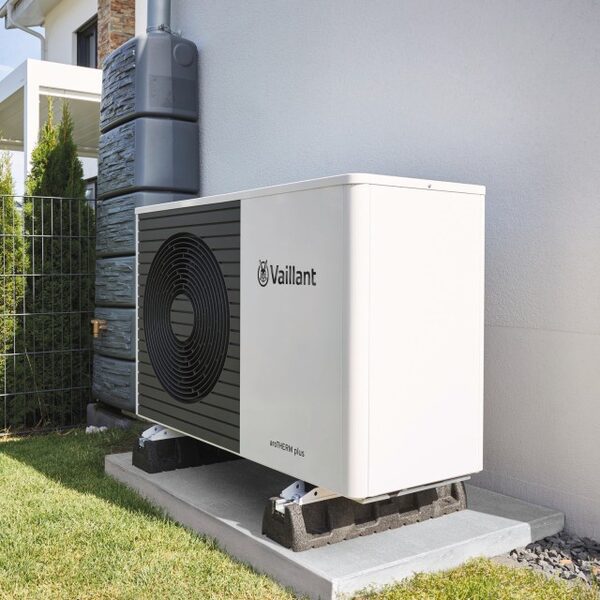
A redeemed voucher reduces the upfront cost of moving a home off gas, oil or LPG. For an off-gas-grid household on oil or LPG, the £9,000 uplifted grant is the largest single lever the state currently offers towards that switch, and it removes the exposure to delivered fuel prices covered on heating oil and LPG price data. Heat pumps that integrate with solar photovoltaic systems are eligible, which matters for households combining generation with electrified heat16.
The dependence that remains is equally plain. Grant payment goes to the installer, not the householder, and the full value must be deducted from the quote before any payment is made7. Eligibility runs through a certified installer, an Ofgem application and a budget queue that can close when the threshold is met16. Grant values are not fixed: the Secretary of State may review them at any time and they may increase or decrease by any amount, with a grant change notice published at least 28 days before the change takes effect16. The scheme itself has a closing date of 30 December 20295. And a heat pump moves a home's heating from a gas supply to an electricity supply, which is a change of dependence rather than its removal, a point developed on what the data says about household energy independence.
For ground source installations, the voucher must be redeemed within 6 months rather than the shorter window that applies to other technologies, so the timing pressure on householder and installer is different again38. Grant value is also separate from the price a household is quoted: the grant is paid to the installer on redemption, so a quoted installation cost and the net cost to the household are not the same figure.
Sources38 cited
- Boiler Upgrade Scheme Statistics: July 2026, GOV.UK, 27 August 2026
- Boiler Upgrade Scheme statistics data tables, July 2026, GOV.UK, 27 August 2026
- Boiler Upgrade Scheme statistics dataset listing, data.gov.uk, 27 August 2026
- Boiler Upgrade Scheme annual report 2025 to 2026 summary, Ofgem, 31 August 2026
- Boiler Upgrade Scheme grant listing, Find a Government Grant, 18 September 2026
- Carbon Budget and Growth Delivery Plan: heat and buildings factsheet, GOV.UK, 23 June 2026
- Boiler Upgrade Scheme guidance for installers, version 5.1, Ofgem, 2 July 2026
- Heat pump deployment quarterly statistics, 2025 Q3, GOV.UK, 2025
- Boiler Upgrade Scheme annual report 2025 to 2026, Ofgem, 2026
- Boiler Upgrade Scheme quarterly report, issue 13, Ofgem, 29 August 2025
- Boiler Upgrade Scheme statistics: May 2024, GOV.UK, 27 June 2024
- Boiler Upgrade Scheme statistics: June 2024, GOV.UK, 25 July 2024
- Boiler Upgrade Scheme statistics: September 2024, GOV.UK, 31 October 2024
- Heat pump applications surge after increase in government grant, GOV.UK, 30 November 2023
- Heat pump deployment quarterly statistics, June 2024, GOV.UK, 2024
- Boiler Upgrade Scheme guidance for installers, version 5, Ofgem, 28 April 2026
- Heat pump deployment quarterly statistics, 2024 Q4, GOV.UK, 2024
- Heat pump deployment quarterly statistics, 2025 Q1, GOV.UK, 2025
- Green home statistics, Uswitch, 2023
- Boiler Upgrade Scheme: information for installers, Ofgem, 17 September 2026
- Boiler Upgrade Scheme annual report 2022 to 2023, Ofgem, 31 July 2023
- Shortage of trained heat pump installers could set back net zero, Nesta, 7 July 2022
- Boiler Upgrade Scheme quarterly report, issue 14, Ofgem, 26 November 2025
- Boiler Upgrade Scheme research briefing, House of Commons Library, 2026
- Government announces additional £1.5 billion to the Boiler Upgrade Scheme, MCS, 21 December 2023
- Apply for the Boiler Upgrade Scheme, GOV.UK, 17 September 2026
- UK boiler statistics, Uswitch, 2022
- Boiler Upgrade Scheme guidance for property owners, version 5, Ofgem, 28 April 2026
- Boiler Upgrade Scheme: check if you are eligible, GOV.UK, 17 September 2026
- Boiler Upgrade Scheme: what you can get, GOV.UK, 17 September 2026
- ECO4 delivery guidance, version 3.2, Ofgem, 8 December 2025
- MCS outreach reveals high satisfaction rates for Boiler Upgrade Scheme installations, MCS, 2 February 2026
- Boiler Upgrade Scheme overview, Ofgem, 17 September 2026
- What the Heat and Buildings Strategy means for MCS certified installers, MCS, 21 October 2021
- Small step forward for net zero, CIPHE, 20 October 2021
- Whitehall needs a sharper focus on outcomes, Energy and Utilities Alliance, 27 April 2026
- Supporting the shift: strengthening information and advice for home energy upgrades, Citizens Advice, 29 July 2026
- Boiler Upgrade Scheme guidance for property owners, version 5 draft, Ofgem, 25 March 2026
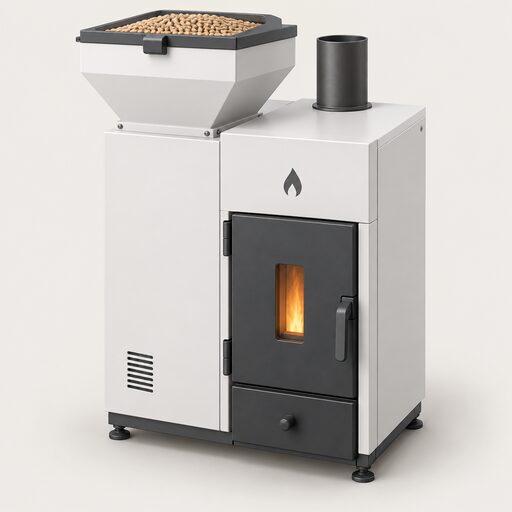 Biomass Boilers and StovesHow pellet and log biomass boilers and room stoves work in UK homes: the £5,000 Boiler Upgrade Scheme grant and its rural, off-gas-grid conditions, emissions limits, smoke control area law, fuel sourcing and the practical demands of storage and maintenance.
 Using an Installer in WalesExplains how installer registration, competent person schemes and building control notification apply in Wales and where Welsh rules diverge.
 Heat Pump Install StatisticsHow many heat pumps are actually being fitted in the UK each year, and is that number going up?
 The Full Statistics GuideHow many homes in the UK have solar panels, heat pumps or batteries?
 The Full Boilers and Heating GuideWhich boiler suits your home, and when is it worth swapping the old one?
 How Much Does a Heat Pump CostA heat pump usually costs around eleven thousand pounds installed, though quotes vary a lot depending on your home.