

In this answer
Short answer
Yes. A private landlord, a second home owner or a holiday home owner can apply for the Boiler Upgrade Scheme, provided the property is in England or Wales and meets the scheme's property conditions. The scheme's own guidance for property owners lists owner-occupied properties, properties rented out to tenants, second homes and holiday homes among the types it covers1. Independent guidance for installers puts it more briefly: the properties that qualify are "Those which are owner-occupied or owned by a private landlord"2.
The grant is £7,500, and from 21 July 2026 eligible off-gas grid properties can apply for an uplifted grant of £9,000 for an air-to-water or ground source heat pump3. The limit that matters most to anyone with more than one property is that only one grant is available per property, and a property that has already received a Boiler Upgrade Scheme grant for a heat pump or biomass boiler cannot receive another4.
The application is not made by the owner at all. The scheme is installer-led: MCS certified installers apply for and redeem vouchers on behalf of property owners1. That single design feature shapes everything else about how landlords and second home owners use the scheme, from consent to the point at which the money comes off the price.
What the scheme offers and who counts as an eligible owner
The Boiler Upgrade Scheme provides upfront capital grants towards the cost of installing heat pumps and biomass boilers in homes and non-domestic buildings8. It is targeted at domestic and non-domestic properties in England and Wales, and self-build properties are eligible9. The published grant value is £7,50010, and the scheme represents £2.7bn of investment in grants11.
Eligibility turns on ownership and on the property, not on who lives there. Guidance for installers states that consumers must own the property they are applying for, "including if it's a business, a second home, or a property they rent out to tenants"2. Older property owner guidance is broader still, naming owner-occupied properties, properties rented out to tenants, second homes and holiday homes, and noting that churches and park homes may be eligible if an energy performance certificate can be issued12. A later update to installer guidance confirms second homes, holiday homes and park homes as examples, along with related properties such as an annex or a swimming pool13.
For a household, the independence question is straightforward. A heat pump replaces delivered gas or oil with electricity, and the grant reduces the capital barrier to that switch. What remains is dependence on the electricity grid and on a supplier, plus the manufacturer's own controls, app and warranty terms. The grant does not change any of that; it changes who pays for the installation.
Landlords and second homes: what the rules say about ownership

Private landlords and second home owners are inside the scheme. The conditions that catch them are the ordinary ones: a current energy performance certificate with no outstanding recommendations for loft or cavity wall insulation, and a property in England or Wales14. The scheme does not require the owner to live in the property.
Consent is where ownership structure matters. Where a property has more than one owner, Ofgem needs consent from only one of them, and that owner must confirm they have the authority to act on behalf of the others4. Where the property is owned by an organisation, consent must still come from an individual rather than the organisation itself, and that individual must be legally authorised to represent it, such as a director or trustee4. For a landlord holding property through a company, that is the practical route.
If the property is sold while an application is in progress, the installer must inform Ofgem so consent can be sought from the new owner4. A sale mid-process does not automatically end the application, but it does require the new owner to be brought in.
"Own the property they are applying for (including if it's a business, a second home, or a property they rent out to tenants)"
One grant per property: the limit that matters most for landlords
The scheme allows one grant per property, and only one voucher can be redeemed per property15. A property is not eligible if a previous Boiler Upgrade Scheme grant has already been received for installing a heat pump or biomass boiler at the same address4. For a landlord with a portfolio, this means the grant is available once per address across the life of the scheme, not once per landlord.
That is a sharper limit than it first appears. A landlord with five rented houses can, in principle, claim five grants, one for each address, provided none has had one before. A landlord with five flats in one converted building faces a different question about how the properties are registered, and shared ground loop installations require each property to have its own voucher application and separate consent from each owner16.
Other schemes treat multiple properties differently, which is worth knowing when comparing routes. Under the Warm Homes: Local Grant, landlords can receive full funding for one property, but for any additional properties must contribute a minimum of 50% of the upgrade costs, with no limit on the number of properties that can be upgraded17. The London guidance for the same scheme puts it as paying half of the upgrade costs for any eligible homes upgraded after the first18, and independent guidance confirms that only the first property is fully funded19. Policy guidance for the scheme sets the same 50% landlord contribution for second and subsequent properties20.
| Scheme | First property | Further properties |
|---|---|---|
| Boiler Upgrade Scheme | One grant per property, £7,500 or £9,000 off-gas grid3 | One grant per property, but never a second grant at an address that has had one4 |
| Warm Homes: Local Grant | Full funding for one property17 | Landlord contributes a minimum of 50% of upgrade costs17 |
Social housing and shared ownership: where the scheme draws a line
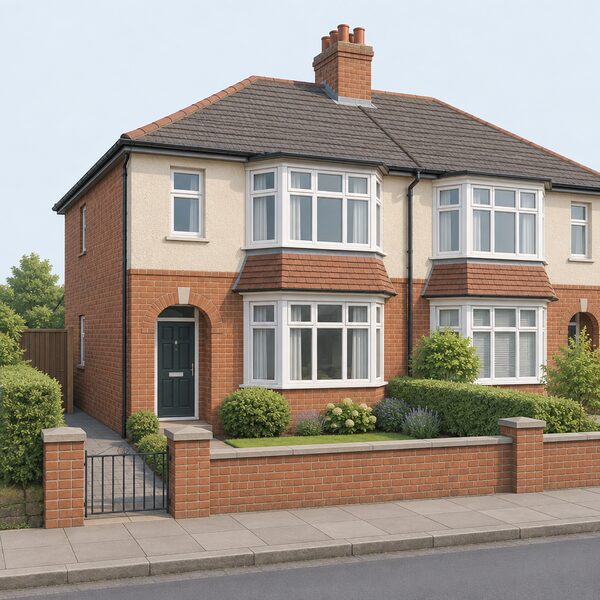
Social housing is not eligible for Boiler Upgrade Scheme funding, and the exclusion explicitly includes shared ownership properties5. Installer guidance lists social housing among the ineligible property types6. Independent guidance reaches the same conclusion, listing social housing and new builds, unless they are custom-build properties, as outside the scheme7.
There is one route back in. Right to Buy properties may become eligible once they are privately owned, and the updated installer guidance expands on what counts as social housing while confirming that position13. A former council house that has been bought under Right to Buy and is now in private ownership is assessed as a private property, not as social housing.
Shared ownership sits on the wrong side of the line. Even where the leaseholder owns part of the property and occupies it, the scheme treats it as social housing and therefore ineligible5. Households in that position have to look at other routes, including the Warm Homes: Social Housing Fund for social landlords and the Energy Company Obligation for supplier-funded measures.
EPC, new builds and self-builds: property conditions
The property conditions do most of the filtering for landlords and second home owners. New build properties which the developer is still building are not eligible, but if a household moves into a finished new build with a fossil fuel boiler, a grant for a heat pump may be available under the scheme21. New properties are not eligible except for certain self-builds22.
A self-build qualifies where the property has been built mainly using the labour or resources of the first owner6. Government eligibility guidance sets out the test in fuller terms: a self-build property is eligible if the owner or the original owner built it themselves or paid a builder to build it, and it has never been owned by a business or organisation21. That last condition is the one that catches landlords, because a property that has been held by a company fails it.
The energy performance certificate requirement applies across the board. A current EPC is needed, with no outstanding recommendations for loft or cavity wall insulation14. For a landlord with an older rental property, that is often the first thing to resolve, and it is a condition of the grant rather than a recommendation. The Boiler Upgrade Scheme eligibility page sets out the full property tests.
How the installer-led application works, and when the scheme closes
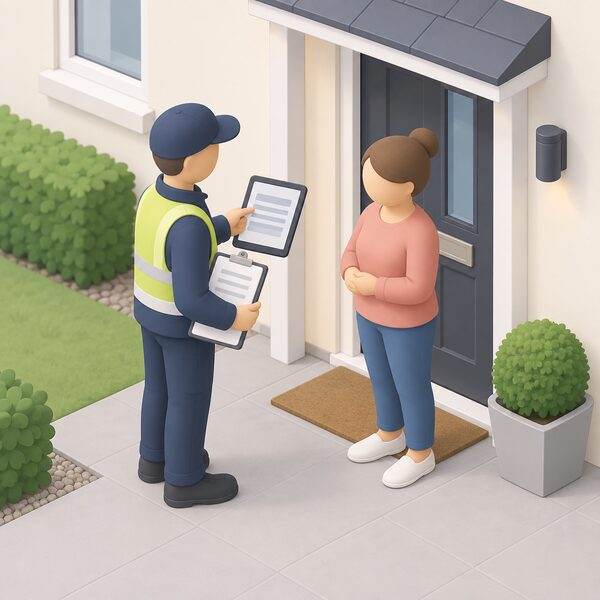
The Boiler Upgrade Scheme is installer-led and the owner cannot apply directly4. Installers apply for the grant on behalf of their customers2, and the grant value is taken off the final price24. It is a two stage process in which the installer applies for and redeems the voucher12. Where more than one installer has applied for the same property, the owner can consent to only one of them, and any other applications are rejected12.
Only installers can ask Ofgem to review a decision, and the installer can request a review on the owner's behalf within the required timeframes4. That is a real limit on a landlord's direct control: the route to challenge a refusal runs through the installer, not the owner.
Ofgem administers the scheme on behalf of the Gas and Electricity Markets Authority25. Complaints about scheme policy, which is set by the Department for Energy Security and Net Zero, go to boilerupgradescheme@energysecurity.gov.uk4. Complaints about scheme administration or the handling of an application go to feedback@ofgem.gov.uk5.
The scheme is scheduled to close at 11:59pm on 30 December 20297, and Ofgem can issue vouchers up to 31 December 202911. For a landlord planning work across several properties, that is the window in which each address must be brought forward.
Where the scheme falls short for non-owner-occupiers
Three limits bear directly on landlords and second home owners. The first is the one grant per property rule, which caps the total support a portfolio can draw at one grant per address and blocks any address that has already had one4. The second is the exclusion of social housing and shared ownership, which removes a large part of the rented sector entirely5. The third is the exclusion of hybrid heat pump systems: a grant cannot be obtained for a hybrid system such as a combination of a gas boiler and an air source heat pump21. Hybrid heat pumps do appear as an eligible measure under the separate Warm Homes: Local Grant26, which is a different scheme with different eligibility rules.
There is also a conflict in the published figures that households will encounter. The grant value is given as £7,500 in the approved grant categories notice10, while other official guidance gives £5,000. On the off-gas grid uplift, the £9,000 figure applies from 21 July 2026 to eligible off-gas grid properties3, and the property must not be fuelled by mains gas6. Around 39% of grants had been made to homes off the gas grid as of November 202527.
For a household's energy independence, the scheme does one thing well: it lowers the capital cost of moving a property off gas or oil and onto a heat pump, which reduces exposure to gas prices and to imported fuel. What it does not do is remove dependence on the electricity grid, on a supplier, or on the manufacturer for controls, app and warranty service. For a landlord, it also does not remove dependence on the tenant's behaviour, since the running costs of the system fall to whoever pays the electricity bill.

Sources27 cited
- Check if you're eligible, GOV.UK, 2026-09-17
- Boiler Upgrade Scheme installer grants and incentives, MCS Certified, 2026-07-21
- Boiler Upgrade Scheme guidance for property owners v5.1, Ofgem, 2026-07
- Boiler Upgrade Scheme guidance for property owners V5, Ofgem, 2026-04-28
- Boiler Upgrade Scheme guidance for installers v5.1, Ofgem, 2026-07-02
- Boiler Upgrade Scheme installers, Ofgem, 2026-09-17
- Boiler Upgrade Scheme, RECC, 2026-09-17
- Boiler Upgrade Scheme quarterly report issue 11, Ofgem, 2025-02-28
- Heat pump deployment quarterly statistics, United Kingdom, 2026 Q1, DESNZ, 2026-06-11
- Notice of approved grant categories and values for the Boiler Upgrade Scheme, GOV.UK, 2026-07-21
- Reforming consumer protection for home upgrade schemes, DESNZ, 2026-06-17
- Boiler Upgrade Scheme property owner guidance V2.3, Ofgem, 2023-09-25
- Summary of updates to BUS guidance for installers V5, Ofgem, 2026-04
- ECO4 delivery guidance v3.2, Ofgem, 2025-12-08
- Energy Company Obligation: homeowners and tenants, Ofgem, 2026-09-17
- BUS guidance for property owners v5 draft, Ofgem, 2026-03-25
- Warm Homes Local Grant, Surrey County Council, 2026-09-17
- Warmer Homes, Greater London Authority, 2026-09-17
- Warm Homes Local Grant scheme guide, Uswitch, 2026-01-05
- Warm Homes Local Grant policy guidance, DESNZ, 2026-07
- What you can get, GOV.UK, 2026-09-17
- Boiler Upgrade Scheme quarterly report issue 7, Ofgem, 2024-02-29
- Boiler Upgrade Scheme quarterly report issue 4, Ofgem, 2023-05-31
- The Boiler Upgrade Scheme, Mitsubishi Electric Living Environmental Systems, 2026-09-17
- Boiler Upgrade Scheme guidance for installers V5, Ofgem, 2026-04
- Apply for a Warm Homes Local Grant, Liverpool City Council, 2026-09-17
- Boiler Upgrade Scheme research briefing CBP-9838, House of Commons Library, 2025-11
 Insulation in Rented HousingWho pays for insulation when you rent, and who has to agree to it?
 Biomass Boilers and StovesHow pellet and log biomass boilers and room stoves work in UK homes: the £5,000 Boiler Upgrade Scheme grant and its rural, off-gas-grid conditions, emissions limits, smoke control area law, fuel sourcing and the practical demands of storage and maintenance.
 Boiler InstallationGetting a new boiler means following building rules, and the person fitting it must be registered to sign the work off.
 Building RegulationsReplacing a boiler or heating system usually needs building regulations approval, and the rules differ across England, Scotland, Wales and Northern Ireland.
 Why Energy Grants DifferWhere you live in the UK changes which home energy grants you can get.
 Social and Rented Home StandardsWhat condition is your landlord legally required to keep your home in?