
In this answer
Short answer
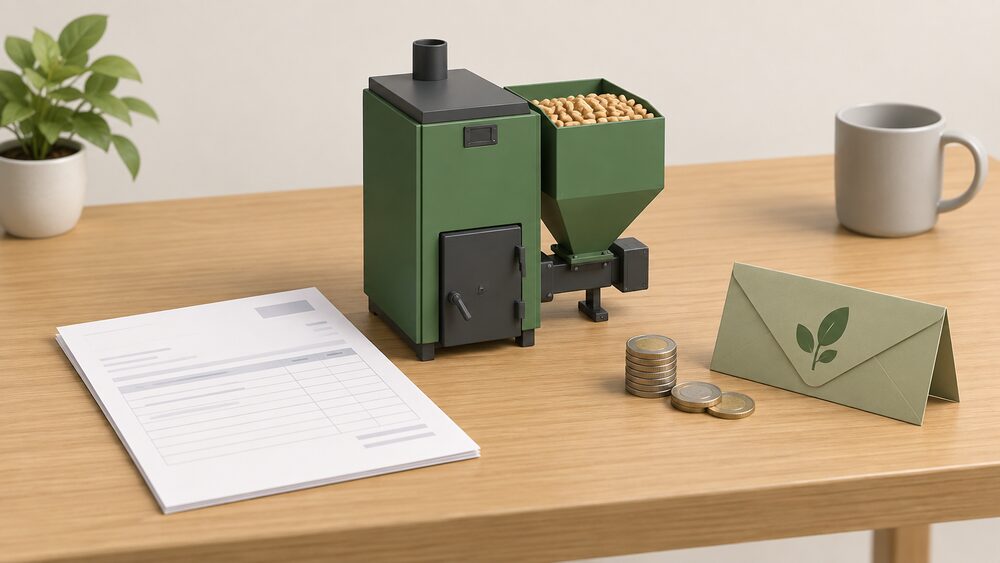
The Boiler Upgrade Scheme pays £5,000 off the cost and installation of a biomass boiler, but only for a narrow set of homes: the property must be off the gas grid, in a rural location, and the boiler must carry an emissions certificate showing that polluting emissions are kept to a minimum1. The application is installer-led, so the householder does not apply to Ofgem directly1.
Biomass is the exception in a scheme built around heat pumps. The £5,000 figure is the biomass grant, while the scheme as a whole advertises grants of up to £7,500, which is the heat pump figure1. The two amounts sit side by side in the official material, so the biomass figure should be confirmed with an installer before work is quoted.
The rules that matter most are location, emissions and capacity. Biomass boilers are only eligible where the property is in a rural location and is not connected to the gas grid, including where a gas connection has been capped or clamped3. The boiler must be a standalone system providing both space and hot water, must meet emission limits for particulate matter and NOx, and must not exceed 45 kWth5.
What the scheme pays a biomass boiler owner
The published grant for biomass is £5,000 off the cost and installation of the boiler1. The scheme's own summary describes upfront capital grants of up to £7,500 to encourage property owners to replace existing fossil fuel heating, and that higher figure is the one attached to heat pumps2. Both figures are given here rather than one being presented as the answer for every technology.
The £5,000 biomass figure has been stable. It appears in the scheme's annual reporting for 2024 to 2025 as the biomass amount from 23 October 20238. Independent guidance repeats the same number, describing a grant of up to £5,000 per installation for biomass boilers in England and Wales, available when a heat pump is not suitable4. A consumer body's funding page likewise states that a boiler must have an emissions certificate showing that polluting emissions are kept to a minimum9.
What the grant does not do is cover the whole cost. It is a capital contribution discounted from the installer's invoice, not a payment to the householder, and the balance is met privately. Prices for biomass boilers are installer-quoted and the scheme publishes no price list, so no cost range can be given here. For a rural household off the gas grid, the practical effect is a reduction in the upfront cost of moving away from oil or electric heating, while the running cost depends on fuel supply, storage and the boiler's efficiency, none of which the grant controls.
Eligibility: which properties and which heating systems qualify
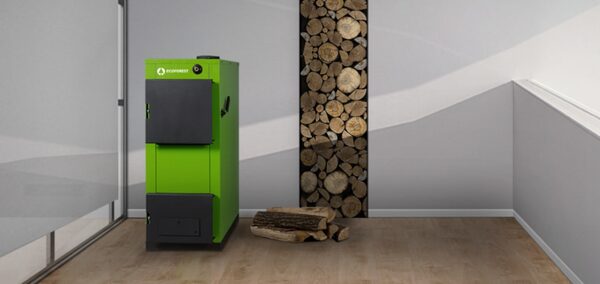
Biomass eligibility is tighter than heat pump eligibility, and the guidance describes it as available only in limited circumstances, subject to additional location and air-quality requirements10. Three conditions run together: the property must be off the gas grid, it must be in a rural location, and the boiler must meet emission limits3.
The heating system being replaced matters too. To qualify, a property must be replacing an existing heating system that operates on either fossil fuels or electricity, and properties that have already had public funding for a heat pump or biomass boiler are not eligible8. The new boiler must be capable of meeting the full space heating and hot water heating demands of the property, and must provide both space and hot water heating rather than one or the other11.
Biomass boilers must be standalone systems providing space and hot water, and are ineligible on the gas grid, including where a connection has been capped or clamped, and in self-builds5. The definition of an eligible biomass boiler was widened to include those with a cooking function, provided the cooking function is integrated and cannot be controlled separately from the heating function of the property13.
A property is not eligible if a previous Boiler Upgrade Scheme grant has already been received for installing a heat pump or biomass boiler at the same address6. Blended funding with ECO4 is covered in the scheme guidance, so an ECO4-funded measure at the property is not by itself a bar14. The ECO4 scheme works on different eligibility grounds, and the two routes are compared on Boiler Upgrade Scheme vs ECO4.
The 45 kWth capacity limit and emissions standards
The maximum permitted capacity for an individual biomass boiler system is 45 kWth, the same ceiling that applies to an individual heat pump system5. The limit is per system, and it is the figure an installer checks against the property's calculated heat demand before quoting.
Emissions are the second technical gate, and they are set out as certificate limits rather than as design guidance. The boiler's emissions certificate must show that particulate matter did not exceed 30g/GJ net heat input and that NOx did not exceed 150 g/GJ net heat input6. The scheme rules require an emissions certificate showing that polluting emissions are kept to a minimum3. The requirements for biomass boilers sit in regulation 10 of the 2022 Regulations, amended by the 2024 amending regulations15.
| Requirement | Limit | Source |
|---|---|---|
| Individual biomass boiler capacity | 45 kWth | 5 |
| Particulate matter | 30g/GJ net heat input | 6 |
| NOx | 150 g/GJ net heat input | 6 |
| Space and hot water | Both required | 11 |
| Full demand | Must meet full space and hot water demand | 12 |
The capacity ceiling shapes which homes the grant realistically serves. A 45 kWth biomass boiler suits a larger rural property with high heat demand, which is also the kind of home most likely to be off the gas grid. Above that figure the scheme does not apply, and the installation becomes a privately funded project. MCS certification is the other standard in play: the scheme is installer-led, and installers who are MCS certified can apply for and redeem vouchers on behalf of property owners16. The MCS biomass technology page sets out what certification covers for the technology4.
How the installer-led application and voucher process works

The application is installer-led, with the installer applying for the grant on the property owner's behalf1. The installer discounts the grant from the invoice, applies to Ofgem for a grant voucher, and redeems the voucher after installation and commissioning1. It is an installer-led two stage process, which means the property owner's chosen installer applies for and redeems the voucher14.
Stage one is the voucher application. Installers submit a voucher application, known as stage 1a, where Ofgem checks whether the pre-installation eligibility criteria are met; if the application succeeds, Ofgem issues the voucher at stage 1b17. Stage two is redemption: the installer submits a voucher redemption application and then receives the grant payment18. The same two-stage description appears across the quarterly reporting18.
- The installer checks the property against the eligibility criteria.
- The installer submits the voucher application to Ofgem.
- Ofgem checks pre-installation eligibility and issues the voucher.
- The boiler is installed and commissioned.
- The installer submits the redemption application and receives the grant.
Two timing rules govern the sequence. The boiler must be commissioned no more than 120 days before the voucher application is properly made, and retrospective applications are permitted if properly made within 120 days of commissioning10. Once issued, the voucher must be redeemed within three months for biomass boilers7. The scheme requires confirmation that the property owner has consented to an application being made on their behalf20. The application process is described in more detail elsewhere.
England and Wales only: where the scheme applies
Only properties located in England and Wales are eligible for Boiler Upgrade Scheme funding6. The scheme is targeted towards domestic and non-domestic properties in England and Wales, and self-build properties are eligible for heat pumps21. The government's own evaluation of the scheme records its territorial extent as England and Wales22.
For biomass specifically, the location test is narrower still. Biomass boilers are only eligible where the property is in a rural location and is not connected to the gas grid4. Rural properties only, in England or Wales, is how the older property owner guidance put it14. Householders in Scotland, Northern Ireland and Wales should note that the scheme does not extend to Scotland or Northern Ireland at all, and that separate devolved schemes operate there, covered under home energy grants in Scotland and home energy grants in Northern Ireland.
The rural and off-grid conditions mean the grant is aimed at households with the least grid dependence already. A property with no mains gas connection is not exposed to gas price movements, but it is exposed to whatever fuel it does burn, whether that is heating oil, LPG or electricity. Biomass moves the household onto a fuel it can store on site, which is a form of energy independence, but it substitutes one delivered fuel for another: the wood pellets or chips still arrive by lorry, and the boiler still needs servicing and a flue. The wider picture of grants and energy independence sets out what the scheme does and does not change.
Social housing, self-builds and other exclusions
Properties classed as social housing are not eligible for Boiler Upgrade Scheme funding, and this includes shared ownership properties7. The guidance has been expanded to explain what counts as social housing, with confirmation that Right to Buy properties may become eligible once they are privately owned5. The social housing position is treated separately.
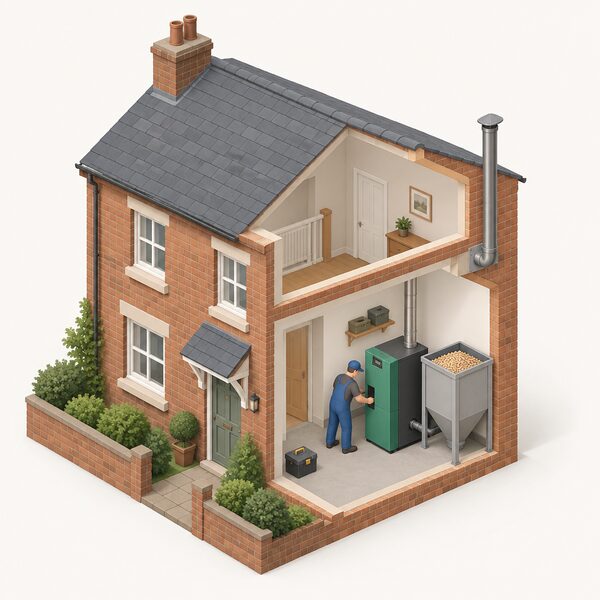
New build properties are not eligible for the scheme except for certain self-builds18. Self-build properties are only eligible for Boiler Upgrade Scheme funding for heat pumps, and biomass boilers are not eligible for funding in self-build properties10. A biomass installation therefore has to be a retrofit into an existing property.
The Energy Performance Certificate position has changed. From 28 April 2026, properties are no longer required to have a valid EPC to apply for the scheme23. Where a property does hold a valid EPC, the certificate number must be provided16. The government has said it intends to amend the eligibility criteria to relax the EPC requirement from 2026/27 onwards, adopting a hybrid model5. The EPC and insulation question is covered in full elsewhere.
Scheme end dates and budget: how long the funding runs
The scheme's funding has been extended well beyond its original window. The government confirmed funding for further years up to 2029/30 through the Warm Homes Plan in January 202624. The scheme is scheduled to close at 11:59pm on 30 December 20291. Older local authority guidance still describes the scheme as running from 2022 to 2025, which reflects the position before the extension25.
Budget figures have moved over the scheme's life. The 2022 to 2023 financial year budget was £150 million6. The final budget for 2024 to 2025 was £180 million26.
Take-up of the biomass element is small. Thirty biomass grants were paid in the quarterly period from November 2025 to January 202618. That is consistent with a technology restricted to rural, off-gas properties with an emissions-certificated boiler. For a household weighing the grant, the practical reading is that funding is confirmed for several more years, the biomass share of it is small, and the eligibility conditions rather than the budget are the binding constraint. The Boiler Upgrade Scheme pillar page covers the scheme as a whole, and the grant amount page covers the payment figures.
Sources26 cited
- Boiler Upgrade Scheme, Find Government Grants, 2026
- Boiler Upgrade Scheme, Ofgem, 2026
- Check if you're eligible for the Boiler Upgrade Scheme, GOV.UK, 2026
- Biomass, MCS Certified, 2026
- Summary of updates to BUS guidance for installers V5, Ofgem, 2026
- Boiler Upgrade Scheme guidance for installers V5, Ofgem, 2026
- Boiler Upgrade Scheme guidance for property owners V5, Ofgem, 2026
- BUS Annual Report 2024 to 2025, Ofgem, 2025
- Funding and grants for energy, Centre for Sustainable Energy, 2026
- BUS guidance for property owners V5 draft, Ofgem, 2026
- Summary of updates for BUS guidance for property owners V4.1, Ofgem, 2025
- Boiler Upgrade Scheme installer guidance, Ofgem, 2022
- Changes to the Boiler Upgrade Scheme, HETAS, 2024
- BUS property owner guidance V2.3, Ofgem, 2023
- The Boiler Upgrade Scheme (England and Wales) (Amendment) Regulations 2024, legislation.gov.uk, 2024
- Boiler Upgrade Scheme for installers, Ofgem, 2026
- BUS quarterly report issue 13, Ofgem, 2025
- BUS quarterly report issue 15, Ofgem, 2026
- BUS quarterly report issue 14, Ofgem, 2025
- Boiler Upgrade Scheme letter of authorisation, Ofgem, 2022
- Heat pump deployment quarterly statistics, UK 2026 Q1, GOV.UK, 2026
- Evaluation of the Boiler Upgrade Scheme 2025, GOV.UK, 2026
- BUS guidance for installers v5.1, Ofgem, 2026
- Boiler Upgrade Scheme statistics, July 2026, GOV.UK, 2026
- Home and business grants, schemes and advice, East Herts Council, 2026
- Accelerating to net zero: government response, GOV.UK, 2024
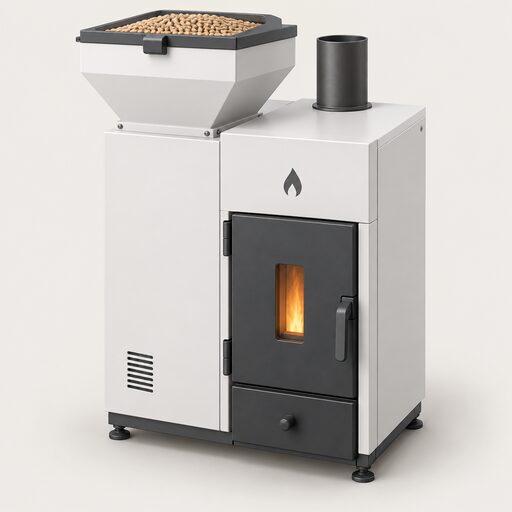 Biomass Boilers and StovesHow pellet and log biomass boilers and room stoves work in UK homes: the £5,000 Boiler Upgrade Scheme grant and its rural, off-gas-grid conditions, emissions limits, smoke control area law, fuel sourcing and the practical demands of storage and maintenance.
 Living Off the Gas GridNo mains gas at your home?
 Building RegulationsReplacing a boiler or heating system usually needs building regulations approval, and the rules differ across England, Scotland, Wales and Northern Ireland.
 Financing an InstallationPaying monthly for a boiler, solar panels, battery or heat pump sounds simple, but who actually lends you the money and what happens if the work goes wrong?
 Certificates You Should ReceiveAfter work like solar panels or a new boiler, what paperwork should you actually be handed, and by when?
 Heating Controls Building RulesWhat heating controls must you fit by law when you replace a boiler?