

In this guide
A home chargepoint is sold and installed under the same consumer protection architecture as other home energy work: a consumer code approved by the Secretary of State, a certification scheme for the installer, and building regulations that apply whatever the installer's paperwork says. There is no standalone "Electric Vehicle Consumer Code" register. The code that governs chargepoint sales and installation is the Renewable Energy Consumer Code, developed and run by Renewable Energy Assurance Ltd (REAL)1. Grant-funded chargepoint work adds a second layer: the installer must be authorised by the Office for Zero Emission Vehicles2.
The practical effect for a household is that two checks matter before signing anything. The first is whether the installer is a member of an approved consumer code, which is what gives a defined complaints route and contractual standards. The second is whether the installer is OZEV-authorised, which is a condition of the grant schemes rather than a general requirement for all chargepoint work3. Building regulations approval is always required when installing an EV home charger, and a competent and reputable installer should be used, with specific processes for notifying the local building control authority4.
Costs sit in a defined band. A typical domestic installation is worth £800 to £1,500 for the electrical work, excluding the charger unit5. Research cited by the Planning Portal puts installation costs between £450 for a basic model, increasing to around £1,200 as the power and capabilities increase4. The two figures measure different things: one is labour and electrical work, the other is a total that moves with the specification of the unit.
What the Electric Vehicle Consumer Code is and who runs it
The consumer code framework for home energy work is administered through bodies approved by the Secretary of State. The Renewable Energy Consumer Code was developed and is sponsored and run by Renewable Energy Assurance Ltd (REAL)1. It is one of the codes that sits behind grant-funded renewable and low-carbon installations, and it exists for a stated purpose: consumer codes exist to protect consumers from any harm they may face due to any MCS installer's misconduct7.
That framing matters for chargepoint work because the code is not a product standard. It is a conduct standard covering how a member sells, quotes, contracts and handles complaints. The Boiler Upgrade Scheme guidance for installers states the requirement plainly: installers must also be a member of an approved consumer code8. The same structure applies across the low-carbon installation sector, where installers working with consumers must be MCS-certified and members of a consumer code approved by the Secretary of State9.
For a household buying a chargepoint, the code's value is procedural rather than technical. It gives a named body to escalate to, a set of expectations about what a quote and contract must contain, and a route that sits alongside, not instead of, statutory consumer rights. The Energy Consumer Commission has an established role monitoring and advocating for consumers on energy issues, which is the wider policy context in which these codes operate10.
"The RECC was developed and is sponsored and run by Renewable Energy Assurance Ltd (REAL)."
The limit is worth stating. Membership of a consumer code is a condition of certain grant schemes and a signal of process discipline. It is not a guarantee of workmanship, and it does not replace the building regulations approval that applies to every home chargepoint installation.
What the code covers: standards for domestic chargepoint installers
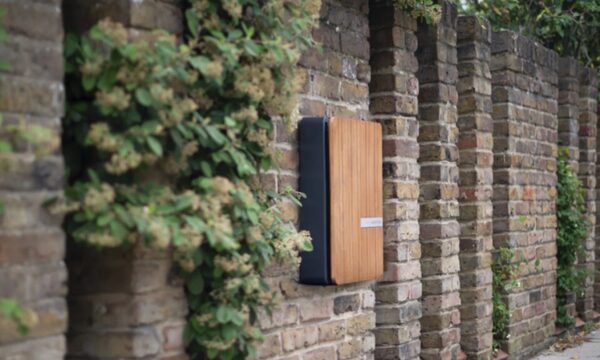
The technical standards for a domestic chargepoint are set outside the consumer code, in building regulations and electrical standards. The Building Regulations 2010 include regulation 44J, "Minimum standards of an electric vehicle charge point"11. That is the statutory floor. On top of it sit the installation standards that grant-funded work must meet: BS EN 61851, the IET wiring regulations BS 7671, the IET Code of Practice for Electric Vehicle Charging Equipment Installations, and the Electricity Safety, Quality and Continuity Regulations installation requirements12.
The consumer code's contribution is disclosure and contract conduct. Where a vehicle lease is bundled with a chargepoint, the scheme rules require the offer to list the cost of the chargepoint and installation, including VAT13. That is the kind of term a code is designed to enforce: the household sees what it is paying for, separated from the vehicle.
Grant rules also define what counts as an eligible cost, which shapes what a compliant quote should itemise. Claimable costs include the chargepoint units, additional electrical components or hardware, civil engineering works, labour costs, project management and reporting costs, VAT incurred by the customer, and site survey works when leading to a completed installation claim12. Onsite software and hardware required to manage and maintain the chargepoints, communications media, grid connections, concrete plinths or footings, signage, reinstatement work and vehicle barriers are also within scope12.
The direction of travel is toward chargepoints as standard building equipment rather than an optional extra. A government consultation describes requiring all new domestic and non-domestic buildings to install a chargepoint14. For a household, the practical reading is that the standards are converging: a chargepoint installed to grant specification today is installed to roughly the standard that new-build regulation is moving toward.
Why using a code-approved installer matters for a home chargepoint
Building regulations approval is required in all cases, and this may be achieved through the use of a competent person or a local building control body4. That single sentence explains most of the value of choosing a registered installer. A member of a competent person scheme can self-certify their own work, which removes a separate notification step and the fee that comes with it. Electricians registered on a Competent Person Scheme like NICEIC's are deemed competent to self-certify their own work, saving householders time and money15.
Where the work is not done by a person registered with the competent person scheme, the relevant building control authority must be notified of the work4. That is a cost and a delay, and it is the household's responsibility to arrange it. Installing a home charger is classified as development, so it is up to the householder to ensure the correct permissions are in place16.
Grant-funded work adds the OZEV authorisation requirement. You must use an OZEV approved installer to complete the installation of the chargepoint under the on-street parking grant17, and the same condition applies to the renters and flat owners grant and the landlord grant18. Independent guidance from NICEIC puts the two conditions together: to be eligible, you must use or own a vehicle on OZEV's list of approved vehicles and have the charger installed by an OZEV-approved installer15.
The independence question is worth naming. A chargepoint ties a household to the electricity grid for fuel, to a supplier for tariff, and to the manufacturer for app and firmware. The installer's registration determines who is accountable when the physical work goes wrong. That is the part of the chain a household can verify before signing, and it is the part that a consumer code and a competent person scheme are built to make checkable.
Installation cost: £800 to £1,500 for a typical home charger
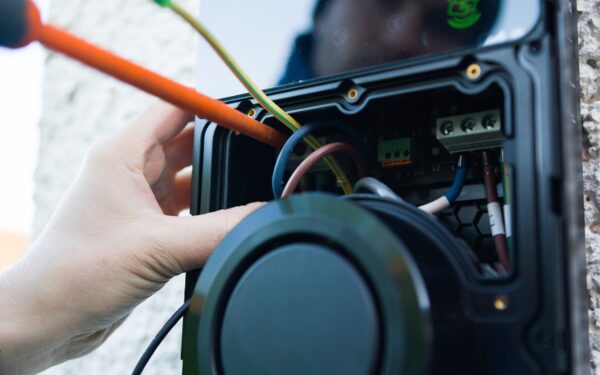
The headline figure for the electrical work is £800 to £1,500, excluding the charger unit5. That is the labour and electrical side of a typical domestic job. The Planning Portal's figure covers the whole installation and moves with specification: research suggests that installation costs range between £450 for a basic model, increasing to around £1,200 as the power and capabilities increase4.
The two ranges are not in conflict so much as measuring different scopes. One is the electrical work alone; the other is a total that rises with the unit's power and features. Independent guidance from NICEIC sets out what drives the spread: the cost of installation will depend on several considerations, including the charging station model, charging speed, and your electrician's fees to install it15.
| Cost element | Figure | Scope | Source |
|---|---|---|---|
| Electrical work | £800 to £1,500 | Excludes the charger unit | 5 |
| Basic to higher-power installation | £450 to around £1,200 | Rises with power and capabilities | 4 |
No published rate exists for the work itself, so prices are installer-quoted. The government's own guidance does not publish a rate: contact an installer approved by the Office for Zero Emission Vehicles (OZEV) to find out how much it costs to install a chargepoint3. That is the position for a household: the ranges above describe the market, and the actual figure comes from a survey and a quote.
Two further cost notes bear on the total. Grant-funded work can claim VAT incurred by the customer as an eligible cost, which means the VAT position is part of the claim rather than an add-on12. And where a vehicle lease bundles a chargepoint, the offer must list the cost of the chargepoint and installation, including VAT, so the household can see the two components separately13.
What a standard installation includes, and what costs extra
A compliant installation is defined by the standards it meets rather than a fixed list of parts. Your EV charger must be installed in line with the current edition of BS 7671, the national standard for electrical installations15. To install EV chargers, an installer needs competence in the IET Code of Practice for Electric Vehicle Charging5. Those two requirements set the baseline for what a standard job includes: a wall-mounted unit, a dedicated circuit from the consumer unit, earthing and protection to the current edition of the wiring regulations, testing, and certification.
What sits inside a grant claim gives a useful picture of the wider scope. Claimable costs include the chargepoint units, additional electrical components or hardware, civil engineering works, labour costs, project management and reporting costs, VAT incurred by the customer, and site survey works when leading to a completed installation claim12. Communications media, grid connections, concrete plinths or footings, signage, reinstatement work and vehicle barriers are also claimable12.
That list is effectively the catalogue of extras. Civil engineering works, plinths and footings point to ground-mounted or post-mounted units and to cable runs that need excavation. Reinstatement work covers making good after a trench. Grid connections and additional electrical components point to supply upgrades. None of these is unusual, and none is included in a bare "standard installation" price.
The practical test for a household is whether the quote separates the unit, the electrical work, and any civil or reinstatement element. A quote that bundles everything into one figure makes it impossible to see which parts are grant-eligible and which are not, and it makes comparison between installers meaningless.
Eligibility: off-street parking, Wi-Fi, and landlord permission

Parking is the gate that most households pass or fail on. For the renters and flat owners grant, your home must have its own private off-street parking space13. The scheme rules expand on what that means: the space must be off-street, private and clearly defined, it does not have to be part of the property, and it must be accessible to you at all times13. The landlord grant uses similar language: each parking space must be off-street, private and clearly defined, accessible to the tenant, and owned by the landlord or held under a legal right19.
For renters, the supporting evidence requirement is explicit. You will need to provide supporting evidence when you apply, such as a rental agreement if you rent the property13. In practice the parking space must be one the tenant can use without asking permission each time, which is why the "accessible at all times" condition matters more than the paperwork.
Households without off-street parking are not shut out entirely, but the route is different and narrower. The on-street parking grant requires a non-temporary cross-pavement charging solution installed alongside the chargepoint, adequate on-street parking, permission from the local highways authority, and a declaration that the householder will obtain the necessary planning permissions17. Evidence required includes local highways authority consent for the cross-pavement solution and a declaration that you will obtain necessary planning permissions17.
Wi-Fi and data are a separate condition, and it is a legal one rather than a scheme rule. The Electric Vehicles (Smart Charge Points) Regulations 2021 require that domestic EV chargers must be smart, capable of responding to signals to shift charging to off-peak periods5. This is a legal requirement, not optional5. The regulations are enforced by the Secretary of State under regulation 1520.
The design of the requirement anticipates a lost connection. A charge point must be configured such that when it loses communications network connectivity it is still able to charge21. So a household does not need permanent connectivity for the charger to work, but it does need it for the smart functions that the regulations require and that time-of-use tariffs depend on. On tariffs, the position is narrower than often assumed: you do not need a smart meter simply to charge an EV, but without one you may not be able to access some EV-specific tariffs22.
Planning permission and DNO notification: when each applies
Most home chargepoints go in under permitted development. If your home has off-street parking it is likely the installation of an EV home charger will fall under permitted development rights23. The Planning Portal states the same for domestic chargers: the installation of these can be achieved using permitted development rights, provided certain limits are met4.
The limits are specific. Planning permission is not required provided the outlet and its casing will not exceed 0.2 cubic metres, and provided it is not located on scheduled ancient monument land24. The legal basis is Schedule 2, Part 2, Class D and E of The Town and Country Planning (General Permitted Development) (England) Order 2015 (as amended)23. If the work does not meet those requirements, planning permission will be required23.
| Situation | Planning position |
|---|---|
| Home with off-street parking, within limits | Likely permitted development, no application23 |
| On-street parking | Planning permission usually required6 |
| Conservation area or listed building | Planning permission usually required6 |
| More than one upstand per parking space | Planning permission usually required6 |
| Outlet and casing over 0.2 cubic metres | Planning permission required24 |
Planning permission is usually required for on-street parking, conservation areas, listed buildings, areas where the installation is restricted, and more than one upstand per parking space6. The permitted development route is also removed for dwellings that have had permitted development rights withdrawn, and for dwellings in an area of outstanding natural beauty or a conservation area, where the 0.2 cubic metre limit applies24.
Notification is a separate matter from planning. If the work is not done by a person registered with the competent person scheme, then the relevant building control authority must be notified of the work4. Where a competent person does the work, that notification is handled through the scheme. On the network side, notification to the distribution network operator about connection and disconnection is mandatory for plug-in solar devices25, which is the closest parallel in the material for how connection notification works; chargepoint installation itself is a load rather than a generation connection.
The four nations differ. The permitted development rules described here are the England order23. Scotland, Wales and Northern Ireland operate their own planning and building regimes, and the grant schemes are administered with nation-specific conditions. The landlord grant, for example, excludes buildings under construction or being renovated where the Part S Regulations applies on or after 15 June 2022 in England, and devolved countries with similar regulations, such as the Building (Scotland) Regulations from 5 June 202319. Northern Ireland's chargepoint and infrastructure grants are published separately by the Department for Infrastructure26.
How the installation works, from survey to certification

The process starts with a survey, because the grant rules make site survey works a claimable cost only when they lead to a completed installation claim12. That is a small but useful signal: the survey is part of the job, not a separate sales visit to be charged for and abandoned.
The sequence that follows is set by the electrical and building regulations rather than by the code. The installer assesses the supply and the route from the consumer unit, confirms the parking position and the mounting point, and checks whether the unit's power and the existing supply can be reconciled without an upgrade. Where civil works are needed, plinths, footings and reinstatement enter the scope12.
Installation itself is governed by BS 7671 and the IET Code of Practice for Electric Vehicle Charging Equipment Installations12. The unit is commissioned, its smart charging functions configured, and the installation tested. Building regulations approval is achieved either through a competent person or through the local building control body4.
Certification is the part a household should hold on to. The competent person should provide a completed Electrical Installation Certificate which shows that the work was tested for safety27. Where the plans or building notice route is used, when work is finished you must provide the electrical installation certificate to the building control body28. A compliance certificate serves the purpose of proving the work complies with building regulations6.
The independence picture at the end of the process is mixed, and worth stating plainly. The household owns the unit and the circuit, and the electricity comes from the grid through a supplier of the household's choosing. What remains dependent is the manufacturer's app and firmware, the data connection the smart charging regulations assume, and the installer's workmanship warranty. The certificates are what convert the installation from a verbal promise into something a future buyer, insurer or electrician can verify.
Sources28 cited
- Renewable Energy Consumer Code, Chartered Trading Standards Institute, 2026-09-20
- Electric vehicle chargepoint grants, GOV.UK, 2026-04-01
- Electric vehicle chargepoint grant for households, GOV.UK, 2026-09-17
- Electric vehicle chargers, Planning Portal, 2026
- Section 722 EV charging complete guide, Elec-Mate, 2026-07-02
- Building regulations for electric vehicle charging, Planning Portal, 2026-09-17
- Summary of updates to Boiler Upgrade Scheme Guidance for Property Owners, Ofgem, 2023-12
- Boiler Upgrade Scheme guidance for installers, Ofgem, 2026-07-02
- Boiler Upgrade Scheme guidance for property owners, Ofgem, 2026-04-28
- Consumer Scotland draft workplan: energy post water 2022-23 consultation, Scottish Government, 2022-02-02
- The Building Regulations 2010, legislation.gov.uk, 2026-09-17
- Electric vehicle chargepoint and infrastructure specifications, GOV.UK, 2023-10-10
- Electric vehicle chargepoint grant for renters or flat owners, GOV.UK, 2026-09-17
- Solar carparks and EV charging call for evidence, GOV.UK, 2025-05
- Electric vehicle charger installation and maintenance, NICEIC, 2025-08
- Planning permission for electric vehicle charging, Planning Portal, 2026
- Electric Vehicle Chargepoint Grant for Households with On-Street Parking, Find Government Grants, 2026-09-17
- Electric Vehicle Chargepoint Grant for Renters and Flat Owners, Find Government Grants, 2026-09-18
- Electric vehicle chargepoint and infrastructure grants for landlords, Find Government Grants, 2026-09-18
- The Electric Vehicles (Smart Charge Points) Regulations 2021, legislation.gov.uk, 2021-12-15
- Guide to EVSCP Regulations 2021, GOV.UK, 2026-09-18
- EV tariffs and home charging: what consumers need to know, Energy Ombudsman, 2026-09-11
- Permitted development for electric vehicle charging, Planning Portal, 2026
- Electric vehicle charging, Planning Portal, 2026-09-17
- Plug-in solar interim product specification, GOV.UK, 2026-07
- Electric vehicle chargepoint and infrastructure grants, Department for Infrastructure, 2026-09-18
- Building regulations: electrics, Welsh Government, 2026-09-17
- Electrical safety, Cumberland Council, 2026-09-17
 Home Charger InstallationWho can fit a home EV charger, and does it need building regulations approval?
 New Build Charger RequirementsExplains the requirement for charge points and cable routes in new and materially altered homes, set by Part S in England and equivalent rules elsewhere in the UK.
 EV Charge Point Faults and FixesDescribes the common failure patterns on domestic charge points: tripped protective devices, lost connectivity, stuck cables and locks, error indications and charging that stops early.
 EV Charger WarrantiesCovers typical warranty lengths on UK home charge points, what parts and labour are included, registration conditions and extended warranty options.
 EV Charger Safety and StandardsHow do you know a home charge point is safe to use?
 Electrical RequirementsWill your home need a bigger electricity supply before a charge point can go in?