

In this guide
Wales runs its own building control regime, its own funded retrofit programmes and its own set of installer conditions, so a household here is not simply working with an England-and-Wales rulebook. Two registers do most of the work when finding an installer in Wales: the Microgeneration Certification Scheme (MCS) for renewable technology, and TrustMark, the government endorsed quality scheme, for work around the home. Installers under UK Government schemes must be TrustMark registered and/or MCS certified1.
The legal backdrop is separate. The Building etc. (Amendment) (Wales) Regulations 2026 apply to buildings and building work in Wales2, and the Building Regulations 2010 carry a Wales-specific application provision3. Electrical work in a home or garden in Wales must follow the building regulations, and in Wales special locations include kitchens and outdoors, which is a wider notifiable set than in England4.
For funded work the conditions are tighter still. Under Green Homes Wales, the installer must be registered with TrustMark and the relevant body for the measure, must comply with the relevant PAS certification, and cannot be the borrower or a member of their household or immediate family6. Warm Homes Nest, the Welsh Government scheme for houses with a poor Energy Performance Certificate rating, includes an independent quality assurance service, and any issues identified are corrected immediately, before the installer is paid8.
Finding an installer in Wales: the two registers that matter
The practical starting point is not a directory but a register. MCS is a certification scheme for microgeneration installation companies and products, aiming to ensure consistent standards and provide confidence to consumers10. TrustMark is described in official guidance as a competent person register for finding an installer that will assess your circumstances and property to identify suitable measures11. Between them they cover the two broad categories of work a Welsh household is likely to commission: renewable generation and heating on one side, general energy efficiency and building work on the other.
The registers are not interchangeable, and the funded schemes show why. Green Homes Wales requires installers to be registered with TrustMark as an approved PAS 2030 installer, or registered with TrustMark and certified with MCS where the installation involves a low carbon technology such as a heat pump or solar panels6. That is a two-part test: the general quality mark plus the technology-specific certification. A firm holding only one of the two does not meet the scheme's condition for that measure.
There is also a personal test. The installer cannot be a member of your household or immediate family6. The loan terms put it more fully: the installer must not be the borrower, a member of the borrower's household or immediate family7. This closes off a route where a household might otherwise self-certify work to unlock scheme funding.
For electrical work, the register question has a Welsh twist. Official guidance advises checking that an installer is a member of a scheme covering the work they will be undertaking12. In Wales the notifiable set is broader than in England, because kitchens and outdoors count as special locations5. A household in Wales therefore has more reason than one in England to confirm the scheme scope covers the specific room or location, not just the trade.
MCS: the quality mark for renewable installations
MCS certification ensures that installers install renewable technologies to industry-recognised standards13. That is the core of what the mark means: a technical standard, applied by a certified company, verified by a certification body. MCS sets and maintains technical standards for installations and products, certifies installers and products against those standards, issues MCS certificates for completed eligible installations, and assists certification bodies to review and address cases and consumer issues relating to installers or products14.
The scheme is also the gateway to money. MCS certification is a requirement for accessing many UK government incentives and ensures access to robust protections13. For a Welsh household, that matters most where a grant or loan scheme names certification as a condition, and where a tariff or payment depends on an eligible installation being certified.
MCS is in the middle of a transition. The transition phase is due to end by 31 March 2027, by which date all MCS certified installers must operate under the redeveloped Scheme15. MCS published material on transforming consumer protection for renewables in September 2026, and on plug-in solar panels becoming available in the UK in the same month. The direction of travel is a tighter scheme, not a looser one.
For solar photovoltaic and wind installations with a declared net capacity of 50kW or less, and for micro combined heat and power installations, the work must be commissioned by an MCS-certified installer using an MCS-certified product16. That pairing, certified installer plus certified product, is what makes the resulting certificate meaningful. A household commissioning renewable work in Wales should expect both halves to be present.
TrustMark: the Government Endorsed Quality Scheme for work around the home
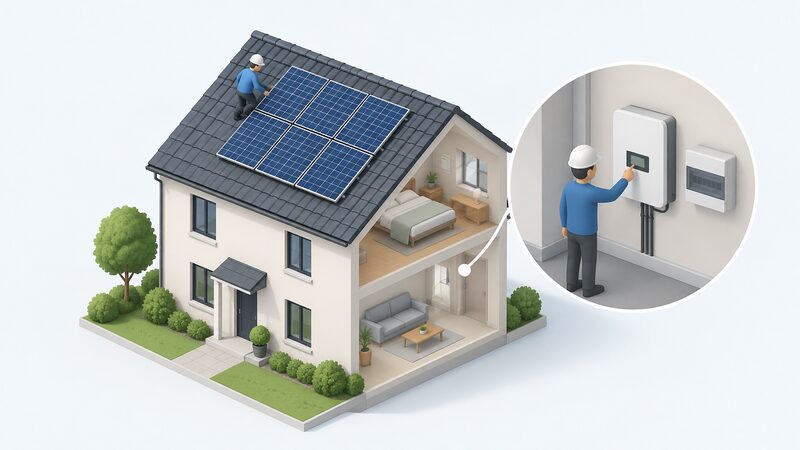
TrustMark is a government endorsed quality scheme17. It operates as a register of businesses that have met the scheme's requirements, and it is the body named in legislation for certain installations. Under the Warm Home Discount (England and Wales) Regulations 2026, a boiler or central heating system must be installed by, or under the responsibility of, a person who is registered with TrustMark, with a certificate of lodgement issued by the operator of TrustMark18. That is a statutory condition, not a marketing claim.
The register is also the route into funded retrofit. Official guidance points households towards searching a competent person register such as TrustMark to find an installer that will assess circumstances and property and identify suitable measures11. For Green Homes Wales, TrustMark registration is a scheme condition, and the loan terms require the installer to remain registered until the installation work has been completed7. A lapse in registration part-way through a job is therefore not a technicality.
TrustMark (2005) Limited is a company registered in England and Wales with company number 0548014418. It is a single UK-wide operator, so a Welsh household is dealing with the same register as one in England, even though the building control regime underneath differs.
The Welsh Government has signalled that it may extend the accreditation expectation further. A review of the next iteration of the Warm Homes Programme noted that further consideration will need to be given as to whether contractors delivering the Welsh Government Schemes will need to be TrustMark accredited19. That is a direction of policy rather than a current rule, and it is worth reading as such.

Building Regulations in Wales: what the law requires for your installation
Wales has its own application provision within the Building Regulations 20103, and the Building etc. (Amendment) (Wales) Regulations 2026 apply to buildings and building work in Wales2. The practical question for a household is which work is caught, and who signs it off.
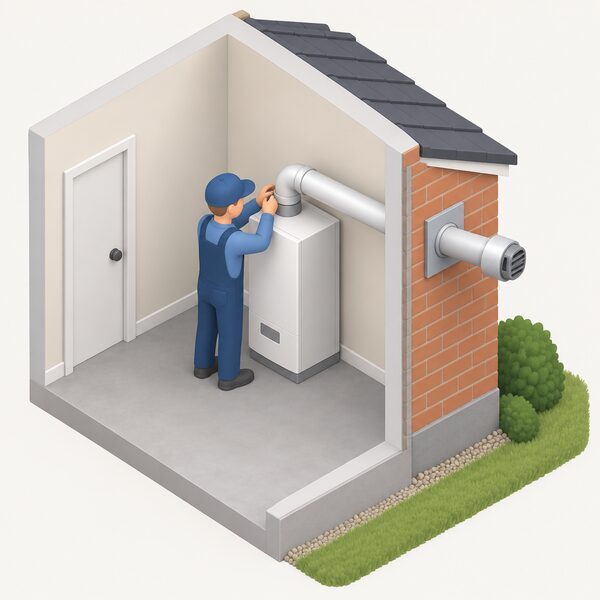
The list of building work is broad. It includes the erection or extension of a building, the installation or extension of a controlled service or fitting, alterations affecting ongoing compliance with structure, fire or access requirements, the insertion of insulation into a cavity wall, underpinning of foundations, and work affecting thermal elements, energy status or energy performance20. Services and fittings caught include washing and sanitary facilities, hot water cylinders, foul water and rainwater drainage, replacement windows, and fuel burning appliances of any type20. A flue installation is expressly covered: if you wish to install a flue, building regulations apply21.
Insulation has its own rule. Insulation has to comply with the relevant building regulations both when installed during construction and when fitted retrospectively22. That catches the common case of a household adding insulation to an existing Welsh home rather than building new.
Electrics are where Wales diverges most visibly. Electrical installation work in a home or garden in England and Wales must follow the building regulations4, and the Building Regulations only set standards for electrical installation work in relation to dwellings5. They do not set standards for the safety of electrical appliances, but they do require that fixed connections of appliances are safe5. In Wales, special locations include kitchens and outdoors5, so work in those places is notifiable where equivalent work elsewhere may not be.
Some work is explicitly outside the notification net. Repairs, replacements and maintenance work, extra power points or lighting points, and other alterations to existing circuits, except in a kitchen or bathroom or outdoors, do not need to be reported5. The Welsh non-notifiable list also covers any repair or maintenance work or like-for-like replacement, any addition or alteration to an existing circuit that is not in a kitchen, bathroom or outdoors, installing or upgrading main or supplementary equipotential bonding, and installing extra low voltage cabling outside bathrooms for telephone, fire alarm, burglar alarm and heating systems23.
| Work in a Welsh home | Building Regulations position |
|---|---|
| Flue installation | Building regulations apply21 |
| Cavity wall insulation insertion | Counts as building work20 |
| Retrospective insulation | Must comply with the relevant building regulations22 |
| Electrics in a kitchen or outdoors | Special locations in Wales, so notifiable5 |
| Like-for-like repair or maintenance | Non-notifiable23 |
| Replacement windows | A controlled service or fitting20 |
Checking an installer is certified before you sign
The check itself is straightforward, and official guidance is direct about it. You are advised to check your installer is a member of a scheme covering the work they will be undertaking12. For electrical work, it is recommended to hire an installer who is registered with a competent person scheme, a registered competent person, who can self-certify that the work meets the required standards4.
Self-certification is the mechanism that saves a household a separate building control application. Where a registered competent person does the work, the household should receive a certificate showing the work was done by a registered installer24. For electrical work specifically, the competent person should also provide a completed Electrical Installation Certificate showing that the work was tested for safety4.
There is a second certificate that applies regardless of registration. A qualified installer, whether registered or not, should give a signed BS 7671 electrical safety certificate for all types of electrical work25. That is a separate document from the building regulations certificate, and it is the record that the installation itself was tested to the wiring standard.
For funded work, the check extends to the paperwork trail. Under Green Homes Wales, the borrower must instruct the Retrofit Coordinator named in the Installation Grant Offer Letter, who provides end-to-end support throughout the scheme, and the coordinator must be registered under TrustMark7. The borrower must own and occupy the property situated in Wales at the time the letter is issued, a Project Information Form aligned with the Recommendations Reports is required, an unsecured fixed sum loan from the scheme must have been obtained, Annex C requirements must be met, installers must be registered, work must not start before the letter is issued, the measure must be completely new, and no other public financial support may be received7.
Consumer protection: what MCS certification gives you
MCS certification is a requirement for accessing many UK government incentives and ensures access to robust protections13. The protections are not abstract. They rest on a documented standard, a certificate issued at the right moment, and a route back to the certification body if something goes wrong.
The certificate is the pivot. An MCS certificate is proof that the installation is MCS-certified, and it should only be issued once the installation is fully installed and commissioned; certificates issued before completion are ineligible16. A household that is handed a certificate before the work is finished is holding a document that does not do what it appears to do.
MCS also has a defined role in disputes. For the Boiler Upgrade Scheme, MCS's roles include setting and maintaining technical standards for installations and products, certifying installers and products against those standards, issuing MCS certificates for completed eligible installations, and assisting certification bodies to review and address cases and consumer issues relating to installers or products14. That last function is the one a household uses when a certified installer's work is in question.
There is a verification step that catches some households by surprise. MCS may contact a property owner for a short, routine verification on behalf of Ofgem, either by email or by phone on 0333 103 819826. Property owners should aim to respond within seven days15. This is a check on the installation, not a sales approach, and it is worth recognising for what it is.

If something goes wrong: complaints, ADR and redress
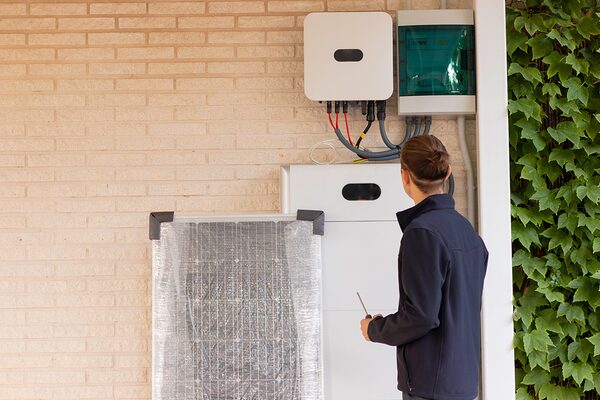
The escalation route in Wales runs through the certification body and the consumer code, with the funded schemes adding their own quality checks on top.
The first step is to give the installer a proper chance. Before contacting a consumer code, the installer should have been given at least 10 working days to resolve the complaint10. MCS is the contact for issues with the installation process, the installer, or an MCS certificate or product10. MCS can be reached at mcscertified.com or by calling 0333 103 813026.
The funded schemes build in their own inspection. Warm Homes Nest includes an independent quality assurance service: experts check the quality of scheme designs and visit installers, and any issues identified are corrected immediately, before the installer is paid for the work9. That payment condition is a stronger lever than a complaints process, because it withholds money until the work is right.
For Green Homes Wales, redemption of the loan depends on confirmation. To redeem, the borrower or Retrofit Coordinator must confirm satisfactory installation by the specified installer, confirm that the necessary lodgements have been submitted to TrustMark, confirm receipt of all Condition 25 documents, confirm other eligibility requirements are met, and provide a dated copy or image of the installer invoice or invoices7. Each of those is a document a household can ask to see.
Where an installer has ceased to trade, the guarantee position is published. For ECO4 and the Great British Insulation Scheme, original installers are liable for fixing the installation, and costs of up to £20,000 should be covered by a guarantee when the installer has ceased to trade or failed to remediate1. That figure is the published cap on the guarantee, not a promise that every defect will reach it.
In Northern Ireland, a separate statutory mechanism exists: a distributor may issue a notice in writing requiring remedial works where it is not satisfied that a connected or proposed connection is constructed, installed, protected, used or arranged for use to prevent, so far as is reasonably practicable, danger or interference27. That provision does not extend to Wales, but it illustrates the kind of enforcement power that exists elsewhere in the UK.
Grants and schemes that require a certified installer
Welsh funding programmes are where installer conditions bite hardest, because the money is conditional on the paperwork as much as the work.
Green Homes Wales supports the installation, in domestic properties located in Wales, of certain types of energy efficiency improvement measures and low carbon heating systems7. Its conditions are cumulative rather than alternative: TrustMark registration, the relevant body registration for the measure type, PAS certification compliance, and the family exclusion6. The scheme also requires the Retrofit Coordinator to be instructed and registered under TrustMark, and the property to be owned and occupied by the borrower in Wales when the letter is issued7.
Warm Homes Nest is the Welsh Government's free upgrade route for houses with a poor Energy Performance Certificate rating8. Its quality assurance model is notable: independent design checks and installer work inspections, with issues corrected before payment9. A household on this scheme is therefore not solely reliant on its own inspection of the work.
The wider UK schemes also reach Welsh households, and they carry their own installer conditions. Installers under UK Government schemes must be TrustMark registered and/or MCS certified1. The Boiler Upgrade Scheme guidance for installers sets out MCS's role in standards, certification and case handling14, and the property owner guidance sets out the verification contact route26. The Energy Company Obligation 4 is set to end on 31 December 20261, which is a deadline that affects the timing of any application.
The Warm Home Discount (England and Wales) Regulations 2026 add a statutory installer condition for boiler and central heating installations: the work must be done by, or under the responsibility of, a person registered with TrustMark, with a certificate of lodgement issued by the operator of TrustMark18.
| Scheme | Installer condition | Source |
|---|---|---|
| Green Homes Wales | TrustMark registered, relevant body registered, PAS certified, not family6 | Welsh Government |
| Warm Homes Nest | Independent quality assurance, issues corrected before payment9 | Welsh Government |
| UK Government schemes | TrustMark registered and/or MCS certified1 | Parliament |
| Warm Home Discount (E&W) 2026 | TrustMark registered, certificate of lodgement issued18 | Legislation |
| ECO4 and GBIS | Up to £20,000 repair costs covered by guarantee where installer ceased trading1 | Parliament |
What MCS certification does not guarantee

Certification is a standard for how work is designed and installed. It is not a performance guarantee, and the distinction matters for a household weighing up a heat pump or solar array.
The clearest limit is on performance. MCS requires installers to provide a design-stage prediction of system efficiency, not verify actual performance28. MCS does not require remediation of systems that are underperforming relative to their design28. A household therefore receives a modelled figure, and the scheme does not compel a fix if the real figure falls short of it.
There is a related point on controls. Third party non-modulating controls are not prohibited28. That is a technical allowance rather than a defect, but it means the control setup in a given installation is not dictated by the certification scheme.
The certificate itself has a timing condition that households should police. It should only be issued once the installation is fully installed and commissioned, and certificates issued before completion are ineligible16. A certificate obtained early is not a shortcut to anything.
Finally, certification is not a warranty. It says nothing about how long a manufacturer will stand behind a product, or what a workmanship warranty covers. Those are separate documents, and they are the ones a household relies on years after the certificate has been filed.
"MCS requires installers to provide a design-stage prediction of system efficiency, not verify actual performance."
Getting quotes and agreeing responsibility for compliance
The quote stage is where responsibility for compliance is settled, and in Wales the answer is not automatic.
Official guidance is clear that if you are the owner of the building, it is ultimately you who may be served with an enforcement notice if the work does not comply with the regulations20. Where a builder is employed, responsibility for compliance will usually be theirs, but this should be confirmed at the very beginning20. That confirmation is a contract term, not a conversation.
The route to compliance is a choice. Most work requires using an installer registered with a competent person scheme or seeking approval from a Building Control body5. Safety can be checked either by using an electrician registered with a competent person scheme or by notifying the building control section of the local authority5. In Wales, approval can be sought from a private registered building control approver where the work does not include a higher-risk building29.
For micro combined heat and power, official guidance advises contacting an installer who can provide the necessary advice, preferably one who belongs to the relevant Competent Person Scheme30. The same logic applies across technologies: the scheme membership is what allows self-certification, and self-certification is what removes the need for a separate application.
On quotes themselves, official guidance for solar recommends using the government-endorsed Microgeneration Certification Scheme to find certified installers and getting at least three quotes from reputable installers8. Three quotes is the published baseline, and it is the point at which a household can compare what each installer is proposing to certify and notify.

Sources30 cited
- Consumer protection and government schemes, House of Commons Library, 2026
- The Building etc. (Amendment) (Wales) Regulations 2026, Welsh Government, 2026
- The Building Regulations 2010, legislation.gov.uk, 2026
- Building regulations: electrics, Welsh Government, 2026
- Building regulations general information, Planning Portal, 2026
- Green Homes Wales, Development Bank of Wales, 2026
- Loan standard terms and conditions: Green Homes Wales, Development Bank of Wales, 2026
- Energy efficiency and solar panels, London Borough of Hammersmith and Fulham, 2026
- Written statement: Housing Cabinet Secretary responds to UK Government action on GBIS and ECO4, Welsh Government, 2025
- Who to contact, Ofgem, 2026
- Energy Company Obligation scheme and home energy efficiency, Leeds City Council, 2026
- Solar photovoltaics and planning in conservation areas, West Suffolk Council, 2026
- Why MCS certification matters, MCS, 2026
- Boiler Upgrade Scheme, Ofgem, 2026
- Boiler Upgrade Scheme guidance for installers, Ofgem, 2026
- Feed-in Tariffs: frequently asked questions, Ofgem, 2018
- Get a grant or loan to improve your home energy efficiency, Bristol City Council, 2026
- The Warm Home Discount (England and Wales) Regulations 2026, legislation.gov.uk, 2026
- Next iteration Warm Homes Programme review and recommendations, Welsh Government, 2023
- When you need approval, Planning Portal, 2026
- Building regulations: flue, chimney or soil and vent pipe, Welsh Government, 2026
- Building regulations: insulation, Welsh Government, 2026
- Building regulations: minor works, Planning Portal, 2026
- Building regulations: doors and windows, Welsh Government, 2026
- Quick guide to the Building Regulations: questions and answers, Welsh Government, 2021
- Boiler Upgrade Scheme guidance for property owners, Ofgem, 2026
- The Electricity (Northern Ireland) Regulations 2012, Article 27, legislation.gov.uk, 2026
- Report on the heat pump transition, Climate Change Committee, 2026
- Building regulations approval: how to apply, GOV.UK, 2026
- Micro combined heat and power: building regulations, Planning Portal, 2026
 Using an Installer in EnglandHow do you check an installer is registered to sign off their own work, and what happens if they are not?
 Energy Policy in WalesWhat help can you get in Wales to make your home warmer and cheaper to run?
 Building Regulations WalesIf you are building or extending in Wales, the rules are not the same as in England.
 Installer in Northern IrelandHow do you check an installer in Northern Ireland is properly registered, and who do you complain to if the work goes wrong?
 Finding an Insulation InstallerHow to find, verify and check an insulation, glazing or ventilation installer in the UK: the registration schemes, trade bodies and guarantee arrangements that cover the work, how to compare quotes, what a written specification should state, and how complaints and disputes are handled.
 Welsh Building Regs InsulationDo insulation or glazing rules in Wales differ from England?