
In this guide
An insurance-backed guarantee (IBG) is an insurance policy that backs the original guarantee given by a contractor1. It does not replace the installer's workmanship guarantee or the manufacturer's product warranty; it sits behind them, so that the promise still means something if the firm that made it stops trading. The period of cover should be equal to the maximum guarantee period provided by the installer or contractor, and the maximum period of cover is up to 10 years1.
The protection matters because the failure it covers is common enough to be a recognised risk. An IBG protects the homeowner if the installer goes out of business after completing the work, so repairs and workmanship issues can still be addressed2. Where the installer ceases to trade, the insurer honours the terms of the guarantee the installer issued, in accordance with the policy terms and conditions, and will send qualified tradespeople to assess the issue and arrange remedial work if the claim is valid3.
The rules have tightened. MCS approved financial protection products are mandatory for installations delivered to consumers under the redeveloped installer scheme, and will replace IBGs as mandatory for installers under that scheme4. Those products must provide at least six years' cover from the moment of installation, a simple claims route with a capped excess of £250, and remediation funding where the original installer has ceased to trade6. For cavity wall insulation, the older and longer-running arrangement is the CIGA guarantee, which runs for 25 years and covers problems caused by faulty or inappropriate installation8.
What an insurance-backed guarantee is, and what it actually covers
An IBG is a specialist form of financial protection that can cover a household if the original installer ceases to trade during the guarantee period9. It is not a product warranty and not a substitute for one. It complements the overall package of consumer protection, and it is not a replacement for product warranties provided by manufacturers9.
The distinction between the layers is worth setting out plainly, because households often treat them as one thing. A manufacturer's guarantee covers the products used, such as the glazing units, frames or panels; an installer's guarantee covers the workmanship and the installation process10. A heat pump installation typically carries two layers of guarantee: a manufacturer's warranty covering the equipment itself, and an installer's guarantee covering the quality of the workmanship and the installation as a whole2. The IBG sits behind the second of those.
What the IBG covers in practice is installation issues and product failure, where those fall within the guarantee the installer gave9. It provides protection for qualifying workmanship issues during the guarantee period4. It does not extend the guarantee, and it cannot be greater than the guarantee provided by the installer or contractor1. If a policy is purchased for a lesser period than the guarantee provided, the cover will last for the maximum period provided on the policy issued1.
The trigger is the installer's failure, not the household's dissatisfaction. Subject to the policy terms and conditions, an IBG provides protection in the event the installer ceases to trade and cannot honour the terms of their written guarantee3. An insurance-backed guarantee remains in place even if the contractor ceases trading4. That is the whole point of it: the guarantee is only as good as the company standing behind it, and the insurance moves the promise to a party that is still there.

Why an IBG matters: protection when the installer fails

The case for an IBG rests on a simple asymmetry. A workmanship guarantee of ten years is a promise about the future made by a business whose future is not guaranteed. An insurance-backed guarantee ensures that cover remains valid even if the contractor ceases trading10. Without one, the household's remedy is against a company that may no longer exist, and the practical value of the guarantee falls to whatever assets remain.
The cover is not automatic and it is not free-standing. Policies are activated automatically once the installer has registered the consumer's installation and paid the premium5. It is important for the contractor to pay for the policy at the point of registering the consumer's installation with MCS1. Where an installation is registered but the premium is not paid, the household may believe it holds protection it does not have. The confirmation document is the check: a household should receive an insurance certificate confirming that cover is in place9.
IBGs are used across major home improvement work, particularly projects involving windows, doors, roofing, conservatories, solar panels or renewable energy installations4. The scope is not limited to energy work, but energy work is where the sums and the timescales make the protection most consequential: a heat pump, a battery or a solar array is a long-lived asset whose faults may not appear for years.
The limit is that an IBG protects the workmanship promise, not the household's whole position. It does not cover a deposit paid to an installer who never starts work, and it does not cover the cost of a replacement system where the original was simply undersized or badly specified. Those are matters for the contract, the consumer codes and, in some cases, the payment method used. The deposits and staged payments page covers the money side, and when your installer goes bust covers what happens when the failure occurs before completion rather than after.
MCS financial protection products: the new mandatory scheme
The MCS scheme has moved from IBGs to a defined class of approved products. MCS approved financial protection products are mandatory for installations delivered to consumers under the redeveloped installer scheme4. They will replace IBGs as mandatory for installers under the redeveloped scheme1. The redeveloped MCS:2025 scheme is designed to close the gap, with mandatory financial protection and single-point accountability for resolution11.
The transition is staged rather than instant. The products are now available and can also be purchased by installers still operating under the current scheme, and their use is compliant under the current scheme5. MCS welcomes this and deems the use of these products compliant under the current scheme4. They are also available for purchase by installers still operating under the current scheme1. MCS stated that they would be made available to purchase for every MCS certified installer as soon as they became available, including those still operating under the current scheme6.
The mandatory scope is defined by the contract, not the technology. The products are mandatory for installations that have a domestic contract delivered under the redeveloped scheme6. That means the obligation attaches to work sold to a domestic consumer under the new scheme rules, and the installer must declare which product has been selected when creating a certificate on the MCS Installations Database for domestic installations4.
The scheme also carries an approval and listing process. Requirements for providers cover the application process for product approval, the granting of initial MCS approval, how providers may identify their products as MCS Approved, listing of approved products in the online directory, and subsequent annual renewal requirements7. Once approved, protection products will be listed on the MCS website for selection by installers5. The products must be backed by adequate financial reserves and independently audited, and must be easy for consumers to understand5.
For a household, the practical effect is that the protection is no longer a matter of what an individual installer chose to buy. It is a condition of operating under the scheme, with a defined minimum term, a capped excess and a published list of approved providers. The MCS certified installers page sets out what certification itself covers.
What the MCS-approved products must provide: six years, £250 and a clear claims route
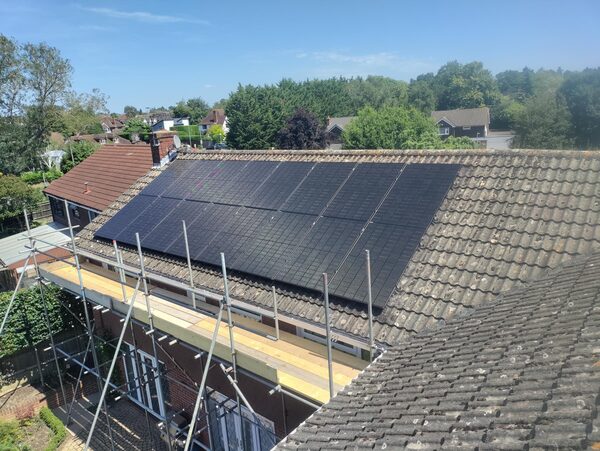
The requirements are specific, which is what makes them useful to a household trying to judge a policy. MCS approved financial protection products must provide at least six years' cover from the moment of installation6. They must offer a simple claims route with a capped excess of £2506. They must fund remediation if an installation does not comply with MCS requirements as a result of a failure in design or workmanship, adequately fund the cost of remediation if the original installer has ceased to trade, and not restrict claims based on how an installation was financed7.
| Requirement | What it means for the household |
|---|---|
| At least six years' cover from installation | The protection runs well beyond the first year, and starts from the installation date6 |
| Capped excess of £250 | The household's contribution to a valid claim is limited6 |
| Simple claims route | A defined route to make a claim for remediation6 |
| Remediation funding | The product funds putting right an installation that does not comply with MCS requirements through a design or workmanship failure7 |
| No financing restriction | A claim cannot be refused because of how the installation was paid for7 |
| Adequate reserves, independently audited | The provider must be able to meet claims5 |
The six-year term is not arbitrary. It is aligned with UK consumer law requirements under the Consumer Rights Act 2015 for faulty goods that are not of satisfactory quality, fit for purpose or as described5. That alignment matters because it means the financial protection term matches the period over which a household already has statutory rights in relation to goods, rather than inventing a separate and shorter window.
The excess cap is the figure most often asked about, and it is the same across the MCS documents: a capped excess at £25010, and an excess not greater than £2505. The products must also provide protection even if the installer goes bankrupt, is retired, refuses to carry out work to remedy an installation issue, or there is a failure in design5. That list is broader than simple insolvency, and it covers the awkward case where the firm still exists but will not return.
IBGs and the MCS certificate: declaring your protection product
The protection is recorded on the certificate, which is what makes it checkable later. For domestic installations, the installer must declare which financial protection product has been selected when creating a certificate on the MCS Installations Database4. Under the IBG arrangements, the organisation providing the IBG must be declared when creating a certificate on the Installations Database1.
That declaration is the household's evidence. A household should receive an insurance certificate confirming that cover is in place9. If the guarantee certificate is missing, the route is to contact the IBG provider the installer said the installation is registered with12. Where an installation problem arises and the installer has ceased to trade, the contact is the IBG provider named on the insurance-backed guarantee certificate12.
The certificate also has a role in grant-funded work. Under the Domestic RHI, replacing the MCS-certified product required a Replacement Product Declaration Form completed by the householder and an MCS-certified installer and sent to Ofgem13. That is a reminder that the certificate is not only a consumer protection document; it is the record that schemes and regulators use to trace what was installed and by whom.
The point to hold on to here is narrow: the protection product is named on the certificate, and the certificate is the document a household needs when a claim becomes necessary.
CIGA: the 25-year guarantee for cavity wall insulation
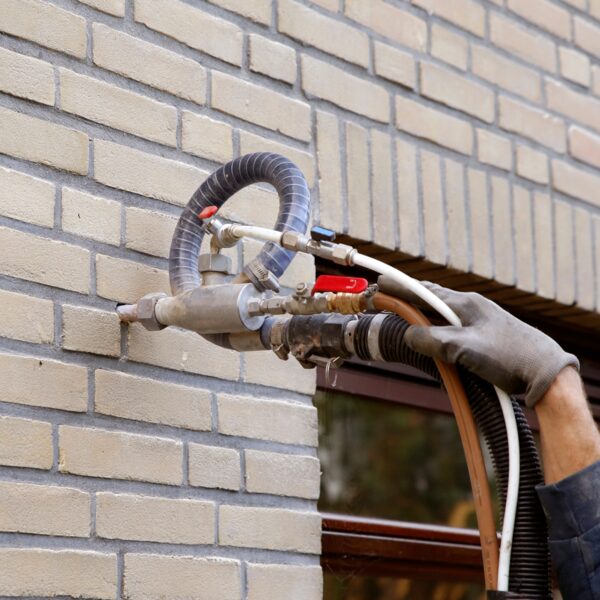
Cavity wall insulation has its own, much older protection arrangement, and its term is far longer than anything in the MCS scheme. The CIGA guarantee is for 25 years and covers problems that are caused by faulty or inappropriate installation of cavity wall insulation8. CIGA will have the property registered if the cavity walls have been insulated by an installer covered by the guarantee8.
The scheme behind it is the Cavity Wall Insulation Self Certification scheme, operated by the Cavity Insulation Guarantee Agency in association with the British Board of Agrément14. Qualifying installations also receive a CIGA independent 25 year guarantee against defects in materials and workmanship14. Complaints that involve workmanship or materials are covered by the independent CIGA 25 Year Guarantee that is provided for all CIGA installations15.
The 25-year term is treated as the standard for this kind of work well beyond CIGA itself. A 25-year guarantee is considered standard for solid wall insulation products and installations16. In Scotland, where grant aid is awarded for cavity wall or solid wall insulation under the Affordable Warmth Scheme, the installer employed must be able to provide a minimum 25-year guarantee for the work17. Area Based Scheme rules require contractors to provide a guarantee to the householder from the Cavity Insulation Guarantee Agency or an equal and approved scheme for cavity wall insulation18. The duration requirement in that guidance is that it lasts for 25 years or longer18.
CIGA has also extended into new build. Effective from 2nd April, CIGA will be offering a New Build Guarantee for Cavity Wall Insulation to its members only19. The guarantee will be for a period of 10 or 25 years from the day of installation19. Member installers using the service are subject to the same level of rigour as retrofit installers, including meeting the Minimum Technical Competency, being approved and trained by the System Designers whose product they install, and being subject to surveillance of 5 percent of all ongoing installation work by a CIGA inspector within the overall guarantee cost19. The evidence for a new build guarantee is a desktop assessment of GPS and date stamped images of each elevation uploaded to CIGA ISA after installation19.
CIGA strongly recommends that the householder checks that any company carrying out work on their property is reputable and aware the property has cavity wall insulation installed20. That is a practical warning about the most common way a long guarantee is lost: not through the original installation, but through a later job that damages the insulation.
Making a claim: how the process works under CIGA and MCS products
The two schemes run on different machinery, and a household needs to know which one it is dealing with before it starts.
Under CIGA, all complaints are logged immediately on receipt, and an acknowledgement is sent15. Complaints must be responded to within one month, and the installer or system designer will then investigate and report their findings to CIGA within one month15. CIGA will initially direct the complaint to the CIGA member company involved to give them the opportunity to rectify the situation, or, where the member is no longer trading, to the supplying System Designer15. Where the installer has been unable to resolve a complaint to the customer's satisfaction, a CIGA Technical Inspector may investigate, report findings and offer a conclusion together with any advice to the customer15.
Complaints should clearly specify the nature of the complaint and include photographs, copies of any existing correspondence, full contact details including email if available, and the name and registration number of the CIGA member involved15. All complaints are treated in confidence, although details may be passed to the manufacturer or System Designer for further investigation15. If help is needed in making a complaint, the householder may instruct anyone they choose to act on their behalf15.
Where the complaint is not resolved, CIGA operates an independent arbitration scheme. The required documents are the nature and basis of the concern, the nature and extent of any remedy sought, supporting documents relied on as evidence, confirmation that all reasonable efforts have been made through the registered installer's complaints procedure, and confirmation that the dispute has been escalated to CIGA and remains unresolved or that CIGA has issued a deadlock letter21. The arbitrator can award an apology, completion of specified works to rectify a defect, a nominal sum payment, reimbursement of the arbitration fee to the customer, or customer payment of outstanding amounts to the installer21.
For CWISC installations, the guarantee is issued and administered by the IAA currently, or previously by CIGA, and details on how to submit a claim under the guarantee are contained within the guarantee certificate22. Complaints involving workmanship or materials are covered by the independent CIGA or IAA 25 Year Guarantee provided for all CWISC installations22.
Under an MCS financial protection product, the route is the claims process the product must provide. The products must offer clear routes to make claims for remediation and a simple claims route7. The protection covers remediation for issues with the installation when resolution cannot be secured through the original installer5. Where an IBG is in place instead, the insurer will honour the terms of the guarantee issued by the installer, in accordance with the policy terms and conditions, and will send qualified tradespeople to assess the issue and arrange for the remedial work to be carried out if the claim is valid3.

Consumer codes and installers: HIES, Qualitymark and where IBGs fit
The guarantee sits inside a wider structure of installer approval, and the structure determines who is allowed to offer what. A requirement of companies wanting to gain MCS certification is that they are members of a CTSI Approved Consumer Code of Practice scheme in the first instance23. Installers under UK Government schemes must be TrustMark registered or Microgeneration Certification Scheme certified12.
The consumer codes carry their own protections. All HIES Accredited Installers operate under a CTSI Approved Consumer Code, and accreditation involves appropriate insurance and financial checks, verified qualifications and certifications, and ongoing compliance monitoring24. HIES policy coverage includes product and workmanship12. The Consumer Protection Association is listed as an IBG provider1, and Qualitymark Protection is an IBG provider25.
Grant schemes add conditions on top. Installers delivering work under the Boiler Upgrade Scheme must continue to hold membership with one of the two approved consumer codes, RECC or HIES, until further notice26. Installers must also be a member of an approved consumer code under the Boiler Upgrade Scheme guidance27. Under ECO4, measures should be installed by or under the responsibility of a TrustMark registered installer and have a relevant certificate of lodgement28. In Wales, installers under Green Homes Wales must either be registered with TrustMark as an approved PAS 2030 installer, or registered with TrustMark and certified with the Microgeneration Certification Scheme where the installation involves a low carbon technology such as a heat pump or solar panels29.
Flexi-Orb adds a scheme-level requirement of its own: Flexi-Orb requires certified installers to provide an Insurance Backed Guarantee for solar PV and battery storage installations24. That guarantees that the installer's workmanship is covered, should they cease trading24.
The codes also set the minimum behind the insurance. An installer must guarantee the workmanship of the installation for a minimum of two years following installation, and that guarantee must be insured to ensure the workmanship guarantee will be honoured if the company ceases to trade1. HIES policy coverage states a minimum two-year workmanship cover12. The IBG is subject to terms and conditions, and those terms are where the detail lives24.
"Insurance-backed means an insurance policy has been taken out to make sure the guarantee or warranty is still valid if the trader or seller goes out of business."
For a household, the structure means the IBG is rarely a standalone purchase. It arrives as a condition of the installer's registration, declared on the certificate, and backed by a provider that has been approved and listed. The HIES consumer code and Renewable Energy Consumer Code pages cover the codes themselves, and workmanship warranties and aftercare covers the guarantee the IBG sits behind.
What the protection does for a household's energy independence
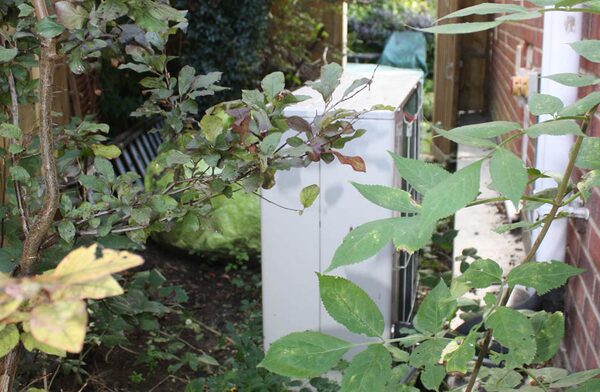
An insurance-backed guarantee does not generate a unit of electricity or a therm of heat. Its contribution to household energy independence is indirect but real: it protects the capital already spent on equipment that reduces reliance on the grid and on imported gas. A solar array, a battery or a heat pump is a long-lived asset, and the household's return on it depends on the system continuing to work for its expected life. An IBG is one of the mechanisms that keeps a workmanship failure from becoming a total loss.
The dependence that remains is worth stating as firmly as the benefit. The guarantee depends on a provider that must be approved, adequately reserved and independently audited5. It depends on the installer having registered the installation and paid the premium, since policies are activated automatically once the installer has registered the consumer's installation and paid the premium5. It depends on the household keeping the certificate, because the claim route runs through the provider named on it12. And it depends on the household not invalidating the guarantee through later work, which is the specific risk CIGA warns about20.
The term also sets a boundary. An IBG cannot be greater than the guarantee provided by the installer or contractor, and the maximum period of cover is up to 10 years1. The MCS products run for at least six years from installation6. The CIGA guarantee runs for 25 years8. A household weighing a long-lived installation against a ten-year protection window should understand that the two are not the same length, and that the protection covers workmanship and defined failures rather than the whole life of the equipment.
Where the installer is still trading, the first route is always the installer. The IBG and the MCS product are backstops for the case where that route is closed. The installers and energy independence page sets out the wider picture, and the home energy installers and retailers section covers the checks that reduce the chance of needing a claim at all.
Sources30 cited
- Insurance Backed Guarantee Products, MCS Certified, 2026-05-13
- Heat Pump Certifications, The Consumer Protection Association, 2026-04-02
- Insurance Backed Guarantees, Flexi-Orb, 2026-02-25
- MCS Approved Financial Protection Products, MCS Certified, 2026-09-17
- Financial Protection, MCS Certified, 2026-05-13
- Robust Financial Protection Is Pivotal to Increasing Confidence in Renewables, MCS Certified, 2026-01-28
- Requirements for Financial Protection Providers, MCS Certified, 2026-05-13
- Cavity Wall Insulation, Centre for Sustainable Energy, 2025-12
- Understanding Insurance Backed Guarantees, The Consumer Protection Association, 2025-06-18
- Compare Contractors Fairly, The Consumer Protection Association, 2025-11-27
- Clean Heat Market Mechanism and Heat Pump Transition Report, Department for Energy Security and Net Zero, 2026-05
- Homeowners, HIES, 2026-08-27
- Domestic RHI Essential Guide, Ofgem, 2022-03
- CWISC and CIGA's Competent Persons Scheme, Cavity Insulation Guarantee Agency, 2026-09-20
- Consumer Complaints Process, Cavity Insulation Guarantee Agency, 2026-09-20
- Energy in Non-Domestic Buildings and Heat and Buildings Statistics, Department for Energy Security and Net Zero, 2025-06
- Affordable Warmth Scheme, Northern Ireland Housing Executive, 2026-09-17
- Scottish Government Energy Efficiency Information Release, Scottish Government, 2024-08
- New Build FAQ, Cavity Insulation Guarantee Agency, 2026-09-20
- Home Improvements, Cavity Insulation Guarantee Agency, 2026-09-20
- Independent Arbitration Dispute Process, Cavity Insulation Guarantee Agency, 2026-09-20
- Complaints Procedure CWISC, Installation Assurance Authority, 2026-09-20
- Renewable Energy Consumer Code, Chartered Trading Standards Institute, 2026-09-20
- Flexi-Orb Consumer Guide, Flexi-Orb, 2025-02-17
- Consumer Charter Guide, Flexi-Orb, 2025-02-18
- Boiler Upgrade Scheme Guidance for Installers V5, Ofgem, 2026-04-28
- Boiler Upgrade Scheme Guidance for Installers V5.1, Ofgem, 2026-07-02
- ECO4 Delivery Guidance Version 4.0, Ofgem, 2026-03-26
- Green Homes Wales, Development Bank of Wales, 2026-09-17
- Claim Using a Warranty or Guarantee, Citizens Advice, 2026-09-17
 When Your Installer Goes BustWhat happens to deposits, part-completed work, workmanship guarantees and complaints when a home energy installation company fails, and how to claim on deposit protection, an insurance-backed guarantee, card or finance cover, and who honours the manufacturer's warranty.
 Cover and Service PlansHow manufacturer maintenance plans, insurer boiler cover and independent contracts differ in what they repair, exclude and charge.
 Workmanship WarrantiesIf something goes wrong with your solar panels, who actually fixes it and who pays?
 Insulation StandardsHow do you know your insulation was fitted to a proper standard, and who backs the guarantee if the installer disappears?
 Manufacturer Approved NetworksDoes an approved installer badge mean better work, or just a longer warranty on the boiler or heat pump?
 Manufacturer WarrantiesHow long does a boiler, heat pump or solar panel warranty actually last, and what do you have to do to keep it valid?