
In this guide
Flexi-Orb is a UK certification scheme for the companies that install renewable energy equipment in homes. It is one of only two renewable energy installation certification schemes in the UK, and it covers solar photovoltaics, electrical energy storage systems and electric vehicle charge points within the residential market1. It is not a product standard and it is not a grant scheme: it certifies the installer, and the installation is then registered on the Flexible Energy Register.
The scheme is owned, maintained and developed by Flexi-Orb itself, which describes its role as Scheme Owner, and it is designed in accordance with ISO/IEC 17067:20133. It is recognised by UKAS to that standard, which Flexi-Orb describes as the first scheme of its kind to hold that recognition1. The stated objective is to improve the quality and safety of the installation of renewable energy products, and the scheme exists, in its own words, to protect homeowners from mis-selling and poor installations4.
For a household, the practical value is a route to an export tariff, a consumer code with mediation behind it, and an insurance-backed guarantee on solar and battery work. The limits matter just as much: heat pumps are not yet certifiable through Flexi-Orb, and the guarantee position differs between technologies.
What Flexi-Orb is and how it is governed
Flexi-Orb is an installation standards scheme for renewable technologies, run by the organisation of the same name, which owns, maintains and develops the INS-001 Installation Scheme1. Its governance is anchored through a Board, and the scheme documents exist to let the scheme working group, Certi-fi staff and the Board define scheme requirements, give guidance to stakeholders, facilitate regular review and manage changes as the scheme develops3. Formal scheme review is conducted by the Flexi-Orb Senior Leadership Team3.
The scheme sets out five governance principles: impartiality, independence, transparency, consistency and fairness3. Flexi-Orb states that each of the five principles applies to the operations of its schemes and businesses, and that it is committed to the continuing improvement, development and operation of those schemes according to them6. It also states that it uses all available data to update scheme requirements, amend risk assessments, refine processes and provide up-to-date advice on compliance issues6.
The scheme launched in June 2024 with two certification bodies, and Flexi-Orb was established three years before its August 2024 announcement10. Certi-fi is its parent company, and in December 2024 three senior roles were appointed: a Head of Technical, a Head of Consumer Services and a Business Solutions Manager11. The scheme is recognised by DESNZ, which is the recognition that matters for export tariff access5.
What it covers: solar PV, battery storage and EV charge points
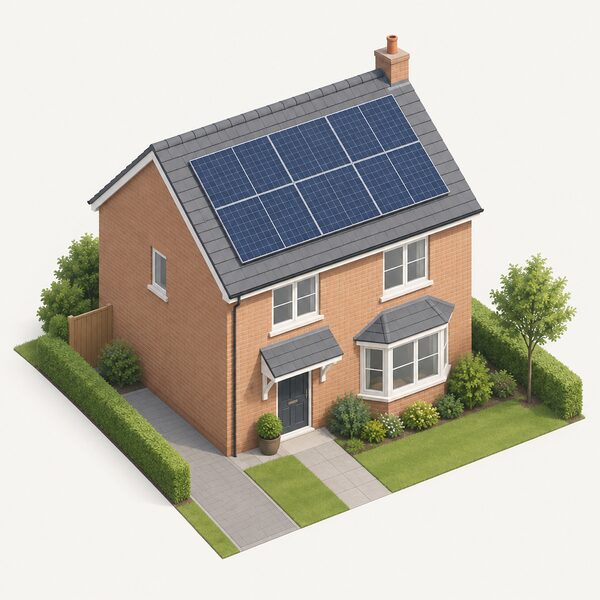
The Installation Scheme covers Solar Photovoltaic (PV), Electrical Energy Storage System (EESS) and Electric Vehicle Charge Point (EVCP) installations, and installers are certified to carry out and register those three technologies12. Flexi-Orb describes itself as the first in the UK to offer certification for the installation of electric vehicle charge points, and it launched the first UKAS accredited EVCP Installation Scheme10.
The insurance-backed guarantee position is not uniform across the three. Providing an insurance-backed guarantee for a solar PV or electrical energy storage system installation is mandatory, while providing one for an EV charge point only installation is optional7. Flexi-Orb requires certified installers to provide an insurance-backed guarantee for solar PV and battery storage installations specifically2. All Flexi-Orb certified installers are required to provide their domestic customers with a guarantee meeting the minimum criteria set out in the scheme's insurance-backed guarantee provider policy15.
| Technology | Covered by the scheme | Insurance-backed guarantee |
|---|---|---|
| Solar PV | Yes12 | Mandatory7 |
| Battery storage (EESS) | Yes13 | Mandatory7 |
| EV charge point (EVCP) | Yes14 | Optional for EVCP only7 |
| Heat pumps | Not yet open to installers8 | Not applicable yet |
The scheme is also reviewing the insurance-backed guarantee policies it will accept, as new Financial Protection Products are introduced for renewable energy installations16. That is a live area of change rather than a settled one.
Flexi-Orb and MCS: installation versus product certification
The two UK renewable installation certification schemes are Flexi-Orb and MCS, and the distinction a household needs is between certifying the company and certifying the equipment1. Flexi-Orb certifies installers: a certified installer is described as a qualified and experienced professional who has undergone rigorous training and assessment to meet the scheme's standards, and who has been independently assessed for quality, safety and professionalism12. Products, separately, are certified to UK standards to ensure they are safe and reliable, and only products with relevant certification can be registered on the system by installers registered with Flexi-Orb18.
That separation is enforced through a product database. Certified installers must only install products that meet the scheme's minimum standards criteria and are listed on that database1. So the installer's certification and the equipment's certification are two different checks, and both apply.
For the household, the two schemes are alternatives at the point of choosing an installer rather than rivals in the same job. Ofgem's guidance for the Smart Export Guarantee states that an installation must have been carried out by a Flexi-Orb installer or an MCS installer to benefit from the SEG19. EPVS, a consumer-facing body, states that all its members are either Flexi-Orb certified or MCS certified19. A household comparing installers is therefore comparing two certification routes to the same export tariff entitlement, not one route and a lesser one. More on the MCS route is at MCS certified installers.
How certification works: certification bodies, UKAS recognition and surveillance
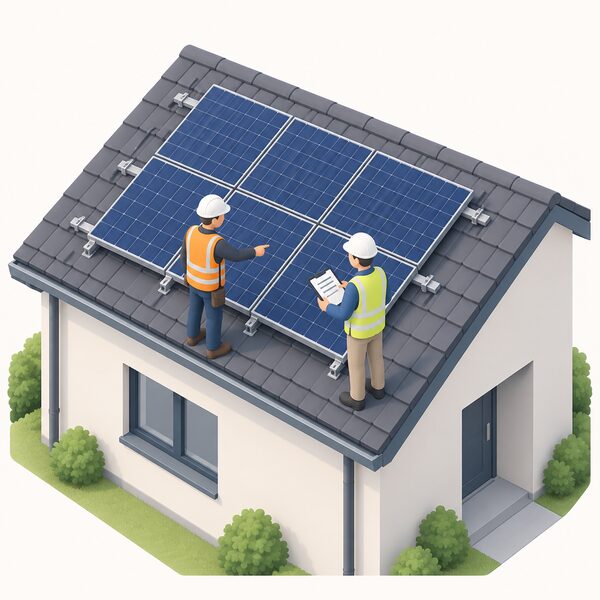
Certification is not granted by Flexi-Orb directly. An installer must apply and be assessed by one of the certification bodies that operate the Flexi-Orb Scheme3. Flexi-Orb certification was initially available through Simply Certification and Blue Flame Certification, with more certification bodies working on applications to offer the scheme10. Blue Flame Certification Limited received approval to operate the INS-001 Installation Scheme on 21 June 2024, with an approval scope covering PV, EESS and EVCP.
UKAS, the United Kingdom Accreditation Service, is the sole national accreditation body recognised by the UK government to assess certification, testing, inspection and calibration organisations20. UKAS audits and assesses both Flexi-Orb and the certification bodies that operate the scheme, with constant surveillance and ongoing reassessment once successful1. Flexi-Orb is recognised by UKAS to ISO/IEC 17067:2013, and the scheme describes itself as the first of its kind to hold that recognition1.
Certification is an ongoing process rather than a one-off award. It includes continuous monitoring, surveillance and re-assessment, and certified installers are subject to up to five additional on-site assessments annually to ensure they remain compliant1. The scheme's own summary of the process is that certification includes an initial on-site assessment and up to five additional site checks annually, ensuring ongoing adherence2. All Flexi-Orb certified installers undergo a rigorous vetting process to gain certification, which includes an on-site assessment to confirm compliance with the Installation Scheme12.
"UKAS (United Kingdom Accreditation Service) audits and assesses both Flexi-Orb and the Certification Bodies that operate the scheme"
The accreditation chain matters because it is what separates an assessed scheme from a trade association's badge. The same principle appears in building regulation guidance: Approved Document L Volume 1, published in Wales in April 2026, states that test data should be certified by a conformity assessment body accredited by UKAS to carry out that work21. Northern Ireland's building control technical booklet B likewise identifies UKAS as the sole national accreditation body recognised by the UK government for this purpose20.
What certified installers must do
The obligations on a certified installer run across four areas: assessment, code membership, product choice and paperwork.
Certification criteria are strict and must be evidenced, and certified installers must keep up with the latest standards so that installations comply with current laws and safety guidelines17. Installers certified to the scheme must also be members of a Chartered Trading Standards Institute approved code, and Flexi-Orb certification stipulates that all installation companies have a consumer code meeting the requirements of that institute1. Every customer installed under the scheme is covered by one of those approved consumer codes10.
On products, the rule is that certified installers must only install products meeting the scheme's minimum standards criteria and listed on its product database1. On paperwork, registering an installation on the Flexible Energy Register states that it complied with the requirements of the relevant editions of all codes of practice, the IET Wiring Regulations BS7671, and Building Regulations in force at the time of installation9. The certificate itself provides evidence that an installation was carried out by an installer certified as working to the requirements of the Flexi-Orb INS-001 Installation Scheme, and it should be included in the handover pack the installer provides9.
Flexi-Orb does not mandate that certified installers must also be members of EPVS7. Membership of EPVS is a separate matter from Flexi-Orb certification, even though all EPVS members hold one certification or the other19.
Consumer protection: the CTSI code, guarantees and dispute resolution

The consumer protection layer has three parts: a code, a guarantee and a complaints route.
The code is approved by the Chartered Trading Standards Institute, and Flexi-Orb states that adhering to it is part of what certification requires22. Flexi-Orb ensures that every customer installed under the scheme is covered by one of the CTSI approved consumer codes, which gives the consumer free access to complaints mediation, an Ombudsman Service and an insurance-backed guarantee4. The scheme also comes with access to dispute resolution services, providing a clear pathway for consumers to raise concerns or complaints about their installations22.
The guarantee is the insurance-backed guarantee described above, and its purpose is protection should the installer cease to trade10. Flexi-Orb states that if an installation company ceases trading, the consumer can still rely on the guarantee provided by the insurance22. All certified installers are reviewed regularly and have appropriate insurance and warranties in place12. Flexi-Orb's own advice to homeowners is to request confirmation that the system will come with an insurance-backed guarantee15. More on how these guarantees work is at insurance-backed guarantees.
Complaints are registered through a form on the Flexi-Orb website, with supporting documents or images uploaded alongside, and the complainant confirms acceptance of the privacy policy23. Flexi-Orb then informs the complainant of any action that has, or will, take place23. The scheme describes this as a structured resolution process ensuring concerns are addressed quickly and fairly, and states that the codes are there to support the consumer to ensure a fair resolution, always provided free of charge17.
Where Flexi-Orb falls short: heat pump coverage and SEG acceptance
Two limits are worth stating plainly.
Heat pumps are not yet certifiable through Flexi-Orb. Flexi-Orb has said since July 2024 that it is working on adding heat pumps to the scheme and that installers will be able to become certified to install the technology in 20251. The consumer guide listed heat pumps as due to be added in 20252. A later page states that installers will be able to become certified to install heat pumps in 202625. The Heat Pump Scheme has been recognised by UKAS as fit for the purpose of accredited conformity assessment, and the associated code of practice is committed to high quality, professionally designed and compliant installations focusing on safety and effective performance to maximise savings, designed by stakeholders from the industry8. But the scheme is not yet open to installers, and Flexi-Orb's own wording is that this is being worked on "so that the Scheme can be opened to installers"8. Until that happens, a heat pump installation cannot be registered through Flexi-Orb, and the dates given for opening have moved.
On export tariffs, the position is positive but not universal. A Flexi-Orb registration certificate enables a household to sign up for SEG tariffs, allowing payment for energy generated and exported2. A registration certificate offers the ability to sign up to an export tariff with an energy provider, so that payments can be received for excess energy generated but not used and exported back to the grid12. Ofgem's guidance states that to benefit from the SEG an installation must have been carried out by a Flexi-Orb installer or an MCS installer19. The scheme is recognised by DESNZ for this purpose5. Individual suppliers set their own terms within that framework, so acceptance is worth confirming with the supplier rather than assumed.
Who runs the scheme and how it is developing

Flexi-Orb is the Scheme Owner, and it describes its own role as using all available data to update scheme requirements, amend risk assessments, refine processes and provide up-to-date advice on compliance issues6. Its governance is anchored through a Board, with formal scheme review conducted by the Senior Leadership Team3. Certi-fi is the parent company, and the December 2024 appointments of a Head of Technical, a Head of Consumer Services and a Business Solutions Manager indicate a scheme moving from launch into operation11.
The Flexible Energy Register is the register of installations, and access is available to any relevant stakeholder who has an agreement with Flexi-Orb16. Only installations completed by Flexi-Orb certified installers can be registered on it12. Homeowners can check whether an installation has been registered and request an additional copy of the certificate by completing a form, and incorrect information can be corrected either by contacting the installer directly or by completing the form with a copy of the certificate and a note of what needs correcting9. Where the correction relates to registered system details, Flexi-Orb must confirm the correct details with the installer before changes can be made9.
Reviews are the scheme's other development. Every customer registered on the Flexible Energy Register receives an automatic email asking them to rate and review their installer, and participation is optional7. Customers can leave a detailed review or upload images of their installation, and each time a review is left the installer is notified and offered the chance to respond, even if the customer has opted to remain anonymous7. Review topics cover reliability and punctuality, customer service, quality of workmanship and the sales process2. Over 11,000 reviews were collected under the free Beta Service operated while the Installation Scheme was undergoing assessment, and those reviews, along with all reviews received under the accredited scheme, are being added to the Renewable Energy Review Centre7. Flexi-Orb has stated that about 30% of customers leave reviews through the scheme1.
The scheme also offers a free validation review for any customer who has obtained a quote from a Flexi-Orb installer and wants the figures independently verified, and a dedicated helpline offering technical advice, clarifying information provided by installers and ensuring householders have the resources to make informed decisions2.
What this means for a household's energy independence
Flexi-Orb certification does not change what a household's equipment can do. It changes who is accountable when the installation is done, and what paperwork exists afterwards.
The independence it supports is procedural. A registered installation produces a certificate that enables an export tariff, which turns a solar array from a cost-saving device into one that earns from exported electricity2. The consumer code gives free access to mediation and an ombudsman service, and the insurance-backed guarantee means the protection on solar and battery work sits with an insurer rather than with a company that may cease trading4. The certificate also records that the work complied with BS7671 and Building Regulations in force at the time, which is the evidence a future buyer or a building control query will want9.
The dependence that remains is on the installer's continuing certification, on the certification body that assessed them, and on the insurer behind the guarantee. Flexi-Orb monitors certified installers and can require up to five additional on-site assessments a year, but it does not warrant the work itself1. The guarantee is only as good as the policy behind it, and the scheme is currently reviewing which guarantee policies it will accept as new financial protection products enter the market16. For heat pumps, the certification route does not yet exist, so a household installing one is relying on other registration and code arrangements entirely. Where an installer's certification is the thing being checked, the wider guide to checking an installer before you buy sets out the other registers that apply.
Sources25 cited
- What is Flexi-Orb: a quick introduction, Flexi-Orb, 2024
- Flexi-Orb consumer guide, Flexi-Orb, 2025
- Scheme governance policy, Flexi-Orb, 2026
- Installation scheme, Flexi-Orb, 2026
- Flexi-Orb for my home, Flexi-Orb, 2025
- Good practice principles policy, Flexi-Orb, 2026
- Installer monitoring, Flexi-Orb, 2026
- Heat pumps, Flexi-Orb, 2026
- Flexi-Orb certificate queries, Flexi-Orb, 2024
- Ground-breaking new solar panel subscription scheme gains Flexi-Orb certification, Flexi-Orb, 2024
- UK's newest renewables certification scheme expands with several key hires, Flexi-Orb, 2024
- Solar PV, Flexi-Orb, 2025
- Electrical energy storage systems (EESS), Flexi-Orb, 2025
- Electric vehicle charge points (EVCP), Flexi-Orb, 2025
- Insurance backed guarantees, Flexi-Orb, 2026
- Flexible Energy Register, Flexi-Orb, 2025
- Renewable energy installations, Flexi-Orb, 2024
- Flexible energy: how can we ensure a smooth transition to a new energy system, Flexi-Orb, 2019
- Smart Export Guarantee (SEG) generators, Ofgem, 2026
- Technical booklet B: materials and workmanship, Building Control Northern Ireland, 2013
- Building Regulations Approved Document L Volume 1 2026, Welsh Government, 2026
- How EPVS and Flexi-Orb are improving the standard of renewable energy installations, EPVS, 2024
- Register a complaint, Flexi-Orb, 2026
- Homeowners, Flexi-Orb, 2026
- Flexi-Orb, Flexi-Orb, 2026