
In this comparison
MCS and Flexi-Orb are two separate certification routes for home renewable installations in the UK, and they do not cover the same ground. MCS is the UK's quality mark for renewable energy systems such as solar panels and heat pumps, and it certifies low-carbon products and installations used to produce electricity and heat from renewable sources1. Flexi-Orb is a scheme owner whose installation scheme covers solar photovoltaics, battery storage and electric vehicle charging in the residential market2.
The practical difference for a household is what each certificate unlocks. MCS certification is a condition of the Boiler Upgrade Scheme: installers must be MCS certified to take part, and the low-carbon heating products supported under the scheme must be MCS certified too3. Flexi-Orb sits on the electricity side, where a Flexi-Orb Registration Certificate allows a householder to sign up to an export tariff and be paid for excess electricity exported to the grid5. The Smart Export Guarantee rules recognise a scheme accredited as equivalent to MCS, naming the Flexi-Orb renewables scheme6.
Both schemes exist to protect consumers, and both run complaint and dispute routes. What follows sets out what each covers, which government support each unlocks, how the protections compare, and how to check an installer's status before work starts.
MCS and Flexi-Orb: what each scheme actually is
MCS describes itself as an independent certification scheme for microgeneration installation companies and products, aiming to ensure consistent standards and provide confidence to consumers7. Its roles include setting and maintaining technical standards for installations and products, certifying installers and products against those standards, issuing MCS certificates for completed eligible installations, and assisting certification bodies to review and address cases and consumer issues relating to installers or products3. It is the standards organisation for small-scale domestic renewable energy and technology across the UK9.
Flexi-Orb operates as a scheme owner, and states that each of its five good practice principles applies to the operations of its schemes and businesses10. It describes itself as committed to the continuing improvement, development and operation of its schemes and businesses, and says it uses all available data to update scheme requirements, amend risk assessments, refine processes and provide up-to-date advice on compliance issues10. Its certification scheme aims to improve the quality and safety of the installation of renewable energy products, with governance anchored through its Board and principles of impartiality, independence, transparency, consistency and fairness11.
The two are not simply rivals. The Smart Export Guarantee guidance treats a scheme accredited as equivalent to MCS, such as the Flexi-Orb renewables scheme, as satisfying the certification requirement6. Flexi-Orb states that its scheme is recognised by DESNZ5. Flexi-Orb has also stated that its installation scheme is undergoing assessment to gain UKAS recognition, and that reviews from its Beta Service and its Accredited Scheme will both be added to the Renewable Energy Review Centre12. UKAS audits and assesses both Flexi-Orb and the certification bodies that operate the scheme, with constant surveillance and ongoing reassessment once successful13.
For a household, the distinction is about which certificate a given technology produces and which scheme the installer holds. MCS certification is a mark of quality demonstrating adherence to industry-recognised standards for renewable products, contractors and their installations14. Flexi-Orb is designed to protect consumers and drive up standards to increase confidence in the green economy15.
What MCS covers: the UK's quality mark for small-scale renewables

MCS certifies, quality assures and provides consumer protection for microgeneration installations and installers, covering small-scale renewable electricity technologies such as solar photovoltaic panels, biomass, wind, heat pumps and heat products16. It is a certification scheme for microgeneration installation companies and products17. The breadth matters: MCS is the route that reaches heating as well as electricity, which is why it appears in grant rules for heat pumps rather than only in export tariff paperwork.
Membership of a consumer code is built into the scheme. A requirement of companies wanting to gain MCS certification is that they are members of a CTSI Approved Consumer Code of Practice scheme in the first instance18. That links MCS certification to the Renewable Energy Consumer Code and the wider installer schemes and consumer codes landscape, rather than leaving consumer protection to a separate, optional arrangement.
MCS also maintains its standards through technical working groups, which it facilitates, and it conducts research on industry developments and their potential impact, and analyses updates to standards referenced in its documents19. Recent standards work includes air-to-air heat pumps, with implementation into MCS entering its next phase on 8 September 202619. MCS published its response to plug-in solar panels becoming available in the UK on 14 September 202619.
There are limits to what certification guarantees. MCS requires installers to provide a design-stage prediction of system efficiency, not verify actual performance, and it does not require remediation of systems that are underperforming relative to their design20. Weather compensation is not mandatory under current MCS requirements, and third party non-modulating controls are not prohibited20. MCS specifies handover documentation but not the quality of verbal explanation, household understanding, structured follow-up or ongoing support20. Those are the boundaries of the quality mark, and they are worth knowing before treating a certificate as a performance guarantee.
What Flexi-Orb covers: solar PV, batteries and EV charging
Flexi-Orb's installation scheme covers solar photovoltaic, electrical energy storage system and electric vehicle charge point installations5. Its certified installers are certified to carry out and register those three technology types13. The scheme focuses on the quality and compliance of energy-efficient installations, namely solar photovoltaics, battery storage and electric vehicle charging within the residential market21. Flexi-Orb has also stated that heat pumps were due to be added in 202515.
Certification is not a one-off inspection. Flexi-Orb certified installers undergo a rigorous vetting process to ensure compliance with the installation scheme, and certification includes an initial on-site assessment and up to five additional site checks annually, ensuring ongoing adherence15. Certification is an ongoing process that includes continuous monitoring, surveillance and re-assessment13. Flexi-Orb states that certified installers have been independently assessed for quality, safety and professionalism2.
Registration is tied to the installer's status. Under the installation scheme, only installations completed by Flexi-Orb Certified installers can be registered on the Flexible Energy Register5. That register is the mechanism that produces the registration certificate a household uses for export tariff sign-up, so the installer's certification status at the time of the work is what determines whether the installation can be registered at all.

Which certification unlocks which government support and SEG payments
The Boiler Upgrade Scheme is the clearest case. Installers must be MCS certified to participate in the scheme, and installers and the low-carbon heating products supported under it must be MCS certified and members of an approved consumer code4. Ofgem's scheme rules repeat the requirement that installers must be MCS certified and meet the MCS standards3. For a household claiming the grant, MCS certification is a condition of eligibility rather than a quality preference.
On the electricity side, the Smart Export Guarantee guidance recognises a scheme accredited as equivalent to MCS, such as the Flexi-Orb renewables scheme6. Flexi-Orb states that a Flexi-Orb Registration Certificate offers the ability to sign up to an export tariff with an energy provider, so that a household can receive payments for excess energy generated but not used and exported back to the grid5. Flexi-Orb also states that consumers using a Flexi-Orb certified installer can benefit from SEG tariffs with their energy provider2.
The Feed-in Tariff, which closed to new applicants, still matters for existing generators. An MCS-FIT installation is a solar PV or wind installation with a declared net capacity at or below 50kW, or a micro CHP installation up to the 2kW scheme maximum22. For MCS-FIT small-scale installations under deployment caps, installations are ordered by the date and time of the installation's MCS certificate23. Where FIT generators are installing energy storage or battery systems up to 50kW, Ofgem recommends that an MCS installer is used and that the system is installed in line with the MCS Battery Standard24.
Energy efficiency schemes take a similar approach. The ECO4 measures table lists solar PV with MCS as the required standard25. The pattern across government support is consistent: MCS is the certification named in the rules, with Flexi-Orb recognised as an equivalent route for the export tariff side.
| Support route | Certification named in the rules | Source |
|---|---|---|
| Boiler Upgrade Scheme | Installers must be MCS certified and meet MCS standards; members of an approved consumer code | 3 |
| Smart Export Guarantee | MCS, or a scheme accredited as equivalent such as the Flexi-Orb renewables scheme | 6 |
| Feed-in Tariff (existing generators) | MCS-FIT installation definition; MCS installer recommended for storage up to 50kW | 24 |
| ECO4 | Solar PV listed with MCS as the standard | 25 |
Consumer protection compared: complaints, guarantees and dispute resolution
MCS now manages complaints in-house under its redeveloped installer scheme, and provides alternative dispute resolution where parties cannot reach a resolution26. It describes itself as the single point of contact for complaints about MCS certified installers or installations, after an issue is raised with the installer first8. MCS will consider complaints about system performance and design, quality of work, incomplete installation, delayed installation, commissioning and handover, installer conduct, damage to property, mis-selling, contractual issues, issues with product, and breach of the customer commitment8. It shares details of a complaint with the installer's certification body and, where the installer is a member of a consumer code, with that code as well8.
Flexi-Orb provides a structured resolution process, stating that concerns are addressed quickly and fairly2. Its dispute resolution through consumer codes is always provided free of charge, and the codes exist to support the consumer in reaching a fair resolution21. Flexi-Orb also gives consumers free access to alternative dispute resolution through consumer codes, and states that consumers receive financial protection, access to alternative dispute resolution and are not missold27. It describes its consumer support as a service giving consumers a way to address concerns or complaints about their installation, ensuring fair outcomes for all parties28.
"We can still review your complaint and let you know what options are available."
Timing differs between the schemes and the nations. MCS expects installers to acknowledge a complaint within two working days and respond effectively, and states that most complaints should be fully resolved within 8 weeks29. MCS describes 14 days as a reasonable maximum time to expect a response from an installer30. For MCS certified installations, a complaint must be made no more than two years after the date the system was commissioned7. MCS will not consider installations completed more than six years ago, or five years in Scotland, under the Consumer Protection Act 20158. In Scotland, consumer rights claims have a limit of five years, starting from the time you became aware there was a problem14.

How to check whether an installer is certified

Both schemes publish the status of their installers, and the check is worth doing before signing anything. Flexi-Orb states that all its certified installers undergo a rigorous vetting process to gain certification, including an on-site assessment to ensure compliance with the installation scheme5. Its certified installers are independently assessed for quality, safety and professionalism2. Certification includes an initial on-site assessment and up to five additional site checks annually15.
For MCS, the certificate itself is the record. MCS issues MCS certificates for completed eligible installations, and its roles include assisting certification bodies to review and address cases and consumer issues relating to installers or products3. A household can check an installer's certification and the certificate for a completed job through the MCS route, and the guide to checking, obtaining or amending an MCS certificate sets out how that works.
Flexi-Orb runs a review mechanism alongside certification. Every customer registered on the Flexible Energy Register receives an automatic email asking them to rate and review their installer, and there is an option to leave a detailed review or upload images of the installation12. Participation is optional, but each time a review is left the installer is notified and offered the chance to respond, even where the customer has opted to remain anonymous12. Reviews from the Beta Service and the Accredited Scheme will both be added to the Renewable Energy Review Centre12.
MCS also contacts property owners directly for verification. It may get in touch for a short, routine post-installation verification on behalf of Ofgem by email or on 0333 103 8198, and property owners should aim to respond within seven days17. MCS can be contacted on 0333 103 8130, and complaints can be sent to mcscomplaints@mcscertified.com17. MCS runs a whistleblowing route, and states that lessons learned will be used to improve scheme oversight and maintain standards25.
Which scheme matters for your installation
The answer follows the technology and the support being claimed. Where a household is claiming the Boiler Upgrade Scheme, MCS certification is required of the installer and the product, so the MCS route is the one that matters3. Where the installation is solar PV, battery storage or an EV charge point and the aim is an export tariff, a Flexi-Orb Registration Certificate supports sign-up, and the Smart Export Guarantee rules recognise Flexi-Orb as an equivalent scheme6.
For existing Feed-in Tariff generators adding storage, Ofgem recommends an MCS installer for systems up to 50kW, with the system installed in line with the MCS Battery Standard24. That recommendation sits alongside the FIT generator guidance, which repeats the recommendation that an MCS installer is used24. The FIT generator pages set out the wider obligations that apply to accredited generators22.
What this means for a household's energy independence is narrower than it first appears. Certification determines who may do the work and which payments and grants are available, but it does not remove the underlying dependencies. An export tariff still runs through an energy supplier, and the Smart Export Guarantee is administered by suppliers under Ofgem's rules6. A battery reduces reliance on grid imports at particular times of day, but the household remains connected and the scheme's registration sits with a certifying body and, for Flexi-Orb, a register operated by the scheme owner5. MCS certification is a condition of grant funding, not a guarantee of system performance, since MCS requires a design-stage prediction of efficiency rather than verification of actual performance and does not require remediation of underperforming systems20.
The practical position is that both schemes are worth checking, and neither is a substitute for the other. MCS reaches heating and electricity technologies and is named in grant rules; Flexi-Orb covers solar PV, batteries and EV charging and produces the registration certificate used for export tariff sign-up. Where an installer holds one and not the other, the choice of scheme follows the work being done and the payment being claimed.
Sources30 cited
- MCS for consumers, MCS Certified, 2026
- Flexi-Orb for my home, Flexi-Orb, 2025
- Boiler Upgrade Scheme, Ofgem, 2026
- Boiler Upgrade Scheme annual report 2024 to 2025, Ofgem, 2025
- Flexi-Orb homeowners, Flexi-Orb, 2026
- Smart Export Guarantee: earn money for exporting renewable electricity, GOV.UK, 2020
- Who to contact, Ofgem, 2026
- Consumer complaints, MCS Certified, 2026
- Leading consumer protections champion supports MCS on future plans, MCS Certified, 2023
- Good practice principles policy, Flexi-Orb, 2026
- Scheme governance policy, Flexi-Orb, 2026
- Installer monitoring, Flexi-Orb, 2026
- What is Flexi-Orb: a quick introduction, Flexi-Orb, 2024
- Remedies and redress: an overview of your key consumer rights, Trading Standards Wales, 2025
- Flexi-Orb consumer guide, Flexi-Orb, 2025
- ECO4 Flex and GBIS Flex information document, Ceredigion County Council, 2025
- Boiler Upgrade Scheme guidance for property owners, Ofgem, 2026
- Renewable Energy Consumer Code, Chartered Trading Standards Institute, 2026
- MCS working groups, MCS Certified, 2026
- Heat pump transition report, Climate Change Committee, 2026
- Renewable energy installations, Flexi-Orb, 2024
- Feed-in Tariffs: FIT generators, Ofgem, 2026
- FIT guidance for licensed electricity suppliers, Ofgem, 2024
- Guidance for FIT generators, Ofgem, 2024
- Whistleblowing, MCS Certified, 2026
- How MCS is transforming consumer protection for renewables, MCS Certified, 2026
- Flexible energy: how can we ensure a smooth transition to a new energy system, Flexi-Orb, 2019
- How EPVS and Flexi-Orb are improving the standard of renewable energy installations, EPVS, 2026
- Complaints handling, MCS Certified, 2026
- What to do if things go wrong, MCS Certified, 2026
 MCS ExplainedMCS is the quality mark for solar panels, heat pumps and other home renewables.
 MCS Installation StatisticsHow many homes have had solar panels, heat pumps or batteries fitted by certified installers, and is that number still rising?
 MCS CertificationWhy do so many installers and tariff schemes ask about MCS certification when you get solar panels?
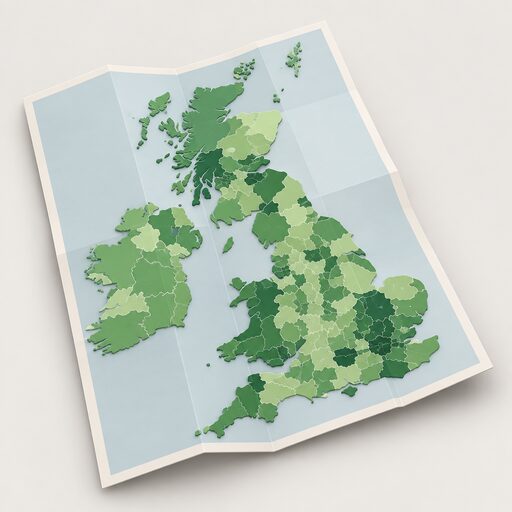 MCS Data by Local AuthorityHow many solar panels, heat pumps or batteries have gone into homes in your council area?
 Installer Schemes and CodesCheck whether your installer is on TrustMark, and whether they belong to HIES or the Renewable Energy Consumer Code.
 Export Tariff EligibilityTo get paid for solar power you send to the grid, you need a certified installer, your network operator told about the connection, and a meter that records what you export.